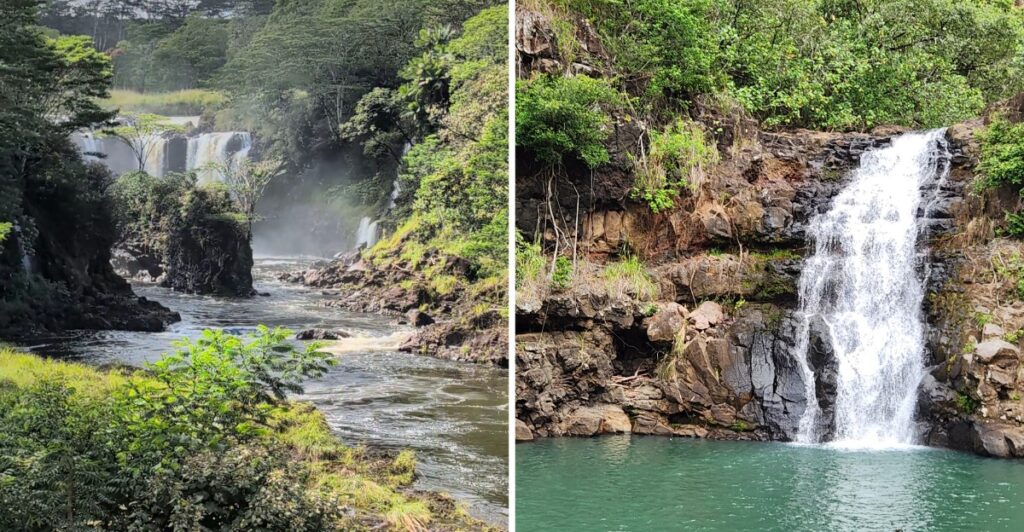
One Hawaii waterfall plunges 442 feet, yet the paved loop to see it is less than half a mile long. Honestly, I love it when the biggest payoff asks for so little actual walking.
Another cascade pours straight under a highway bridge, so you look down at it instead of up. A third even lets you swim at its base, with a lifeguard on duty and a free life vest.
That mix of short walks and big views makes this list really easy on tired legs and short schedules. Recent storms have reshuffled some trail access, though, so a little planning goes a long way this fall.
Pack a light rain jacket, bug spray, and a bit of patience for winding roads. The islands still have plenty of mist and rainbows to share before the calendar flips to a brand-new year.
1. Rainbow Falls
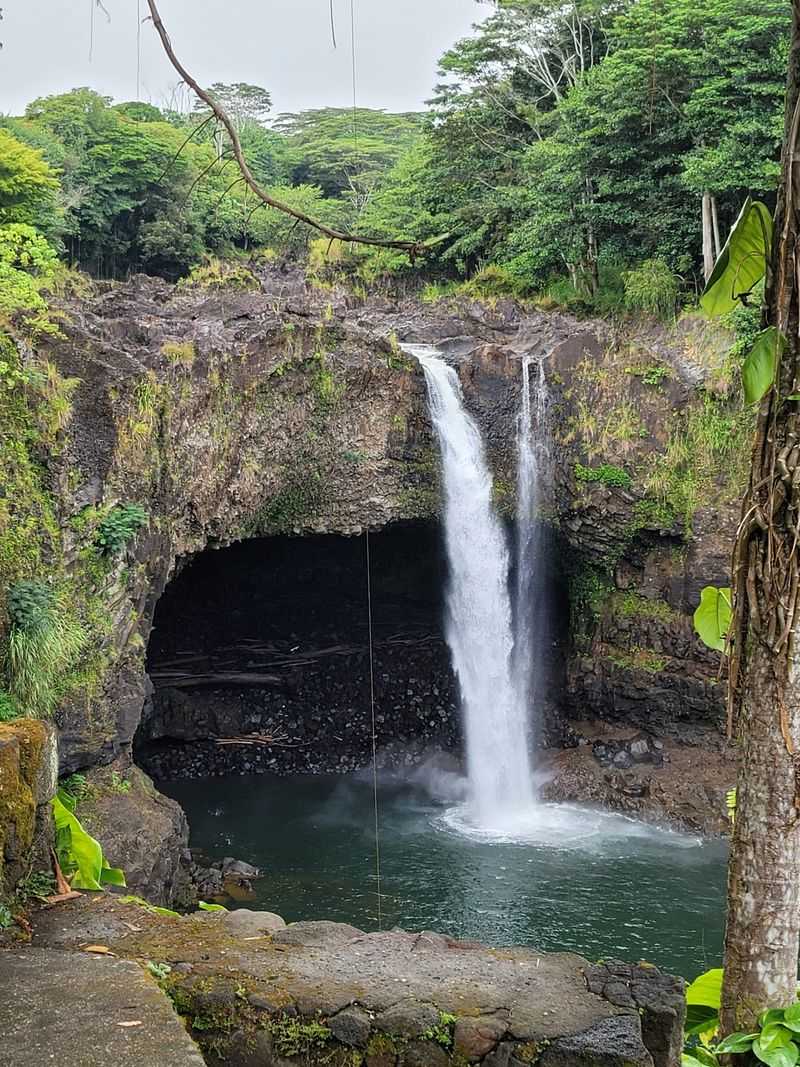
This waterfall comes with a built-in light show on sunny mornings. Mist from its 80-foot drop often catches the sun and throws a rainbow across the pool.
In Hawaiian, the falls are called Waiānuenue. The avenue that leads you here carries the same name.
Legend says the cave behind the falls was home to Hina, mother of the demigod Maui. That’s quite the waterfront address.
The falls sit in Wailuku River State Park, just outside downtown Hilo. Rainbow Falls is open daily from 7 a.m. to 5:30 p.m., with entrance and parking fees for non-Hawaii residents.
Big banyan trees grow near the overlook, so give yourself a few extra minutes to wander. Swimming here isn’t safe, and there’s no lifeguard on duty.
Heavy rainfall can cause dangerous conditions along the Wailuku River and temporarily affect park access.
It reopened later that month, but weather can change access quickly.
Go early if you want the rainbow, since it depends on morning sun. The parking lot is small, so an early arrival helps there, too.
Sunny days around 10 a.m. give you the best odds of a rainbow. On cloudy days, you still get the full 80-foot drop over the lava cave.
Address: Rainbow Drive, Hilo, HI 96720.
2. Mānoa Falls
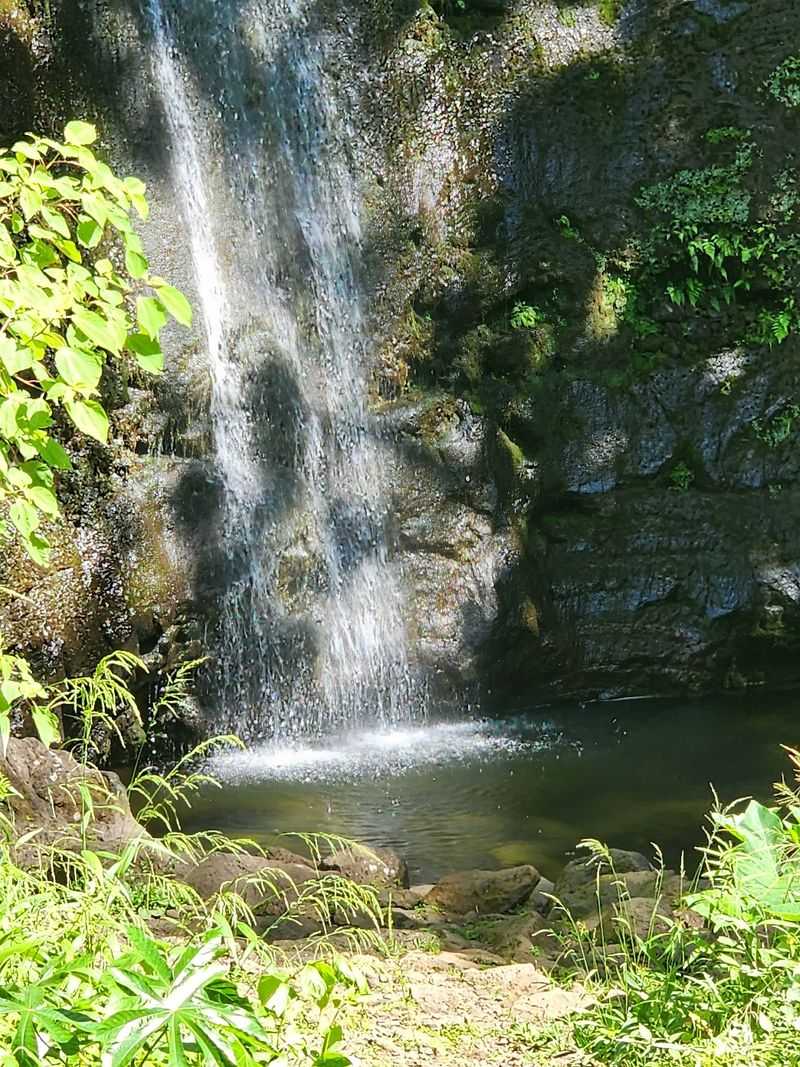
Movie crews have used this rainforest trail as a backdrop, and it sits at the back of a Honolulu valley. That’s a lot of jungle for a spot so close to the city.
The out-and-back hike runs a little under 2 miles. Expect uneven ground and plenty of mud after rain.
At the end, the falls drop about 150 feet down a steep cliff. Swimming at the base isn’t allowed.
A rockfall hazard fence went in near the falls, and the trail reopened in 2021 after that project. Crews added overdue safety improvements at the same time.
More maintenance came in spring 2026, with weekday closures in late March and early April. The trail returned to regular hours, 6 a.m. to sunset, once the work wrapped up.
Bugs love this damp forest, so pack repellent. Bring water too, since there’s none along the trail.
The paid trailhead lot keeps daytime hours, roughly 8 a.m. to 6 p.m. Bus riders can hop off the number 5 line and walk in.
The ʻAihualama Trail branches off near the falls, but it is currently closed to hikers. For a longer hike, consider the nearby Puʻu Pia Trail instead.
Address: 3737 Manoa Road, Honolulu, HI 96822.
3. Waimea Falls
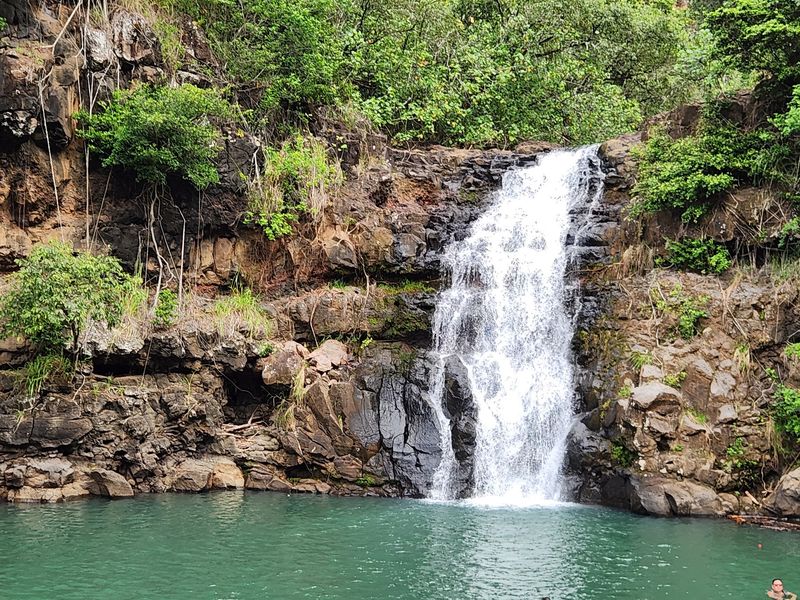
A lifeguard, a free life vest, and a 45-foot waterfall make this North Shore swim feel surprisingly civilized. Swimming happens when conditions are safe, and lifeguards make that call each morning.
The falls, also called Waihi Falls, sit at the end of Waimea Valley. The valley covers about 1,875 acres of botanical gardens and cultural sites.
A paved path runs about three-quarters of a mile each way to the pool. Interpretive signs along the route share plant and cultural history.
People lived in this valley for centuries, and it’s among the most archaeologically significant sites on Oʻahu. The last kahuna nui to live here was Hewahewa, a high priest from Hawaiʻi Island.
Today, Hiʻipaka LLC, a Native Hawaiian nonprofit, manages the valley. Admission is required, and hours shift seasonally, so check before you drive up.
Life vests are required for all swimmers, regardless of age. A changing room near the falls makes the swim easy to plan.
Pets stay home here, since endangered species live in the valley. Waimea Bay sits right across the highway if you want some sand afterward.
Evenings bring the Toa Lūʻau to the valley. That can turn a waterfall day into a full North Shore outing.
Address: 59-864 Kamehameha Highway, Haleiwa, HI 96712.
4. Twin Falls
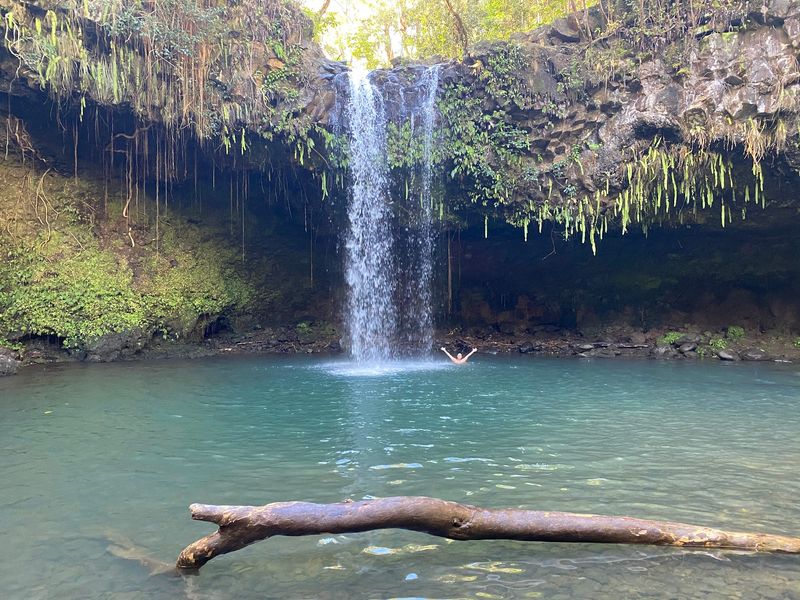
The first big waterfall stop on the Road to Hana sits on a working family farm. Wailele Farm has opened its trails to the public since 1997.
You’ll find it at mile marker 2 of the Hāna Highway. That early spot makes it an easy first stretch for your legs.
Short paths lead to falls and pools along Hoʻolawa Stream. The walk to the farthest falls runs roughly half a mile.
A farm stand by the entrance sells smoothies, coconuts, sugarcane juice, and banana bread. Buying a snack there supports the family that keeps the trails open.
Gates open in the early morning, and last entry is around 4:30 p.m. The farm reserves the first Saturday of every month for Hawaii residents only, so other visitors should plan accordingly.
Parking is in a dirt lot beside the highway. Please use it rather than squeezing onto the shoulder.
Flash floods can rise fast after heavy rain, so respect posted signs. Water shoes help if you plan to wade near the pools.
Address: 6300 Hana Highway, Haiku, HI 96708.
5. Puaʻa Kaʻa Falls
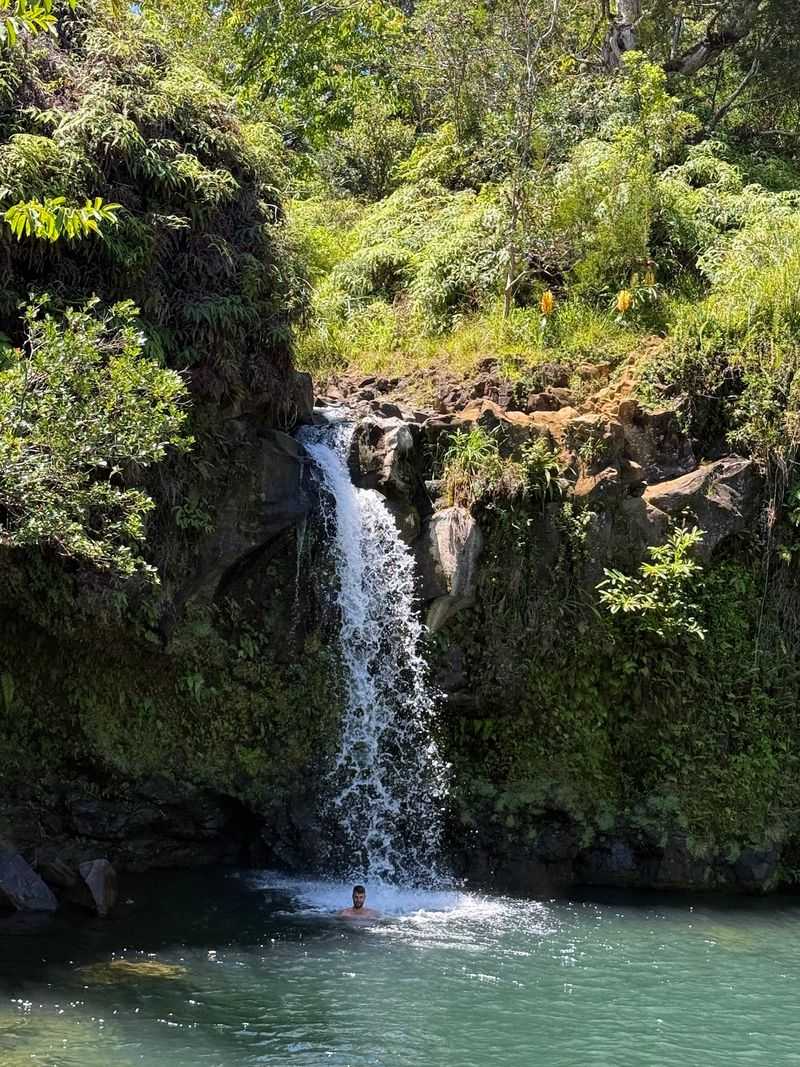
A waterfall named Rolling Pig sounds like a joke, but the name is real. Puaʻa Kaʻa translates to rolling pig in Hawaiian.
The falls sit inside Puaʻa Kaʻa State Wayside, a 5-acre rainforest park. The highway cuts right through it, with the restrooms on the ocean side.
Cross the road from the parking area and head inland to find a pair of waterfalls. They tumble into pools just a few minutes from your car.
Covered picnic shelters sit near both the parking lot and the falls. That makes this a handy lunch stop on a long drive.
The state refreshed the restrooms, pavilions, and railings in 2025. Hurricane Nolo forced a brief closure in late September 2026, and Maui parks reopened soon after.
Watch for falling rocks beneath the falls and sudden flash floods. The view from the bridge is a safe, easy bonus.
The wayside sits about half a mile past mile marker 22. That puts it roughly midway along the classic Road to Hana drive.
The upper pool sits just beyond the picnic tables. Reaching it means hopping across a few stream rocks.
Address: Hana Highway, near Mile Marker 22, Haiku, HI 96708
6. Peʻepeʻe Falls
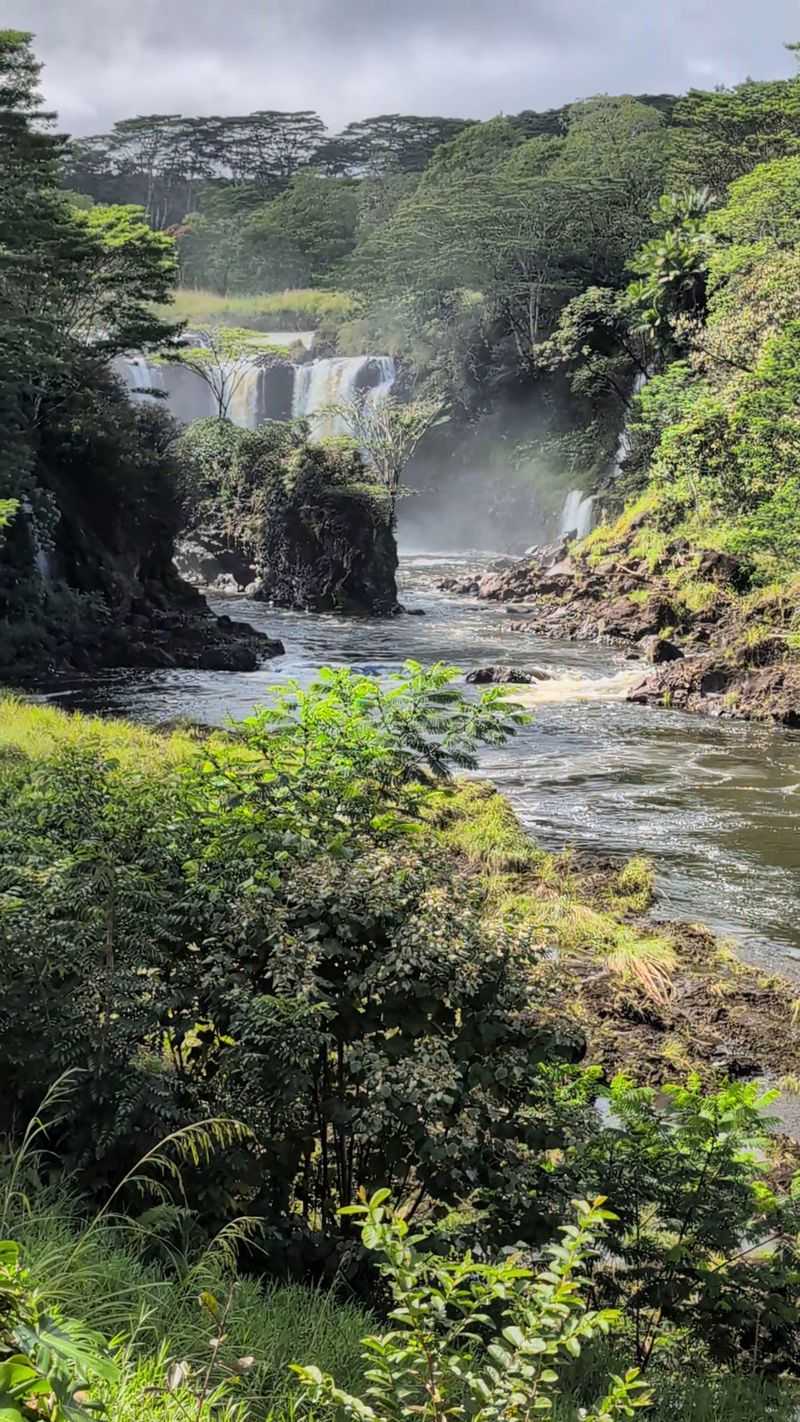
Water here rolls and bubbles like it’s sitting on a stove burner. The swirling pools below Peʻepeʻe Falls are known as the Boiling Pots.
The pools connect through underground flow and small cascades. Hexagonal basalt columns line them, formed as lava cooled slowly.
Legend ties the spot to the demigod Maui. He used hot stones to make the river boil and drive out a moʻo named Kuna.
The overlook sits about 1.5 miles upstream from Rainbow Falls, in the same state park. Seeing both makes for an easy Hilo morning.
Boiling Pots is open daily from 7 a.m. to 5:30 p.m., with entrance and parking fees for non-Hawaii residents. The gates lock in the early evening.
Stay in the viewing areas, even if the pools look calm. The Wailuku River can turn dangerous fast, and swimming isn’t safe here.
Drone flying isn’t allowed in the park. Bring a zoom lens instead for close-up shots of the cascades.
Address: Peʻepeʻe Falls Drive, Hilo, HI 96720.
7. Umauma Falls
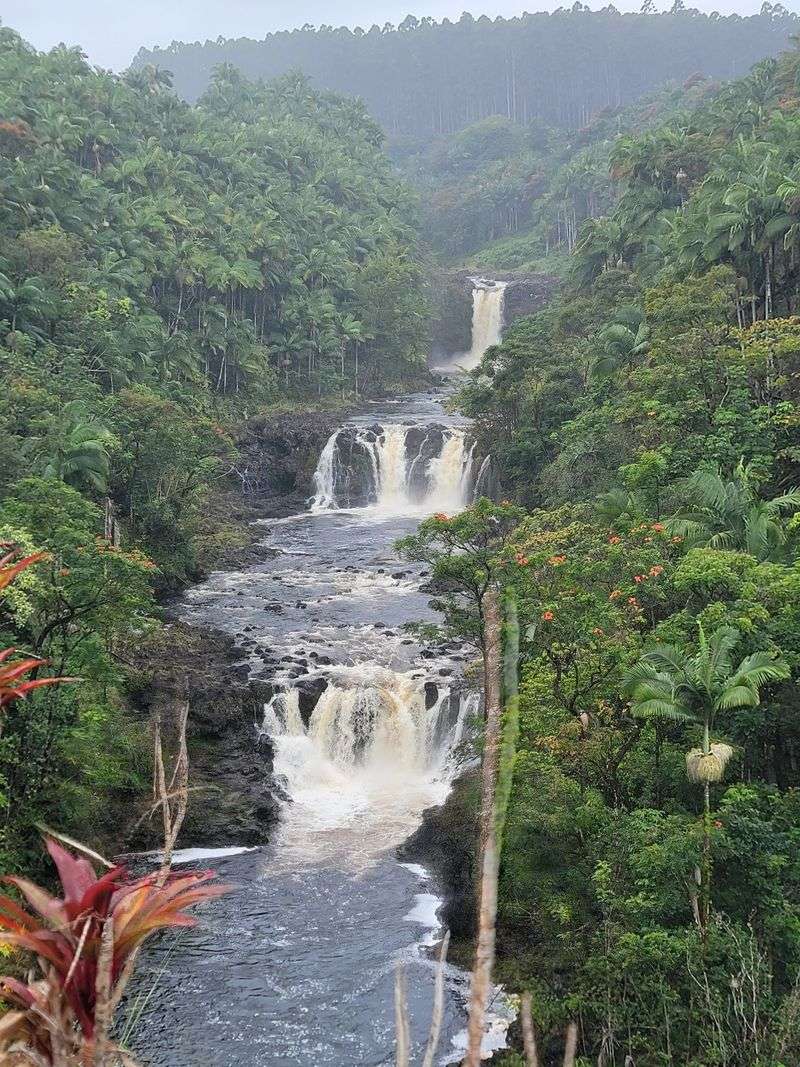
Three tiers of water stack up in a single view at this Hamakua Coast waterfall. Better yet, a concrete road lets you drive right to the viewing area.
The falls sit on private land run by the Umauma Experience. The company bought the lookout and about 90 surrounding acres in 2008.
Self-guided visits start at the visitor center, where you can grab a map and a snack. An admission fee applies for falls viewing.
A garden and river walk follows the Umauma River past a natural palm forest. Watch for a large native ʻōhiʻa tree with feathery red blooms.
The rope along the path has its own story. Local explorers found it loose at sea near South Point, and it stretched over 1,000 feet.
Thrill seekers can add a 9-line zipline that passes over 14 waterfalls. ATV, horseback, rappel, and private swim tours run on the same property.
Viewing hours have run from 8 a.m. to 5 p.m. daily. Confirm before you go, since plans on private land can shift.
Address: 31-313 Old Mamalahoa Highway, Hakalau, HI 96710.
8. Wailua Falls
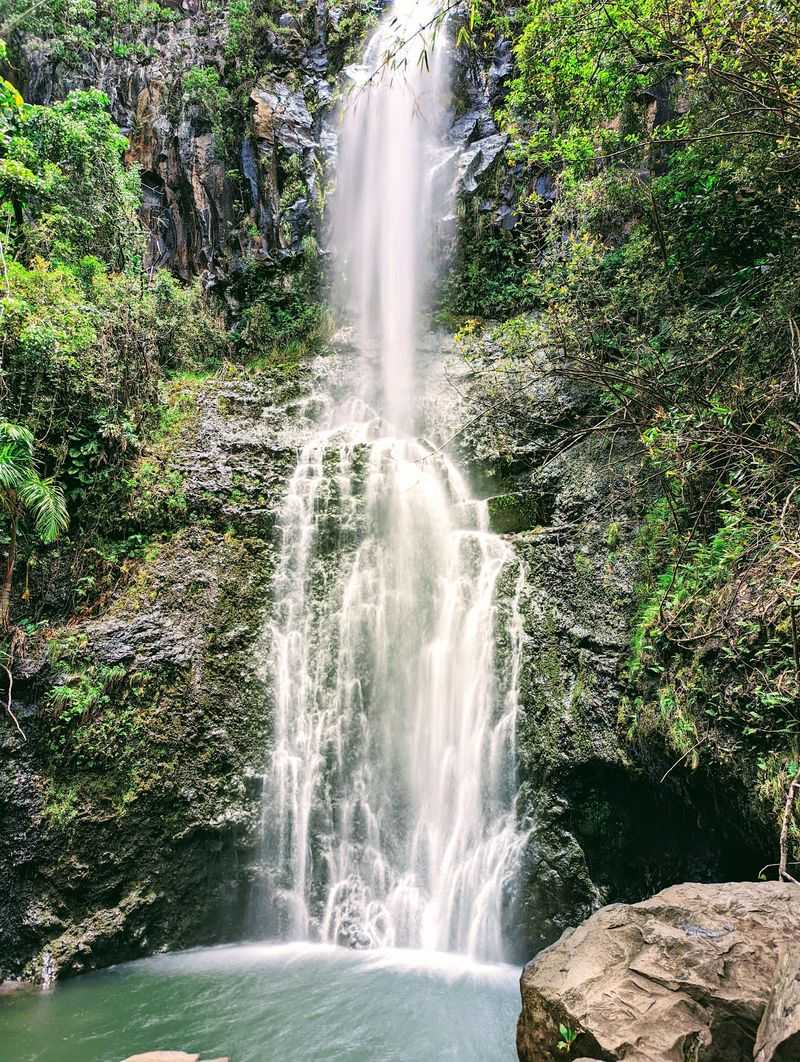
Despite its name, this waterfall flows from Honolewa Stream, not Wailua Stream. It drops about 80 feet just a few steps from the road.
You’ll find it just past mile marker 45, after the Hana Highway becomes Highway 31. That puts it beyond Hana town, on the way toward Kīpahulu.
It’s often called Maui’s most photographed waterfall. The view from beside the bridge makes that easy to believe.
A small parking lot sits on the ocean side just past the falls. Pull in carefully, since the road here is narrow.
A short path leads toward the base, but it can be tricky and slippery. The roadside view delivers plenty on its own.
Water flow varies, yet the falls usually look good throughout the year. After heavy rain, the flow can swell noticeably.
Two smaller falls, Puaʻa Luʻu and Hahalawe, sit a little farther down the road. Puaʻa Luʻu has its own short path if you want one more stop.
Upstream, Kekuapoʻowai Falls hides in the forest. You’d need a helicopter to see that one.
Address: Hana Highway (Route 31), near Mile Marker 45, Hana, HI 96713.
9. Makapipi Falls
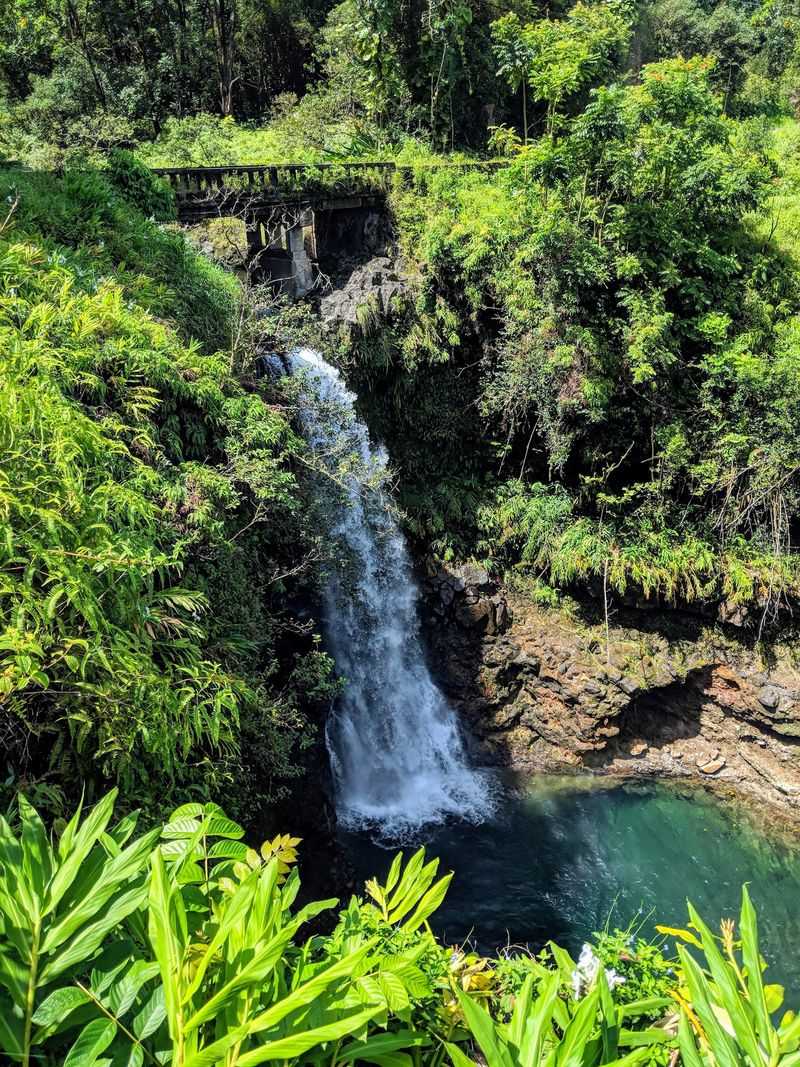
Most waterfalls make you look up, but this one pours right under your feet. Stand on the ocean side of the bridge, and the water plunges below you.
It sits about 175 yards past mile marker 25 on the Hāna Highway. Slow down near the bridge, or it’s easy to miss.
Makapipi Stream flows across a lava streambed before dropping into a blue pool. That contrast between dark rock and bright water steals the show.
The flow is seasonal, so dry months can shrink it to a trickle. Rainy stretches bring the strongest cascade.
Park only where it’s legal, and never block the road. Watch for passing cars while you peek over the edge.
Upper Hanawi Falls, just past mile marker 24, makes a natural first stop. It’s almost always flowing, which helps if Makapipi runs low.
Together, the two falls give you a quick double feature on this stretch of Maui. Neither one requires more than a few steps from the road.
Address: Hana Highway, near Mile Marker 25, Hana, HI 96713.
10. ʻAkaka Falls
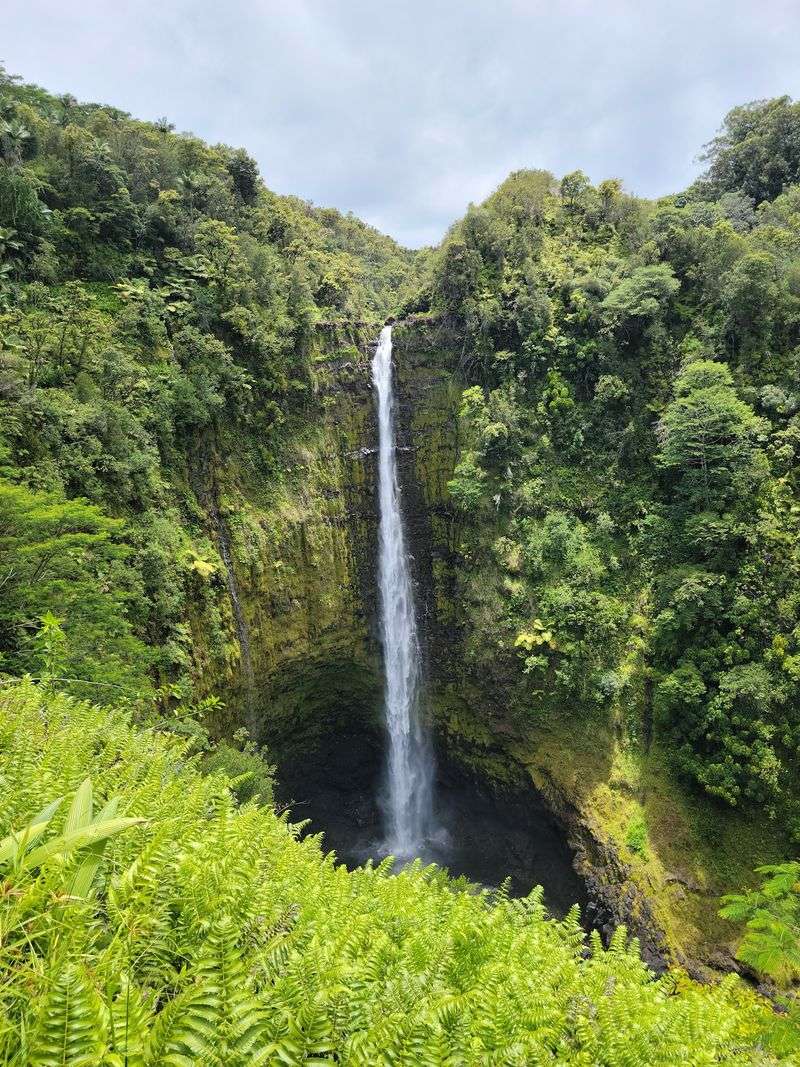
Save the tallest drop for last, because this one free-falls 442 feet. The water plunges into a gorge carved by the stream itself.
A paved 0.4-mile trail offers waterfall viewpoints, but part of the loop remains closed due to fallen trees following September 2026 storms.
It includes several flights of stairs, so strollers and wheelchairs won’t work.
Along the way, you’ll also spot Kahuna Falls, which drops about 100 feet. Two waterfalls on one short loop is a pretty good deal.
Following the late September 2026 storms, the right side of the ʻAkaka Falls trail remains closed because of fallen trees. Check the state parks notices before you go.
The water and comfort station has reopened. Non-residents pay a parking fee, and it’s credit card only.
Cell service is limited at the park. Pre-paying for parking through ParkMobile can save a headache.
The park sits at the end of Akaka Falls Road, about 3.6 miles from Honomu. It lies north of Hilo along the Hamakua Coast.
It’s a fitting finish for a Hawaii waterfall list. Go chase that mist before the year wraps up.
Address: End of Akaka Falls Road (Highway 220), Honomu, HI 96728.