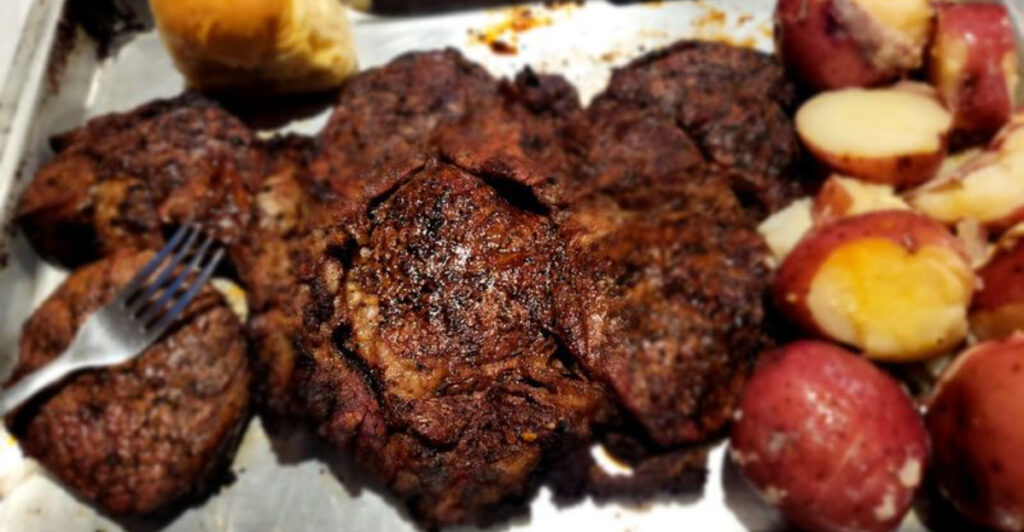
In Texas, stake is a serious business.
So if a local points you to a steakhouse, don’t ask questions. Just put the address into your maps and follow the directions.
The maps will probably lead you to this rustic steakhouse that started as a general store decades ago.
What you will find there is a hand-cut ribeye, a side of cheesy mashed potatoes, and a dining room that fills up every Friday and Saturday with people who drove a very intentional distance to be there.
Plan your visit for “medium” happiness, “well-done” vibes.
A General Store That Became A Steakhouse
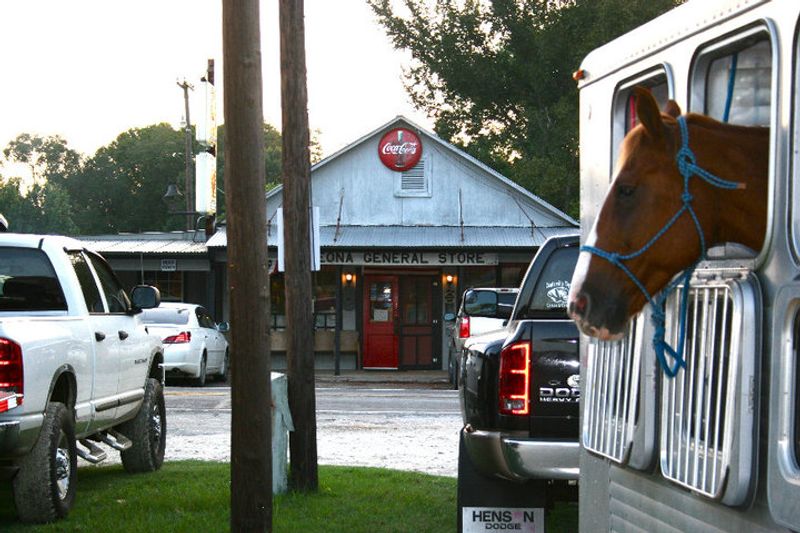
One cold drink stop changed the future of this old Texas store.
The building spent decades serving everyday basics after opening as a general store in 1921. Their identity change happened when Jerry and Cynthia House bought it in 1997.
That shift mattered because the House family had roots in Leona that reached back to the 1870s, giving the purchase real local history instead of a novelty angle.
At first, the restaurant side stayed modest. Hamburgers went out to family and friends.
The operation tested what the building could support without losing its original character.
Then the kitchen narrowed its attention to steak, and that single decision gave the business a sharper purpose.
You can trace the restaurant’s reputation to that moment of focus. A former general store already carried the bones of rural Texas life, so the steakhouse did not need extra theatrics to explain itself.
It only needed a clear specialty and steady execution.
That background changes the way you read the menu. The story here is not about reinvention for trend’s sake.
It is about an old building, a family history, and one practical choice that turned a roadside stop into a place people seek out for dinner with serious intent.
A Small Leon County Building Became A Purposeful Dining Stop
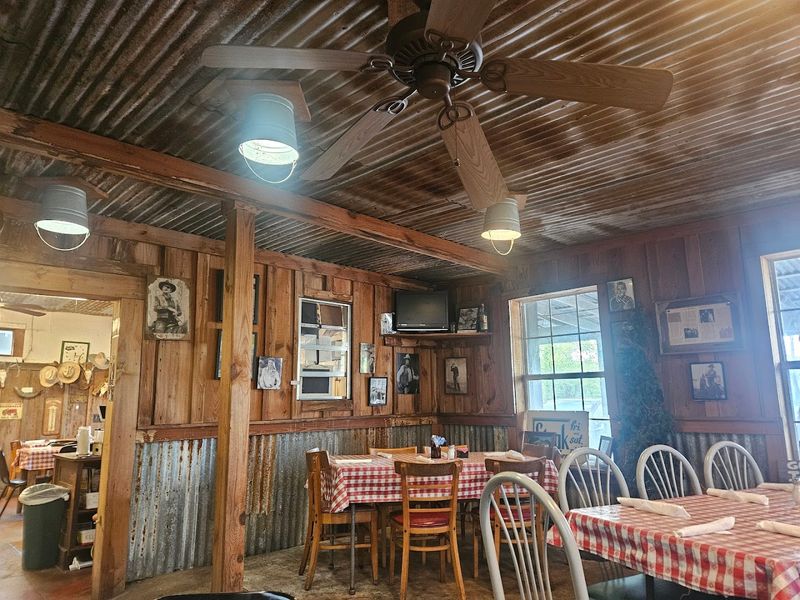
Some restaurants depend on convenience, but this one asks you to choose it on purpose.
Leona sits in Leon County between Houston and Dallas near US Highway 75. People don’t stumble upon this location and that shapes the whole experience.
They head there for a meal with intention.
The building at 136 Leona Blvd N, Leona, TX 75850 keeps the outline of a working general store, which gives it that rustic feeling.
You get weathered wood, straightforward construction, and a structure that tells you exactly what part of Texas you are in.
Nothing about the exterior tries to distract from the reason people stop.
That directness gives the place an unusual kind of identity. It does not depend on heavy design, oversized menus, or roadside gimmicks.
The destination comes from the building’s old practical frame meeting a very narrow food focus.
If you pay attention to restaurant geography, this address explains plenty.
Small-town dining often gains power when a place knows exactly what trip it is asking from you.
Here, the road, the old store shell, and the specialized menu all point in the same direction, which makes the whole operation easier to understand before the first plate lands.
The Hand-Cut Ribeye Built The Name One Steak At A Time
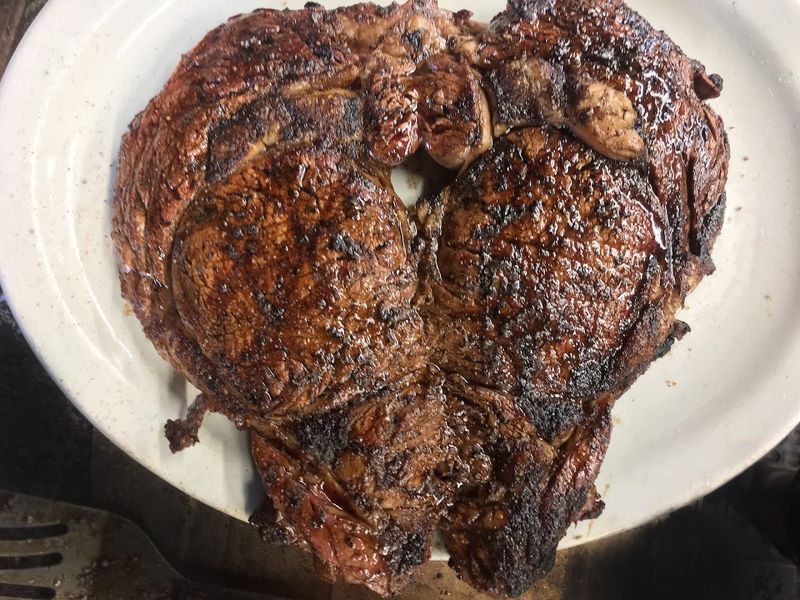
The menu quickly makes it obvious that the ribeye does the heavy lifting here.
This steakhouse built its name around hand-cut ribeye, a choice that says more than a long list of options ever could.
When a kitchen centers one cut so clearly, you know where its attention goes.
That focus pays off because ribeye rewards precision. The cut carries enough marbling to handle high heat, hold flavor, and deliver the beefy richness people chase when they make a trip for steak.
A hand-cut approach also signals direct control over portioning and preparation, which suits a place built on repetition and consistency.
You can connect the popularity of the restaurant to that one decision.
Over the years, the menu added smoked chicken and grilled pork ribeye, but the hand-cut ribeye stayed at the center of the story. It remains the plate most closely tied to the restaurant’s identity.
That narrow menu tells you how the kitchen thinks. It prefers depth over variety and trusts one signature item to carry the reputation.
If you like restaurants that stop chasing trends and start mastering a single core dish, this is the paragraph where your dinner plans quietly change.
The House Rub Turns The Signature Steak Into A Repeatable Flavor
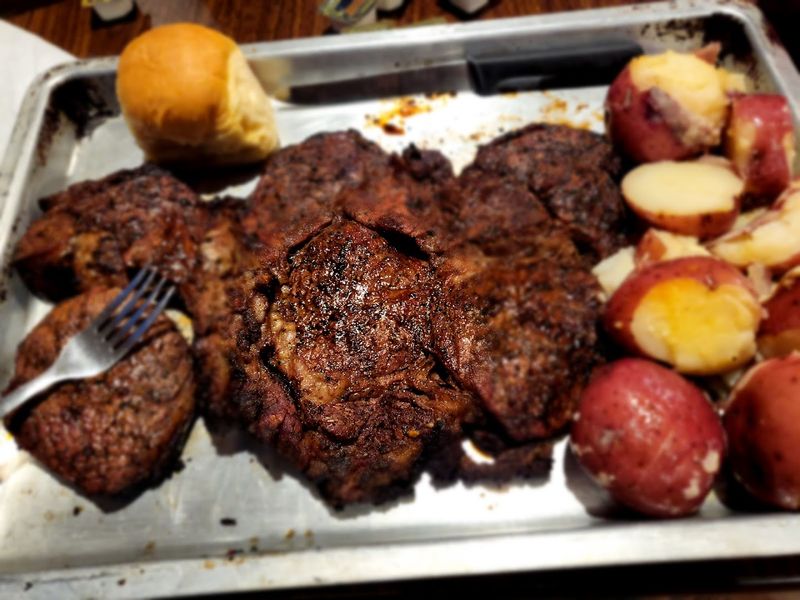
Seasoning often separates a solid steak from a memorable one.
Here, the defining layer comes from the House Rub. The blend is used on the grill’s signature steaks and one of the clearest clues to how the restaurant protects its flavor identity.
A place does not put its name on a rub unless that blend matters every single time the meat hits the heat.
That detail says plenty about the kitchen’s priorities. Ribeye already brings rich beef flavor, so the seasoning must support that richness without burying it under salt or heat.
The balance has to sharpen the crust, carry through the char, and still let the cut speak for itself.
For you, that makes the meal easier to read.
The taste does not rely on a rotating trick or a one-night flourish. It comes from a repeatable formula that pairs with the same steak focus described across the menu.
Restaurants earn trust when their signature flavor has a clear source. This one does.
The House Rub gives the steak a recognizable identity. Memorable food usually starts with a method you can describe, not a mystery you cannot pin down once the last bite disappears from the plate.
Steak Dinners Add Rolls Salad And Cheesy Mashed Potatoes To The Main Plate
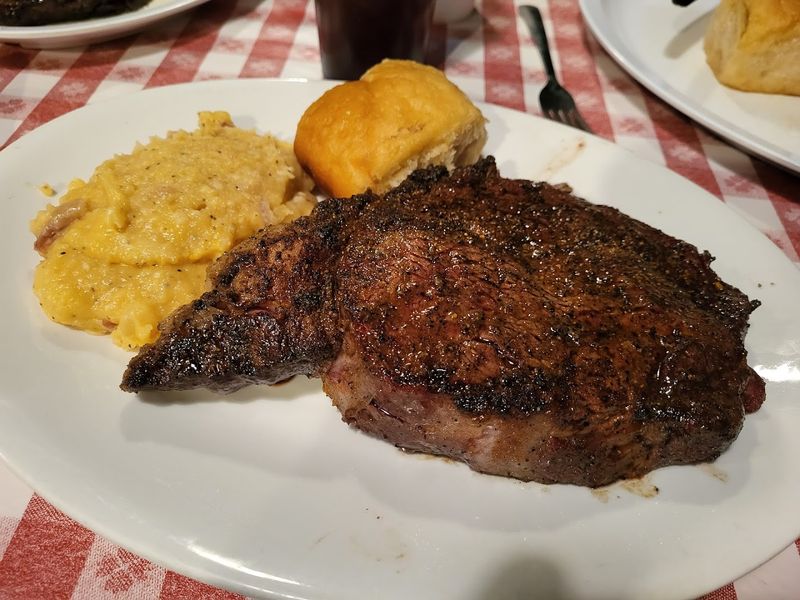
A steak dinner earns its reputation through the full plate, not just the center cut.
At Leona’s, the ribeye arrives with salad, homemade rolls, and cheesy mashed potatoes.
Those sides reveal a lot about the restaurant’s approach to supper. The meal sticks with classic steakhouse support dishes that make sense in a rural Texas setting.
The salad gives the plate contrast before the heavier elements take over. Homemade rolls bring softness and a fresh-baked note that belongs beside grilled beef, not under it.
Then the cheesy mashed potatoes add the rich, comforting finish that a serious steak dinner usually demands.
This combination works because each side plays a defined role. None of them tries to compete with the ribeye, yet none of them reads as filler either.
The structure of the plate keeps the steak in command while still delivering the kind of complete meal people expect when they drive out for dinner.
You can judge a steakhouse by how carefully it pairs its staples. A strong side lineup tells you the kitchen understands pace, texture, and appetite.
By the time the rolls disappear and the potatoes cool just enough for another bite, the logic of the whole plate becomes very hard to argue with.
The Kitchen Can Narrow Its Focus Without Repeating Itself
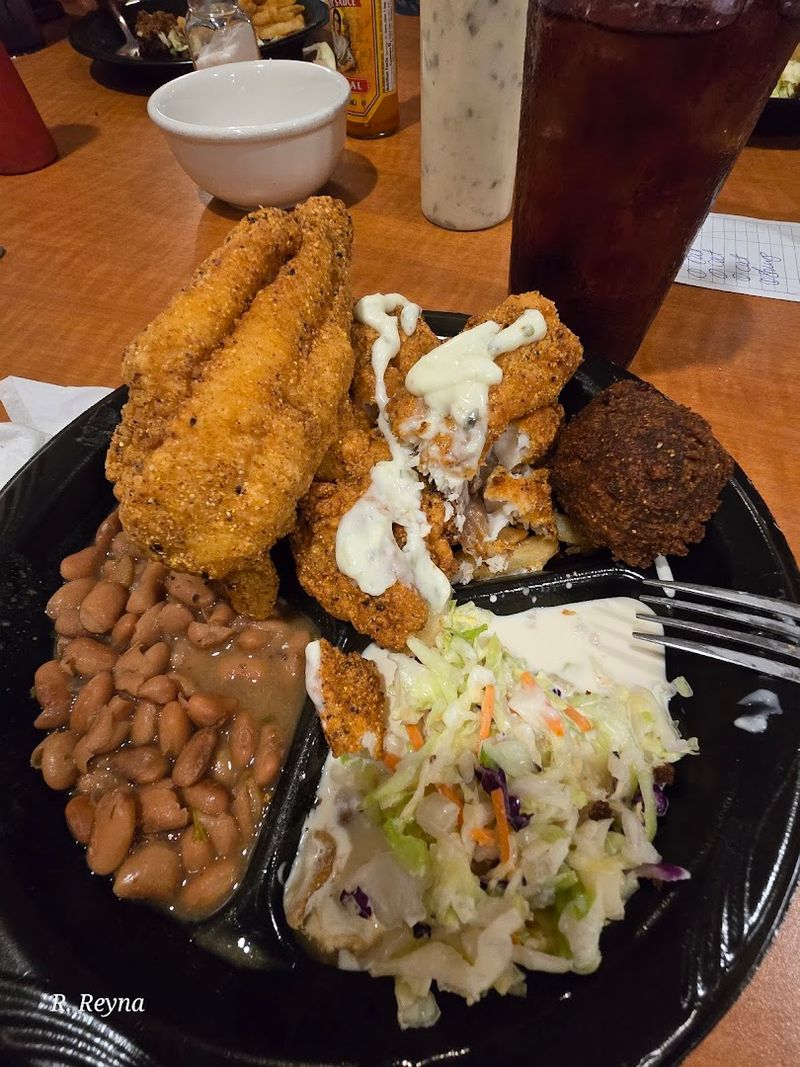
Even though steak may lead the conversation, catfish holds its own with a full plate built on tradition.
The Thursday catfish dinner centers on four pieces of fried catfish served with coleslaw, beans, French fries, and a hushpuppy.
That lineup places the restaurant inside a very familiar Southern and East Texas food language.
Catfish demands a different kind of discipline than ribeye. The breading needs a crisp finish, the fish needs moisture, and the sides need to support a fried main without dragging the meal down.
Coleslaw brings sharp contrast, beans add body, fries handle the comfort factor, and the hushpuppy completes the regional picture.
This matters because it shows the kitchen can specialize without becoming one-note.
A restaurant known for steak can lose direction when it adds second choices, but catfish fits naturally here because it follows the same practical rule: choose a recognizable dish and execute it with clarity.
If steak gets all the headlines, catfish supplies the evidence that the menu’s discipline runs deeper than one item.
You learn something useful from that plate. The kitchen understands regional standards well enough to serve beef with confidence and fish with equal seriousness.
It raises the stakes for dessert in the best possible way.
Finish The Meal The Texas Way
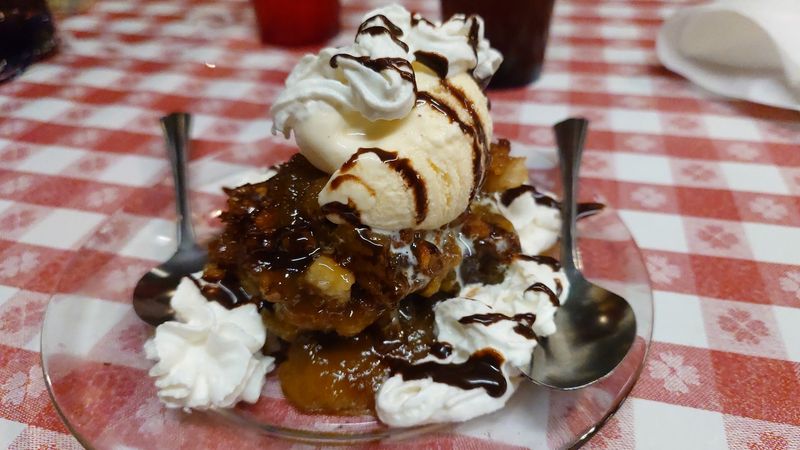
Dessert closes the argument, and this menu keeps that final round rooted in Southern comfort.
Cobblers come in peach, blackberry, and pecan, joined by banana pudding, chocolate brownie, and bread pudding.
That list tells you the kitchen favors recognizable regional desserts over novelty.
The cobbler carries the strongest Texas signal. Peach and blackberry fit naturally into the state’s fruit dessert tradition.
The pecan points straight to a staple ingredient with deep local identity.
Each one suits a meal built on steak because cobbler brings warmth, sweetness, and a straightforward finish.
Banana pudding and bread pudding push the menu deeper into comfort territory with softer textures and familiar flavors after a savory main.
Meanwhile, the brownie gives a simpler option for anyone who wants chocolate without extra ceremony. The selection stays short, which helps it stay coherent.
A dessert list like this does important work. It shows the restaurant understands how to land the meal without changing its voice at the last minute.
After beef, potatoes, and rolls, the right ending should taste grounded, generous, and familiar enough to make you study the table for one more spoonful before calling it a night.