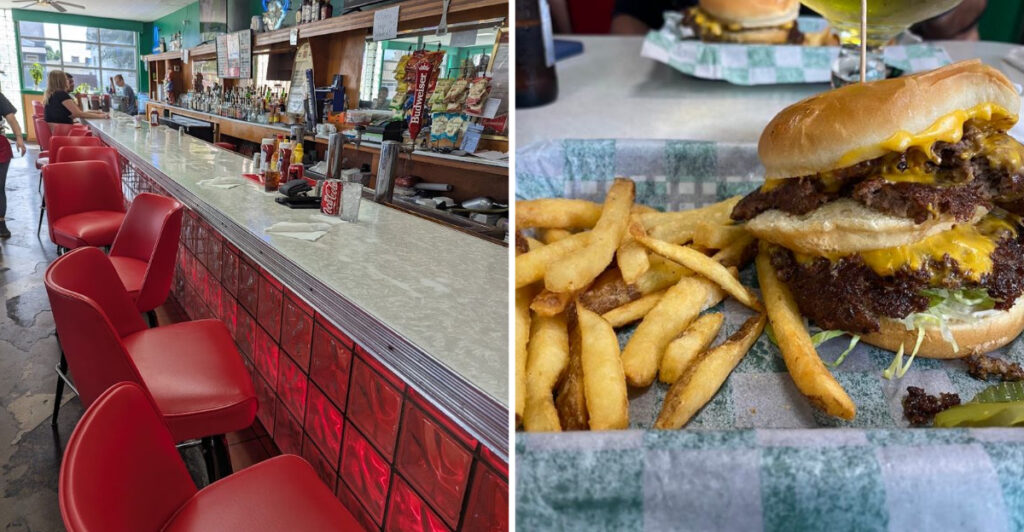
Some burgers arrive neatly stacked and prepared to cooperate. This one shows up looking like the griddle ignored every reasonable height restriction.
Two crisp-edged patties and an extra slice of bun create a tower that begins testing your grip before the first bite.
The edges crackle, and the entire stack slowly leans toward the plate like lunch has developed its own escape plan.
Indiana has spent generations learning how to handle it. Cash comes out, sleeves go up, and onion rings are ordered with confidence that may disappear once the burger arrives.
The room needs no elaborate theme or oversized menu because the griddle has already made its case.
Ready to tackle the Indiana double cheeseburger that turns a simple lunch into a two-handed assignment?
A Railroad Lunch Counter Started The Story In 1918
Long before smash burgers filled social feeds, Louis Stamatkin was pressing lunch onto a hot cooking surface for workers on Indianapolis’ west side.
The Macedonian immigrant opened Belmont Lunch on January 25, 1918. Nearby factories and rail operations supplied a steady crowd of employees who needed a filling meal before returning to demanding shifts.
The original idea was practical rather than glamorous. Feed the neighborhood well, keep the food affordable, and give working customers a place where lunch did not require ceremony.
That direct approach still shapes the restaurant. Burgers, sandwiches, chili, and fried sides make sense in a room built around appetite instead of presentation. You are not handed a speech about the concept. The meal explains it.
The past is present, certainly. It just happens to arrive with cheese melting down both sides.
North Belmont Avenue Keeps The Tradition In Place
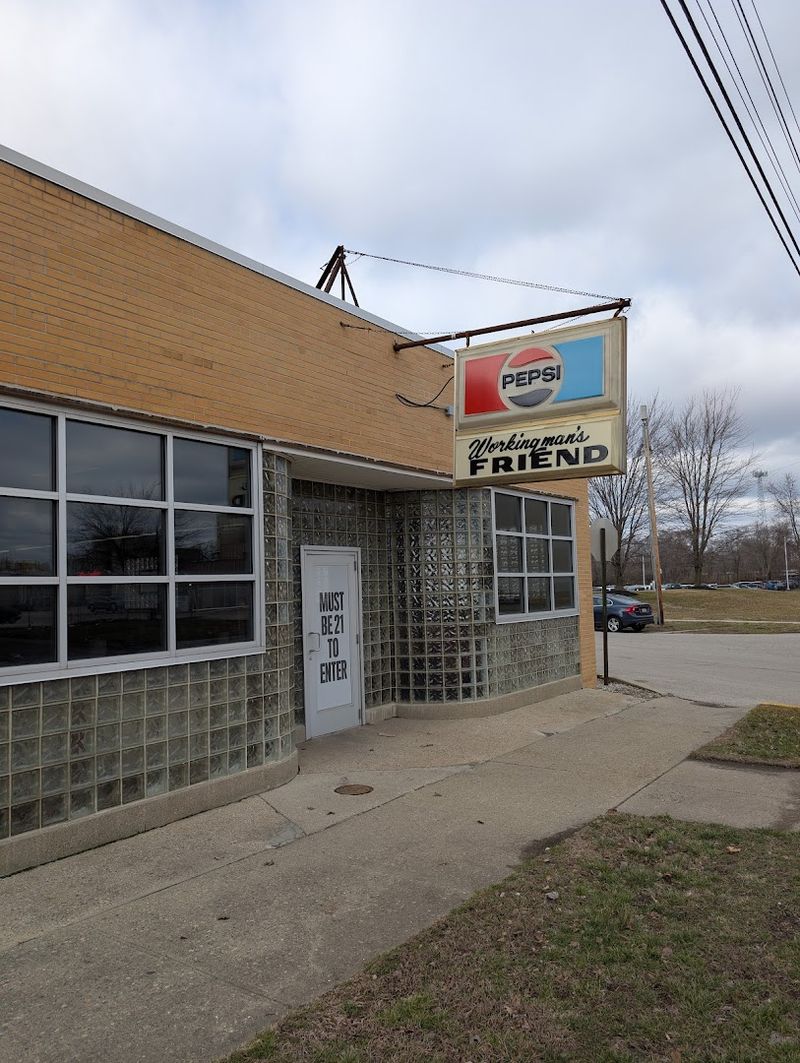
A wall of glass blocks catches the eye before the burger has any chance to compete.
The Workingman’s Friend stands at 234 North Belmont Avenue, Indianapolis, Indiana, on the city’s near west side. Its setting connects the restaurant to the industrial neighborhood that first supplied its customers rather than relocating the story into a newer commercial district.
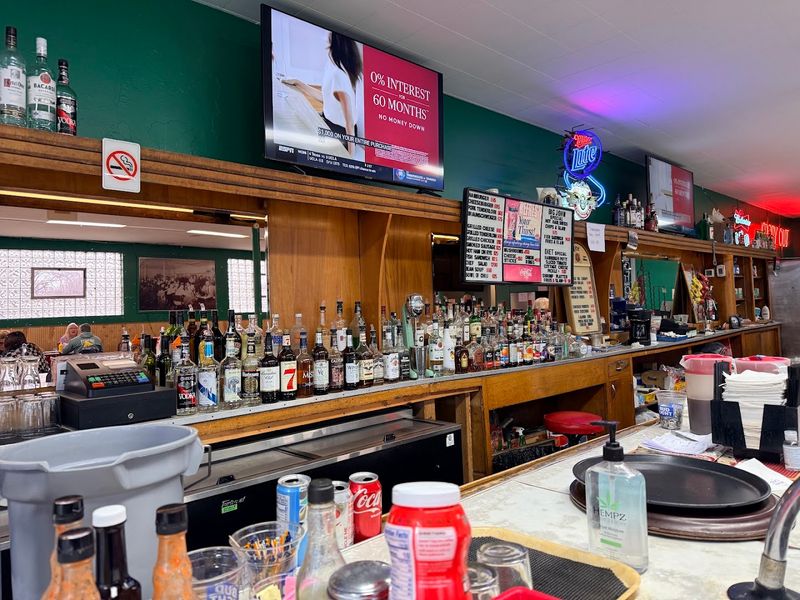
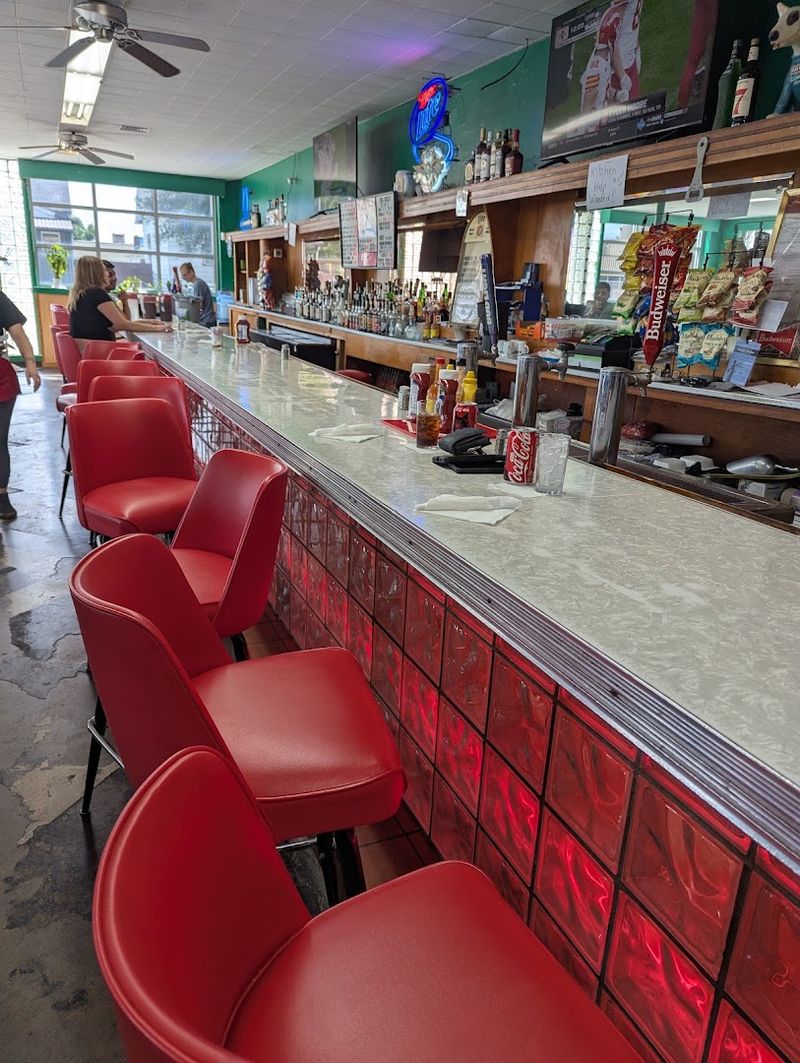
Inside, the long counter and closely arranged tables keep the room connected. Regulars can spot familiar faces, newcomers can watch plates travel from the kitchen, and nobody is several rooms away from the action.
Do not expect a carefully staged dining room built for lingering photo sessions. Find a seat, study the concise menu, and pay attention when the first thin patty hits the flat-top.
The address has watched Indianapolis change around it. The burger, meanwhile, continues reporting for the lunch shift.
An Open Tab Created A Name No Marketing Team Could Invent
The restaurant’s name began as a favor, not a branding exercise.
Many early customers were railroad and factory workers who did not always have money in hand before payday. Stamatkin allowed them to keep tabs and settle what they owed later.
That trust earned him a reputation as the workingman’s friend. The nickname eventually replaced Belmont Lunch and gave the restaurant a title rooted in the relationship between one owner and the people he fed.
A century later, the story gives the sign more weight. It represents a business that understood its customers’ circumstances and chose patience over a quick refusal.
You can invent a clever name in an afternoon. Earning one from hungry railroad workers takes considerably longer.
This one arrived with unpaid tabs, returned trust, and enough burgers to keep the story moving.
The Stamatkin Family Never Handed The Story To Strangers
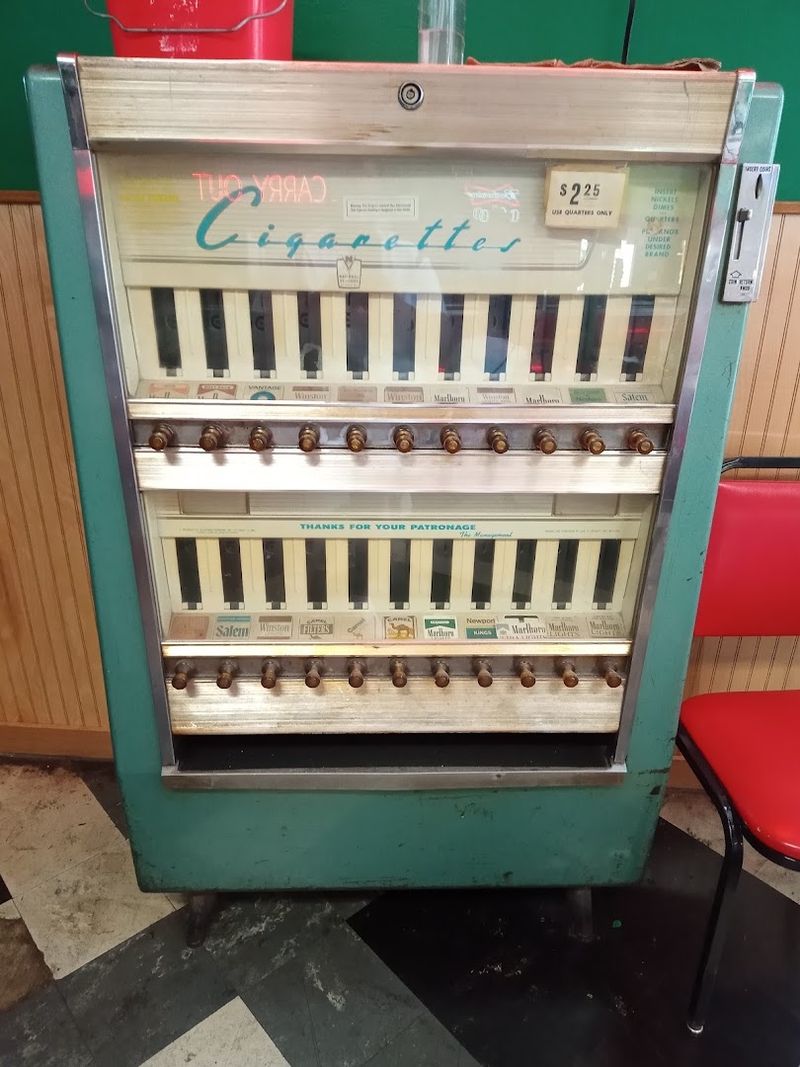
Restaurants often describe themselves as family businesses. Here, the family tree has been working behind the counter for generations.
After Louis Stamatkin established the lunchroom, his sons continued the operation. His granddaughter Becky Stamatkin later joined the business as a teenager and became its third-generation owner.
That continuity matters because the restaurant’s character lives in small decisions. A new operator could replace the grill, expand the menu, brighten the room, or reshape the burger into something easier to photograph.
The Stamatkin family kept the recognizable pieces in place.
Becky has described the vintage grill with more credit than herself when discussing the burger’s reputation. That answer says plenty about the restaurant’s priorities. The equipment, technique, and daily repetition get the attention.
Family ownership can sound sentimental until you taste what consistency does to a thin beef patty.
At that point, tradition stops being a slogan and becomes lunch.
A Vintage Flat-Top Builds The Crispy Edge
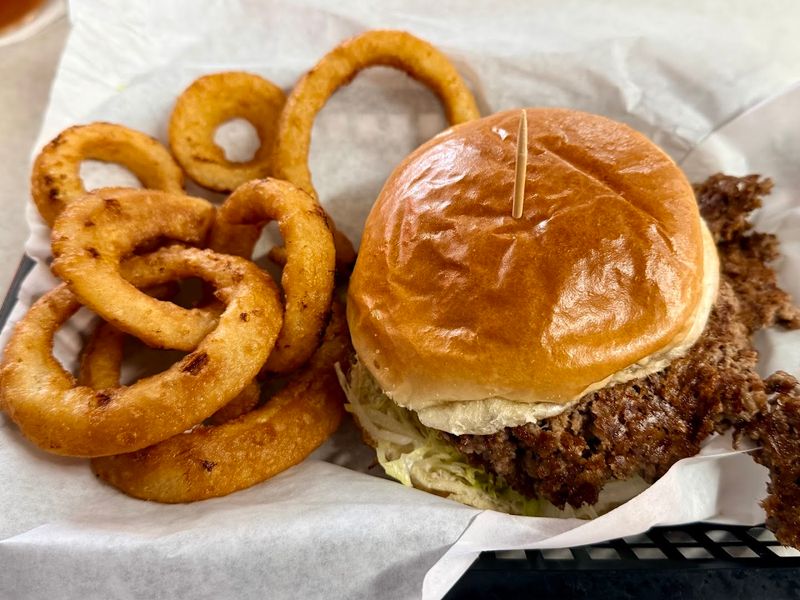
The most valuable object in the kitchen may be a broad piece of metal that has been working since 1960.
The Workingman’s Friend credits its vintage flat-top with helping create the burger’s distinctive surface. Thin patties meet intense heat and are pressed firmly enough to spread outward, developing dark, lacy edges while the centers retain their beefy character.
That edge changes the entire bite. A thick pub burger offers one kind of juiciness, but this burger chases contrast.
Crisp fragments extend beyond the softer center, cheese settles into the uneven surface, and every layer provides another chance for the griddle to make itself known.
Watch the burger closely when it arrives. The patties are not perfect circles, and the irregular edges are part of the prize. Those fragile sections can break away before the first full bite, which turns plate cleanup into an early bonus course.
Modern kitchens can measure temperatures with extraordinary precision. This one has six decades of muscle memory.
The grill does not need an upgrade. It needs somebody to keep ordering doubles.
The Double Cheeseburger Adds A Bun To The Middle
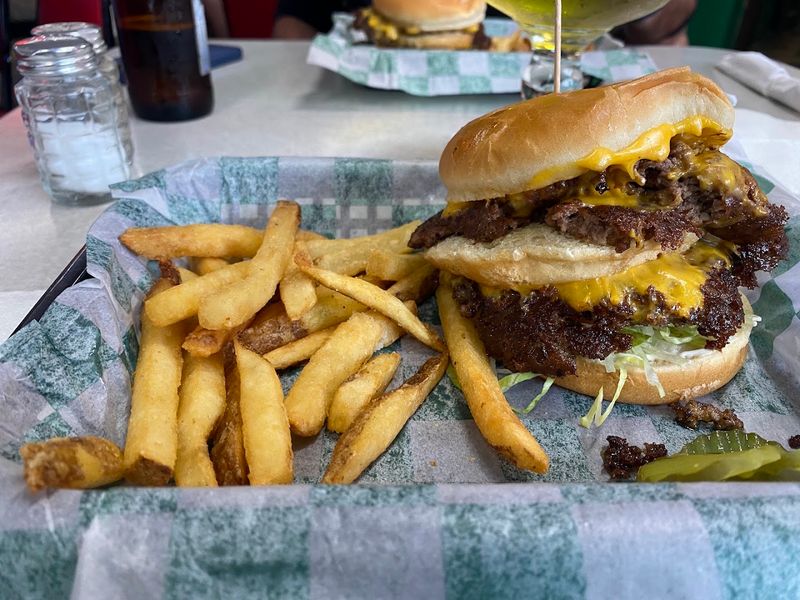
Here comes the architectural question: why stop at two pieces of bread when a third can join the center?
The famous double uses two flattened patties with cheese on both. A middle section of bun separates the layers, giving the stack a shape familiar to anyone who has studied a certain nationally known double-decker burger.
Shredded iceberg lettuce and mayonnaise bring coolness against the hot beef and melted cheese. Tomato, onion, pickles, mustard, and ketchup can join according to preference, but first-timers should avoid burying the griddle flavor under every condiment at once.
The center bun is not merely structural. It catches beef juices and melted cheese from both directions, becoming softer as the burger settles. By the middle of lunch, it has absorbed enough flavor to justify its place in the stack.
Use two hands from the beginning. Trying to prove that one hand is sufficient usually ends with lettuce on the table and cheese attached to an unexpected finger.
The burger may be thin by patty standards, but the full construction has ambitions.
It does not tower for attention. It spreads, crackles, and wins by the bite.
Onion Rings And Fried Zucchini Compete For Plate Space
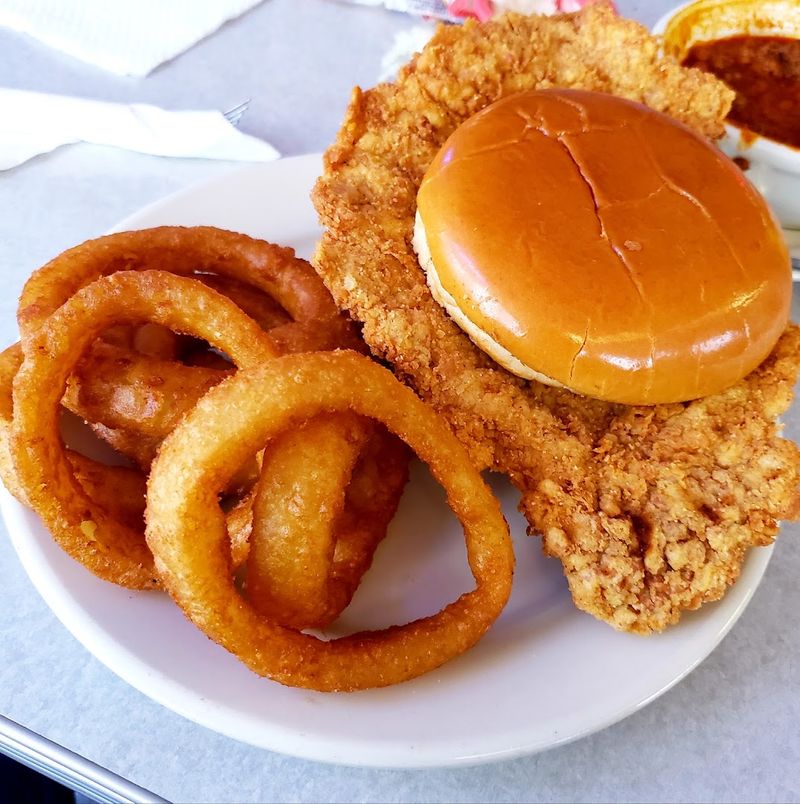
The side order presents a problem because the obvious answer is onion rings, but fried zucchini refuses to leave quietly.
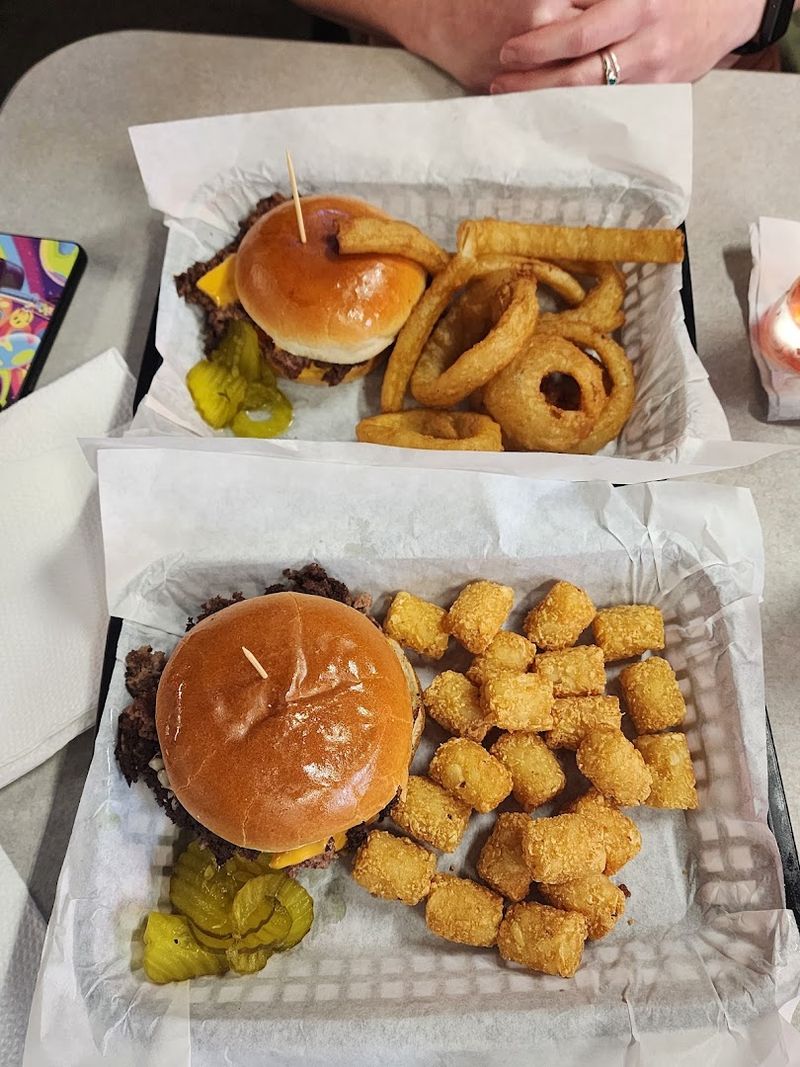
The onion rings have enough stature to appear beside the double in most conversations about the restaurant. Their crisp coating and tender onion offer a natural partner for the salty beef and cheese.
French fries provide the familiar route, especially for anyone who wants a handful between burger bites without introducing another strong flavor.
Fried mushrooms and tater tots may also appear among current favorites, widening the decision beyond the original draft’s shorter list.
Then comes the fried zucchini with ranch. Axios highlighted it in 2026 alongside the burgers, fries, and onion rings, showing that this vegetable is far from an overlooked corner of the menu.
Split two sides when dining with a companion. The burger already carries plenty of bread, beef, and cheese, so sharing gives the table contrast without turning lunch into a competitive eating event.
Take one onion ring early, before the burger occupies both hands. Save the zucchini for the midpoint, when a different crunch can reset the meal.
The double cheeseburger steals most orders. The sides spend lunch plotting a respectable comeback.
Cash And An Adult Entry Rule Keep The Routine Specific
A successful visit begins before you reach the door.
The restaurant operates on a cash-only basis and limits entry to guests who are at least twenty-one. Those rules are still part of the current experience, so arriving prepared prevents the least exciting kind of lunch story.
The service window centers on lunch rather than a full day of dining. That narrower schedule helps explain why the room can fill quickly and why regulars treat timing as part of the ritual.
Check the current schedule before crossing town, carry enough cash for the meal and sides, and avoid assuming a quiet exterior means an empty dining room. The line can build quickly when local workers, longtime customers, and burger travelers arrive at once.
Once seated, keep the order simple. A double cheeseburger, one or two sides for the table, and a little patience will reveal why national publications and local diners keep pointing toward the same grill.
Awards can bring someone through the door once. Crispy edges are responsible for the return trip.
Bring cash, bring your appetite, and leave any plan for a delicate lunch at home. The Workingman’s Friend has been serving Indianapolis since 1918, and the double cheeseburger still knows how to take over the table.