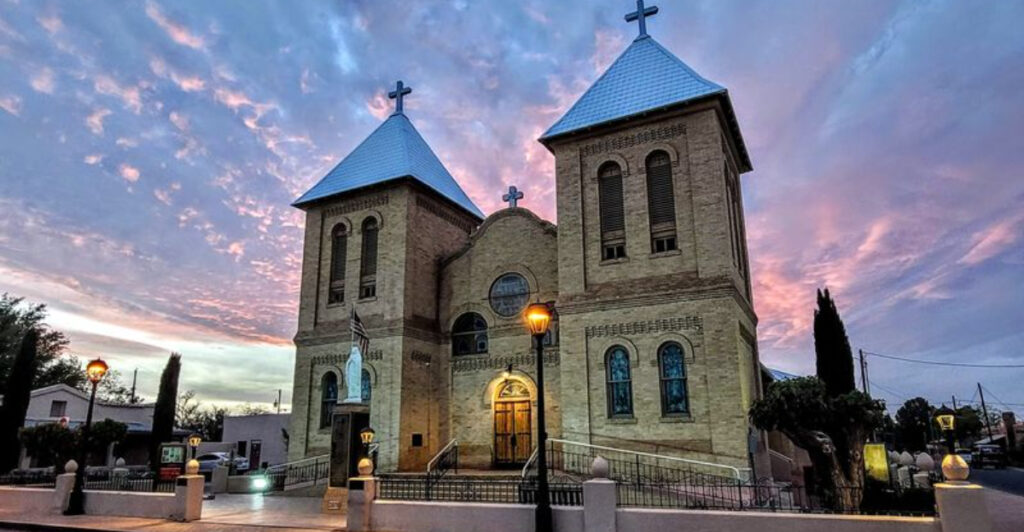
This historic desert town catches you off guard in the best way. You arrive thinking you will take a quick look around the plaza, maybe snap a photo, then move on.
Good luck with that. The adobe walls pull your eyes in.
Red chile ristras brighten the doorways. The old church anchors the scene like it has been waiting all morning.
This New Mexico spot feels cinematic without trying too hard. Nothing begs for attention.
It just keeps giving you reasons to pause. A painted door catches you.
A quiet bench somehow does too. I found myself walking slower here, partly because the streets invite it and partly because there is always another detail worth catching.
There is history and that small-town feeling people keep chasing, all wrapped around one unforgettable plaza under the desert sun, still feeling lived in and worth the pause long after you leave.
Adobe Streets With Timeless Charm
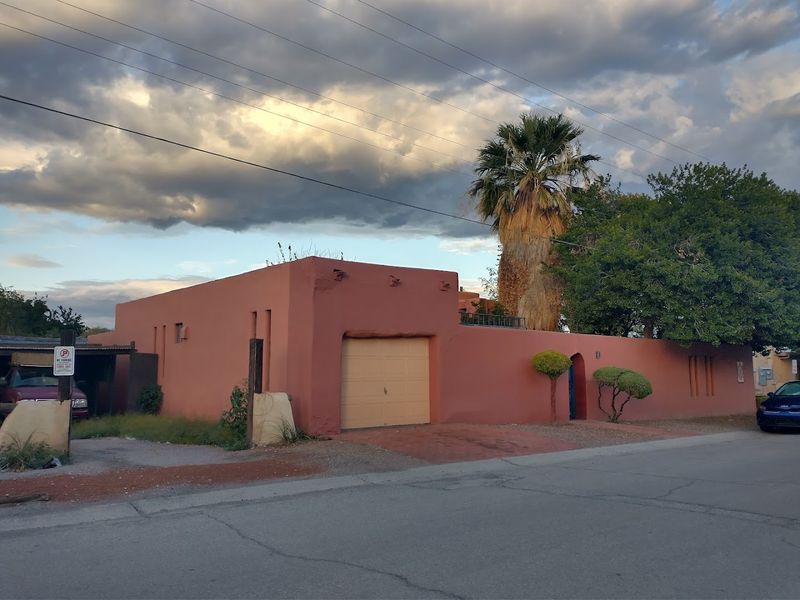
Few things stop you in your tracks the way a centuries-old adobe street can.
The walls here are thick, sun-warmed, and the color of desert sand baked for generations.
Every building seems to lean in slightly, as if the whole street is sharing a quiet secret with anyone willing to slow down and listen.
I walked these blocks on a Tuesday morning when the crowds had not yet arrived, and the silence felt like a gift.
The texture of the walls alone is worth studying, rough and layered, with patches that tell you repairs have been made with care rather than speed.
Small wooden doors painted in turquoise and deep red break up the sandy palette in the most satisfying way.
Historic preservation rules here are strict, so nothing feels out of place or jarring to the eye.
You get the sense that time moves differently on these streets, slower, softer, and more deliberate.
Locals move through the lanes with the easy confidence of people who know exactly where they belong.
Old Mesilla, located at the historic plaza in Mesilla, New Mexico, earns every bit of its reputation for timeless adobe beauty.
A Plaza Made For Wandering
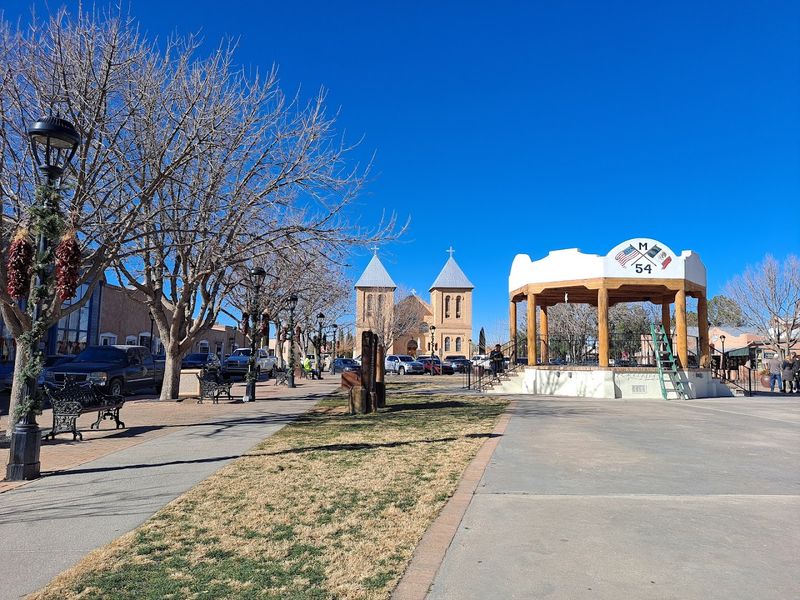
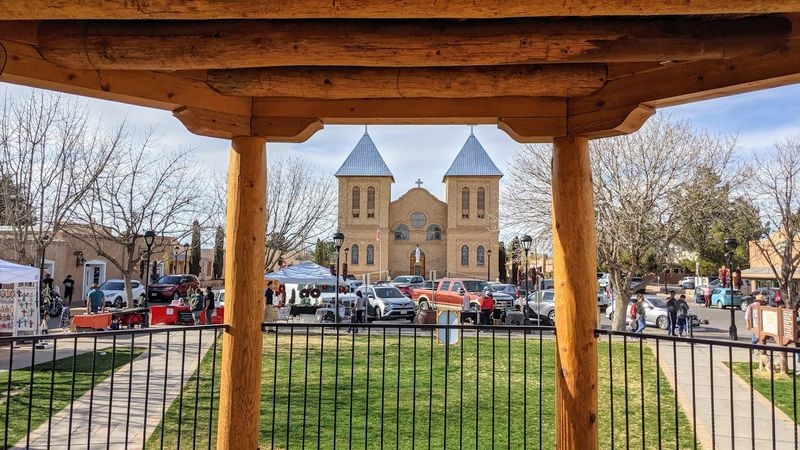
The Mesilla Plaza is a National Historic Landmark, and the moment you step onto it, you understand why.
It is one of those public spaces that manages to feel both grand and completely approachable at the same time.
Shaded benches invite you to sit down, and the gentle sound of nearby conversation drifts past without demanding your attention.
I spent nearly two hours just wandering the perimeter, stopping to look at storefronts and then circling back to the center green for no reason other than it felt good to be there.
The plaza has served as the town’s social, spiritual, and economic heart since the 19th century, and that layered history is still palpable today.
Community events, concerts, and seasonal celebrations fill this space throughout the year, keeping it alive rather than preserved like a museum piece.
Vendors sometimes set up near the edges, offering handmade crafts and regional food that smells better than anything you planned to eat for lunch.
The proportions of the plaza feel human-scaled, intimate enough to feel personal.
Every corner of this square offers a slightly different view of the surrounding buildings and the church beyond.
Sunlit Corners And Old Walls
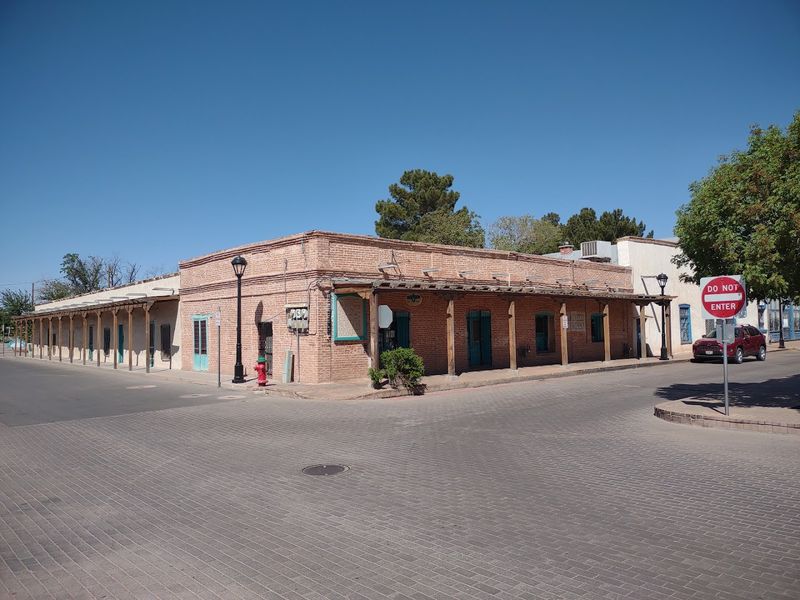
Late afternoon light in this town does something genuinely special to the old walls.
The adobe catches the sun at a low angle and turns the entire streetscape into a warm, amber-toned painting that no filter could improve.
I found myself stopping at corners I had already passed just to see how the shadows had shifted in the last hour.
The thick walls create deep shadow lines that photographers and casual walkers alike find irresistible.
One particular corner near the plaza stopped me cold because the light had turned a stretch of old brick into something that looked almost edible, warm and layered and richly textured.
Buildings here have been standing since the 1800s, and their surfaces carry the honest marks of that age.
Patches of plaster, hand-set stone, and weathered wood trim all show up in the same wall sometimes, creating a kind of accidental collage.
The town’s strict architectural guidelines mean that nothing modern intrudes on these compositions.
Visitors who arrive around four in the afternoon tend to linger longer than they planned because the light simply will not let them leave.
Sunlit corners here are worth every extra minute you carve out of your schedule.
Historic Doors And Desert Light
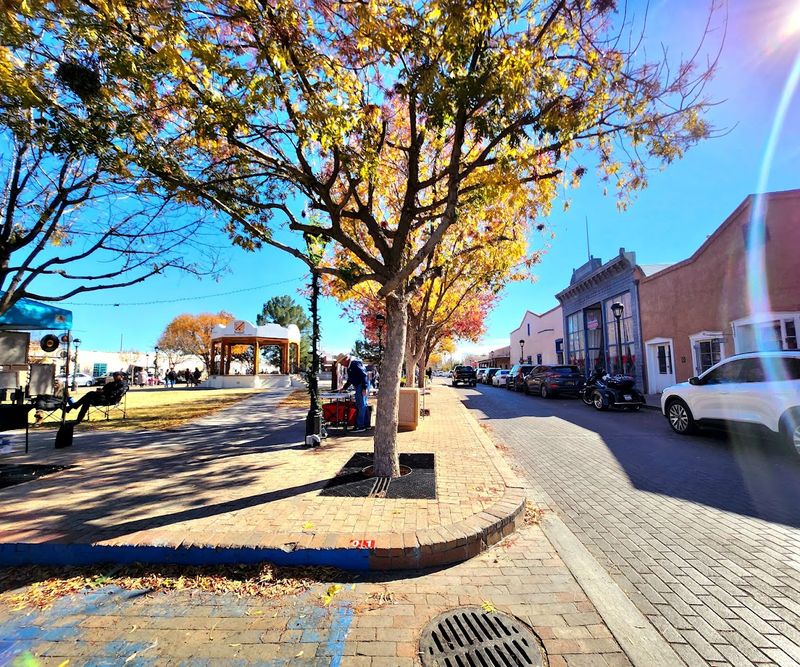
Doors in Mesilla are a whole story on their own.
Painted in deep turquoise, terracotta red, and sun-faded sage green, they pop against the sandy adobe walls in a way that makes every block feel like a curated gallery.
Some of these doors are clearly original, with iron hardware and hand-carved details that no modern reproduction could convincingly copy.
I started photographing them early on my first morning and had a small collection before I even reached the plaza.
The desert light that floods the town for most of the day makes every painted surface glow with unusual intensity.
There is a reason this part of New Mexico has long attracted painters and photographers, and standing in front of one of these old doorways, you feel it immediately.
The contrast between the rough, matte adobe and the glossy painted wood is a detail that rewards anyone who pays close attention.
Historic preservation rules protect these facades from replacement or modification, so what you see today is genuinely close to what travelers would have seen a century ago.
Each door feels like a quiet introduction to whoever or whatever waits on the other side.
Quiet Beauty Around The Square
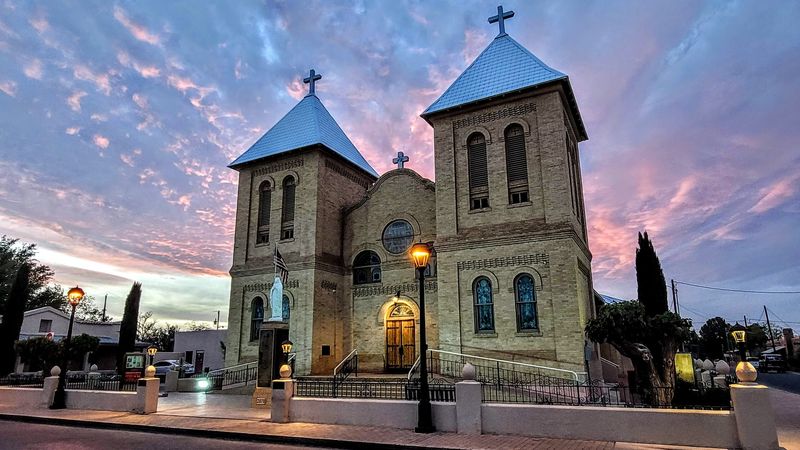
Not every beautiful place announces itself loudly, and Mesilla is proof of that.
The beauty around the central square is the quiet kind, the sort that builds slowly as you notice one detail after another without any single moment demanding your full attention.
Potted plants cluster near doorways, their terracotta containers matching the walls behind them almost perfectly.
Hand-painted signs in faded fonts hang above shop windows that have not changed their layout in decades.
I sat on a bench near the square one morning and just watched the light shift for about twenty minutes, which is not something I typically do in a new place.
The Basilica of San Albino stands at the edge of the plaza, its yellow-brick facade and distinctive twin belfries rising above the roofline with quiet authority.
Elevated to a minor basilica in 2008, it remains the spiritual anchor of the community and draws visitors who arrive for reasons that have nothing to do with tourism.
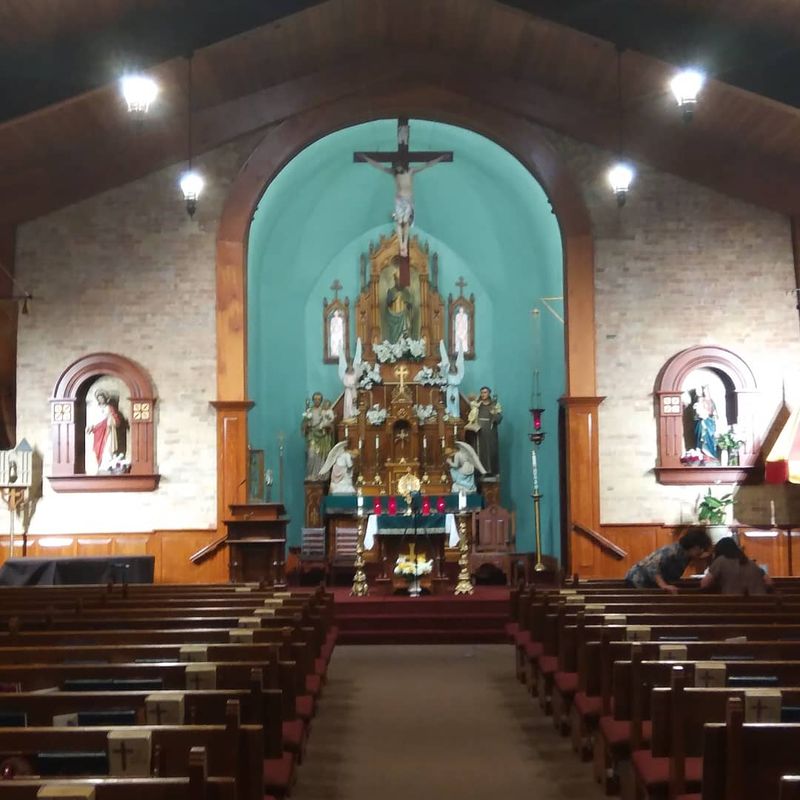
Stained-glass windows inside cast pools of colored light onto stone floors that have been worn smooth by generations of footsteps.
The square rewards patience more than any other quality a visitor can bring.
Southwestern Details Everywhere You Look
Red chile ristras hanging from doorways and portal beams are one of the first things you notice here, and they never stop being visually satisfying no matter how many times you pass them.
These arrangements of dried chile pods are a symbol of Southwestern hospitality, and in Mesilla they appear on nearly every building around the plaza.
The deep red against the sandy adobe creates a color combination that feels both bold and completely natural at the same time.
Beyond the ristras, hand-painted tiles, wrought iron window grilles, and carved wooden lintels add layer after layer of regional detail to the streetscape.
I kept finding small decorative touches I had missed on earlier passes, a painted pot here, a mosaic step there, a carved santo tucked into a wall niche.
The town’s identity is rooted in a blended heritage that draws from Indigenous, Spanish colonial, and Mexican traditions, and the visual details reflect all of that.
Nothing here feels imported or artificially placed for tourist appeal.
Every ristra, every tile, every carved beam belongs to a living tradition that the community actively maintains.
Southwestern details in Mesilla are not decoration, they are a genuine cultural language spoken fluently by every building on the block.
Artful Shops And Warm Walkways
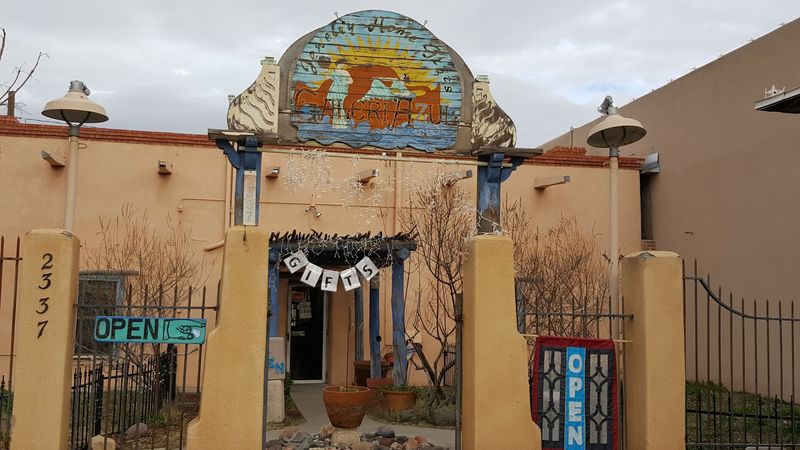
Browsing the shops around the Mesilla plaza is one of the more genuinely enjoyable retail experiences I have had anywhere.
The boutiques and galleries here are small, independently owned, and stocked with things you will not find duplicated at a mall or a chain store.
Southwestern paintings, hand-thrown pottery, woven textiles, and silver jewelry fill display cases and hang from walls in a way that feels considered rather than cluttered.
I spent a long stretch of time in one gallery talking to no one in particular and just moving slowly from piece to piece, which is exactly the pace the space seemed designed for.
The walkways connecting the shops are shaded by portal overhangs, which makes the whole experience comfortable even when the desert sun is at its most assertive.
Specialty restaurants along these same walkways serve authentic New Mexican cuisine, the kind with green and red chile that earns its heat through flavor rather than aggression.
The mix of art, food, and craft creates an atmosphere that keeps visitors moving from one doorway to the next with genuine curiosity rather than obligation.
Local artisans sometimes work near their storefronts, adding a live, unhurried energy to the walkways.
These warm, shaded paths around the plaza are where the town’s creative spirit feels most concentrated.
A Storybook Stop In The Desert
History runs deep here, and it surfaces in ways that feel more vivid than a textbook ever managed.
The Gadsden Purchase treaty was signed in Mexico City on December 30, 1853, making the Mesilla Valley central to a pivotal land deal that helped shape the American Southwest.
Billy the Kid was tried for murder here, and the building where that trial took place still stands, which is the kind of detail that makes history feel close rather than distant.
During the Civil War, Mesilla briefly served as the capital of the Confederate Territory of Arizona, adding yet another layer to an already complex past.
All of that weight sits underneath a surface that looks, on any given afternoon, like the backdrop for a cozy holiday film.
The combination of dramatic history and storybook aesthetics is what makes this place unlike anywhere else I have visited in the Southwest.
Strict preservation ordinances have kept the town’s character intact despite being part of the larger Las Cruces metropolitan area.
Seasonal events including Cinco de Mayo fiestas, mariachi concerts, and the luminaria lighting on Christmas Eve keep the community calendar full and the plaza animated.
This extraordinary small town is found at the historic Mesilla Plaza, Mesilla, New Mexico, and it earns every superlative visitors reach for.