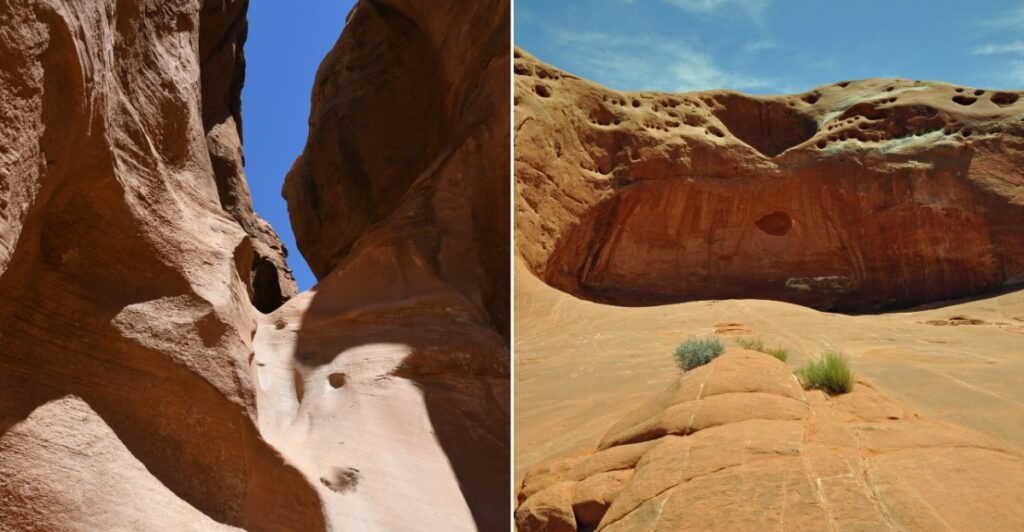
Some staircases lead upstairs. This one was carved into a cliff because travelers once needed a way through country that offered few easy options.
That alone makes the setting feel stranger than fiction. Along a remote stretch of southern Utah, the steps belong to a route shaped by wagon travel, steep rock, and the stubborn logistics of crossing Glen Canyon.
Reaching them today still demands preparation, which is part of what keeps the story from feeling like a roadside curiosity. You are not simply looking at steps in stone.
You are looking at evidence of how people solved a problem when the landscape refused to cooperate. For anyone tracing pioneer routes through Utah, this site makes the difficulty of nineteenth-century travel tangible.
Check road conditions, bring what the drive requires, and give the place more attention than a photograph. The staircase is only the visible clue to a bigger story.
A Staircase At The End Of A Long Road
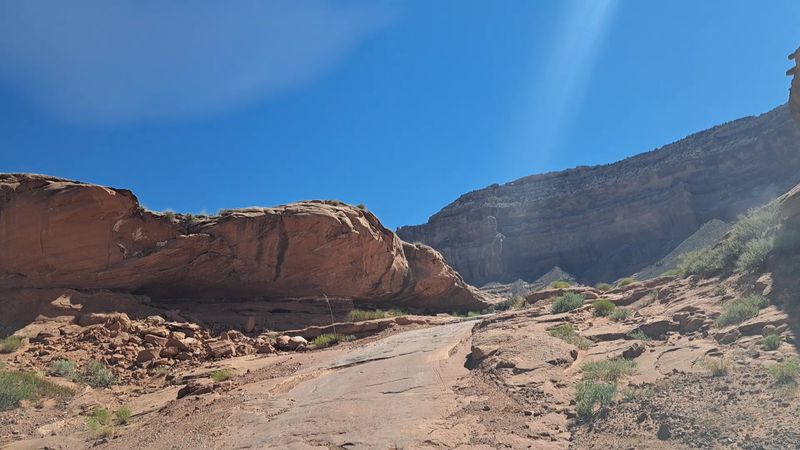
Sometimes a destination settles the question of what to do, then raises a more practical one: can your vehicle reach it? Hole-in-the-Rock Miners’ Stairs is associated with a historic passage through the sandstone at Glen Canyon, rather than a staircase in a town square.
Escalante is the useful starting point for understanding the route, not a sign that the steps are a quick stroll from town.
The name points to two parts of the story. Travelers first made the opening famous by bringing wagons through it.
Miners later worked on the route, leaving another chapter in the rock. Seeing the place puts both efforts beside the same steep landscape.
That is more interesting than a tidy monument with all its difficult parts politely removed.
In southern Utah, distance on a map can hide the time needed on an unpaved road. Treat this as a planned outing, not a spontaneous turn before dinner.
Check current access and road conditions with the National Park Service before leaving Escalante. A little preparation lets the story, rather than a rushed drive, become the reason for going.
Why Wagons Needed A Gap In The Cliff
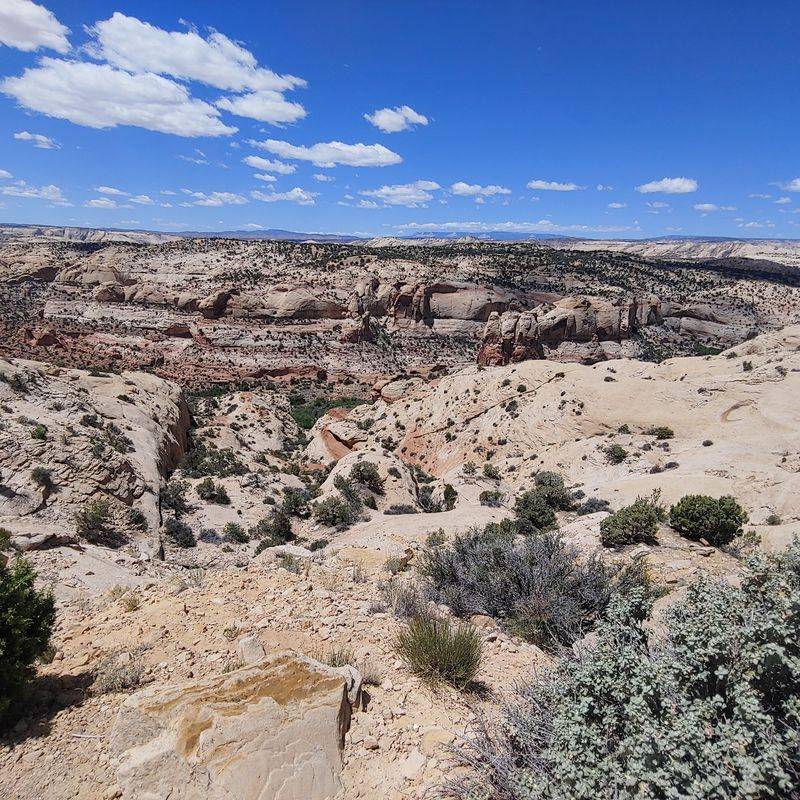
A wagon route through a cliff is not the sort of shortcut anyone would choose twice without a very good reason. In 1879, members of a Mormon settlement expedition headed toward the San Juan River country faced the problem of crossing the Colorado River and continuing toward what became Bluff.
Hole-in-the-Rock offered a gap in Glen Canyon’s western rim, but a gap was not the same thing as a road.
The travelers worked to make the descent usable for wagons and animals. The expedition passed through the opening in early 1880 after months of difficult travel and preparation.
Think about that when looking toward the cut: the challenge was not simply walking down a slope. People had to move their belongings and transportation through it, then continue their journey.
Hole-in-the-Rock Miners’ Stairs belongs to this larger story, although the miners’ steps and the original wagon work should not be treated as identical. Keeping those chapters separate makes the history clearer.
Utah has plenty of roads that make travel seem ordinary now. Here, the landscape shows why earlier travelers could not take a route for granted, and why improving one opening mattered so much.
The Miners Added Their Own Footsteps
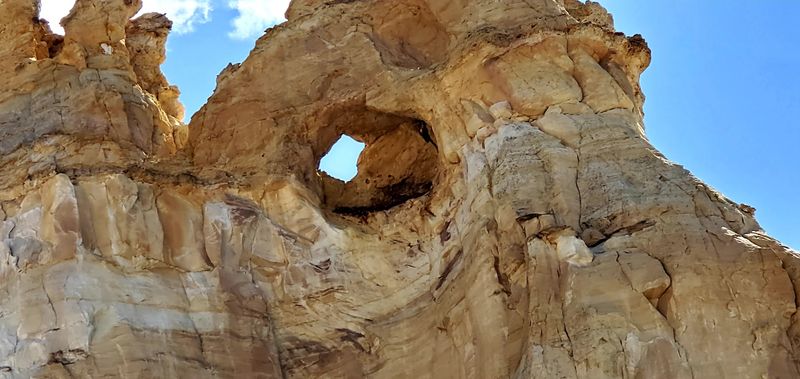
The wagon expedition explains the famous opening, but it does not explain every mark a visitor might associate with the route. Mining activity came later.
The miners’ stairs reflect efforts to make movement through this difficult passage more manageable on foot. Calling them simply pioneer steps skips a useful detail: the same piece of rock mattered to different people at different times.
That distinction gives Hole-in-the-Rock Miners’ Stairs its particular character. A formal staircase is built to make climbing predictable.
Steps cut into sandstone tell a less orderly story. Their setting remains steep, and their historical purpose does not turn them into a maintained stairway for casual exercise.
Photographs can make a rough passage look surprisingly neat, especially when the frame leaves out the slope around it.
Look for the relationship between the worked rock and the natural opening rather than expecting a long, uniform flight of steps. Stay within your ability, and do not assume that seeing the stairs requires following the whole historic descent.
The practical reward is in recognizing layers of human work at one crossing. That makes the name more than a label and the landscape more than a backdrop.
A Historic Route Without Museum Walls
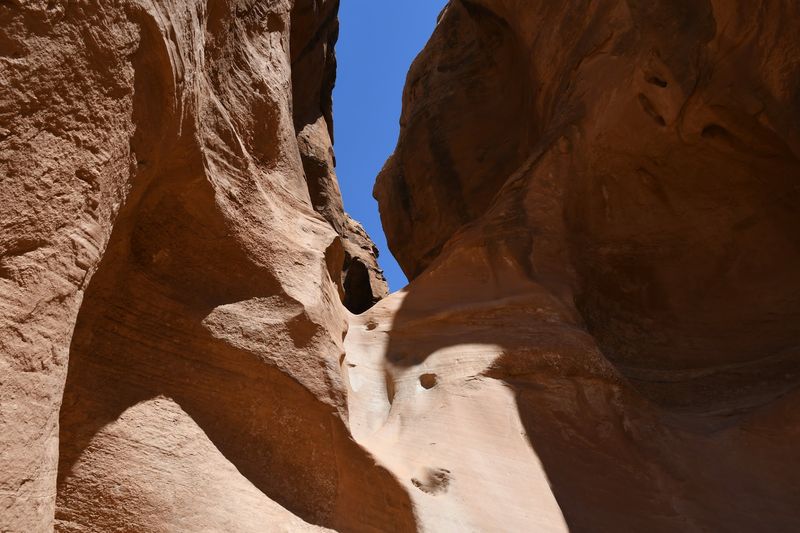
Here is the part that changes how the story lands: Hole-in-the-Rock is not a replica built to help visitors picture an old crossing. The opening and surrounding rock are the setting where the route was made.
That direct connection explains why a fairly simple view can hold attention longer than a polished display.
The National Park Service recognizes Hole-in-the-Rock as an important part of the settlement expedition’s history. Its location in Glen Canyon National Recreation Area also means that visiting calls for the judgment you would use at an outdoor historic site, not the habits of a museum visit.
Conditions matter. Rock, slopes, and the return drive deserve as much thought as the history you came to see.
Why It Matters: Hole-in-the-Rock Miners’ Stairs helps show that the famous wagon passage had a later history, too. The miners’ work did not erase the earlier route; it added another reason people needed to cross this particular terrain.
In Utah, where a modern road can smooth over miles of complicated ground, that visible effort is a useful reminder. A map shows where a route goes.
Worked sandstone begins to explain what it took to make one.
Different Visitors Can Share The Same Story
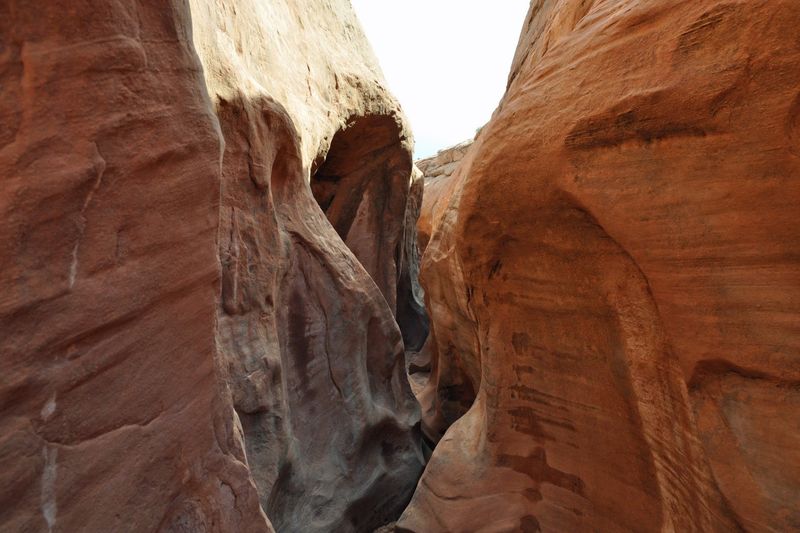
Some historic places ask everyone to follow the same script. At Hole-in-the-Rock, the basic question is simpler: how much of the route do you need to see to understand it?
Even without attempting a steep descent, visitors can consider the narrow opening, the wagon expedition, and the later work associated with the miners’ stairs.
Families might use the landscape to help older children picture the difference between a wagon and a modern vehicle. The honest lesson includes limits: keep children close and decide how far to go based on the conditions you find.
Couples and solo travelers can take their own time with the history, without assuming that finishing a difficult scramble proves anything. Weekend travelers should give the road its proper share of the schedule.
Hole-in-the-Rock Miners’ Stairs suits curious visitors who are comfortable treating access as part of the decision, not an afterthought. It may be a poor choice for someone expecting level paths or a quick roadside stop.
That is useful to know before setting out. Southern Utah rewards a realistic plan more reliably than an ambitious one, and there is no prize for getting farther down a historic passage than you can comfortably climb back up.
Give Hole-in-the-Rock Road The Time It Asks For
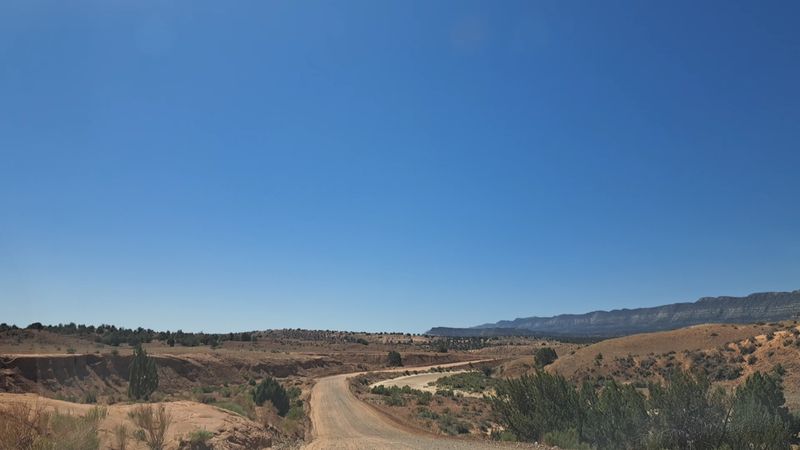
A simple Saturday detour sounds appealing until the detour involves a long unpaved road. Hole-in-the-Rock Miners’ Stairs is listed at Glen Canyon National Recreation Area Hole-in-the-Rock Road, Escalante, UT 84726, but that address should not be mistaken for a conventional street destination.
Before leaving Escalante, ask the National Park Service or a local visitor center about current conditions and whether your vehicle is suitable for the entire route.
Weather can change an unpaved road quickly, and the final approach deserves particular care. Bring water, allow generous daylight, and do not rely on a phone signal as your only navigation plan.
If road conditions or your available time do not fit, turn the outing into a future plan. History is patient; a rental car agreement may be less so.
Once there, let the terrain set the pace. The aim is to understand the crossing and the later work on the rock, not to complete a descent at any cost.
Leave historic markings undisturbed, and follow current park guidance for access. A manageable visit begins with an honest drive plan and ends with enough time to return safely.
That is less glamorous than improvising, but far more useful.
The Rock Keeps More Than One Chapter
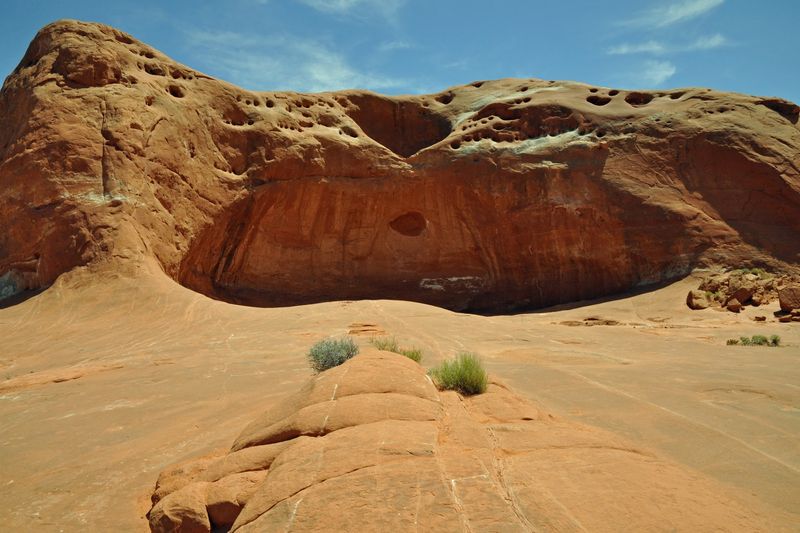
The remarkable part of this staircase story is not that people found an easy way through Glen Canyon. They did not.
The opening called for hard work from the wagon expedition, and later miners found reason to work on the passage again. One stretch of sandstone carries both chapters without sorting them into separate exhibits.
That is why Hole-in-the-Rock Miners’ Stairs deserves a closer look than its name alone might suggest. The stairs are tied to a larger route, and the route makes sense only when you take the cliff seriously.
Seen that way, the steps are not a curious decoration. They are evidence that crossing this landscape remained a practical problem after the wagons had passed.
For a Utah outing, the sensible approach is plain: check the road, carry what you need, respect the historic rock, and choose a viewing point that suits your ability. Nobody needs to turn a meaningful stop into an endurance test.
The reward is understanding why people altered this unlikely gap at all. Long after a photograph becomes just another image on a phone, that question tends to stick around.
The stairs make more sense when you look at the cliff first.