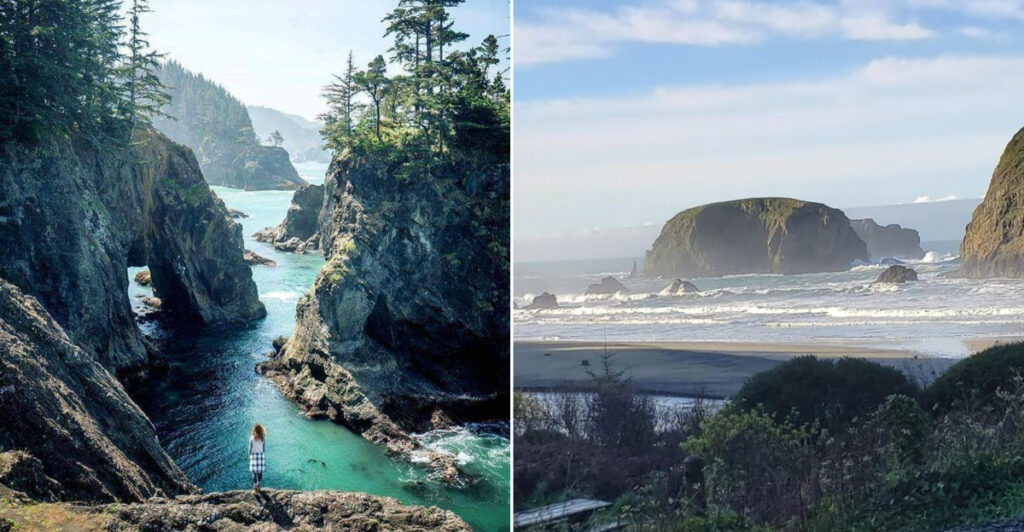
Pull over. Right here. Oregon just got serious. A raw, dramatic coastline runs along this state that stops travelers completely in their tracks.
Sea stacks burst straight out of the Pacific. Ancient forests press right up to the cliff edge. Hidden beaches sit quietly below, waiting for anyone willing to make the short trek down. This is Oregon at its most untouched.
The kind of coastal scenery that makes a person genuinely reconsider every beach trip they have ever taken before this one. The travelers who find this stretch come back every single year.
They tell people about it with the kind of enthusiasm usually reserved for life-changing experiences. Because honestly, it kind of is one.
Wild, cinematic, and completely on its own terms. Oregon’s coastline has always been stunning, and this particular stretch sits at the very top of that list.
Where The Corridor Begins
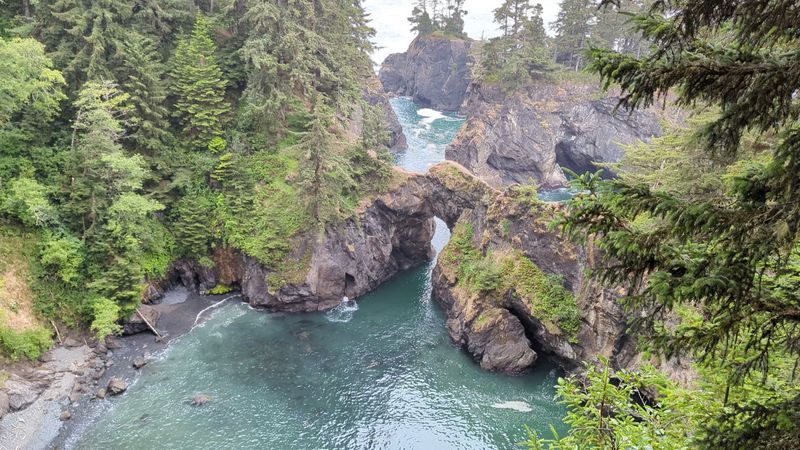
Not every road trip has a moment where you pull over and forget to breathe, but Highway 101 through the Samuel H. Boardman State Scenic Corridor has a way of doing exactly that to first-time visitors.
This 12-mile linear state park runs along the southwestern edge of Oregon, sitting between the towns of Brookings and Gold Beach.
The corridor was named after Samuel H. Boardman, the very first Oregon State Parks superintendent.
He fought hard to protect this section of coastline, and standing here today, it is easy to understand why he cared so deeply.
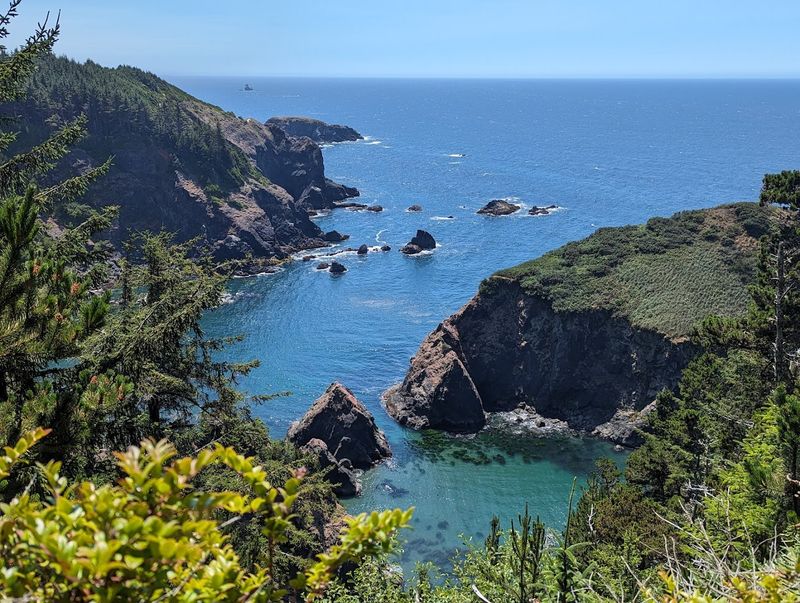
The landscape does not ease you in gently. Craggy bluffs drop straight into the Pacific, forests press right up to the cliff edges, and offshore rock formations break the horizon in every direction.
Have you ever seen a coastline that looks completely unedited?
This one does. There are no beach houses cluttering the views, no commercial strips pulling your eyes away from the water.
What you see is what Oregon looked like long before anyone thought to develop it, and that is a rare thing to experience anywhere along the Pacific coast today.
Secret Beach Surprise
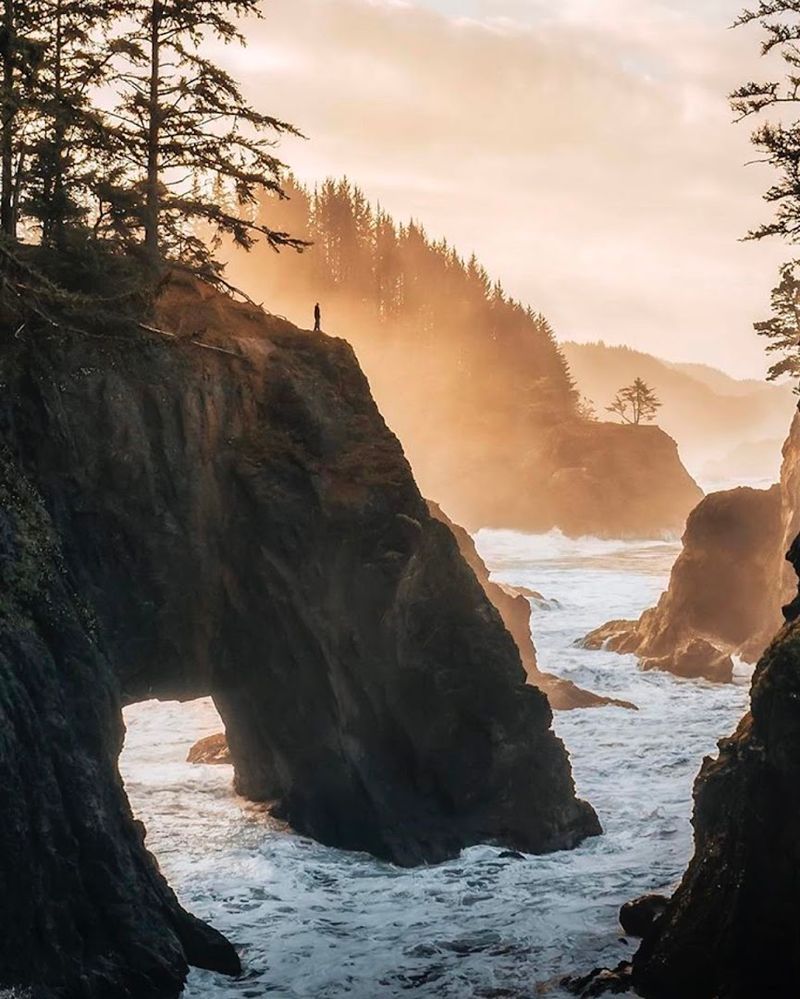
There is a beach here with an honest name. Secret Beach lives up to every letter of it, sitting at the bottom of a steep trail that is not exactly advertised from the road.
No signs on Highway 101 point you directly toward it. The parking area holds only about eight cars, which means the people who find it on a quiet morning feel like the luckiest travelers in Oregon.
The hike down is steep enough that good footwear is not just a suggestion. Visitors say the climb back up requires more effort than expected, but the reward at the bottom makes every step worth it.
A waterfall spills directly onto the beach and empties into the ocean, which is not something you see every day. Sea stacks frame the cove on both sides, and the light at sunset turns the whole scene into something that is genuinely hard to describe without sounding dramatic.
What makes Secret Beach so special is the feeling you get standing there. The silence is real.
The scale of the rocks around you is real. One visitor described it as one of the most beautiful places they had ever seen, and that kind of reaction tends to repeat itself here.
Can a beach actually be worth a steep hike on a foggy morning? Ask anyone who has made it down to this one.
Arch Rock Viewpoint Stop
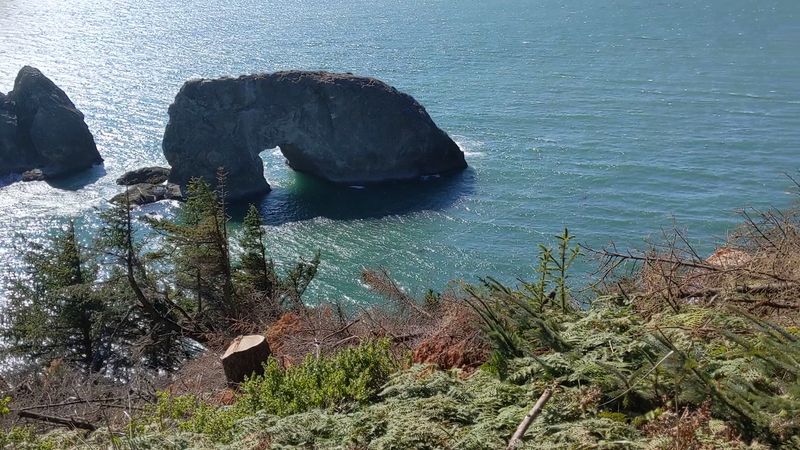
Arch Rock is the kind of viewpoint that makes people stop mid-sentence. You are talking, you glance left, and suddenly the conversation is over because a massive natural sea arch is sitting in the Pacific Ocean right in front of you.
This is one of the most accessible stops along the corridor. The pullout off Highway 101 is easy to find, and the short walk to the viewpoint platform takes only a few minutes.
No long hike required to earn this one.
The arch itself is a dramatic formation carved by centuries of wave action. Watching the ocean move through it during high surf is the kind of thing that reminds you how patient and powerful water can be over a long stretch of time.
Photographers tend to linger here longer than planned. The angle from the viewpoint puts the arch perfectly in frame with the surrounding sea stacks and the deep blue of the Pacific stretching behind them.
Morning light and late afternoon golden hour both produce outstanding results, so the timing of your stop genuinely matters. Have you ever tried to photograph something so impressive that you ran out of storage on your phone?
Arch Rock has that effect on people. It is one of those spots where the image you capture in your head is even better than any photo, and that is saying something for a place this photogenic.
Natural Bridges Blowhole Magic
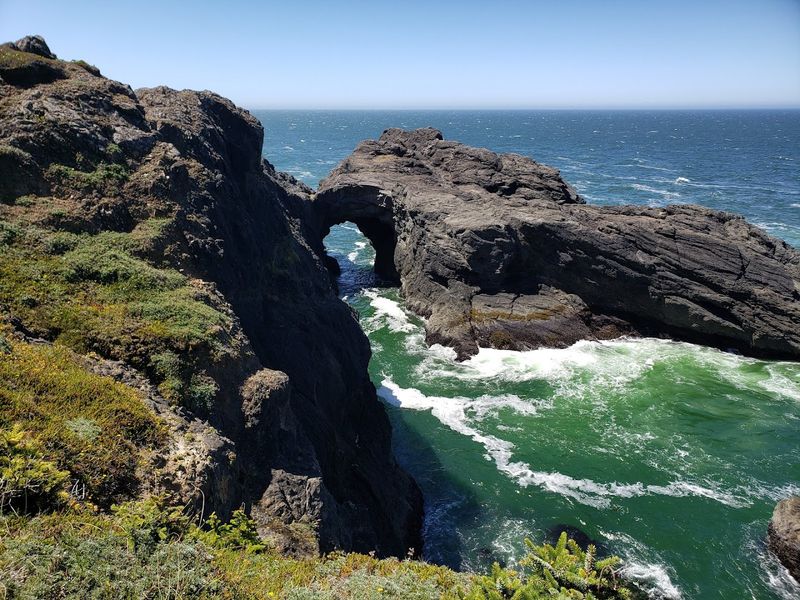
If Arch Rock gets your attention, Natural Bridges will hold it for a long time. This viewpoint sits above a cluster of sea arches and rock tunnels where the ocean surges through with a force that you can hear before you even see it.
The blowholes here shoot water upward when swells hit at the right angle, turning an already dramatic landscape into something that feels almost theatrical. Standing at the overlook, you get a panoramic view of multiple arches all at once, with the green forest pressing in on both sides of the cliff.
This stop is a favorite among visitors who have explored the full length of the corridor. One traveler described Natural Bridges as their favorite spot along the entire route, which is a bold statement considering the competition it faces from every other viewpoint along these 12 miles.
The trail to the viewpoint is short and manageable for most fitness levels, making it accessible even if you are not planning a full hiking day. Families with kids find this one particularly memorable because the visual drama is immediate and easy to appreciate at any age.
What is the best time to visit Natural Bridges? High tide on a day with bigger swells delivers the most impressive water action through the arches.
Check tide charts before you go, and you will be rewarded with a show that no theme park could replicate.
Hiking The Oregon Coast Trail
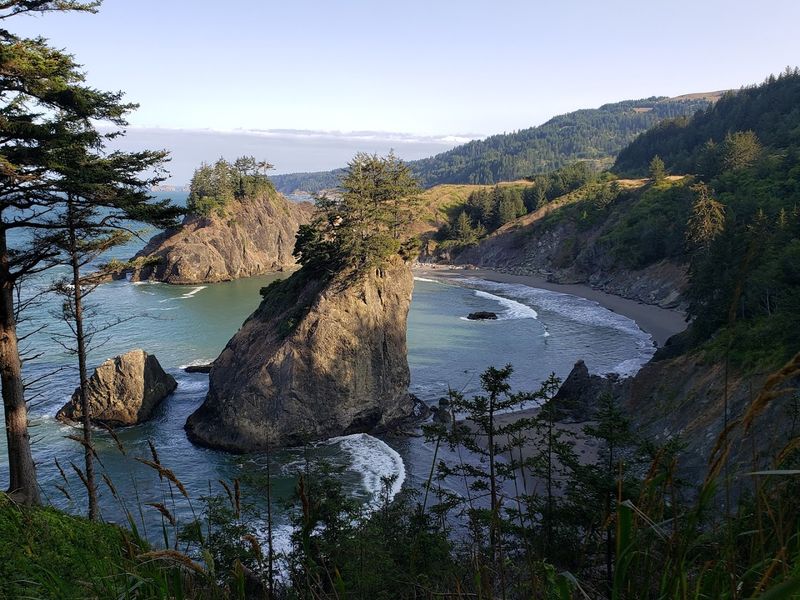
The Samuel H. Boardman State Scenic Corridor contains 18 miles of the longer 362-mile Oregon Coast Trail, and that number alone should tell you something about the hiking opportunities packed into this relatively compact park.
Trail difficulty varies across the corridor, which means there is genuinely something for every type of hiker. Some paths are easy, flat walks to viewpoints that take under ten minutes.
Others drop steeply toward the water and demand solid footing and a reasonable level of fitness.
One piece of advice that experienced hikers repeat consistently: wear proper shoes. The trails can be muddy, rooted, and uneven in ways that casual footwear handles poorly.
Traction matters here, especially on the steeper descents toward the beaches.
The payoff for putting in the effort is access to viewpoints and coves that most drivers on Highway 101 never see. Visitors who hike the loop trails consistently say they find something new each time, and one local who has explored the area for over a decade says he still has not seen everything the corridor holds.
The forest is dense with 300-year-old Sitka spruce trees, and the trail winds through sections where the canopy closes overhead completely.
Whale Watching From Cliffs
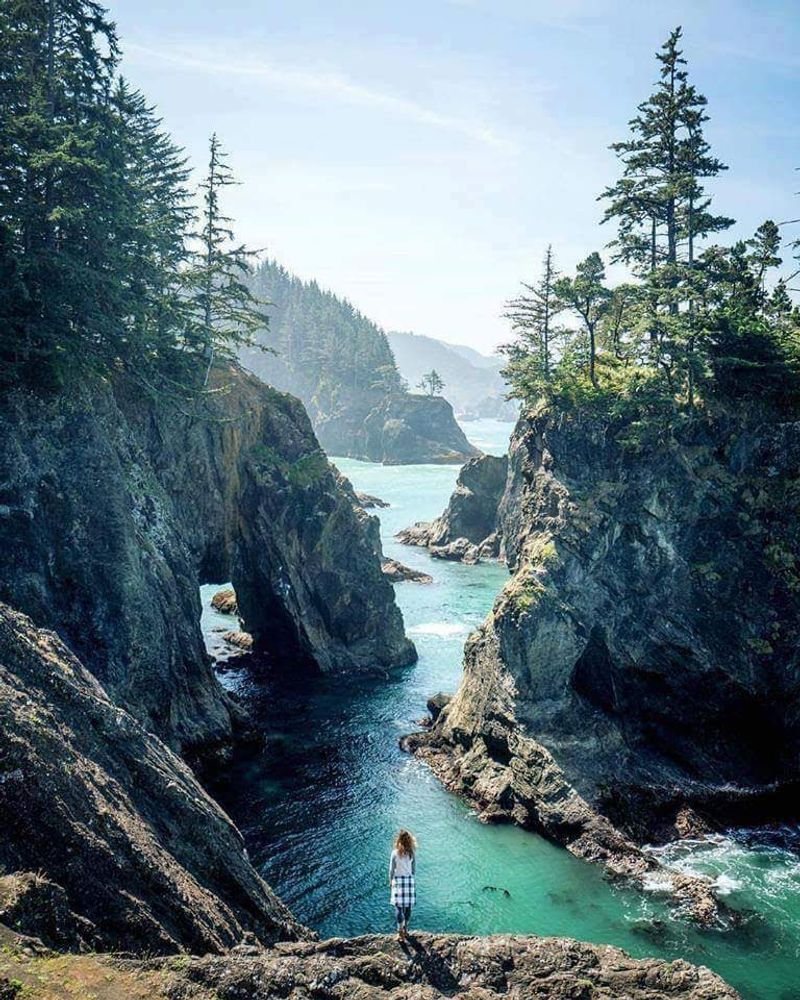
Standing on a cliff above the Pacific and watching a gray whale surface in the water below is one of those experiences that resets your entire perspective on a regular Tuesday afternoon.
Samuel H. Boardman State Scenic Corridor sits along the migration route of Pacific gray whales, and both spring and fall bring the best chances of spotting them from the elevated viewpoints throughout the park.
The height of the cliffs here actually works in your favor, giving you a bird’s-eye angle that makes it easier to spot whale spouts and movement in the water below.
Cape Ferrelo Viewpoint is particularly well-regarded for whale watching. The open ocean view from the cape extends far enough that patient observers can track whale movement across a wide stretch of water.
Binoculars are worth packing for this activity. The whales do not always surface close to shore, and having a little optical help turns a distant splash into a confirmed sighting.
Kids tend to become completely obsessed with the search once they understand what they are looking for.
There is no guarantee with wildlife, of course, but the corridor’s position along the Oregon coast puts it directly in the path of one of the largest gray whale migrations on the planet. Tens of thousands of whales make this journey each year.
Whaleshead Beach Up Close
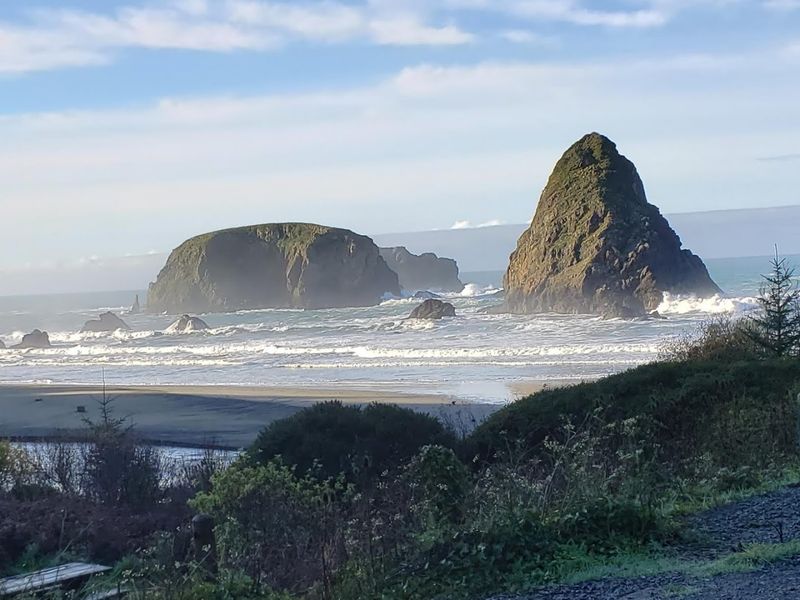
The name Whaleshead Beach does not require much explanation once you see the rock formation that inspired it. A large offshore sea stack rises from the water in a shape that really does resemble the head of a whale breaking the surface, and it anchors one of the most striking beach scenes in the entire corridor.
This beach is one of the more accessible stops along the park, with parking and facilities available nearby. Families tend to spend more time here than at other spots because the beach itself is wide enough to walk, explore, and simply sit without feeling crowded.
Rock formations along the shoreline create natural tide pools that are worth investigating at low tide. Sea anemones, small crabs, and various marine creatures make their homes in the rocky pools, turning a beach walk into an impromptu natural history lesson for anyone curious enough to crouch down and look closely.
The view back toward the cliffs from the beach is just as impressive as the view looking out to sea. The forested bluffs rise steeply behind the sand, and the combination of green forest, dark rock, and blue ocean creates a color palette that photographers specifically seek out.
Planning Your Perfect Visit
The practical details of visiting the Samuel H. Boardman State Scenic Corridor are almost as appealing as the scenery itself.
Entry to the park is completely free, no pass required, which makes it one of the best-value natural attractions anywhere along the Oregon coast.
The corridor runs along U.S. 101 between Brookings and Gold Beach, and most visitors approach it as a scenic drive with multiple stops rather than a single destination. Pullouts and parking areas are spaced throughout the 12-mile stretch, so there is no pressure to commit to one spot for the whole day.
The full address is U.S. 101, Brookings, OR 97415, and entry to the park is completely free with no park pass required.
Tide awareness matters more here than at most beach destinations. High surf and incoming tides can move faster than expected on the narrower beaches, and the cliffs above the water are not places for casual leaning.
Pay attention to posted safety information at each stop.
Sunset at Cape Ferrelo is consistently described as one of the best light shows on the southern Oregon coast. Arriving an hour before the sun drops gives you time to settle into a good viewing spot without rushing.
What would you do with a full free day on one of the most spectacular coastlines in the country?