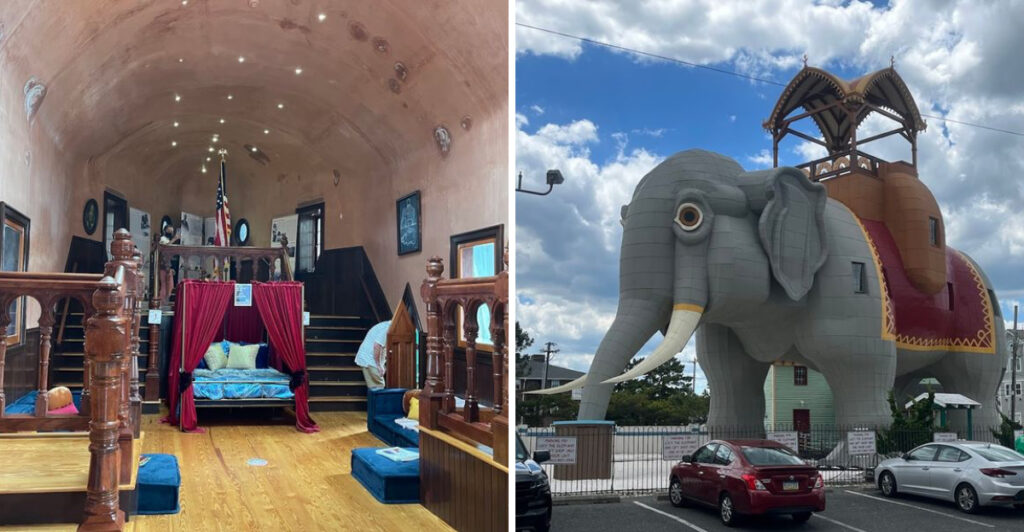
One of the most jaw-dropping secrets in American architecture is parked right on the shore, and it looks like a six-story elephant. Built from nearly one million pieces of wood, she has been standing since 1881 and keeps getting more remarkable with every passing year.
Real estate gimmick turned National Historic Landmark, tavern turned community icon. New Jersey does not do things halfway, and this wooden elephant is the proof.
Twin tusks, a spiral staircase running up through her leg, a dramatic ride on a flatbed truck to escape demolition. The whole story sounds invented, but every single chapter of it is real.
Pull up to the shore in New Jersey, look up, and try not to stop dead in your tracks.
A Real Estate Stunt That Became a Legend
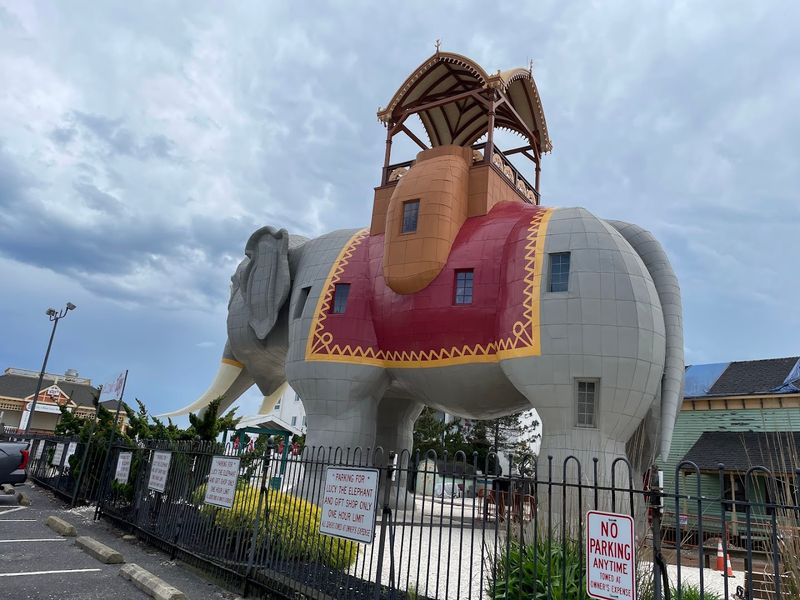
Before Lucy was a beloved landmark, she was a sales pitch. In 1881, a real estate developer named James V.
Lafferty had a bold idea to attract land buyers to what was then called South Atlantic City, New Jersey. He built a six-story elephant-shaped structure to grab attention, and it worked.
Potential buyers would climb inside and view the surrounding land parcels from an observation deck on Lucy’s back, called a howdah. It was creative marketing at its most theatrical.
Lafferty even secured a U.S. patent in 1882 for “animal-shaped buildings,” making Lucy one of the most unusual patented structures in American history.
What started as a clever gimmick slowly transformed into something far greater. Lucy outlasted the land sales, the developer, and nearly the entire era she was born into.
Today, she stands at 9200 Atlantic Ave, Margate City, NJ 08402, proof that even a wild business idea can leave a permanent mark on history.
Built From Nearly One Million Pieces of Wood
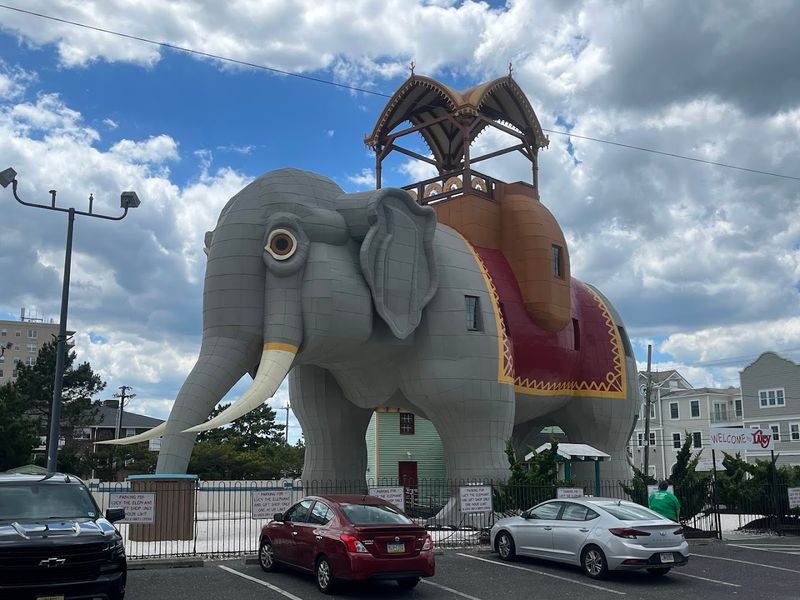
The sheer scale of Lucy’s construction is staggering. She stands 65 feet tall, stretches 60 feet long, and measures 18 feet wide.
Her total weight tips the scales at roughly 90 tons.
Builders used nearly one million individual pieces of wood to assemble her frame. They hammered in 200 kegs of nails and secured everything with 4 tons of bolts and iron bars.
Her exterior was originally wrapped in 12,000 square feet of tin to protect the wood underneath from the harsh coastal weather of New Jersey.
More recently, restoration crews have been replacing that original tin skin with Monel, a corrosion-resistant metal alloy better suited for the salty sea air. Every repair keeps Lucy standing for another generation of curious visitors.
The craftsmanship involved in both her original construction and her ongoing restoration reflects a serious commitment to preserving one of the most unusual wooden buildings ever assembled in the United States.
Three Elephants Existed, But Only One Survived
Lucy was never alone. James Lafferty built two other elephant-shaped structures around the same time.
The Elephantine Colossus rose on Coney Island, and the Light of Asia stood in Cape May, New Jersey. Both were massive and attention-grabbing in their own right.
Neither one made it. The Elephantine Colossus burned down, and The Light of Asia was torn down in 1900 after falling into disrepair.
Lucy is the sole survivor of this trio, which makes her existence feel almost miraculous. She is the last elephant standing from an era when larger-than-life architecture was used as a marketing tool along the American coastline.
That survival alone sets Lucy apart from almost any other structure in the country. She carries the weight of her lost siblings in every plank and bolt.
Knowing that two others once existed but are now gone makes every visit to Margate City feel like a genuine encounter with something rare, irreplaceable, and almost impossible to believe is still here.
From Elephant Bazaar to Lucy, the Name Has a Story
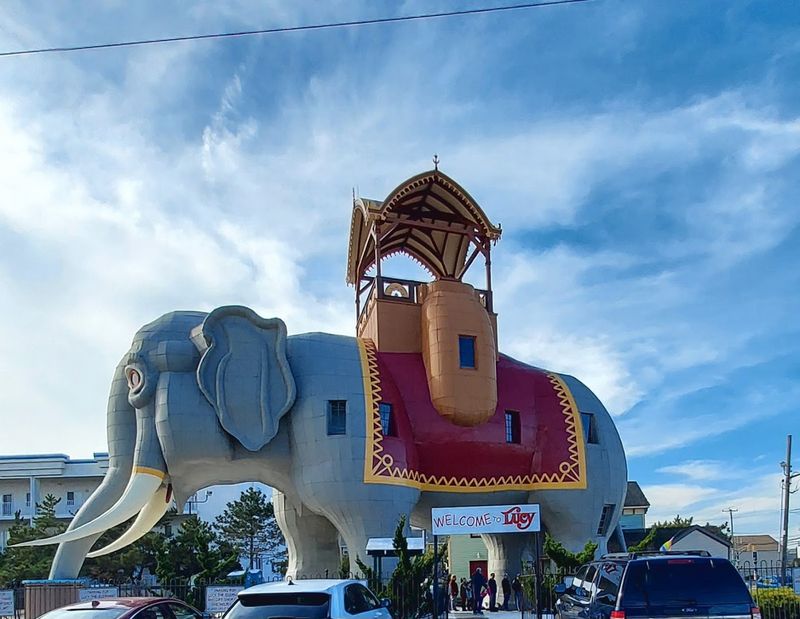
Lucy was not always called Lucy. When she first opened, the structure went by the name Elephant Bazaar, a nod to her original commercial purpose.
That name stuck for years as she changed hands and uses through the late 1800s.
In 1887, a man named Anton Gertzen purchased the elephant. The structure passed through the family, and in 1902, Anton’s daughter-in-law, Sophia Gertzen, reportedly gave her the name that everyone knows today. “Lucy the Elephant” had a personality behind it, and the name caught on fast.
Renaming a building might seem like a small detail, but in Lucy’s case, it marked a turning point. She stopped being just a real estate prop and started becoming a character.
A name gives a place identity, and identity builds loyalty. That loyalty is exactly what saved her decades later when the threat of demolition loomed over New Jersey’s most unusual wooden structure.
A name, it turns out, can carry enormous power.
She Has Lived Many Lives Over the Decades
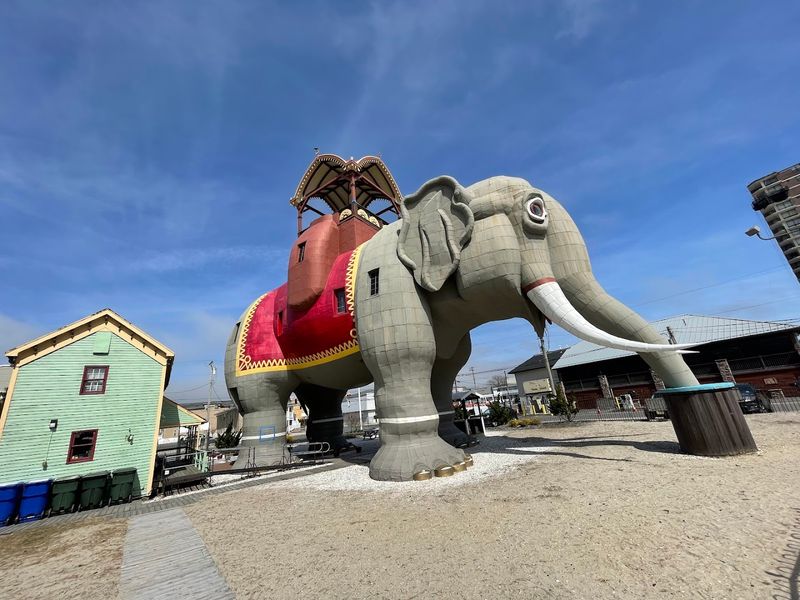
Most buildings have one purpose. Lucy has had many.
Over her long life, she has served as a real estate office, a restaurant, a business office, a summer cottage, and even a tavern before Prohibition put a stop to that particular chapter.
Each use added a new layer to her story. Families actually lived inside her at various points, calling the belly of a wooden elephant home.
That detail alone stretches the imagination, but it is entirely true. New Jersey’s unusual history runs deep, and Lucy sits at the top of that list. Her ability to adapt kept her relevant across changing eras and shifting communities.
She was never just one thing to one group of people. That flexibility, combined with her unmistakable appearance, helped her outlast trends, economic shifts, and even near-abandonment.
Every use she was put to added another chapter to a story that grows more fascinating the deeper you explore it.
The Rumrunner Legend That Lit Up Her Eyes
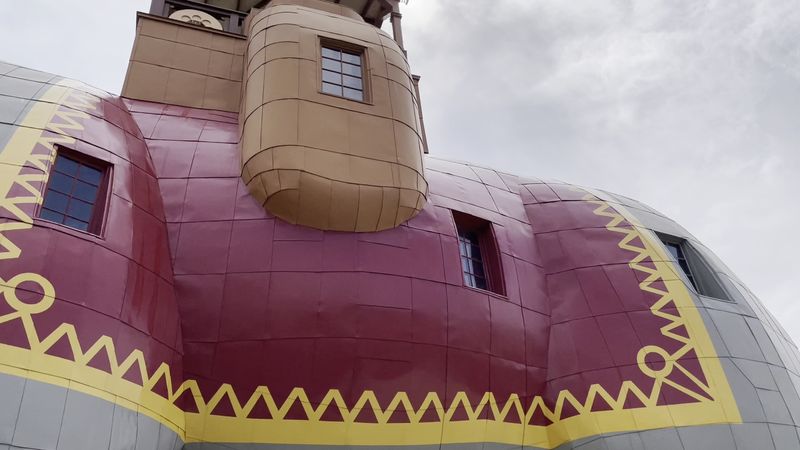
During Prohibition, a rumor spread that Lucy’s eyes were used as signal lights for rumrunners sneaking contraband along the New Jersey coastline. Red lights reportedly warned that authorities were nearby.
Green lights meant the coast was clear.
Whether the story is fully confirmed or partly legend, it has become one of the most captivating details in Lucy’s history. It paints a picture of a giant wooden elephant standing on the shore, secretly communicating with smugglers in the dark.
It sounds like fiction, but the timeline fits perfectly with the Prohibition era.
Stories like this are what transform a building into a legend. Lucy was already extraordinary on the outside, but this tale adds a layer of mystery that no museum exhibit can fully capture.
It reminds visitors that history is rarely tidy or straightforward. Sometimes the most incredible chapters are the ones whispered just below the surface of the official record, waiting for curious minds to find them.
The 1960s Brought Her Closest to the End
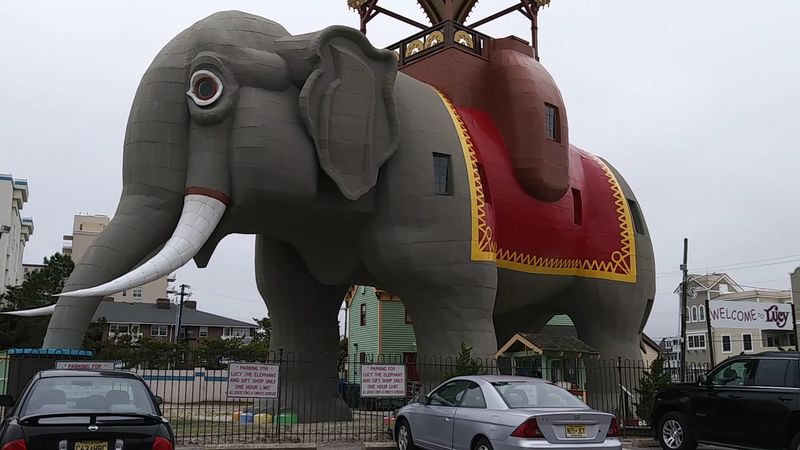
By the 1960s, Lucy was in serious trouble. Decades of coastal weather, neglect, and changing ownership had left her in a state of significant disrepair.
Local officials declared her condemned, and plans for demolition moved forward.
It looked like New Jersey was about to lose its most eccentric landmark for good. The structure that had survived so much was finally facing a threat it could not outrun on its own.
Without intervention, Lucy would have become just another story about something wonderful that used to exist.
Fortunately, the community had other plans. The 1960s may have brought Lucy to her lowest point, but that low point also sparked one of the most heartwarming preservation efforts in American history.
Sometimes things have to get truly desperate before the right people step forward. In Lucy’s case, the darkest chapter turned out to be the turning point that set the stage for everything that came after, including a rescue effort that still inspires people today.
The Grassroots Campaign That Refused to Give Up
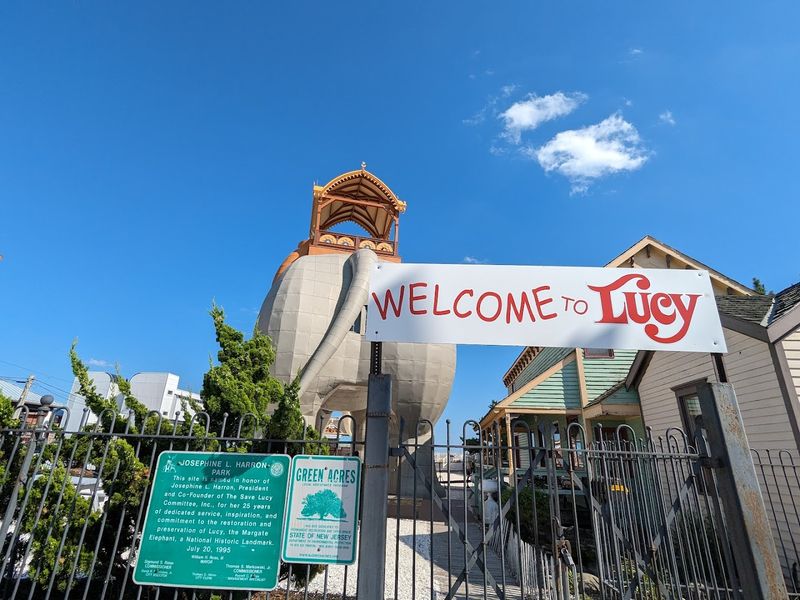
In 1969, a group of determined citizens formed the Save Lucy Committee. Their goal was straightforward: raise enough money and public support to prevent Lucy’s demolition.
What followed was a genuine grassroots movement fueled by community passion.
The committee organized fundraising efforts, spread awareness, and pushed back against the forces that wanted to tear her down. Their work paid off in a remarkable way.
In 1970, Lucy was physically moved approximately 100 yards to a city-owned lot in Margate, New Jersey, where restoration work could begin safely.
Moving a 90-ton, six-story wooden elephant down a city street is not a small undertaking. The logistics alone required serious planning and coordination.
Yet the Save Lucy Committee made it happen, and the effort stands as one of the most unusual preservation achievements in the history of New Jersey. Their refusal to accept Lucy’s end is the reason she still exists today, welcoming visitors from across the country and beyond.
A National Historic Landmark Title Well Earned
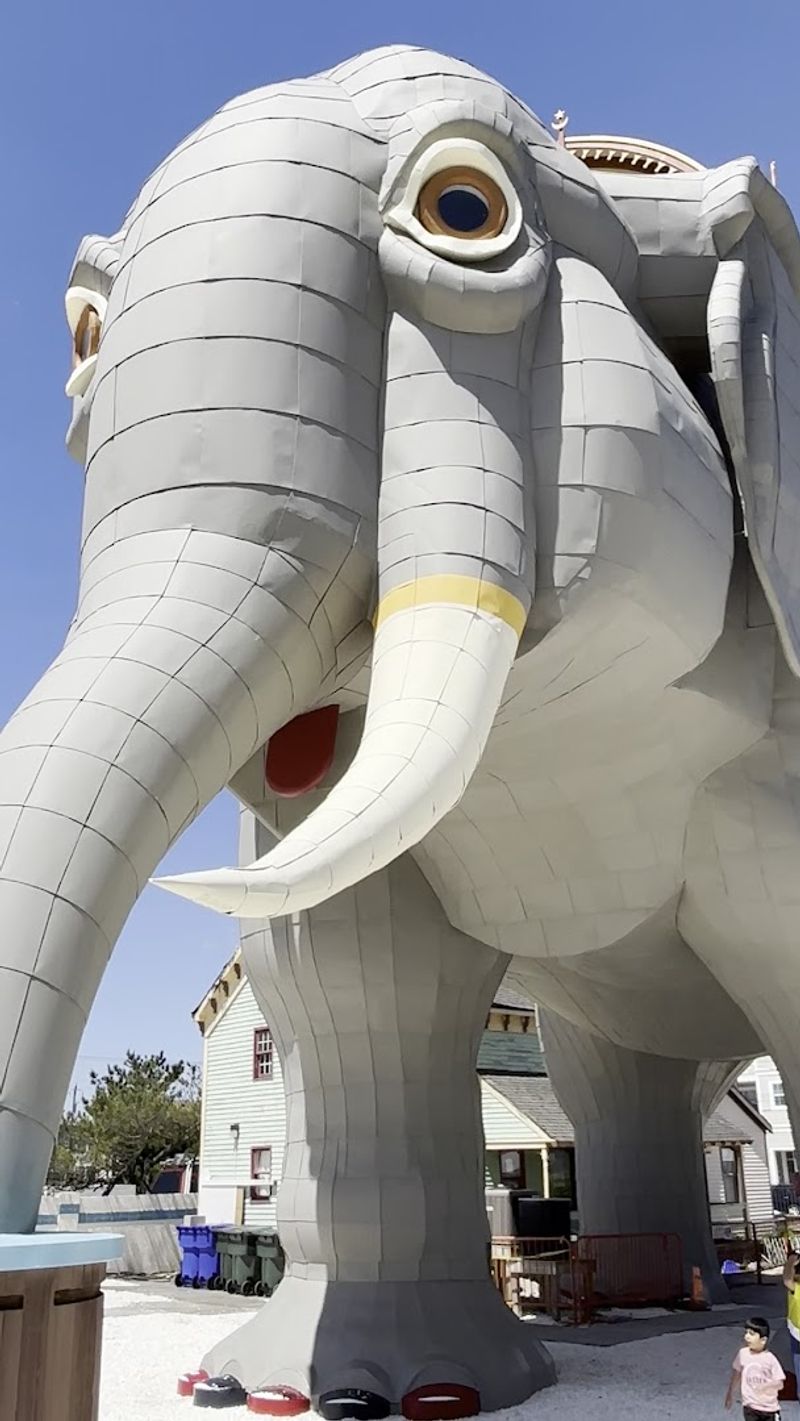
In 1976, Lucy the Elephant received one of the highest honors the United States government can give a structure. She was designated a National Historic Landmark, placing her in the same category as sites of profound cultural and historical significance across the country.
That designation was not handed out lightly. It recognized Lucy’s unique architectural character, her role in American commercial history, and her survival against extraordinary odds.
For a wooden elephant built as a real estate stunt on the New Jersey shore, the recognition felt both surprising and completely deserved.
The landmark status also helped secure ongoing funding and attention for her preservation. It gave the Save Lucy Committee and future caretakers a powerful tool for protecting her from future threats.
Visitors who walk through her today are not just entering a quirky attraction. They are stepping inside an officially recognized piece of American history, one that has earned its place among the country’s most protected and celebrated structures.
What Visiting Lucy Actually Looks Like Today
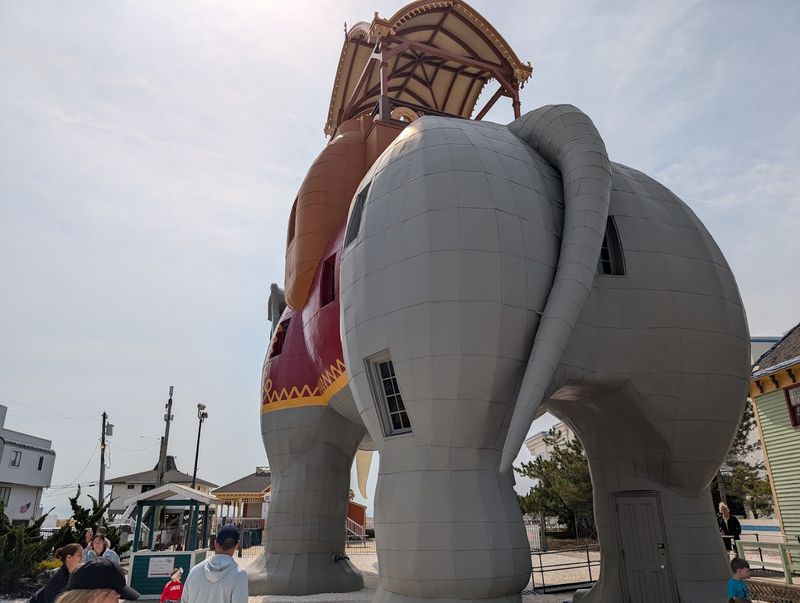
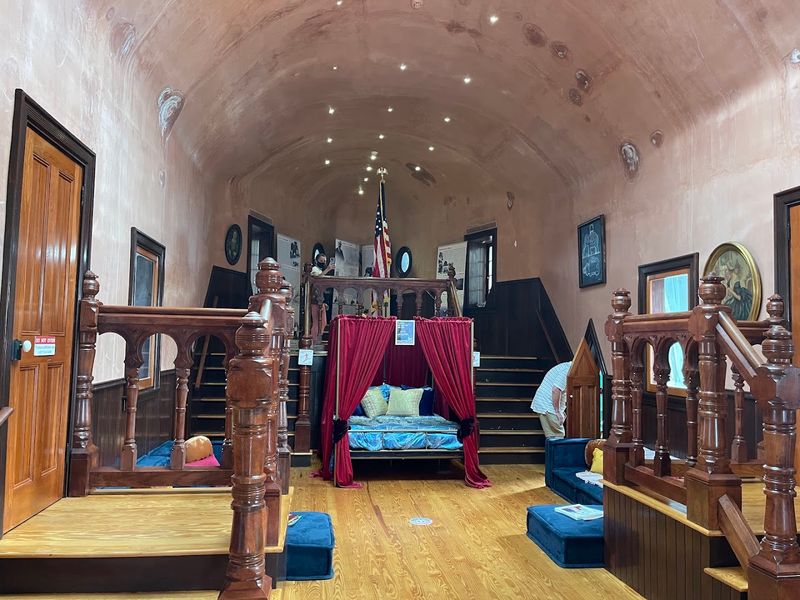
Visitors to Lucy today can take a guided tour that winds through her interior and up to the observation deck on her back. The tour typically runs around 30 to 45 minutes and includes a short video about her history played inside the belly of the elephant.
The staircase inside is narrow and spiral-shaped, so comfortable footwear makes a real difference. From the top, the views stretch out over the Atlantic Ocean and the surrounding New Jersey coastline, offering a perspective that no photograph can fully prepare you for.
Tickets are purchased across the street rather than at Lucy’s location directly, so arriving with a few extra minutes helps avoid confusion. A gift shop offers elephant-themed souvenirs for those who want to take a piece of the experience home.
The site at 9200 Atlantic Ave is well-maintained, and the guided tours are led by knowledgeable staff who clearly care about sharing Lucy’s story with every visitor who climbs her stairs.
An Overnight Stay Inside an Elephant Is Possible
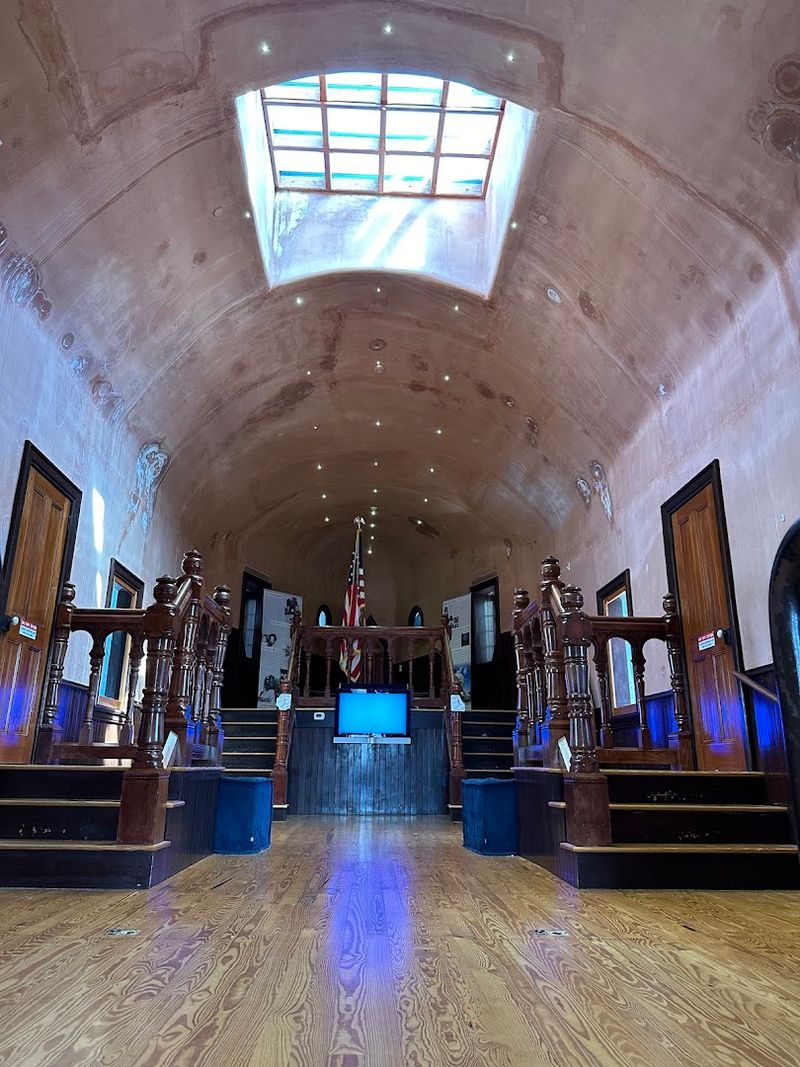
In 2020, Lucy made headlines for a reason that had nothing to do with history or storms. She was listed on Airbnb, offering overnight stays inside the structure itself.
The idea of sleeping inside a six-story wooden elephant on the New Jersey shore is the kind of travel experience that very few places on earth can offer.
Availability for overnight stays is limited and not always guaranteed, so checking current listings before planning a trip is strongly recommended. But even the possibility of spending a night inside Lucy adds a layer of excitement to any visit.
It transforms her from a daytime attraction into a full overnight adventure.
For anyone who has ever wanted to say they slept inside a National Historic Landmark shaped like an elephant, Lucy provides that exact opportunity. It is the kind of story that gets told at dinner tables for years afterward, which is fitting for a structure whose entire existence has been one unbelievable chapter after another.