Oregon does not do ordinary beaches. Not even close. There is a shoreline covered entirely in thousands of smooth, round black basalt stones where the real magic is not above the water. It is below it.
Purple sea stars. Giant green anemones. Hermit crabs going about their day. And if the timing is right, a Giant Pacific Octopus making a surprise appearance.
Have you ever crouched down at the edge of a tide pool and felt like you accidentally discovered another world? That is exactly what this place delivers.
Park rangers show up right on the beach to help visitors spot creatures most people have only ever seen in aquariums. The tide pools here are among the richest on the entire Oregon Coast, and that is not a small claim.
Why scroll past this when it is sitting right there waiting?
Rocks That Roll And Sing
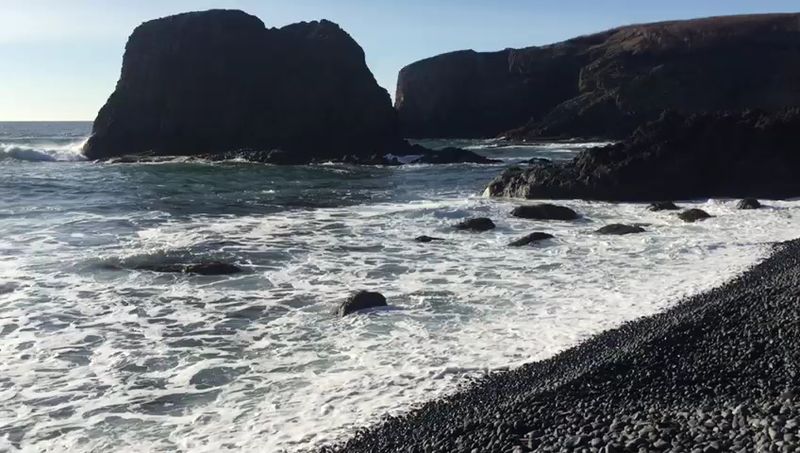
There is no sand at Cobble Beach, and that is exactly what makes it so unforgettable. The entire shoreline is blanketed in thousands of smooth, round basalt cobblestones, each one polished by millions of ocean waves over millions of years.
These stones were formed by lava flows around 14 million years ago. The ocean has been rounding them out ever since, and the result is a beach that looks like it belongs on another planet.
Here is the part that surprises most visitors: the beach makes music. When a wave pulls back, the cobblestones tumble and clatter against each other, creating a deep, rolling sound that is unlike anything you have heard at a beach before.
One visitor described it as ethereal, and it really is.
The stones range in size from a marble to a baseball, with most sitting around the size of a lemon. Walking on them is a bit of a balancing act, so sturdy shoes with good grip are a smart choice.
The surface shifts underfoot with every step. That wobbly walk is part of the fun, honestly. Kids love the challenge, and adults usually end up laughing too.
Have you ever heard a beach play its own soundtrack? Cobble Beach does exactly that, and it is the kind of sound you will find yourself trying to describe to everyone back home.
Tide Pool Life Up Close
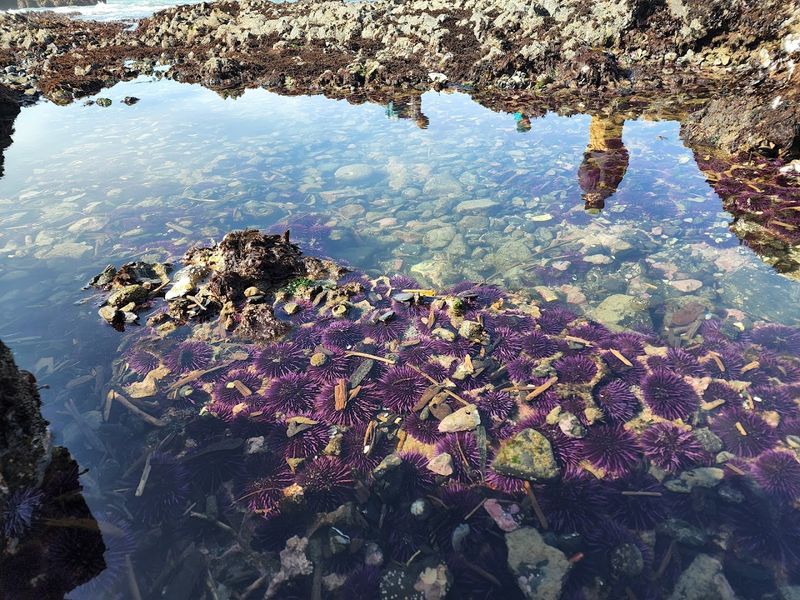
Crouching down beside a tide pool at Cobble Beach feels like peering into a secret city. The pools are packed with life, and every few inches you look, something new catches your eye.
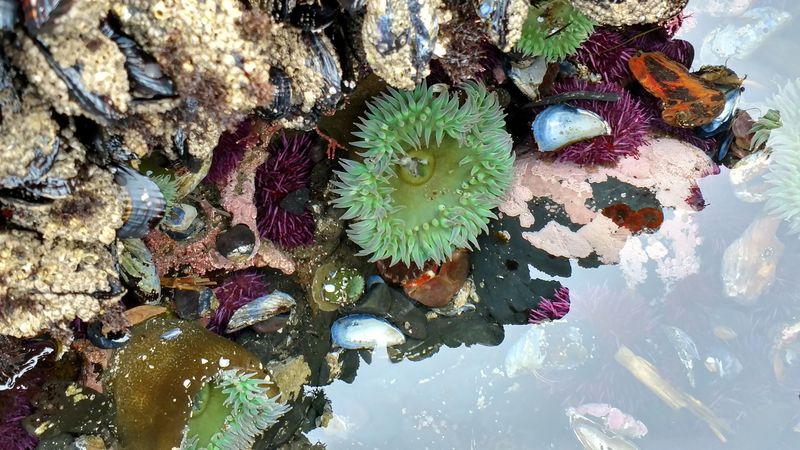
Purple sea urchins cluster in rocky crevices. Giant green anemones wave their tentacles slowly in the current.
Ochre sea stars cling to surfaces in shades of orange, yellow, and purple. Hermit crabs scuttle around dragging borrowed shells, and tiny sculpins dart between the rocks so fast you almost miss them.
Oregon’s coastline is known for rich marine ecosystems, and this spot ranks among the very best for tide pool diversity. The variety here is genuinely impressive, even for experienced coastal visitors.
The best time to explore is one to two hours before low tide. That window gives you the clearest view into the pools before the water starts creeping back.
Checking a tide chart before you go is a move that will absolutely pay off.
Park rangers are often right there on the beach during low tide, ready to help identify what you are looking at. They carry species ID guides and love answering questions, so do not be shy about asking.
Seals Sunbathing Nearby
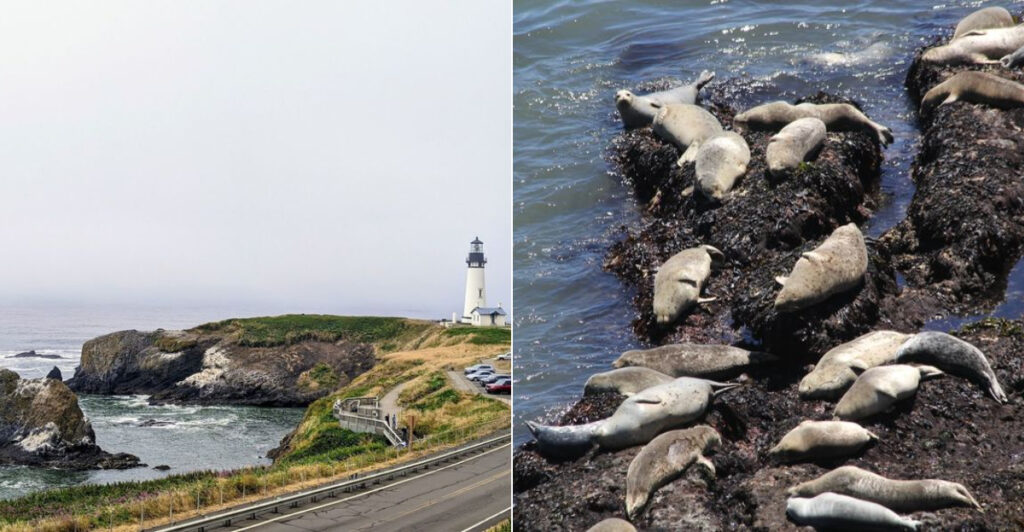
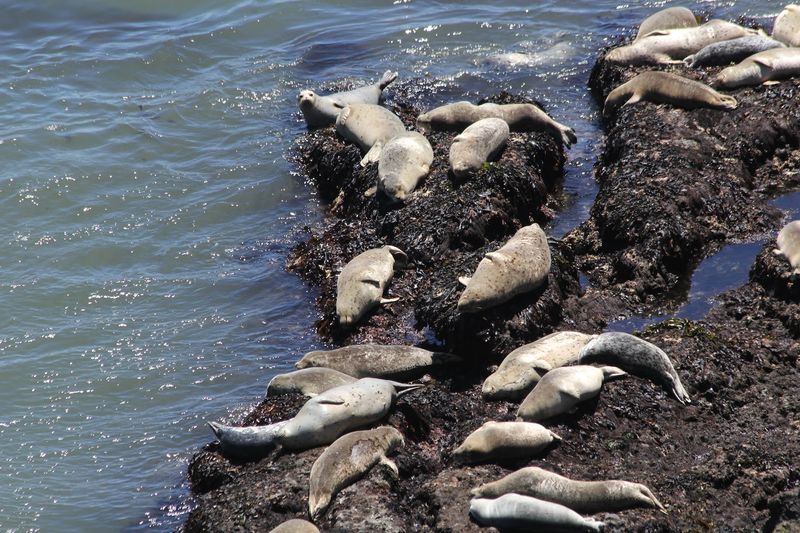
Harbor seals have clearly figured out the best spots along the Oregon coast, and they have claimed the rocks near Cobble Beach as their personal lounging area. They are year-round residents here, and on most visits, you will spot at least a few of them draped lazily over the offshore rocks.
Watching them from the beach is one of those simple pleasures that somehow never gets old. They flop around, yawn dramatically, and stare back at you with their big dark eyes like they cannot believe you walked all the way down those stairs just to watch them nap.
Visitors have reported seeing seals swimming just a few yards from shore, occasionally poking their heads up to check out the humans exploring the tide pools. It feels incredibly personal, even from a respectful distance.
The key word there is distance. Rangers ask visitors to keep space between themselves and the seals, both for the animals’ safety and for yours.
Seals are wild animals, and even relaxed-looking ones prefer not to be approached.
Baby seals have also been spotted here during certain seasons, which visitors describe as almost unbearably cute.
Seabirds By The Thousands
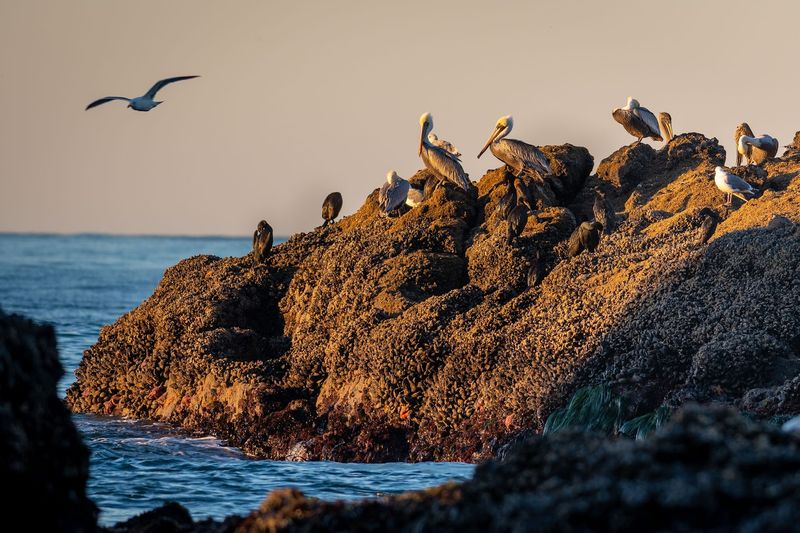
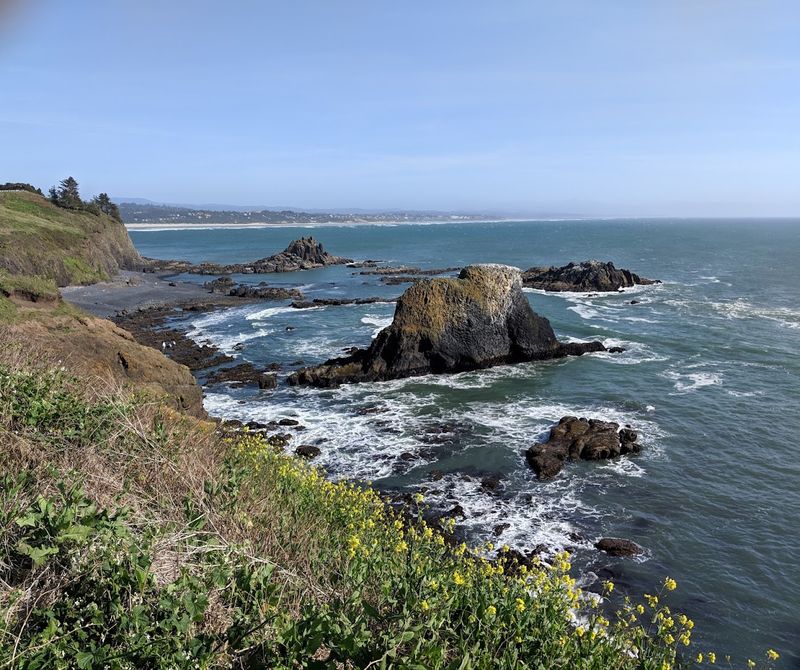
Look up from the tide pools and out toward the sea stacks rising just offshore, and you will see one of the most dramatic bird colonies on the Oregon coast. Hundreds of thousands of Common Murres nest on those rocky pillars every year, and the sight of them is genuinely breathtaking.
Common Murres are black-and-white seabirds that look a little like penguins but fly perfectly well. They pack themselves onto the sea stacks so tightly that the rocks seem to move.
The noise they make is constant and wild, a kind of rolling chorus that carries all the way to the beach.
Bald eagles have also been spotted circling the area, which tends to cause a noticeable stir among the murre colonies. Watching the reaction ripple through thousands of birds at once is something you do not forget quickly.
Pelicans cruise along the waterline in low formation, and various shorebirds pick through the tide pools alongside human visitors. The whole area feels like a very busy wildlife crossroads.
Birdwatchers who visit Cobble Beach often say it is one of the most rewarding spots they have found anywhere along the Pacific coast. Have you ever stood on a beach and watched a bald eagle soar overhead while seals lounged below and murres called from the sea stacks?
That is a very specific kind of perfect.
Getting Down There Safely
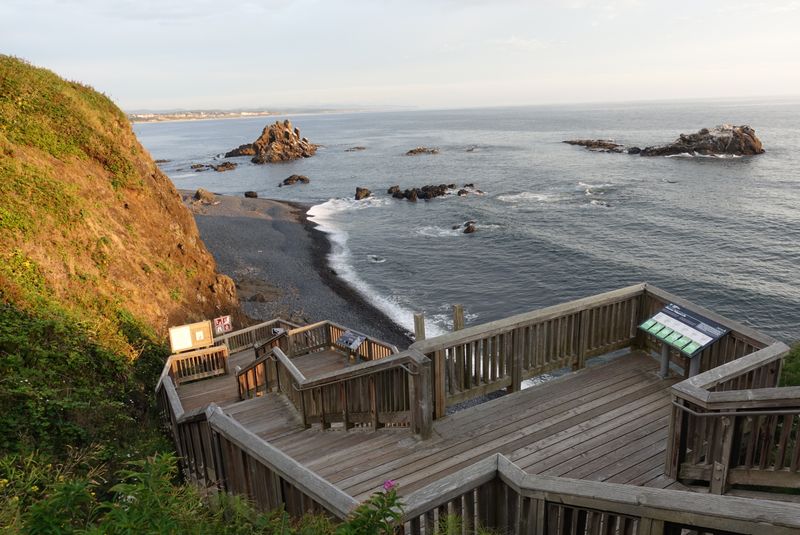
Cobble Beach does not give itself up easily, and that is part of its charm. To reach the shoreline, visitors descend a long stairway from the parking area and observation deck above.
It is around six flights of stairs, and the path down offers sweeping views of the coastline the whole way.
The walk down is manageable for most people, though the climb back up can feel a bit more demanding, especially after spending an hour crouching over tide pools. Comfortable shoes and a steady pace make it very doable.
Once you are on the beach itself, the cobblestones require your full attention. They shift and roll underfoot, and it is easy to lose your balance if you are not paying attention.
Wearing shoes with solid grip is not optional here, it is genuinely important.
The area is not stroller-friendly, and it can be challenging for visitors with mobility limitations. That is worth knowing before you plan your visit, especially if you are coming with family members who might find uneven surfaces difficult.
Ocean safety is serious here too. Sneaker waves, which are sudden, powerful waves that arrive without warning, are a real risk along this stretch of coast. Rangers consistently remind visitors to face the ocean at all times and never turn their backs to the water.
The Lighthouse Next Door
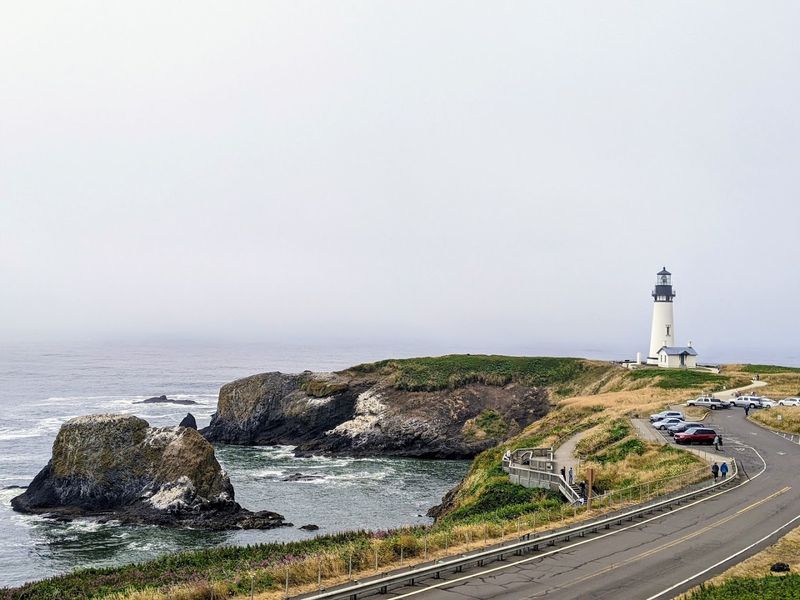
Right above Cobble Beach, perched on the rocky headland, stands the Yaquina Head Lighthouse. It is the tallest lighthouse in Oregon, rising 93 feet above the ground, and it has been guiding ships since 1873.
The view from below, looking up at the white tower against the sky, is one of those images that sticks with you.
The lighthouse and the beach share the same protected area, the Yaquina Head Outstanding Natural Area, managed by the Bureau of Land Management.
From the observation deck near the lighthouse, visitors can scan the ocean for migrating gray whales during winter and spring. Spotting a whale spout from that height, with the lighthouse behind you and Cobble Beach below, is the kind of view that travel photographers dream about.
The meadow between the parking area and the lighthouse adds another layer of beauty to the whole scene. Green grass, coastal wildflowers, and the dramatic backdrop of the Pacific make even the walk to the stairs feel like a worthwhile experience on its own.
One visitor put it simply: the scenery of the meadow and the lighthouse before the ocean is so beautiful.
Rules That Protect Everything
This beach is a protected marine garden, and that status is not just a title. Real rules are in place to keep the ecosystem healthy, and the rangers who patrol the beach take them seriously.
The good news is that the rules are simple and easy to follow.
Visitors are asked to step only on bare rock surfaces, not on mussels or other organisms that cover the rocks. It is easy to accidentally step on a living creature if you are not paying attention, which is why the rangers give a quick orientation at the bottom of the stairs during low tide visits.
No marine life or rocks may be removed from the beach. That means no pocketing sea shells, no taking home a cool-looking cobblestone, and absolutely no collecting sea creatures.
Everything in those tide pools belongs to the ecosystem, not to a souvenir bag.
Dogs must be kept on a leash at all times. The rocky terrain is actually tough on dogs’ paws, and the uneven cobblestones can cause slips and injuries for pets that are not used to the surface.
One visitor mentioned their dog slipped on the rocks, which is a good reminder that this terrain is not ideal for all animals.
Following these guidelines is what keeps Cobble Beach extraordinary for every visitor who comes after you. Have you ever thought about how many people will see that same tide pool next year, next decade, next generation? Your footsteps matter here.
Best Time To Visit
Timing your visit to Cobble Beach can make a big difference in what you experience. The tide pools are most accessible and most impressive one to two hours before low tide.
That is when the water has pulled back enough to reveal the full richness of the marine life living in the pools.
Checking a tide chart before you go is one of the smartest things you can do. Low tide times shift every day, so planning around them means you get the full show rather than staring at water-covered rocks and wondering where all the sea stars went.
Summer visits tend to draw more families, and the beach can feel lively and social during peak months. Visiting on a weekday, especially a school-day Monday as some visitors have noted, often means a quieter experience with more space to explore at your own pace.
Sunset visits in summer are particularly spectacular. The warm light hits the black cobblestones and turns the whole beach into something that looks almost cinematic.
One visitor described visiting 1.5 hours before sunset in midsummer as gorgeous, and the gray whales they spotted offshore clearly agreed it was a good time to show up.
Oregon weather is always a wildcard, of course. Even on a stormy day, the beach has its own dramatic beauty, and the sound of cobblestones rattling in rough surf is something genuinely worth experiencing.
Have you ever planned a beach trip around a tide chart? Cobble Beach is the perfect reason to start.