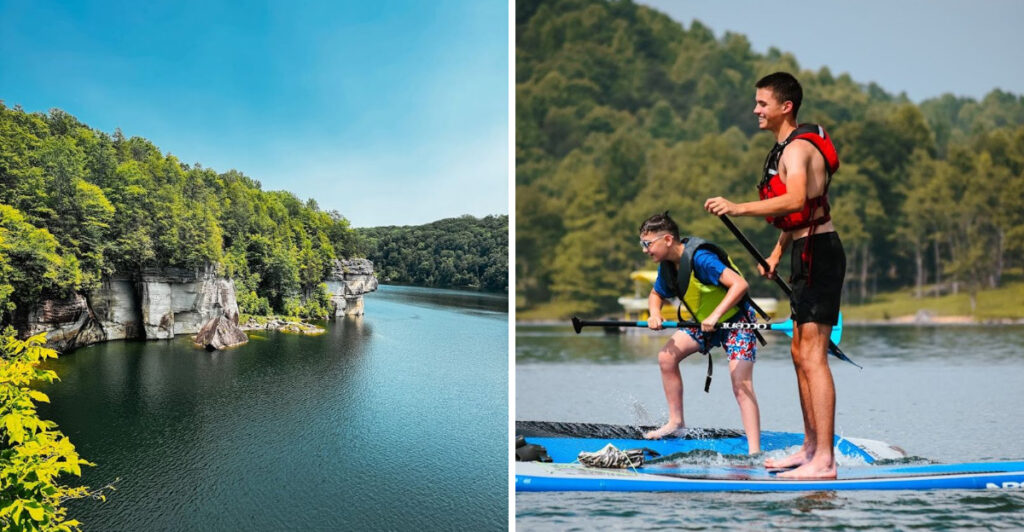
West Virginia has a lake that people call the Little Bahamas of the East, and the first time you see that water, the nickname stops sounding like a stretch. Sixty miles of shoreline wrap around turquoise coves, sandstone cliffs, and forested banks that shift with every bend.
Scuba divers drop below the surface and report visibility up to 45 feet. Rock climbers work routes on cliff faces with the lake shimmering far below.
Kayakers paddle through passages that feel more like outdoor cathedrals than anything you typically find in the Appalachians. The lake is also West Virginia’s largest, sitting behind the second-biggest rock-fill dam in the eastern United States.
All of it adds up to a destination that keeps surprising people who thought they already knew what a lake trip could look like.
The Crystal Clear Water That Started A Legend
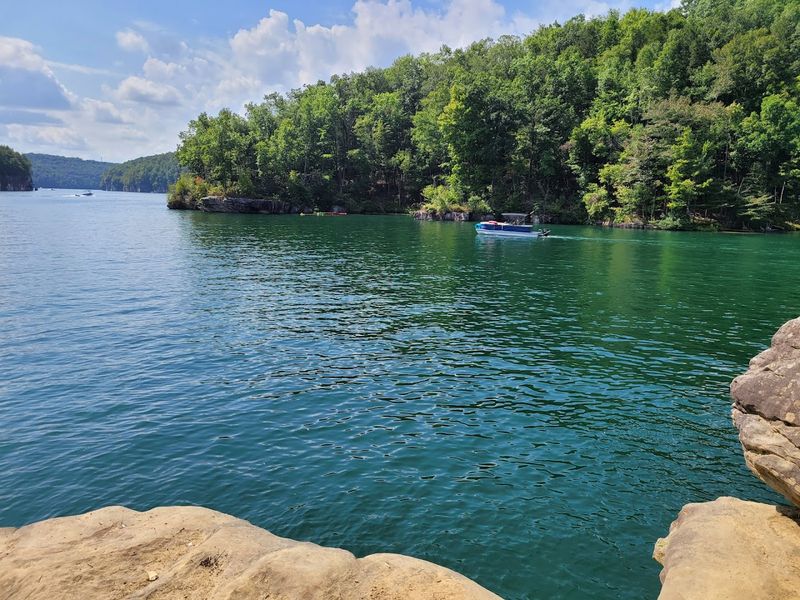
The water at Summersville Lake does not look like it belongs in West Virginia. It shimmers in shades of aqua and blue-green that feel more Caribbean than Appalachian.
That striking clarity earned the lake its well-known nickname, The Little Bahamas of the East.
The reason behind the color is scientific but the result is magical. The lake sits in a deep basin carved by the Gauley River, with minimal runoff carrying sediment into the water.
That low sediment level keeps the water remarkably transparent.
Underwater visibility regularly reaches up to 45 feet during summer months. Boaters can look over the side and watch their anchor line disappear slowly into the blue-green depths below.
It is the kind of clarity that makes even non-divers curious about what lies beneath. Skin Diver Magazine famously dubbed Summersville Lake the cleanest and clearest freshwater lake east of the Mississippi River, and the turquoise water makes it easy to see why that reputation has stuck.
Sixty Miles Of Shoreline Worth Every Step
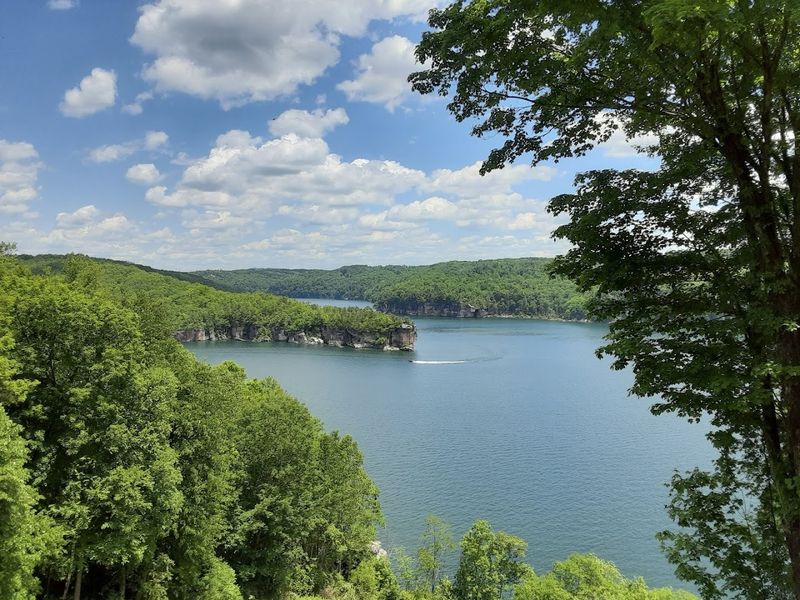
Sixty miles of shoreline sounds like a number pulled from a travel brochure. At Summersville Lake, it is very much real.
That massive stretch of water’s edge winds around coves, past cliffs, through quiet inlets, and along forested banks that shift with every turn.
The variety along the shoreline is remarkable. Some sections feature tall sandstone walls rising straight out of the water.
Others open into calm, shallow areas perfect for swimming or anchoring a boat for the afternoon.
Kayakers and paddleboarders often spend full days exploring without covering the same water twice. Hikers following the Long Point Trail get rewarded with sweeping overlook views of the lake stretching out below.
The sheer scale of the shoreline means crowds rarely feel overwhelming, even during peak summer weekends. There is always another cove to discover, another cliff face to admire, and another stretch of that famously clear water waiting just around the next bend.
How A Dam On The Gauley River Created Something Spectacular
Before there was a lake, there was a river. The Gauley River carved its way through Nicholas County, West Virginia, for centuries before engineers saw potential in its flow.
Construction on the Summersville Dam began in 1960 and finished in 1966.
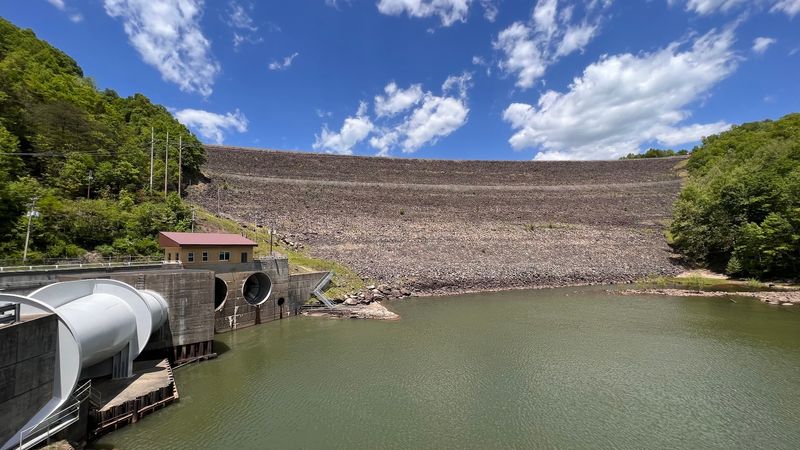
The U.S. Army Corps of Engineers built the dam using a rock-fill design, making it the second-largest rock-fill dam in the Eastern United States.
The scale of the structure is genuinely impressive up close. High rock walls and a massive spillway greet visitors who drive down to the tailwaters area below.
The dam was dedicated in 1966, and the lake behind it slowly filled to become the largest lake in West Virginia. The dam serves flood control and water supply purposes alongside recreation.
Every fall, the lake is drawn down to prepare for whitewater rafting season on the Gauley River below, then refills each spring from snowmelt and rainfall. The cycle gives the lake a rhythm all its own.
Scuba Diving In A Freshwater World Like No Other
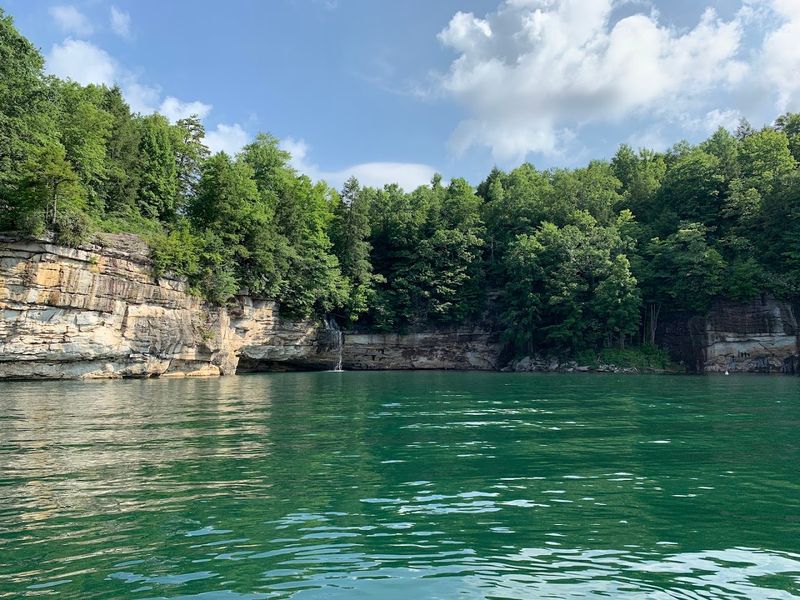
Most people associate scuba diving with tropical oceans. Summersville Lake flips that expectation entirely.
The water clarity here makes it one of the most popular freshwater dive sites in the entire eastern United States.
Divers drop below the surface and find a surprisingly rich underwater world. Submerged cliffs drop away into darkness.
Massive boulders sit on the lake floor, covered in freshwater growth. An intentionally sunken boat rests below the surface, giving divers a genuinely unique structure to explore.
Visibility up to 45 feet means divers can see far ahead as they move through the water. The experience feels almost otherworldly given the mountain setting above.
The lake draws divers of all skill levels, from beginners working on open water certifications to experienced divers seeking something different from the usual salt-water destinations. West Virginia might not be the first place that comes to mind for diving, but Summersville Lake makes a convincing case for putting it at the top of any diver’s list.
Rock Climbing Along Cliffs That Drop Straight Into The Lake
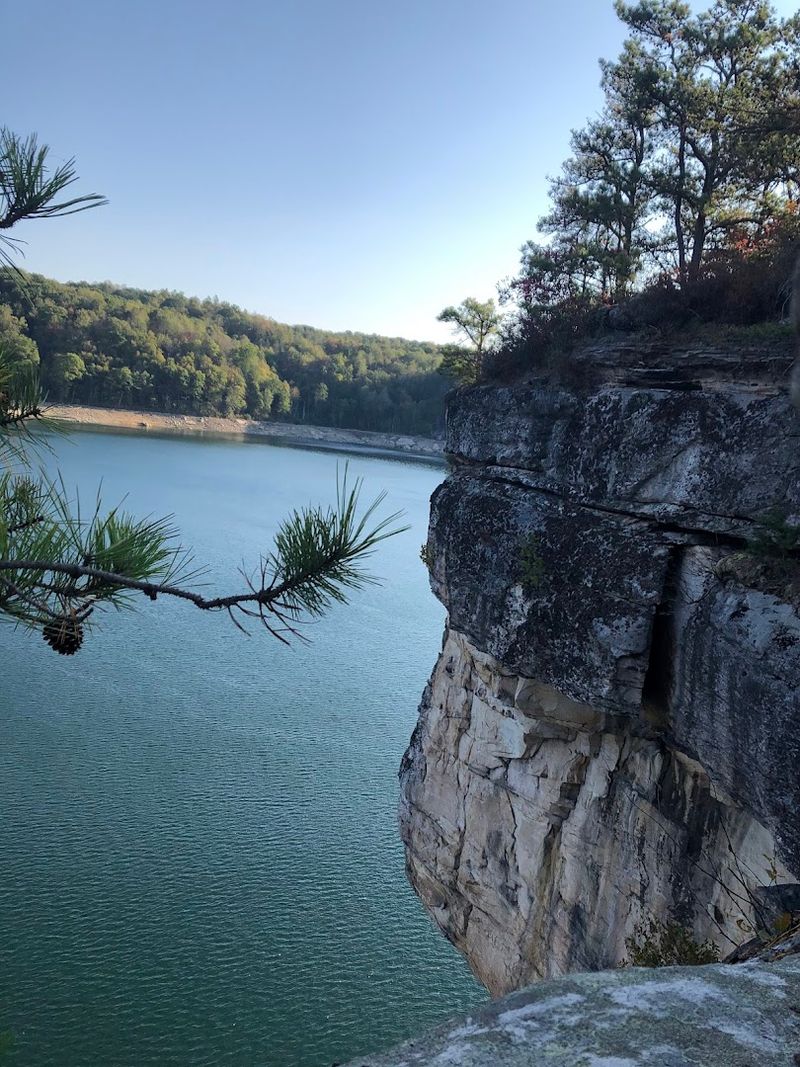
The cliffs at Summersville Lake were not just made for looking at. They are a serious destination for rock climbers, drawing enthusiasts from across the region and beyond.
The sandstone walls here are considered some of the finest climbing terrain in the eastern United States.
Routes vary widely in difficulty, making the area accessible to beginners while still challenging seasoned climbers. The dramatic setting adds an extra layer of intensity.
Climbers work their way up cliff faces with the lake’s turquoise water shimmering far below.
The rock quality is generally excellent, with features that reward technical skill and careful footwork. Many routes follow natural lines in the sandstone, tracing cracks and ledges up to exposed tops with sweeping views of the lake.
The combination of challenging climbing and extraordinary scenery is rare anywhere, let alone in West Virginia. Climbers who make the trip often describe it as one of the most visually rewarding places they have ever put their hands on rock.
Fishing The Depths Of West Virginia’s Largest Lake
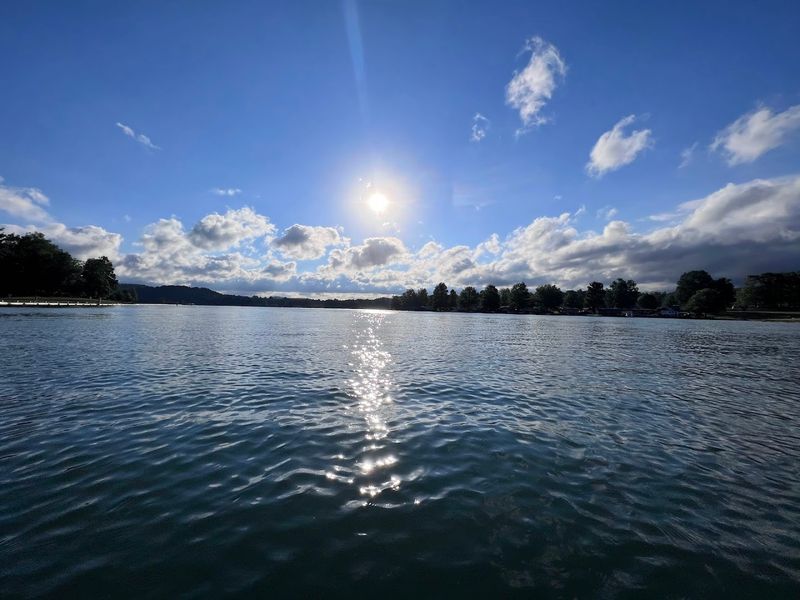
Anglers have plenty of reasons to point their boats toward Summersville Lake. The water supports a healthy and diverse mix of fish species that keeps fishing interesting across all seasons.
Walleye, perch, crappie, bluegill, channel catfish, and both smallmouth and largemouth bass all call the lake home.
Trout fishing adds another dimension, appealing to fly fishing enthusiasts as well as those who prefer a simple line and hook from the dock. The lake’s depth, reaching up to 327 feet at its deepest point, creates diverse habitat zones that different species favor at different times of year.
Boat ramps and dock areas provide easy access for those launching their own vessels. The calm midweek atmosphere makes for especially productive fishing, with fewer boats cutting through the water and stirring things up.
The surrounding Summersville Lake Wildlife Management Area covers nearly 6,000 acres and adds even more opportunity for anglers who enjoy mixing a morning of fishing with some quiet time in the woods.
Kayaking And Paddleboarding Through Sandstone Cathedrals
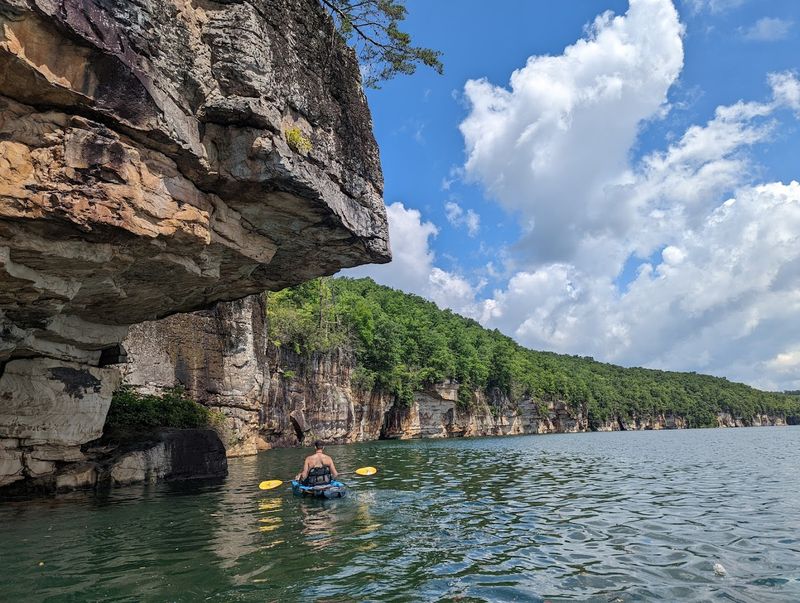
Paddling at Summersville Lake is an experience that hits differently than most lakes. The cliffs rise up on either side of narrow coves, creating passages that feel more like outdoor cathedrals than typical lake scenery.
The water below is so clear that paddlers can watch fish moving in the shallows.
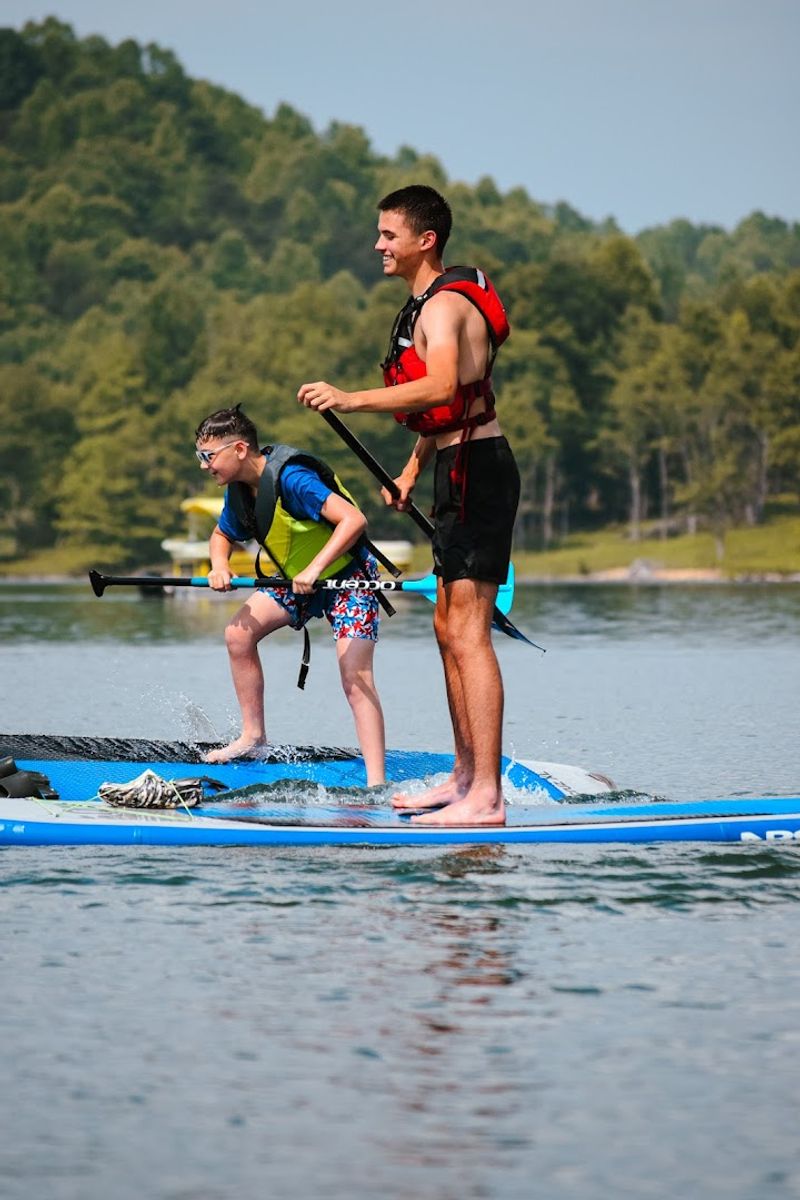
Kayaks and stand-up paddleboards are popular choices for exploring the quieter corners of the lake. Battle Run is a favorite launch spot, offering a small beach area and calmer water that suits beginners and families well.
Long Point area offers more dramatic cliff scenery for those willing to paddle further out.
Rentals are available for visitors who do not bring their own gear. Weekdays tend to offer calmer conditions, since weekend boat traffic can create noticeable wave action that bounces off the cliff walls.
Morning paddling sessions, before the boats pick up speed, reward early risers with mirror-flat water and stunning reflections of the sandstone walls stretching down into the clear blue depths below.
Summersville Lake State Park And What It Means For Visitors
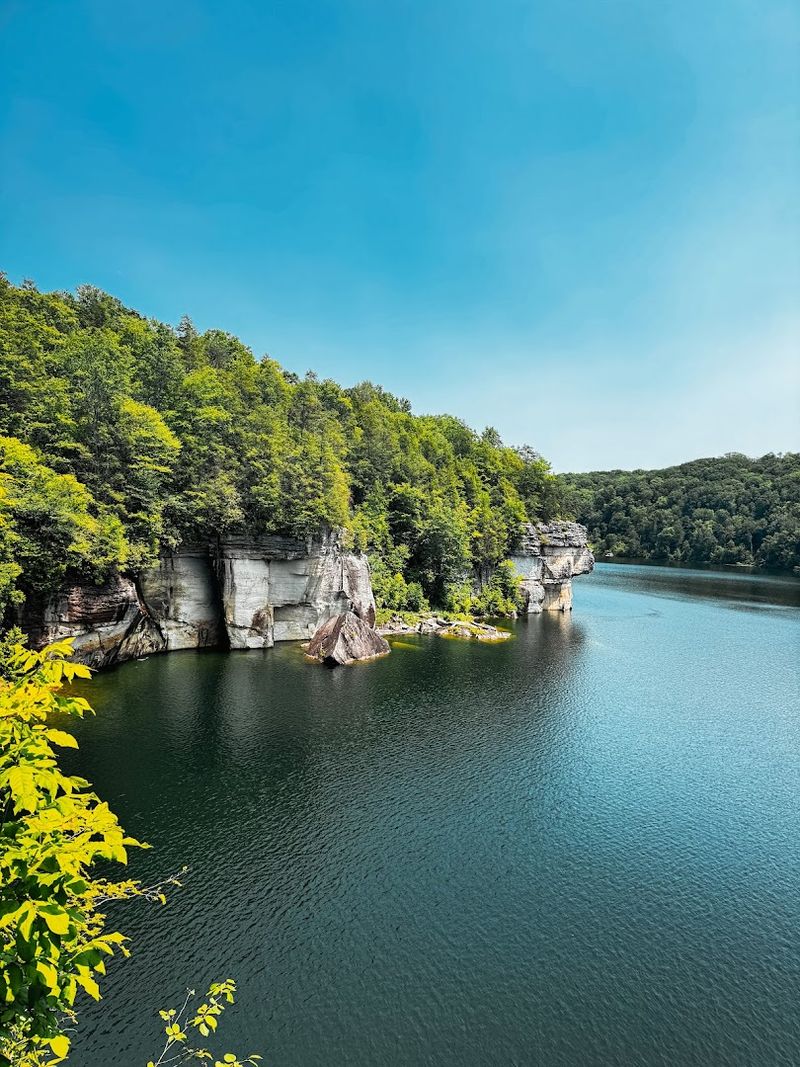
August 2023 marked a milestone for Summersville Lake. That month, 177 acres on the northern shore were officially designated as Summersville Lake State Park.
The designation formalized protections for one of the most scenic stretches of shoreline on the entire lake.
The park status brings added infrastructure and attention to an area that already attracted significant visitor interest. Camping options continue to expand, with new cabin rentals in development alongside existing RV hookups, electric sites, and tent camping areas.
A beach area gives swimmers a designated spot to cool off in the famously clear water.
The state park also provides a hub for families looking to make a full weekend of the visit. Beach volleyball, hiking trails, and boat access all operate within or near the park boundaries.
West Virginia has long benefited from outdoor tourism, and the formal state park designation helps ensure that Summersville Lake remains protected and accessible for future generations who deserve to see those turquoise waters for themselves.
The Only Working Lighthouse In West Virginia
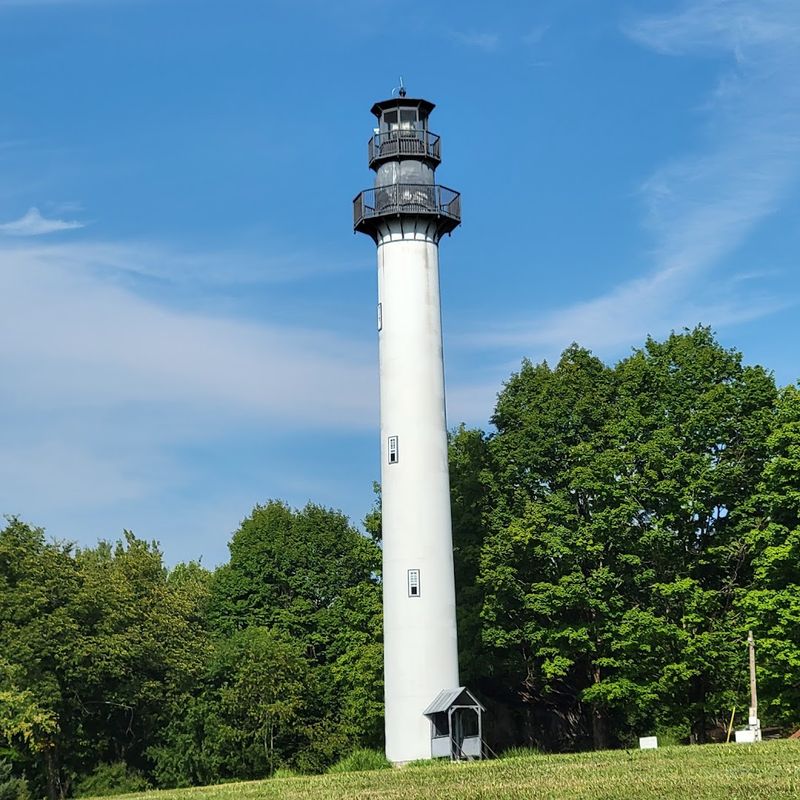
West Virginia is landlocked, so a working lighthouse feels like a genuine surprise. Yet the Summersville Lake Lighthouse stands as the only working lighthouse in the entire state, and it sits right along the lake’s shoreline.
The lighthouse is a distinctive landmark that adds an unexpected nautical character to an already dramatic setting. It serves as a navigational aid for boaters on the lake and doubles as a popular photography subject.
The combination of the lighthouse, the clear water, and the surrounding cliffs makes for a scene that looks almost unreal in photos.
Visitors often make a point of finding the lighthouse during their time on the water. It is a quirky detail that perfectly captures what makes Summersville Lake so interesting.
The lake already defies expectations with its Caribbean-like clarity in the middle of the Appalachian Mountains. Adding West Virginia’s only lighthouse to that list just reinforces the idea that this place consistently delivers things nobody quite expected to find here.
Wildlife And Wild Spaces Around The Lake
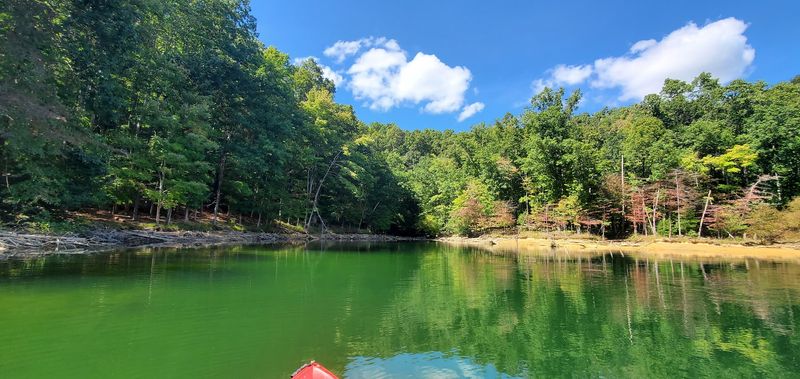
The lake does not exist in isolation. The Summersville Lake Wildlife Management Area wraps around much of the shoreline, covering nearly 6,000 acres of forested land that teems with wildlife.
Deer, wild turkey, and various bird species move through the area regularly.
The management area offers hunting opportunities in season, but wildlife watching draws just as many visitors. Birdwatchers find the mix of water and forest habitat especially productive.
Ospreys and herons are commonly spotted along the shoreline, while the forested interior supports a wider variety of woodland species.
Hiking trails wind through the management area and connect to lake overlooks. The Orange Run Trail and Long Point Trail both pass through terrain that showcases the relationship between the forest and the water.
Wildflowers bloom along trail edges in spring, and fall foliage turns the cliffs and hillsides into a patchwork of color. West Virginia’s natural landscape has always been one of its strongest draws, and the land surrounding the lake amplifies that reputation considerably.
Swimming Spots And No-Wake Zones Worth Knowing
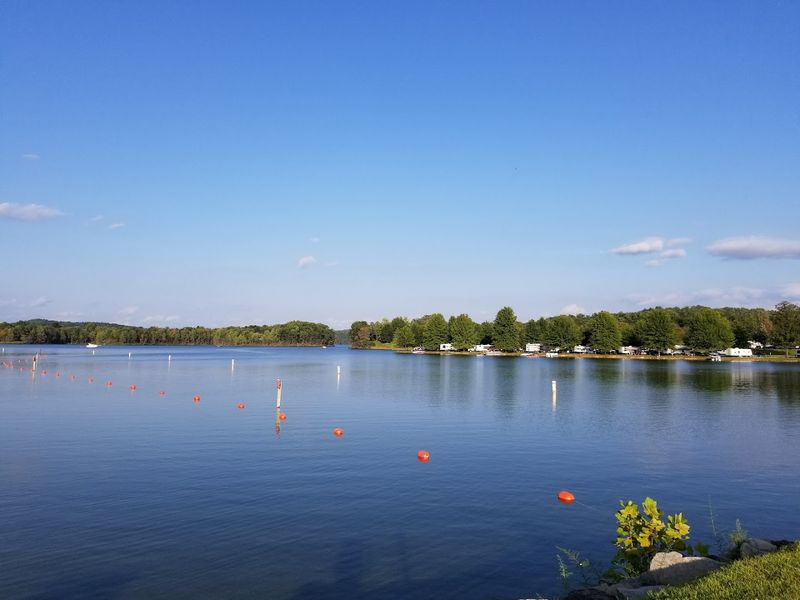
Swimming in water this clear is an experience that is hard to describe without sounding dramatic. The lake’s turquoise tones are visible from the surface, and once in the water, the clarity becomes even more striking.
Swimmers can see the bottom with unusual ease in the shallower areas.
Designated swimming areas provide safe spots for families and casual swimmers. The beach area near the state park is a popular choice, offering a sandy entry point and relatively calm conditions.
No-wake zones on certain parts of the lake allow open-water swimmers to cover longer distances without worrying about boat traffic.
The Whippoorwill Road area offers a more adventurous access point, with a short walk down to the water rewarding those willing to make the trip. Water conditions are generally calmer on weekdays, when boat traffic is lighter.
Weekends bring more activity and occasional wave action from passing boats, which adds a different kind of fun for those who enjoy a little movement in the water.
Planning A Visit To Summersville Lake
Getting the most out of a trip to Summersville Lake starts with timing. Summer brings the fullest water levels, the warmest temperatures, and the most activities.
Fall offers a different but equally compelling experience, with lower water levels exposing more of the gorge and foliage turning the hillsides vivid orange and red.
Camping is a popular choice, with options ranging from tent sites to RV hookups with electric and water connections. New cabin rentals are in development, expanding overnight options for those who prefer a roof overhead.
The Battle Run Campground sits close to a small beach and kayak launch, making it a practical base for water-focused trips.
Boat ramps provide access for those trailering their own vessels. Gear rentals are available for visitors arriving without equipment.
West Virginia’s road network connects Summersville Lake to nearby towns, making supply runs straightforward. The lake sits within Nicholas County, and the surrounding area offers additional dining and lodging options for those who prefer to stay off-site.