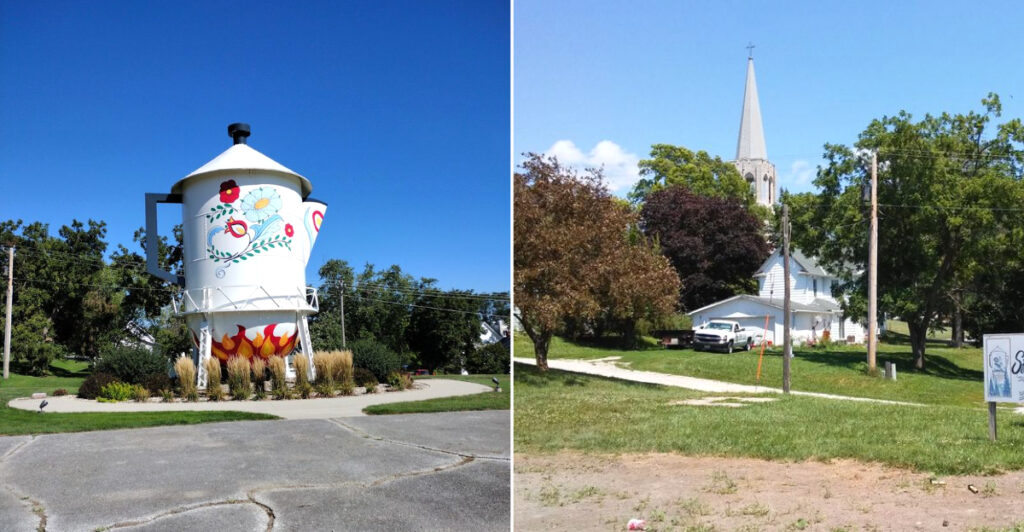
I have seen plenty of water towers, and nearly all of them understood the assignment far too literally. This Iowa landmark decided to become a giant Swedish coffee pot instead.
The cheerful blue-and-white structure now stands on the grounds of a small-town museum with deep immigrant roots, a serious appreciation for coffee, and a wonderfully specific connection to American television history. What first looks like roadside whimsy quickly becomes a story about identity, hospitality, and local pride.
How did ordinary infrastructure turn into one of Iowa’s most memorable landmarks? The answer is far richer than the oversized handle suggests.
A Coffee Pot on the Horizon
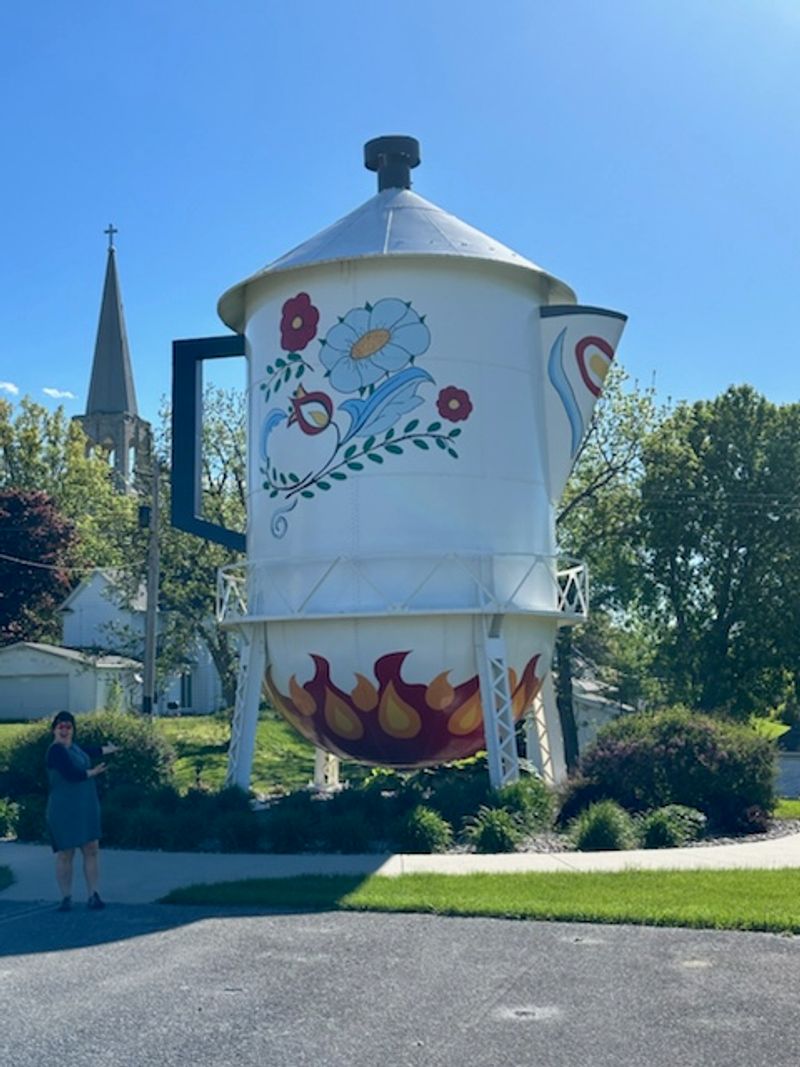
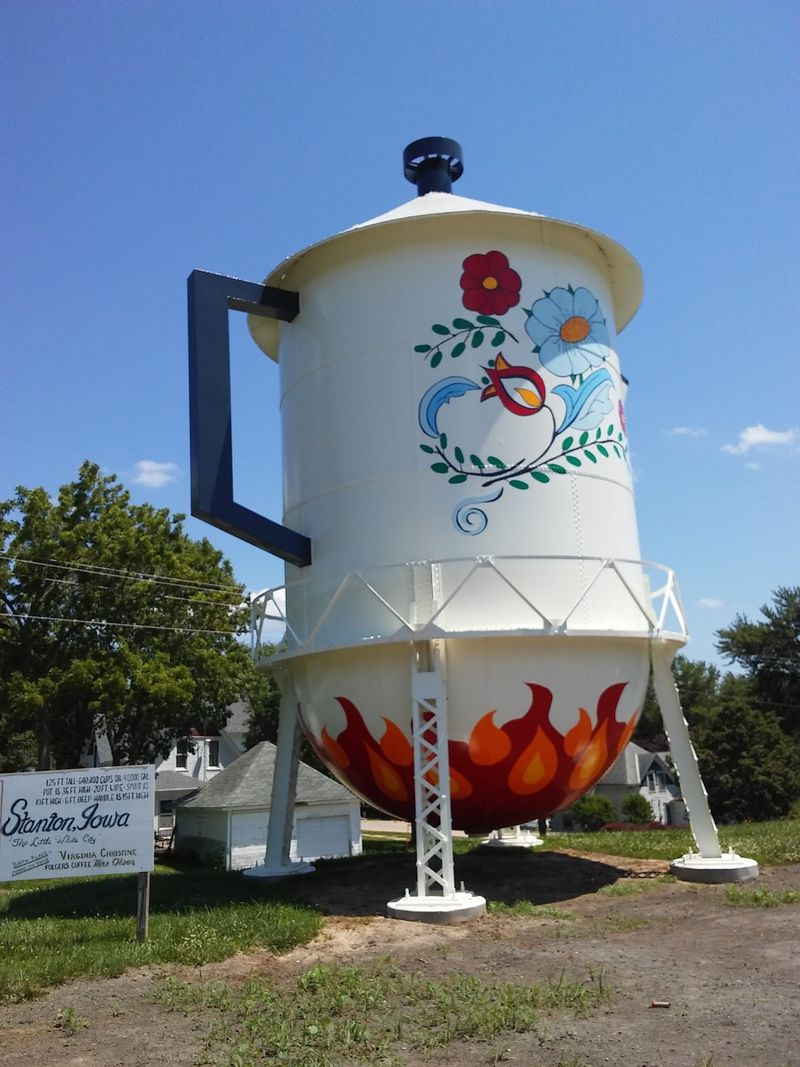
Most water towers blend into the background. But the former water tower now displayed in Stanton, Iowa, has been stopping drivers cold since the town transformed it in 1971.
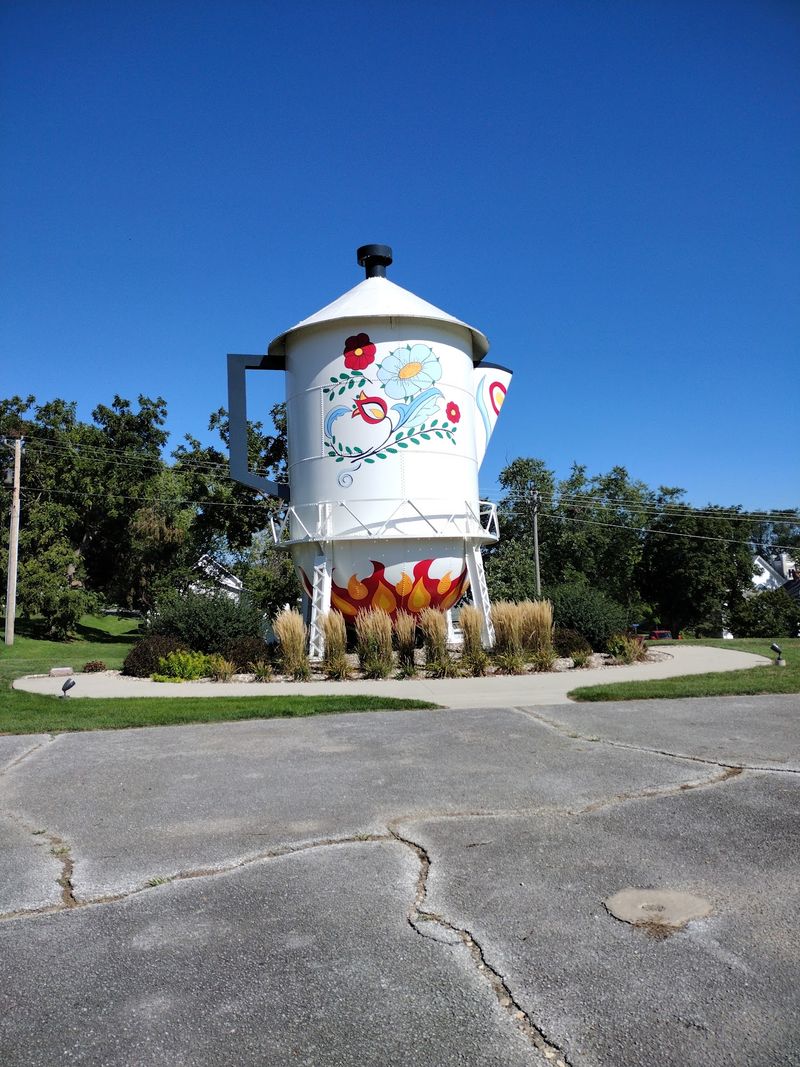
The town decided to honor its Swedish heritage by transforming a functional water tower into the world’s largest Swedish coffee pot. The result is a cheerful, folk-art-style structure decorated with blue and white floral designs that stand out against the open sky.
At roughly 35 feet tall, this is not a small prop. It served as a functional piece of town infrastructure before being retired in 2015, moved to the museum grounds, and preserved as a historic landmark.
The coffee pot sits on Hilltop Avenue, and the view approaching it on a clear day is genuinely delightful. You round a bend, and there it is, bold and cheerful, completely out of context in the best possible way.
For anyone curious about quirky Americana with real cultural roots, this is the kind of landmark that rewards a detour.
The Swedish Heritage and Cultural Center and the coffee pot are located together at 410 Hilltop Ave, Stanton, IA 51573.
The Swedish Roots of Stanton
Stanton was established as a Swedish immigrant settlement in 1870. That influence shaped everything from the town’s architecture to its social customs.
Many of these settlers had connections to southern Sweden and established Swedish communities elsewhere in the Midwest, bringing with them a strong work ethic, Lutheran faith, and a deep love of coffee, a cultural ritual sometimes called fika back in Sweden.
Coffee was more than a drink in Swedish culture. It was a daily gathering, a way to strengthen community bonds, and a symbol of hospitality extended to neighbors and strangers alike.
That tradition carried forward for generations, and by the time the town decided to rebrand its water tower, the coffee pot was a natural and meaningful choice. It was not just a novelty.
It was a tribute to the people who built the town.
The Swedish Heritage and Cultural Center keeps this history alive through exhibits, documents, and artifacts that trace the journey from Sweden to Montgomery County. Visiting gives you a genuine sense of where these families came from and what they built once they arrived.
Virginia Christine and the Folgers Connection
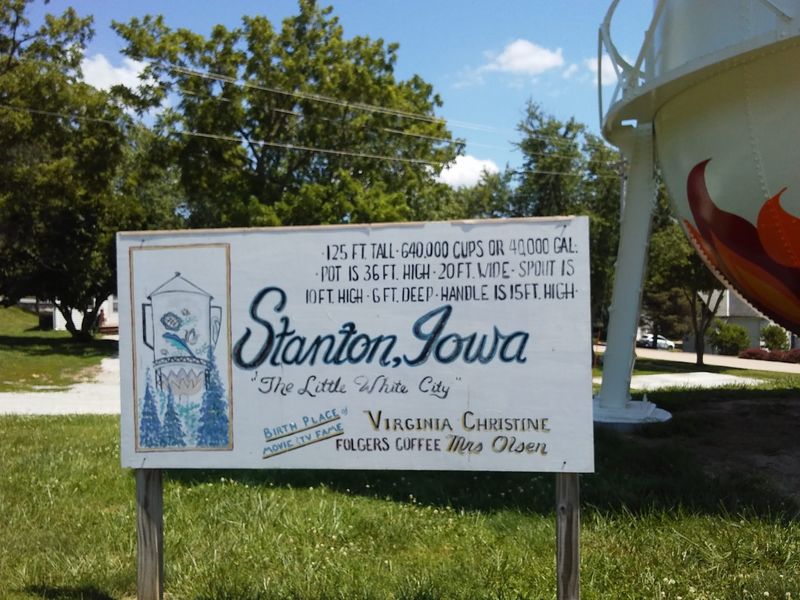
Here is a name worth knowing: Virginia Christine. She was born in Stanton, Iowa, and she became one of the most recognizable faces on American television as Mrs. Olson, the friendly neighbor she portrayed during a 21-year run in Folgers Coffee commercials beginning in the mid-1960s.
Her character was warm, wise, and always ready with a cup of Folgers, and she became a beloved fixture in American households for more than two decades. The role made her synonymous with good coffee and neighborly kindness.
Stanton embraced that connection enthusiastically. The coffee pot water tower became a tribute not just to Swedish coffee culture but also to their hometown celebrity.
A second water tower nearby was later designed to look like a giant Swedish coffee cup and saucer in her honor.
A historical marker beside the coffee pot recognizes Virginia Christine and explains the connection between Stanton, its coffee-themed landmarks, and her television career.
It is a proud and affectionate tribute to a woman who put this small town on the national map, one cup of coffee at a time.
Inside the Swedish Heritage and Cultural Center
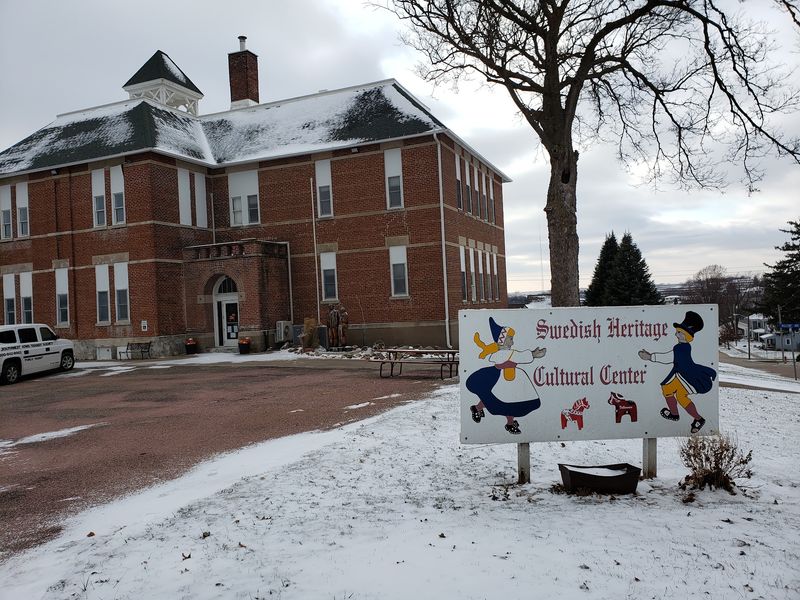
The museum itself is compact but genuinely rich in content. The exhibits cover Swedish immigration, Stanton’s development, and the specific families who shaped the community over generations.
You will find artifacts from Sweden, historical photographs, an early-1900s classroom, family-history materials, and displays covering subjects such as Stanton’s Children’s Home, local baseball, banking, and agriculture. Each display tells a small but meaningful story about real people and real lives.
A gift shop inside the center sells Swedish-themed items, including Dala horses, Swedish glass, cookbooks, linens, jewelry, coffee mugs, and seasonal decorations.
The selection gives visitors a chance to take home something connected to the culture celebrated by the museum.
The staff are friendly and knowledgeable, and the atmosphere feels more like visiting a neighbor’s home than a formal institution. That warmth is entirely fitting for a place rooted in Swedish hospitality traditions.
Plan to spend at least an hour or two exploring everything on the grounds. The center is open Wednesday through Saturday from 1 to 4 pm between April and October, with visits also available by appointment, so check the schedule before making the drive.
The Old Schoolhouse on the Grounds
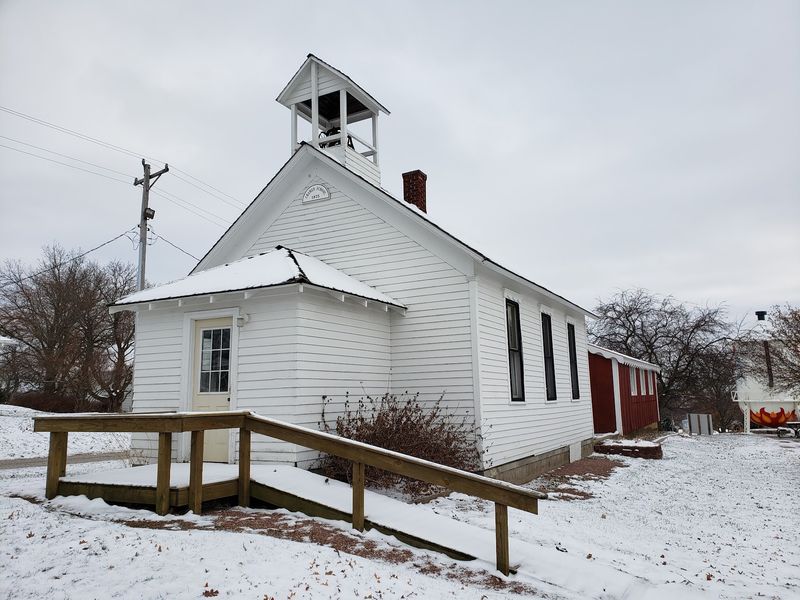
Beyond the coffee pot tower and the main museum building, the grounds of the Swedish Heritage and Cultural Center include a preserved one-room schoolhouse that dates back to the pioneer era.
Structures like this one were central to immigrant communities. They were not just places of learning.
They were where children of Swedish parents became fluent in English, where community meetings were held, and where the next generation was prepared for life on the American frontier.
The schoolhouse has been restored and stands as a tangible reminder of how education was conducted in rural Iowa more than a century ago. Stepping inside, you get a vivid picture of the discipline and simplicity that defined early frontier schooling.
Single desks, a chalkboard, and minimal decoration tell a story of practicality and purpose. There was nothing extra here, just the essentials needed to teach reading, writing, and arithmetic to children who had chores waiting at home.
This kind of preserved structure grounds the broader museum experience in something physical and specific. It moves the story from abstract history to something you can actually see and stand inside.
Swedish Fika Culture and the Coffee Tradition
Coffee in Swedish culture is not just a morning habit. It is a ritual called fika, a dedicated pause in the day meant for coffee, something sweet to eat, and good conversation with people you care about.
The Swedish settlers who built Stanton brought this tradition with them, and it quietly shaped the town’s social fabric for generations. Neighbors gathered over coffee.
Disputes were settled over coffee. Celebrations were marked with coffee.
It was the common thread running through daily life.
That cultural weight is exactly why the coffee pot water tower carries so much meaning beyond its novelty. It is not just a funny-shaped tank on a hill.
It is a community saying, “This is who we are and where we came from.”
The museum’s exhibits touch on this tradition, and the connection to Virginia Christine’s Folgers commercials makes the theme even richer. She was, in many ways, a real-life embodiment of the fika spirit, warm, welcoming, and always ready to offer a cup.
Understanding fika adds real depth to your visit and makes the coffee pot tower feel like much more than a roadside attraction.
The Drive to Stanton
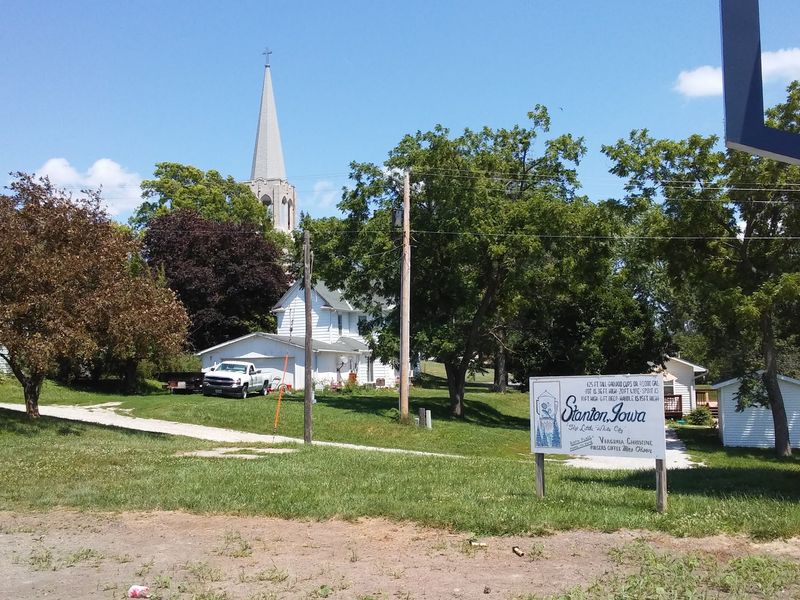
Getting to Stanton is part of the experience. The town sits in Montgomery County in southwestern Iowa, and the drive through the surrounding farmland is genuinely beautiful, especially in the warmer months when the fields are full and green.
The landscape here is classic Midwest: gently rolling hills, wide-open skies, and the occasional grain elevator breaking the horizon. There is a quietness to it that feels restorative if you have been spending too much time in cities.
Highway 34 and nearby county roads bring you through small towns and past working farms that look much as they have for decades. The pace slows naturally as you get closer to Stanton, and that gradual deceleration puts you in exactly the right frame of mind for a heritage museum visit.
Multiple visitors have noted that the drive itself was one of the highlights of their trip, and that tracks completely with the landscape on offer. Rural Iowa can make you feel both small and calm at the same time.
Plan the drive for a clear day if you can. The coffee pot on the hill looks its absolute best against a bright blue sky.
Special Events Throughout the Year
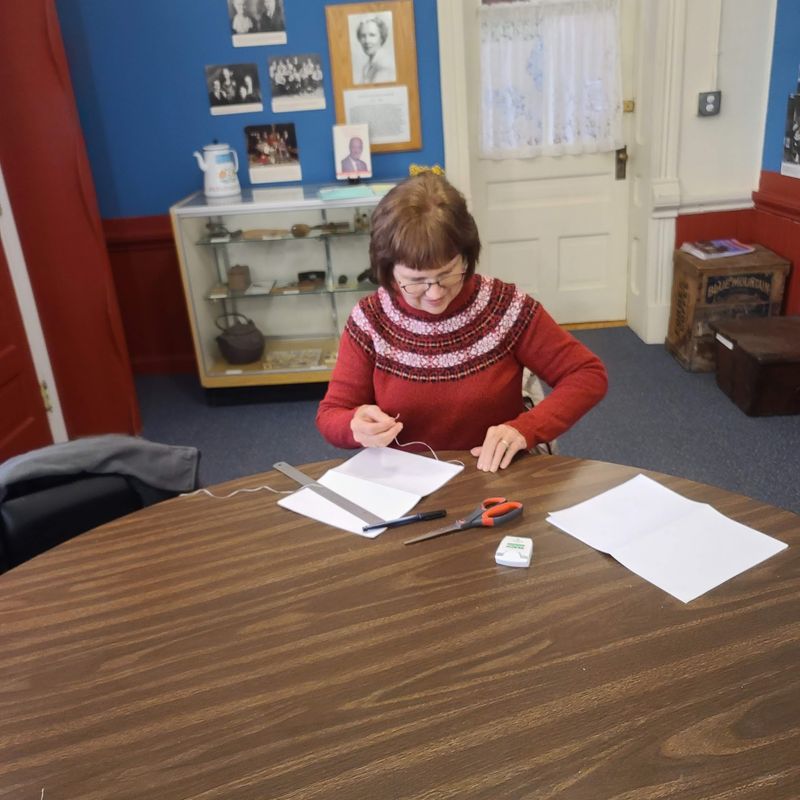
The Swedish Heritage and Cultural Center is not just a static collection of artifacts. It hosts special events throughout the year, many of them tied directly to Swedish cultural traditions and seasonal celebrations.
Midsommar, or Midsummer, is one of the most beloved celebrations in Swedish culture, and the center has hosted events that bring this tradition to Stanton. These gatherings draw both locals and visitors who want to connect with Scandinavian heritage in a hands-on way.
Other events focus on Swedish history, immigrant stories, and traditional crafts. The programming shifts with the seasons, so checking the center’s website at swedishheritageandculturalcenter.org before your visit is a smart move to see what might be happening during your trip.
These events turn the center from a place you visit once into a place you return to. Each season brings something different, and the community involvement makes every event feel genuine rather than staged.
For families with Swedish or broader Scandinavian ancestry, these gatherings offer a rare chance to connect with heritage in a living, active way rather than just reading about it behind glass cases.
Connecting Kids to Ancestry

Family visits to the Swedish Heritage and Cultural Center carry a particular kind of weight for parents with Scandinavian roots.
Watching children make a real connection to their ancestry through photographs, artifacts, and stories is a different experience from anything a textbook can offer.
The museum does a good job of presenting history in a way that is accessible to younger visitors. The exhibits are not overly academic, and the physical objects on display give kids something concrete to focus on and ask questions about.
The coffee pot tower alone is enough to capture a child’s imagination. A water tower shaped like a coffee pot is inherently funny and fascinating, and that initial hook often leads to genuine curiosity about why it exists and what it represents.
Parents have noted that visits here sparked real conversations about family history that continued long after the drive home. That kind of lasting impact is rare and worth seeking out.
For families planning a summer road trip through the Midwest, adding Stanton to the itinerary requires minimal extra mileage but delivers a memorable and meaningful stop that the whole family will remember.
Practical Tips for Your Visit
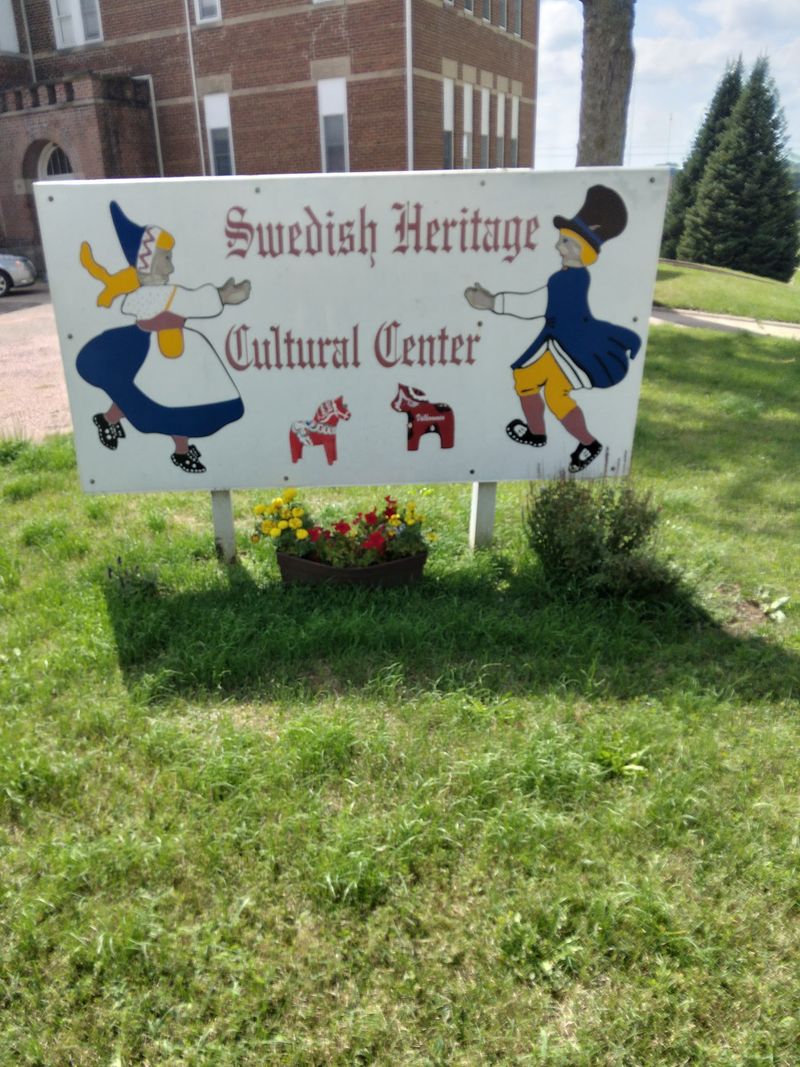
A few logistical notes will help you make the most of your time at the Swedish Heritage and Cultural Center.
The museum is open Wednesday through Saturday from 1 to 4 pm between April and October, and visits outside regular hours may be arranged by appointment, so plan accordingly.
The phone number is 712-829-2840 if you want to call ahead or ask about special events. The website at swedishheritageandculturalcenter.org is also a good resource for current hours and programming updates.
The center is not heavily advertised, which means crowds are rarely a problem. Multiple visitors have described stumbling upon it by chance and being genuinely surprised by how worthwhile the stop turned out to be.
Intentional visitors tend to leave even more satisfied.
Wear comfortable shoes if you plan to explore the full grounds, including the schoolhouse and the preserved coffee pot. The outdoor areas are easy to walk but worth taking your time with.
The gift shop inside carries a variety of Swedish-themed items, including Dala horses, glassware, cookbooks, linens, jewelry, and coffee mugs.
General admission is $5 for adults, making a visit here low-cost, high-reward, and genuinely hard to forget once you have made the trip.