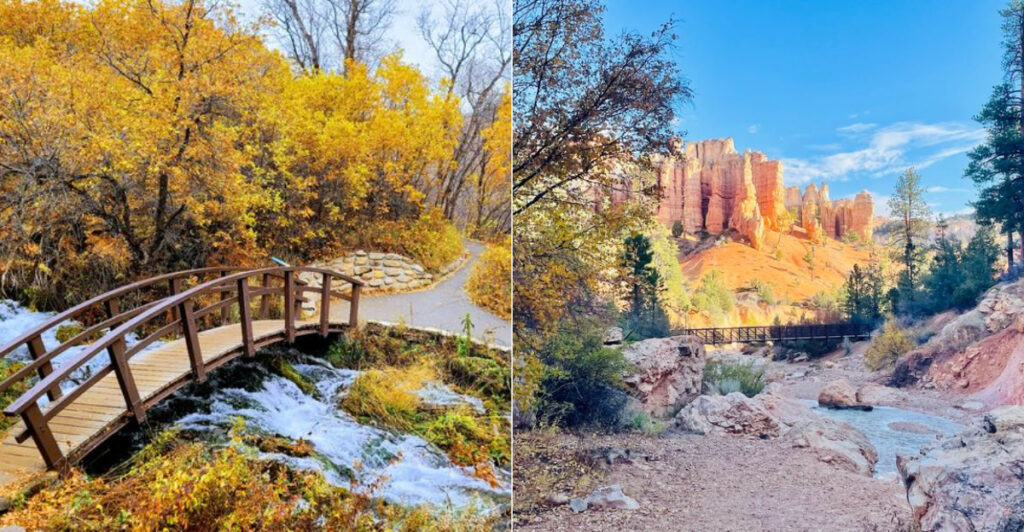
Beauty hits differently when it does not make you suffer for it first. In Utah, some of the most rewarding trails begin close to the road, then quickly trade traffic noise for canyon shade, aspen groves, waterfall mist, and wide-open views that feel wildly generous for such a short walk.
These are the kinds of hikes that work when the group has mixed energy levels, when kids need a real payoff, or when you want a memorable outing without turning the day into an endurance test. The magic is in how fast the scenery changes.
One minute you are adjusting your water bottle, and the next you are staring at cliffs, cascades, or a viewpoint that makes the whole car go quiet. Bring snacks, wear decent shoes, and leave room on your camera roll.
Utah’s easiest adventures can still deliver the kind of scenery that feels almost unfairly dramatic.
Grotto Falls Trail
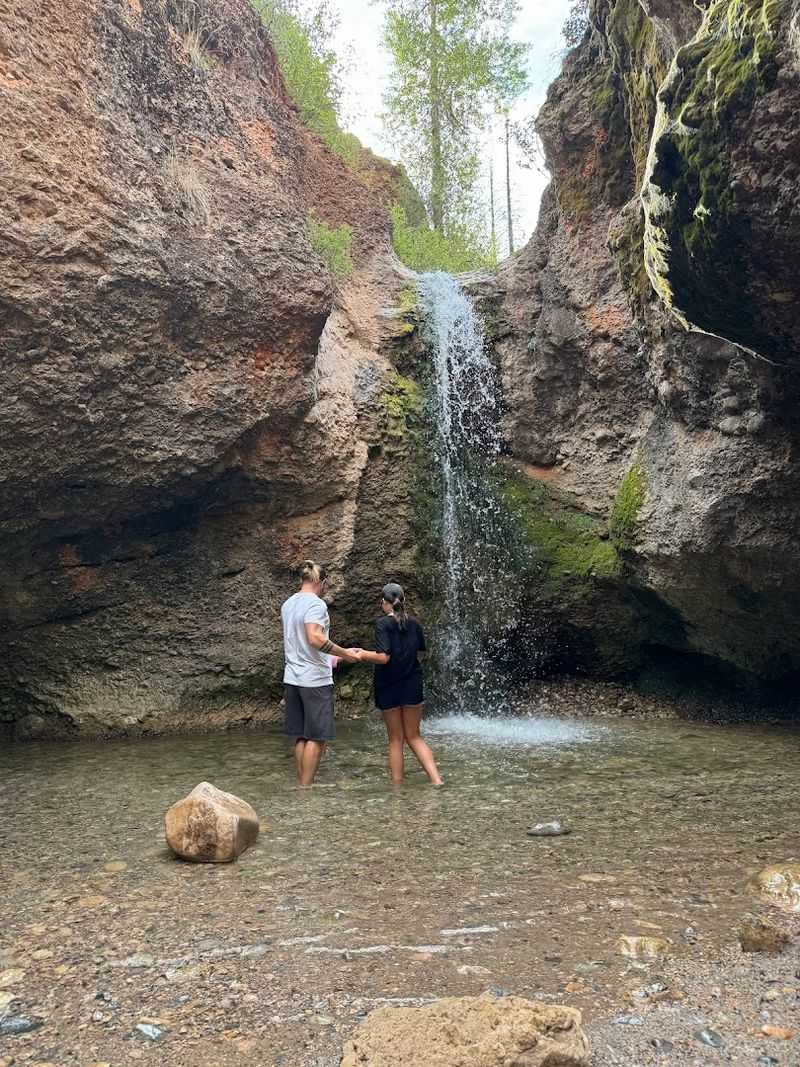
Payson Canyon has a way of sneaking up on you. You drive the Nebo Scenic Loop Road half-expecting a forgettable forest walk, and then suddenly there’s a stream gurgling beside your boots and a waterfall spilling into a mossy grotto like something out of a storybook.
Grotto Falls earns its name without any exaggeration.
The trail is short and family-friendly, following the stream with a few easy crossings that kids absolutely love. Wear shoes you don’t mind getting slightly damp, because the rocks near the falls can be slippery in the best possible way.
The payoff is a cool, shaded alcove where the water drops into a small pool and the canyon walls close in just enough to feel cinematic.
Go on a weekday morning if you want the place to yourself. Summer weekends draw families from nearby Payson and Spanish Fork, so an early start gives you that rare, quiet moment where the only sound is moving water.
Pair the hike with a scenic drive along the rest of the Nebo Loop, and you’ve turned a simple waterfall stop into an entire afternoon worth remembering.
Battle Creek Falls Trail
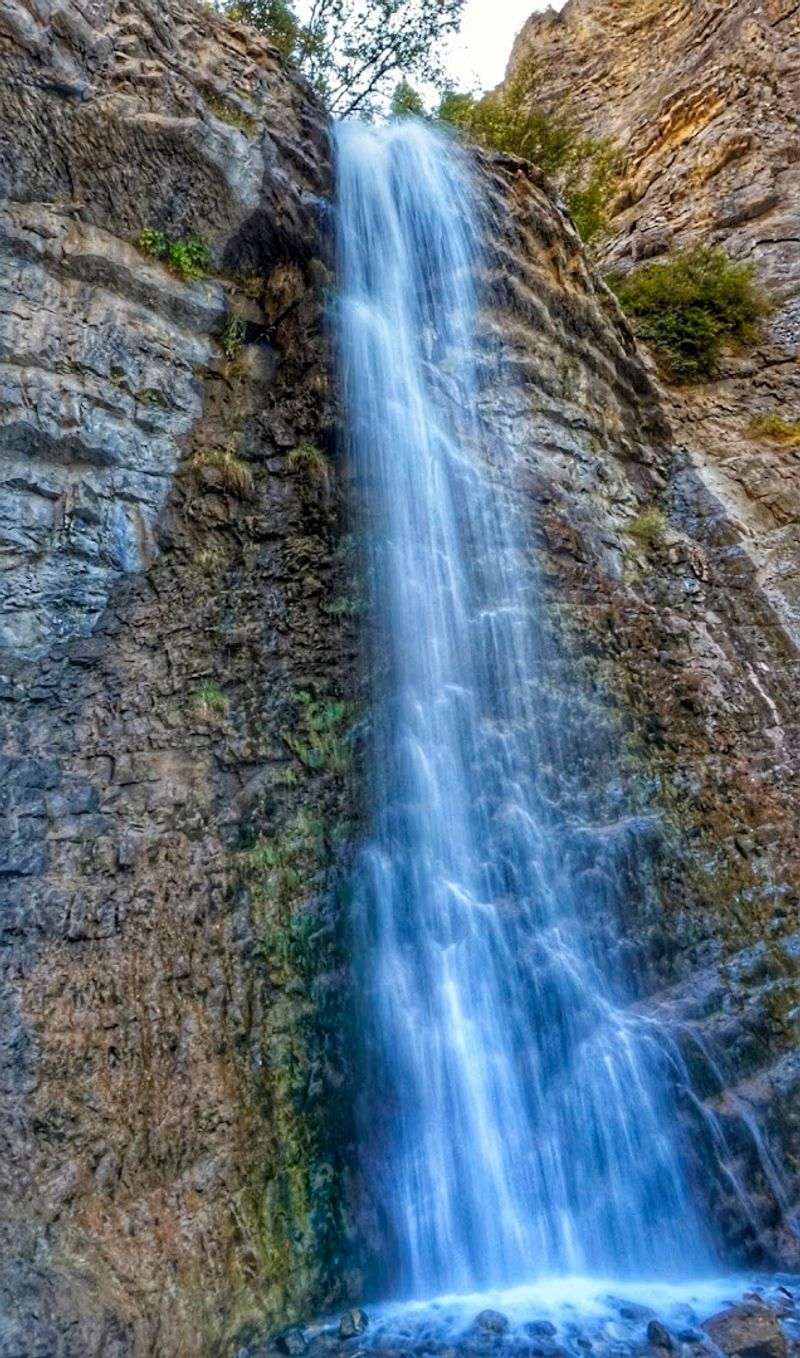
There’s something almost cheeky about Battle Creek Falls. It sits tucked into the foothills above Pleasant Grove, barely half a mile from the trailhead, yet it manages to feel like a genuine discovery every single time.
Utah Lake shimmers in the valley below, and the contrast between that wide, flat view and the narrow canyon ahead of you is genuinely striking.
The route is straightforward enough for young children and casual walkers, following Battle Creek up into a tight ravine where the waterfall waits at the end like a well-earned reward. Spring and early summer bring the most impressive flow, fed by snowmelt from the Wasatch peaks above.
By late summer the falls calm down, but the canyon itself stays cool and inviting.
The trailhead sits right at the edge of a residential neighborhood, which gives the whole outing a wonderfully low-key feel. You park, walk a few minutes, and suddenly you’re standing in front of cascading water with a panoramic valley view behind you.
Honestly, the effort-to-reward ratio here is almost unfair. If you’re looking for a confidence-boosting first hike for someone new to the trail life, this is the one to pick.
Lisa Falls Trail
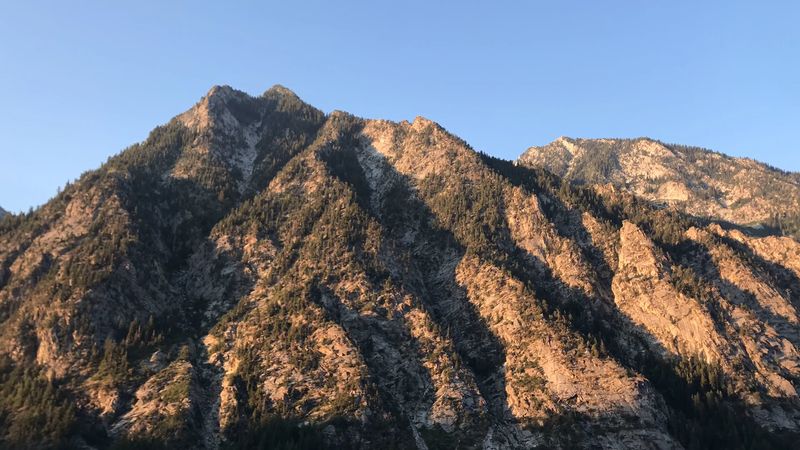
Most people drive right past Lisa Falls without knowing it exists. It hides between mile markers six and seven on Little Cottonwood Canyon Road, announced by nothing more than a small pullout and the faint sound of falling water if you crack your window.
That low-key entrance is exactly what makes it feel like a secret worth keeping.
The hike is genuinely brief, more of a short scramble than a formal trail, but the payoff is a lovely cascade tucked against granite canyon walls that feel enormous up close. The canyon is part of a protected watershed, so dogs aren’t allowed, and parking is limited enough that timing matters.
Aim for early morning on a weekday if you want breathing room.
What I appreciate most about Lisa Falls is its unpretentious character. There’s no visitor center, no interpretive signs, no gift shop.
Just water, rock, and the quiet satisfaction of finding something beautiful without much fanfare. It pairs well with a drive deeper into Little Cottonwood Canyon, where the scenery only gets more dramatic the further you go.
Think of it as an appetizer for the bigger mountain views waiting just around the bend.
Rocky Mouth Falls Trail
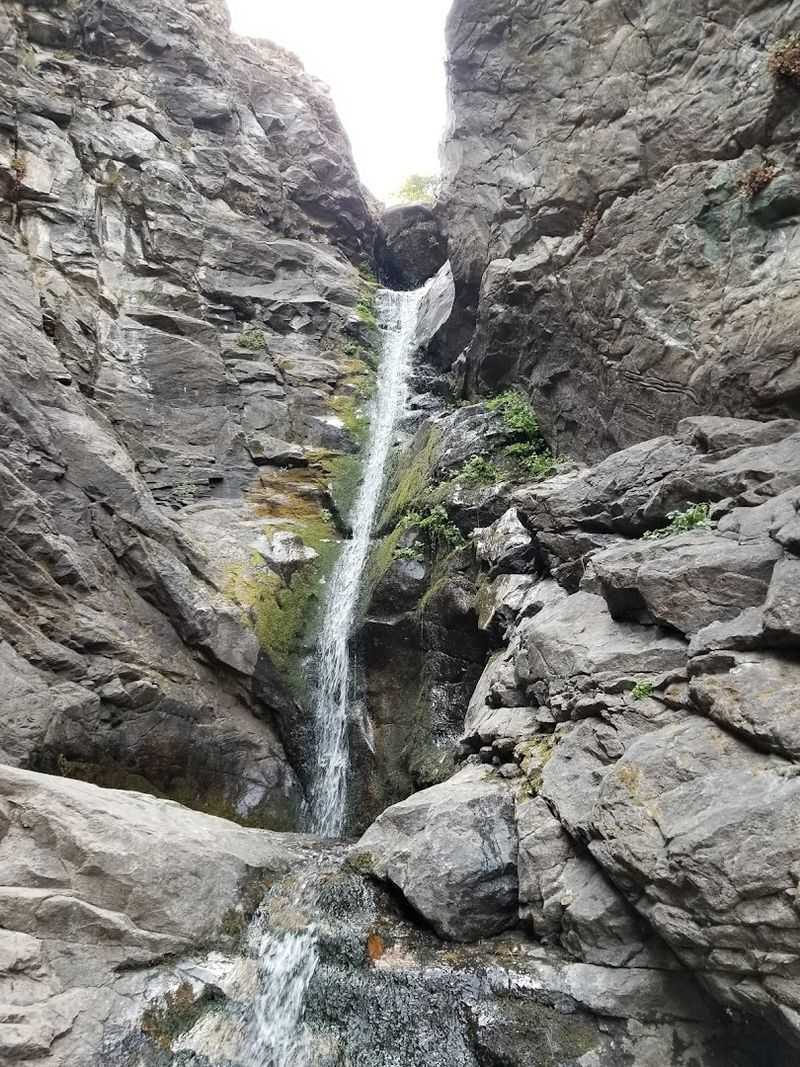
Rocky Mouth Falls has the personality of a well-kept neighborhood secret. The trailhead sits right along Wasatch Boulevard in Sandy, sandwiched between suburban streets and the rugged Wasatch foothills, and the contrast is part of the charm.
One minute you’re passing mailboxes, and the next you’re squeezing into a narrow canyon that feels genuinely wild.
The hike itself is short and easy-to-moderate, with the canyon walls tightening as you move toward the falls. The waterfall arrives with satisfying drama, dropping into a rocky alcove that feels surprisingly remote given how close you are to the city.
Spring runoff makes the falls impressive, but even in drier months the canyon itself is worth the walk.
Families and solo hikers both find something to love here. Kids are fascinated by the narrow slot-canyon feel of the final approach, while adults appreciate how quickly the urban noise disappears behind them.
Parking along the boulevard is manageable if you arrive before mid-morning. Pack water and good footwear since the rocky sections near the falls demand a bit of attention.
Rocky Mouth is proof that you don’t need to drive hours into the wilderness to find something that genuinely takes your breath away.
Cascade Springs Interpretive Trail
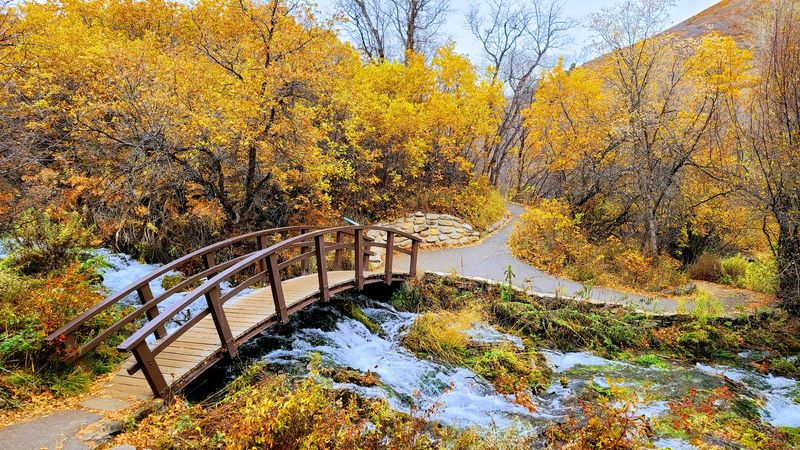
Cascade Springs operates by its own gentle logic. Water bubbles up from the ground, cold and impossibly clear, then rushes over limestone terraces in a series of small cascades before settling into pools that look almost too turquoise to be real.
It’s less of a hike and more of a slow, enchanted wander, and that suits most people just fine.
The Forest Service has built boardwalks and bridges throughout the area, making it accessible for strollers, older visitors, and anyone who prefers their waterfall experience without scrambling over loose rocks. Mountain views frame the scene from multiple angles, and interpretive signs explain the spring geology in a way that’s genuinely interesting rather than dry.
Note that the gate on the Midway side closes seasonally around December 15, so check access before a winter visit.
Cascade Springs rewards slow visitors most generously. Pause on one of the bridges, watch the water move beneath you, and you’ll understand why locals treat this place like a restorative ritual rather than a checkbox on a trail list.
Combine it with a stop in nearby Midway for pie or a warm drink, and you’ve assembled a near-perfect low-effort Utah afternoon that punches well above its planning weight.
Provo River Falls
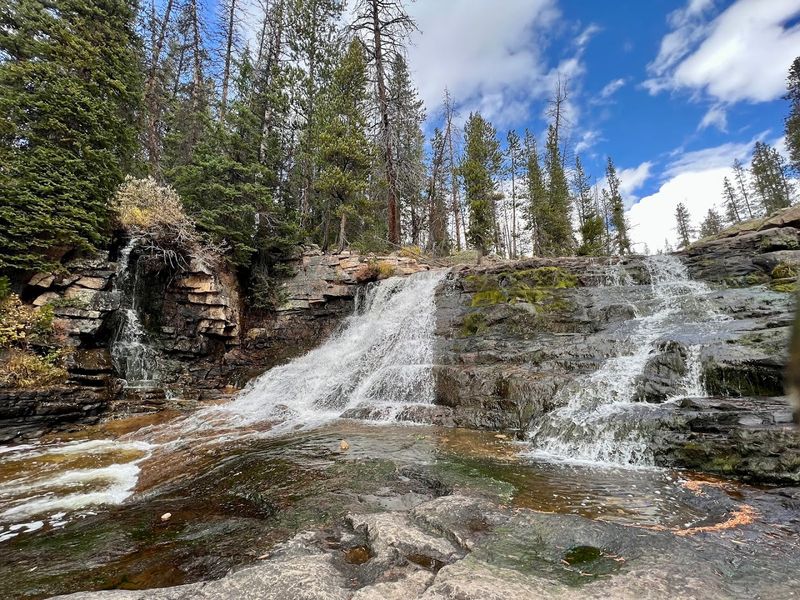
Driving the Mirror Lake Highway through the Uintas already feels like a reward in itself. The highway climbs through aspen groves and open meadows, gaining elevation with a kind of easy confidence, and then Provo River Falls appears along the roadside like the exclamation point the drive deserved.
The cascades are wide, energetic, and refreshingly photogenic without requiring any real effort to reach.
A short walk from the overlook brings you close enough to feel the mist and hear the full, rushing roar of the river tumbling over its rocky steps. The surrounding alpine scenery is sweeping in the truest sense, open sky, distant ridgelines, and the kind of clean mountain air that makes city lungs feel newly installed.
Peak flow happens in late spring and early summer, but the falls remain active well into the season.
Provo River Falls is the rare waterfall stop that works beautifully as a standalone destination or as one bead on a longer Mirror Lake Highway road trip. Pair it with a picnic at one of the nearby pullouts and you’ve got an outing that feels like far more than the minimal planning it required.
The Uintas have a generous spirit, and this spot captures it perfectly.
Mossy Cave Trail
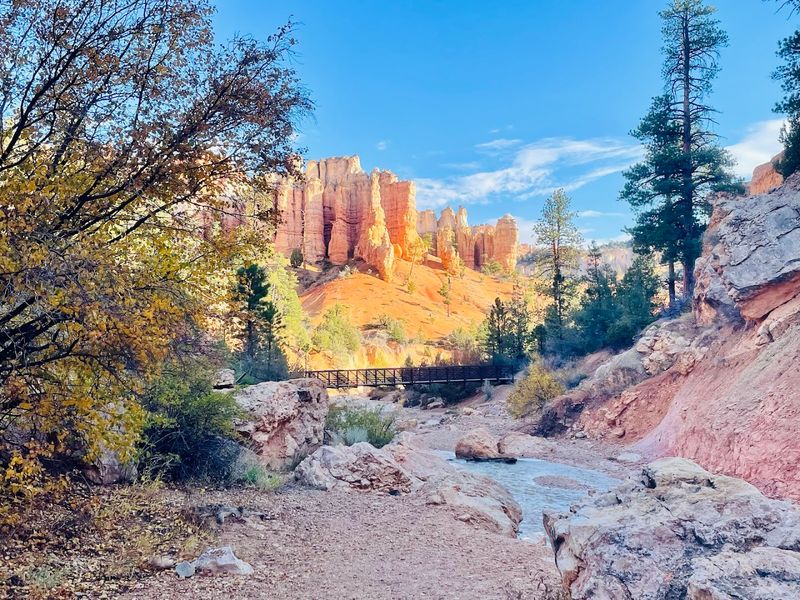
Bryce Canyon gets most of its attention for the big amphitheater views and the steep hoodoo descents, but Mossy Cave Trail quietly offers a different kind of experience entirely. It runs along a small stream, passes through a landscape dotted with those famous orange-and-red spires, and ends at a cool, dripping cave alcove that feels almost prehistoric.
In summer, a seasonal waterfall adds to the spectacle.
The National Park Service calls it one of the park’s easier hikes, and that assessment holds up. The trail is short, the elevation gain is modest, and the scenery delivers well above its difficulty rating.
Winter visitors get a bonus: the falls freeze into dramatic icicle formations that hang from the cave entrance like natural chandeliers. Either season, the place has a theatrical quality that makes every photo look deliberate.
Mossy Cave sits just off Utah State Route 12, slightly removed from the main park crowds, which gives it a quieter, more contemplative atmosphere. Arriving early or late in the day improves the light dramatically and keeps the trail pleasantly uncrowded.
If you’re already making the drive to Bryce, skipping this trail would be like ordering a meal and leaving before dessert arrives. Don’t do that to yourself.
Lower Calf Creek Falls Trail
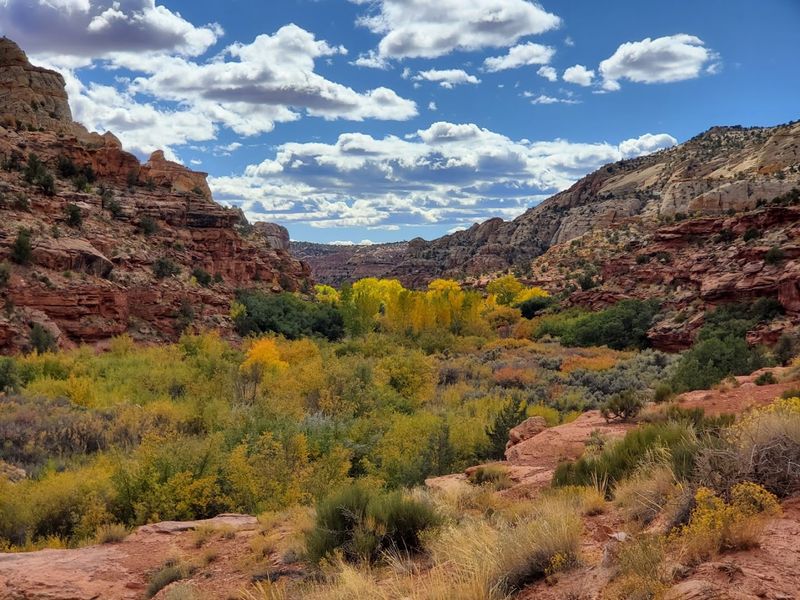
Six miles sounds like a commitment, and it is, but Lower Calf Creek Falls earns every step with the kind of payoff that makes you forget you were ever tired. The trail follows a flat canyon bottom through Escalante Canyons, past ancient granaries, beaver ponds, and canyon walls streaked with desert varnish in shades of rust and charcoal.
Then the falls appear: 126 feet of white water dropping into a pool so clear it looks digitally enhanced.
The Bureau of Land Management developed this trail thoughtfully, adding interpretive panels that give the canyon walls context without turning the experience into a classroom. It’s described as a good introductory hike to the broader Escalante region, and that framing is accurate.
The terrain is genuinely manageable, though the distance and sun exposure require water, sunscreen, and a realistic sense of the Utah desert’s mood.
Start early, especially in summer, when afternoon heat in the canyon can be relentless. The reward at the end, that cool mist, that improbable pool, that 126-foot curtain of falling water framed by red sandstone, is one of the most legitimately stunning natural sights in the state.
Lower Calf Creek Falls is the kind of place that turns casual hikers into devoted Utah converts.
Stewart Falls Trail
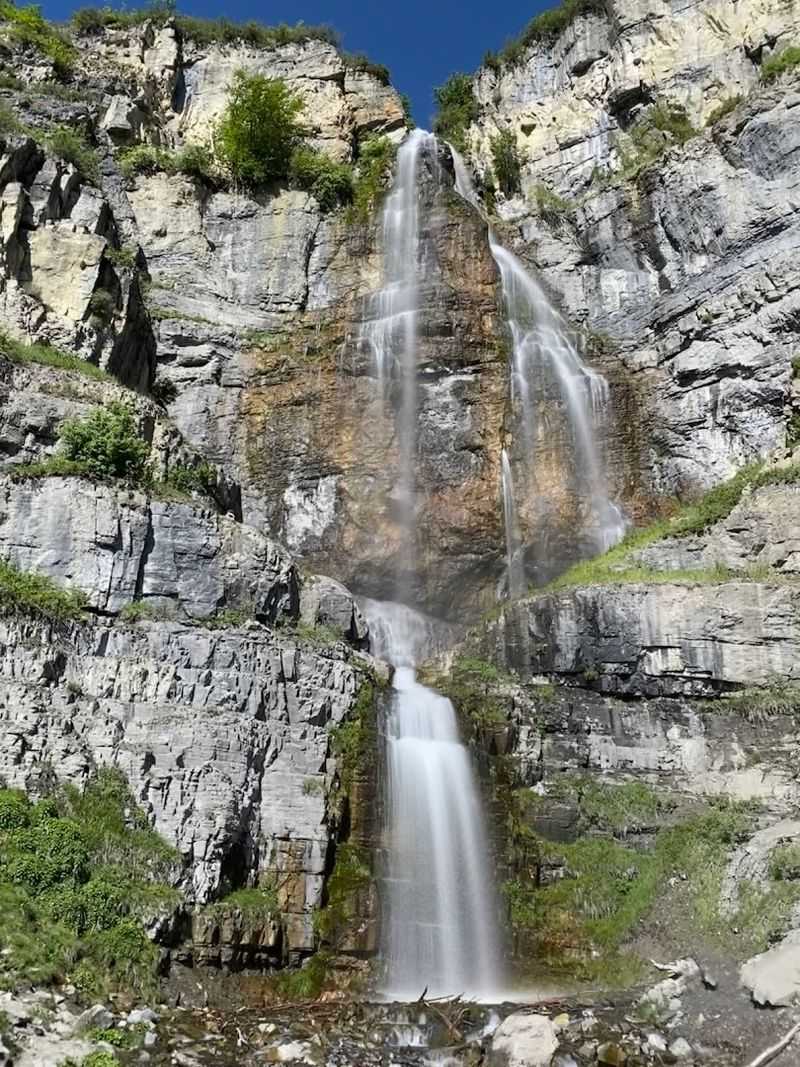
Stewart Falls has a sense of occasion that most waterfalls can only aspire to. Two tiers, more than 200 feet of total drop, backed by the dramatic slopes of Mount Timpanogos, the whole setup feels less like a hike destination and more like a landscape painting you accidentally walked into.
The Aspen Grove Trailhead near Sundance puts you on a forested path that builds anticipation at every turn.
The trail runs moderate rather than easy, with enough elevation and distance to feel like genuine exercise rather than a casual stroll. That said, it remains accessible for reasonably fit hikers of most ages, and the forest scenery along the way keeps the effort feeling worthwhile long before the falls come into view.
Aspens turn golden in early fall, making autumn visits particularly spectacular.
Timing your visit around late morning light puts the falls in the best natural glow, though the canyon shade keeps things comfortable even on warm days. Sundance Resort sits nearby, which means a post-hike meal or coffee stop is never far away.
Stewart Falls rewards the slightly greater effort with a payoff that frankly embarrasses easier trails. If you’re going to choose one moderately ambitious waterfall hike in Utah, make it this one and don’t look back. Utah’s easiest adventures can still deliver the kind of scenery that feels almost unfairly dramatic.