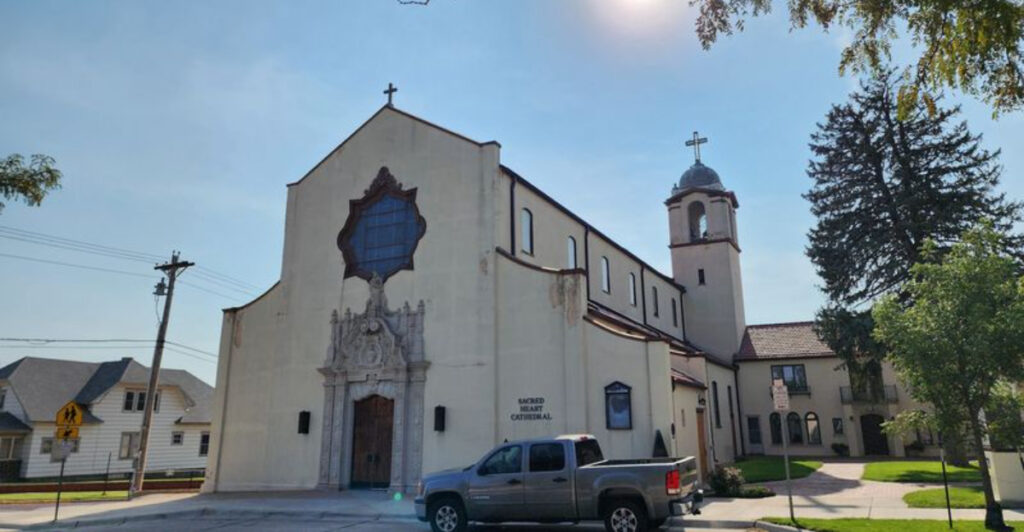
Some places make history feel taller. Across Kansas, beautiful churches rise from small towns, prairie roads, and quiet neighborhoods with stained glass, graceful steeples, carved details, and stories shaped by generations of faith and community.
They are more than landmarks. They are testaments to patience, devotion, and the kind of craftsmanship that still makes people stop and look up. The beauty is not only in the architecture.
It is in the way these churches hold weddings, Sunday mornings, immigrant stories, local memories, and the steady rhythm of towns that grew around them.
Each one feels like a chapter written in stone, wood, glass, and light, shaped by time and detail, where every surface tells part of a larger story you can almost step into.
I have always loved places where beauty and history share the same doorway, and Kansas churches like these would make me slow down, step closer, and listen with my eyes.
1. Basilica Of St. Fidelis, Victoria
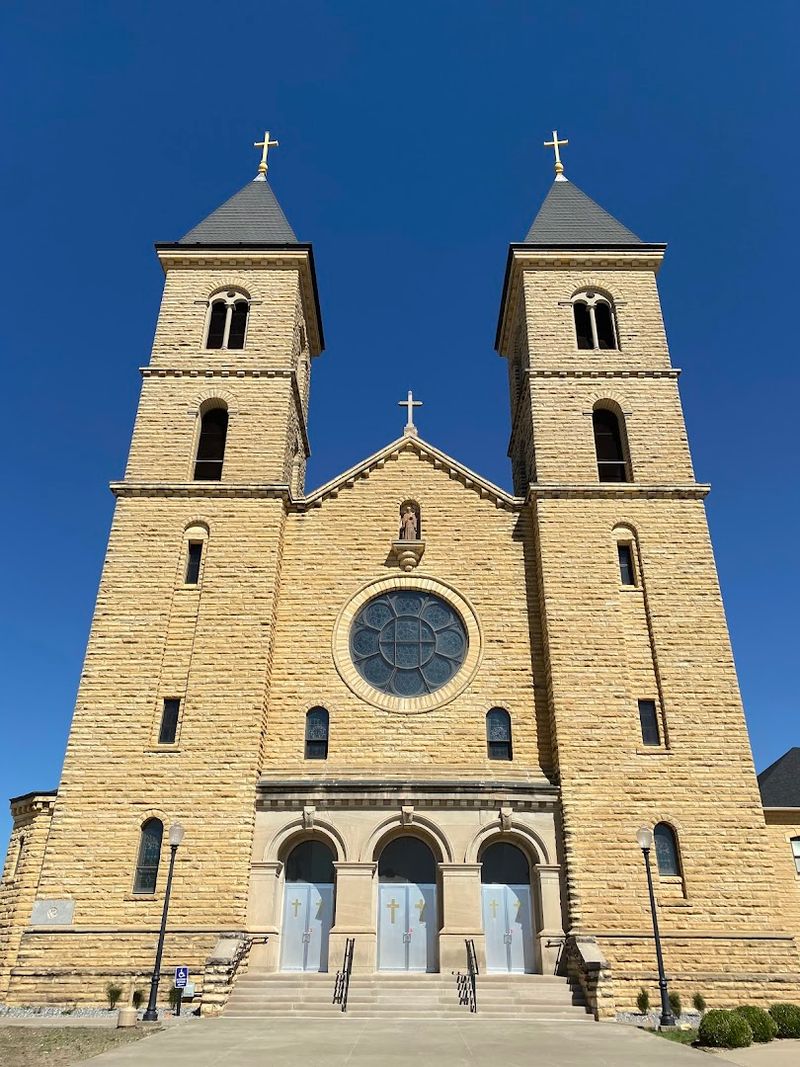
Standing on the open Kansas plains like a cathedral transplanted straight from Europe, the Basilica of St. Fidelis in Victoria is one of the most strikingly unexpected sights in the entire state.
Nicknamed the “Cathedral of the Plains,” this limestone giant was built by German-Russian immigrants in 1911 and officially received minor basilica status in 2014.
The twin towers soar into the sky, making the building visible for miles across the flat surrounding landscape.
Inside, the church holds elaborate stained glass windows, detailed stonework, and a sense of grandeur that feels almost impossible given the remote Kansas setting.
The congregation that built it had already constructed two earlier churches on the same site, each one bigger than the last, reflecting their deep devotion and growing community pride.
St. Fidelis remains an active parish today, and visitors from all over the world make the trip to Victoria just to stand inside this prairie masterpiece and soak it all in.
2. St. Joseph Catholic Church, Hays
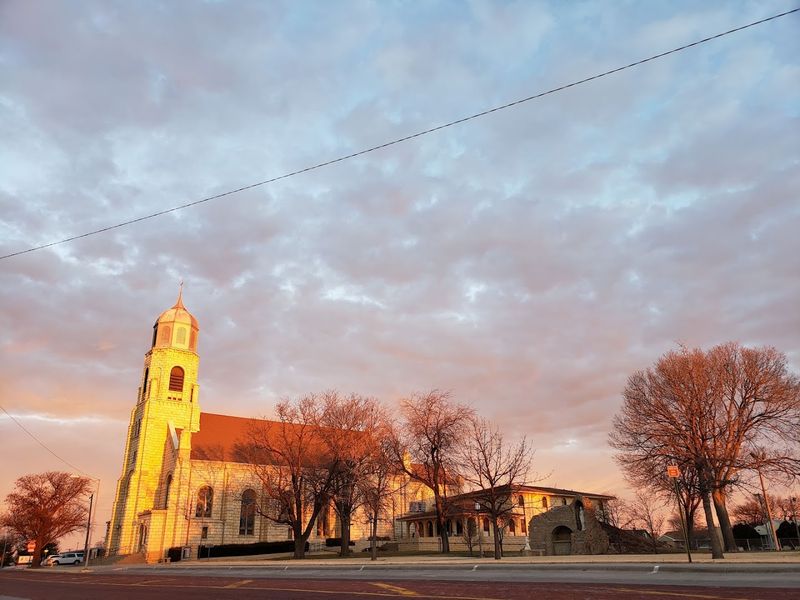
Long before Hays became a well-known western Kansas city, St. Joseph Catholic Church was already putting down roots that would last for generations.
Founded in 1876, the parish grew alongside the frontier town itself, becoming a spiritual anchor for settlers navigating the unpredictable life on the Great Plains.
The current church building is a handsome structure featuring detailed stonework and a prominent steeple that gives it a commanding presence in the city landscape.
St. Joseph is deeply connected to the history of Hays and the broader settlement of western Kansas, making it as much a historical landmark as it is a place of worship.
The church has served the community through droughts, wars, and sweeping social changes, and its walls carry the quiet weight of all those shared experiences.
A visit to St. Joseph in Hays offers a fascinating window into the faith that helped build this part of the American frontier from the ground up.
3. St. Catherine Catholic Church, Catharine
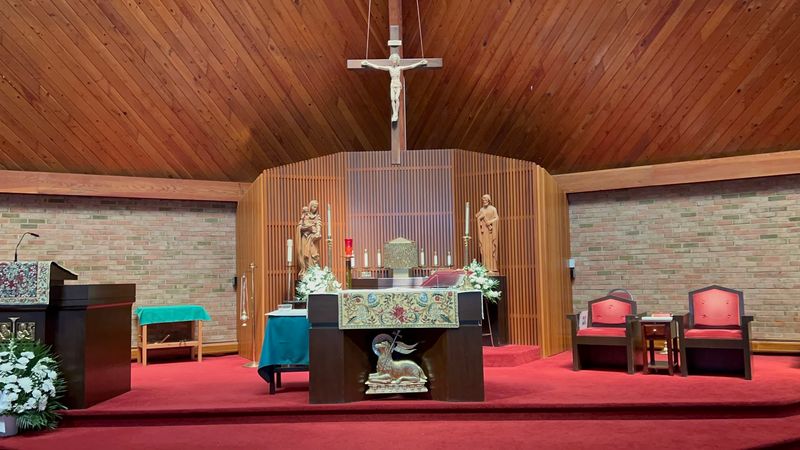
The small village of Catharine, Kansas, and St. Catherine Catholic Church are tightly linked, which tells you something important about how central this parish is to the identity of the community.
Built by Volga German immigrants who arrived in Kansas in 1876, the church reflects the extraordinary effort these settlers put into creating a spiritual home on unfamiliar soil.
The limestone construction is characteristic of the region, sourced directly from the local land that these families were working so hard to farm and cultivate.
St. Catherine has a quiet, unhurried beauty that feels perfectly matched to the wide-open landscape surrounding it.
The interior preserves many original features, giving visitors a genuine sense of stepping back into the late 19th century with every detail carefully maintained by a devoted local congregation.
For anyone exploring the Ellis County church trail, St. Catherine is an essential stop that rewards attention and curiosity in equal measure.
4. St. Francis Of Assisi Catholic Church, Munjor
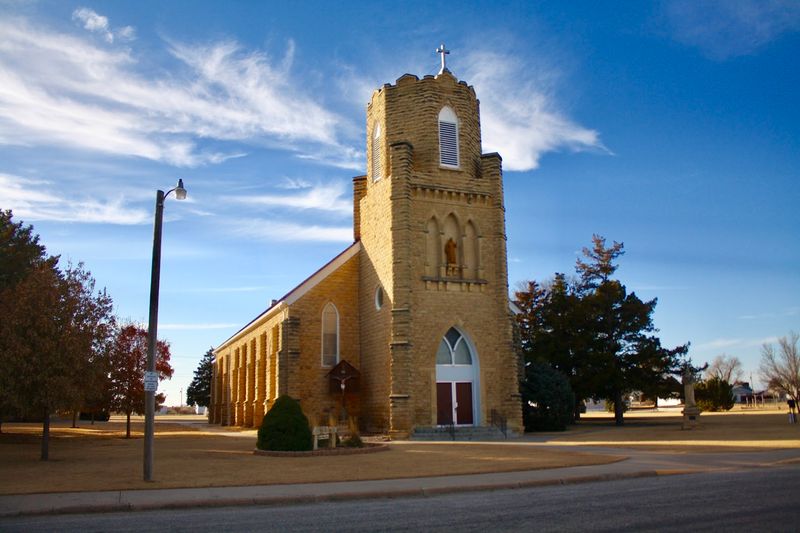
Munjor is barely a dot on most maps, but St. Francis of Assisi Catholic Church gives this tiny Ellis County community an architectural presence that punches well above its weight.
Like many churches in this part of Kansas, it was built by Volga German immigrants whose determination to recreate the religious traditions of their homeland shaped everything from the building’s design to its interior decoration.
The church’s limestone walls have weathered more than a century of Kansas wind, sun, and occasional dramatic storms without losing any of their dignified character.
Inside, visitors find an interior that balances simplicity with reverence, featuring painted details and religious artwork that reflect both Old World influences and frontier resourcefulness.
St. Francis of Assisi sits in a landscape so flat and expansive that the church seems to float above the horizon on a clear day.
The surrounding community may be small, but the pride locals take in maintaining this beautiful historic church is anything but modest.
5. Holy Cross Church, Pfeifer
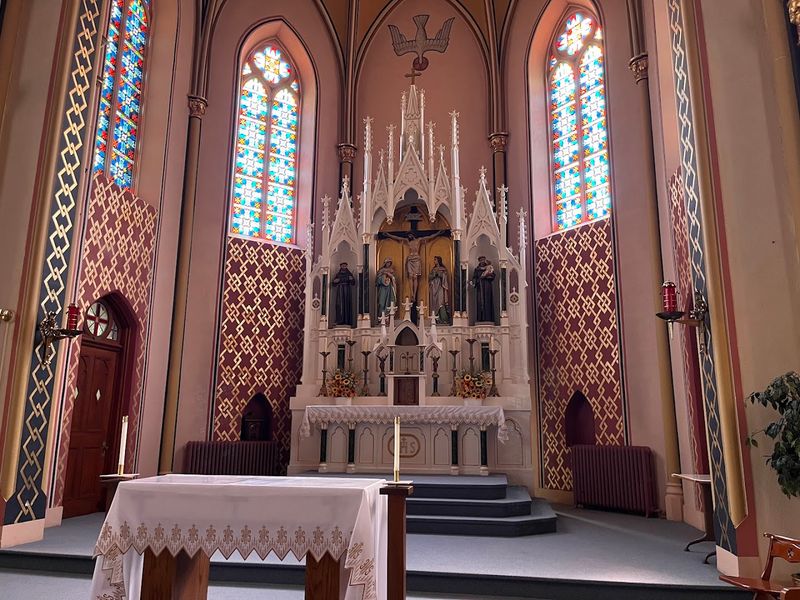
Sometimes called the “Chalk Church” because of its brilliant white limestone construction, Holy Cross Church in Pfeifer is one of those buildings that stops you cold the moment it comes into view.
Built beginning in 1915 and dedicated in 1918 by a community of Volga German settlers, Holy Cross replaced earlier structures and was designed to reflect the congregation’s deep Catholic heritage and growing prosperity.
The central spire and twin side towers are the building’s most dramatic feature, rising sharply above the surrounding plains and visible from a remarkable distance in every direction.
Holy Cross has been recognized as one of the finest examples of Gothic-style church architecture in the entire state of Kansas.
The interior is equally impressive, featuring vaulted ceilings, richly decorated altars, and stained glass windows that fill the nave with warm, colorful light on sunny afternoons.
Pfeifer itself is a ghost of its former self, but Holy Cross Church keeps the memory of this once-thriving immigrant community vibrantly and beautifully alive.
6. St. Anthony Catholic Church, Schoenchen
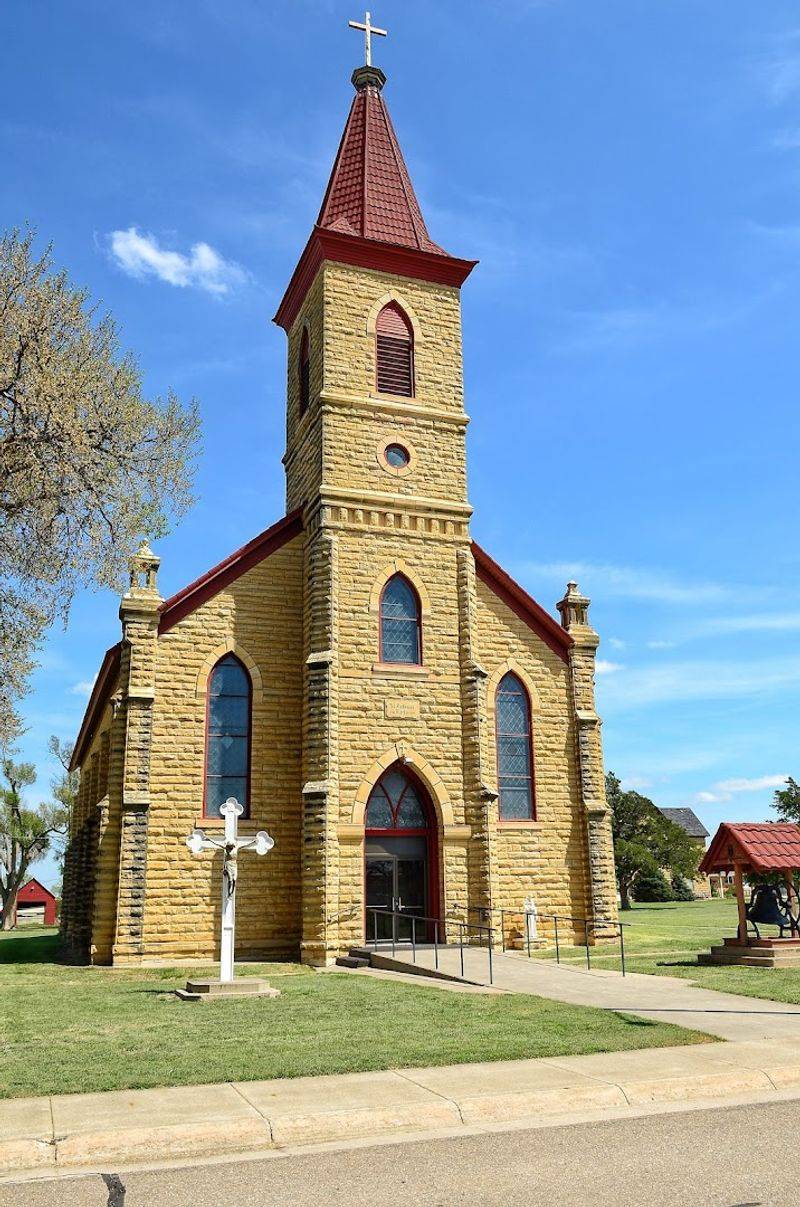
The name Schoenchen comes from the German word for “little beautiful one,” and St. Anthony Catholic Church fits that description with remarkable precision.
Founded by Volga German immigrants in the 1870s, this Ellis County parish built its current limestone church in the early 20th century as a testament to both faith and community solidarity.
The building’s clean lines and well-proportioned steeple give it a timeless quality that feels right at home against the wide Kansas horizon.
St. Anthony is part of the broader network of immigrant Catholic churches that transformed this stretch of central Kansas into a kind of open-air museum of prairie religious architecture.
Inside, the church preserves original woodwork, painted ceilings, and decorative details that speak to the skilled craftspeople within the congregation who gave their best work to this sacred space.
Visiting St. Anthony in Schoenchen feels like a genuine discovery, a place where history, faith, and artistry quietly coexist far from any tourist trail.
7. Cathedral Of The Immaculate Conception, Wichita
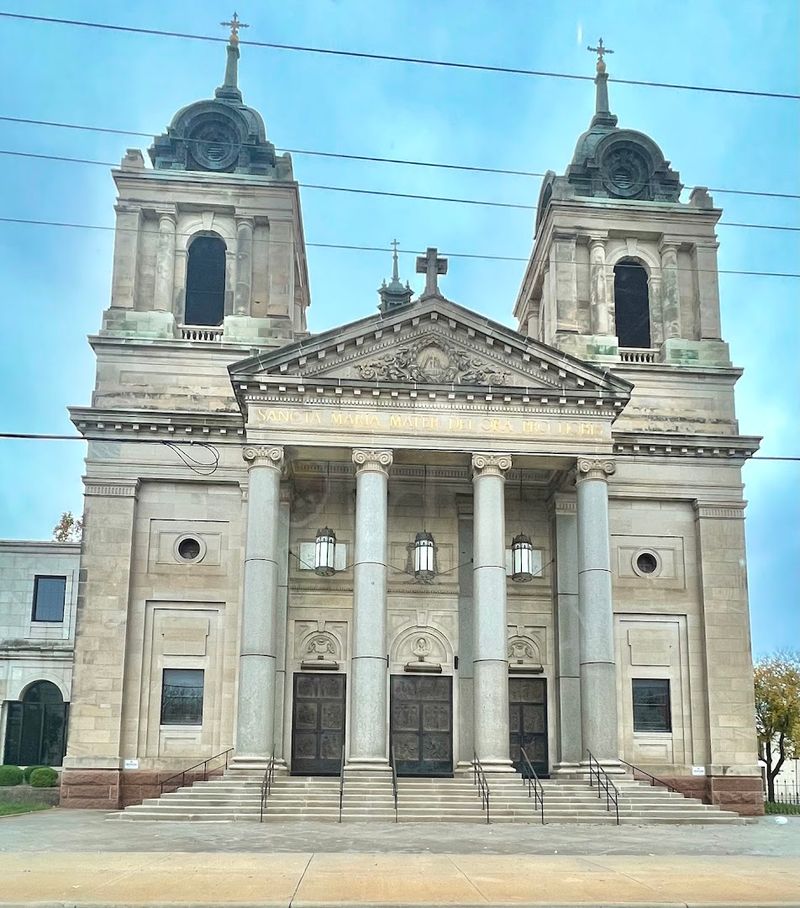
Wichita is Kansas’s largest city, and the Cathedral of the Immaculate Conception lives up to that status with an elegant Renaissance Revival design that anchors the downtown skyline with quiet authority.
Completed in 1912, the cathedral serves as the mother church of the Diocese of Wichita and has been a spiritual and architectural landmark for the city for well over a century.
The exterior features Bedford stone, classical detailing, and a graceful dome that draws the eye upward in stately fashion.
Step inside the Cathedral of the Immaculate Conception and the experience shifts dramatically, with soaring ceilings, detailed marble work, and stunning stained glass windows that transform natural light into something almost painterly.
The cathedral has undergone careful restoration efforts over the decades, preserving its original character while updating what needed updating for a working 21st-century parish.
For architecture enthusiasts and history lovers alike, the Cathedral of the Immaculate Conception in Wichita is absolutely worth carving out time to visit properly.
8. Cathedral Of Saint Peter The Apostle, Kansas City
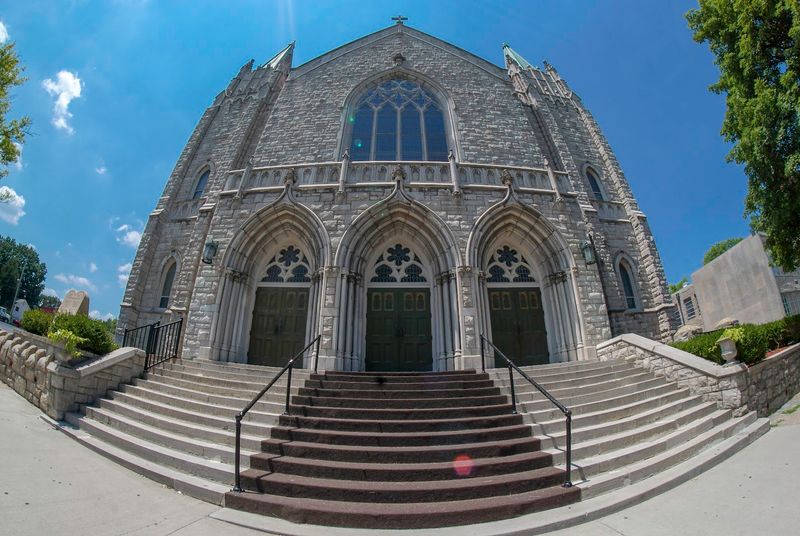
Perched in Kansas City, Kansas, the Cathedral of Saint Peter the Apostle commands attention with its robust architecture and rich stone detailing.
Dedicated in 1927, the church later became the cathedral in 1948 and serves as the seat of the Archdiocese of Kansas City in Kansas, making it one of the most prominent Catholic landmarks in the entire region.
The building’s arches, heavy masonry, and carefully composed proportions give it a sense of permanence and solidity that feels deeply appropriate for a cathedral.
Inside, the Cathedral of Saint Peter the Apostle reveals a surprisingly warm and detailed interior, with decorative elements, carved wooden features, and beautifully executed religious art throughout.
The setting adds to the drama, giving the cathedral a strong visual presence over the surrounding neighborhood that emphasizes its role as a community focal point.
The Cathedral of Saint Peter the Apostle is a rewarding destination for anyone exploring the religious and architectural heritage of the Kansas City metropolitan area.
9. Sacred Heart Cathedral, Dodge City
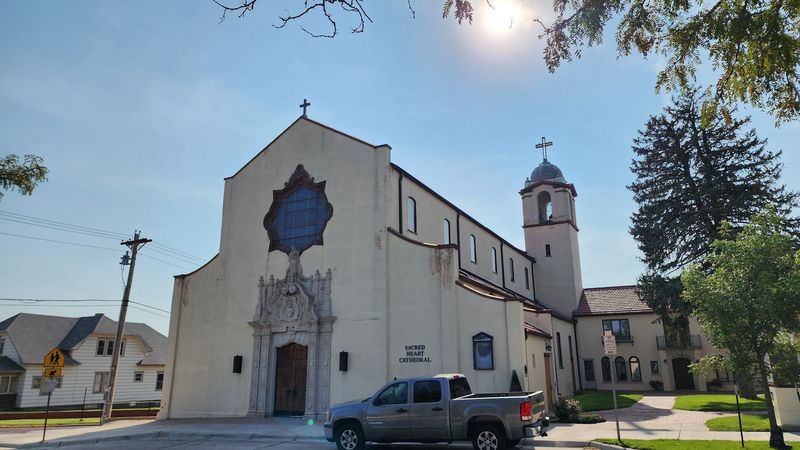
Dodge City is world-famous for cowboys, cattle drives, and frontier lawmen, but Sacred Heart Church offers a completely different and equally compelling chapter of the city’s story.
Built in the early 20th century after an earlier parish church served the community, Sacred Heart stands as a testament to the Catholic communities that grew up alongside the rough-and-tumble cattle trade in southwestern Kansas.
The church’s Spanish Colonial Revival architecture feels like a deliberate counterpoint to the wild reputation of old Dodge City, bringing elegance to a place more commonly associated with dusty saloons and six-shooters.
Sacred Heart served as the cathedral when the Diocese of Dodge City was established in 1951, giving it an institutional importance that matched its impressive physical presence.
The interior features stained glass, carved woodwork, and a reverent atmosphere that invites visitors to slow down and appreciate the craftsmanship on display.
Sacred Heart proves that Dodge City has always had more depth and complexity than its legendary frontier reputation might suggest to first-time visitors.
10. First Presbyterian Church, Topeka
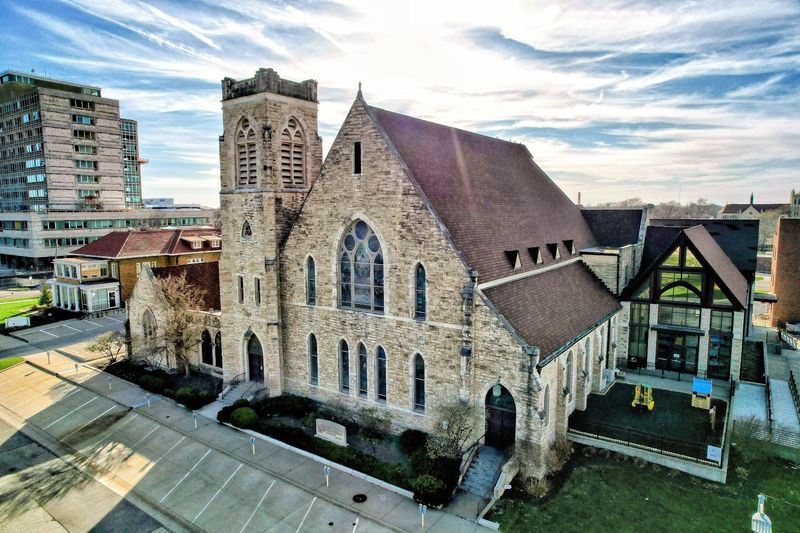
Topeka has been the capital of Kansas since statehood in 1861, and First Presbyterian Church has been part of that civic story for nearly as long, making it one of the most historically significant Protestant congregations in the state.
The current building is an impressive limestone structure featuring classical architectural details that reflect the congregation’s long-standing prominence in Topeka’s social and political life.
First Presbyterian has counted among its members governors, senators, and other figures who shaped Kansas history, weaving the church’s story tightly into the broader narrative of the state.
The sanctuary interior is notable for its excellent acoustics, fine woodwork, and a dignified atmosphere that balances grandeur with genuine warmth.
First Presbyterian has also been a voice in important national conversations, including the civil rights era, adding moral weight to its already considerable historical significance.
Visiting this church in the heart of Topeka means stepping into a space where faith, politics, and community history have been quietly intertwined for generations upon generations.
11. Bethany Lutheran Church, Lindsborg
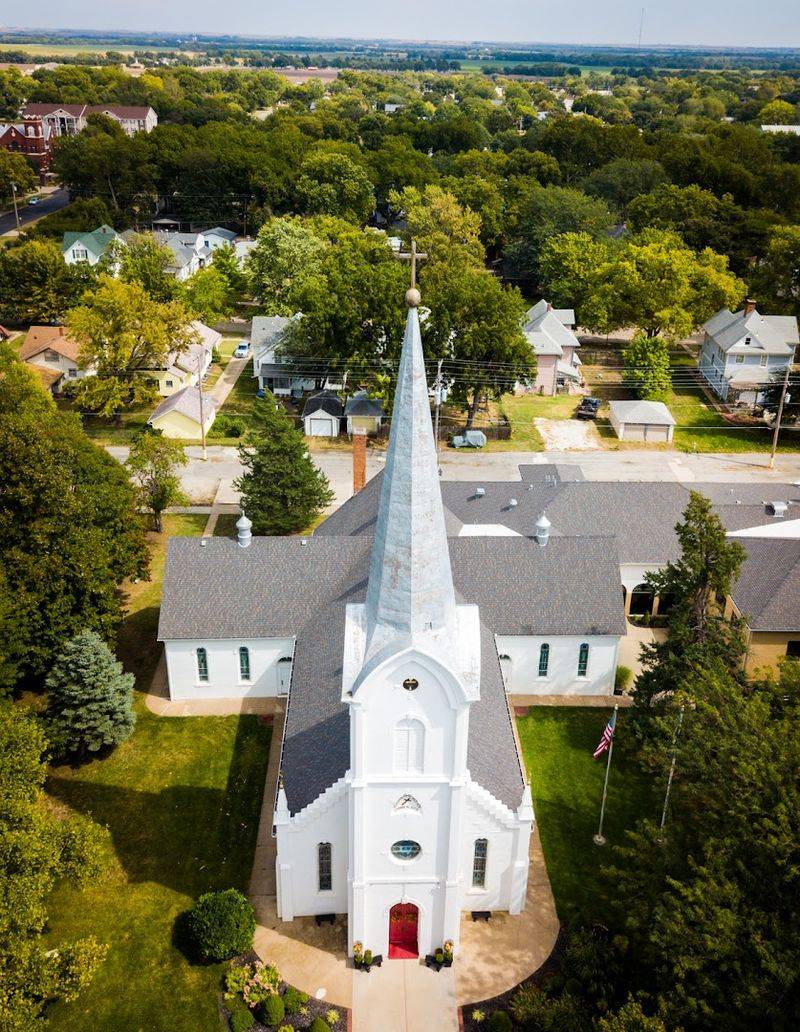
Lindsborg calls itself “Little Sweden USA,” and Bethany Lutheran Church is very much the spiritual heart of that Swedish-American identity that makes this small central Kansas town so distinctive and endearing.
Founded by Swedish immigrants in the 1870s, the congregation at Bethany Lutheran has maintained a proud Scandinavian cultural tradition that sets it apart from virtually every other church on this list.
The church is perhaps best known for its annual performance of Handel’s Messiah, a tradition that dates back to 1882 and has made Lindsborg a surprising destination for classical music enthusiasts from across the country.
Bethany Lutheran’s building reflects the understated elegance typical of Scandinavian Lutheran architecture, with clean lines, honest materials, and a focus on the quality of light inside the sanctuary.
The congregation’s deep ties to Bethany College, which was founded by the same Swedish settlers, give the church an academic and cultural dimension that adds another layer of interest.
Bethany Lutheran in Lindsborg is genuinely one of a kind, a place where Swedish heritage, musical tradition, and Kansas prairie history all come together in one quietly remarkable spot.