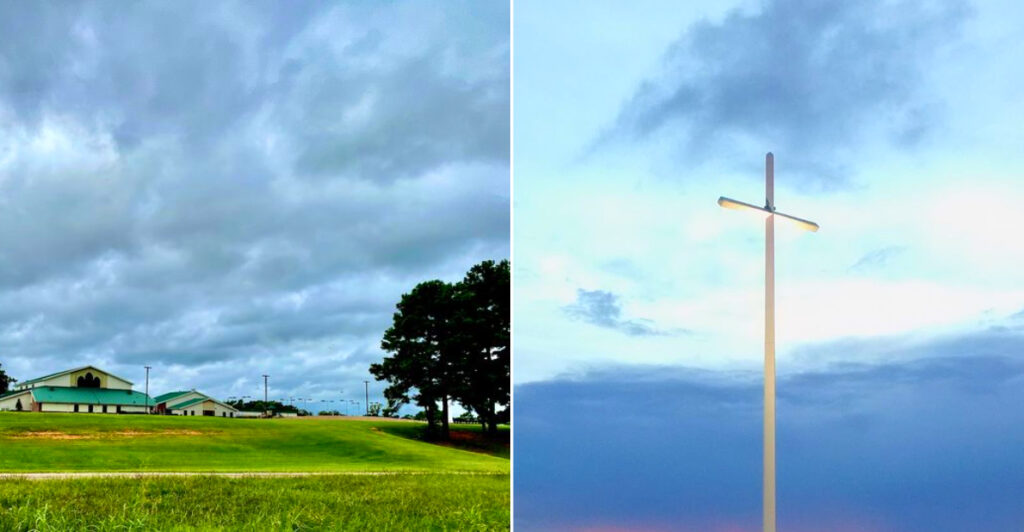
Rising 199 feet above the flat terrain where Louisiana, Arkansas, and Texas converge at the river, this cross commands attention from every direction for miles before you reach it.
The structure ranks among the tallest crosses in the world, built from steel that catches the late-afternoon sun, turning the entire silhouette into something that feels more like a beacon than a monument.
The base sits on elevated ground near the water, which means the reflection doubles on clear mornings, plus the surrounding park gives visitors a place to stand still long enough to register the scale.
Walking toward it from the parking lot takes longer than you expect, and the shadow it casts at midday covers enough ground to host a small gathering. Few structures carry this kind of visual weight across multiple state lines, and fewer still make the drive feel like part of the destination in Louisiana.
Approaching The Cross
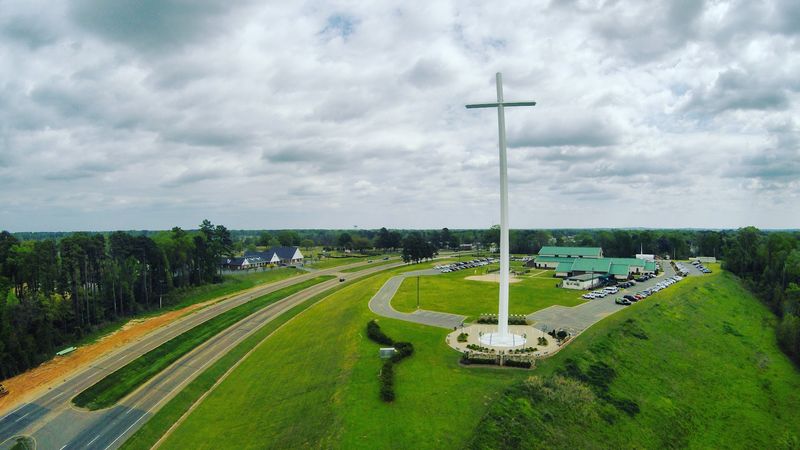
The first thing you notice is scale – the cross rearranges the horizon and makes the surrounding trees look like props. Driving up US-80, it reads as both devotional object and civic beacon, an engineered presence that interrupts the ordinary flow of trucks and strip malls.
There is a calm energy on site; people cross the grass with dogs and small children, some pausing to take photos, others content to sit and watch. Accessibility is straightforward – the Prayer Garden is flat and paved in parts, with ramps and a nearby parking area for those who need it.
Plan for sun and wind; shade is limited and the cross throws a long shadow by late afternoon.
When The 199-Foot Cross Enters The Skyline, You’re There
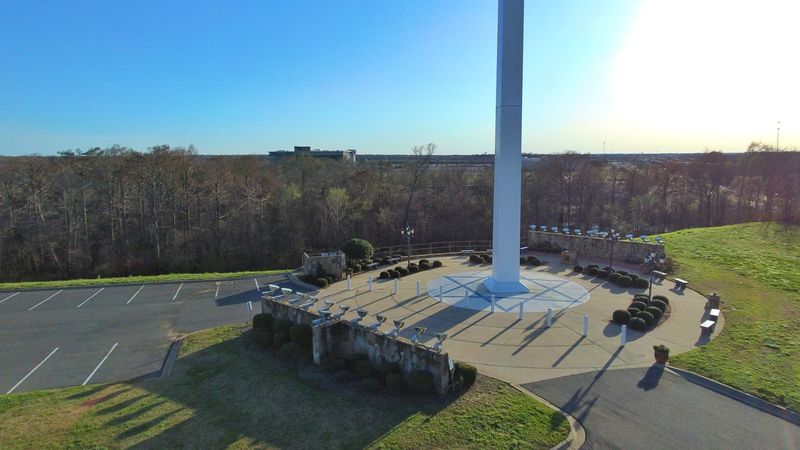
The 199-Foot Cross at the Prayer Garden stands at 700 US Highway 80 in Haughton, Louisiana. From Shreveport or Bossier City, follow Interstate 20 east and connect toward Interstate 220 or Highway 80.
The cross rises near the junction of I-20, I-220, and Highway 80, so the final approach is more visual than complicated. Once you are on Highway 80, watch the south side of the road for the church property and the towering white landmark.
Turn into the Central Assembly of God / Church of the Cross grounds and follow the drive toward the Prayer Garden parking area. The cross is tall enough to guide the last stretch better than any street sign.
Historical Context
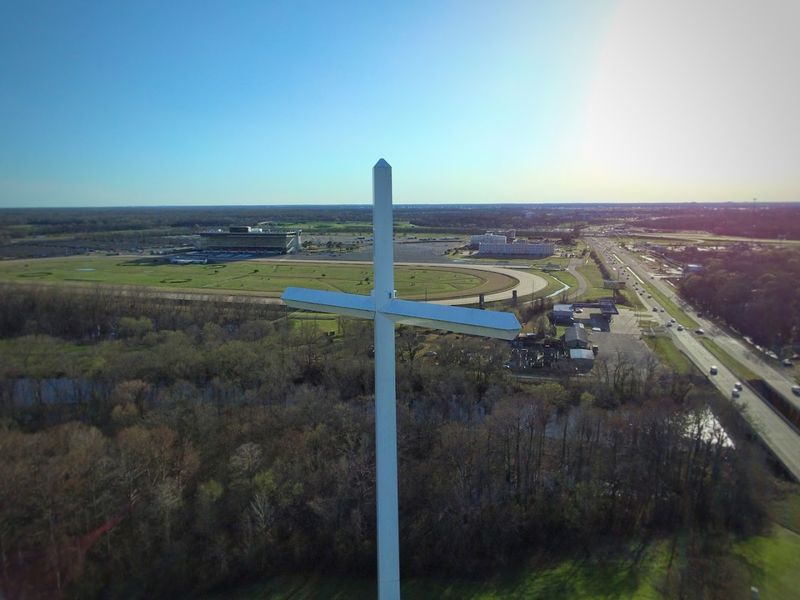
The 199-Foot Cross at the Prayer Garden stands at 700 US Highway 80 in Haughton, Louisiana. From Shreveport or Bossier City, follow Interstate 20 east and connect toward Interstate 220 or Highway 80.
The cross rises near the junction of I-20, I-220, and Highway 80, so the final approach is more visual than complicated. Once you are on Highway 80, watch the south side of the road for the church property and the towering white landmark.
It appears above the surrounding trees and buildings before you reach the entrance, making it one of those rare roadside stops that is easier to spot than to explain.
Turn into the Central Assembly of God / Church of the Cross grounds and follow the drive toward the Prayer Garden parking area. The cross is tall enough to guide the last stretch better than any street sign, especially on a clear day when its bright frame stands out against the Louisiana sky.
Design And Architecture
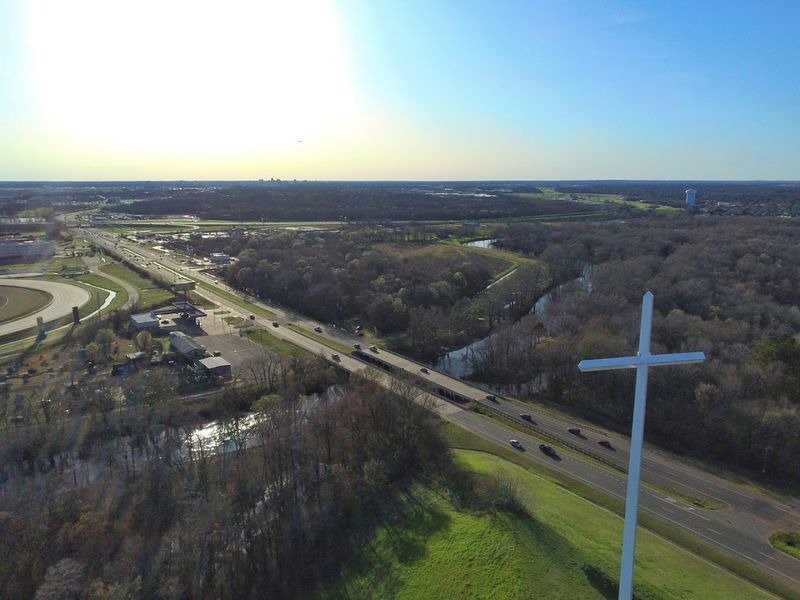
The 199-foot cross was erected to serve as a visible symbol for the Central Assembly of God and as a landmark for the Ark-La-Tex region, standing where highways converge. It joins a global roster of monumental crosses, comparable in intent though not always in scale to other notable structures worldwide.
For drivers moving between Shreveport, Bossier City, and Haughton, its height turns it into an unmistakable point of orientation.
Local significance is practical and symbolic; the cross marks a gathering place for community events and church outreach, while also operating as a navigational reference for travelers. The Garden is maintained by the church and open to the public at no charge, which has helped it become a steady part of the roadside landscape.
Its presence raises predictable conversations about public religious displays, but the site remains welcoming to a broad array of visitors, from church members and road-trippers to people who simply stop because the scale catches their attention.
Sensory Oddities
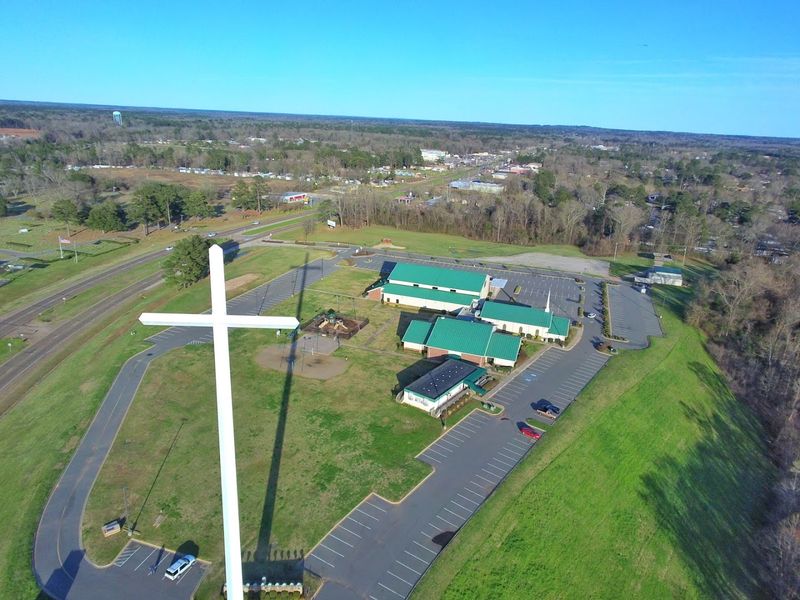
You expect silence at a place called a Prayer Garden, but the site has distinct sensory layers, the mechanical hum of distant traffic, the occasional rattle of highway wind in the grass, and the sound of cameras clicking. Birdsong interlaces with this modern noise, and gulls or swallows sometimes wheel near the upper reaches of the structure.
The contrast between devotion and roadside motion gives the place a quiet tension that is easy to miss if you rush through.
In summer, heat blooms off the pavement and the metal arms of the cross feel warm to the touch near the base. In cooler months, the silhouette becomes sharper and the sky seems to emphasize verticality, making the cross read as a stark graphic gesture against open fields.
These small, unexpected details add texture to a straightforward roadside pilgrimage.
Visitor Logistics
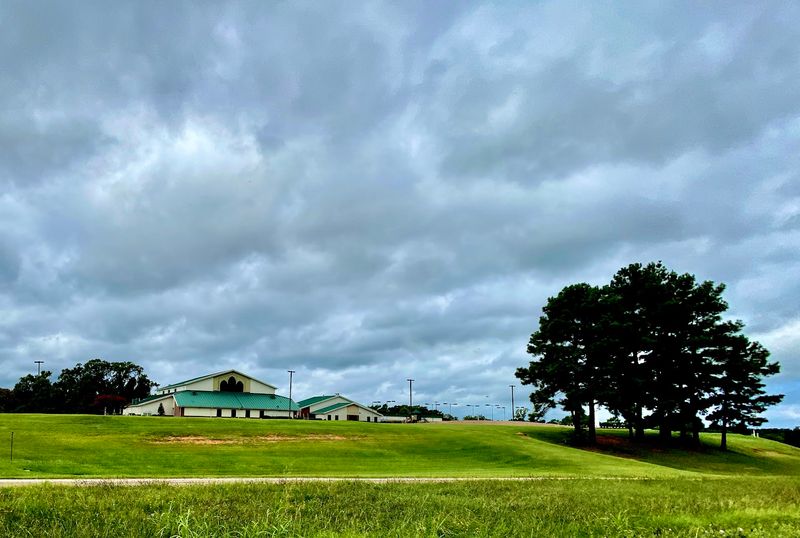
Getting there is simple: the site sits right off US-80 near the I-20 interchange, with visible signage and a small parking area for cars and accessible spots. Hours reflect the church schedule, typically open daytime on weekdays, so plan accordingly and check the church website or phone for current times.
The grounds are mostly flat and include paved walkways that make the site wheelchair friendly. Restrooms are church facilities, so availability can vary based on staffing and events.
There are no food vendors on site, so bring water and sun protection if you expect to stay a while.
Visiting during business hours usually ensures a welcoming staff presence if you need assistance.
Local Culture Around The Cross
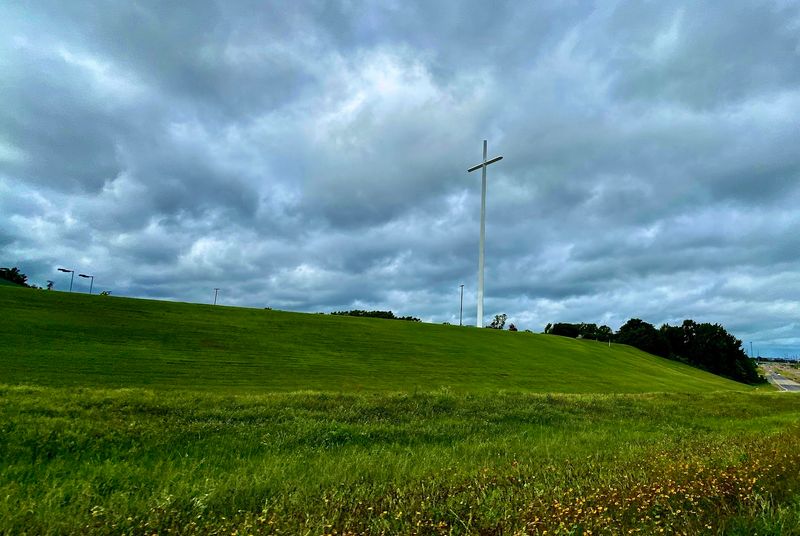
The cross functions as a cultural anchor for local gatherings and quiet reflection, attracting church members and curious passersby alike.
Visitors often report friendly interactions with staff and volunteers from Central Assembly of God, which reinforces the sense that the site is intended as a community resource rather than a private shrine.
That hospitality matters, because the scale of the cross could feel imposing without the simple warmth of people nearby.
During certain church events the Garden becomes busier, with families and children adding lively movement to an otherwise meditative place. Even on ordinary days you can sense that this is a spot where people come to mark moments, including graduations, remembrances, personal prayers, or simply a pause on a long drive.
The mix of devotion, roadside curiosity, and civic landmarking makes the site culturally resonant in the Ark-La-Tex.
Seasonal Quirks
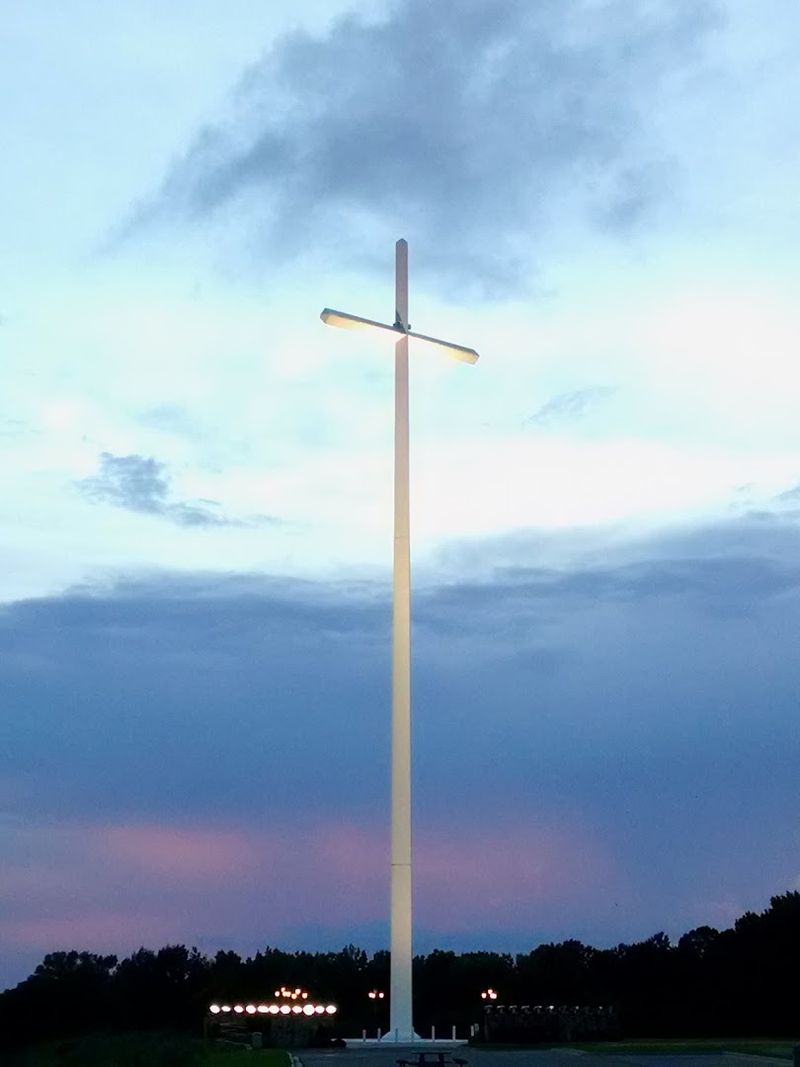
The cross changes personality with the seasons, in summer it asserts a patient, sun-bleached presence, while autumn brings crisper lines and a shorter, more dramatic shadow. Winter mornings can add fog that softens the structure to a spectral silhouette, which makes early visits especially moody and photographic.
The white frame also reacts beautifully to changing light, shifting from stark and clean at midday to warmer and more dimensional near sunset.
Spring floods and heavy rain occasionally affect roadside visibility, though the elevated position of the Garden keeps the immediate grounds usable most of the time. Landscaping is modest, so seasonal plantings are sparse and the architecture remains the visual focus.
Photographers will want to time visits for golden hour or foggy mornings to capture distinctive moods, especially when the sky gives the cross a stronger sense of scale.
Detail Spotlight
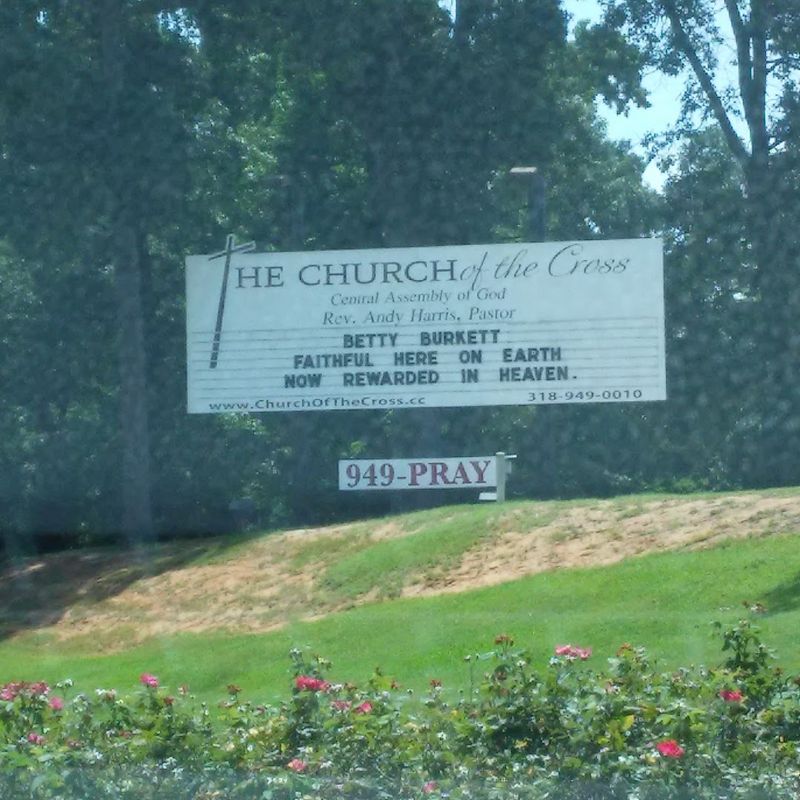
There are small features that reward a slow walk: a modest plaque at the base, trimmed hedges, and concrete paths that show signs of regular upkeep. These human-scale details contrast with the monumentality of the cross and remind you that the site is actively cared for, not abandoned as a roadside oddity.
Benches face the structure and are positioned to invite intentional viewing. Trash receptacles and informational signs are unobtrusive but practical, which suggests a mindful approach to site stewardship.
The overall maintenance reflects a church that treats the landmark as both symbol and service.
Looking closely turns what could be a single visual shout into a collection of quieter, well-kept elements.
Preservation And Maintenance
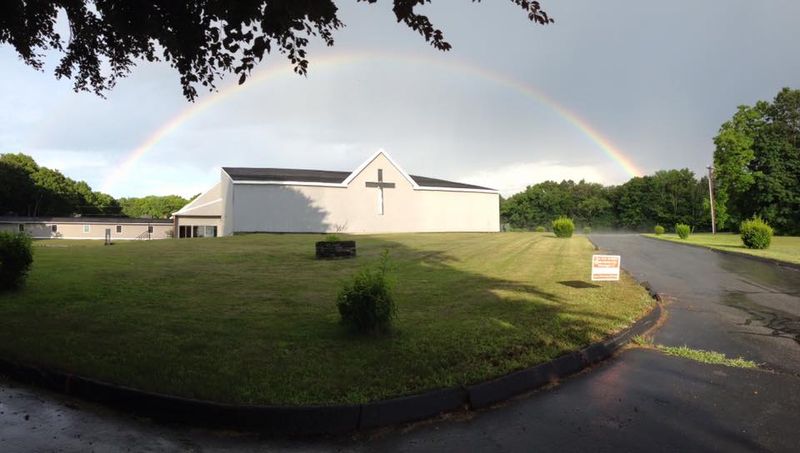
The cross requires ongoing maintenance to remain safe and visually intact; steel surfaces need periodic inspection for corrosion, bolted connections must be checked, and lighting systems require service.
The church coordinates upkeep, which is visible in the neat walkways and the absence of graffiti or neglect that often marks other roadside structures.
That level of care helps the site feel intentional rather than abandoned, even when visitors arrive outside formal church hours.
Occasional lifts or work crews appear during maintenance windows, and those moments can be interesting for visitors who notice the scale of the effort required to care for such a large object. Weather resilience is part of the design, but human attention keeps the landmark presentable and safe.
If you visit during maintenance, the crew is usually professional and unobtrusive, and work tends to be scheduled during weekdays when foot traffic is lighter.