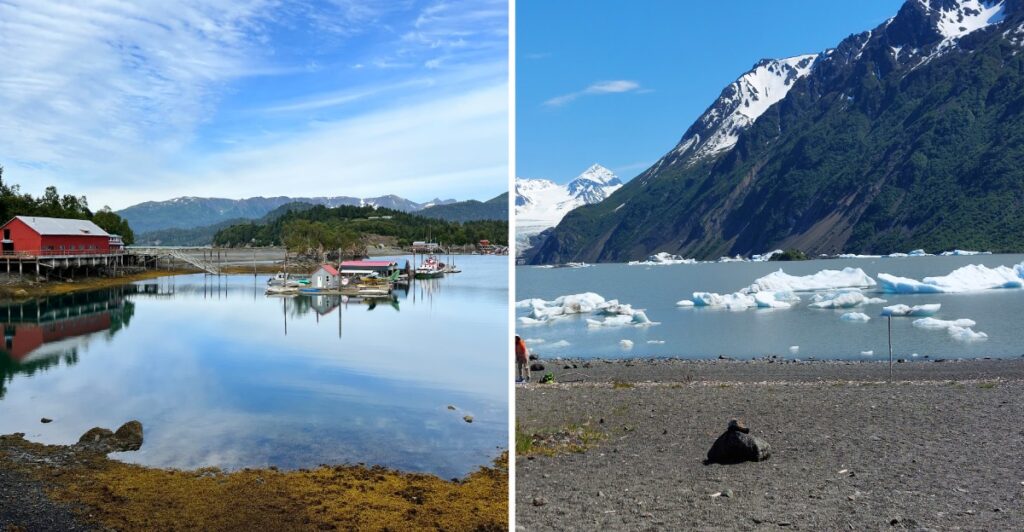
No roads. No parking. No “we’ll just drive over.”
That changes the mood pretty quickly.
To reach this Alaska village, you cross Kachemak Bay by boat and arrive from the water, which already makes the day feel more interesting than following another highway sign.
Once you step ashore, the scale stays small. You move on foot, follow the boardwalk, and let the bay set the pace.
I like that the trip asks you to switch gears before you even arrive.
Weather matters. Timing matters. The boat matters.
But that little bit of effort is part of the story.
You are not squeezing this stop between errands or pulling into a crowded lot.
You are crossing the water to see what waits on the other side.
And honestly, that is a pretty good way to start an adventure.
There Really Are No Roads Into Halibut Cove
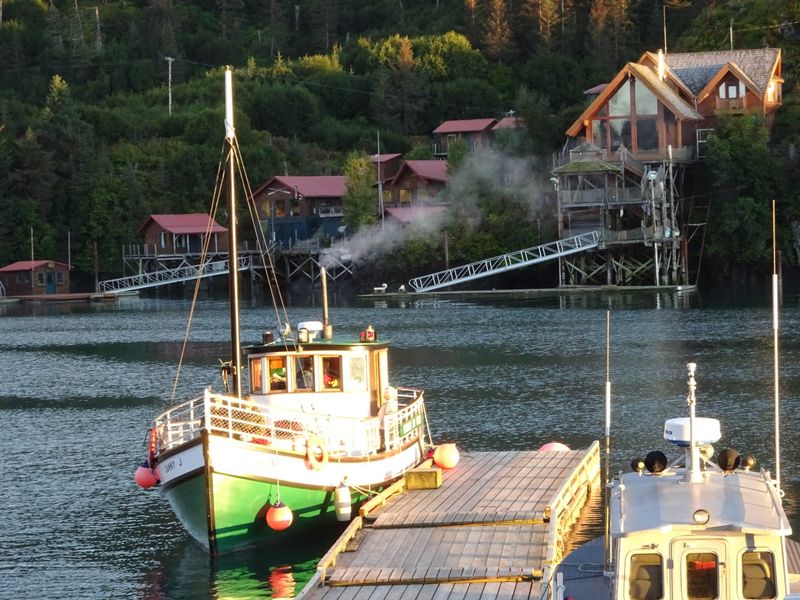
Halibut Cove sits on the east side of Kachemak Bay across from Homer, and there is no road connecting it to the mainland highway system. There are no conventional roads running through the community either. That one fact shapes nearly every visit.
Instead of arriving at a parking lot, visitors approach from the water. During the operating season, scheduled passenger service from the Homer Spit provides one of the simplest options.
Private boats and other arranged marine transportation can also be part of the plan, depending on where you are staying.
The lack of roads does not mean the village is cut off from daily life. It means transportation works differently. Residents and businesses rely heavily on boats, docks, footpaths, and boardwalks, with passenger movement organized around the bay rather than pavement.
For a traveler, that changes the packing list more than the itinerary. Layers, rain protection, sturdy shoes, and schedule flexibility matter more than figuring out where to park.
Weather can influence a crossing, so transportation should come first. Confirm the boat arrangements before building the rest of the day. A missed connection here is harder to solve than a wrong turn on a highway, especially outside the main summer season.
Boardwalks Take Over Where Streets Would Normally Begin
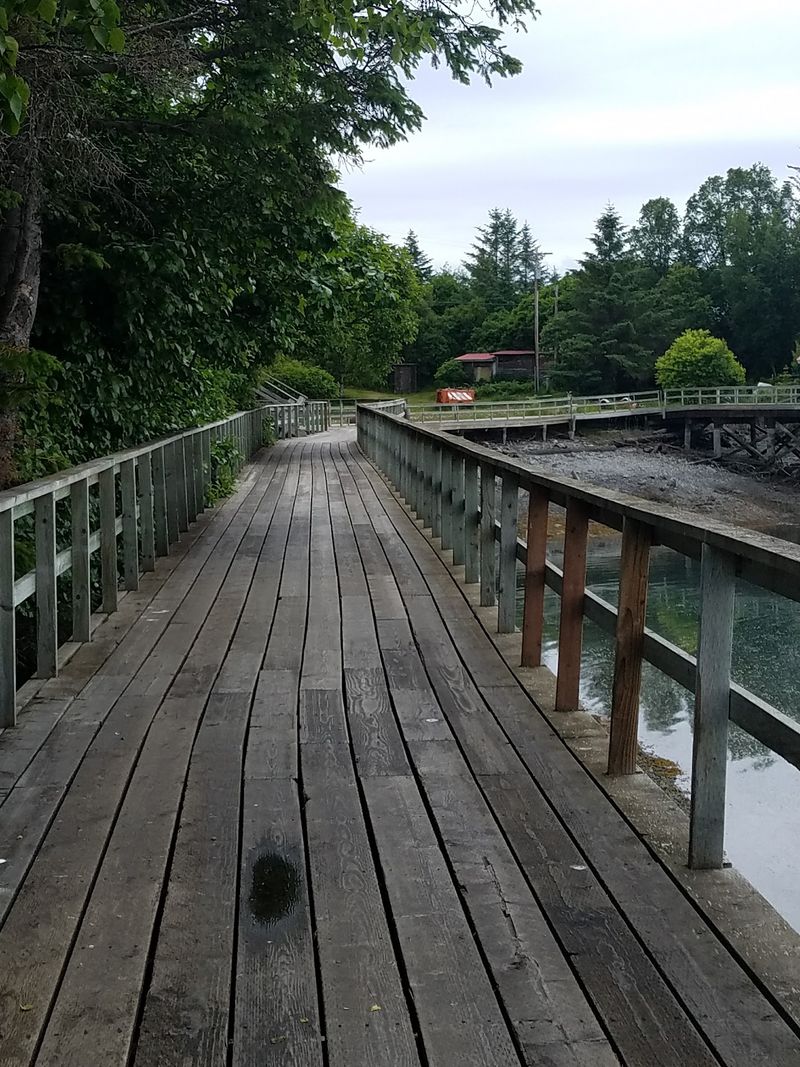
Once you arrive, walking becomes the practical way to move around the developed waterfront. Halibut Cove stretches along roughly twelve blocks of boardwalk that skirt the water’s edge, linking pieces of the community without a normal street grid.
A section associated with the Danny J ferry experience includes about a half-mile of accessible boardwalk. Even there, dock conditions deserve attention because ramps can become much steeper at low tide.
Comfortable shoes are the easy choice. Rain can leave wood slick, and Alaska weather can shift quickly enough that a dry arrival does not guarantee a dry return.
The boardwalk is also a reminder that this is a residential community, not an attraction built solely for visitors. Some property is private, and seasonal businesses set their own access expectations. Staying on public routes and following local signs keeps the visit simple.
You do not need to cover every section to understand the place. A short walk from the dock already shows how differently a roadless waterfront community organizes everyday movement.
Herring Once Brought More Than A Thousand People Here
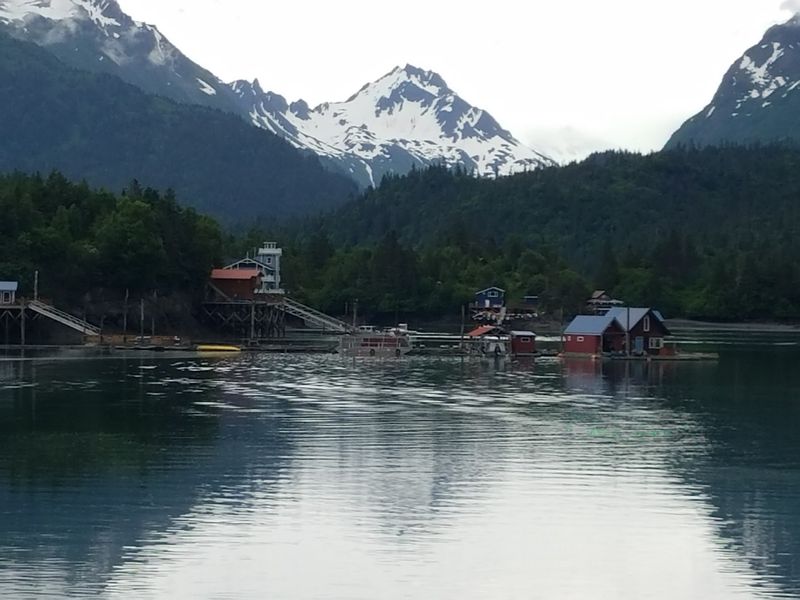
The quiet scale of modern Halibut Cove hides a much busier chapter. Around 1911, the community supported forty-two herring salteries and a population of more than one thousand people. Fishing was not a side story then.
It was the reason the settlement had grown so large.
Salteries processed the herring catch, and the waterfront functioned as a working industrial community built around boats, crews, docks, and seasonal harvests. When the herring industry declined and the salteries closed, much of that population left.
The community that remained developed along a different path, but commercial fishing never disappeared from the picture. Commercial fishermen still share the community with artists, craftspeople, and seasonal tourism businesses.
That history helps explain why boats feel like more than transportation here. They connect the present-day village to the work that shaped the cove more than a century ago.
The numbers are the useful part to remember: forty-two salteries and more than one thousand residents at the 1911 peak. They put today’s much smaller community into perspective.
The Boat From Homer Can Be Part Of The Day
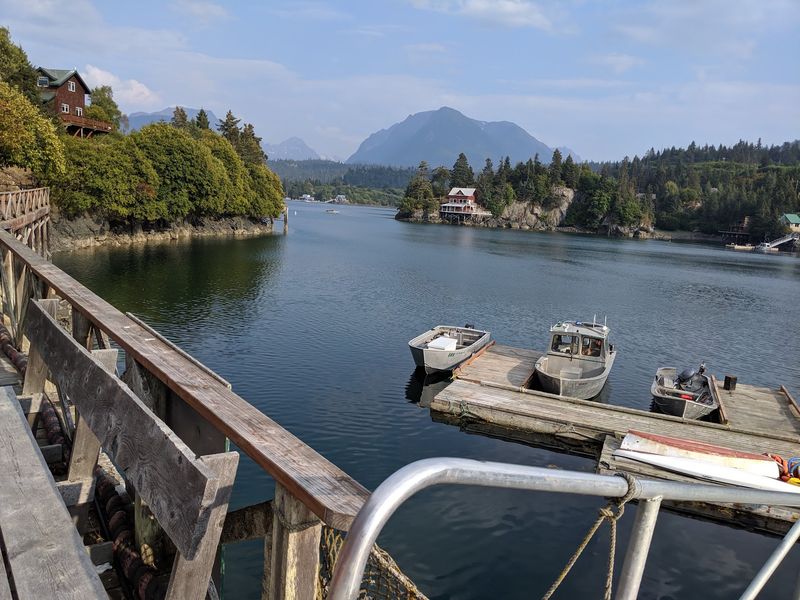
One established seasonal connection between Homer and Halibut Cove is the Danny J, a conventional-style fishing boat that has carried residents and visitors across the bay since 1966.
For the 2026 season, its ferry and tour operation ran from May 23 through September 6.
The noon trip included a Gull Island stop on the way across. Gull Island supports nine nesting bird species, and the broader area can bring views of seabirds and marine wildlife before the boat reaches the cove.
The evening trip headed directly toward Halibut Cove for dinner service.
Both scheduled trips were sold as round trips, with reservations required. The vessel carries twenty-eight passengers, and the ramps used for boarding can become steep when the tide is low.
Because the 2026 scheduled season has ended, anyone planning a later visit should not assume the summer ferry timetable is still operating. Transportation in and around Kachemak Bay is seasonal, so arrangements should be confirmed for the exact dates of the trip.
When the scheduled ferry is running, the crossing does more than solve transportation. It gives you a gradual arrival, with open water between the busy Homer Spit and a village where roads stop being part of the equation.
Artists And Fishermen Share A Very Small Community
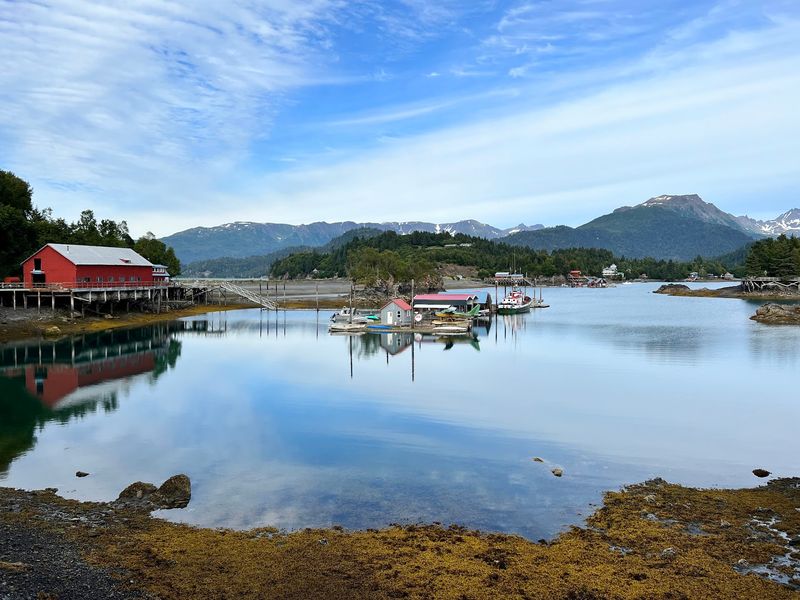
Halibut Cove today combines working-waterfront traditions with a strong arts presence. Summer galleries feature painting, pottery, sculpture, and other work from more than a dozen local artists, while commercial fishing remains part of the community’s identity.
The combination makes sense once you see the setting. Boats, forested slopes, open water, changing tides, and mountain views are not occasional scenery here. They are the background to daily routines.
For trip planning, use Halibut Cove, AK 99603 as the community location rather than expecting a conventional roadside destination. The ZIP Code is valid for Halibut Cove, but there is no road route into the village.
That distinction matters when booking lodging too. A cabin or guest house may provide specific dock or pickup instructions that matter far more than a street-style navigation pin.
Follow the operator’s arrival directions instead of assuming every property is reached from the same landing.
Wilderness lodges, guest houses, cottages, and cabins provide several ways to stay overnight. Staying overnight changes the rhythm considerably because you are no longer tied to the same-day ferry schedule.
For a day trip, keep the plan compact. Walk the boardwalk, browse the galleries that are open, and leave time for the return boat. The small scale works best when you are not racing the clock between every stop.
Kachemak Bay Opens The Door To A Much Bigger Landscape
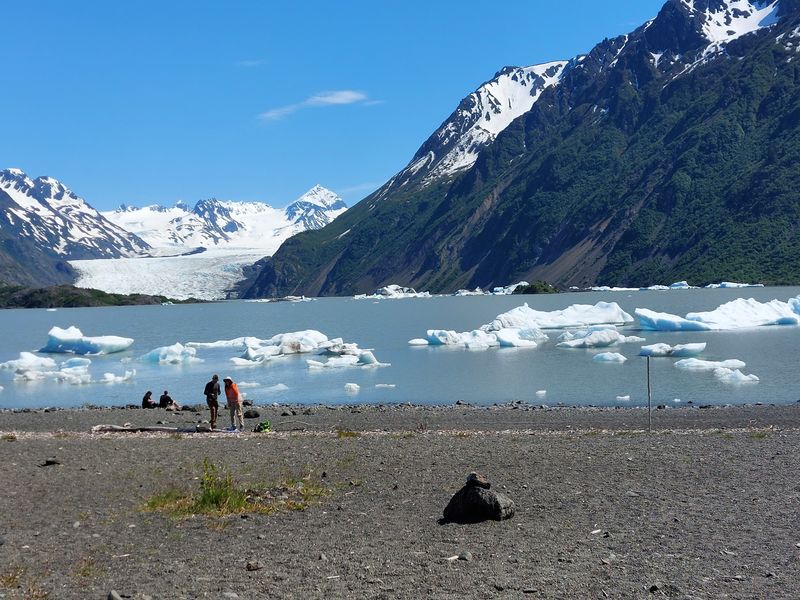
Halibut Cove sits beside Kachemak Bay State Park, roughly four hundred thousand acres of mountains, glaciers, forests, coastline, and ocean, with boating, kayaking, hiking, camping, fishing, and wildlife viewing across the park.
There are no roads into the park either. Trailheads are reached by boat or plane, and water taxis from Homer are a normal part of accessing cabins, docks, and hiking routes.
Grewingk Glacier can be reached through the park’s trail system, while other routes connect different parts of the shoreline and backcountry. Conditions vary, and some routes are considerably more demanding than a casual village walk.
That difference matters. A stroll around Halibut Cove and a hike in the state park are not interchangeable activities. The park can require transportation planning, trail research, extra food, weather gear, and enough time for the return pickup.
Halibut Cove Lagoon also has a public dock and access to park facilities and trails. Tides matter there, and the channel can be difficult to use at lower water, so boaters need to plan around local conditions.
If you want the village and the park in one trip, give yourself enough time. The water makes them neighbors, but it controls how quickly you can move between them.
Seasonal Timing Determines What Kind Of Visit You Get
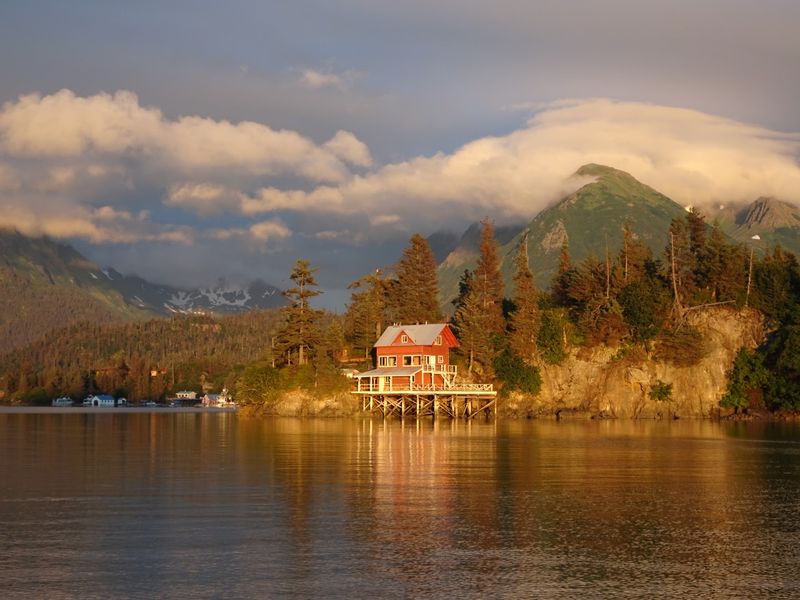
Summer is when visitor services are easiest to combine. The Danny J ferry, The Saltry restaurant, galleries, and many lodging options operate on seasonal calendars rather than year-round tourist schedules.
For 2026, the Danny J and The Saltry operated from May 23 through September 6. The restaurant is now closed for the season and plans to return in 2027.
During its operating months, The Saltry served on Ismailof Island and paired reservations with scheduled round-trip ferry options from Homer.
The restaurant is only one piece of the seasonal picture. Lodges, cottages, and guest houses may keep different calendars, while private boats and other marine transportation follow their own arrangements.
That is why the date should come before the wish list. Decide when you are going, then confirm which ferry, lodging, galleries, dining, and park transportation are actually operating.
An overnight stay gives you more room for kayaking, hiking, or simply spending time around the cove without watching the return clock. A day trip works better when the goal stays focused on the village itself.
Halibut Cove does not need a long list of attractions to feel different. The absence of roads already changes how you arrive, how you move, and how much attention you pay to weather and water.
Plan the crossing first, leave some flexibility around conditions, and the rest of the visit becomes much easier to shape.