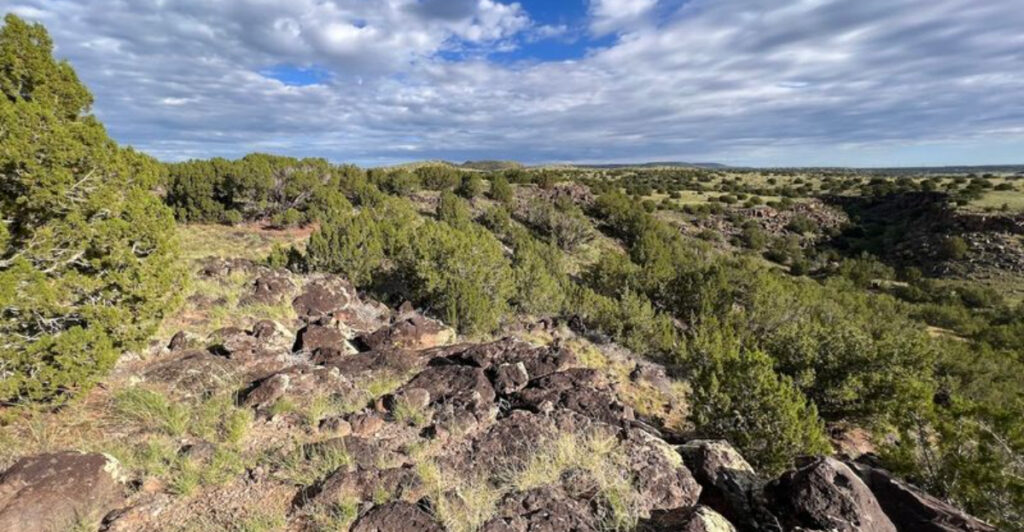
The trail does not announce itself. South of Santa Fe, it starts with dirt under your shoes and desert light on your face.
Then the basalt comes into view, and everything changes.
At this quiet mesa in New Mexico, more than 4,400 recorded carvings cover the rocks, many left by Puebloan people centuries ago. There is no big entrance moment.
No polished display waits at the top. You decide when to be impressed.
You walk, look closer, and suddenly the stone feels full of human presence. A bird shape appears on one rock.
A dancer waits on another. One strange symbol keeps you staring because you know it meant something, even if the meaning has slipped out of reach.
That is the pull of this place. It does not try to entertain you.
It simply waits for you to notice how much is still written in stone when you finally pause.
Ancient Rock Art Across A Quiet Mesa
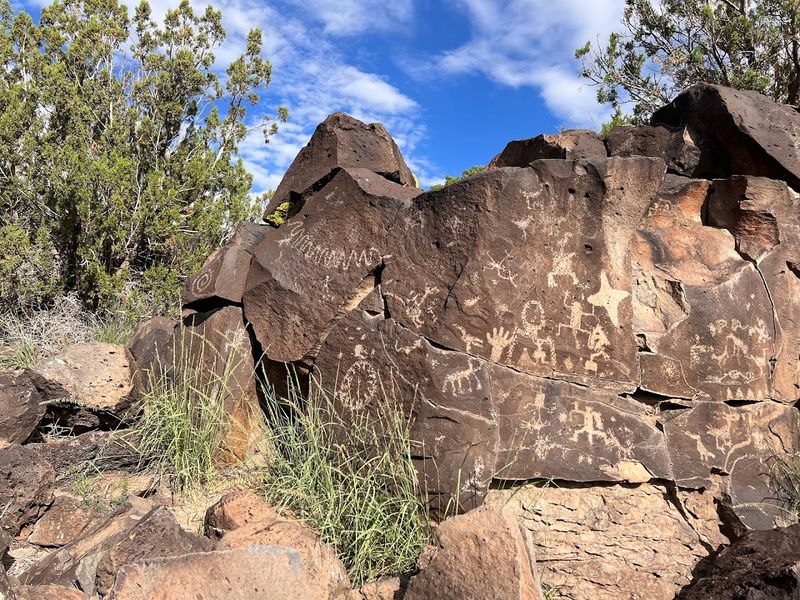
At the base of the trail for the first time, I had no idea what I was about to walk into. The mesa stretches out quietly above the surrounding scrubland, its surface covered in dark volcanic basalt that has absorbed centuries of sun and wind without complaint.
What makes this place so striking is the sheer number of carved images spread across that rock, because a 1991 survey recorded over 4,400 petroglyphs within less than a mile of trail. Most are associated with Keresan-speaking Puebloan people between the 13th and 17th centuries, though the broader site includes probable Archaic and historic-period imagery.
The BLM manages the site, and free access means there is no ticket booth standing between you and thousands of years of human expression. After rain or fresh snow, the petroglyphs can appear with remarkable clarity because dust is washed from the basalt surface.
You can find all of this ancient artistry at La Cieneguilla Petroglyphs, off Paseo Real west of Santa Fe, New Mexico, near the Santa Fe Airport.
Desert Views Above The River
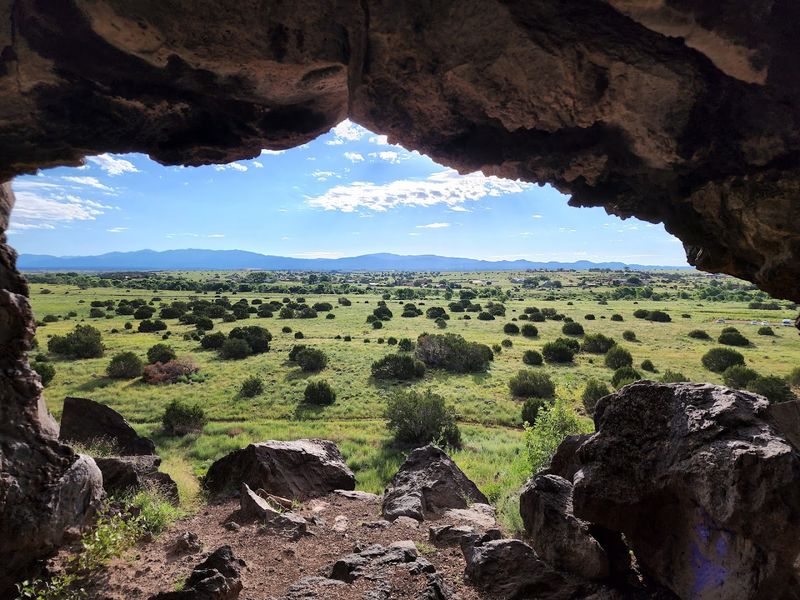
Once you scramble up to the top of the mesa, the reward hits you fast. You notice it before you even start looking for a single petroglyph.
The basalt cliffs sit directly above the Santa Fe River, and from that elevated vantage point the surrounding desert valley opens up in every direction with a kind of dramatic stillness that only the Southwest can produce. Rolling scrubland, distant ridgelines, and the wide pale sky create a backdrop that makes you feel genuinely small in the best possible way.
Planes sometimes approach the nearby Santa Fe airport, which adds an unexpectedly modern layer to a place that otherwise feels centuries removed from the present. Ravens and crows are frequent visitors up on the rim, gliding in lazy arcs above the lava rock as if they have claimed permanent residency.
Early mornings and late afternoons tend to bring softer light that makes both the views and the carved images easier to appreciate without the harsh midday glare.
Bringing a full water bottle is non-negotiable here, especially during summer when the exposed mesa offers zero shade and temperatures climb fast.
Centuries-Old Symbols In Stone
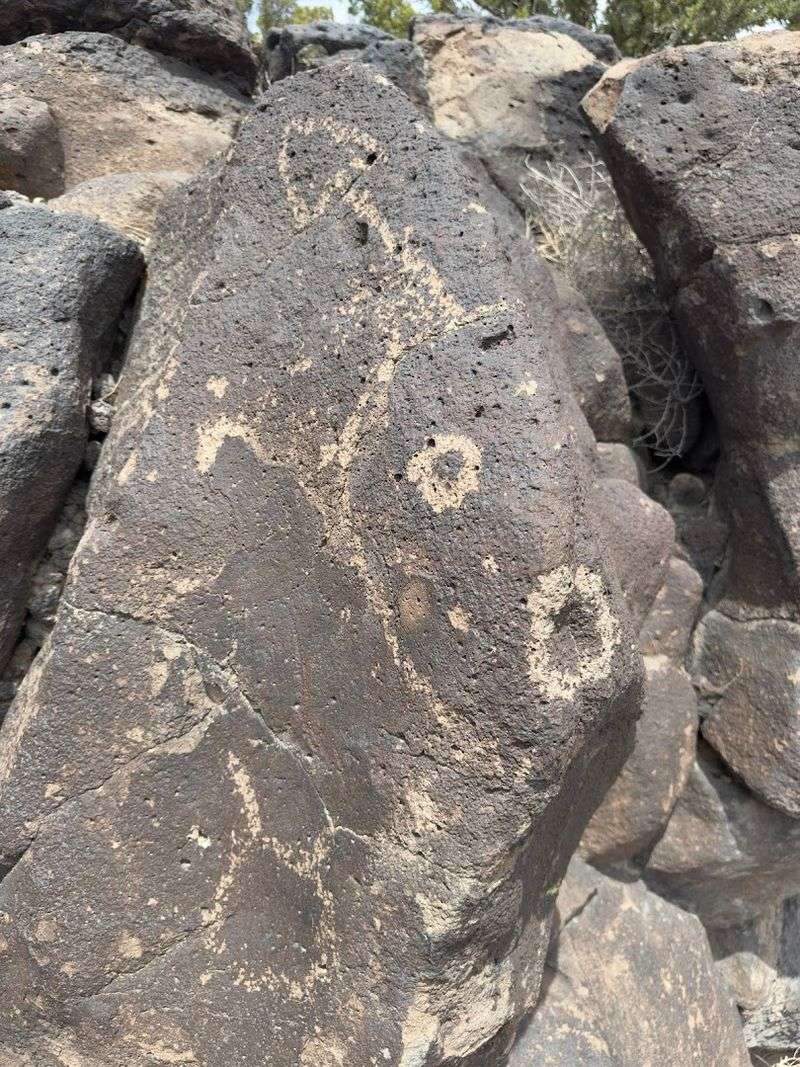
Here is a fact that stopped me in my tracks: nobody fully knows what most of these symbols mean. Researchers have studied the site extensively, and while certain recurring images carry widely accepted interpretations, a large portion of the carved symbols remain open to personal reading.
That mystery is not a frustration, it is actually one of the most compelling reasons to visit, because you get to stand in front of a 700-year-old carving and form your own connection with it. Geometric shapes appear alongside animal forms, human figures, and patterns that seem almost abstract, giving the entire mesa the feeling of a gallery curated across multiple generations.
Some carvings show crisp, confident lines while others are worn smooth by centuries of weather, which makes the contrast between old and older something worth noticing as you move along the rim. The site also sits along the historic El Camino Real de Tierra Adentro, the Spanish colonial route running from Mexico City to Santa Fe, which means this rock face likely watched centuries of travelers pass below.
That layered history makes every carved line feel like a conversation across time.
A Short Trail With Timeless Marks
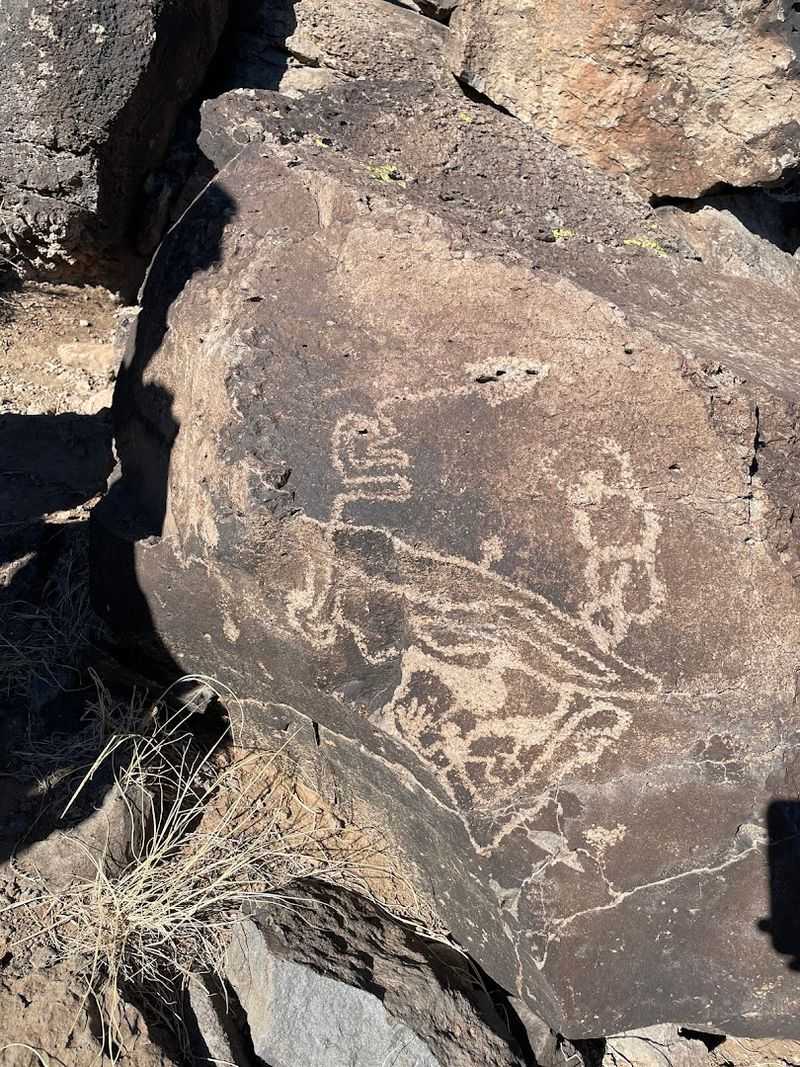
The visit is often described as about a one-mile hike or wander, which sounds modest until you factor in the rocky scramble required to reach the petroglyphs along the basalt rim. Signage at the trailhead is minimal, and the experience can feel like an Easter egg hunt, which is honestly an accurate and charming way to put it.
Follow the arrow-marked path from the parking area, then carefully explore along the upper basalt rim where the best concentration of carvings appears. The climb involves navigating large boulders and uneven volcanic rock, so solid hiking shoes with good grip are not optional, they are essential.
The route can be challenging but manageable for most active visitors who are comfortable with uneven footing and exposed rock. The visit typically takes between 30 minutes and two hours depending on how thoroughly you explore, and thorough exploration is absolutely worth the extra time.
Parking is free, the lot is marked with a sign from the main road, and the whole experience costs nothing but your attention and a decent pair of shoes.
Bird Figures And Flute Players
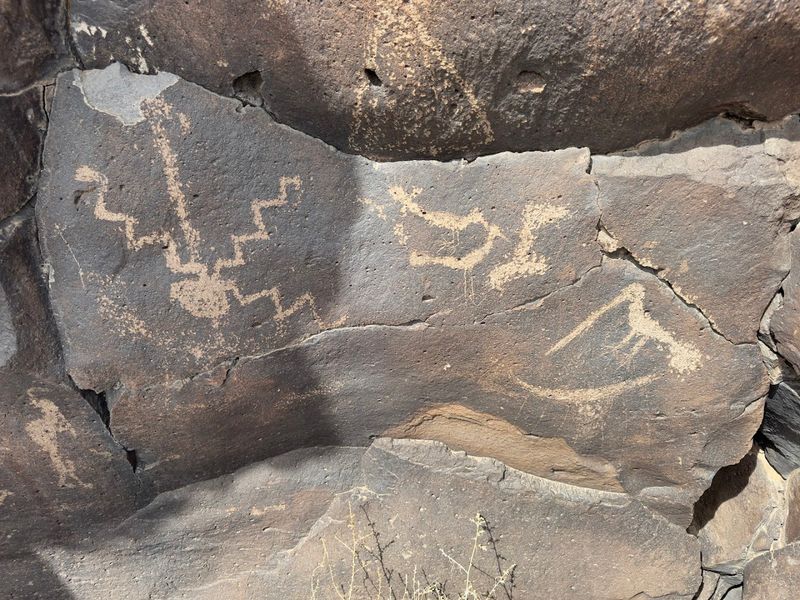
A survey of the site counted 1,385 bird figures alone, which means that no matter where you look along the rim, something with wings is probably watching you back. Bird imagery dominates the mesa in a way that feels intentional and ceremonial, though exactly what those figures communicated to the people who carved them remains one of the site’s most intriguing open questions.
Humpbacked flute-player figures, often popularly identified as Kokopelli, appear across the basalt surfaces and are among the most iconic symbols associated with ancient Southwestern Puebloan culture. Seeing one of those figures carved directly into the rock rather than printed on a souvenir mug is a genuinely different experience, one that feels grounded and real in a way that gift shop versions simply cannot replicate.
Human figures in various poses join the birds and flute players, creating what feels like a frozen community mid-story on the rock face. The open sky above the mesa amplifies everything, because there are no trees, no rooflines, and no walls blocking the view, just stone, carvings, and the wide blue ceiling of the New Mexico high desert.
Standing there, it is easy to understand why people chose this particular ridge to leave their marks.
Basalt Walls With Hidden Details
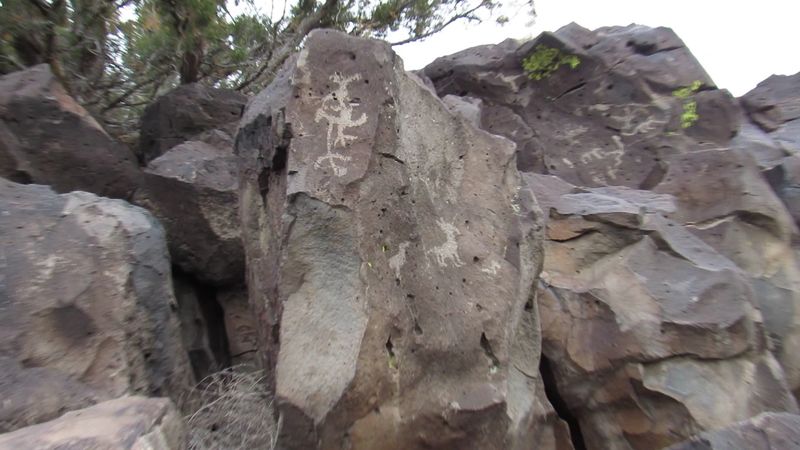
Part of what makes walking this rim so satisfying is the slow reveal of details that you almost missed.
Petroglyphs are scattered along the edge of the volcanic caprock rather than clustered in one convenient viewing spot, which means the site rewards patience and a willingness to peek over ledges and around corners.
The dark desert patina on the basalt creates natural contrast with the lighter stone exposed by carving, but in dry dusty conditions that contrast softens considerably, which is why visiting after rain makes such a dramatic difference.
Tumbleweeds are a real obstacle at certain times of year, piling up against the cliff base and blocking access to some of the lower carvings, so long pants are a practical recommendation rather than a fashion suggestion.
Snakes are another resident worth keeping in mind during warmer months, and watching where you place your hands while climbing is straightforward common sense on a site like this.
Despite these minor considerations, the walls themselves hold an extraordinary density of imagery, and even visitors who feel they missed sections typically come away having seen dozens of distinct carvings.
Every rough surface holds the possibility of something carved just around the next curve.
A Sacred Landscape Near The Desert Edge
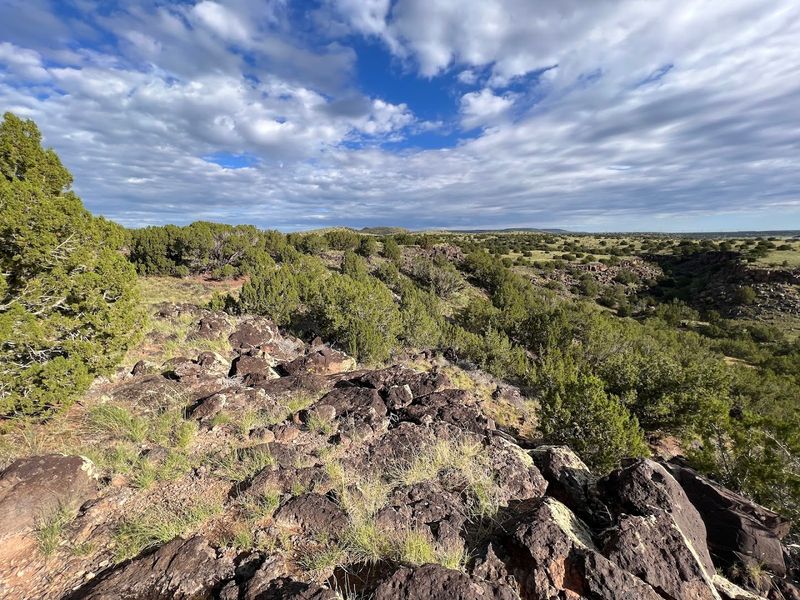
This landscape feels important before any information panel has a chance to explain why. The site sits along the El Camino Real de Tierra Adentro, the historic Spanish colonial route that connected Mexico City to Santa Fe and served as one of the most important travel corridors in North American history for centuries.
Puebloan communities chose this elevated basalt ridge deliberately, and the density of imagery here suggests it held ongoing cultural and possibly ceremonial importance over many generations. The site is also part of a living cultural landscape, with lasting significance for Pueblo and Native communities connected to this part of New Mexico.
That contrast between ancient quiet and modern noise is oddly fitting for a place that has witnessed so many different eras of human movement and activity. The landscape itself, lava rock, open sky, desert scrub, and distant ridgelines, reinforces the feeling that this is ground worth treating with care and respect.
Vandalism remains a documented threat at the site, and protecting these carvings depends entirely on visitors choosing to look without touching and leave without marking.
Sunlit Stones And Silent Stories
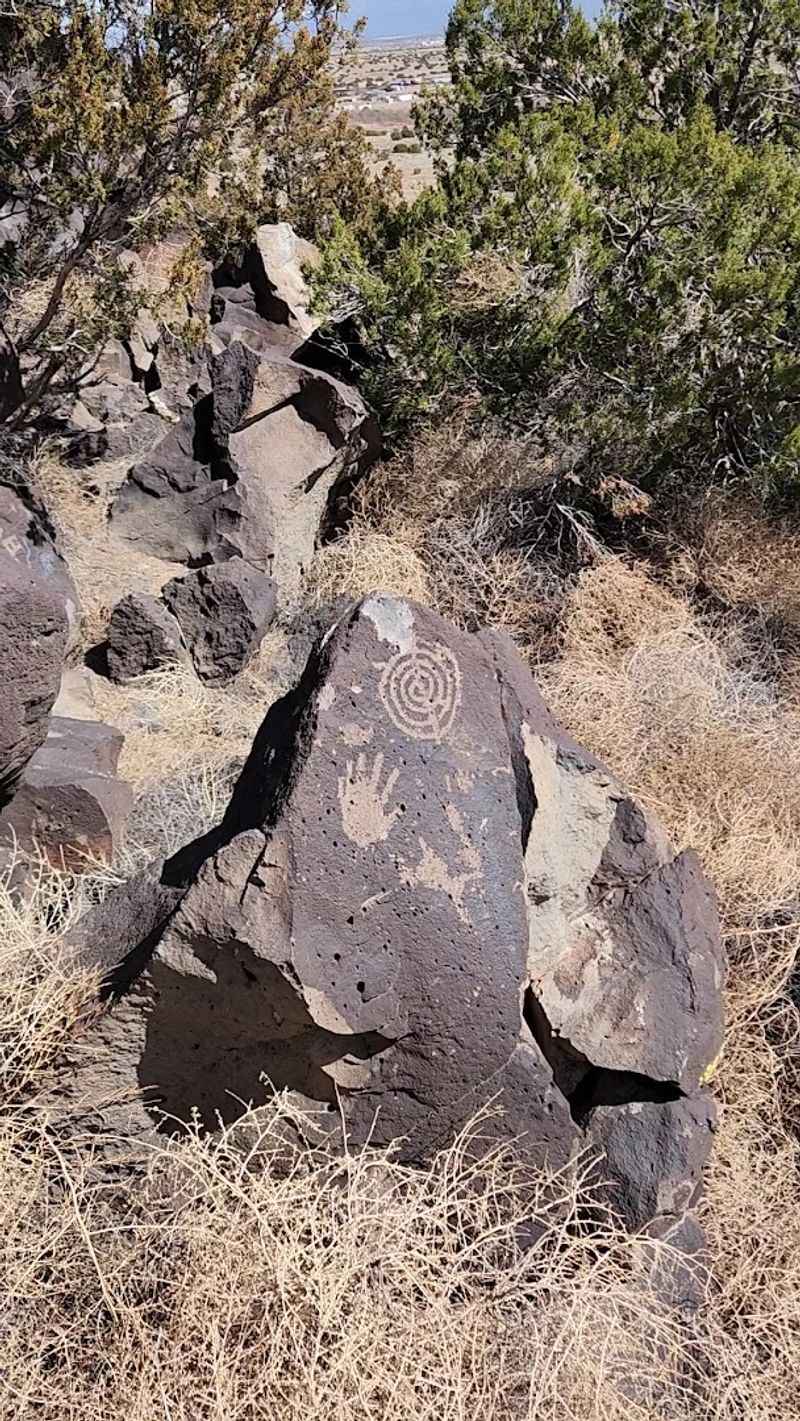
Late afternoon light on the basalt rim makes the whole mesa feel less like a hiking trail. It becomes more like a slow walk through a sun-warmed archive.
The angle of the sun in the afternoon hours brings out the depth of the carved lines in a way that flat midday light cannot match, making figures and patterns suddenly jump into focus that you might have walked right past an hour earlier.
Cooler months offer a particularly pleasant window for unhurried exploration, especially when the sun is gentle and the exposed rock is easier to linger beside. Winter can be striking here too, when clear light and patches of snow make the dark basalt and pale carved lines stand out even more sharply.
The silence up on the rim, punctuated only by wind and the occasional raven call, gives the petroglyphs a weight that busy tourist sites rarely manage to hold onto. Every carved figure up here carries a story that its creator understood completely and that we can only guess at now, which makes the sunlit stones feel less like a museum and more like a conversation waiting to be started.