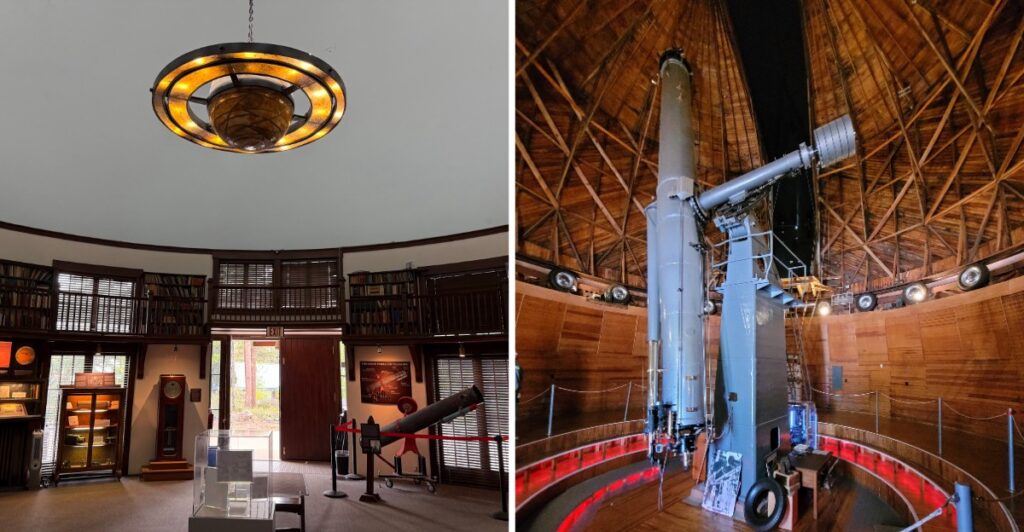
Some telescopes have a view. This one has a résumé.
The old refractor has been pointing skyward since the 1890s, and decades later it helped astronomers study the Moon before humans ever walked there.
That is already enough reason to look twice.
But Arizona keeps more history up this hill.
A famous discovery happened here. Modern research still happens nearby. And on clear nights, visitors can actually look through the same historic instrument themselves.
I would save that part for after dark.
Read the story first and put your eye to the eyepiece.
How often do you get to borrow a telescope that already helped write a chapter of space history?
A Moon Map Was Made Long Before Apollo Landed
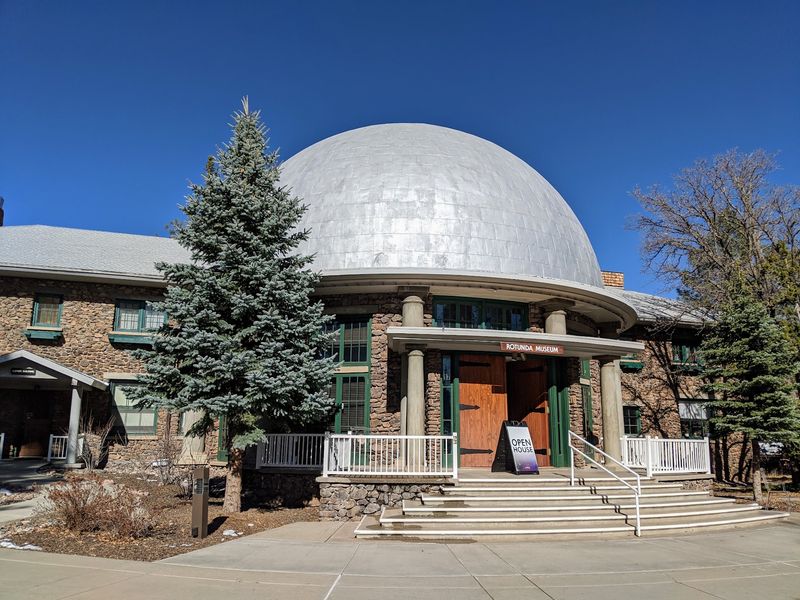
Long before astronauts stepped onto the Moon, detailed maps were needed to understand its surface. At Lowell Observatory, the 24-inch Clark Refractor became part of that effort during the space-race era.
Beginning in 1961, the Aeronautical Chart and Information Center established an office at Lowell.
Observers, photographers, and scientific illustrators worked together to study the lunar surface and create maps for the Apollo program.
The Clark supplied telescopic views that helped support that work.
Those maps required careful observation. Craters, ridges, valleys, and changing shadows had to be translated into useful visual records.
Photographs were part of the process, but artists also worked directly from telescopic observations and other reference material to build detailed lunar charts.
The Clark itself had already been working for decades by then. Built in 1896 by Alvan Clark & Sons, the refractor was originally used for planetary observations and other astronomical research.
Its later role in lunar mapping added another chapter to a telescope that had already seen generations of scientific work.
Start here if the Moon is what brought you up Mars Hill. Spend a few minutes with the Clark before moving on, especially if you plan to return after sunset for public viewing.
Your Turn At The Clark Telescope
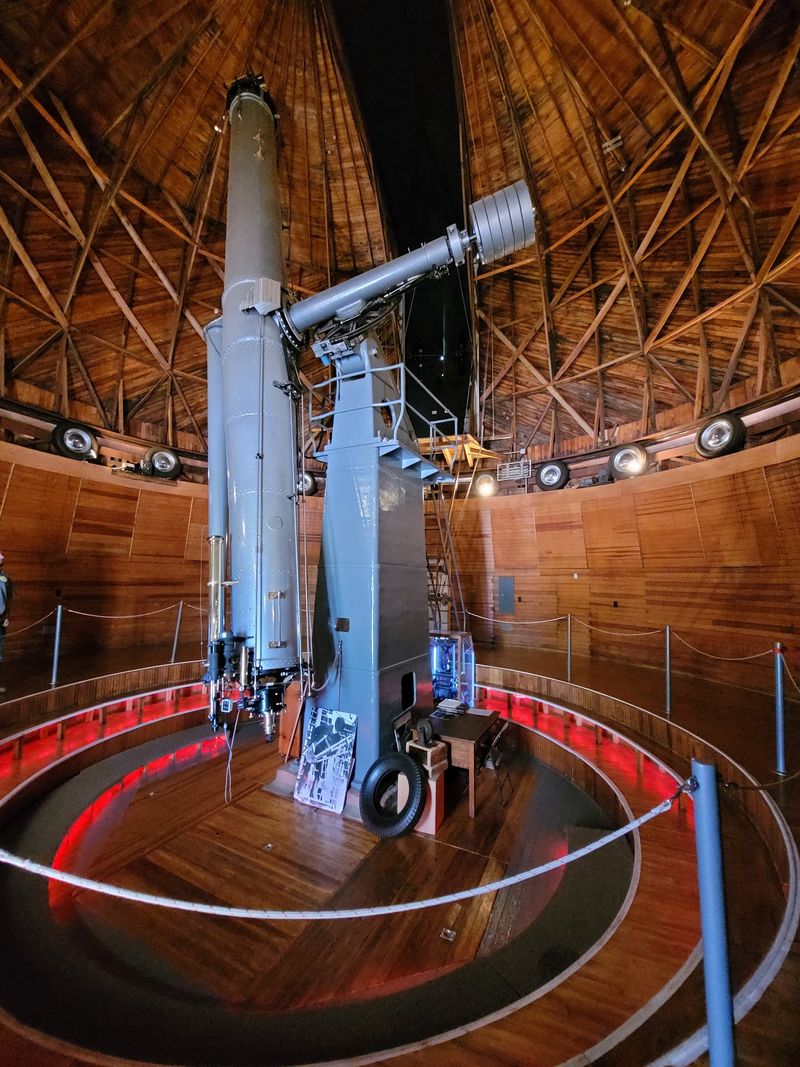
The Clark is no longer used for frontline research, but it still points at the night sky. Public viewing is offered daily except Tuesdays from dusk to 9:30 p.m., weather permitting.
That schedule makes the weather part of your planning. A clear forecast gives you the best chance of looking through the telescope, while clouds can change or cancel observing.
Check conditions before heading up the hill, especially if the Clark is the main reason for your visit.
The instrument is a 24-inch refractor, meaning it gathers light through a large objective lens rather than a mirror.
The same telescope was used by Percival Lowell for observations of Mars and later contributed to work connected with the expanding universe and the Apollo-era Moon maps.
At the eyepiece, telescope views depend on the target, sky conditions, atmospheric steadiness, and time of night. Expect the view to change from one evening to another as those conditions shift.
A warm layer is sensible after sunset in Flagstaff, and patience helps when weather or observing conditions shift. Let the sky decide how much of the evening belongs to the Clark.
Where Pluto Was Found In 1930
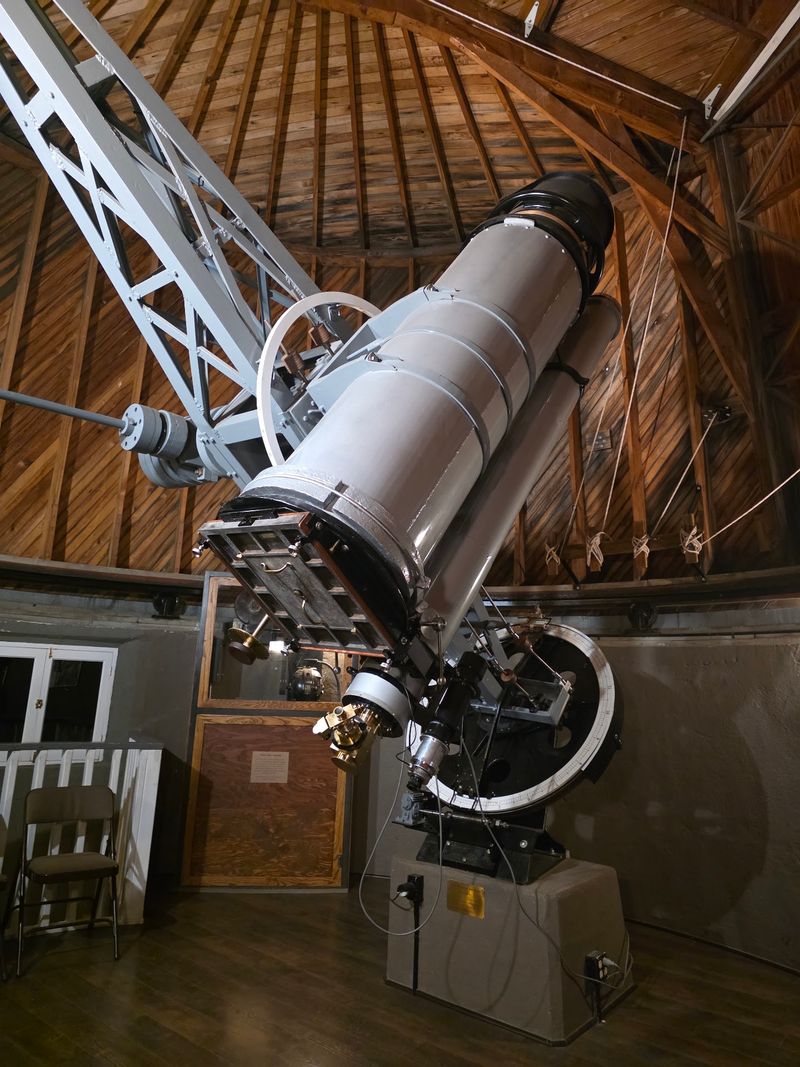
Another dome on Mars Hill holds the instrument used to discover Pluto. The 13-inch Lawrence Lowell Astrograph was built in 1928 and 1929 for the search for a predicted world then called Planet X.
Clyde Tombaugh used the telescope to take large glass photographic plates of the same regions of sky on different nights.
By comparing the plates, he could look for an object that changed position against the background stars. In February 1930, that method revealed Pluto.
The telescope is now known as the Pluto Discovery Telescope. It remains inside the Pluto Discovery Dome, where visitors can see the instrument and the room connected with the discovery.
Tombaugh used 14-by-17-inch glass photographic plates, taking wide-field images that could be compared for motion against the background stars.
The dome is generally open daily except Tuesdays from 1 p.m. to 9:30 p.m., though the schedule can change.
Stairs lead to the astrograph, and the Pluto Dome is not ADA accessible.
An educator may be present during open-house hours to answer questions about the telescope, photographic plates, and the search that led to Pluto.
Give this stop enough time to look closely at the equipment. The astrograph was built for photographic plates rather than public eyepiece viewing.
Mars Hill Sits Above Flagstaff
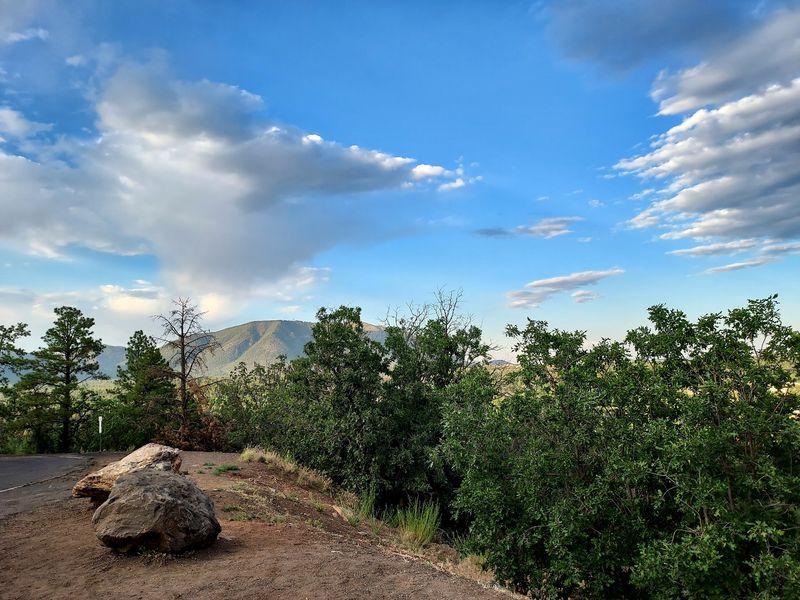
Lowell Observatory occupies Mars Hill about a mile west of historic downtown Flagstaff. The campus sits at roughly 7,250 feet above sea level, high enough that elevation deserves a little attention if you are arriving from much lower ground.
Walk at a comfortable pace, drink water, and give yourself extra time between buildings if needed. The visitor campus includes historic domes, exhibit spaces, public observing areas, and newer facilities, so a visit can involve more walking than a single-building museum stop.
The hilltop location goes back to the observatory’s founding. In 1894, Andrew Douglass tested potential sites in Arizona for Percival Lowell and found Flagstaff suitable for astronomical observing.
Lowell chose the location, and the observatory began operations that same year.
Ponderosa pines are part of the Mars Hill setting, while the elevation also means temperatures can change noticeably after sunset. Bring a layer even if the afternoon feels comfortable.
If you are dividing the visit between daytime history and nighttime observing, use the middle of the day for exhibits and historic buildings, then shift toward the public telescopes as sunset approaches.
More Than A Century Of Astronomy Since 1894
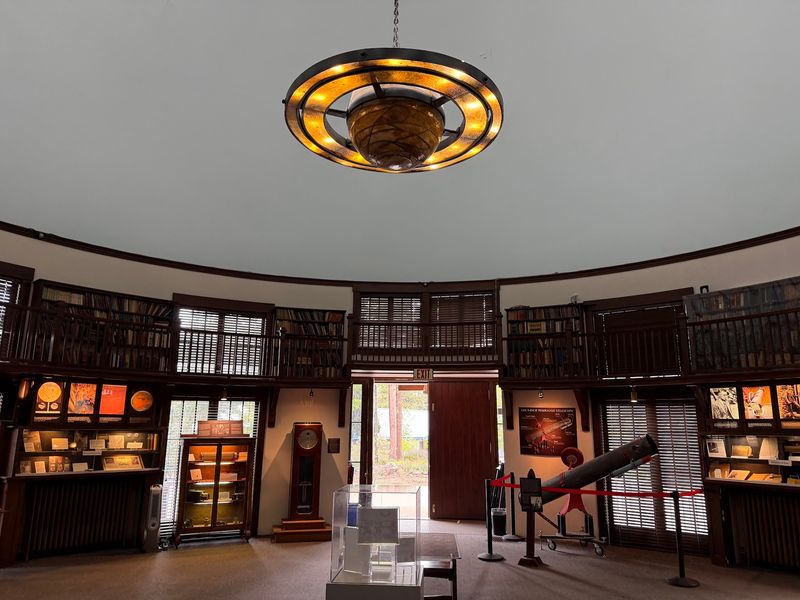
Percival Lowell founded the observatory in 1894 with Mars as a major focus. He was particularly interested in reports of linear features on the planet that were once interpreted as canals.
Those ideas did not survive later scientific scrutiny, but the observations remain part of the institution’s history. Follow the sequence through early planetary sketches, later measurements, improved instruments, and the discoveries that followed.
The campus also preserves other milestones. Vesto Slipher used Lowell instruments in work that revealed large galactic redshifts, an important early step toward understanding the expanding universe.
Pluto followed in 1930, and later Lowell astronomers contributed to research on the rings of Uranus and Pluto’s atmosphere.
Historic material can be explored in the Rotunda Museum inside the Slipher Building. The building dates to 1916 and contains artifacts connected with the observatory’s scientific past.
Slow the pace here rather than racing from dome to dome. Read a few labels, look at the instruments, and give the older equipment time before heading back outside.
Astronomy Is Still Happening Here
Lowell is not only a historic site. It remains an active research institution studying planets, comets, asteroids, exoplanets, galaxies, dark matter, and other astronomical questions.
Modern research includes work with the Lowell Discovery Telescope, a 4.3-meter instrument located away from the Mars Hill visitor campus near Happy Jack, Arizona.
The darker research site gives astronomers access to a large modern telescope while Mars Hill continues to serve both science outreach and public observing.
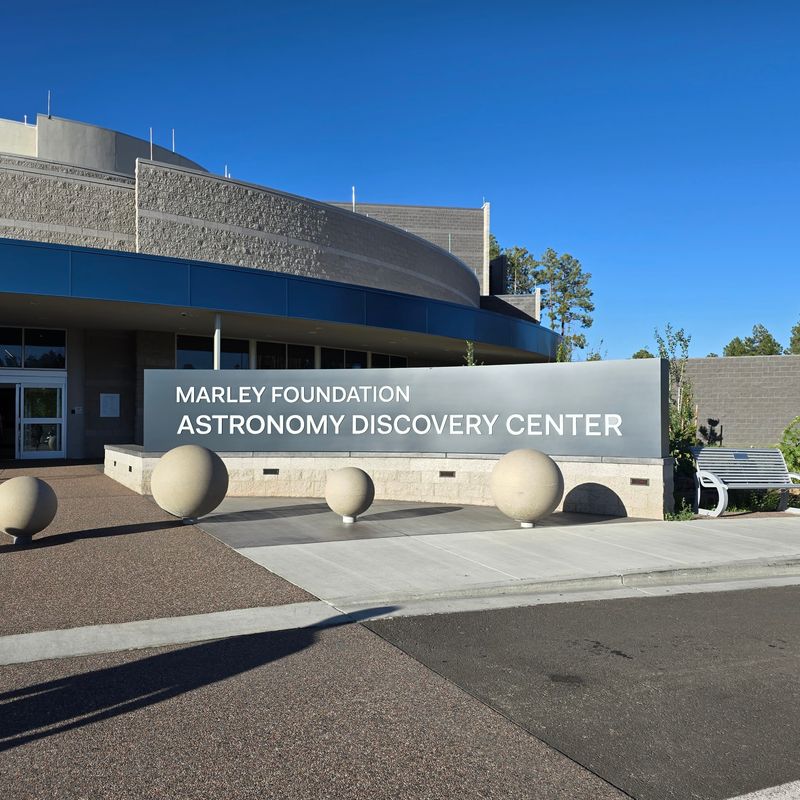
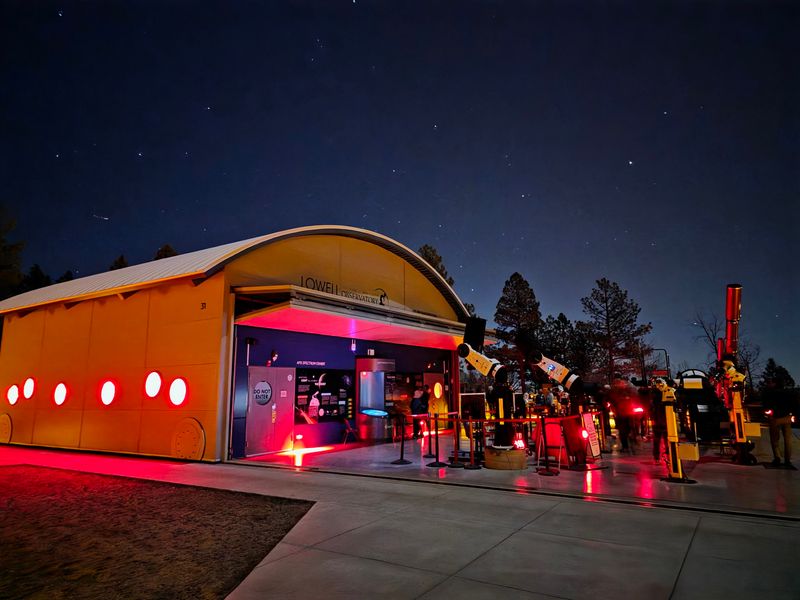
The visitor campus now includes the Astronomy Discovery Center and the Giovale Open Deck Observatory, where six telescopes are available for public viewing when conditions allow.
The Astronomy Discovery Center opened in November 2024 as the observatory’s new visitor hub. Its exhibits and programs sit alongside the older domes rather than replacing them, so you can move between current astronomy and preserved instruments during the same visit.
The Open Deck Observatory nearby adds six public telescopes for evening viewing when weather cooperates.
Plan the visit around 1400 W Mars Hill Rd, Flagstaff, AZ 86001. The observatory is closed Tuesdays, and telescope programs depend on weather, so check the day’s schedule before driving up.
If your time is limited, choose one historic telescope, one exhibit area, and one nighttime observing stop. If you have a longer evening, move between the Clark, the Pluto Discovery Dome, and the public observing areas without trying to rush every building.
Flagstaff Keeps The Night Sky Dark
Flagstaff became the world’s first International Dark Sky City in 2001, building on decades of local efforts to reduce unnecessary light around astronomical facilities.
After sunset, those dark-sky practices help protect observing conditions for research while also supporting public stargazing close to town.
At Lowell, nighttime viewing can include the Clark Telescope and the six instruments at the Giovale Open Deck Observatory. What you see changes with the season, time, weather, and position of the planets, Moon, and other targets.
Arrive with a flexible target list. One night may favor the Moon or a bright planet, while another may open up star clusters, double stars, or deeper objects through the public telescopes.
Staff choose targets according to conditions rather than promising the same view every evening.
A jacket and comfortable shoes are useful, and darker clothing can make moving between indoor and outdoor areas easier on your eyes. Give your vision a few minutes to adjust after stepping outside.
End the visit by looking up without a telescope for a moment. The same dark-sky protections that support modern research also make Mars Hill a place where the naked-eye sky still has plenty to show.