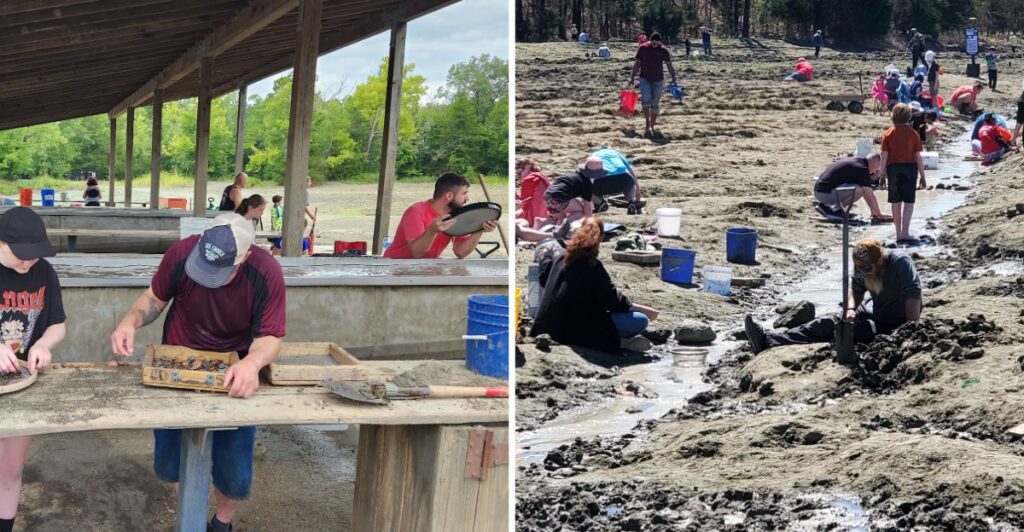
Usually, “finders keepers” gets complicated when diamonds are involved.
Not here.
In Arkansas, you can walk into a field, start searching the dirt, and actually keep the gem if luck decides to cooperate.
That changes the mood pretty quickly.
Every shiny little stone deserves a second look. Every scoop of soil suddenly feels suspiciously promising.
You can keep things simple and scan the ground, or grab a shovel and screen when treasure hunter mode fully kicks in.
The field sits over an ancient volcanic deposit, so the possibility is very real.
So are the mud, heat, and dirty shoes.
Dress accordingly.
And if somebody finds a diamond before you do?
Congratulations.
You now have a family rivalry.
The Only Public Diamond Field Of Its Kind

Most people only see diamonds behind glass at a jewelry counter. Here in Murfreesboro, you can search for natural diamonds where they were carried to the surface by ancient volcanic activity.
Crater of Diamonds State Park is the only place in the world where the public can search for diamonds at their original volcanic source. You are not sifting through trucked-in gravel or a staged pile. The search happens in the eroded surface of a real volcanic crater.
The field looks surprisingly plain at first glance. Instead of glittering walls or underground tunnels, expect furrowed earth, open sky, and stones of all shapes and colors. A diamond may look like an ordinary pebble until you examine its surface more closely.
Start with a look around the visitor center, where exhibits introduce the local geology and show examples of uncut diamonds. The Diamond Discovery Center near the field offers additional information about searching techniques.
Digging and screening are other options, and there is no requirement to use elaborate equipment. Give yourself time to learn what the soil looks like before deciding how to search.
No discovery is guaranteed, of course. The possibility of finding a genuine diamond is what makes an ordinary patch of Arkansas dirt such an unusual place to spend an afternoon.
A Volcano Built This Treasure Box Long Ago
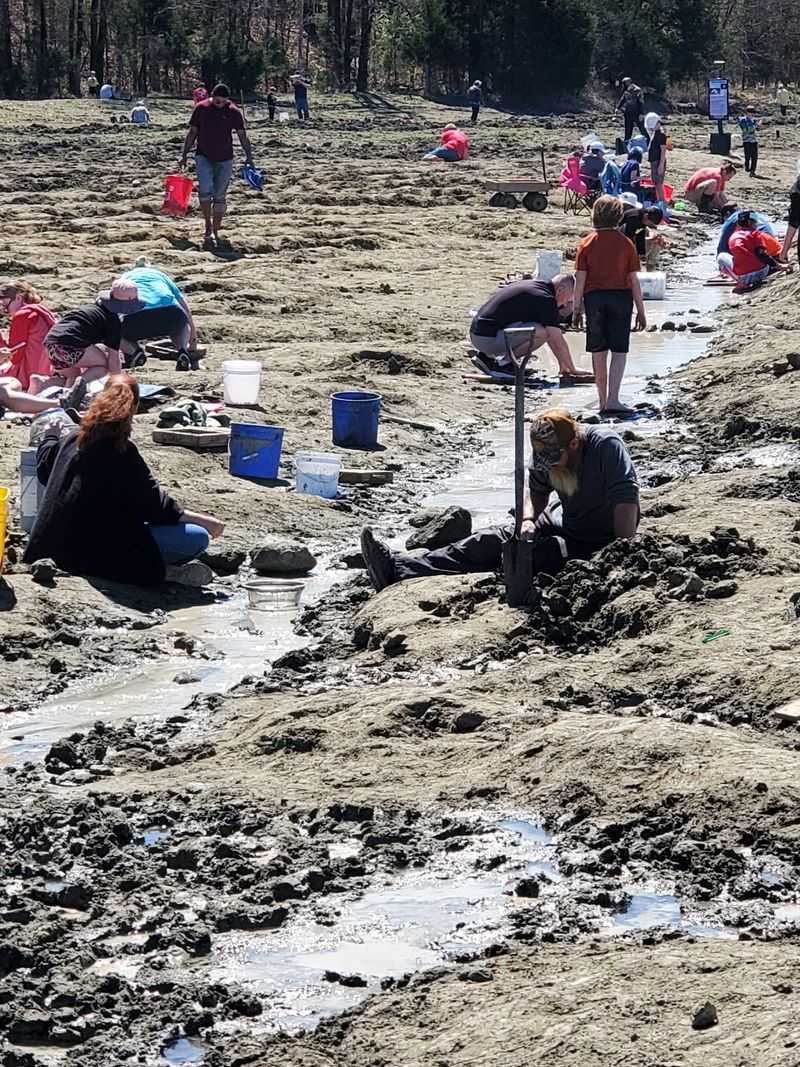
Around 100 million years ago, volcanic activity carried diamond-bearing material upward from deep below what is now southwest Arkansas. The diamond field lies on the eroded surface of that ancient volcanic feature.
Diamonds form at great depths under intense heat and pressure. Volcanic material can transport them toward the surface, where weathering eventually exposes some of the crystals.
The park’s exposed volcanic deposit contains the stones that searchers examine today.
Over long periods, the exposed material has broken down, leaving soil and fragments that visitors can search today. Rain and erosion continue to move loose material around the field.
Here’s something to look for besides diamonds: jasper, quartz, agate, amethyst, garnet, and other naturally occurring stones and minerals also turn up in the search area.
Put an interesting specimen aside for identification rather than assuming every bright crystal is a diamond.
The visitor center’s displays offer a useful introduction before you step into the field. Once outside, compare the colors and textures of stones you find with the examples you have just seen.
Sort a small scoop carefully and compare the different colors, textures, and crystal shapes before moving on.
Thirty Seven Acres Of Dirt Waiting For Your Shovel
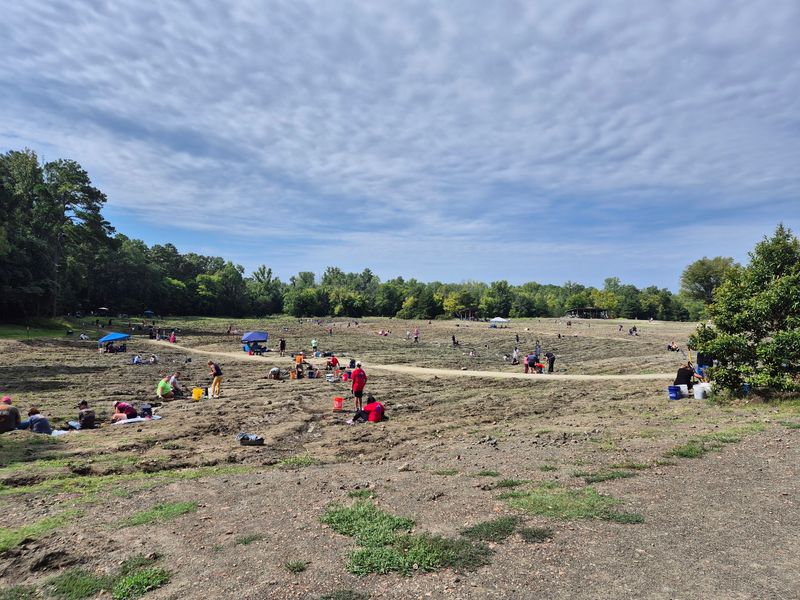
Bring sunscreen, because shade is hard to come by out there. The designated diamond search area covers about 37 acres of plowed ground, much of it exposed to the sun.
Stay within the marked search boundaries, and leave trees and areas outside the field undisturbed. If you dig a hole, park rules require you to fill it before leaving.
The soil changes with the weather. Rain can leave the ground sticky and muddy, while dry conditions make surface searching easier underfoot. Periodic plowing turns the earth, but it does not happen on a guaranteed daily schedule.
A hat, drinking water, comfortable clothes, and footwear suitable for mud are sensible companions. Knee pads or a small cushion can make kneeling more comfortable. Bring gloves if you intend to dig or handle wet screens for a while.
Shelters and umbrellas brought onto the search area must be secured and removed at the end of the day.
A longer visit leaves room to experiment with screening and sorting.
Finders Keepers Is The Official Rule Here
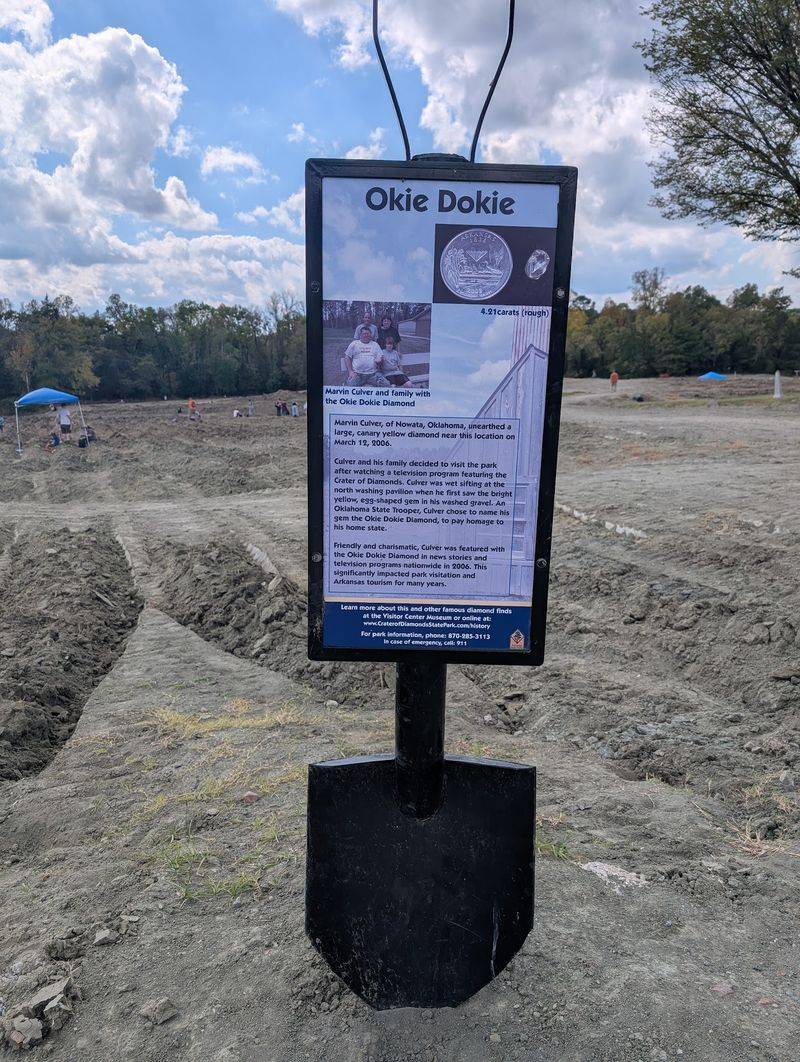
The central rule is delightfully straightforward: diamonds and other rocks or minerals found in the designated search area are yours to keep. A small crystal belongs to its finder just as surely as a larger one.
The property became an Arkansas state park in 1972, bringing the opportunity to search this diamond-bearing ground into the state park system. The field had already been operated as a tourist attraction before the state acquired it.
There are boundaries to the collecting rule. Searching must take place in the marked area, and restrictions apply to equipment and the removal of unprocessed soil.
Visitors may take home only a limited quantity of processed concentrate, so bringing an unlimited amount of dirt home is not an option.
Unsure whether a stone is genuine? Bring it to the Diamond Discovery Center. Park staff offer free identification of rocks and minerals and can register diamonds found at the park.
Plenty of searching days end without a diamond, and the experience does not promise a valuable prize. Look carefully, keep what catches your eye, and ask for help identifying unfamiliar finds.
You can sort the day’s discoveries before heading back to your car.
Thousands Of Lucky Finds Over The Years
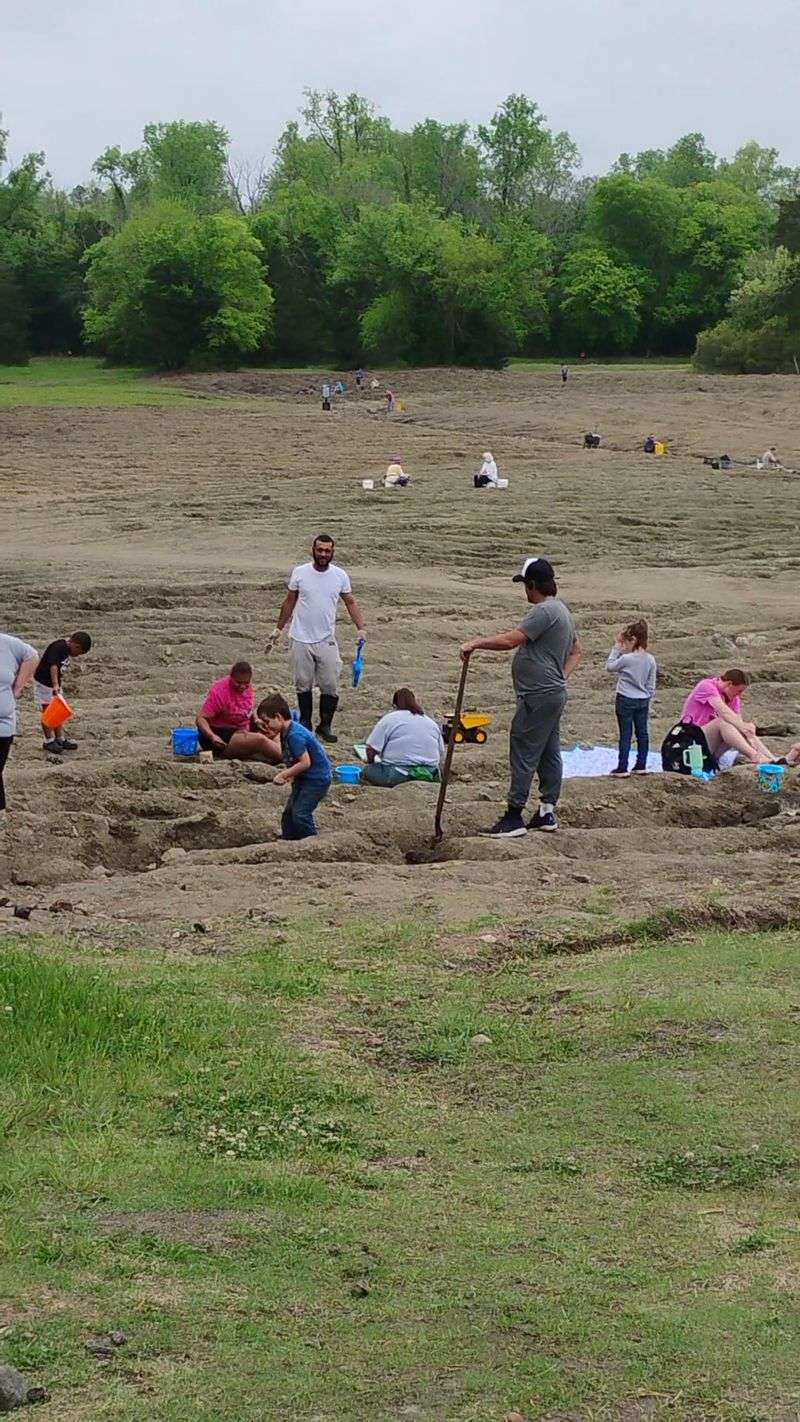
Tens of thousands of diamonds have been found at the park since it opened in 1972. The recorded total exceeded 37,000 by early 2026, with discoveries recorded from the public search field.
White, brown, and yellow are the three commonly identified diamond colors at this site. Rough diamonds do not necessarily look like the cut stones in jewelry cases. Their outer surfaces can appear smooth and slick, and their shapes are often rounded.
The average diamond found here is about the size of a match head, so scanning quickly may mean overlooking something interesting. A larger or unusually shaped stone is not automatically a diamond either.
Surface searching is one way to begin. Walk slowly over the plowed rows, looking for clean, reflective crystals resting among soil and pebbles. After rain, it can be useful to look where loose surface material has shifted, provided conditions allow safe walking.
The Diamond Discovery Center can examine a possible find without charge. There is no need to decide on the spot whether a crystal is quartz or something rarer.
For a different perspective, visit the park’s exhibits about notable finds. The exhibits include examples of notable stones, while the field offers room to practice the techniques you have learned.
Shovels, Screens, And A Whole Lot Of Patience
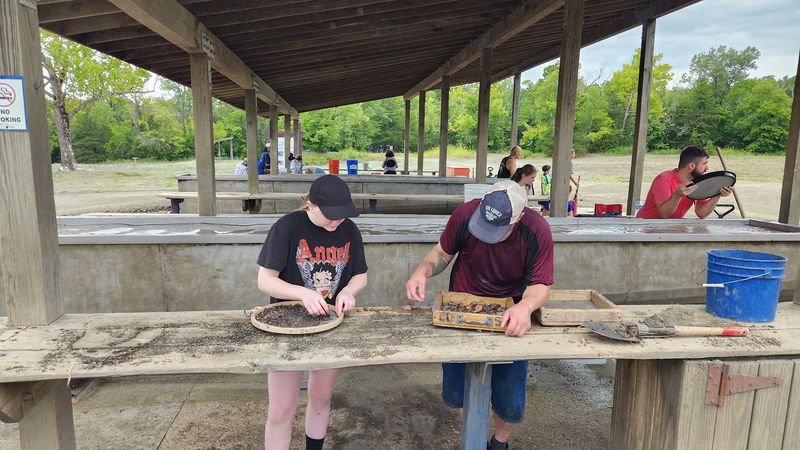
Grab a bucket, a shovel, and a screen, and you have the basics covered. Visitors can bring hand-operated, nonmotorized equipment or rent tools at the park’s Diamond Discovery Center.
A basic rental kit includes a shovel, screen set, and bucket. Individual items and more advanced screening equipment may also be available, with rental charges and refundable deposits.
Motor-driven or battery-operated digging and searching equipment is not permitted.
There are several ways to look for diamonds. Surface searching involves scanning the top of the soil. Dry sifting separates smaller pieces from larger material.
Wet sifting uses water and screens to wash away finer dirt while keeping heavier pieces for closer inspection.
Covered washing pavilions provide a place to try wet sifting. Fill a screen with suitable material, work it through the water, and sort the stones left behind. Go slowly, especially when turning a screen to inspect its contents.
The park offers diamond-searching demonstrations and interpretive programs, though individual program times vary. Check the day’s schedule at the visitor center or Diamond Discovery Center before committing your afternoon to a particular activity.
With more time, compare methods and decide which feels comfortable. Keep your tools and belongings together, and return rented equipment before the day’s deadline.
Plan Your Trip To Murfreesboro The Smart Way
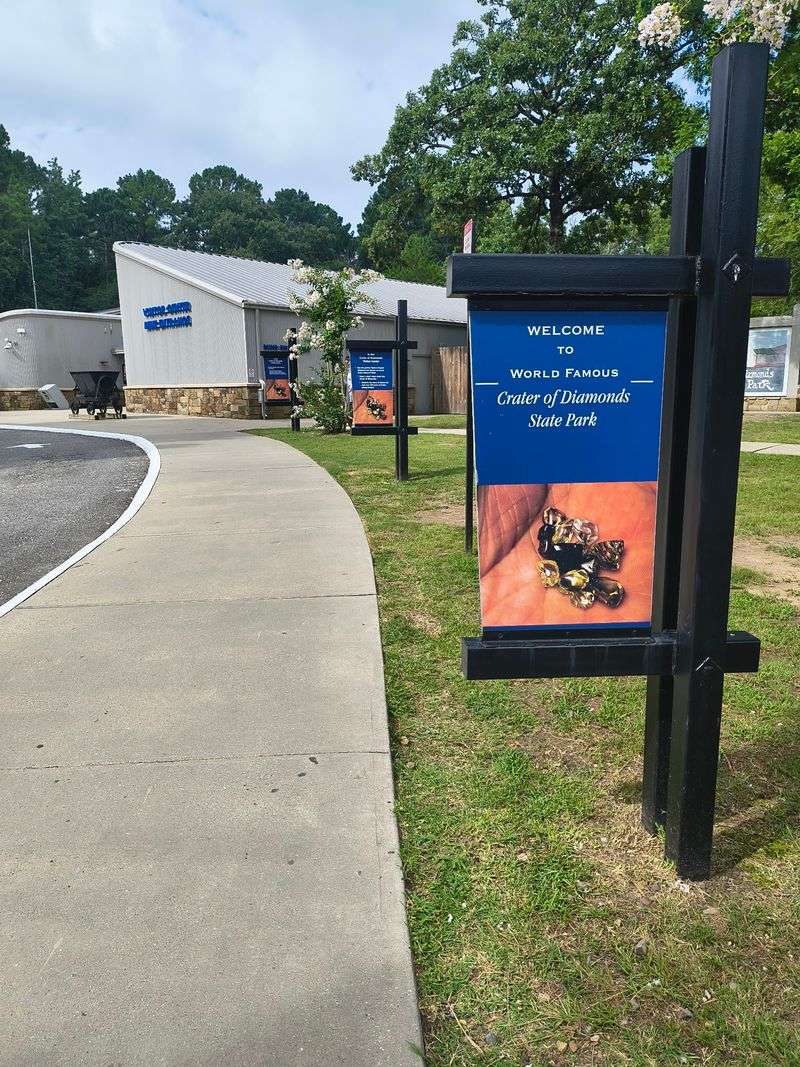
A little planning makes the open diamond field more comfortable, particularly when the sun is strong and the ground is muddy.
The diamond search area generally operates from 8 a.m. to 4 p.m., while the visitor center and Diamond Discovery Center operate from 8 a.m. to 5 p.m.
Holiday closures include New Year’s Day, Thanksgiving Day, Christmas Eve, and Christmas Day. Check seasonal information before traveling.
Admission is charged for entry to the diamond search area. Tickets can be purchased online or at the park; children under six enter free, with separate rates for older children and adults. Equipment rentals cost extra.
Families visiting in summer can consider the seasonal Diamond Springs Water Park, which requires its own admission. The park also has trails, picnic areas, a campground with RV hookups and walk-in tent sites, and a wildlife observation area.
Leashed pets are permitted in most park facilities, with exceptions including the gift shop and water park. Keep drinking water handy for both people and pets, and take breaks when the heat builds.
Start at the visitor center, then head to the field once you know where to find the washing areas and identification desk. Leave enough time to have your stones checked before facilities close.
For navigation, use 209 State Park Road, Murfreesboro, AR 71958. Pack clothes that can get dusty, and leave some room in your bag for whatever the field turns up.