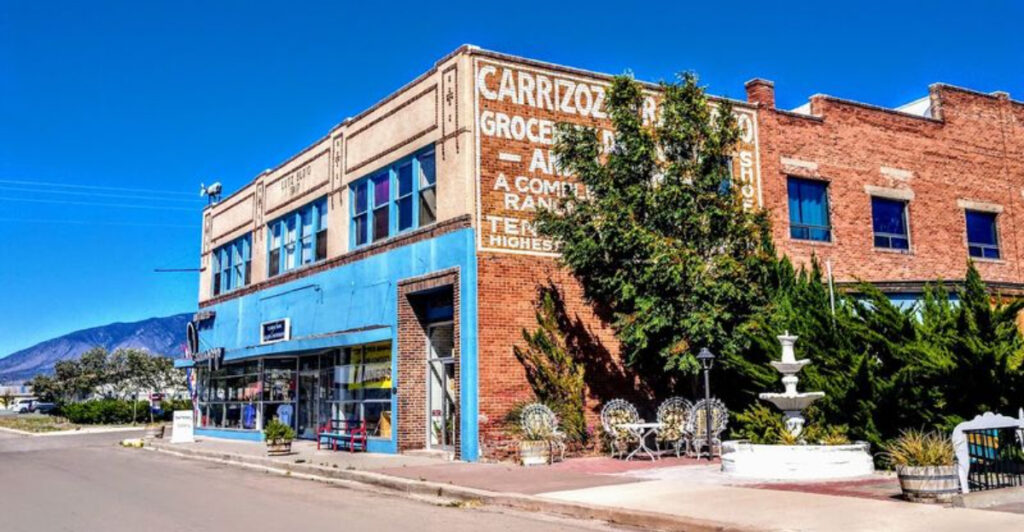
You ever stop somewhere for gas and accidentally find a place you do not want to leave?
That was me in this desert town.
It sits between the Chihuahuan Desert and the Sacramento Mountains, quiet at first glance, then full of surprises once you start walking. I was passing through south-central New Mexico with no plan to stay.
Painted sculptures got my attention first. Murals kept me moving.
By sunset, the old storefronts were glowing with gallery light.
I was checking rooms before dinner was over. The next morning, I was already glad I had stayed.
There is a calm here that does not feel empty. The streets move slowly.
The lava fields nearby make the whole place feel otherworldly. People seem to have time for conversation.
It is the kind of town that does not chase attention.
And somehow, that is exactly what makes you remember it long after you leave.
Painted Burros And Desert Streets
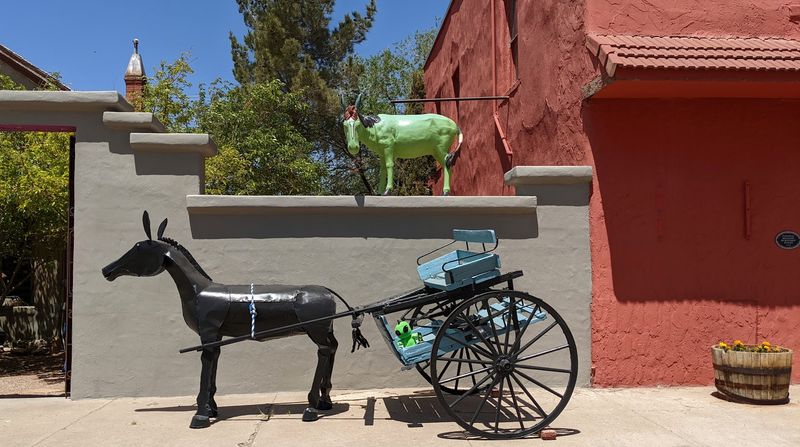
I was wandering down the sun-warmed streets of this small desert town when a brilliantly painted burro stopped me in my tracks.
It stood on the sidewalk like it owned the place.
The Painted Burros of Carrizozo project places painted aluminum burro sculptures throughout the town, each one designed by a local artist, turning an everyday stroll into an open-air gallery experience.
Some burros wear geometric patterns inspired by Native American design traditions, while others feature bold abstract swirls or painted desert landscapes across their sides.
The project is not just decorative, it reflects the town’s deep investment in public art as a way to express community identity and welcome curious travelers.
I spent nearly an hour just wandering from one sculpture to the next, photographing each one and trying to guess the story behind every design choice.
Children seemed especially delighted by the burros, running ahead of their parents to find the next one around each corner.
It is the kind of public art that makes a town feel alive, and in Carrizozo, New Mexico 88301, the painted burros do exactly that with colorful confidence.
Old Storefronts With Gallery Soul
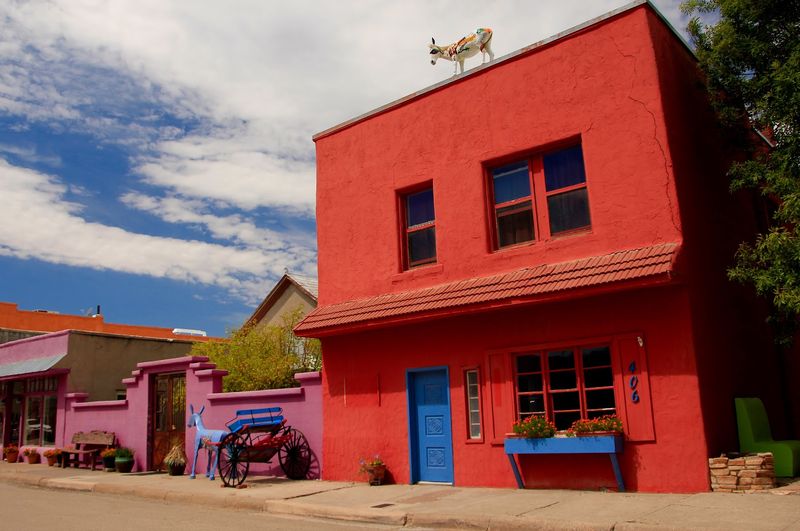
A building can look almost unchanged since 1920, then surprise you with contemporary photography on every wall.
That contrast is part of Carrizozo’s charm.
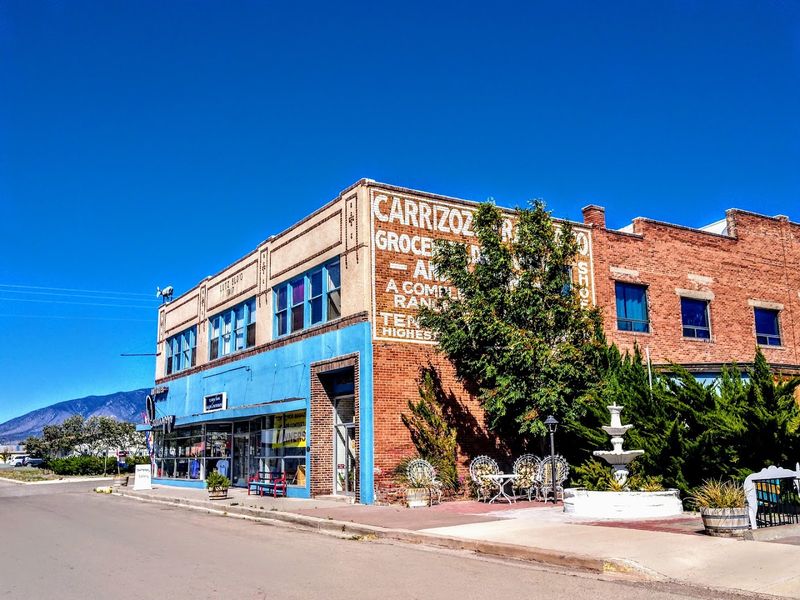
Carrizozo’s 12th Street is the heart of the town’s arts district, where old storefronts and historic buildings from the early 1900s have been reimagined as creative spaces without losing their original character.
The Tularosa Basin Gallery of Photography, locally nicknamed Photozozo, is one of the standout stops, showcasing striking images of the surrounding desert landscape taken by regional photographers.
Malkerson Gallery 408 is another destination worth lingering in, featuring rotating exhibitions that span painting, mixed media, and sculpture from artists connected to the region.
What struck me most was how the architecture itself added to the experience, with pressed tin ceilings, weathered wood floors, and wide display windows that framed the art beautifully.
These buildings carry over a century of history in their walls, and the galleries inside honor that weight rather than erasing it.
Browsing through them felt less like a museum visit and more like being welcomed into someone’s carefully tended creative world.
Black Lava Views Beyond Town
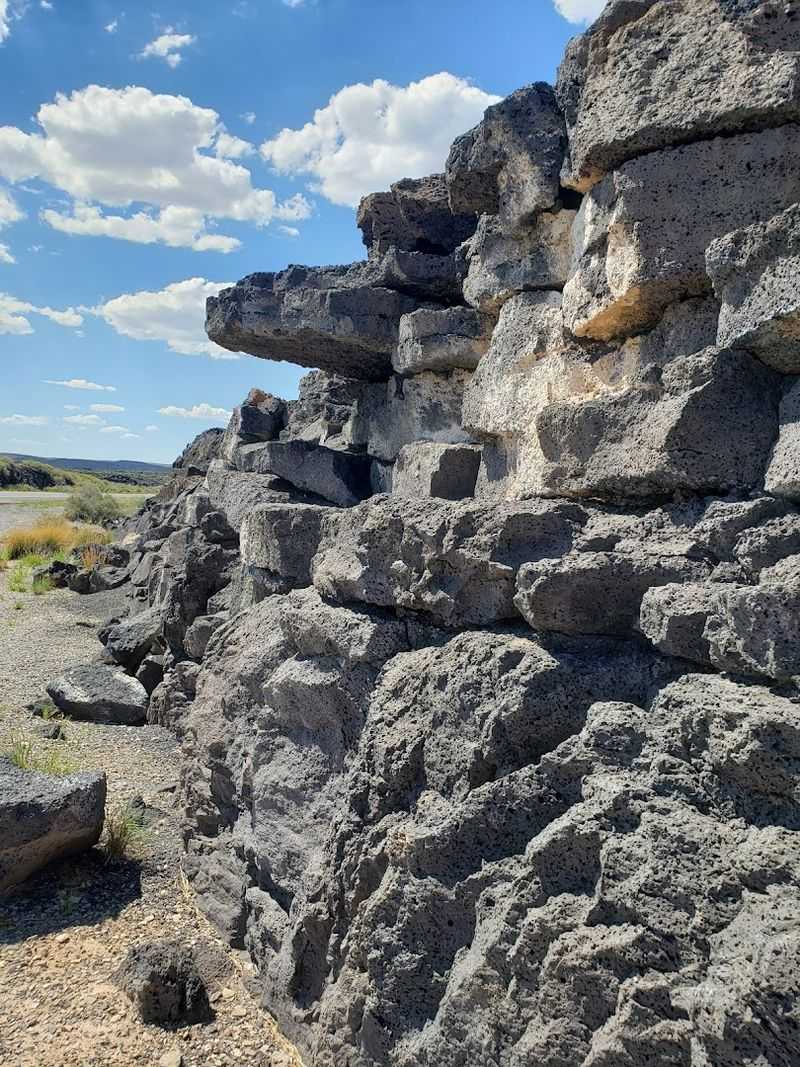
Just west of town, the landscape shifts into something almost otherworldly.
A sprawling black lava field stretches across the Tularosa Basin like a frozen ocean of volcanic rock.
The Valley of Fires Recreation Area sits only about four miles from Carrizozo and protects one of the youngest lava flows in the continental United States, estimated to be around 5,000 years old.
Standing at the trailhead with that dark, jagged expanse in front of me and the Tularosa Basin stretching southward in the distance, I genuinely felt like I had landed on a different planet.
The lava field covers roughly 125 square miles and reaches depths of about 160 feet in some areas, which puts its scale into a perspective that photos honestly cannot capture.
A short nature trail winds through the lava, offering close-up views of the rock formations, desert plants that have taken root in the cracks, and the occasional lizard darting across the surface.
Sunrise and sunset are the best times to visit, when the low light turns the black rock into shades of deep purple and amber.
The view from the edge of that lava field is one of the most unexpected rewards of stopping in this part of New Mexico.
Quiet Roads Under Big Skies
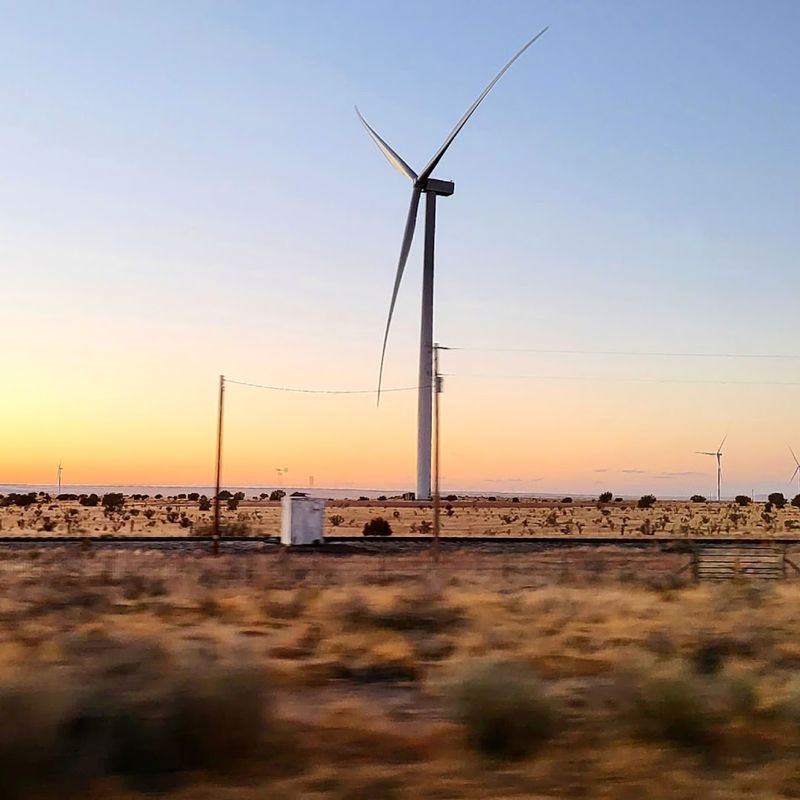
Positioned at the crossroads of U.S. Routes 54 and 380, Carrizozo sits at a geographic intersection that has shaped its identity since the town was founded in 1899 as a railroad hub for Lincoln County.
Today, those same roads lead outward into some of the most open and undisturbed desert scenery in the American Southwest, where traffic is sparse and the horizon seems to stretch on without end.
I drove north on Route 54 one morning just to feel the quiet, and within minutes the town had disappeared behind me, replaced by pale grassland, distant ridgelines, and a sky so wide it demanded my full attention.
The roads around Carrizozo are genuinely peaceful in a way that is increasingly rare, free from billboards, chain restaurants, and the commercial noise that clutters most American highways.
Driving here feels like a reset, the kind of slow travel that reminds you why people first fell in love with road trips before everything became a destination optimized for maximum throughput.
Cyclists, photographers, and solo travelers have all discovered these routes, drawn by the unfiltered landscape and the sense that nothing is rushing them along.
These roads do not just connect places, they offer something harder to find: genuine breathing room under an enormous and generous sky.
Vintage Motels And Roadside Charm
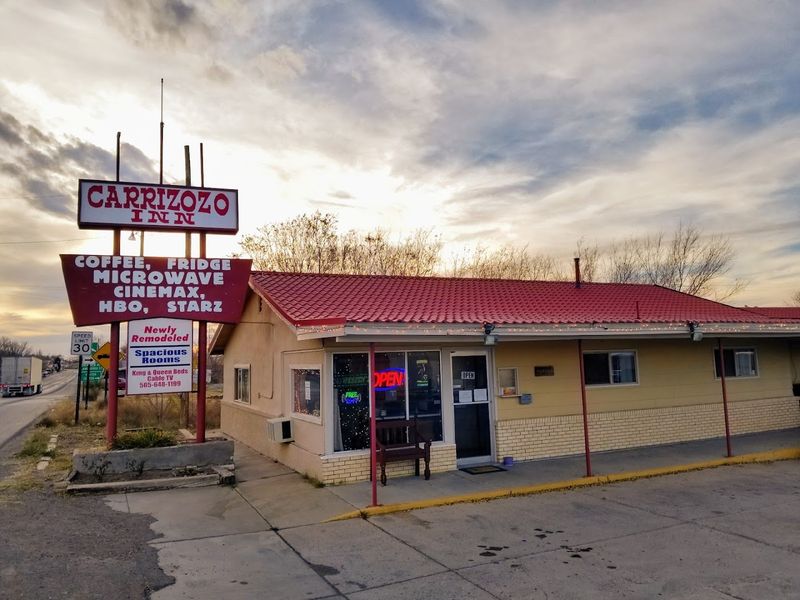
Spending a night in Carrizozo means embracing a slower, more analog version of travel, one where the lodging options lean toward character rather than corporate uniformity.
The town retains the feeling of a classic American roadside stop, with small motels and guesthouses that carry the aesthetic of mid-20th century travel without pretending to be something they are not.
Staying in a room where the window frames the open desert and the parking lot is quiet by nine in the evening is a particular kind of luxury that no five-star property can replicate.
Carrizozo’s population has hovered around 850 to 1,000 residents for years, and that modest scale means the town has never been overrun by the kind of development that erases the original personality of a place.
The gradual shift away from railroad dependency after the mid-20th century actually worked in the town’s favor architecturally, preserving buildings and streetscapes that busier towns long ago demolished.
Walking to dinner from a small motel along streets lit by old-fashioned fixtures, with no crowds and no noise, felt like a scene from a road novel I had always wanted to live inside.
Carrizozo’s roadside charm is not manufactured or staged, it is simply what happens when a town keeps being itself over a very long time.
Art-Filled Corners In The Desert
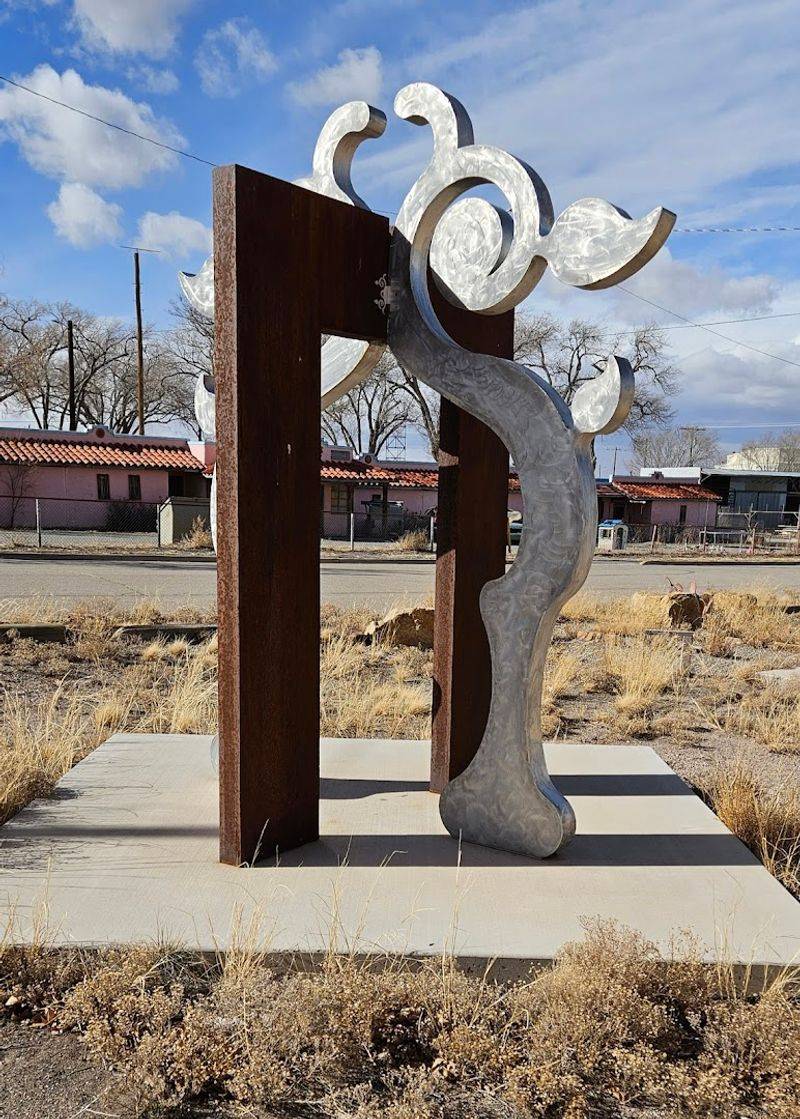
One of the most surprising things about Carrizozo is how consistently the art shows up, not just in galleries but in alleys, on the sides of buildings, tucked into courtyards, and anchoring small public plazas.
The town supports an Artist-in-Residence program that has brought many artists to live and work here, and their influence is visible across the downtown area.
Murals reference the region’s history, the surrounding landscape, and the layered cultural heritage of south-central New Mexico in ways that feel specific rather than generic.
Sculpture gardens appear where you least expect them, small patches of desert-adapted plants arranged around bronze or welded steel works that catch the afternoon light with quiet drama.
Near the main commercial street, I found small art details tucked into unexpected corners, the kind of pieces that made the streets feel personal rather than staged.
The town also hosts World Art Day celebrations and music events, which pull in visitors and energize the local creative community each year.
Art in Carrizozo does not feel like an add-on to attract tourists, it feels like the actual language the town uses to communicate who it is and what it values.
Mountain Backdrops And Open Light
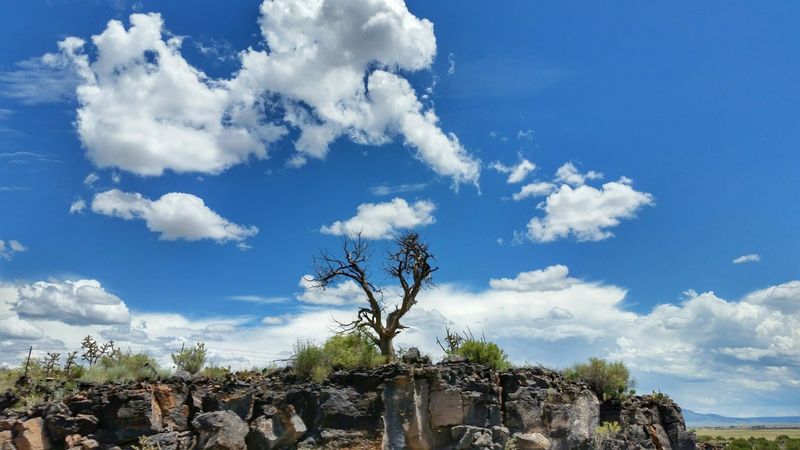
The light in Carrizozo does something remarkable in the late afternoon.
It turns the surrounding landscape into gold, rust, and deep shadow, making every view feel like a painting someone forgot to hang inside.
The Sacramento Mountains and Sierra Blanca country rise to the east and southeast of town, their ridges providing a dramatic contrast to the flat desert floor that stretches in every other direction.
Sierra Blanca Peak, visible from the outskirts of Carrizozo on clear days, reaches over 11,000 feet and anchors the eastern skyline with a presence that is hard to ignore even from a distance.
Photographers come here specifically for the quality of the light, which changes throughout the day from sharp and bleaching at midday to soft and saturated as the sun descends toward the San Andres Mountains to the west.
I set up a folding chair on the edge of the Valley of Fires one evening and simply watched the mountain backdrop shift colors for nearly an hour without feeling the urge to check my phone once.
The open terrain around Carrizozo means that weather systems are visible from far away, with storms building over distant peaks and lightning threading down through layers of cloud in slow, theatrical arcs.
There are places where the landscape earns your full attention, and the mountain-framed desert around Carrizozo is absolutely one of them.
Small-Town Stillness With Creative Energy
Spending real time in Carrizozo means getting comfortable with a particular kind of quiet that most people have forgotten exists in American towns.
The population of around 972 residents, recorded in the 2020 census, keeps the pace of life genuinely unhurried, where locals greet strangers without suspicion and conversations at the coffee counter tend to run longer than anyone planned.
What makes this stillness interesting rather than sleepy is the creative undercurrent that runs through it, a result of years of artists choosing this town as a place to focus, build, and stay.
The Artist-in-Residence program and the galleries on 12th Street have seeded the community with people who see the desert not as an obstacle but as a collaborator in their work.
I spoke with a painter who had moved here from a large city on the East Coast and had no plans to leave, drawn by the affordability, the light, and what she called the productive silence of the place.
That productive silence is something Carrizozo offers freely to anyone willing to slow down enough to receive it, and it is genuinely rare in a world that rewards noise.
Founded in 1899 and still quietly thriving today, Carrizozo 88301 proves that small-town stillness and creative energy are not opposites but natural partners in the right desert setting.