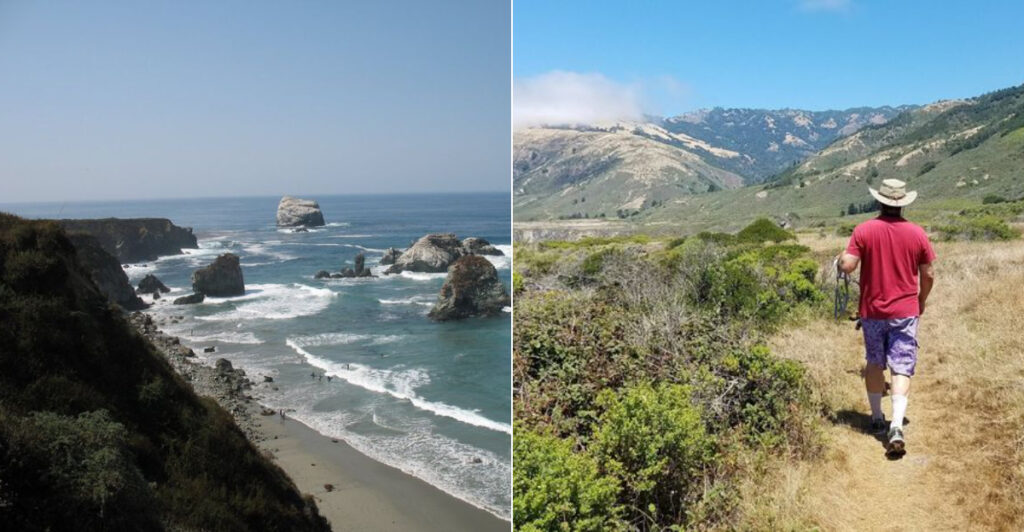
Most drivers cruise right past it on Highway 1 without a second glance, and that is exactly what makes it so worth finding. A rocky, wild coastal cove is sitting quietly out there, and the shore is lined with actual jade stones waiting to be picked up.
Dramatic cliffs, a loud and restless ocean, and a landscape that feels completely untouched by the usual tourist trail. This is the kind of place that rewards the traveler who pays attention and takes the extra step down to the shore.
Not many people make it here, and the ones who do tend to keep it close. Solitude, stunning scenery, and the chance to walk away with a piece of the California coastline in your pocket.
This cove deserves a spot on every serious road trip list. Plan the stop, take the detour, and go find something genuinely rare.
Where Exactly Is This
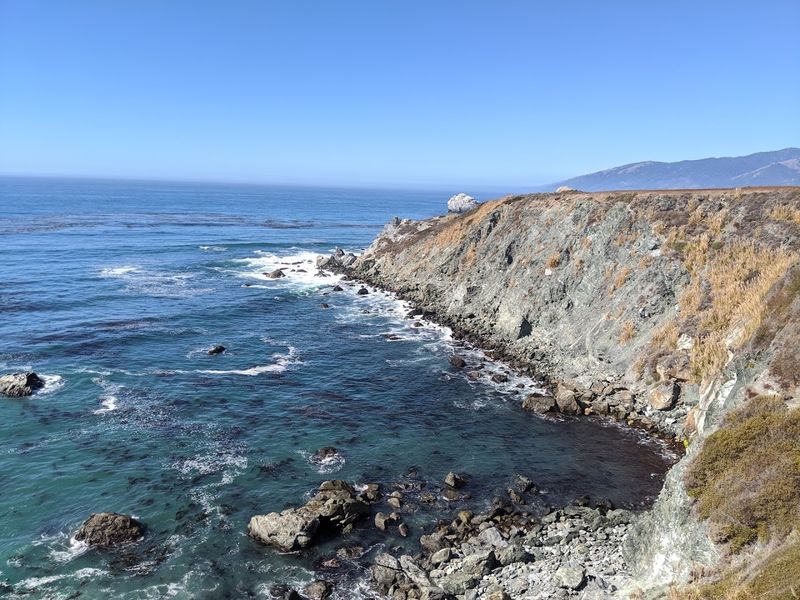
If you blink, you might miss the trailhead entirely. Pull up a map of California’s central coast and look south of Sand Dollar Beach.
That is where Jade Cove sits, along CA-1 in Big Sur, CA 93452, a few miles north of the Monterey and San Luis Obispo county line.
There are no big signs pointing the way. Parking is a small dirt pullout along Highway 1.
Visitors say the entrance is easy to miss, so downloading offline maps before you go is a smart move. Cell service out here is basically nonexistent, and that is part of the charm.
The cove sits within the Los Padres National Forest, managed by the U.S. Forest Service.
The nearest campground is Plaskett Creek Campground, which is just a short drive away. Sand Dollar Beach is also nearby and offers a slightly easier coastal experience if you want to warm up first.
Knowing exactly where you are going before you arrive makes the whole trip smoother. Have you ever shown up somewhere with no signal and no plan?
At Jade Cove, a little preparation goes a long way toward making the visit unforgettable.
The Hike Down
Getting to Jade Cove is not a leisurely stroll. The trail starts as a short, pleasant walk through a meadow, and then it shifts gears fast.
The descent to the shore is steep, uneven, and can be slippery even on dry days. There is a rope anchored at the steepest section that helps hikers get down safely.
Visitors say the rope is there but can be frayed in spots, so test it before trusting it fully.
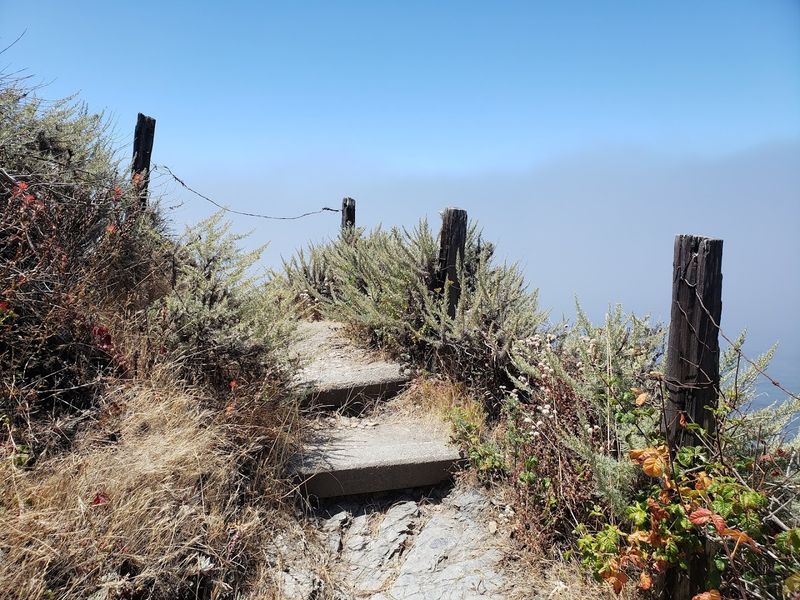
Look for four or five large fence posts sticking up from the ground along the cliff edge. That is the correct trail down.
Other worn paths nearby have led people into seriously tricky situations.
The trail also has patches of poison oak on both sides near the beginning. There is enough space to walk through without touching it, but wearing long pants is genuinely wise advice here.
A natural spring crosses the mid-trail section, making rocks wet and slick in that area. Sturdy hiking boots with good grip are not optional here, they are essential.
Going down feels harder than climbing back up, which surprises most first-time visitors. Take your time, watch your footing, and enjoy the fact that this challenge is exactly what keeps the crowds away.
Is a little adventure not what road trips are made for?
The Rocky Shore Below
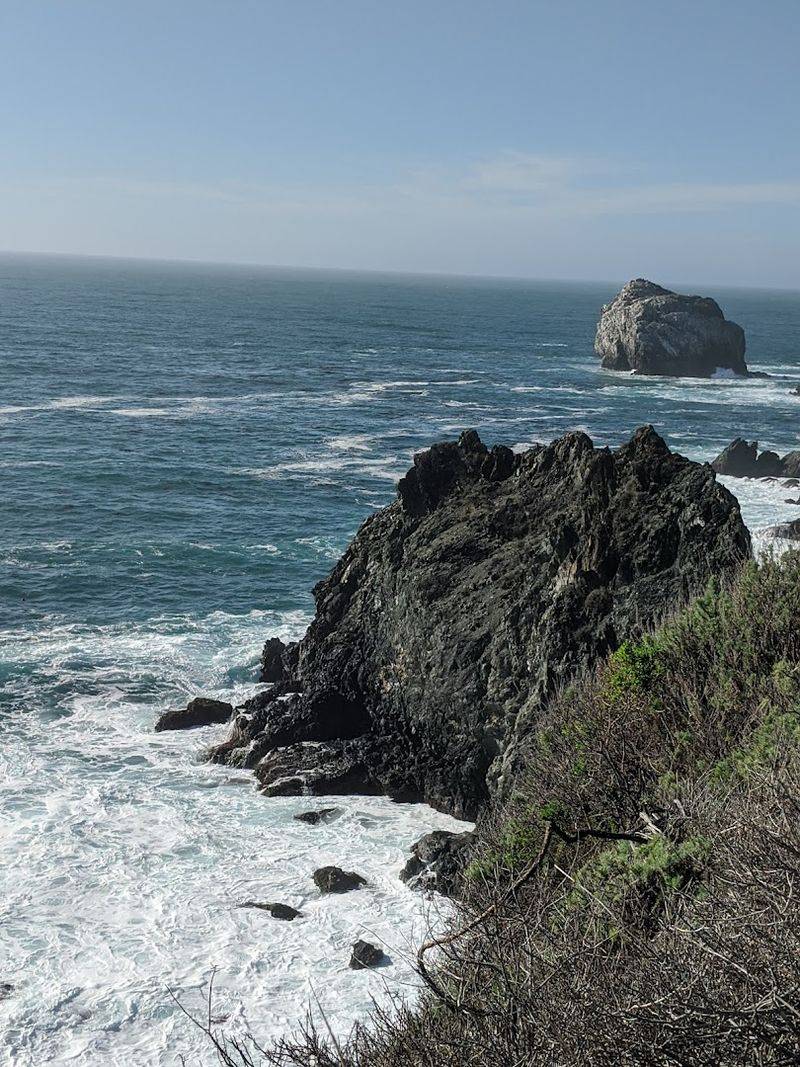
Once you reach the bottom, the first thing you notice is the sound. The Pacific crashes hard against the rocks here, and the spray hits your face before you even step onto the shore.
The beach is not a sandy stretch for lounging. It is a compact, boulder-filled cove with sharp rocks, slick surfaces, and dramatic cliff walls rising on both sides.
It feels raw and completely wild.
Scrambling across the boulders along the coast is part of the experience. Visitors who have spent time here say the views looking back up at the mountains are just as stunning as the ocean views looking out.
The space at the bottom is limited, especially at high tide. At times, the rocks are almost fully submerged, leaving very little room to stand.
Timing your visit around low tide is not just a suggestion, it genuinely changes what is accessible.
The surf here is powerful and unpredictable. Rogue waves are a real possibility, and rip currents make swimming highly inadvisable.
Staying alert and keeping your eyes on the water at all times is the only rule that matters.
There is something almost electric about standing at the base of those cliffs with the ocean roaring in front of you. How often do you find a place in California that feels this genuinely untamed?
Real Jade On Shore
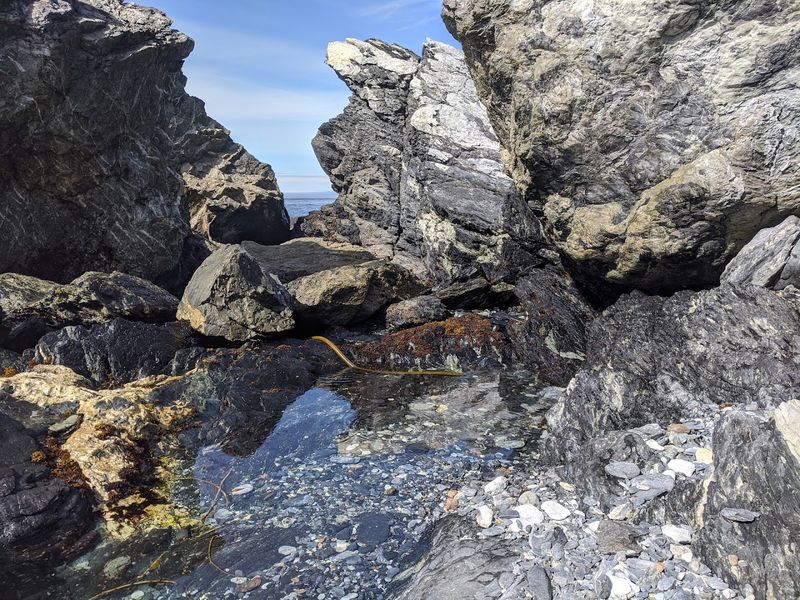
Here is something that sounds almost too good to be true. This cove sits above one of the only known concentrated underwater deposits of quality nephrite jade on the California coast.
Actual jade can be found here, and California state regulations allow visitors to collect loose nephrite jade below the mean high tide line and up to 90 feet offshore. You can only use hand tools and carry out what you personally can hold.
No mechanical equipment, no bulk collecting.
The jade found at this cove comes in a surprising range of colors. Common pieces are grayish green, but emerald green, black, deep forest green, and even translucent blue-green pieces exist.
Some are stunning.
Most of the high-quality jade is now found by experienced divers working underwater. Years of collecting have left fewer large pieces on the immediate shoreline.
But small fragments and interesting green stones are still spotted by sharp-eyed visitors.
You might also find serpentine, a green stone that looks similar to jade but has less value. Learning to tell the difference adds a fun layer of challenge to the hunt.
One visitor on a road trip years ago met jade hunters in the parking area who showed off a 20-pound rock of jade they had pulled up. Stories like that keep the legend of this cove alive.
Could today be the day you find something worth keeping?
Best Time To Visit
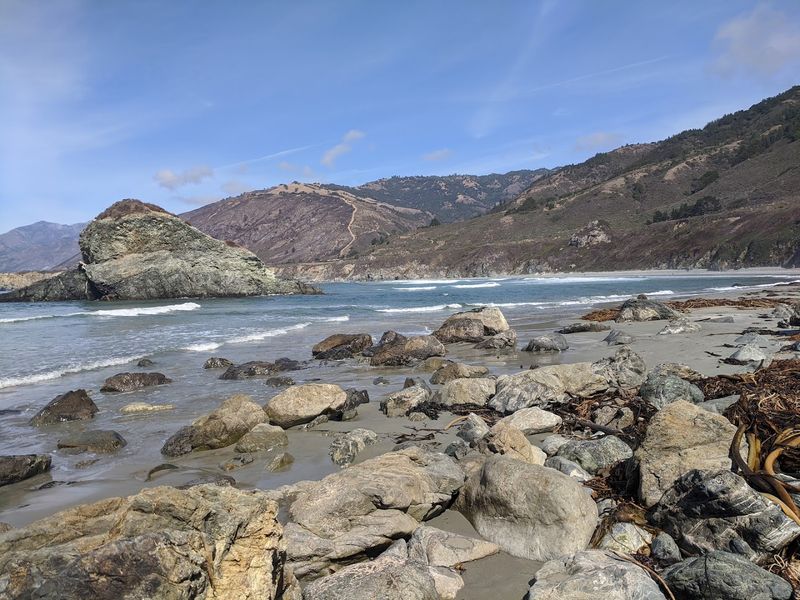
Timing a visit to Jade Cove takes a little planning, but it pays off in a big way. Low tide is the single most important factor for getting the most out of your time here.
At low tide, more of the rocky shore is exposed. That means more space to explore, more stones to examine, and a much safer environment overall.
High tide can swallow the entire beach area, leaving nowhere to stand safely.
For tide tables, use the NOAA Tides and Currents tool and search for San Simeon. That is the most accurate reference for this stretch of coast.
Generic tide charts have sent more than one visitor here at the wrong time.
The fall months, particularly September and October, offer some of the most pleasant conditions along this part of California’s coastline. Crowds are thinner, the air is crisp, and the light on the cliffs in the late afternoon is genuinely beautiful.
Visiting after a winter storm can increase your chances of finding jade fragments that have been churned up from the ocean floor. The trade-off is rougher conditions and a wetter trail.
Weekday visits are quieter than weekends, which already sees relatively few visitors. Monday afternoons have been described by past visitors as beautifully peaceful, with the entire cove to themselves for hours.
When is the last time you had a California beach all to yourself?
What To Pack
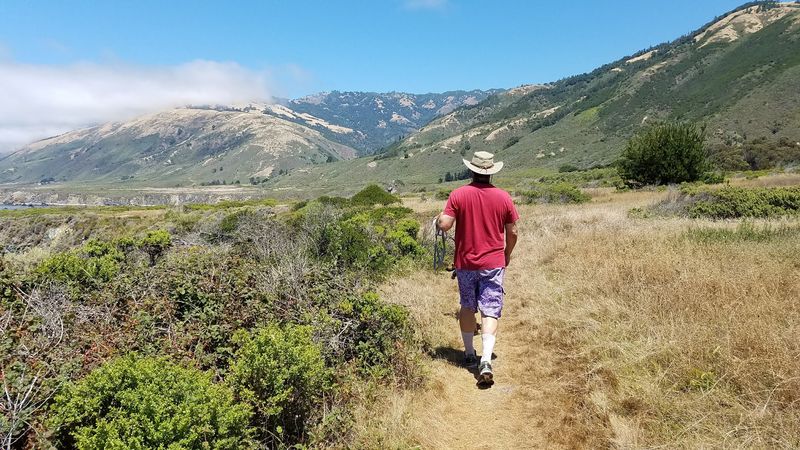
Packing smart for Jade Cove makes the difference between a great adventure and a miserable afternoon. The trail and the shore both demand a little preparation.
Sturdy hiking boots with good grip are the most important item on the list. The trail is uneven, the rocks at the bottom are slick, and a twisted ankle down at the base of those cliffs is a situation nobody wants to deal with.
Long pants are strongly recommended. Poison oak lines parts of the trail at the start, and ticks are present in the surrounding vegetation.
Brightly colored clothing also helps if you are hiking through brushy areas.
Download offline maps before you leave your last point of cell service. Big Sur has very limited coverage, and Jade Cove has essentially none.
Knowing your route before you lose signal is basic but critical.
Bring enough water for the full hike and your time at the cove. There are no facilities, no bathrooms, and no vendors anywhere near this spot.
Pack in everything you need and pack out everything you bring.
A small bag for any jade or interesting stones you find is a nice addition to your kit. Sunscreen and a light jacket round things out, since coastal weather can shift quickly along this stretch of the California coast.
Being prepared means you can focus entirely on enjoying every single moment down there.
Solitude And Scenery
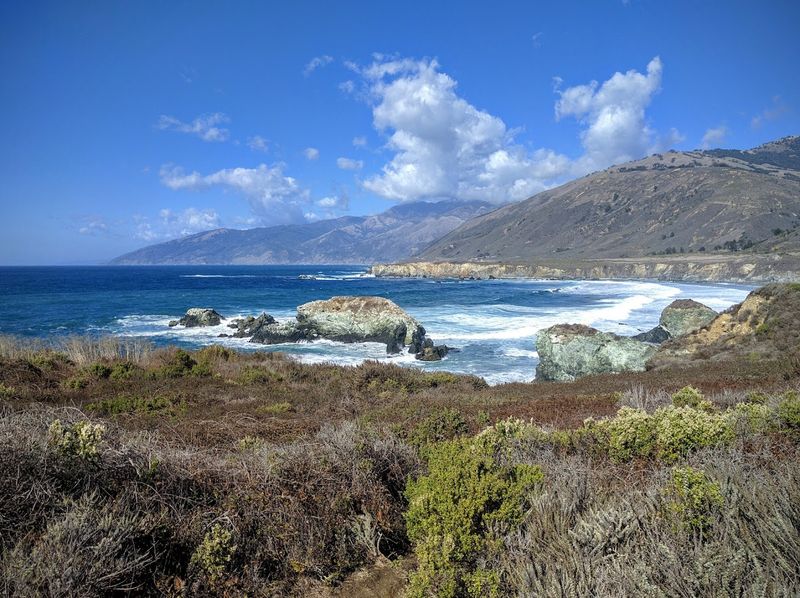
There is a specific kind of quiet that exists at Jade Cove that is hard to find anywhere else along the California coast. The hike filters out the casual visitors, and what is left is something genuinely rare.
Standing on the cliffs above the cove before descending, the view stretches for miles in both directions. The Pacific is enormous from up here. The green hills behind you roll steeply down to meet the ocean, and the contrast is striking.
Visitors who have made it down to the shore describe spending two hours or more without seeing another person. One solo traveler called it one of the most peaceful afternoons of their entire road trip.
That kind of solitude is hard to put a price on.
Even if the trail feels too steep to descend, the views from the top are absolutely worth the short walk from the parking area. You do not have to reach the bottom to feel the full impact of this landscape.
The mountains visible from the shore looking back inland add another dimension to the scenery. It is not just an ocean view.
It is a full, layered landscape that feels almost theatrical in its scale.
California has no shortage of beautiful coastline, but very few spots along it feel this untouched and this quiet. What would it feel like to spend an afternoon here with nothing but the sound of the ocean around you?
Safety First Always
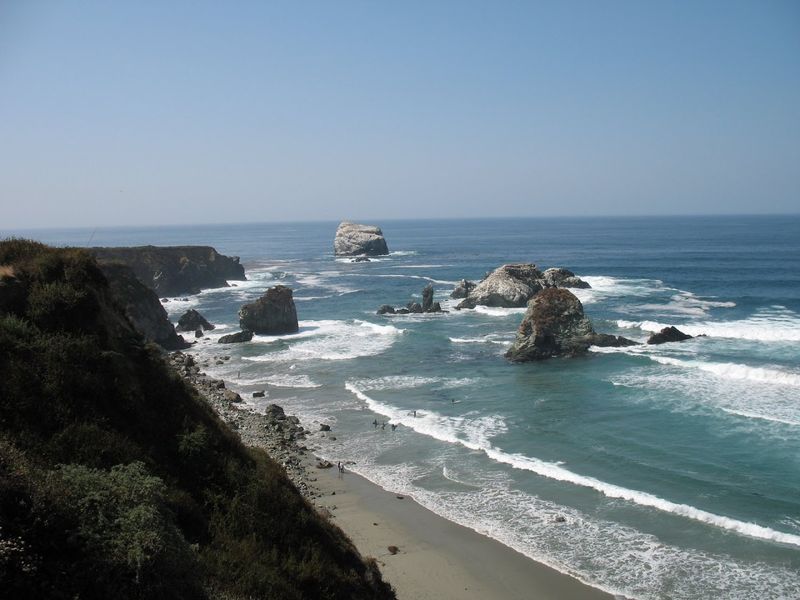
Jade Cove is beautiful, but it asks for your full attention. The ocean here does not follow a schedule, and conditions can change quickly without warning.
Rogue waves are a documented risk at this cove. They arrive without obvious warning and can reach much higher up the rocks than expected.
Never turn your back on the water, even for a moment.
Rip currents make swimming and wading in the surf genuinely dangerous. The cove is a place for exploring and observing, not for getting in the water.
Even wading at the edge of the rocks carries real risk when the surf is active.
The trail down has multiple hazards beyond just the steepness. Loose rocks and dirt on the descent have caught visitors off guard.
Going slowly and testing your footing before committing to each step is the right approach.
The cove is not recommended for young children. One experienced hiker noted that while a young child could physically make it to the bottom, the combination of slippery rocks, strong waves, and limited space makes it an environment that requires mature judgment.
Respecting the environment here also means not collecting jade above the legal limit and not disturbing the natural landscape. The cove has stayed as beautiful as it has because most visitors treat it with care.