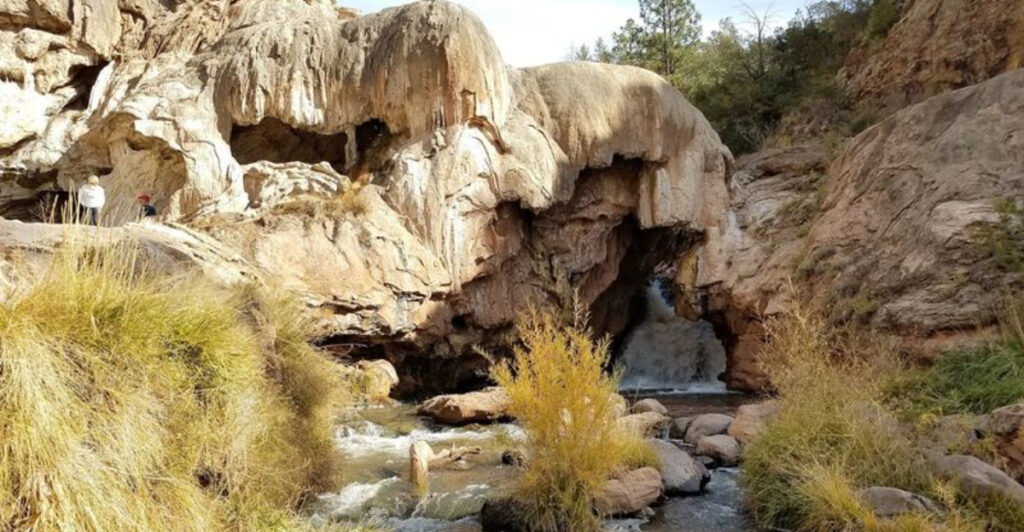
You can be cruising along a mountain highway one moment and staring at a natural dam the next. That sudden reveal is part of what makes this New Mexico roadside stop so memorable.
Mineral-rich spring water has spent thousands of years building layers of pale stone beside the Jemez River, creating a formation that looks frozen in motion. Water still rushes through it.
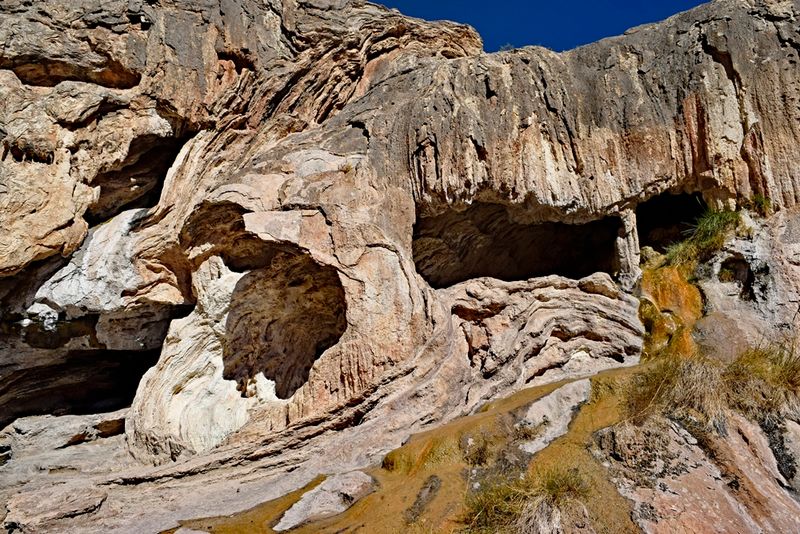
Algae leave bright streaks across the surface. Small openings make the rock feel more like a strange sculpture than a geological deposit.
The best part is how easy it is to see. No long trail stands between you and the view, and no elaborate plan is required.
Pull over, step out, and the entire formation is right there. The story behind this strange roadside formation is just as surprising as the view, especially once you learn how it formed, why it is still changing, and what keeps travelers pulling over for a closer look.
Where The Highway Meets A Geological Oddity
Most geological wonders are tucked deep into national parks, requiring long hikes and serious planning. This one practically waves at you from the roadside.
Positioned directly along the east side of New Mexico State Route 4, just north of the Village of Jemez Springs, the formation sits close enough to the pavement that first-time visitors often do a double-take while driving past.
San Diego Canyon frames the entire scene beautifully, with red and tan canyon walls rising on both sides of the road. The setting feels dramatic even before you step out of the car.
Travelers heading north from Albuquerque pass right by it, and those who slow down are rewarded with one of the most accessible geological spectacles in the Southwest.
There is no long trail to navigate, no permit required, and no hidden entrance fee. The spot is open 24 hours a day, every day of the week.
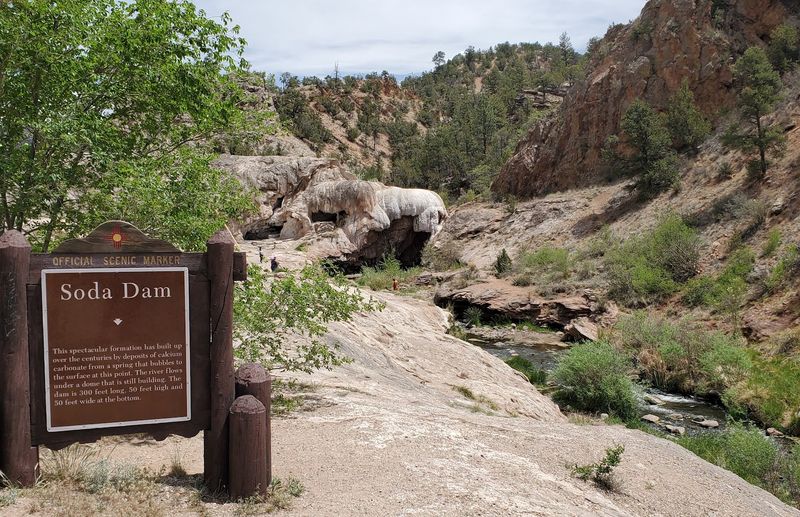
Its pull-off accessibility makes it a practical stop for families, road-trippers, and curious geology fans alike. Welcome to the Soda Dam Historical Marker in Jemez Springs, NM 87025.
A Stone Formation That Looks Frozen Mid-Flow
Calcium carbonate and travertine are the two main ingredients behind this remarkable structure. Hot spring water carries dissolved minerals to the surface, and as the water cools and loses pressure, those minerals precipitate out and slowly stack up over centuries.
The result is a dome-like bridge that arches across the Jemez River in a shape that genuinely looks like a waterfall caught mid-motion and turned to stone.
During winter months, the visual effect intensifies. Icicles hang from the mineral-crusted edges, adding a glassy layer over the already dramatic surface.
Some visitors describe it as an ancient behemoth crouching across the valley floor, and that description is hard to argue with once you see it in person.
The formation is not small by any measure. It stretches more than 300 feet in length, rises about 50 feet high, and spreads 50 feet wide at its base.
That kind of scale is hard to process until you are standing directly beside it, looking up at layers of mineral history that predate every written record in the region. Nature clearly had a long-term building plan here.
The River Passage Hidden Inside The Rock
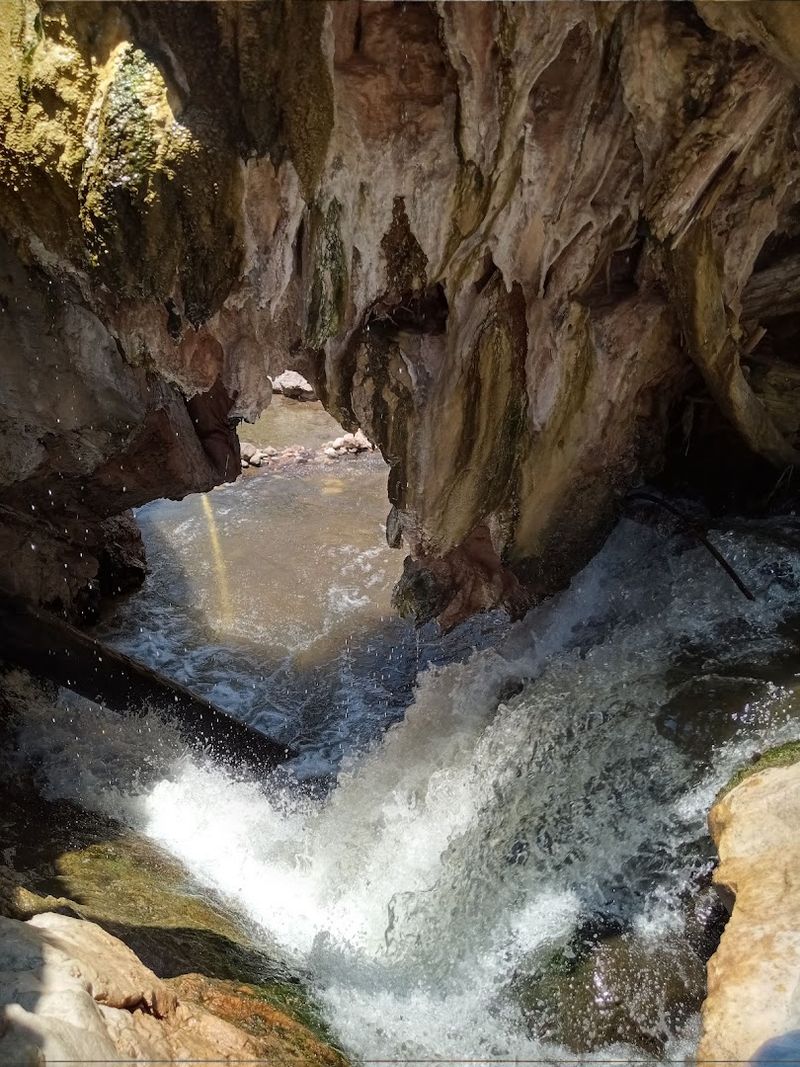
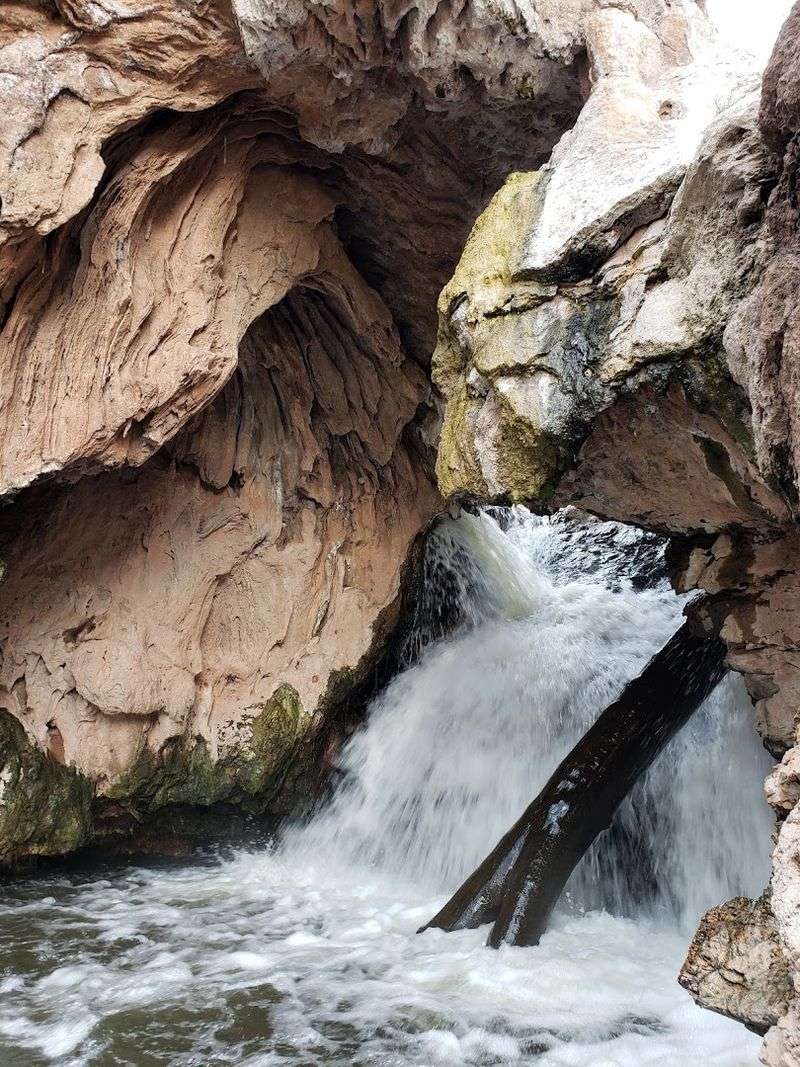
A river running through solid rock sounds like something out of a fantasy novel, but the Jemez River does exactly that at this site. The mineral deposits built up around and over the river channel over thousands of years, eventually forming a natural bridge or arch.
Today, the water pushes straight through the dam rather than around it.
The ancestral Jemez River deserves credit for carving that passage. As the travertine accumulated on the surface, the river kept cutting its own path underneath, creating the tunnel-like channel that visitors can observe and even stand near.
The sound of rushing water echoing inside the rock adds a sensory layer that photographs simply cannot capture.
Kids especially love this feature because it feels like discovering a secret passage. Adults tend to linger here too, trying to wrap their heads around how mineral buildup and river erosion could cooperate so perfectly over millennia.
The river passage is one of those details that makes the whole formation feel engineered rather than natural. New Mexico has no shortage of geological surprises, but this one earns a special category of its own.
Ancient Mineral Layers Glow Beside The Road
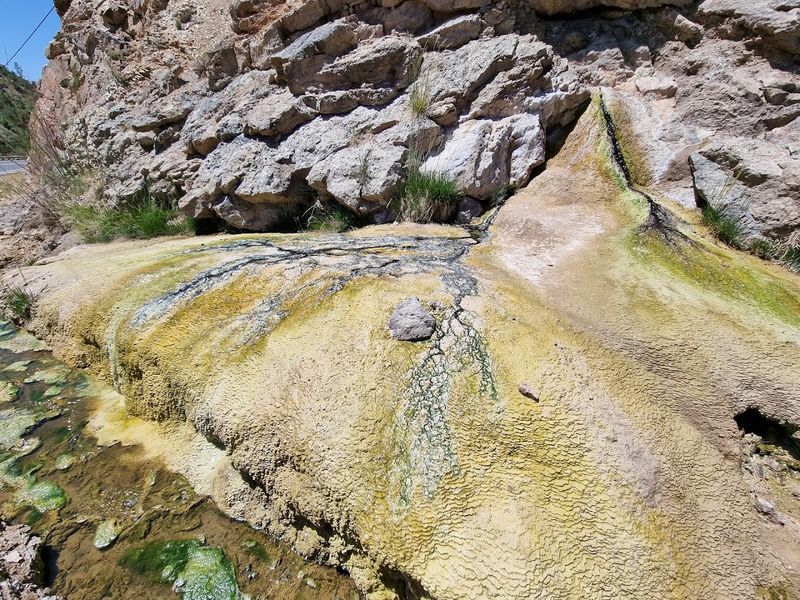
Seven thousand years of mineral layering produces a visual record that reads almost like tree rings. Each layer of travertine represents a period of hot spring activity, with slight color and texture variations marking changes in mineral concentration and temperature over time.
Standing close to the formation, you can trace those layers with your eyes and get a rough sense of geological time.
The hot spring water responsible for this buildup originates deep underground, heated by magma associated with the Valles Caldera. As it rises, it dissolves calcium carbonate from surrounding shale and limestone.
When that superheated water finally reaches the surface and cools, the dissolved minerals drop out and add another thin coat to the growing structure.
Active spring seeps along the formation leave behind vivid trails of green and yellow algae, which contrast sharply against the pale mineral rock. The colors are surprisingly bright, almost neon in certain lighting conditions.
I found myself stopping repeatedly just to look at the way sunlight caught those algae streaks against the layered stone. The whole surface feels alive in a way that most rock formations simply do not.
Strange Openings Twist Through The Formation
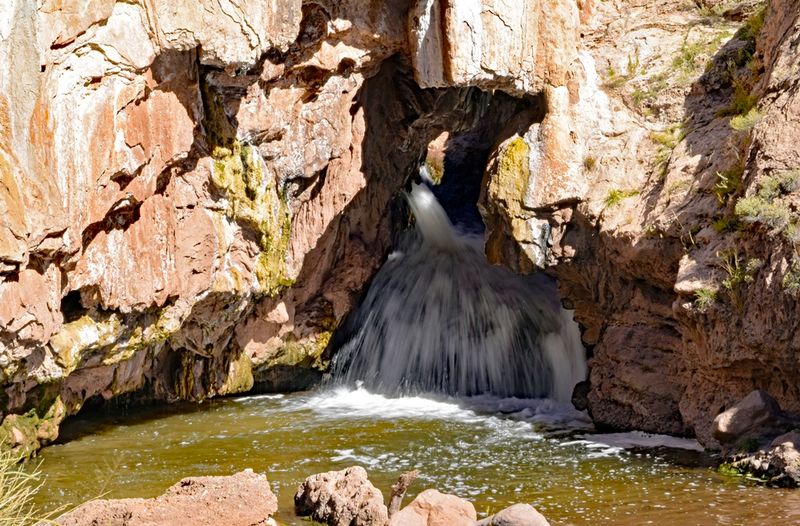
Not every rock formation comes with its own grotto, but this one does. On the south side of the dam, just west of the main waterfall, a small cave-like opening leads into a wet, mineral-lined chamber.
The ceiling and walls display rippled travertine surfaces covered in blue and green algae, creating an interior that feels more like an art installation than a geological accident.
Active spring flows keep the grotto consistently wet, which is part of what makes it so visually striking. Water seeps through the mineral walls and drips from the ceiling, and the whole space smells faintly of sulfur from the thermal springs.
That smell, mentioned by many visitors, is one of those sensory details that sticks in memory long after the visit.
Historically, a larger cave once existed on the north side of the dam, reportedly accessible in the late 1800s and early 1900s. Floodwaters eventually buried that opening, leaving only the southern grotto for modern explorers.
Some visitors have climbed into the small cave area on their own, though the terrain requires careful footing. Sturdy shoes are strongly recommended over sandals for anyone planning to poke around.
Water Still Rushes Beneath The Natural Dam
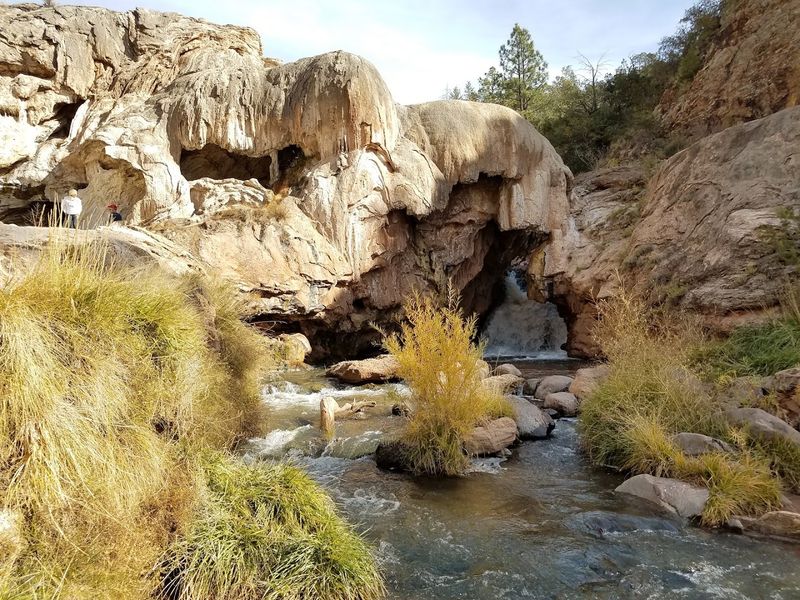
Hot springs are rarely static, and the Soda Dam proves that point every single day. The thermal springs feeding this formation are still active, meaning the dam is technically still growing right now, one thin mineral layer at a time.
That detail makes the whole site feel less like a relic and more like an ongoing experiment in slow-motion geology.
The Jemez River continues flowing underneath the dam, and a scenic waterfall marks the point where the river emerges and continues downstream. The combination of rushing cold river water and seeping hot spring water creates a genuinely unusual environment.
Spring water temperatures at this site can reach approximately 117 degrees Fahrenheit, which is hot enough to cook an egg and far too warm for a casual wade.
The dam structure itself measures over 300 feet long, 50 feet high, and 50 feet wide at its base, making it one of the largest travertine formations of its kind in the region. The scale of the waterfall changes with the seasons, running fuller during spring snowmelt and quieter in late summer.
Either way, the sound of water moving through and beneath ancient mineral rock is a constant and oddly calming backdrop.
Every Curve Reveals A New Texture
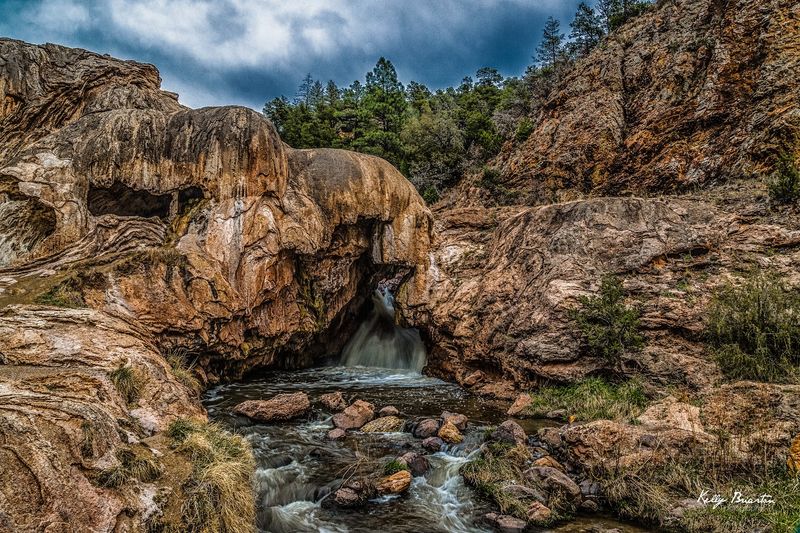
Running your eyes across the surface of this formation is a genuinely engaging exercise. The calcium carbonate deposits do not build up in neat, uniform sheets.
Instead, they ripple, bulge, and fold in unpredictable directions, creating a surface that changes character every few feet. Some sections look smooth and rounded, while others are jagged and pocked with small depressions left by ancient bubbling springs.
Much of the carbonate rock also contains traces of algal filaments embedded directly into the mineral matrix. These are not just surface stains.
The algae actually become part of the rock over time, contributing to both the color and the structural complexity of the dam. Scientists studying the site have found preserved microbial life within the travertine, and some researchers use this formation to better understand how life might be detected on other planets.
Winter visits add yet another layer to the textural experience. Icicles form along the outer edges of the dam where spring water seeps and freezes in cold air, draping the already complex surface in glassy spikes.
I have seen photographs taken in January that look almost impossible to believe. Every season offers a visually different version of the same ancient structure.
A Roadside Stop That Feels Almost Unreal
Scientists studying microbial life within the travertine layers here have drawn comparisons to conditions on other planets, which tells you something about how unusual this place really is. The formation has been called otherworldly by visitors, and that word keeps coming up for good reason.
The colors, the shapes, the sounds, and even the smell of sulfur all combine to create an atmosphere that feels borrowed from somewhere else entirely.
Practical details are worth knowing before you go. Parking is informal and roadside, so weekday visits tend to be less crowded and easier to navigate.
The site is open around the clock, every day of the year, which makes early morning or evening visits surprisingly peaceful. Bring proper footwear because the terrain involves uneven surfaces, dips, and inclines that can catch flat-soled shoes off guard.
Fall visits carry a bonus that has nothing to do with the dam itself. The canyon trees turn vivid shades of orange and yellow in late October, framing the pale mineral formation in warm seasonal color.
New Mexico delivers scenery that rarely needs any extra help, but autumn in Jemez Canyon pushes the experience into a category that is genuinely hard to put into words.