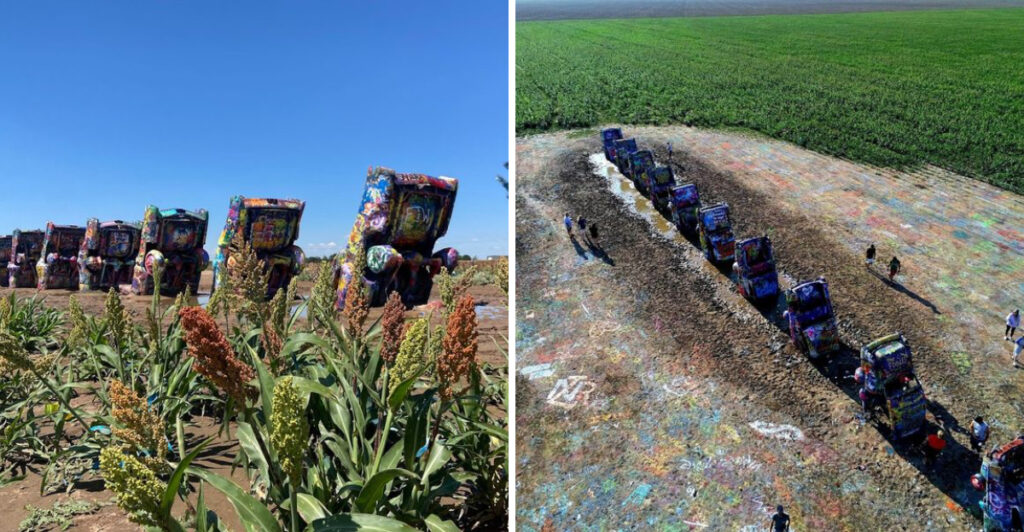
Ten Cadillacs buried nose-first in a Texas cow pasture, tilted at the same angle as the Great Pyramid of Giza, plastered in so many layers of spray paint that the metal underneath is practically a memory. Yes, this is a real place.
Texas is home to one of the most gloriously strange roadside attractions in the entire country, and it has been drawing confused, delighted visitors since 1974. Bring a can of spray paint because you are not just a spectator here, you are part of the art.
It is free, it never closes, and the wide-open Panhandle sky above it makes the whole scene feel even more surreal. No detour on a Texas road trip makes more sense than this one.
The Wild Origin Story Behind Those Buried Cars
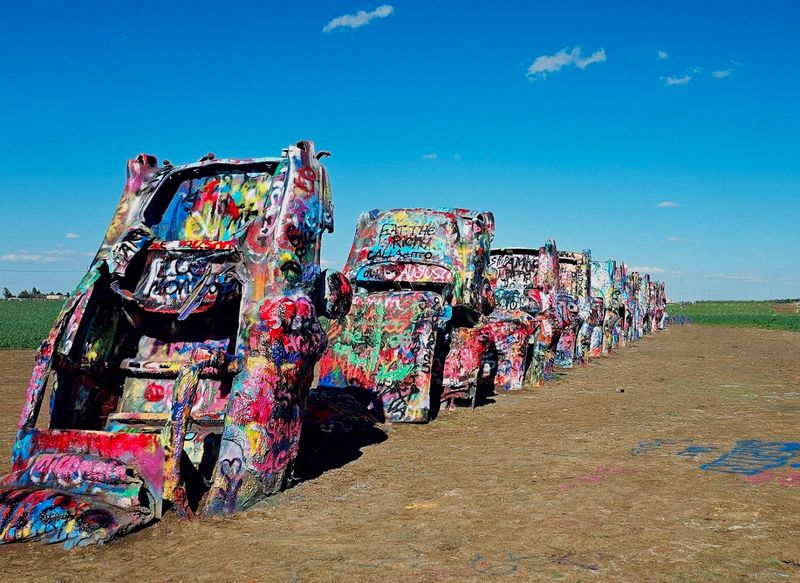
Back in 1974, a group of artists called Ant Farm had a very unusual idea. They wanted to celebrate the rise and fall of the classic American tailfin, and they chose a wheat field outside Amarillo, Texas, as their canvas.
The collective buried ten Cadillacs ranging from 1949 to 1963 models, each tilted at the same 52-degree angle as the Great Pyramid of Giza. That detail alone says a lot about how seriously they took their quirky vision.
The cars were mostly sourced from junkyards. Most cost around $200 each, which makes the whole project feel wonderfully scrappy and bold at the same time.
An eccentric local millionaire funded the entire project, giving the artists the freedom to do something truly bizarre on a grand scale. What started as a statement about American car culture quickly became one of the most recognized roadside attractions in the entire country.
Texas had a new icon.
Ten Cadillacs and Fifty Years of Spray Paint
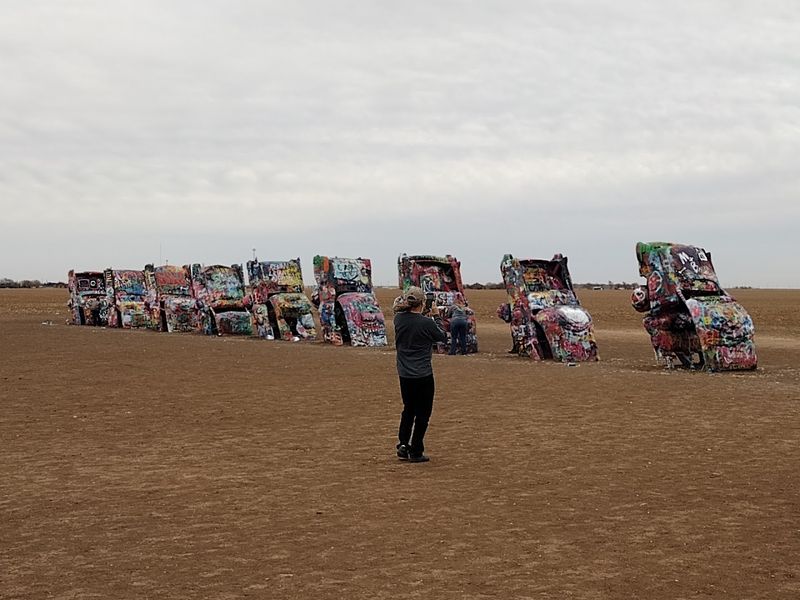
Every inch of these cars tells a story, and most of those stories are written in spray paint. Visitors have been adding their mark to the Cadillacs for decades, and the paint has built up to an almost unbelievable thickness in some spots.
In certain areas, the paint layers reportedly reach up to ten to twelve inches thick. That is not a typo.
Years of color upon color have turned these old machines into something closer to sculpture than automobile.
The cars never look the same twice. One week they might be covered in neon swirls, the next in political messages or birthday wishes.
The constantly shifting surface is part of what makes repeat visits feel fresh.
Occasionally, the cars get painted over in a single solid color to mark special events or moments of national significance. That blank slate never lasts long.
Within hours, the spray cans come out again, and the chaos resumes in the most colorful way possible.
Where Exactly This Strange Place Sits
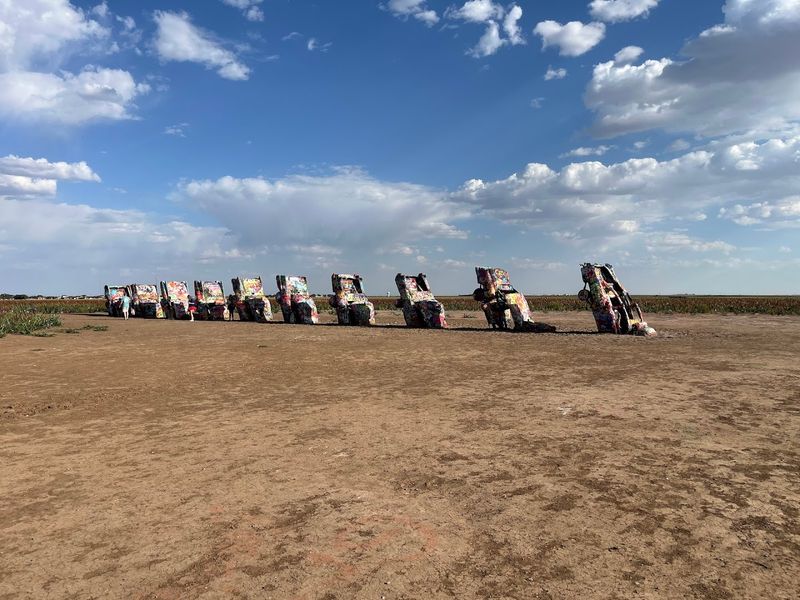
Finding Cadillac Ranch is refreshingly simple. Located at 13651 I-40 Frontage Rd, Amarillo, TX 79124, it sits just west of the city along the famous historic Route 66 corridor.
The attraction was originally placed in a wheat field in 1974. However, as Amarillo expanded westward, the entire installation was physically moved about two miles further west in 1997 to its current home in a cow pasture.
Yes, it sits in an actual working pasture. The faint smell drifting on the breeze is very real, especially on warmer mornings.
That detail somehow adds to the overall charm rather than taking away from it.
Parking along the frontage road is easy and free. From the road, visitors walk about a hundred yards out into the open field to reach the cars.
The flat Texas Panhandle landscape stretches endlessly in every direction, making the buried Cadillacs look even more surreal against the wide open sky.
Art You Can Actually Touch and Change
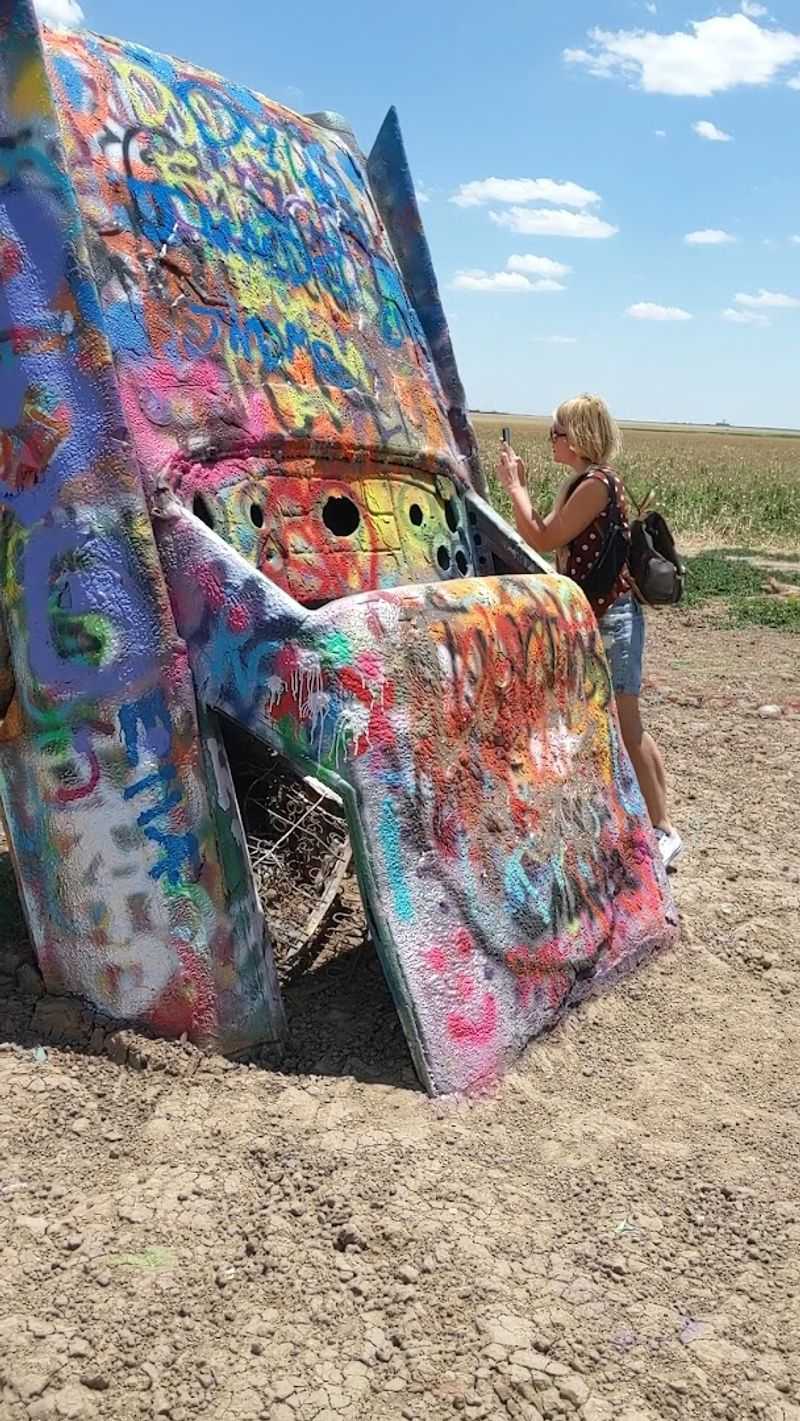
Most art installations come with a firm “do not touch” rule. Cadillac Ranch throws that idea straight out the window.
Visitors are not just allowed to spray paint the cars, they are actively encouraged to do it.
Bringing a can of spray paint is practically a rite of passage here. Nearby stores in Amarillo carry spray paint at lower prices and more reliable stock than what is available on-site.
There is something genuinely freeing about picking up a can and adding your name or a tiny drawing to a fifty-year-old Cadillac.
This interactive quality is what separates Cadillac Ranch from most public art. It is not a passive experience.
Every visitor becomes a tiny part of the ongoing artwork, whether they realize it or not.
The result is an endlessly evolving canvas that belongs to everyone and no one at the same time. That communal creative energy gives the place a lively, unpredictable atmosphere that no museum could ever replicate.
The Best Time To Visit For Photos and Fewer Crowds
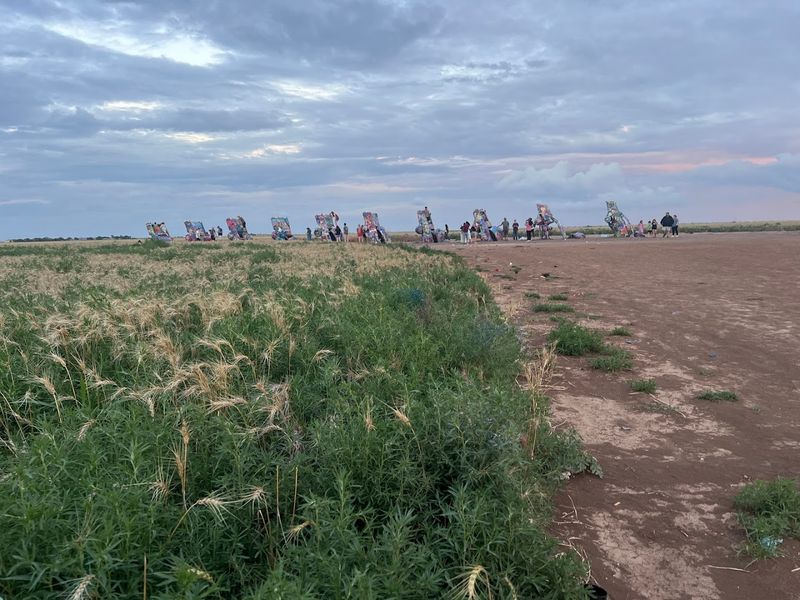
Timing a visit to Cadillac Ranch can make a huge difference in the overall experience. Sunrise and sunset are widely considered the prime windows for photography, when the flat Texas light turns everything warm and cinematic.
Early morning visits also mean fewer people. The site can get surprisingly busy, especially on weekends and during peak road trip season.
Arriving at an off-peak time allows for cleaner photos and a more personal connection with the installation.
Midday visits in summer bring intense heat and harsh overhead light. The Texas Panhandle is not known for shade, and there is absolutely none here.
Sunscreen and a water bottle are smart companions regardless of the season.
Wind is a constant factor in this part of Texas. When other visitors are spray painting nearby, that wind can send paint mist in unexpected directions.
Wearing clothes that can handle a little color is genuinely practical advice. The experience is worth every precaution.
How the Cadillac Tailfin Became a Cultural Symbol
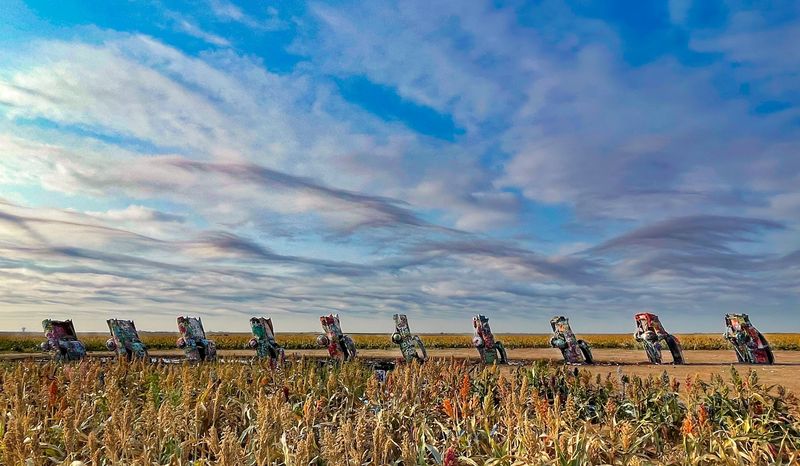
The tailfin is not just a design feature. For a certain generation of Americans, it represented optimism, speed, and the future.
Cadillac introduced the tailfin in 1948, and it grew larger and more dramatic throughout the 1950s before shrinking again by the early 1960s. The buried cars span from 1949 to 1963, capturing the era at its fullest stretch.
The selection was deliberate. The installation traces the full arc of the tailfin’s life, from its humble beginnings to its peak extravagance and eventual disappearance.
Seen from a distance, the ten fins jutting out of the Texas earth read almost like a graph. They rise, peak, and taper in a way that mirrors the cultural moment they represent.
It is surprisingly moving once that context clicks into place.
Understanding this backstory transforms a casual photo stop into something more meaningful. What looks like random buried cars is actually a carefully considered timeline of American ambition and style.
That depth is part of what keeps people coming back.
Free, Open 24 Hours, and Completely Unapologetic
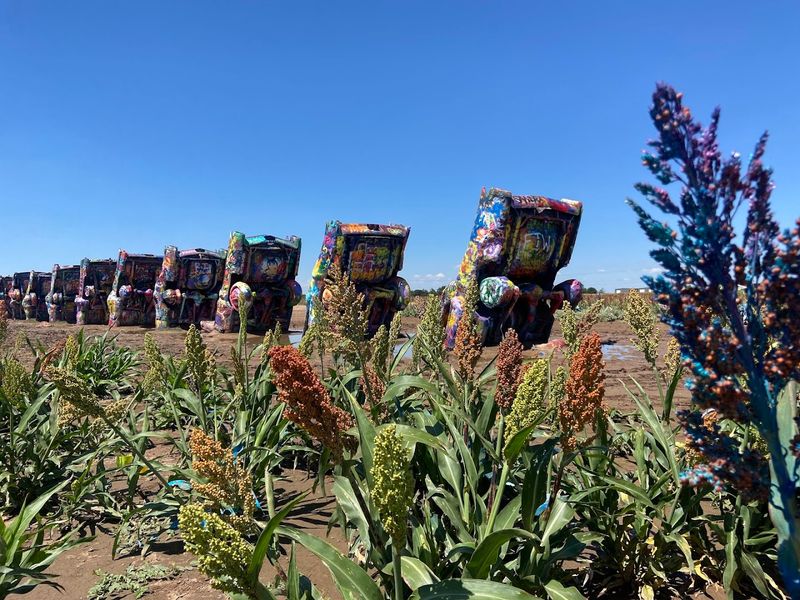
Very few iconic attractions in the United States are completely free and open at all hours. Cadillac Ranch is both.
There is no ticket booth, no reservation system, and no closing time. Visitors simply pull off the frontage road and walk in through an unlocked gate.
The land is privately owned, but the public has always been tacitly welcomed. That open-door spirit feels very much in line with the original vision of the artists who created it.
Art, in their view, was not something to be gated off or rationed.
Visiting after dark is possible, though it comes with a practical caveat. There are no lights on-site, so nighttime visits can be tricky without a flashlight or phone torch.
The stars above the Texas Panhandle are spectacular on clear nights, which does add its own kind of magic to the scene.
The zero-cost, zero-barrier entry makes this one of the most genuinely democratic art experiences anywhere in the country. Accessibility matters, and this place has it in abundance.
Pop Culture Has Been Obsessed With This Place
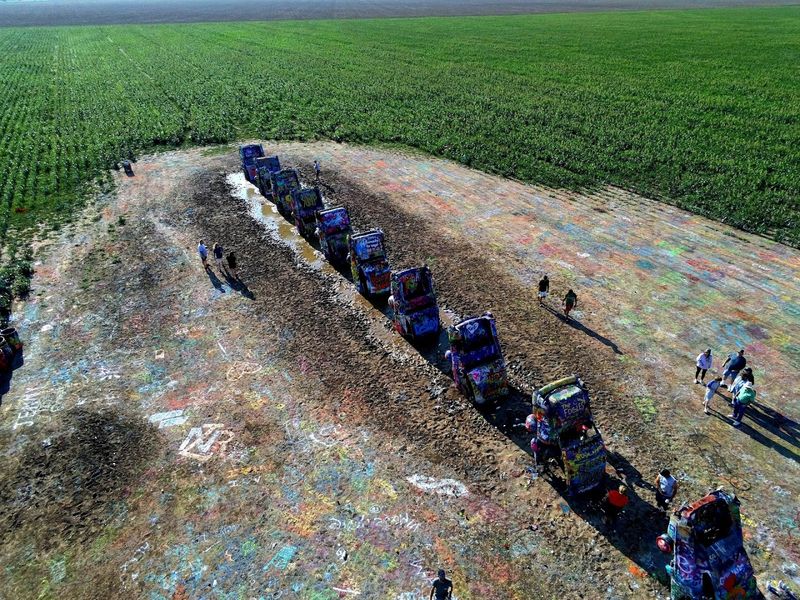
Cadillac Ranch has shown up in songs, films, and television more times than most purpose-built attractions ever manage. Its visual strangeness translates perfectly to a screen, and its symbolism of freedom and rebellion fits neatly into countless American narratives.
Pixar’s animated film “Cars” drew direct inspiration from the installation, creating a version called Cadillac Range within the story. That single reference introduced the concept to an entirely new generation of young fans who then dragged their parents out to see the real thing.
Musicians have referenced it in lyrics, and photographers have returned to it across decades to document how it changes. The ever-shifting surface means no two photographs taken years apart will ever look the same.
This cultural staying power is not accidental. The installation taps into something deeply American: the open road, the love of cars, the urge to leave a mark.
Texas gave it a home, and the rest of the country claimed it as its own.
What Souvenir Hunters Have Done To These Cars Over the Years
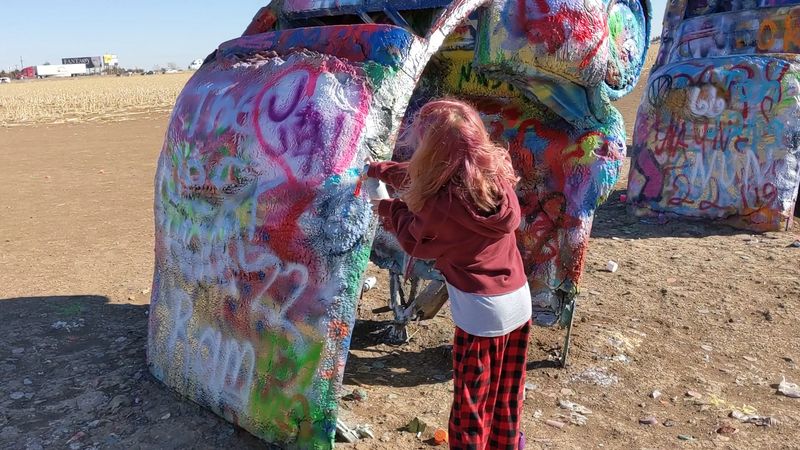
Over the decades, visitors have taken more than just memories from Cadillac Ranch. Chrome trim, radios, speakers, and even entire doors have disappeared as souvenir hunters chipped away at the cars piece by piece.
The situation became serious enough that the wheels were eventually welded to the axles to prevent further removal. What remains today is a stripped-down, paint-encrusted skeleton of each original vehicle.
The cars are barely recognizable as automobiles in any traditional sense.
Interestingly, a vendor near the entrance has turned this reality into a small business. Paint chips that naturally flake off the cars get collected and made into keychains and refrigerator magnets.
It is a clever way to let people take a genuine piece of the installation home without damaging what remains.
There is something oddly poetic about an art piece that has been slowly dismantled by the same public that loves it. It raises real questions about ownership, preservation, and what it means to truly engage with art.
The Atmosphere Out in That Open Cow Pasture
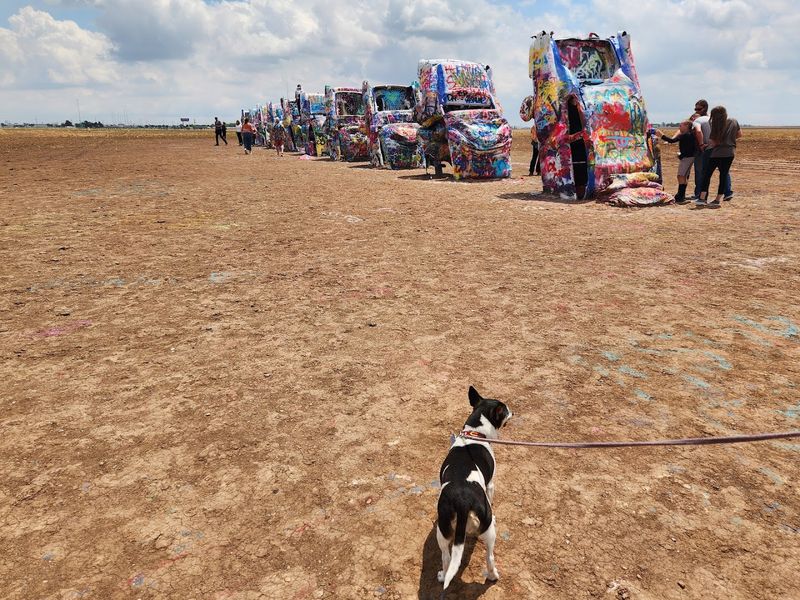
Standing in the middle of a flat Texas cow pasture surrounded by spray-painted Cadillacs is a genuinely hard experience to describe. The wind rarely stops.
The sky feels enormous. The smell from the nearby feedlot can be assertive, especially in warmer months.
And yet, somehow, all of these sensory details combine into something that feels completely right. The rawness of the setting is part of the point.
This is not a manicured tourist site. It is art in the wild, with all the mud, wind, and unpredictability that implies.
Fellow visitors add to the atmosphere in unexpected ways. Families with young kids, photographers with serious camera gear, and road-tripping strangers all share the same patch of dirt.
Conversations start easily here. Everyone is slightly puzzled and equally delighted.
That shared sense of “what even is this place” creates an instant bond between strangers. The open-field setting strips away pretense.
Out here in the Texas Panhandle, everyone is just a person standing next to a buried car, and that is more than enough.
Route 66 and the Road Trip Connection
Route 66 is more than a road. It is a mythology.
For decades, it represented the freedom of the American highway, a ribbon of asphalt connecting Chicago to Los Angeles through the heart of the country.
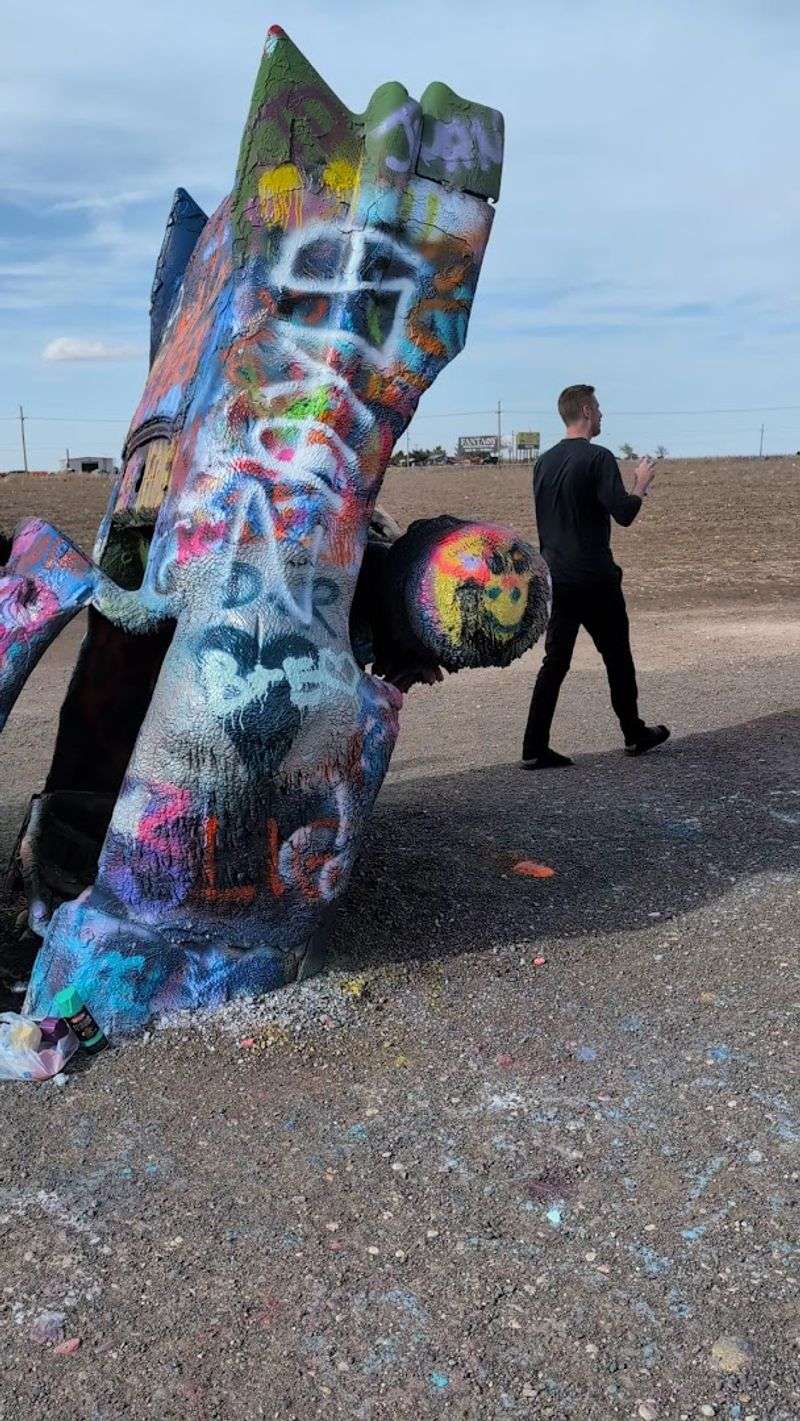
Cadillac Ranch sits squarely within this mythology. Located along the Route 66 corridor in the Texas Panhandle, it has become one of the most photographed stops on any cross-country drive.
Road trippers treat it as a pilgrimage point, a place to confirm they are truly on the classic American route.
The surrounding stretch of I-40 carries echoes of that original highway energy. Diners, motels, and small-town storefronts line the route, each one a piece of living history.
Cadillac Ranch fits naturally into this landscape of nostalgic Americana.
Stopping here on a long drive does something useful beyond the photos. It breaks the monotony of highway miles and reminds travelers that the journey itself holds as much value as the destination.
Texas has always understood that truth better than most.
Practical Tips For Making the Most of Your Visit
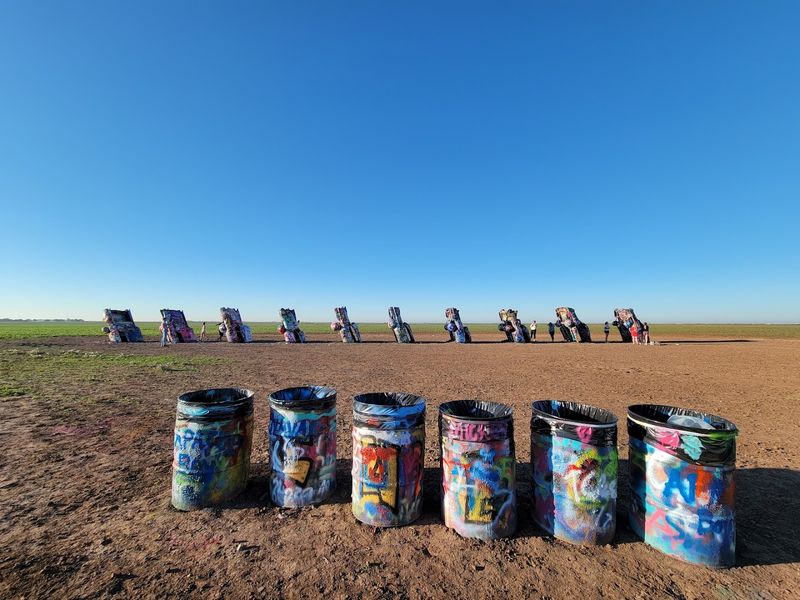
Planning even a short visit to Cadillac Ranch a little in advance makes the experience noticeably better. Buying spray paint before arriving is a smart move.
On-site vendors sometimes have cans available, but supply can vary, and nearby stores offer more affordable options.
Wearing old clothes is genuinely recommended. Wind shifts without warning out on the open plain, and stray paint mist is an occupational hazard.
Closed-toe shoes are also a good call, since the ground can be uneven and muddy after rain.
Early morning on a weekday is the sweet spot for crowd-free visits. Weekend afternoons can bring a steady stream of visitors, which makes photography trickier.
Arriving at sunrise also offers the best natural light by a significant margin.
The walk from the road to the cars is short, roughly a hundred yards, but the terrain is unpaved. Bringing water, especially in summer, is a basic necessity in the Texas heat.
With a little preparation, this stop delivers far more than its humble setting suggests.