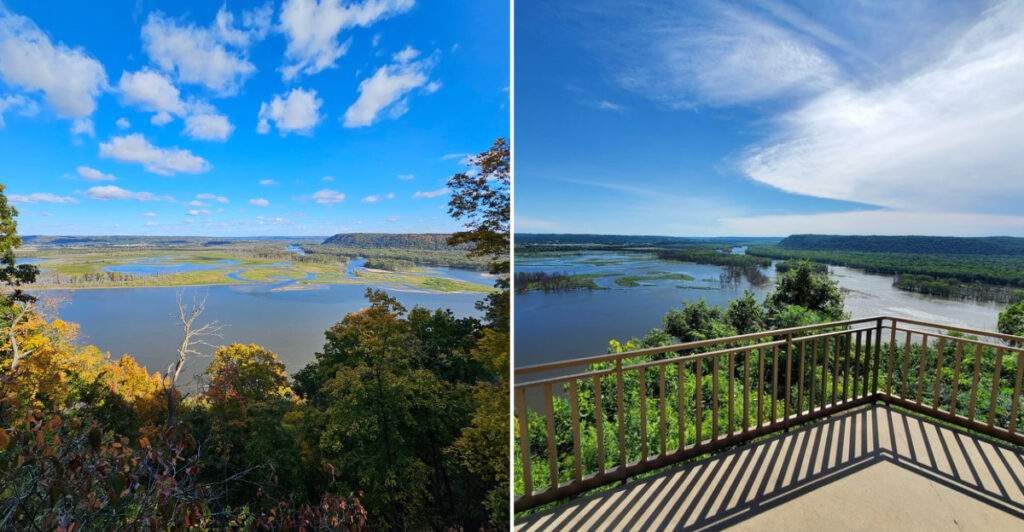
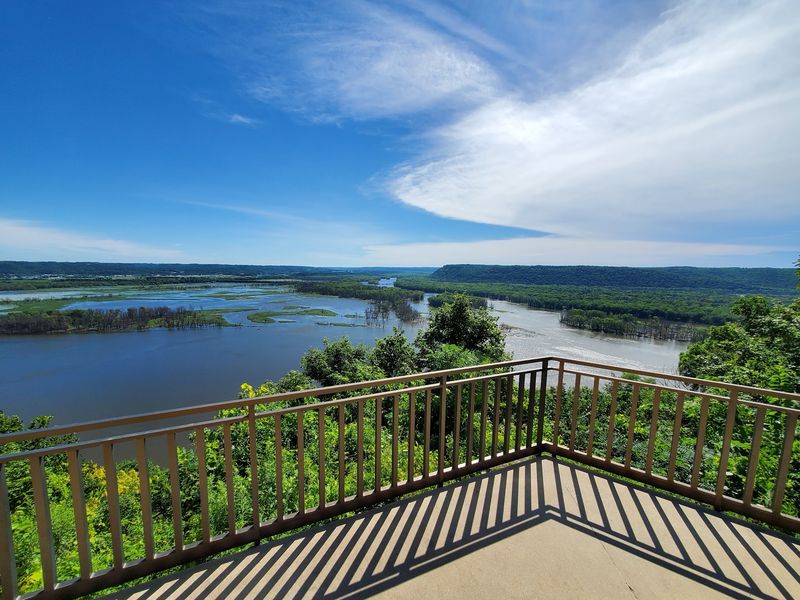
Ever found a view so huge that it makes you stop talking for a second? High above the Mississippi River in Iowa, this overlook delivers that kind of moment with sweeping water, steep bluffs, and a distant river confluence stretching through the valley below.
The scenery feels almost too dramatic for the Midwest, especially when the light hits the forested ridges and turns the whole landscape into something worth staring at for a while. The setting gets even better once you notice the details hiding beyond the main view.
Add a small waterfall and spectacular autumn color, and this scenic stop becomes far more than a quick photo opportunity.
500 Feet Above The River
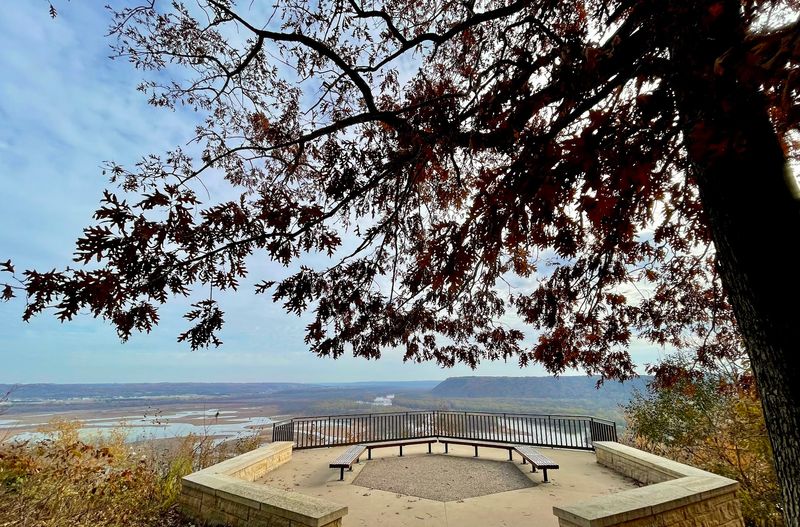
The first time you reach the main platform at Pikes Peak State Park Scenic Overlook, the view hits you before you even have time to brace for it.
You are standing roughly 500 feet above the Mississippi River, and the entire valley unfolds in front of you like a living map.
The confluence of the Mississippi and Wisconsin Rivers is visible from this vantage point, which is genuinely rare. Most overlooks along the Upper Mississippi give you a sliver of the river.
This one hands you the whole picture.
The overlook sits just off an unnamed road near McGregor. The parking lot is close, the paved walkway is short, and the payoff is enormous.
The main paved overlook offers a broad viewing platform near the parking area, while another viewpoint known as Crow’s Nest can be reached along the trail toward Bridal Veil Falls.
Benches are placed along the walkway so you can sit and absorb the scene without rushing. The whole setup feels thoughtful, like someone actually wanted visitors to linger rather than just snap a photo and leave.
The Geology That Built This View
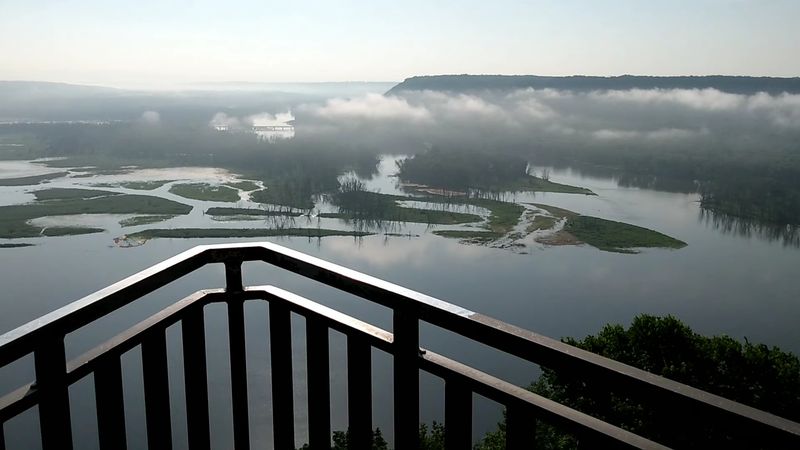
What you are standing on at this overlook is not just a hill. The bluffs here are made of ancient dolomite and limestone, formed hundreds of millions of years ago when a shallow sea covered this region.
Glaciers shaped much of the Midwest, but this corner of Iowa sits in what geologists call the Driftless Area. That means glaciers largely bypassed it, leaving the rugged, deeply carved bluff landscape intact while flatter terrain formed elsewhere.
The result is a topography that feels almost out of place in the Midwest. Steep ridges, forested ravines, and dramatic river bluffs define the scenery here in a way that surprises most first-time visitors.
The height of the overlook, approximately 500 feet above the river, is a direct product of that ancient geology. Erosion carved the valleys deep while the resistant dolomite cap kept the bluff tops high.
Standing at the railing and looking down, it is easy to feel the weight of all that geological time. The river below has been cutting through this landscape for thousands of years, and the bluff you are standing on has been watching the whole time.
Eagles Over The Bluffs
Bald eagles are not a rare sighting at this overlook. They are practically regulars.
The confluence of two major rivers below creates ideal hunting conditions, and the eagles know it.
Visitors who bring binoculars often spot multiple eagles riding thermals along the bluff line or diving toward the river far below. Fall is especially good for this, when hawk and eagle migration peaks and the sky above the overlook becomes genuinely busy with raptors.
Beyond eagles, the forested bluffs support a healthy population of songbirds, woodpeckers, and other river-corridor species. The rugged Driftless landscape still supports extensive forest habitat, even though farming and pasture are also common throughout the region.
Turkey vultures are also common, circling lazily on warm afternoons without much effort. They are not glamorous, but they are impressive in their own unhurried way.
The overlook platform itself is a solid birdwatching spot because the elevation puts you at eye level with birds that would normally be far above your head on flat ground. Bring a good pair of binoculars and budget extra time, because once you start watching the sky here, it is genuinely hard to stop.
The Stairway To Bridal Veil
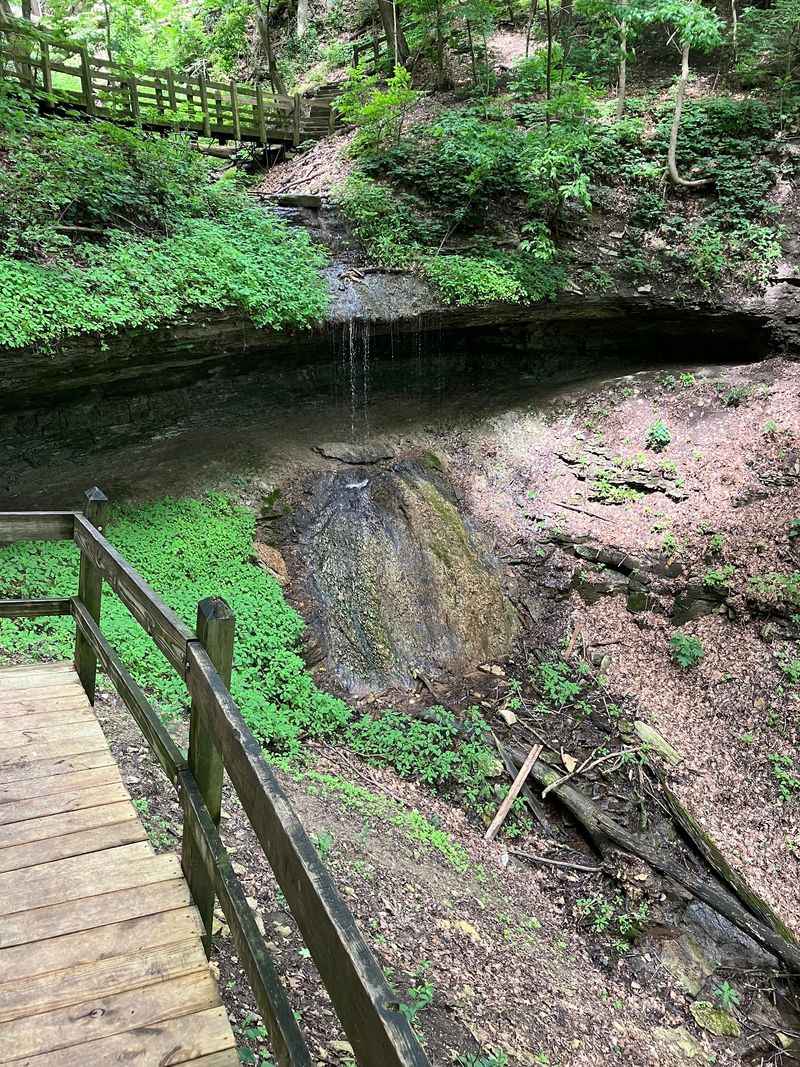
A roughly half-mile trail leads away from the main overlook toward Bridal Veil Falls, with boardwalk sections, stairs, and steeper stretches along the way. The descent is manageable and the trail is well-marked, but coming back up is a different conversation entirely.
The falls themselves are modest. They will not appear on any list of dramatic waterfalls, and that is fine.
What they offer instead is atmosphere: the sound of water trickling through a quiet ravine, cool shade, and a sense of being tucked away from everything.
I spent nearly half an hour sitting near the base of the falls on my visit, and the combination of the sound and the stillness was genuinely restorative.
The forest around the falls muffles outside noise completely. Bug spray is a practical necessity if you plan to go beyond the main overlook platforms, especially in summer.
The trail into the ravine is shaded and damp, which creates ideal conditions for insects.
The stairs back up are the real workout. They are well-maintained and assisted by handrails, but the elevation change is real and your legs will know it.
Worth every step, though, because the falls add a completely different texture to the visit.
When The Bluffs Catch Fire
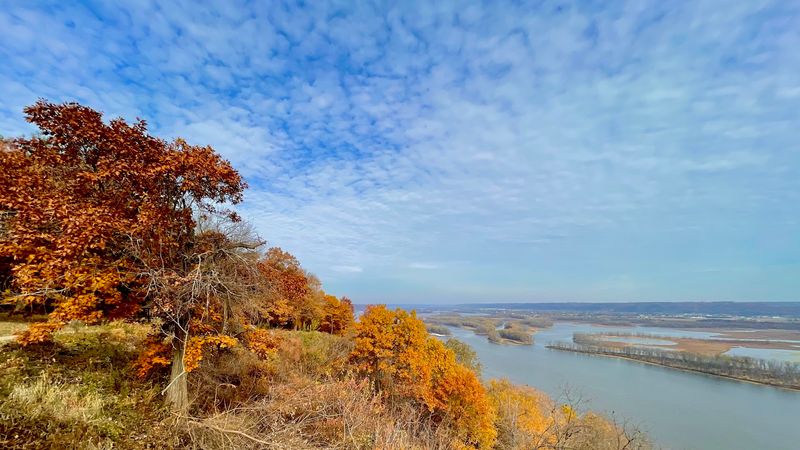
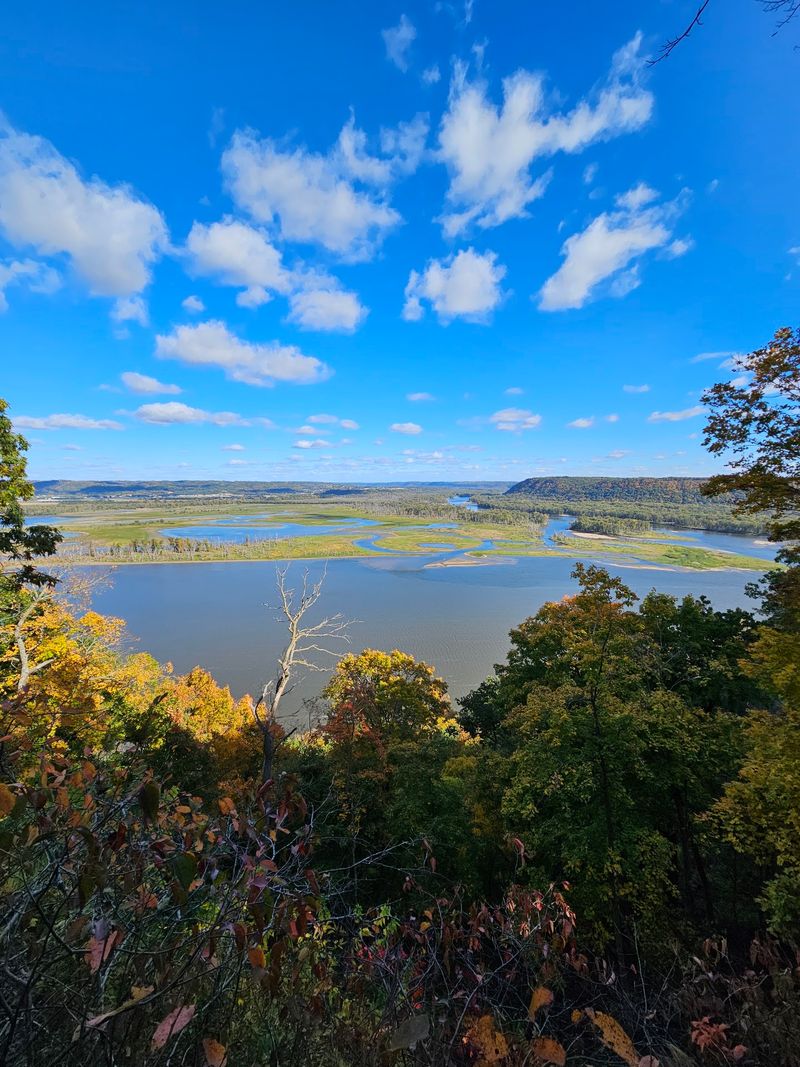
Fall at this overlook operates on a different level than fall anywhere else I have visited in the region. The bluffs on both sides of the river turn red, orange, and gold simultaneously, and the river below reflects the sky in a way that ties the whole scene together.
Peak color typically arrives in mid to late October in this part of Iowa, though it shifts slightly from year to year depending on temperature and rainfall. The overlook faces east and southeast, which means morning light hits the opposite bluffs directly and the colors almost glow.
The combination of elevation and the wide river valley means you can see fall color spread across a much larger area than you would from ground level. You are not looking at one hillside.
You are looking at miles of forested ridge all changing at once.
Hawks and eagles are also at their most active during fall migration, so the sky above the overlook adds movement to the already spectacular scenery. Regulars who return every autumn say no two falls look exactly the same from this spot.
If fall is on your calendar, arrive early in the morning. The light is better, the crowds are smaller, and the whole valley has a quiet quality that disappears once the parking lot fills up.
Big Views, Easy Access
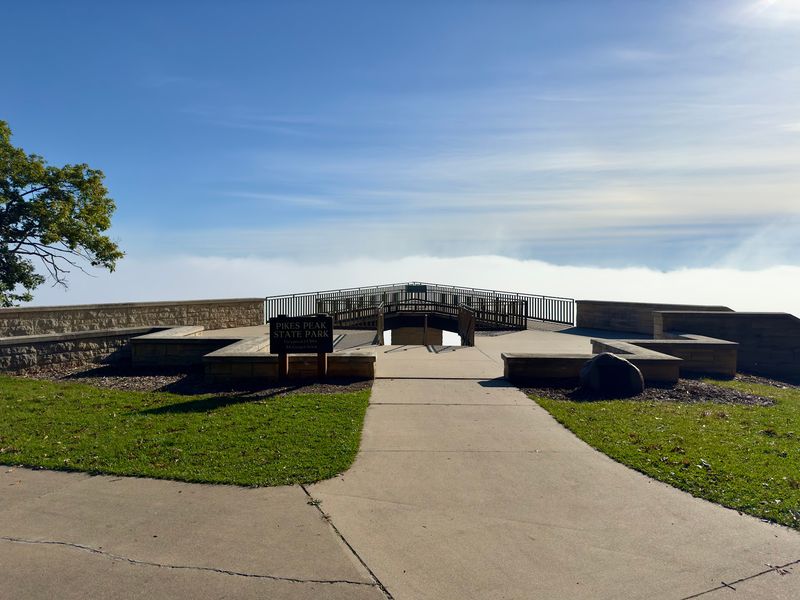
Not every spectacular overlook is easy to reach, but this one takes accessibility seriously. The parking lot sits very close to the main viewing platform, and the connecting walkway is paved and relatively flat.
Benches are placed along the route, which makes the walk comfortable for visitors who need to take their time. The overlook platform itself has railings and enough space to accommodate wheelchairs and strollers without feeling cramped.
This matters more than people sometimes acknowledge. A view this dramatic should not be reserved only for those who can hike long distances.
The setup here means grandparents, young children, and visitors with mobility considerations can all stand at the railing and see the same Mississippi River panorama that everyone else sees.
The main overlook handles much of the visitor traffic, while the separate Crow’s Nest viewpoint along the trail offers another perspective on the surrounding bluff landscape.
Facilities including bathrooms and a small shop are available during the main season but close in October, so plan accordingly if you are visiting in the colder months. The overlook itself remains accessible year-round, which is a genuine bonus for those who want to see the view in winter light.
The Trails Beyond The Main Overlook
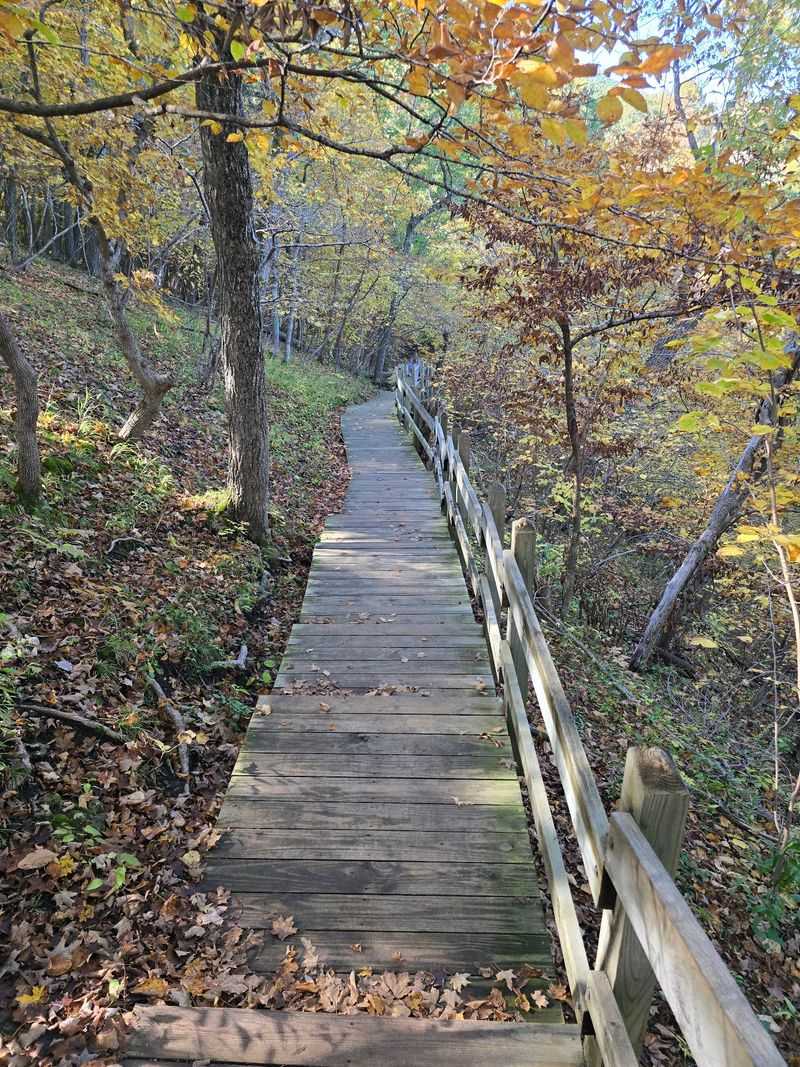
Most visitors at Pikes Peak State Park Scenic Overlook stop at the main platform, take their photos, and head back to the parking lot. That is completely understandable.
The view from the platform alone justifies the trip.
But the trails that continue deeper into the park offer something different: solitude, forest immersion, and a closer look at the bluff ecosystem that creates the scenery everyone admires from above.
The hiking trails are well-marked and rated appropriate for gentle day trips, which means they are accessible to a wide range of fitness levels. Elevation changes exist, and stairs assist at key points along the main trail, but nothing here requires technical skill or specialized gear.
Go deep enough and the crowd thins to almost nothing. The people who venture past the first quarter mile are typically more serious hikers, and the trail quickly feels like a private forest experience rather than a busy park attraction.
The river forest below the bluffs has its own character: tall cottonwoods, dense undergrowth, and the constant sound of the Mississippi moving somewhere nearby. It is a different sensory experience than the open overlook, and the two together make for a complete visit rather than just a quick stop.
What To Know Before You Go
A 4.9-star rating from over 100 visitors is not an accident. This overlook consistently delivers, and a little planning makes the experience even better.
The park is free to enter, which is a genuine advantage. Iowa does not require a park pass for this site, unlike some comparable overlooks in neighboring Wisconsin.
That removes one logistical hurdle entirely.
Morning visits reward early risers with softer light on the river and noticeably fewer cars in the parking lot. Midday on weekends can bring a crowd to the main platform, though the lower deck and the deeper trails stay quieter throughout the day.
Bug spray belongs in your bag from late spring through early fall. The main overlook platforms are breezy enough to keep insects manageable, but the trail down to Bridal Veil Falls is sheltered and humid, and the bugs are more persistent there.
Binoculars are worth the bag space. The view from the platform covers so much distance that details in the river valley below, including wildlife, boat traffic, and the far Wisconsin shore, reward a closer look.
Camera lenses with reach also shine here.
The overlook is worth visiting in every season, but fall and early spring offer the clearest long-distance views before the tree canopy fills in completely.