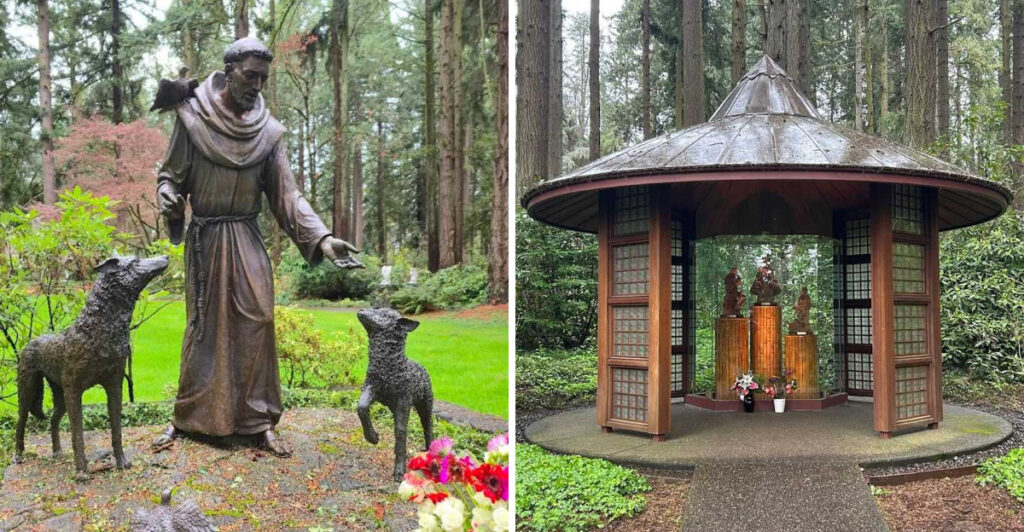
In the heart of Oregon, there’s a sanctuary where peace, beauty, and history come together in a perfect blend.
This 62-acre space, carved into volcanic cliffs, offers visitors an unexpected escape into nature and serenity. From tranquil gardens to panoramic views of the valley below, it’s a place that invites reflection and quiet connection.
The sanctuary’s century-long history continues to welcome all, regardless of background, making it a spot where everyone can feel at home.
Exploring lush gardens, soaking in breathtaking views, or simply enjoying the calm atmosphere, this Oregon sanctuary offers something for every visitor seeking peace and tranquility.
The Story Behind The Sanctuary
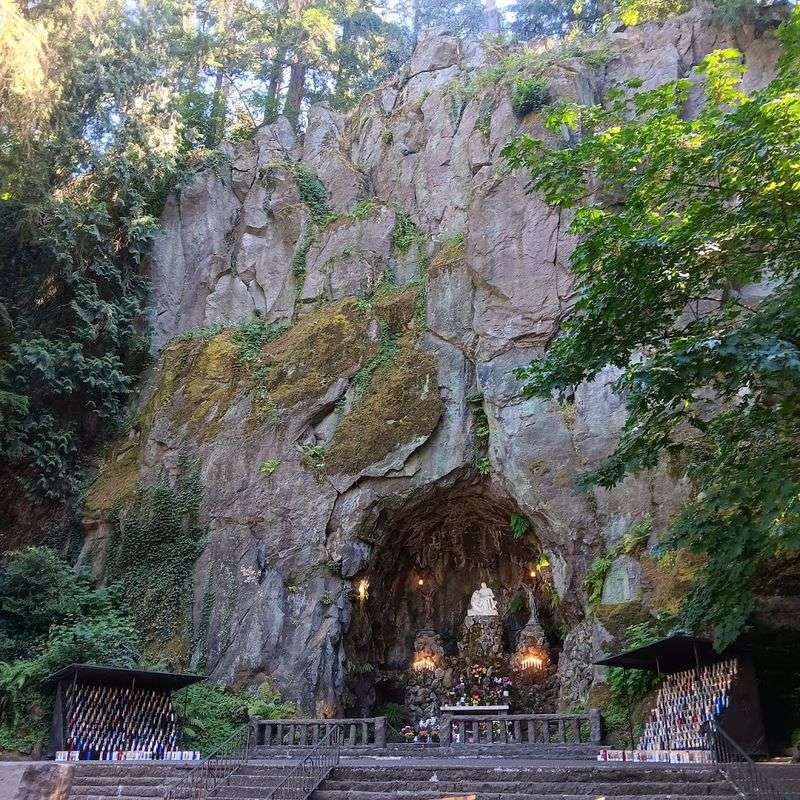
A century-old vision brought this sanctuary to life. The Grotto was established in 1924 by a Servite priest who sought to create a sacred space carved directly into the volcanic basalt cliffs of Portland, Oregon.
What started as a modest outdoor chapel has grown into one of the most distinctive religious landmarks in the entire Pacific Northwest.
The site spans 62 acres and sits in the Madison South district of the city. Its scale is surprising to first-time visitors who expect something small and simple.
Instead, the sanctuary unfolds across two distinct levels, each offering its own atmosphere and purpose.
Over the decades, it has welcomed people from all walks of life, regardless of religious background. The founders wanted a place open to everyone, and that spirit has remained intact for over a hundred years.
Few places in Oregon carry that kind of layered history while still feeling so alive and relevant today.
This place is located at 8840 NE Skidmore St, Portland, Oregon.
The Cliffside Grotto And The Pieta Replica
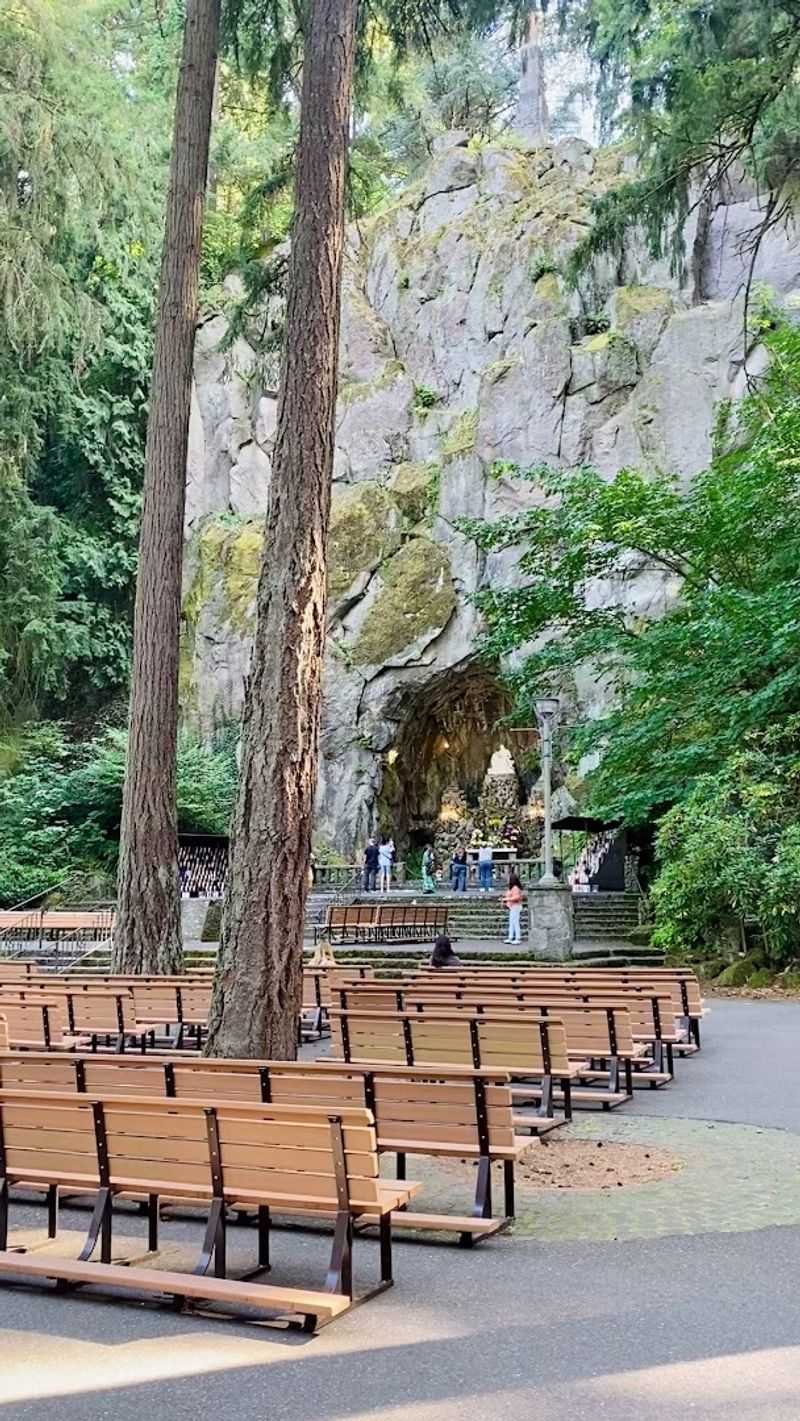
Right at the base of the cliff sits the feature that gives this sanctuary its name. A cave has been carved directly into the basalt rock face, and inside rests a marble replica of Michelangelo’s Pieta, the famous sculpture depicting Mary holding Jesus after the crucifixion.
The combination of raw volcanic stone and delicate marble craftsmanship creates a striking visual contrast.
The cave itself feels cool and quiet even on warm days, which adds to the meditative mood. Candles flicker nearby, and the sound of the outside world fades almost completely once you step inside.
Visitors often pause here longer than anywhere else on the lower grounds.
For those unfamiliar with the original Pieta in Vatican City, this replica offers a meaningful encounter with one of the most recognized works of religious art in the world.
It is free to visit, which makes it accessible to anyone passing through Portland, Oregon, on even the most casual of trips.
Riding The Elevator Up The Cliff
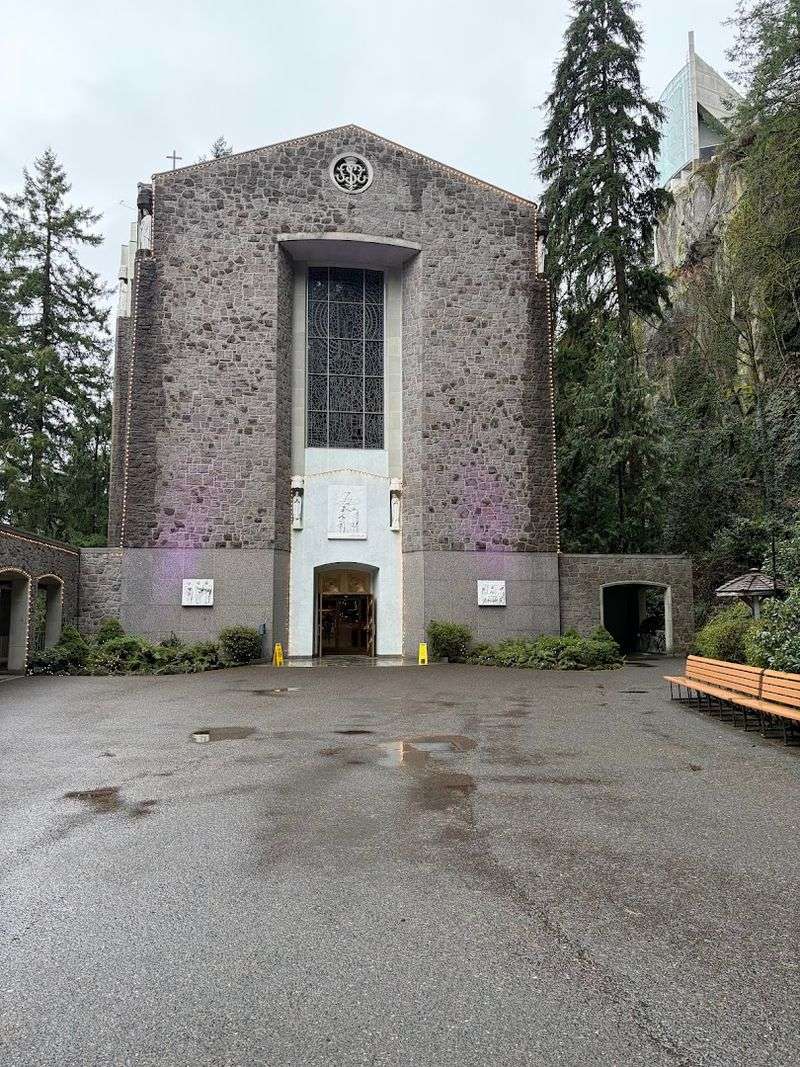
Getting to the upper level involves one of the more unexpected experiences at this sanctuary: an elevator built directly into the cliff face. It rises 110 feet and delivers visitors to a completely different world above the tree line.
The ride itself takes only seconds, but the change in scenery feels dramatic.
A small fee is required to access the upper gardens, and the elevator is the primary way up for most visitors.
Those who prefer to stay on the lower grounds can do so for free, but skipping the upper level means missing some of the most breathtaking views the sanctuary has to offer.
The elevator is a practical solution to a genuinely steep challenge, and it makes the upper gardens accessible to people of varying mobility levels.
Once at the top, the sense of arrival feels earned even without the climb. Oregon has no shortage of scenic overlooks, but few are quite this easy to reach.
The Upper Gardens And Botanical Beauty
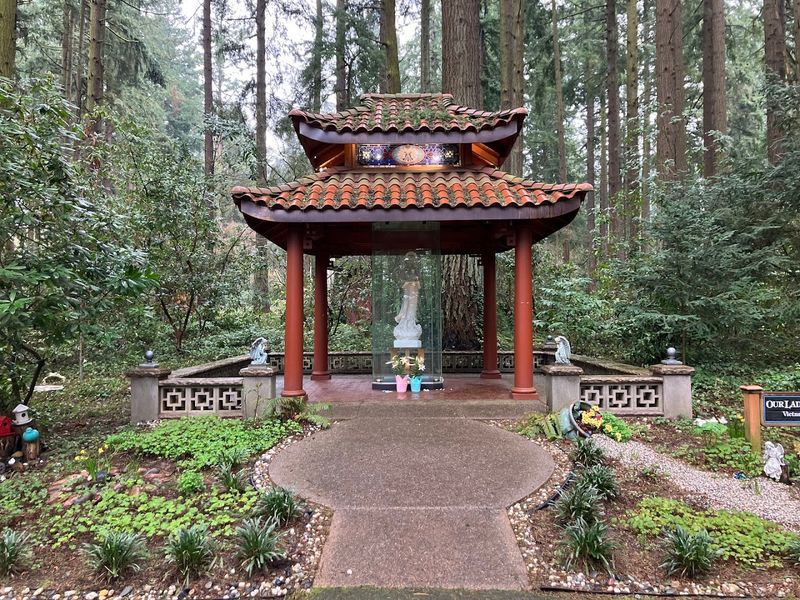
Up top, the landscape shifts from dramatic rock faces to carefully tended gardens filled with roses, rhododendrons, and seasonal blooms that change with every visit.
The upper level of The Grotto covers a generous stretch of land, and the gardens feel both intentional and organic at the same time.
Paths wind through the greenery at a pace that encourages slow walking.
Spring brings an especially vivid display when the rhododendrons are in full bloom and the air carries a faint floral scent across the entire upper grounds.
Summer visits reward those who come early, when the light filters through the tall trees and lands softly on the flower beds below.
Gardening enthusiasts will find plenty to admire in the variety of plantings and the evident care that goes into maintaining them year-round.
For everyone else, the gardens simply offer a beautiful backdrop for quiet reflection. Few botanical spaces in Oregon manage to feel this serene while sitting so close to a major urban center.
Panoramic Views Of The Columbia River Valley
One of the most rewarding moments at the upper level is turning toward the horizon and taking in the full panoramic view. On clear days, the Columbia River Valley stretches out below in sweeping detail, and Mount St. Helens rises in the distance with quiet authority.
It is a view that feels earned, even when arriving by elevator.
The contrast between the dense urban fabric of Portland and the open natural landscape visible from this vantage point is genuinely striking.
The city seems to disappear, replaced by river bends, tree canopies, and volcanic peaks. Photography enthusiasts tend to linger here longer than planned.
The best views come on clear mornings or late afternoons when the light is at its most flattering. Cloud cover can obscure the mountain views, so timing matters if catching that full panorama is the goal.
Still, even on overcast days, the elevated perspective over Oregon’s landscape offers something worth seeing.
The Chapel Of Mary And Its Glass Walls
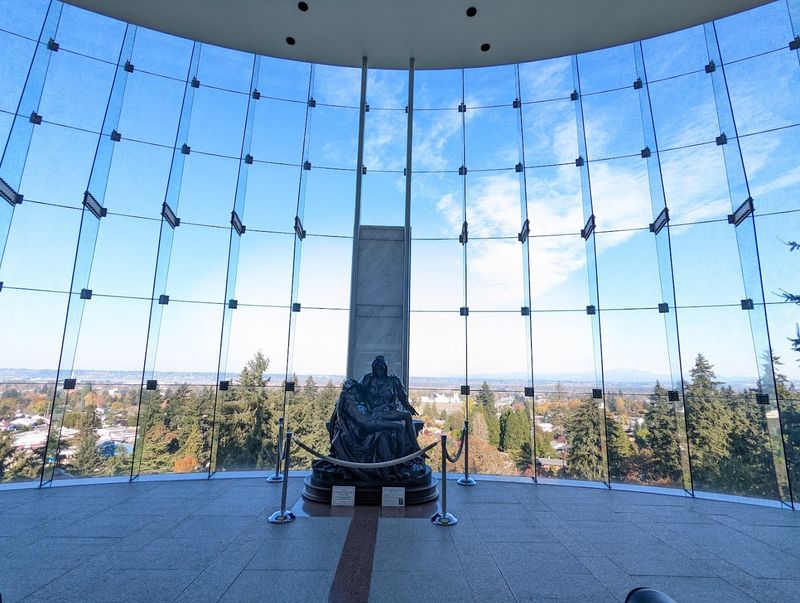
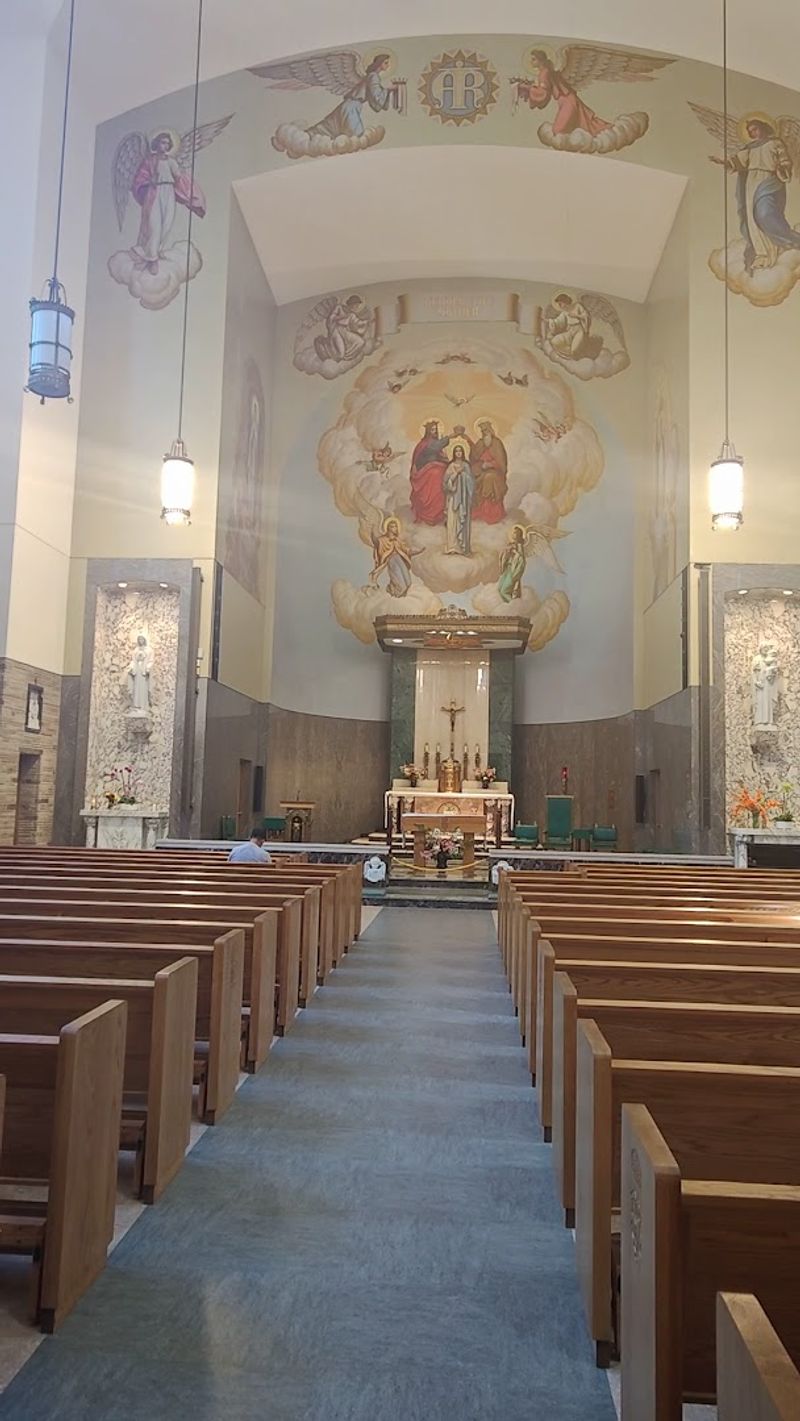
Architecture and nature meet unexpectedly inside the Chapel of Mary on the upper level. This modern chapel features glass walls that frame the surrounding landscape like a living painting, pulling the outdoors inside without removing the sense of enclosure.
The effect is calming in a way that more traditional chapels rarely achieve.
Natural light fills the space throughout the day, shifting in quality and color as the hours pass. The chapel is designed for meditation and quiet prayer, and the transparent walls reinforce that intention by keeping the visitor visually connected to the trees and sky outside.
It never feels closed off or heavy.
Even visitors with no particular religious purpose often find the Chapel of Mary to be one of the most memorable stops on the upper grounds. The combination of contemporary design, natural materials, and expansive views gives it a quality that feels both grounded and open.
Oregon has many beautiful spaces, but this one is genuinely distinctive.
The Peace Garden And Lower Grounds
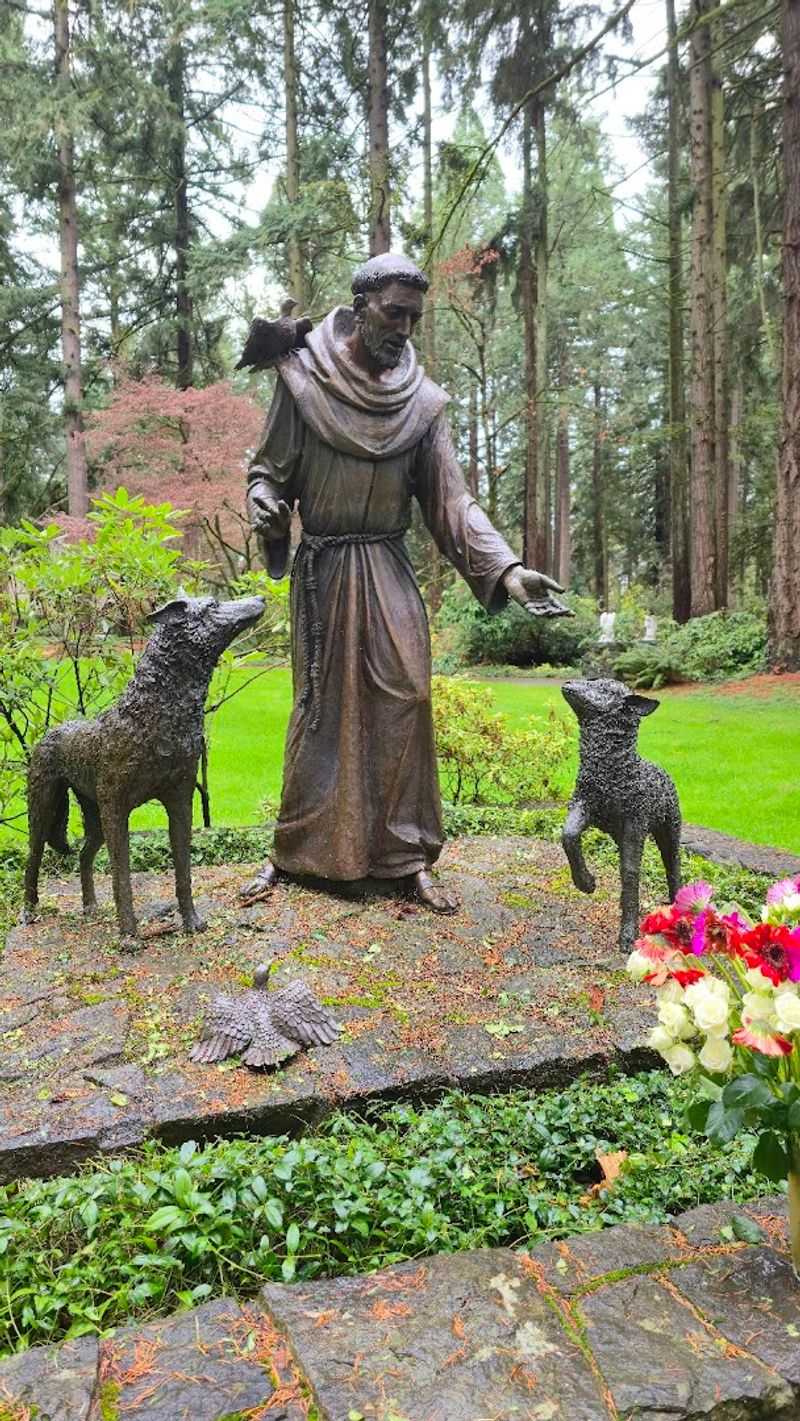
Back on the lower level, the Peace Garden offers a quieter, more intimate experience than the sweeping views above. Flowing waterfalls, carefully placed statues, and shaded pathways create a space that feels designed for slow, thoughtful movement.
The sound of water running over stone adds a constant, soothing background to the entire area.
Benches are positioned at regular intervals, making it easy to sit and simply absorb the surroundings without feeling like there is somewhere else to be.
The lower grounds are free to access, which means the Peace Garden is available to anyone who walks through the main entrance.
The garden works especially well in the early morning when foot traffic is minimal and the light is still soft. Tall trees provide shade throughout the day, keeping the temperature comfortable even in summer.
For those who want calm without the cost of the upper level, the lower grounds alone are well worth the visit.
The Christmas Festival Of Lights
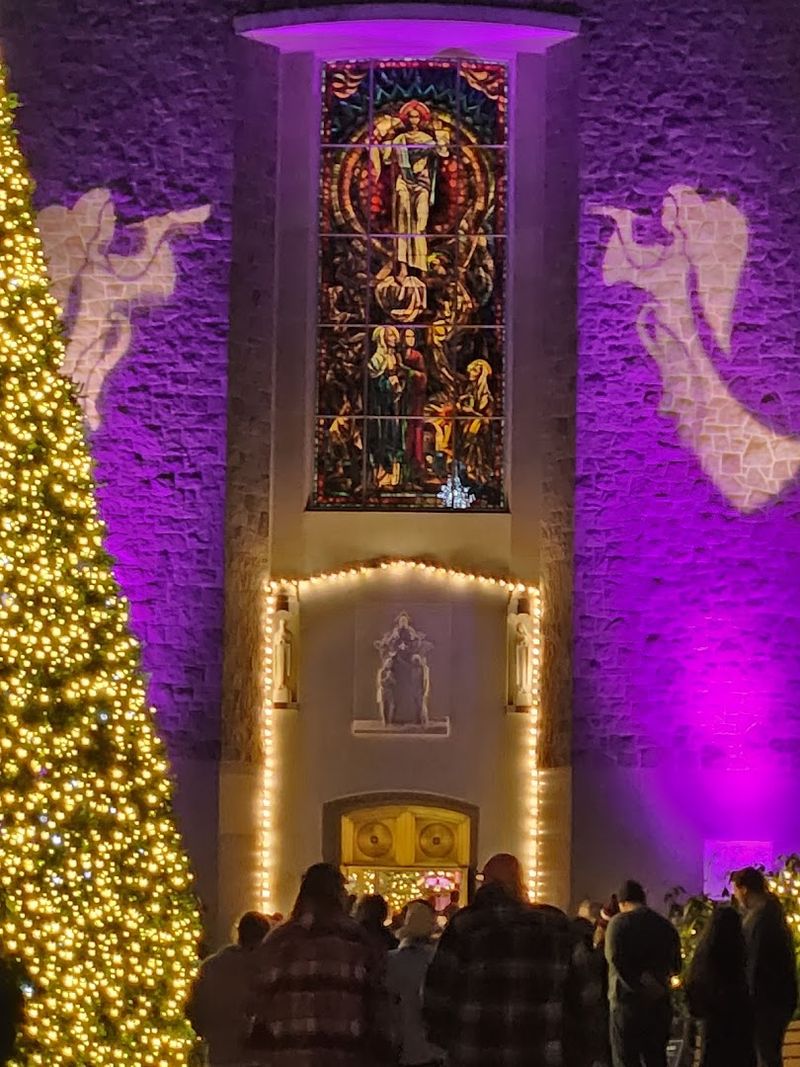
Come December, The Grotto transforms into something that regular visitors barely recognize.
Thousands of lights are strung through the trees and across the grounds, creating a warm, glowing atmosphere that draws crowds from across Oregon and well beyond its borders. Holiday concerts fill the air with choral music performed inside the chapel and across the grounds.
The Christmas Festival of Lights typically features over 170 indoor holiday concerts during the season, ranging from local school choirs to professional vocal groups.
Hot cocoa and seasonal treats are available for purchase, adding a cozy layer to the already festive mood. The combination of sacred setting and holiday celebration gives the event a character unlike most other seasonal light displays.
Parking during the festival fills up quickly, so arriving early or planning ahead is strongly recommended. The experience tends to stay with people long after the season ends, and many families return year after year.
It is one of Portland’s most beloved holiday traditions.
Spiritual Openness And Welcoming Atmosphere
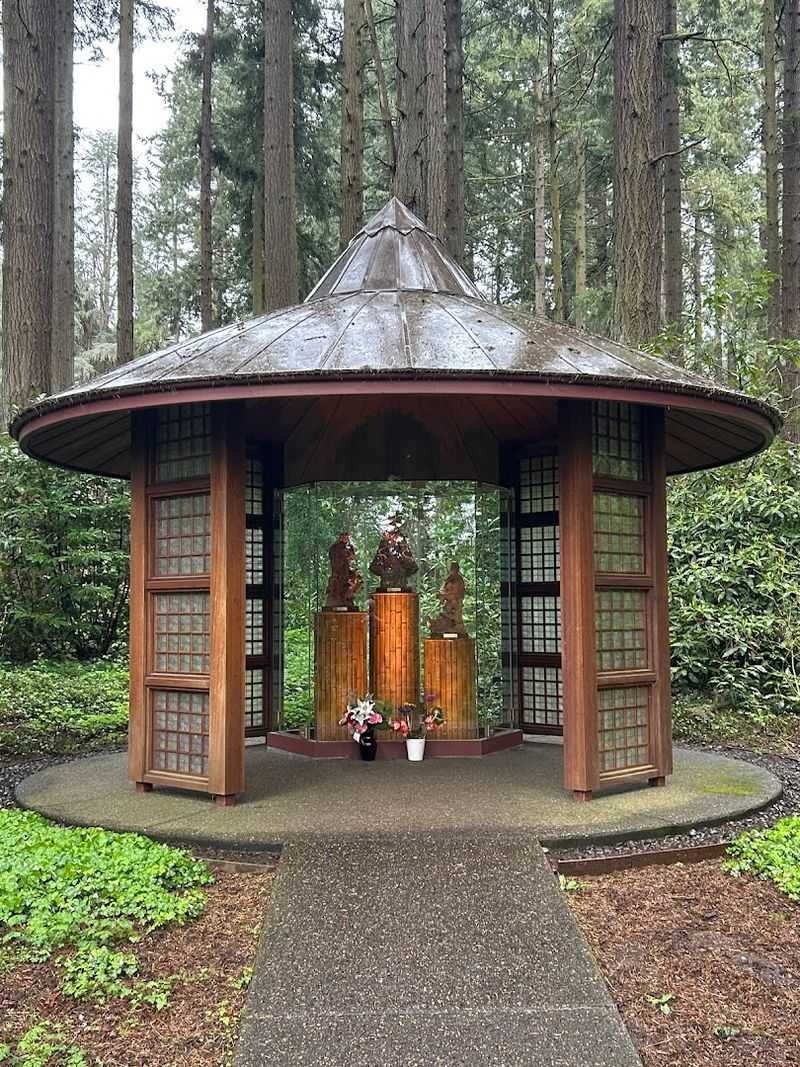
One of the things that consistently surprises first-time visitors is how welcoming the sanctuary feels, regardless of personal beliefs.
The Grotto is a Catholic shrine, but its doors are open to people of every background, and that openness is evident in the way the space is designed and maintained.
Nobody feels out of place here.
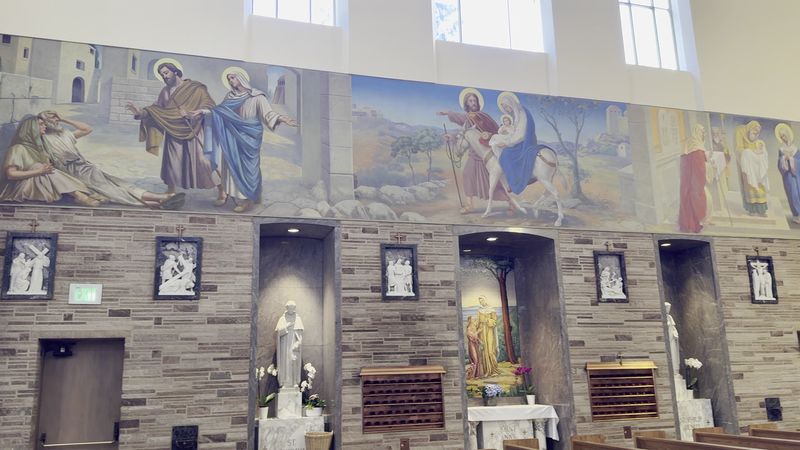
Stations of the Cross line portions of the grounds, offering a structured path of reflection for those who seek it. At the same time, the gardens, waterfalls, and quiet corners provide ample space for those who simply want to sit in nature without any particular religious context.
Both experiences coexist comfortably.
The visitor center near the main entrance adds another layer of accessibility by offering historical context about the site through displays and exhibits. Guests can also write personal petitions and leave them in designated spots around the grounds.
This small ritual has become meaningful to many who visit, adding a personal dimension to what might otherwise feel like a purely scenic stop.
Tips For Planning Your Visit
Planning ahead makes a meaningful difference when visiting this sanctuary. Parking on the grounds is limited, and the lot fills quickly during weekends, holidays, and special events.
Arriving early in the morning on a weekday is the most reliable way to enjoy the grounds without crowds. Some visitors opt to park along the street nearby and walk to the entrance.
The lower grounds, including the Peace Garden and the cliffside grotto, are free to visit. Accessing the upper gardens and the Chapel of Mary requires a small admission fee, paid at the entrance.
The elevator ride is included with that fee and is the standard way to reach the upper level.
Comfortable walking shoes are a good idea since the paths cover a fair amount of ground across both levels. The sanctuary is open daily, making it flexible for most travel schedules.
Oregon weather can shift quickly, so a light layer is worth keeping on hand regardless of the season.