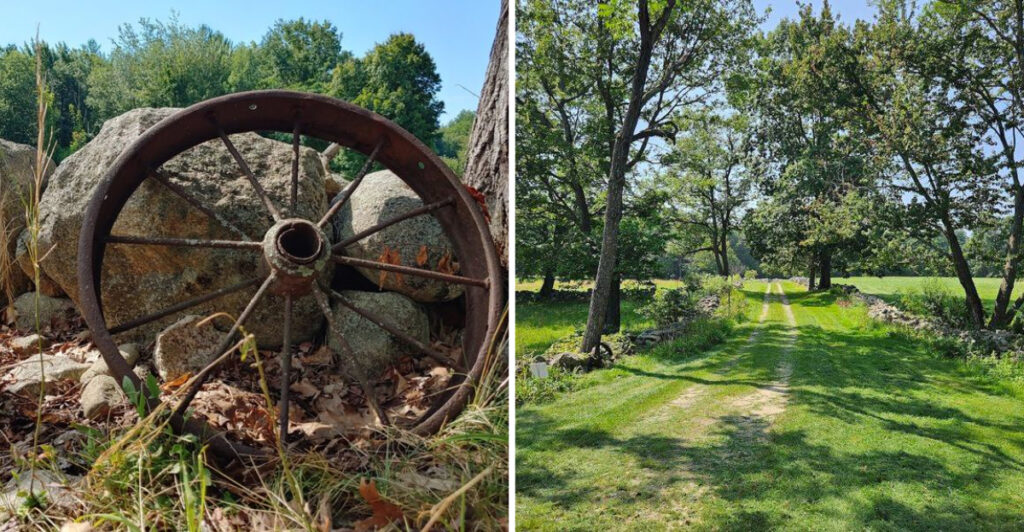
Ever wondered what happens when an entire village simply gives up and walks away, leaving only stone whispers behind?
New Hampshire holds exactly that kind of haunting little secret, placed into rolling fields and shaded woodlands where colonial settlers once tried to build a future.
Today, cellar holes, ancient walls, and a single restored farmhouse are all that remain.
The spookiness here is the quiet, slow-burning kind that settles into your bones.If you love history that feels close enough to touch, New Hampshire might just have your next unforgettable walk waiting in the wings.
The Origin Story Of A Forgotten Settlement
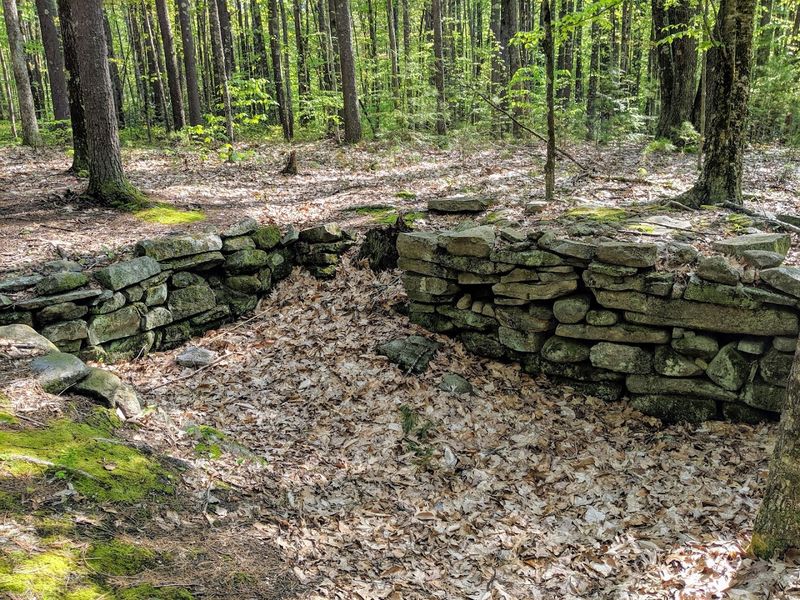
Every ghost town starts with hopeful hands and big plans, and this particular corner of New Hampshire was no exception.
Founded in 1737 by six pioneering families from Massachusetts and Canada, Monson was one of the earliest inland colonial settlements in the territory that would eventually become the Granite State.
The settlers cleared the land, built tight clusters of homes, and dreamed of raising generations right here. In 1746, the community was officially incorporated as a town, which felt like a promising step forward.
At one point, a few hundred residents called this windswept place home. Names like Thomas Nevins, Joshua Bailey, Richard Clarke, and Dr. John Brown filled the early records of a village that truly believed in itself.
Knowing how it all began makes the quiet that now blankets this site feel even more striking to modern visitors.
This abandoned place can be found at Monson Center, Federal Hill Road, Hollis, New Hampshire.
The Settlers Who Tried To Build A Life Here
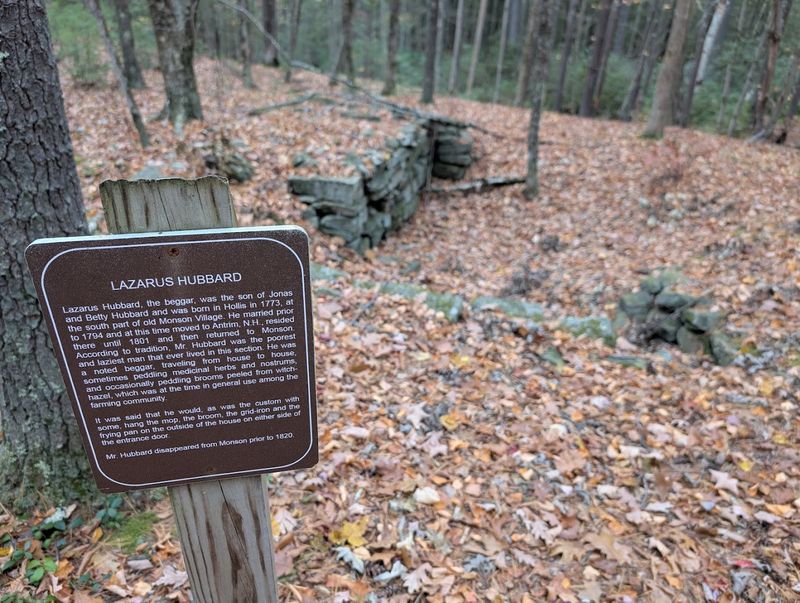
The people who arrived in the 1730s were not casual dreamers. They were hardworking farmers, tradesmen, and veterans who wanted roots in the wilderness of southern New Hampshire, and they poured their lives into making this place thrive.
Thomas Nevins was a sergeant in the French and Indian War whose three sons would later perish in the Revolutionary War. Joshua Bailey raised eleven children here, and the family famously escaped a house fire that destroyed their home.
Dr. John Brown was known across New England for his fancy chaise carriage, a rare symbol of status.
These were real lives, full of joy, hardship, tragedy, and ambition. Reading the biographical markers scattered across the site today makes history feel less like a textbook chapter and more like a conversation happening right at your feet.
Why The Town Was Mysteriously Abandoned
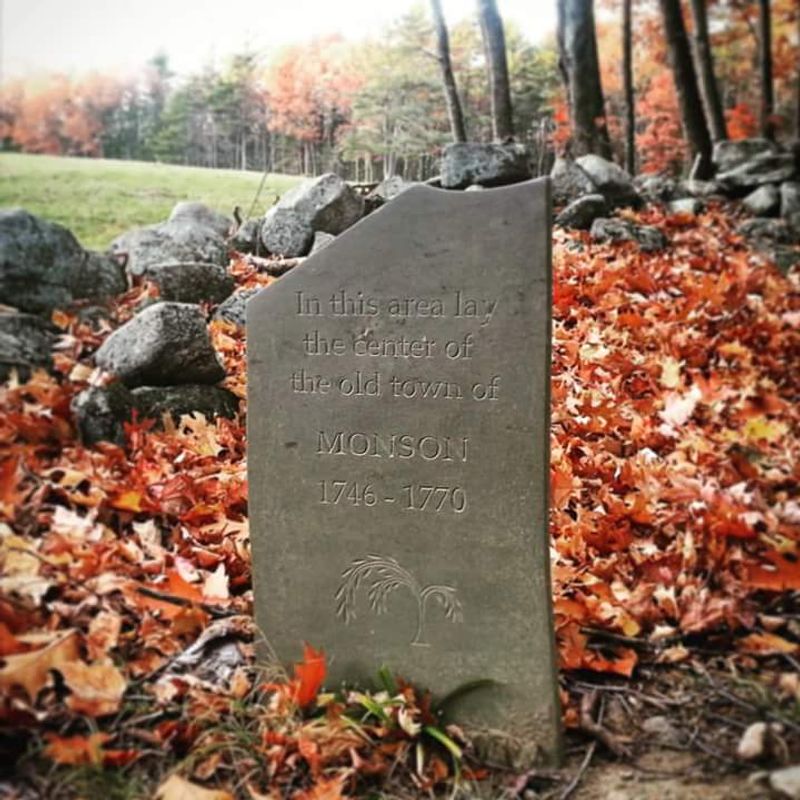
By 1770, the entire village had emptied, and the exact reason remains debated more than 250 years later.
What historians do know is that the settlers petitioned the colonial government to repeal their charter, effectively disbanding the town just before the American Revolution.
Some accounts point to harsh living conditions, rocky soil, and the difficulty of farming this particular stretch of New Hampshire land. Others suggest the residents simply could not agree on where to build a meeting house, which was essential to colonial town life.
One old town history famously noted that the community was unable to support the gospel, build bridges, or maintain roads. Whatever the true cause, the settlers packed up, moved on to nearby Hollis and Milford, and left behind a village that would quietly vanish into the forest for more than two centuries.
How The Land Got Divided Among Four Towns
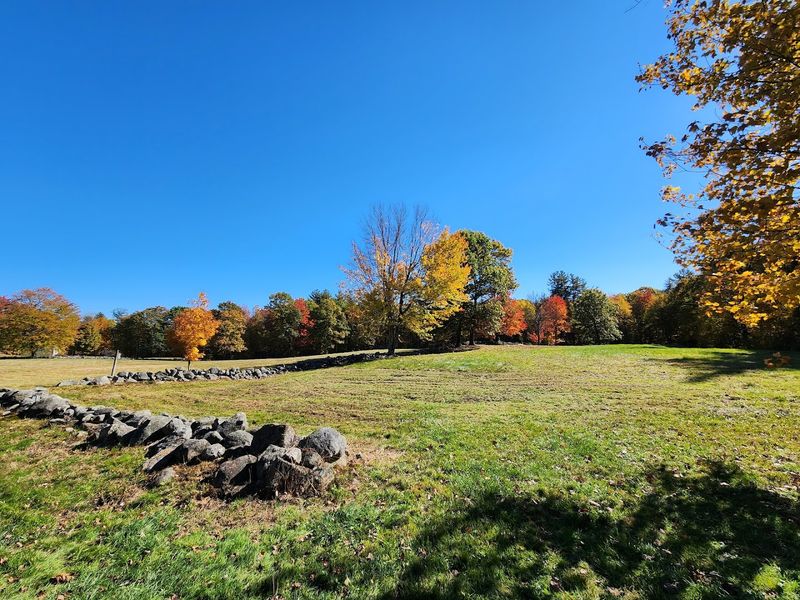
Once the charter was repealed, the original Monson territory did not stay intact.
Instead, the acreage was absorbed into the four surrounding communities of Hollis, Milford, Amherst, and Brookline, which is part of what makes this ghost town so unusually layered today.
For 230 years, the old village sat forgotten, its boundaries blurred across multiple town lines. Locals walked past cellar holes without knowing what they were, and maps stopped showing the original settlement altogether.
The protected site itself now spans about 269 acres, with footholds in both Milford and Hollis.
That geographic quirk explains why the official address sits in Hollis, but the most convenient parking area is just across the line near Milford. It also adds a genuinely strange charm to the place, where history refused to respect modern lines on a map.
The 1998 Rescue That Saved The Site Forever
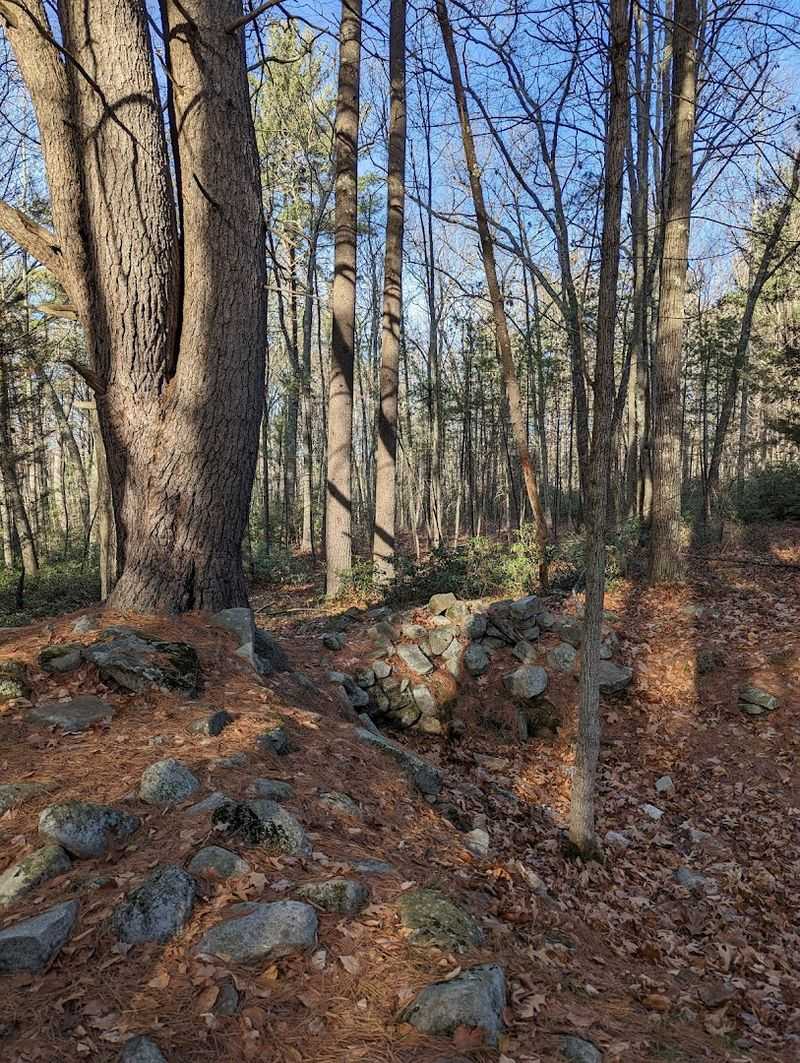
The village almost disappeared for good in 1998, when a developer planned a 28-lot luxury housing subdivision directly on top of the old settlement.
If that project had moved forward, the cellar holes, stone walls, and archaeological treasures would have been erased in a matter of months.
A grassroots effort led by Russ and Geri Dickerman changed everything. The couple donated 125 acres of their own land, raised roughly a third of a million dollars, and rallied hundreds of Friends of Monson to join the cause.
The Society for the Protection of New Hampshire Forests ultimately purchased the property in 1998, with additional partners including the State Division of Historical Resources and Inherit New Hampshire.
In 2008, another 47 acres were added through a neighboring subdivision arrangement, permanently protecting one of the most significant archaeological sites in all of New England.
How To Reach This Remote Ghost Town
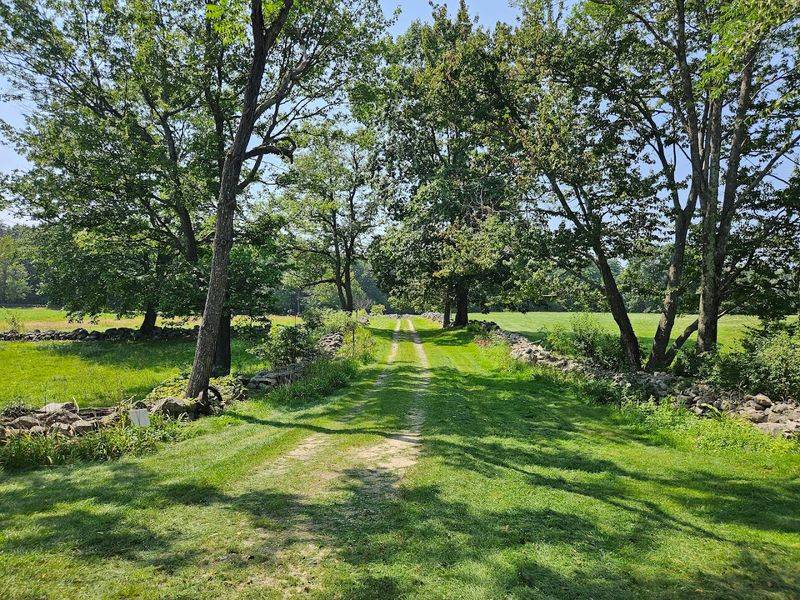
Getting here is easier than most ghost town adventures, but it still rewards a little planning. The parking area is located off Federal Hill Road in Hollis, very close to the Milford town line, marked by a Society for the Protection of New Hampshire Forests sign.
Federal Hill Road itself is a long stretch that starts paved, shifts to dirt through the middle, and returns to pavement near the site. Many first-time visitors actually drive past the small lot without realizing it, as the entrance can look more like a driveway than a trailhead.
From the parking area, a short walk brings you to an informational kiosk with a full trail map. GPS coordinates can be finicky out here, so pulling up directions before you lose cell signal is a smart move.
Once you arrive, though, the rolling fields feel worth every wrong turn.
What Remains Of The Old Village Today
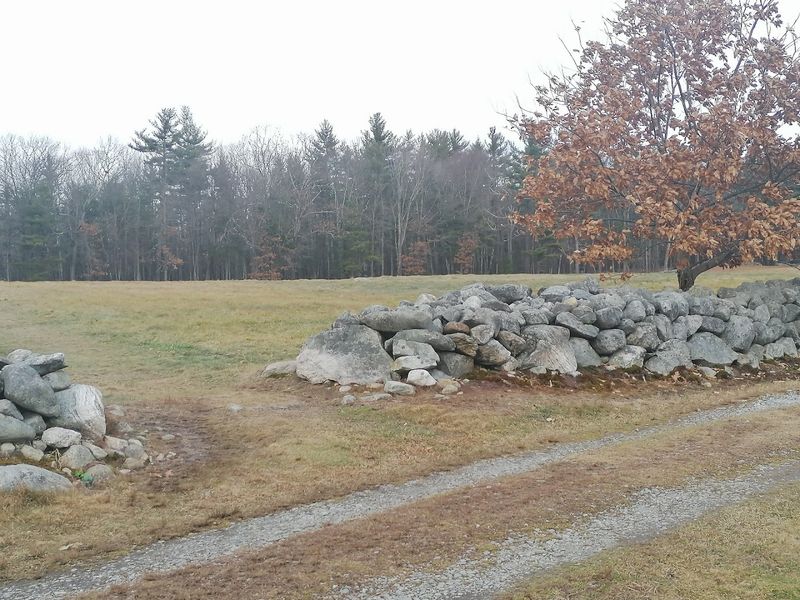
The physical evidence of colonial life here is remarkable, quiet, and delightfully easy to find once your eyes adjust.
A three-mile trail system winds through the preserved land, passing seven original home sites marked with biographical plaques that bring each family’s story back to life.
The main pathway reveals stone-lined cellar holes, long meandering stone walls, and the remnants of dirt roads that once connected neighbors. Each cellar hole has its own signage explaining who lived there, when they arrived, and what became of them.
The star of the preserved village is the Joseph Gould House, a restored colonial home that serves as a small museum. It is the only structure still standing from the old village.
Hayfields stretch out on either side of the approach, framed by disease-resistant American Chestnut trees that are part of an ongoing conservation effort.
The Haunting Atmosphere That Pulls Visitors In
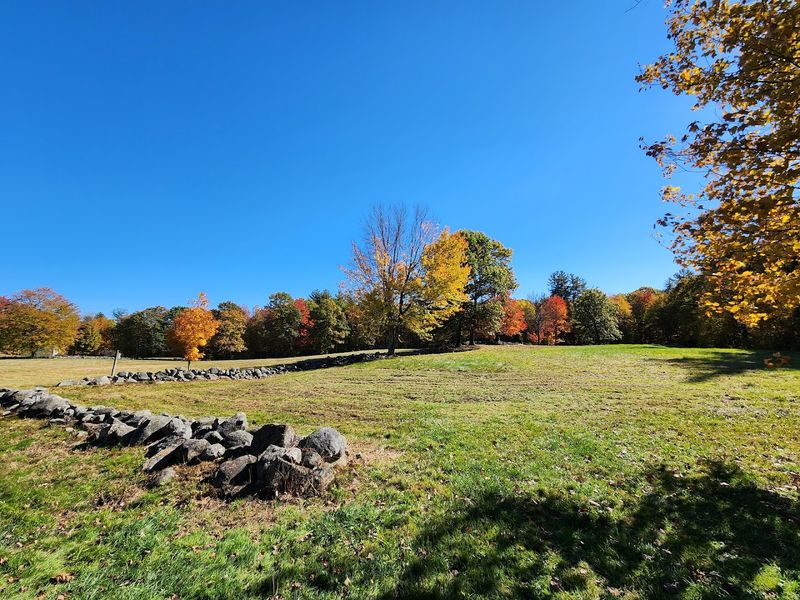
Few places blend peaceful beauty with gentle eeriness quite like this one. On sunny afternoons, rolling hayfields dotted with wildflowers feel almost too idyllic to belong to a ghost town.
On overcast days, the same landscape takes on shadowy, primordial tones that tap straight into the imagination.
The silence here does most of the work. There are no souvenir shops, no crowded parking lots, and no guided tour groups shouting over each other.
Just stone walls, bird calls, and the soft crunch of your own footsteps on the old roads.
Some visitors claim to sense lingering presences near specific cellar holes, especially around the Thomas Nevins site.
Whether or not you believe in such things, the atmosphere has a way of quieting conversations and slowing people down, almost without them noticing it happening.
Wildlife, Fields, And A Surprise Beaver Pond
Nature has made itself very comfortable here, and the protected acreage now functions as a genuine wildlife haven.
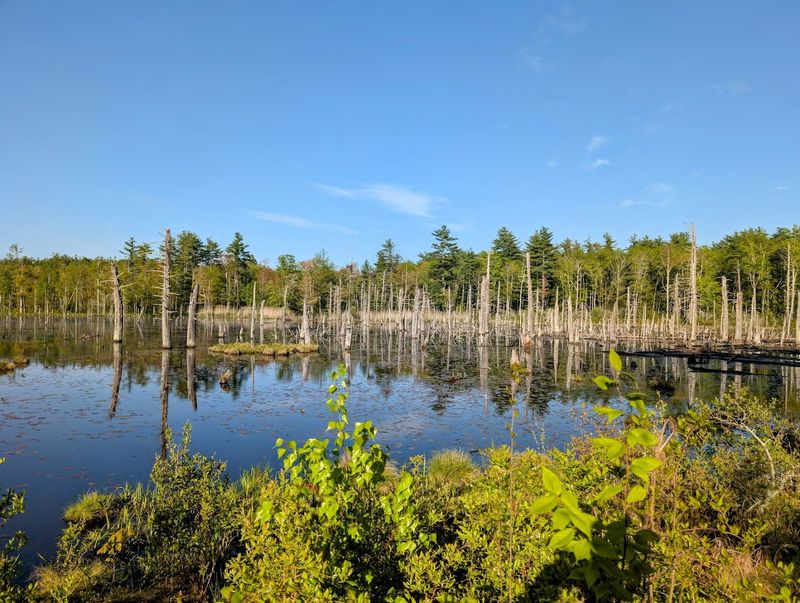
The main trails converge at a sprawling beaver wetland, which hosts an active heron rookery in early summer and draws a wide variety of waterfowl throughout the warmer months.
Benches near the water give hikers a perfect excuse to pause, watch the herons, and let the quiet soak in. Primordial-looking tree trunks jut from the pond surface, adding a strange, almost prehistoric feel to an otherwise peaceful scene.
Along the hayfields and forested sections, visitors regularly spot deer, wild turkey, butterflies, and songbirds. Wild roses and lilies bloom in the warmer months, and leashed dogs are welcome to join the adventure.
The whole property feels layered with life, which makes the quiet ruins even more poignant against such a vibrant backdrop.
Why This Ghost Town Stays With You
Most hikes end when you reach your car again. A visit to this little corner of New Hampshire tends to linger a lot longer than that, which is part of what makes it so unlike other destinations in the region.
The combination of colonial history, genuine archaeological significance, and unhurried natural beauty leaves an impression that sneaks up on people.
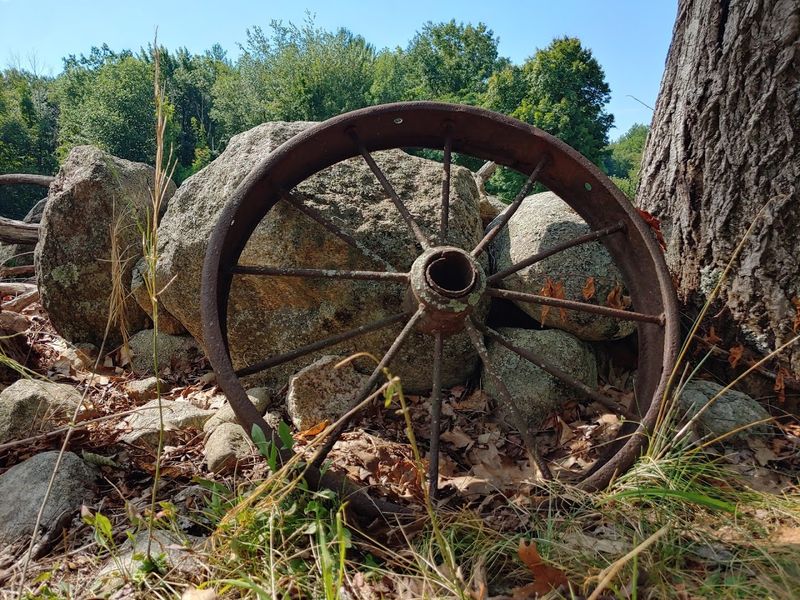
You walked the same roads that families walked in the 1730s, past the foundations of homes they built with their own hands.
Atlas Obscura and leading archaeologists consider the site one of the most significant in all of New England, and the quiet preservation makes that status feel earned rather than loud.
New Hampshire has plenty of trails with breathtaking views, but very few offer this kind of whispered conversation with the past that keeps the mind turning for days afterward.