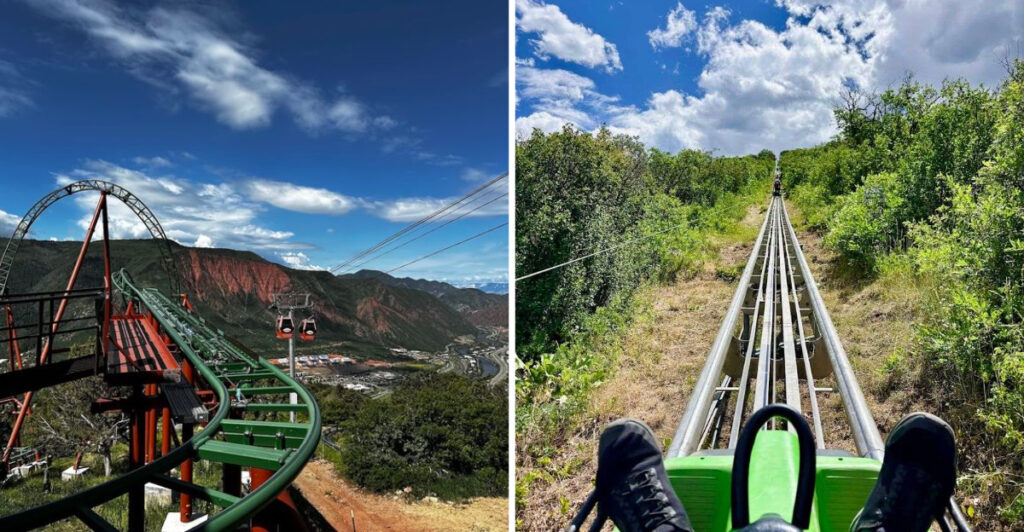
Your hands are about to receive a promotion.
On one Colorado mountainside, they control whether your sled cruises politely through the trees or races downhill as gravity laughs in your face.
There is no accelerator pedal, but releasing the manual brake produces a remarkably convincing imitation.
This Alpine Coaster runs along 3,400 feet of steel track, twisting through hairpin turns, bumps, and waves before towing you back uphill.
gYou choose the pace during the descent, while the sled’s speed-control system keeps enthusiasm from becoming an engineering experiment.
The ride began operating in 2005 as the first alpine coaster installed in the United States. Two decades later, its Rocky Mountain setting still gives it an advantage no ordinary parking-lot coaster can borrow.
Colorado supplies the mountain. You supply the nerve, the braking decisions, and whatever noise escapes during the sharpest turn.
Gravity has the gas pedal. Your hands handle customer service.
Colorado’s Original Alpine Coaster Still Sets The Pace
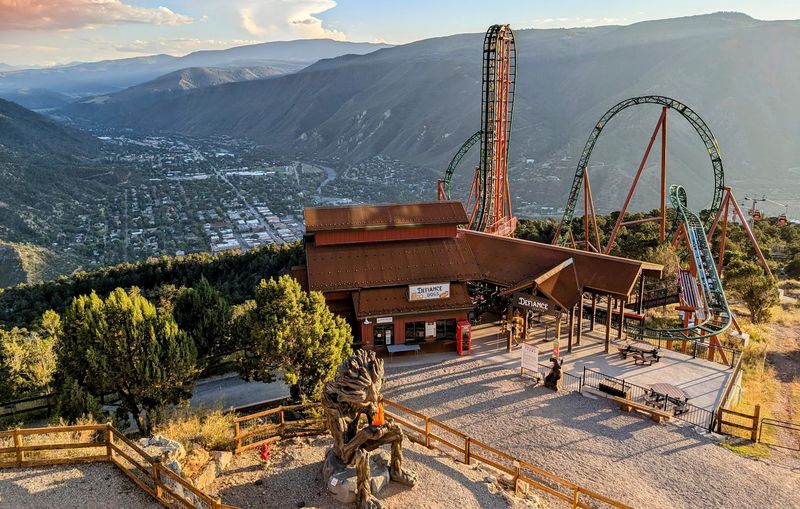
Before alpine coasters started appearing around the country, this one was already sending riders downhill with questionable confidence and excellent scenery.
The Alpine Coaster opened at Glenwood Caverns Adventure Park in 2005. The park identifies it as the first alpine coaster installed in the United States, inspired by similar rides operating in the European Alps.
German manufacturer Wiegand built the toboggan-style system and supplied the track technology.
Its arrival also marked a turning point for the attraction. Glenwood Caverns had reopened for cave tours in 1999, but growing demand created waits that could stretch for hours.
Park owners Steve and Jeanne Beckley added rides to give visitors something entertaining to do between tours, and the Alpine Coaster became the first major thrill ride.
The sled remains attached to a steel track throughout the ride, distinguishing it from an alpine slide that runs through an open trough. The fixed track also allows the coaster to operate during different seasons when conditions permit.
A new fleet of bright green sleds arrived in 2024 as part of the park’s anniversary updates. The makeover changed the vehicles, but not the ride’s basic proposition: sit down, release the brake, and discover how brave your hands feel.
America’s first alpine coaster is no museum piece. It still prefers screaming to reminiscing.
You Decide How Quickly The Mountainside Flies Past
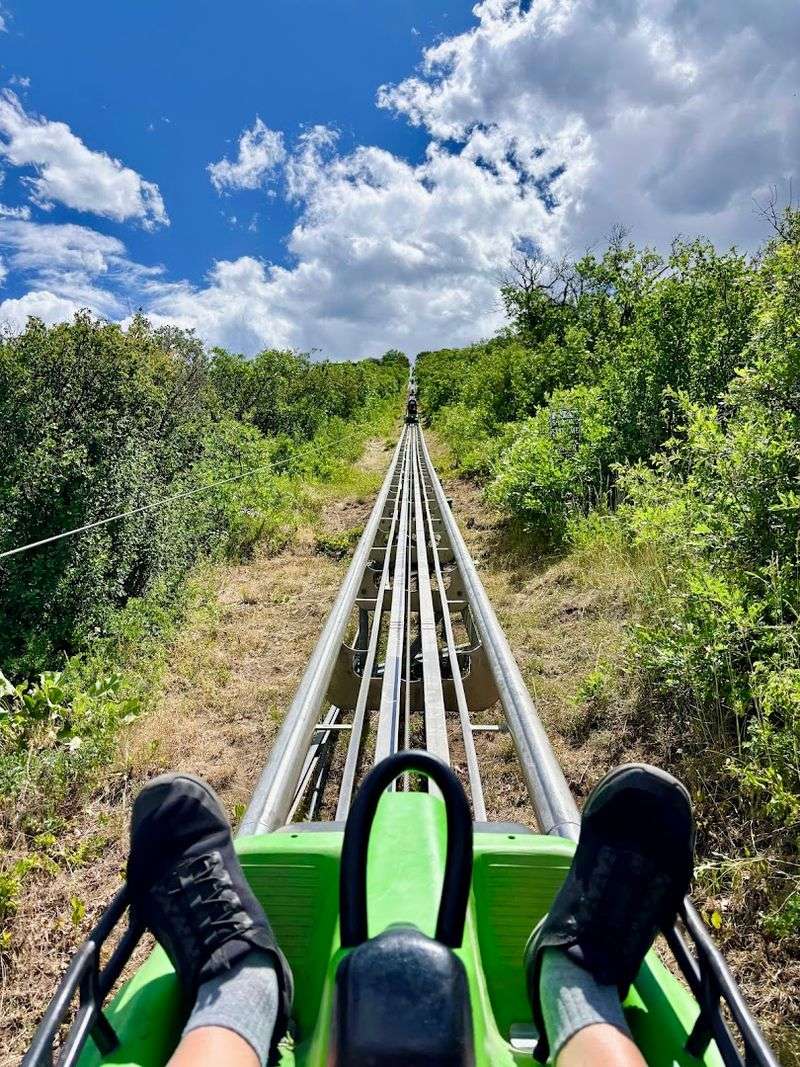
Most rides make every decision for you. This one hands you a lever and watches the negotiations begin.
Each sled uses a manual braking system that lets you control your speed during the downhill run. Push the controls forward to release the brake and let gravity increase the pace. Pull them back when you want the mountain to stop arriving quite so quickly.
The sled has no motor powering it downhill and no accelerator pedal hiding beneath your feet. Gravity supplies the movement, while your hands decide how much of it to accept.
The cars can reach speeds of up to 25 miles per hour, but they are programmed not to exceed the ride’s maximum operating speed. The system also maintains safe spacing between sleds, so the rider behind you cannot turn the experience into mountain traffic.
You can ease through the course and pay attention to the trees, or release the brake more fully and let the curves arrive with considerably less patience. Either choice uses the same track but creates a different ride.
That freedom makes a repeat run especially tempting. The first descent teaches you where you braked. The second one asks whether that caution was really necessary.
Your sled never says “faster.” Gravity is much less subtle.
Three Thousand Four Hundred Feet Leave Room For Plenty Of Twists
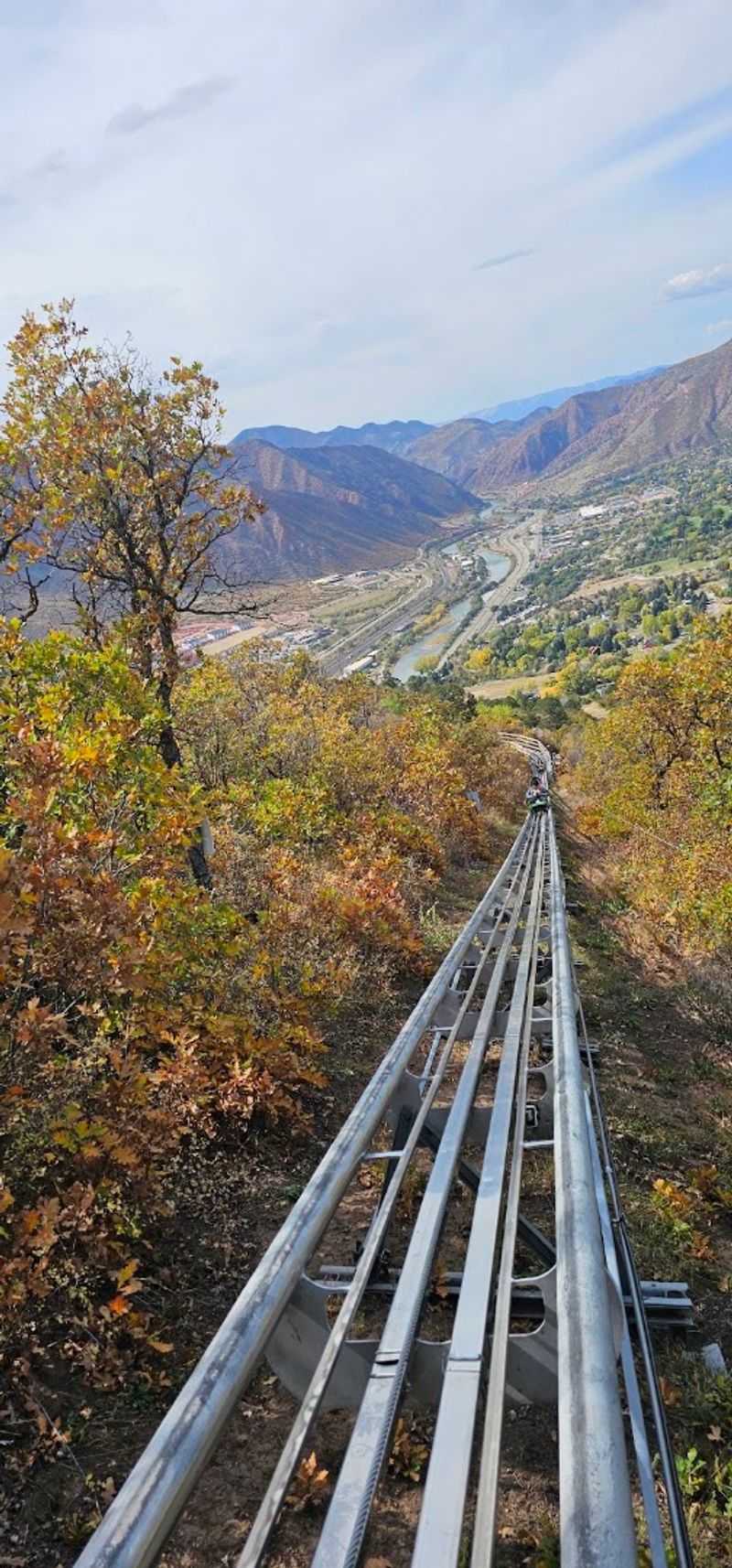
Half a mile sounds manageable until it starts bending downhill.
The Alpine Coaster follows 3,400 feet of track down Iron Mountain, carrying you through hairpin turns, rolling bumps, waves, and longer stretches where the sled can gather speed.
The official ride time places the descent at just under two minutes, depending partly on how often you use the brake.
Those two minutes pack in more variety than one dramatic drop. A smoother section may give you time to relax, only for the next turn to swing into view and remind your hands that they have a job.
The track follows the natural grade and contours of the mountain rather than sitting on a flat amusement-park lot. Trees surround portions of the route, while open sections reveal more of the slope and the Colorado landscape beyond it.
Because the sled remains attached to the rails, you cannot slide away from the course during a sharp bend.
The park says the system was designed to handle its tightest hairpin turns at full operating speed, although you remain free to slow down whenever your confidence requests an emergency meeting.
The distance gives you time to settle into the controls, make a few questionable braking choices, and immediately begin planning how you would handle the same sections differently.
Three thousand four hundred feet later, your bravery will have several performance notes.
Hairpin Turns Put Your Braking Decisions To Work
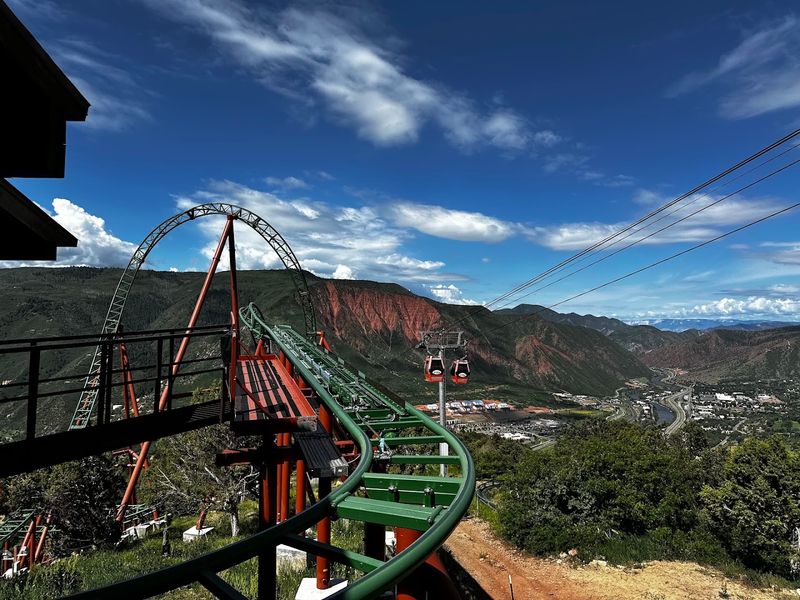
The track suddenly turns back on itself, and your fingers begin earning their vacation.
Hairpin bends are where rider control becomes more than a novelty. You see the curve approaching, decide whether to reduce speed, and feel the sled follow the steel track around the mountain.
The coaster is engineered so its cars can navigate the sharpest turns at the ride’s regulated maximum speed.
That does not mean every rider must charge into them without braking. It means the system controls the upper limit while leaving you responsible for choosing a pace that suits your comfort.
The sled’s attachment to the track keeps it securely guided through the bends. You receive the sensation of leaning into a fast turn without having to wonder whether the vehicle has developed independent travel plans.
A cautious first run can help you learn the course. You may slow before every major curve, then discover that several felt less intimidating than expected. A later ride lets you approach them with more confidence and fewer dramatic conversations with the brake.
The trick is paying attention. Release the controls when you want more speed, then use them smoothly rather than waiting until a bend fills your entire view.
A hairpin does not ask whether you are ready. It simply arrives wearing a curve and a smirk.
The Uphill Return Gives You Time To Catch The View
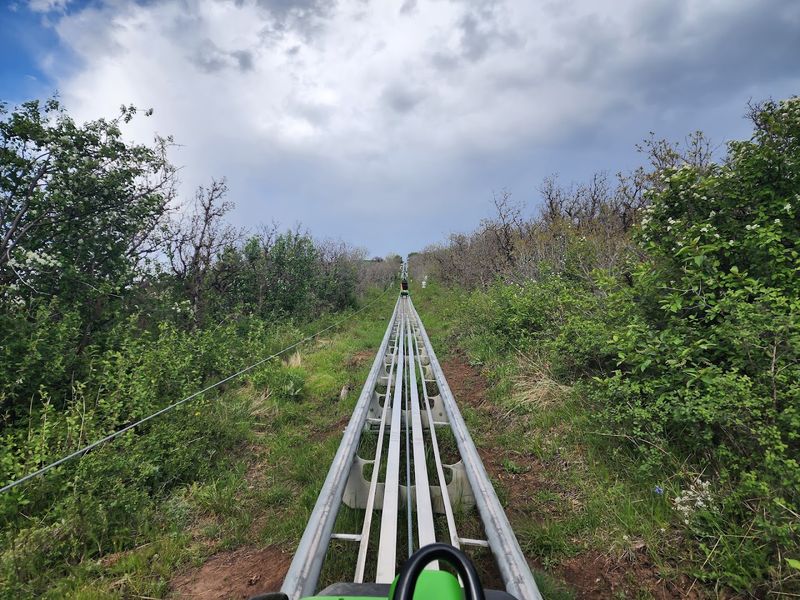
After two minutes of downhill excitement, the coaster assigns you four minutes of mountain reflection.
Once the descent ends, the system tows the sled roughly 1,000 feet back toward the starting area. The return takes about four minutes, bringing the full ride time to approximately six minutes.
You no longer control the pace during this section, which is probably for the best. Your hands can relax while the sled climbs steadily and the Colorado River Valley opens around the mountainside.
The park sits at roughly 7,100 feet above sea level on Iron Mountain. At that elevation, even the mechanical reset comes with views that many rides would save for their grand finale.
The slower ascent also gives you time to replay the descent. You can identify the turn where you braked too early, the straightaway where you could have released the lever farther, and the moment your dignity briefly separated from your voice.
Two riders sharing a sled may spend the return discussing who controlled the speed and who supplied the loudest commentary. Solo riders can simply watch the wildflowers, trees, and valley while their heartbeat files the necessary paperwork.
The descent tests your nerve. The tow uphill gives it time to invent a better version of events.
Why One Descent Often Leads Straight To Another Ride
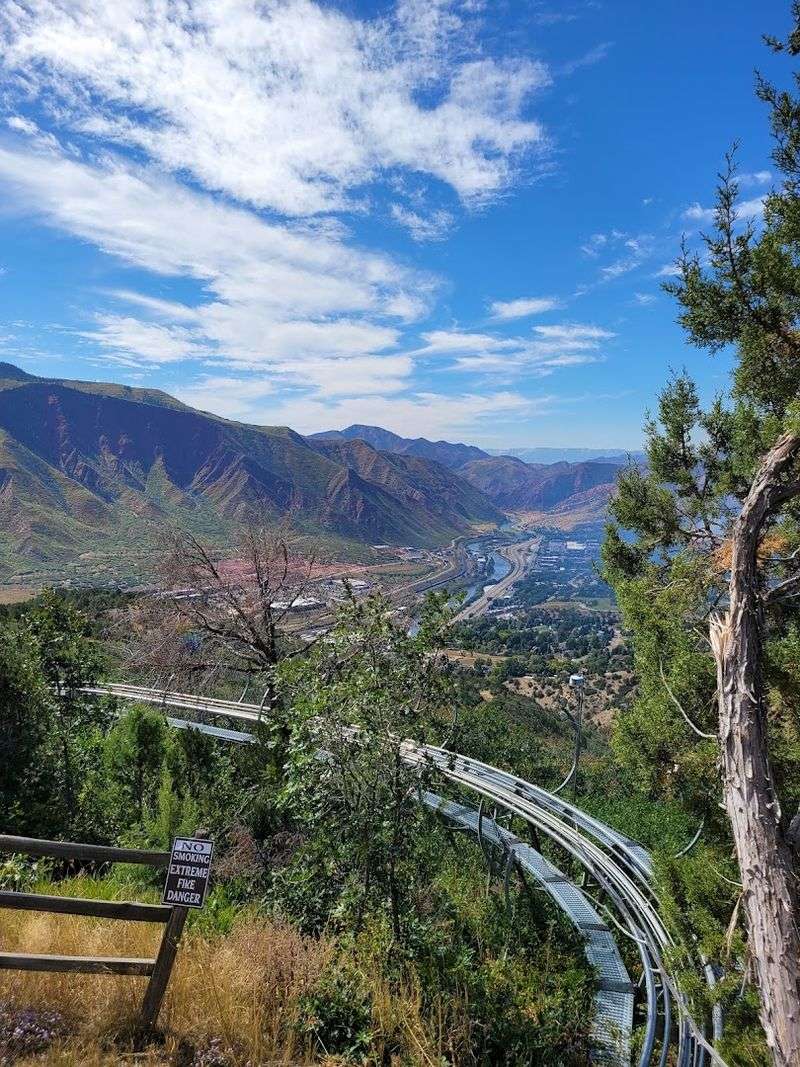
You step out of the sled with one dangerous thought: “I barely used the brake correctly.”
That is how the second run begins.
The Alpine Coaster rewards repetition because your decisions change the experience. Once you know where the longest straight sections and sharpest bends appear, you can adjust your pace instead of reacting to every turn like it arrived uninvited.
Current requirements set the minimum rider height at 38 inches and the minimum age at three. Guests between 38 and 54 inches must ride with a supervising companion who is at least 16, while riders must reach 54 inches to operate a sled alone.
When two people ride together, the person in front must be at least one head shorter than the driver.
The combined weight limit is 330 pounds, and all guests must complete the park’s required activity waiver. Medical, mobility, and safety restrictions also apply, so reviewing the full current requirements before your visit is the smartest move.
The coaster is designed to operate year-round, but mountain weather and maintenance can affect availability. A current ride-status check belongs in the plan, especially when the Alpine Coaster is your main reason for heading up Iron Mountain.
One run teaches you the track. The next one reveals whether you learned anything or merely became louder.
Address: 51000 Two Rivers Plaza Road, Glenwood Springs, Colorado 81601.