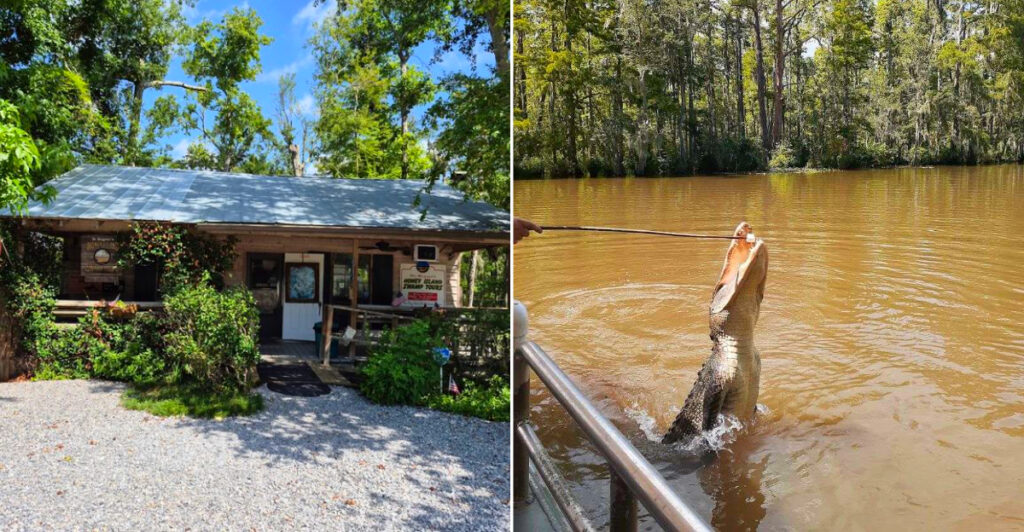
Long before the boat engine cuts and the swamp closes in around you, the stories start. A creature with yellow eyes and gray hair, standing over seven feet tall, spotted by hunters who refused to go back into those same woods for decades.
The Honey Island Swamp Monster is the kind of local legend that gets passed down at fish fries, gas stations, plus the kind that makes you lean in a little closer when the guide points to a cluster of trees, mentions the footprints. The tour itself is quieter than you expect.
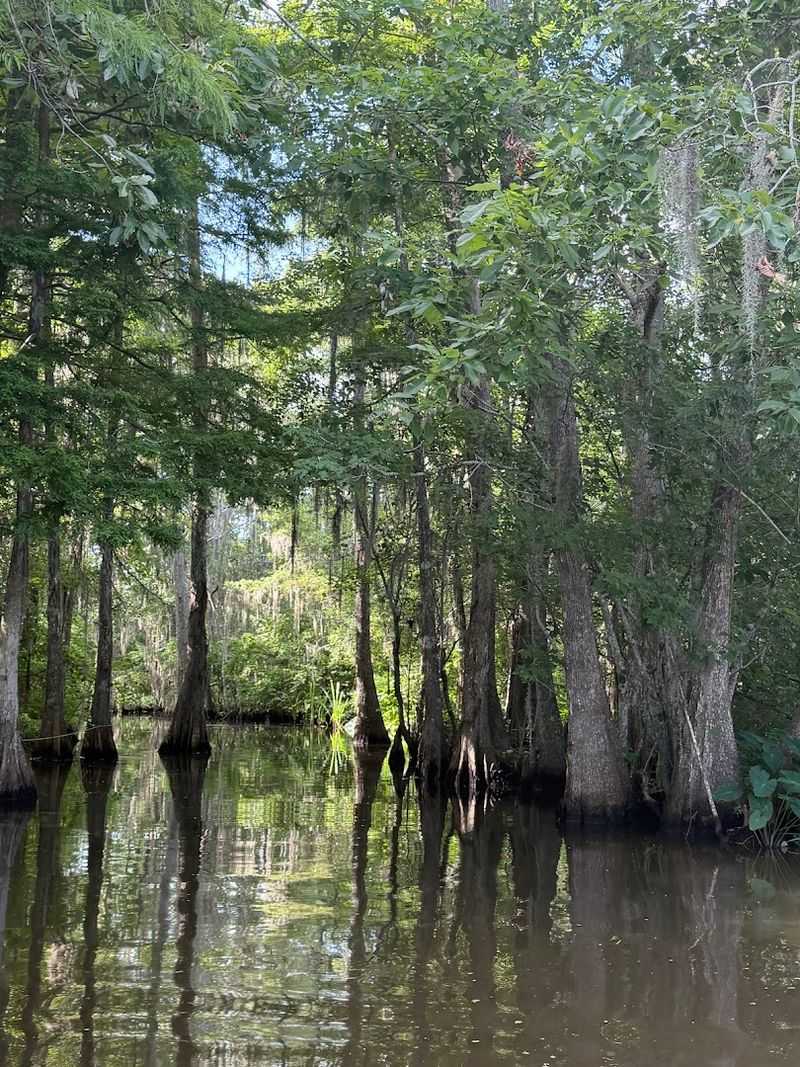
Cypress knees rise from the water like sentinels, the current barely moves, plus the only sounds are the dip of the paddle, the occasional splash of something retreating under the surface. Its possibility lingers in every shadow.
A legendary creature gives this Louisiana swamp its reputation, but the stillness is what stays with you.
Approach And Arrival
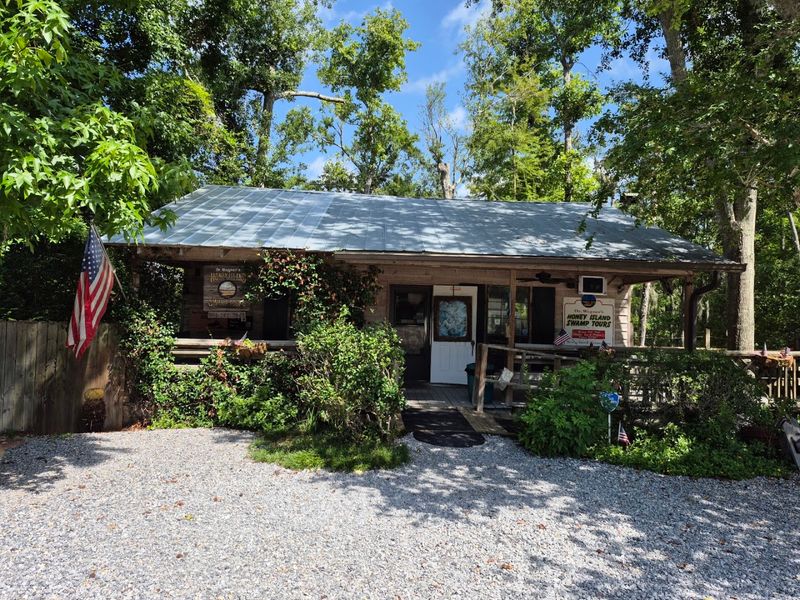
The parking lot does not try to impress you, which makes the first glimpse of the swamp feel more convincing. A modest check-in area, a low building, and guides moving gear toward the boats create a practical, unforced beginning.
This is not a theme-park entrance. It feels like a working launch point beside a much older landscape.
Arriving early helps. You can use the restroom, confirm your reservation, browse the small shop, and adjust hats, sunglasses, or camera straps before boarding.
The staff’s calm pace is useful because the water beyond the dock can make newcomers suddenly attentive.
The mood is anticipation, not spectacle. Engines, ropes, benches, and safety instructions come first, then the boat eases away and the highway world begins to thin behind you.
That ordinary start matters. It creates the perfect contrast for what follows: cypress shadows, slow water, birds lifting from branches, and stories that seem to belong farther from pavement. It also makes the first drift from shore feel quietly earned and genuinely real too.
The Pavement Gives Way To Honey Island
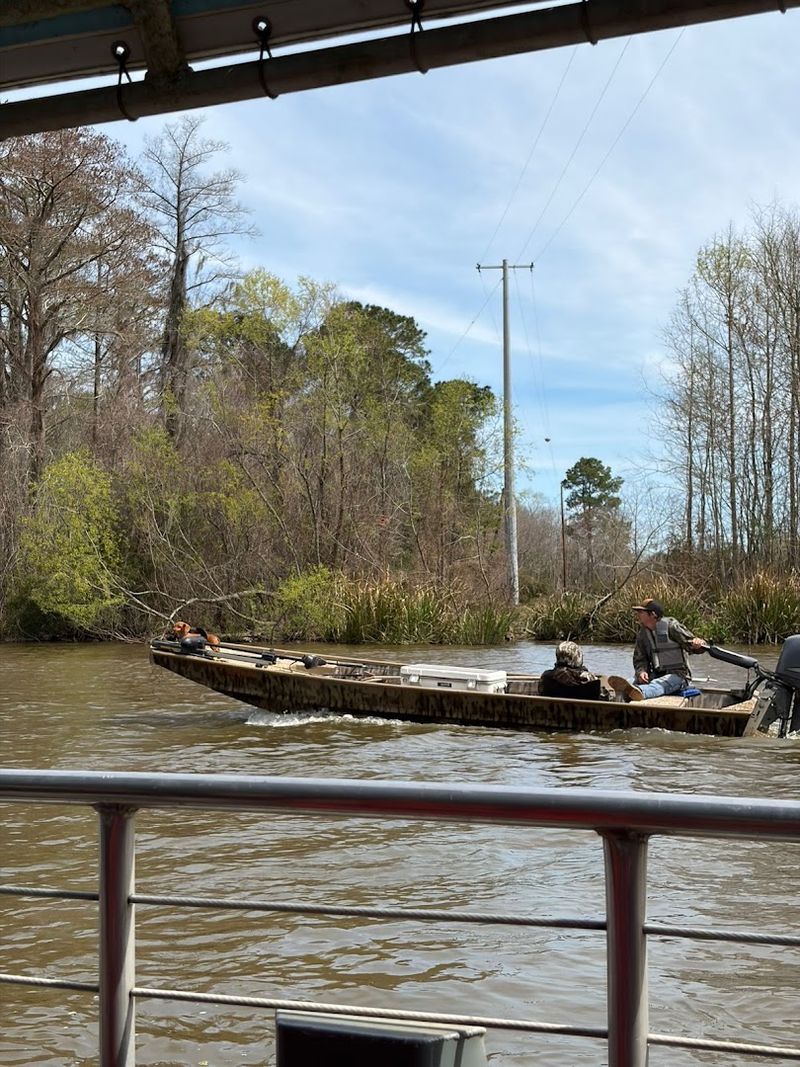
The drive east of New Orleans becomes more interesting as the commercial edges of Slidell give way to a quieter, greener approach.
Dr. Wagner’s Honey Island Swamp Tours departs from 55345 US-90 in Slidell, Louisiana, where the launch sits close to the Pearl River wetlands and the world starts feeling less urban by the mile.
Use the full address, because this is not a downtown storefront you can casually spot from several blocks away. The final stretch along US-90 passes wooded edges and low roadside signs before the tour entrance leads toward the visitor parking area and boat launch.
Plan to arrive ahead of departure, especially if you are driving yourself instead of using hotel pickup. Tours leave on a schedule, and swamp time does not mean late time at the dock. Once parked, follow the walkway toward check-in and let the setting do its quiet work.
Guide Expertise And Stories
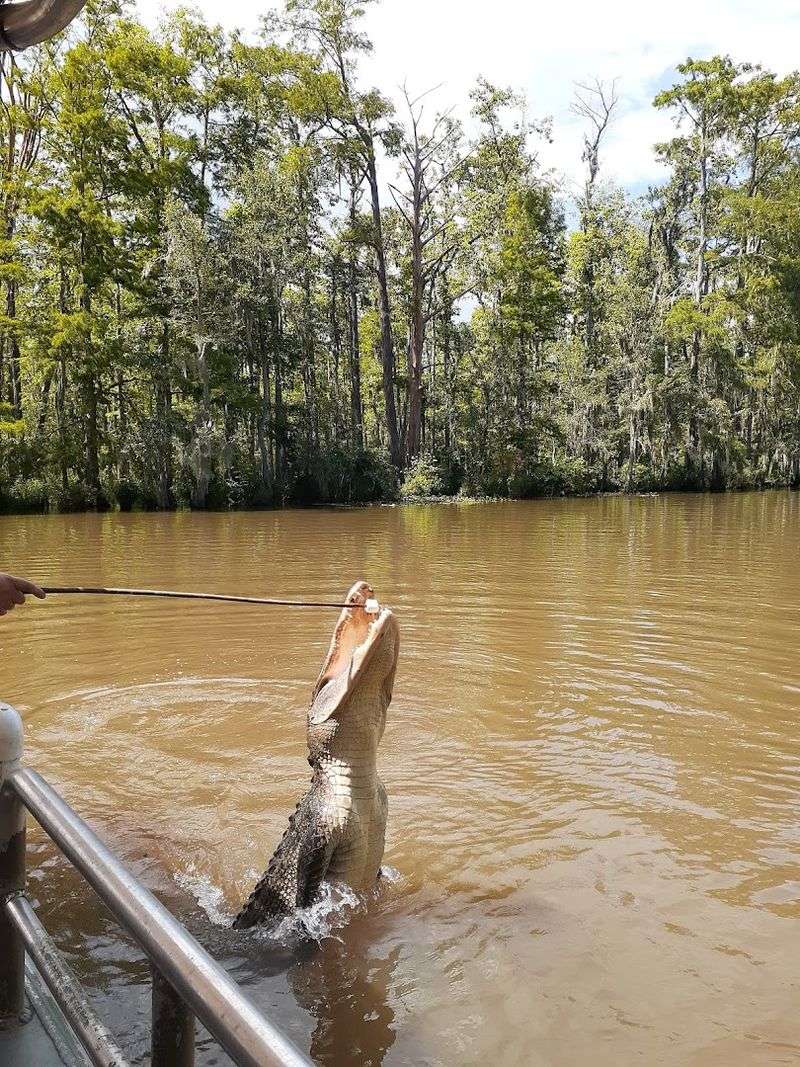
A good swamp guide can make a still branch feel worth watching. The best part of this tour is not only where the boat goes, but how the guide teaches you to look.
Bird calls, water movement, cypress knees, hanging moss, and half-hidden animals become easier to read when someone translates the landscape without overexplaining it.
The storytelling matters too. Local history, ecology, river habits, weather, wildlife patterns, and the Honey Island legend all mix naturally when handled by someone who knows the area beyond a script.
The strongest guides do not turn every shadow into drama. They let the swamp keep its dignity while still giving visitors enough narrative to stay alert.
Ask questions when something catches your attention. Tree names, animal behavior, boat handling, photography, and seasonal changes can all lead to better answers than a standard speech.
A guide’s local patience often becomes the thread that ties the whole ride together, helping the tour feel observed rather than performed for visitors that day. Silence becomes readable there.
Wildlife Rhythm And Sightings
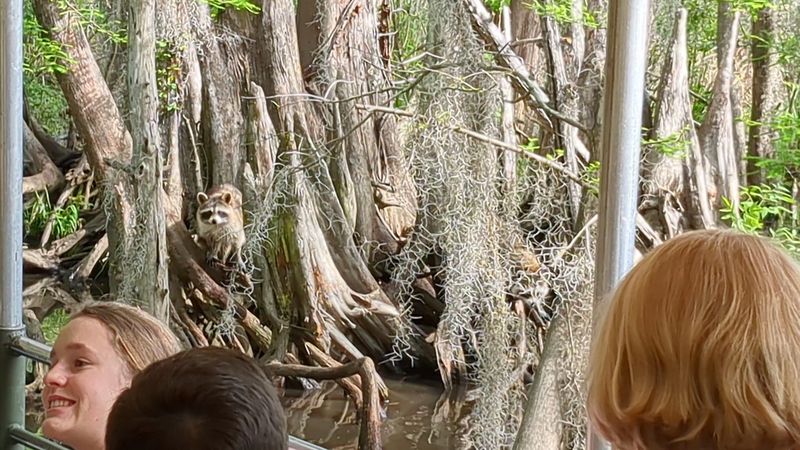
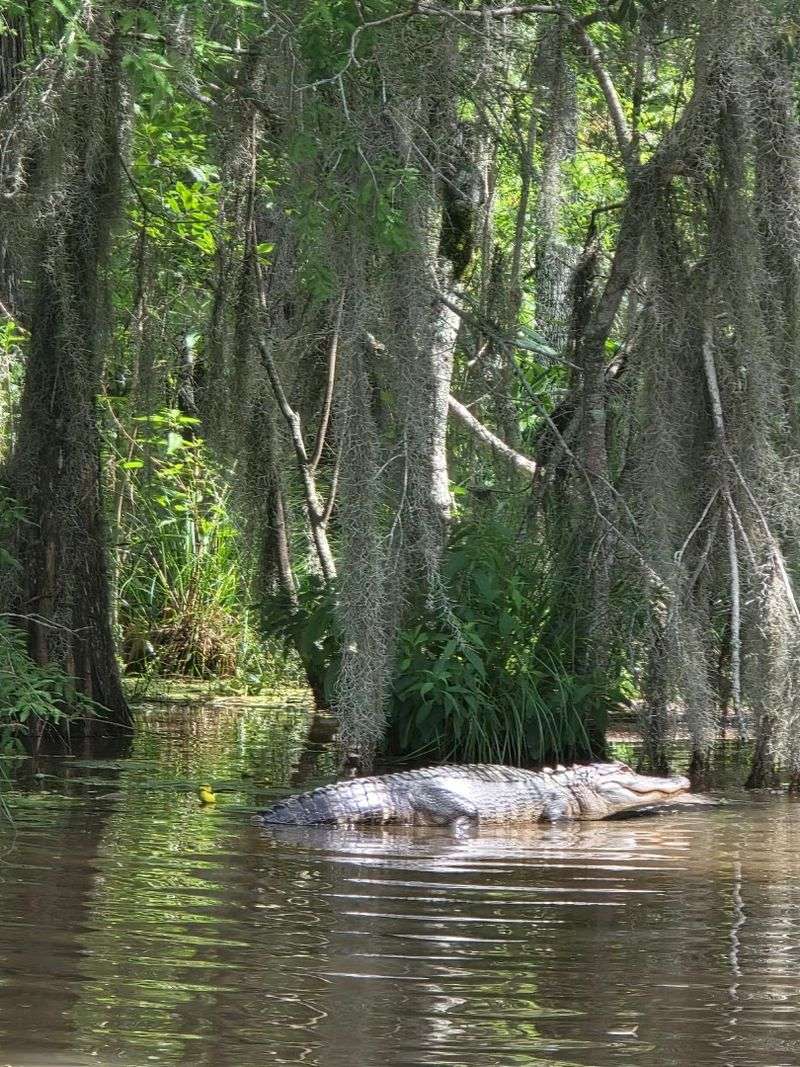
The swamp rarely reveals itself all at once. A shape near the bank may become an alligator only after several seconds of staring.
A raccoon can appear between roots, then vanish before half the boat notices. Herons, egrets, turtles, snakes, and raptors all belong to a rhythm that does not care about anyone’s camera roll.
That patience is part of the appeal. The boat slows, the guide points softly, and the whole group learns to wait.
In a louder attraction, nothing happens unless something performs. Here, stillness is often the setup.
A ripple, a wingbeat, or a head breaking the surface can suddenly feel enormous.
Wildlife sightings depend on weather, season, water levels, and luck, so arriving with a checklist can shrink the experience. Let the swamp be inconsistent.
Some tours are full of alligator moments, others lean toward birds, reflections, and quiet. Either way, the place teaches visitors to notice smaller movements before demanding bigger surprises from the water.
Legend Of The Honey Island Monster
Local folklore gives Honey Island Swamp an extra shadow. The famous Honey Island Swamp Monster is usually described as a large, gray-haired, yellow-eyed creature, closer to a Cajun Bigfoot than a movie monster, and the legend has been passed through reported sightings, footprint stories, and decades of local repetition.
The best tours treat the story as part of the swamp’s cultural fabric, not a guarantee. Nobody needs to pretend the creature will step out between the cypress trees for the legend to work.
The point is that the swamp has always encouraged mystery. Thick vegetation, dark water, animal sounds, and hidden banks create exactly the kind of place where stories grow legs.
Hearing the tale from a boat makes it more effective than reading it online. The guide mentions a sighting, the engine quiets, and suddenly every cluster of trees seems a little more watchful. Belief is optional. Atmosphere is not.
The swamp knows how to hold a rumor and keep it breathing. Uncertainty is the legend’s real engine there.
Seasonal Changes And Timing
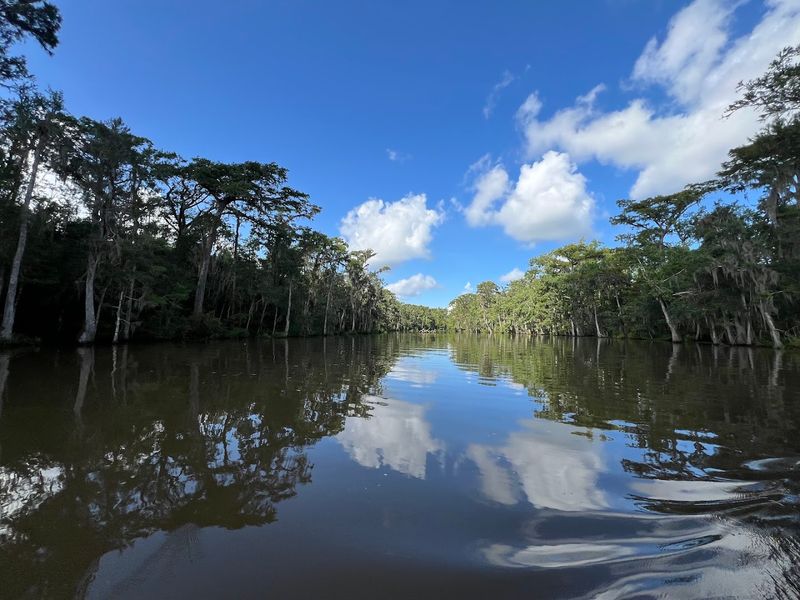
Seasons change the tour more than first-time visitors expect. Spring can bring nesting birds, greener edges, and a sense of renewal across the water.
Summer adds dense foliage, heat, insects, and the heavy Louisiana atmosphere that makes shade feel valuable. Cooler months often bring clearer visibility, more comfortable air, and a different kind of stillness.
Time of day matters too. Morning tours usually offer softer light, calmer water, and better comfort before the sun becomes aggressive.
Late afternoon can be beautiful when shadows lengthen, but weather and mosquitoes may become bigger factors depending on the season.
The smartest approach is to match expectations to nature instead of forcing nature to match your plans. Alligators may be more visible in warm conditions, birds may dominate another ride, and fog or light rain can change the mood completely.
Ask about current conditions when booking, then dress accordingly. A swamp tour is never exactly repeatable, which is the reason timing matters so much.
Conditions are not problems; they direct the show naturally here.
Photography And Respectful Framing
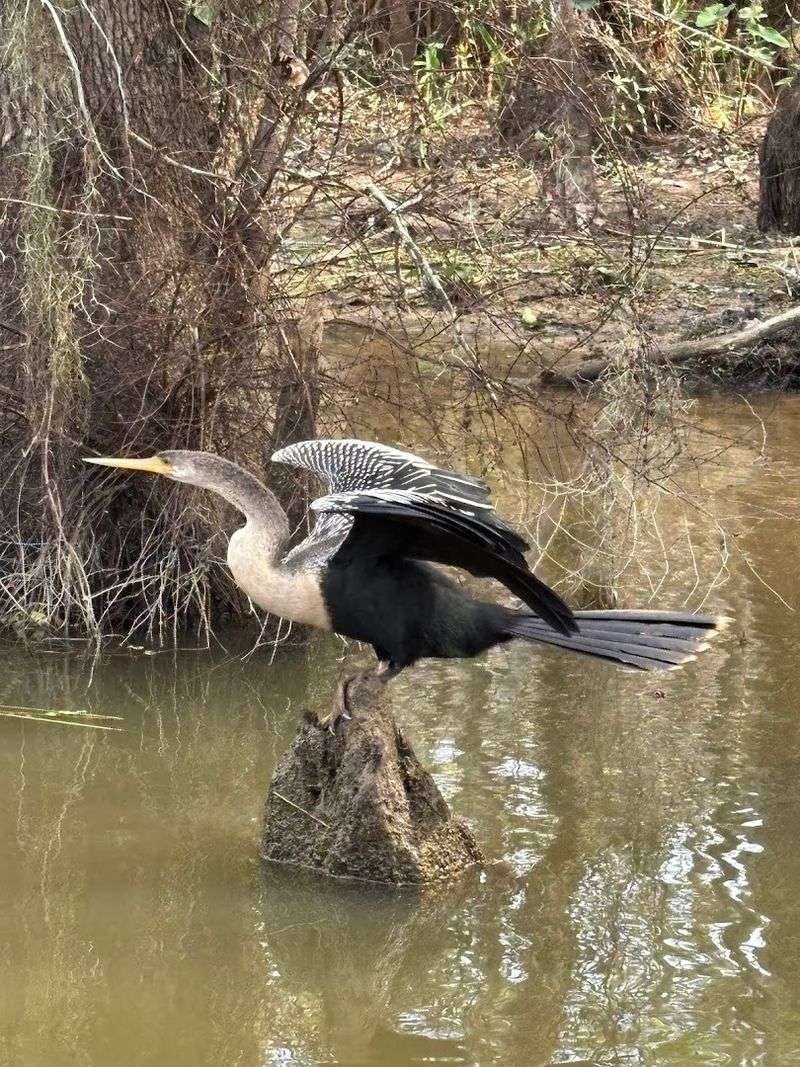
I found that quiet patience yields better photos than aggressive approaches; the guides emphasize distance and natural behavior over dramatic angles. A telephoto lens is invaluable, but composition that includes trees, water reflections, and the animal’s context tells a fuller story than a tight headshot.
Flash is discouraged and sudden movements are avoided to keep animals calm. Think like a journalist capturing a habitat rather than a hunter taking a trophy; the resulting images are more honest and memorable.
What To Wear And Pack
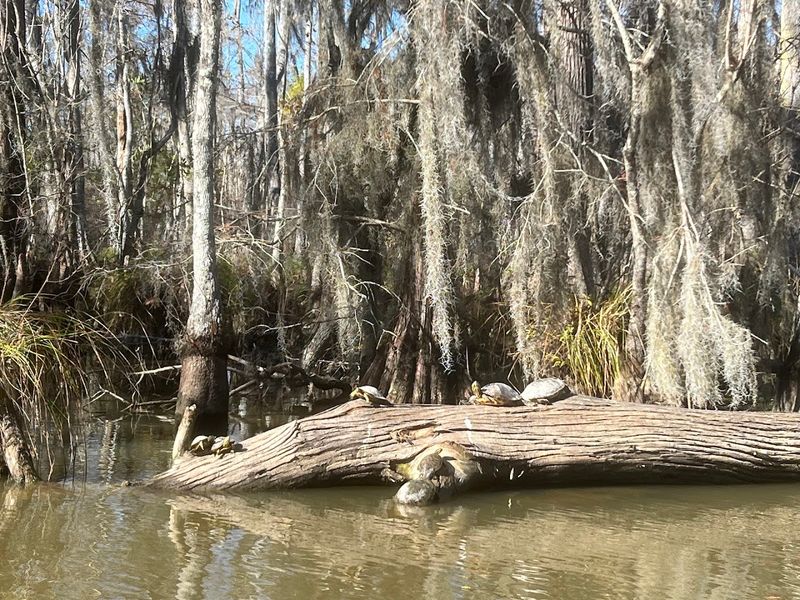
Dress for sun, insects, and unexpected splashes: long sleeves with breathable fabric, a wide-brim hat, and sturdy shoes that can handle wet docks are sensible choices. Bring sunscreen, a small towel, bottled water, and a camera with a strap; pockets in a light daypack keep essentials handy without cluttering the boat.
Repellent is recommended for evening trips, though daytime tours are usually milder. A compact binocular helps with distant birds and treetop nests, improving the overall observation experience.
Accessibility And Practical Logistics
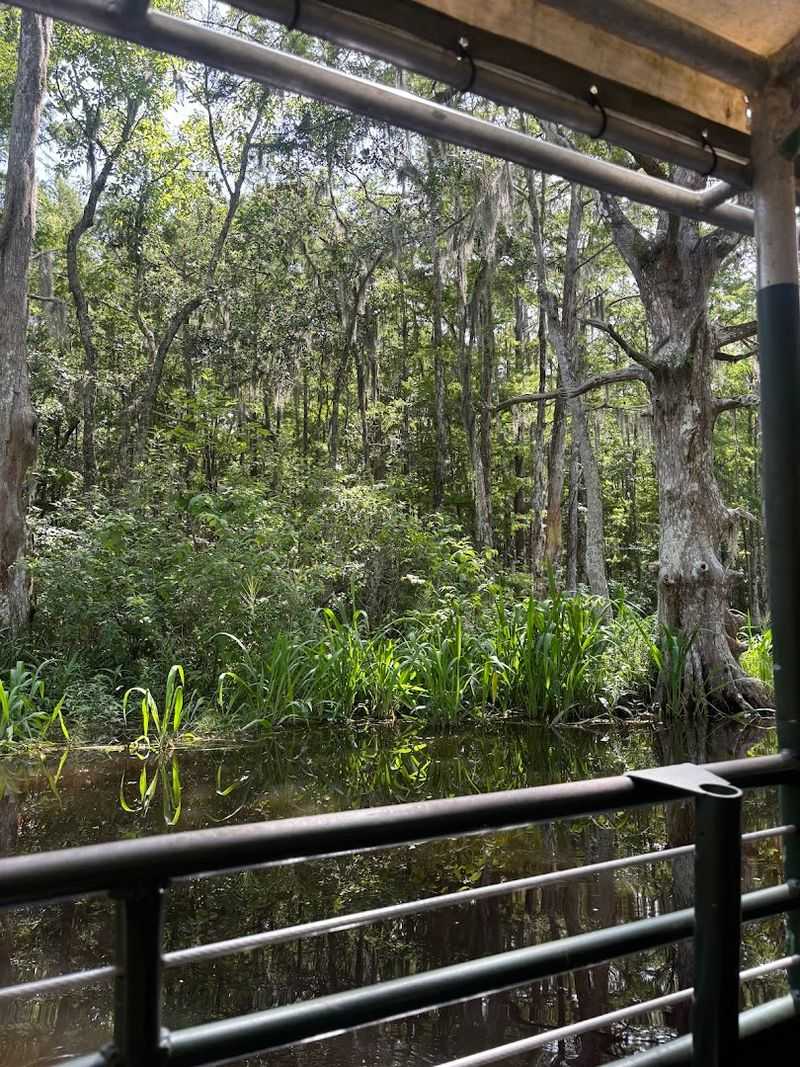
Dr. Wagner’s operates from an easily reached site off US Highway 90 with clear directions and a small, functional dock. Boat boarding involves a short step down and some balance; staff assist guests and explain safety protocols before departure.
Restrooms and a small shop are available onsite for last-minute needs.
If mobility is a concern, mention it when booking and the company will advise on options. The company offers hotel pickup from New Orleans which simplifies logistics for visitors without a car.
Conservation Ethic And Stewardship
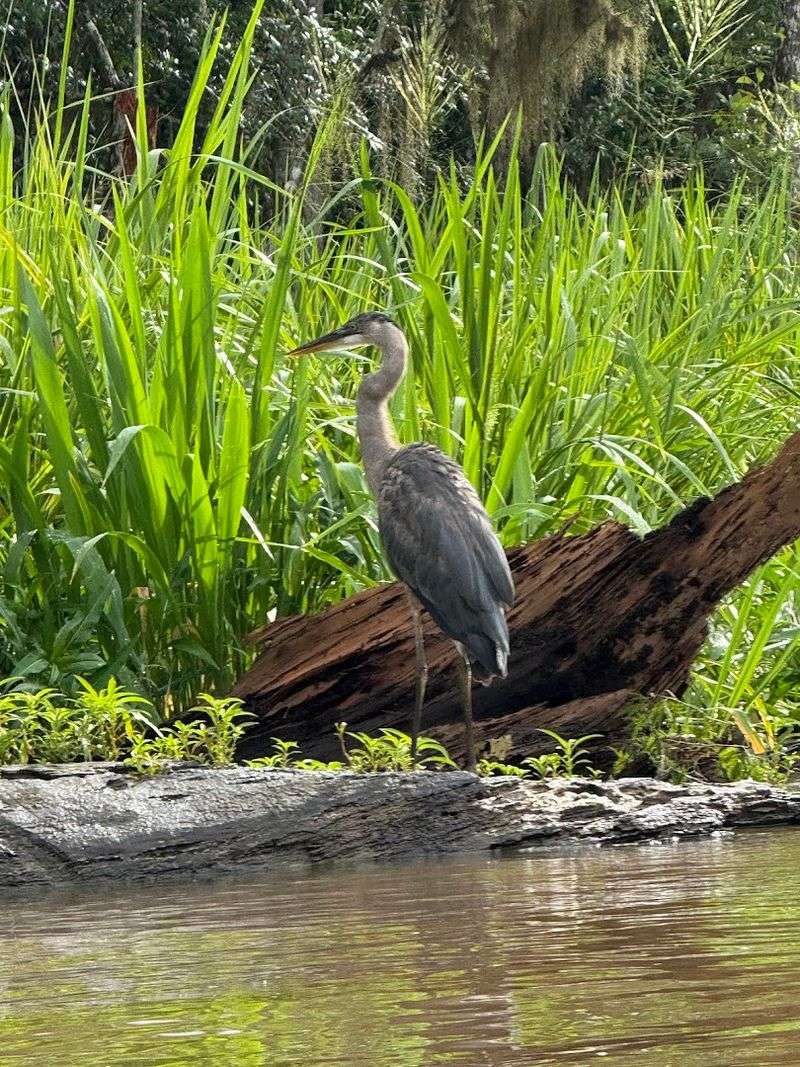
The operators present the swamp as an ecosystem to be respected and protected rather than an amusement to be exploited. Guides explain local conservation efforts and the importance of minimal impact while on the water, from avoiding litter to not disturbing nesting sites.
This ethic is woven into the narration, turning each tour into a modest lesson on stewardship. Visitors leave with practical, verifiable ways to support healthy wetlands, whether through donations to local groups or simple behavior changes on future trips.
Booking Tips And Timing
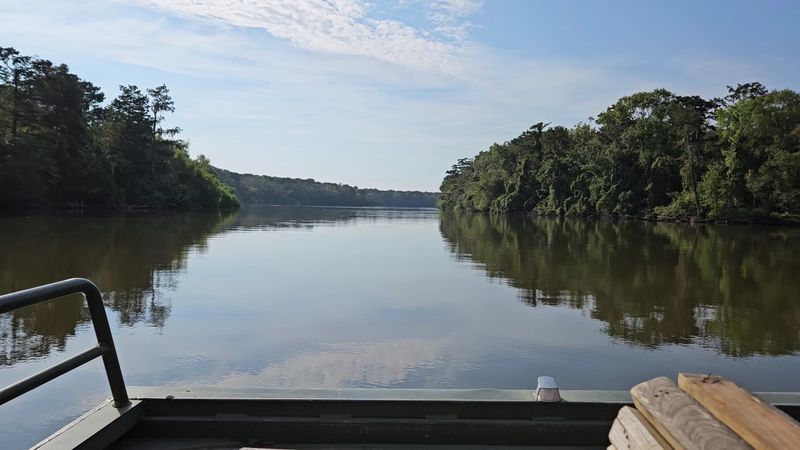
Book ahead, especially during peak travel weekends and holiday periods, because boats have limited seats and popular morning slots fill quickly. The company’s website and phone line list availability and options for hotel pickup from New Orleans, which many travelers find convenient and time-saving.
If you prefer quieter scenes, choose a weekday morning and mention photography priorities when reserving so guides can tailor the route. Confirm weather policies in advance; tours run in light rain but cancel for unsafe conditions to protect guests and wildlife.
Leaving With A Deeper Curiosity
When the trip ends you rarely feel like you finished a checklist; instead you carry away a layered curiosity about the swamp’s ecology and stories. The guides’ measured approach encourages visitors to return with better questions rather than final answers, which felt refreshingly honest.
I left wanting to read more about the region’s species and to support local conservation efforts. That gentle urge to learn more is the clearest sign of a well-run, meaningful tour.