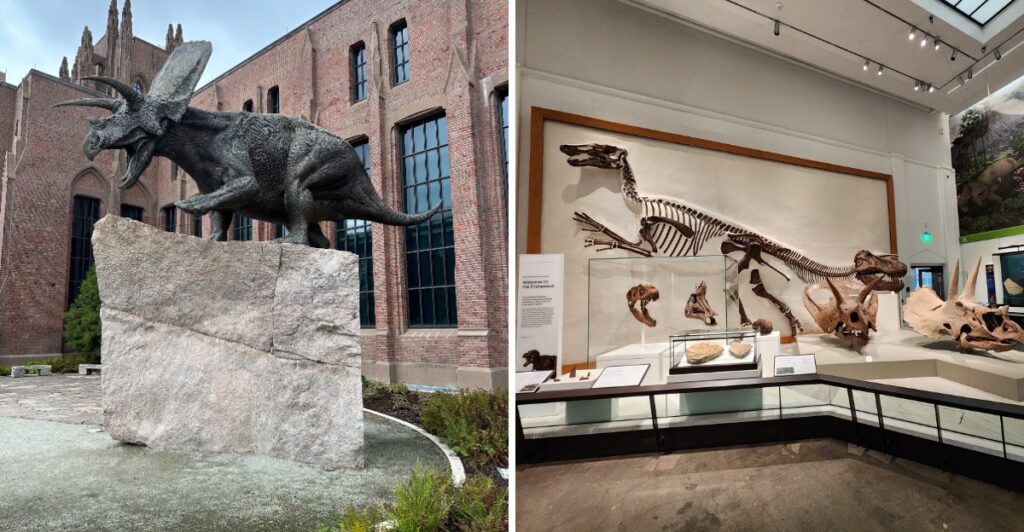
The dinosaurs got a makeover, and nobody had to explain why they were 150 million years late for their appointment.
At a Connecticut museum, a Brontosaurus and a Stegosaurus have been reassembled in livelier poses. After all those years underground, I suppose standing up straight is a reasonable request.
Their backdrop? A mural stretching roughly 110 feet, which took its artist years to complete. I hope the dinosaurs appreciate the effort.
They’re certainly not helping with the painting.
There are sparkling minerals, wildlife displays, and live animals, too.
Here’s the detail I like most: admission is completely free.
You can visit creatures worth millions of years of history without spending a dollar.
You Can Stroll Right Under A Brontosaurus Here
Long necks and dramatic poses steal the show at the Yale Peabody Museum. The Burke Hall of Dinosaurs puts you face to face, or face to shin, with some true giants.
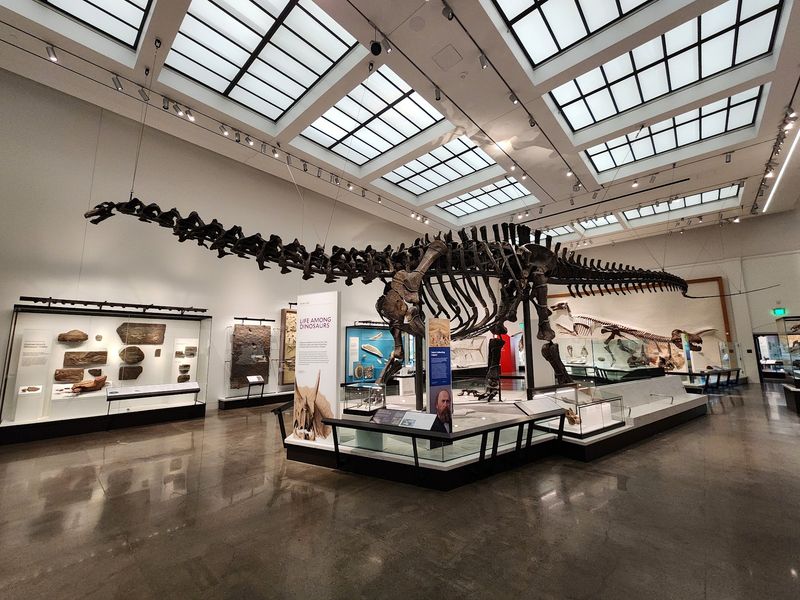
The famous Brontosaurus is the headliner here. Its skeleton stretches overhead, and standing beneath it makes your neck work almost as hard as its neck did.
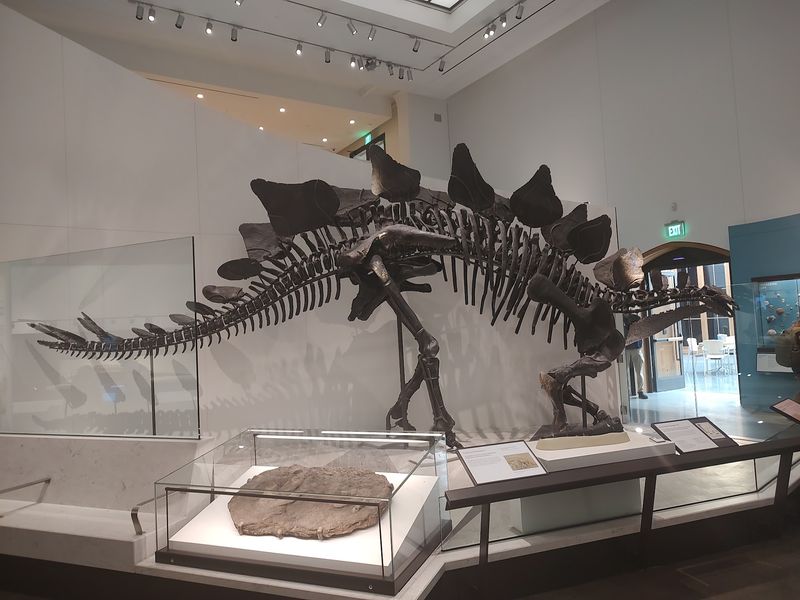
A Stegosaurus holds court nearby with its row of back plates. During the museum’s major renovation, these fossils were remounted in more dynamic, lifelike poses. They no longer look like they’re waiting in line at the bank.
That change matters more than you’d think. The new poses help you picture how these animals actually moved, fed, and carried their enormous bodies.
Kids usually get it instantly. Adults catch up after a few minutes of quietly saying wow under their breath.
Give yourself time in this hall before rushing to the next room. Walk all the way around each skeleton, since details like claws, tail spikes, and rib shapes change from every angle.
Bring a phone with a wide camera setting if you can. Fitting a Brontosaurus into one photo takes some creativity and maybe a step or two backward.
Free Admission Feels Almost Too Good To Be True
Zero dollars. That’s the price of admission at the Yale Peabody Museum, and it applies to every visitor who walks through the door.
The free entry became official when the museum reopened after its big renovation. For families, students, and road trippers, that removes the biggest reason to skip a museum day.
You’ll still check in at the front desk, though. Staff take a quick head count and can hand you a map, which helps a lot in a building this full.
Free admission also changes how you can visit. You don’t have to cram everything into one marathon trip to get your money’s worth.
Pop in for an hour to see the dinosaurs, then come back another day for minerals. Short visits work great with younger kids whose energy runs out fast.
Individual visitors do not need tickets or reservations, even on weekends, although school and other group visits require advance reservations.
A quick look before you leave home can save a little stress at the door.
The gift shop is the one place your wallet might wake up. Consider yourself warned, especially if you’re traveling with a pint-sized dinosaur fan.
That Giant Mural Deserves A Long, Slow Look
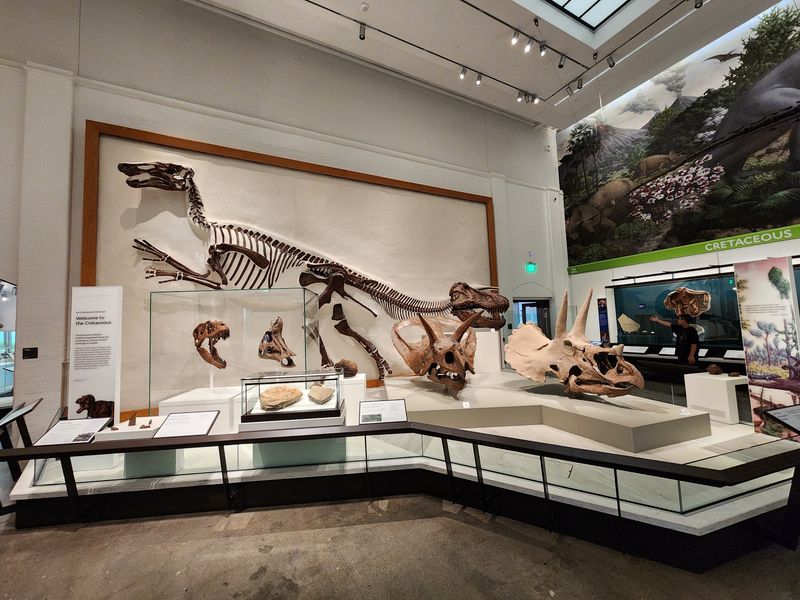
Rudolph Zallinger painted The Age of Reptiles, and it’s one of the most famous dinosaur artworks in the world. The mural runs about 110 feet across the wall of the dinosaur hall.
Zallinger worked on it in the 1940s. He used a fresco secco technique, painting onto dry plaster, and the project took him years to complete.
The mural tells a story from left to right. It walks you through hundreds of millions of years of change, with plants and animals shifting as time moves along.
Many people grew up seeing images of this painting in books. It even appeared on a United States postage stamp, which is a pretty fancy honor for a wall.
Here’s a fun way to view it with kids. Start at one end and have everyone spot a new creature or plant every few steps.
Science has learned a lot since Zallinger painted it, so some details look old-fashioned now. That’s part of the charm, since it shows how ideas about dinosaurs have grown over time.
Stand back first, then move close. Both views reward you.
Rock Lovers May Need To Be Dragged Away From The Minerals
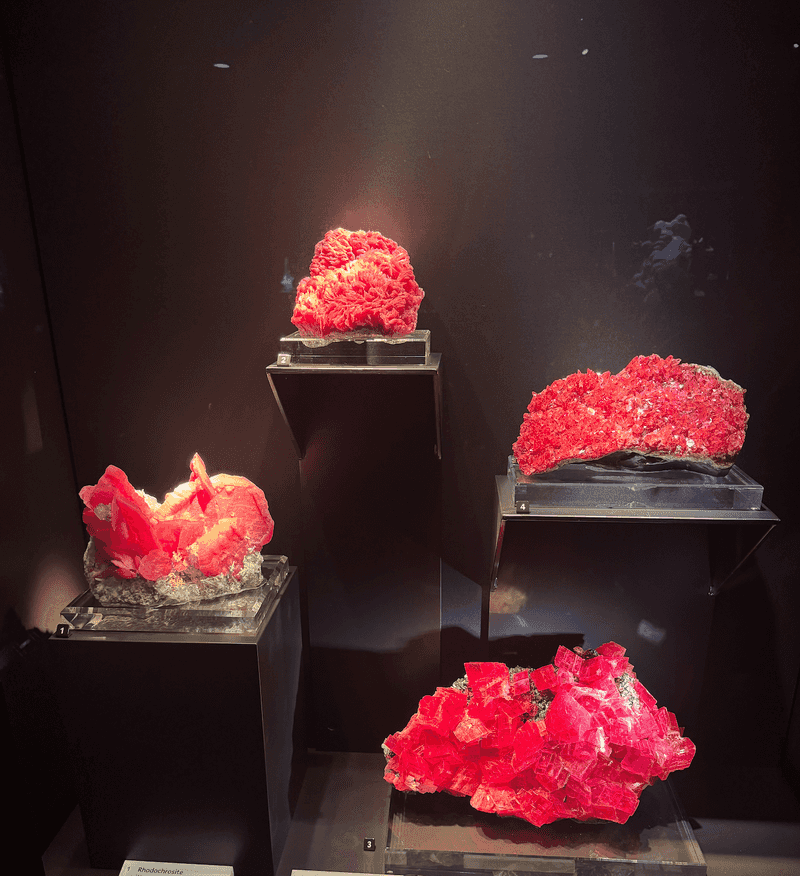
Crystals that look like tiny glowing cities fill the mineral displays here. Plenty of visitors who came for dinosaurs end up spending just as long staring at rocks.
The specimens are lit and arranged almost like art pieces. Purple amethyst, sparkling geodes, and shapes you’d swear were carved by hand all sit behind the glass.
Nature made every bit of it, though. That fact alone can turn a casual glance into a twenty-minute stop.
I’ll admit I’m the type who picks up shiny pebbles on hikes. This hall would absolutely ruin my schedule.
Kids who collect rocks will feel right at home. Encourage them to pick a favorite color, then hunt for every specimen that matches it.
The labels explain how minerals form and where they come from. It’s a sneaky way to learn chemistry and geology without anyone calling it homework.
Look closely at the textures, too. Some crystals grow in neat cubes, while others form spiky clusters or smooth bubbly shapes.
Budget extra time here if anyone in your group loves gems. That’s not a suggestion so much as a friendly forecast.
Some Of The Residents Are Very Much Alive
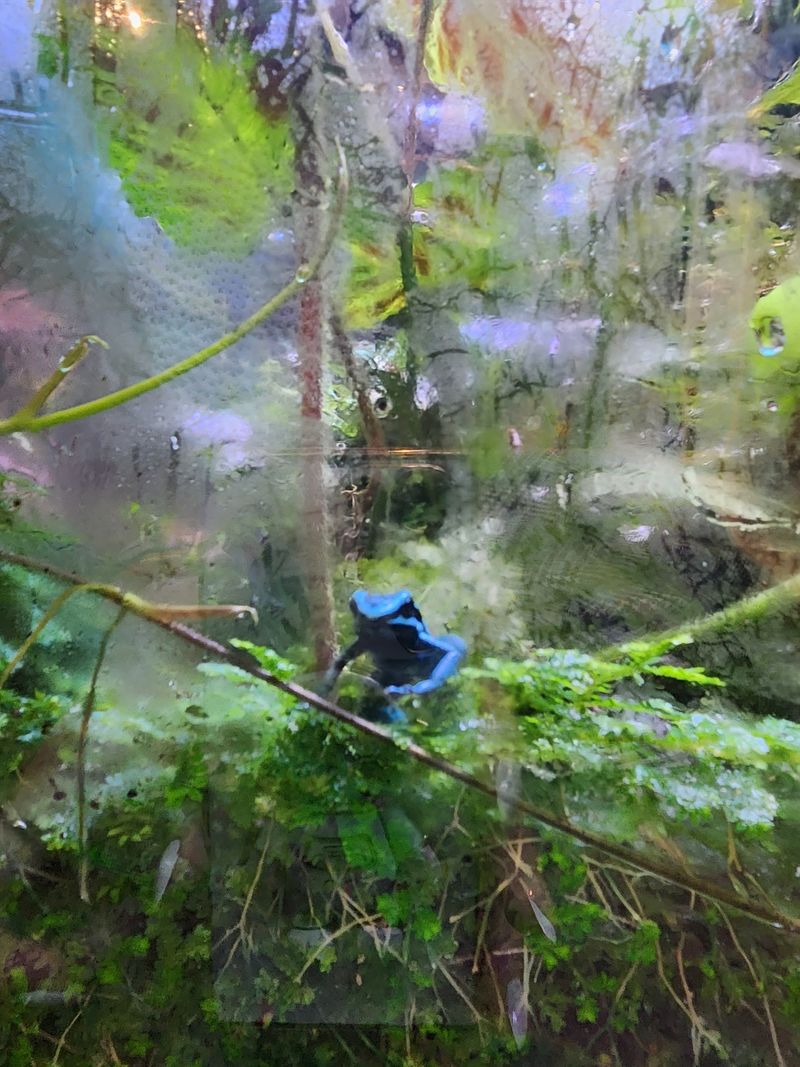
Fossils aren’t the only stars at the Yale Peabody Museum. Live animals live here too, and they bring a totally different energy to the visit.
Colorful poison dart frogs are a favorite. Their bright skin practically glows inside their leafy enclosures, and spotting them takes a sharp eye.
The museum also has a Living Lab area. It gives visitors a closer look at living creatures and the science behind studying them.
That contrast is part of the fun. One minute you’re staring at bones that are millions of years old, and the next you’re watching a tiny frog sit perfectly still.
Younger kids especially love this switch. Live animals keep attention sharp in a way that even the coolest skeleton sometimes can’t.
A tip for frog spotting is to slow down. Scan the leaves, branches, and corners, since these little guys blend in better than you’d expect for something so colorful.
Be gentle with the glass and keep voices calm. The animals are living their lives, and a little patience often earns you a better view.
Consider this your reminder that natural history keeps happening today.
The Dioramas Feel Like Windows Into The Wild
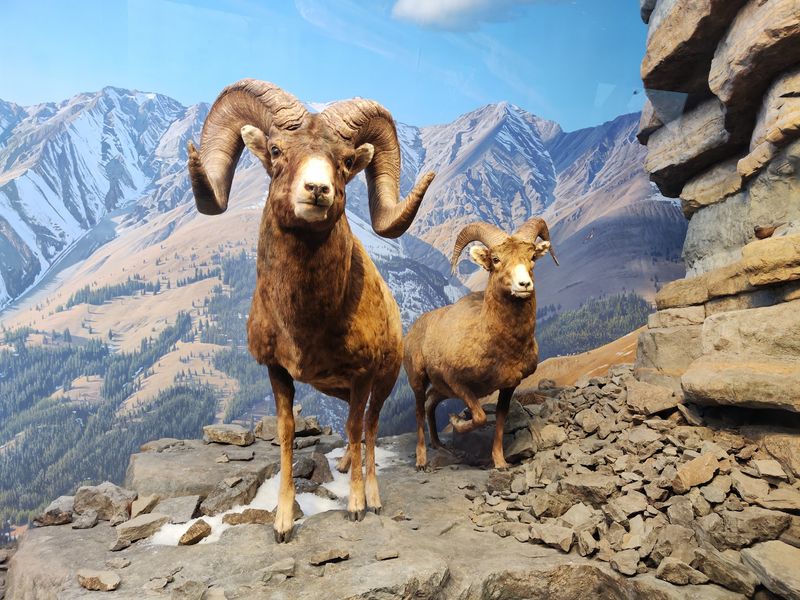
Wolves, deer, and other North American animals freeze mid-moment in the museum’s habitat dioramas. Each scene pairs real-looking animals with painted backgrounds that stretch the view far into the distance.
Dioramas are an old-school museum art form. Done well, they make you forget there’s glass in front of you, and these come impressively close.
The landscapes focus on natural environments, including plenty from this part of the country. You can see forests, wetlands, and open land that might look familiar after a drive through New England.
Take a moment to notice the blend of real objects and paint. Find the spot where the foreground ends and the background begins, because it’s trickier than it sounds.
These scenes also make great conversation starters. Ask kids what the animals might be doing, where they’re headed, or what they’d eat next.
Patience pays off with dioramas. The longer you look, the more small details show up, like tracks in snow or birds hiding in branches.
Quiet and slow is the best approach here. It’s a calm break between the bigger, flashier galleries.
Ancient Cultures Share The Spotlight With The Bones
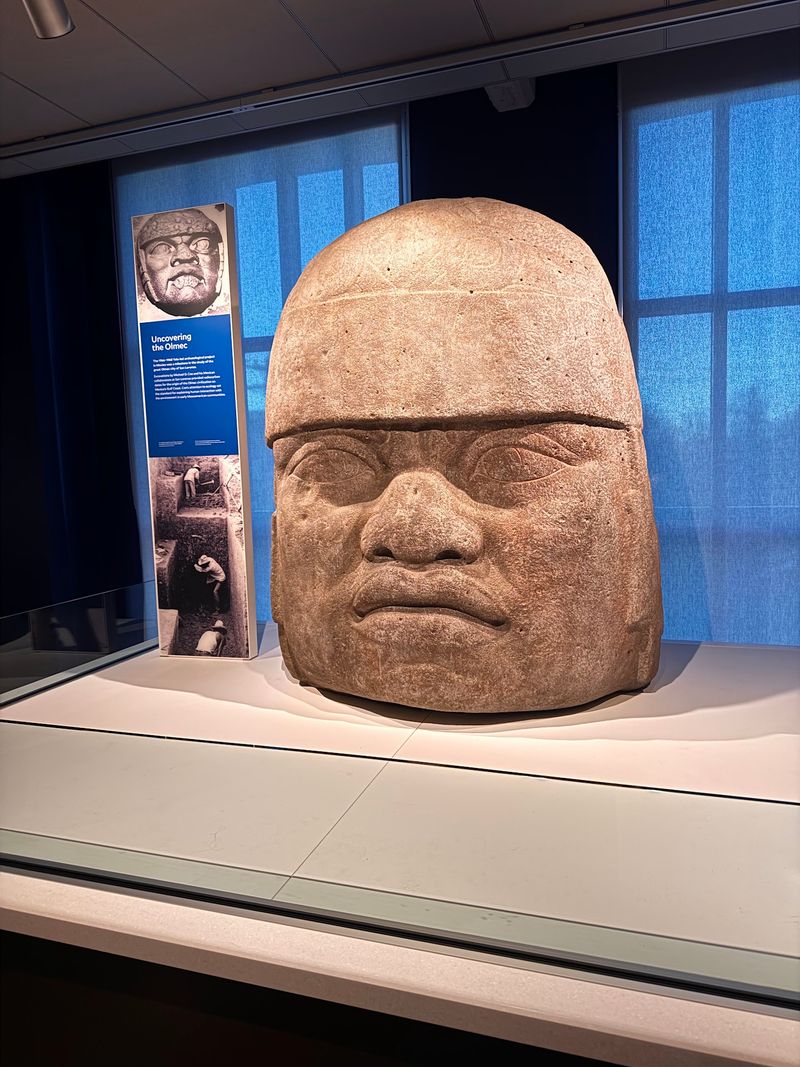
Mummies and dinosaurs under one roof? That’s a pretty strong combo for any curious kid or grown-up.
The museum’s collections go beyond natural history into human history and culture. Egyptian artifacts are part of the mix, along with displays exploring Mesoamerican history and culture.
These galleries add a human side to the visit. After all those fossils, it’s interesting to see how people across time lived, created, and understood their world.
The Yale Peabody Museum also highlights human origins and evolution. Exhibits trace how life changed over enormous stretches of time, connecting the ancient past to us.
Here’s a helpful way to plan. Pick one culture or time period that interests your group, then focus your energy there instead of rushing through every case.
Read a few labels out loud together. It turns the visit into a shared story instead of everyone drifting off in separate directions.
Older kids working on history projects can find great ideas here. A quick photo of a label, with permission rules in mind, can help jog their memory later.
History rarely feels this close.
A Little Planning Makes Your Visit Run Smoother
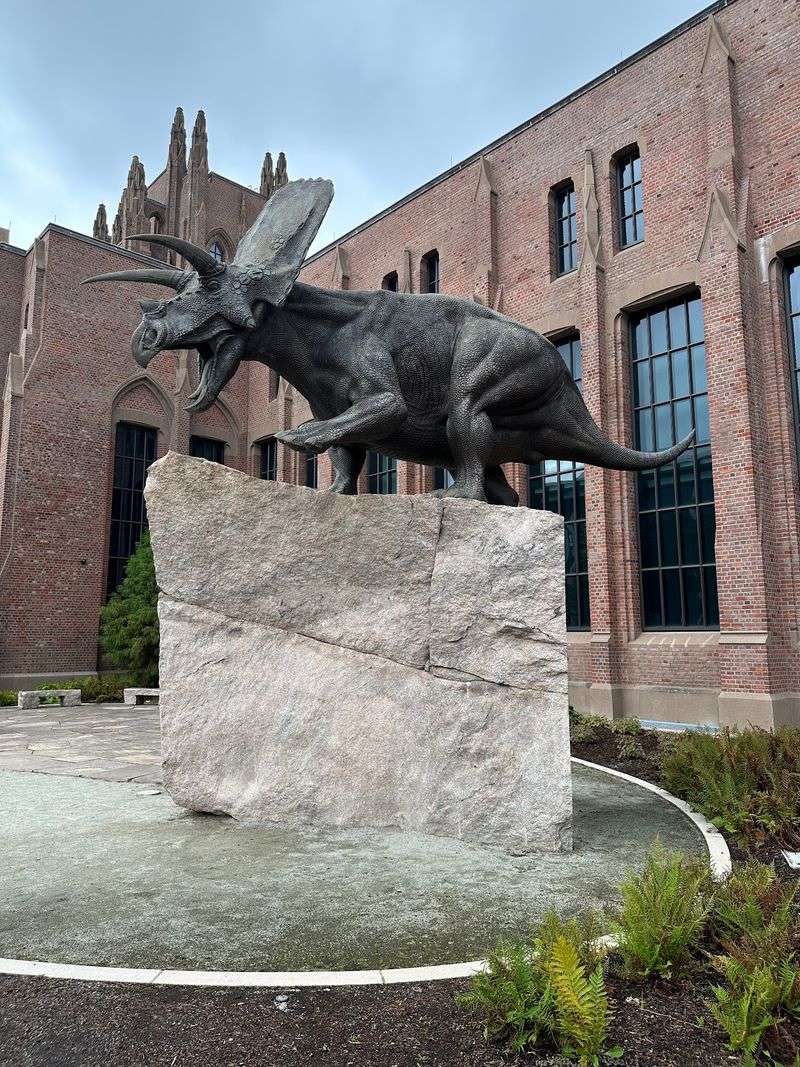
Mondays are off the table. The museum opens Tuesday through Saturday from 10 a.m. to 5 p.m., and Sunday from noon to 5 p.m.
You’ll find the Yale Peabody Museum at 170 Whitney Ave, New Haven, CT 06511. It sits right by Yale University, so a campus stroll pairs nicely with your visit.
Parking takes a bit of strategy. The museum has a visitor lot, but it can fill up, and nearby garages are an option within a short walk.
Pay attention to signs if you park nearby. Some lots are reserved for staff, and a parking ticket is the least fun souvenir in Connecticut.
Plan on a couple of hours for a solid visit. Dinosaur fans and rock lovers may want even more time.
Restrooms sit on one side of the building, so note where they are when you arrive. Little ones will thank you later.
Grab a map at check-in and choose a few must-see galleries first. Then wander freely, because a free museum gives you the luxury of coming back again soon.