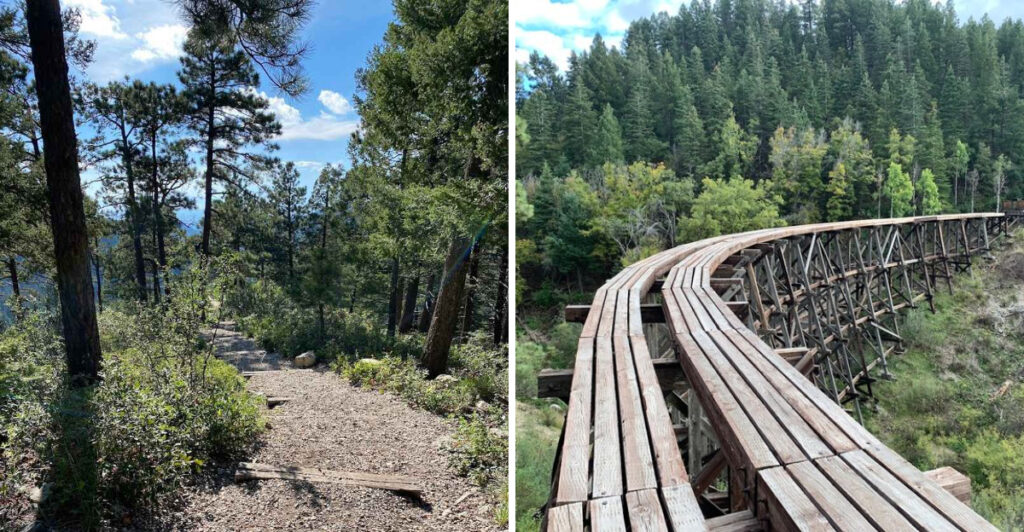
You can still find places where the past has not been polished flat. High in the Sacramento Mountains of southern New Mexico, this curved wooden trestle has stood since 1899, back when trains climbed the grades with timber loads and curious riders leaning toward the windows.
Now it waits at the end of a trail that feels easy, but never boring.
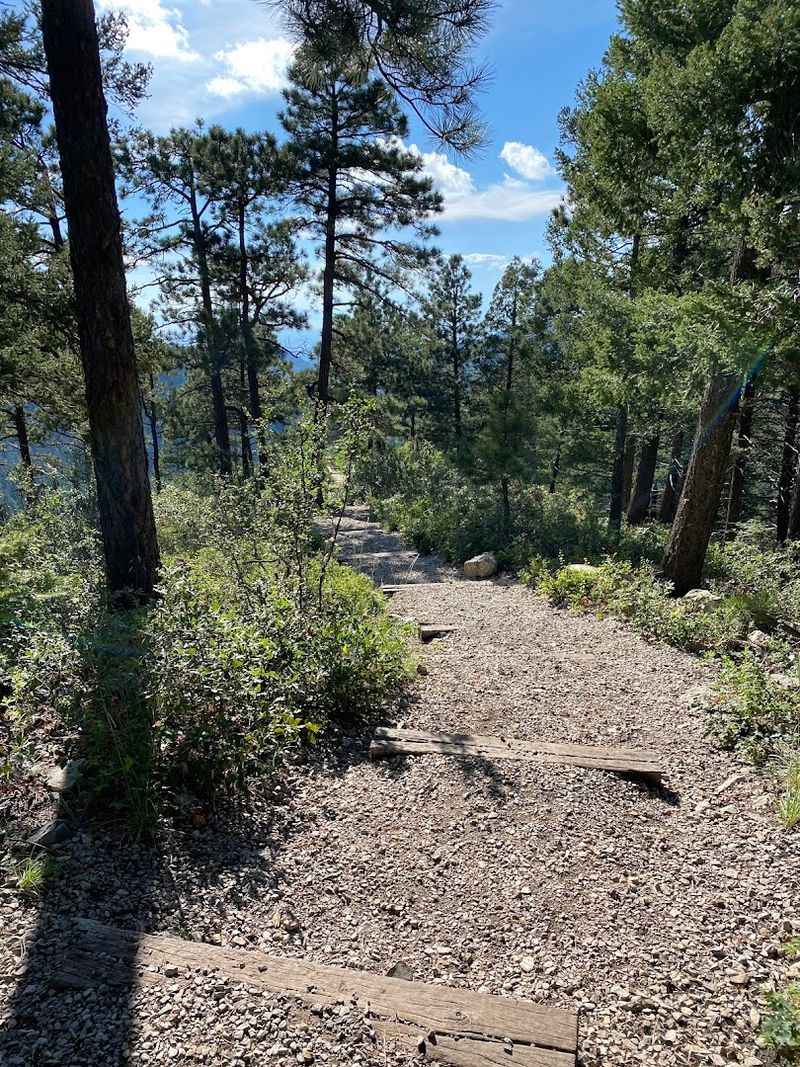
You walk under the pines, follow the mountain path, and then the old structure comes into view without making a big entrance. It is quiet now, but you can almost picture the rumble of wheels crossing above the canyon.
That is the hook. The place does not shout.
It just makes you look longer.
On clear days, White Sands shines far beyond the trees.
By the time you reach the view, the whole hike feels worth it before you even turn back.
A Forest Path With Vintage Charm
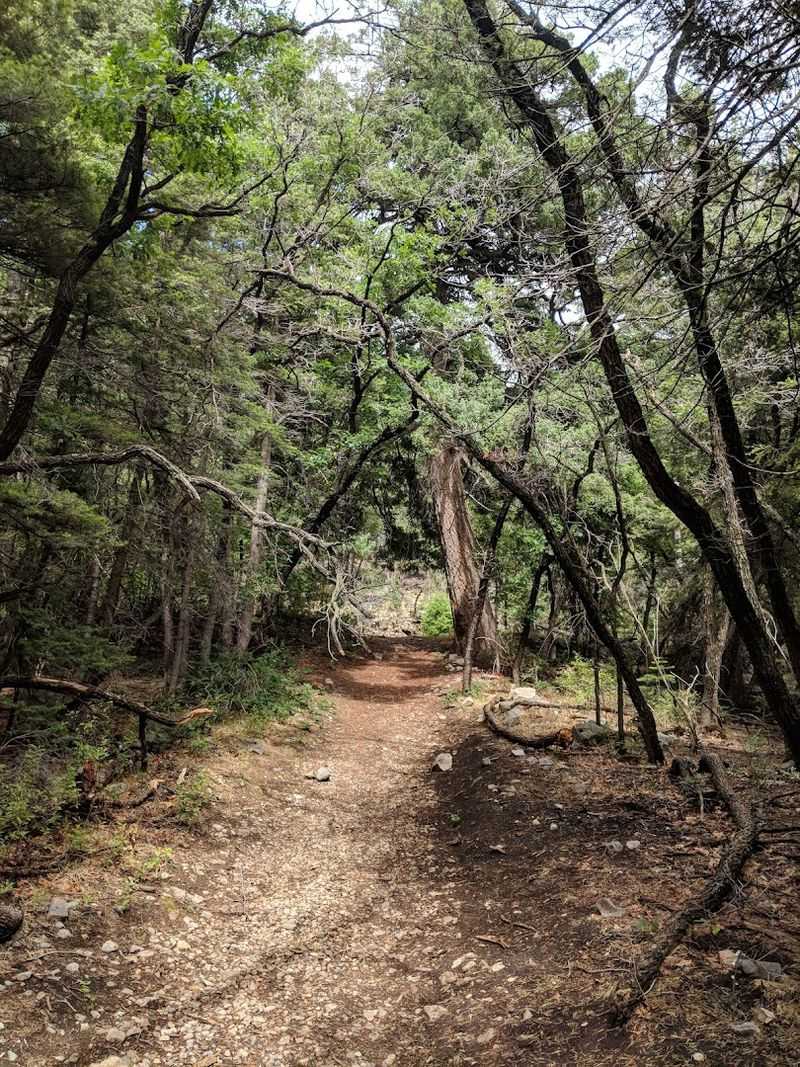
A trail like this can feel as if it belongs to another era. The pine trees stand tall, and the mountain air feels cool, clean, and quiet.
The Cloud-Climbing Trestle Trail, officially designated T5001, runs through the Lincoln National Forest near Cloudcroft and delivers that kind of old-world atmosphere from the very first step.
The trailhead sits at the Trestle Recreation Area, which comes with parking and restrooms, making it one of the more comfortable starting points for a hike in this part of New Mexico.
I found the path to be well-maintained and clearly marked, with a gentle start that made it approachable for hikers of varying fitness levels.
The route is about 2.4 to 2.6 miles round trip, moving through a dense canopy of ponderosa pine, and the forest floor is soft and quiet underfoot.
Informational signs along the route add an educational layer to the walk, offering context about the railway history woven into this landscape.
By the time you reach the trestle, the forest path has already done its job of setting the mood perfectly, leading you to the Mexican Canyon Railroad Trestle in Cloudcroft, NM 88317.
Towering Timbers Above The Canyon
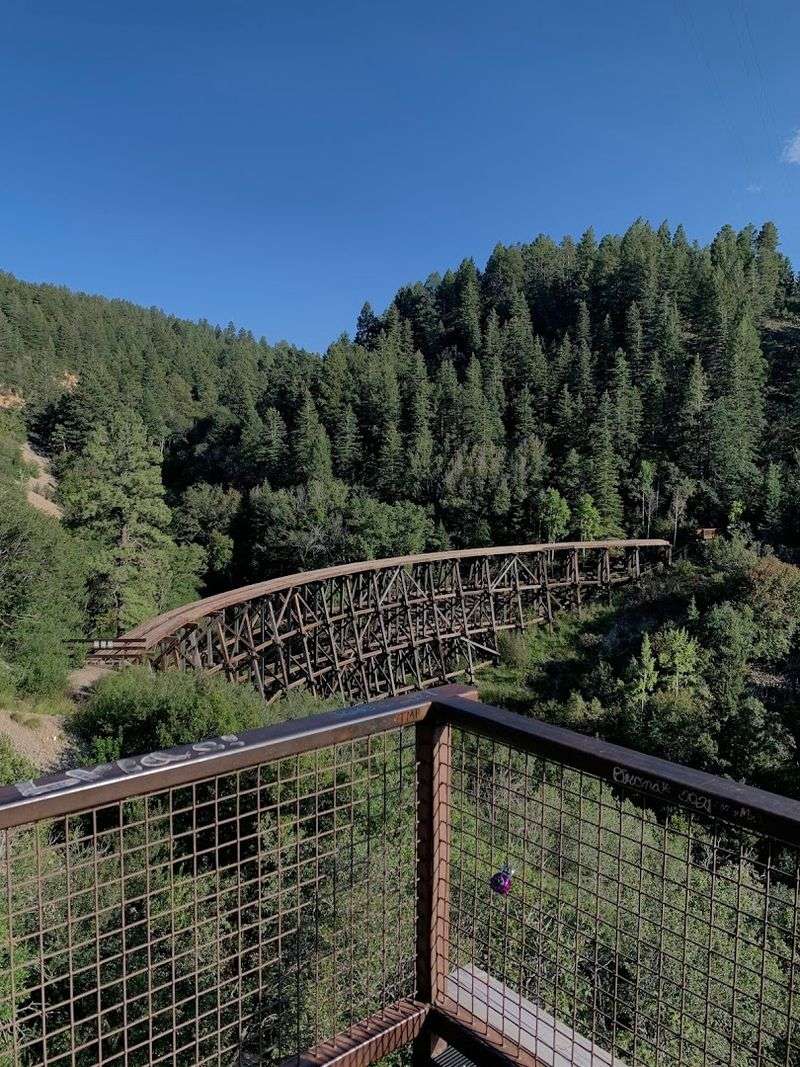
The Mexican Canyon Railroad Trestle rises 52 feet above the canyon floor and stretches 323 feet in length. It is not the kind of structure that politely blends into the background.
The sheer scale of it hits you the moment you clear the tree line and get your first unobstructed view, with those massive timber beams framing the open sky above the canyon in a way that feels genuinely dramatic.
The curved design of the trestle adds an architectural elegance that surprises most visitors who expect something purely functional.
I stood at the viewing area for longer than I planned, just tracing the arc of the structure with my eyes and trying to imagine the engineering effort required to build something like this in 1899.
The wooden beams show their age in the best possible way, with a weathered texture that communicates decades of mountain seasons.
Visitors should note that walking or climbing on the trestle itself is not allowed, which helps ensure its long-term preservation for future generations.
The view from below and across the canyon is more than enough to leave a lasting impression on anyone who makes the trip.
A Quiet Trail Through Mountain Air
This high-country hike brings a particular kind of quiet that is hard to find anywhere else. The trail to the Mexican Canyon Trestle delivers that mountain stillness in generous portions.
The elevation keeps temperatures noticeably cooler than the desert floor below, which makes this a refreshing destination even during the warmer months of summer when southern New Mexico can feel relentless.
I remember pausing midway through the trail just to listen, and the only sounds were wind moving through the pines and a distant bird calling somewhere deeper in the forest.
The route is short, but the mountain elevation and occasional steeper sections make it better described as easy to moderately challenging rather than effortless.
Families with children, older adults, and first-time hikers can still enjoy this trail with good shoes, water, and an unhurried pace.
The path passes through sections where the tree canopy opens slightly, offering teasing glimpses of the canyon landscape before the full reveal at the trestle viewpoint.
That gradual build toward the main attraction makes the walk feel purposeful rather than just a means to an end.
Where Pine Forest Meets Railroad History
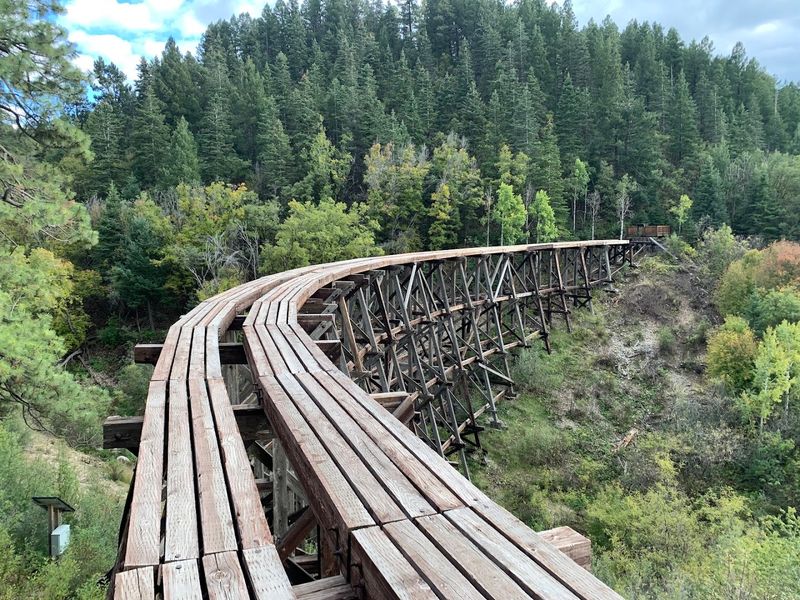
The story behind this trestle begins in 1899, when the Alamogordo and Sacramento Mountain Railway, commonly known as the A&SM, pushed its tracks up through the Sacramento Mountains to reach the village of Cloudcroft.
The railway earned the affectionate nickname the “Cloud Climbing Railroad” because of the dramatic vertical ascent it made through the mountain terrain, gaining thousands of feet in elevation over a relatively short distance.
Originally built to haul timber out of the mountains, the line eventually shifted its focus toward passenger service, carrying tourists up to the cool mountain air of Cloudcroft as a respite from the desert heat below.
The trestle trail passes historical markers that tell this story in accessible, engaging language, making the hike feel as much like a history lesson as an outdoor adventure.
I appreciated how the interpretive signs connected the landscape to real human stories, giving context to the wooden structure that might otherwise just look like an old bridge.
The A&SM Railway once included dozens of timber trestles along its mountainous route, and the Mexican Canyon Trestle is among the few surviving examples today.
With that history in mind, every step on the trail carries a quiet sense of historical weight.
Canyon Views Framed By Old Woodwork
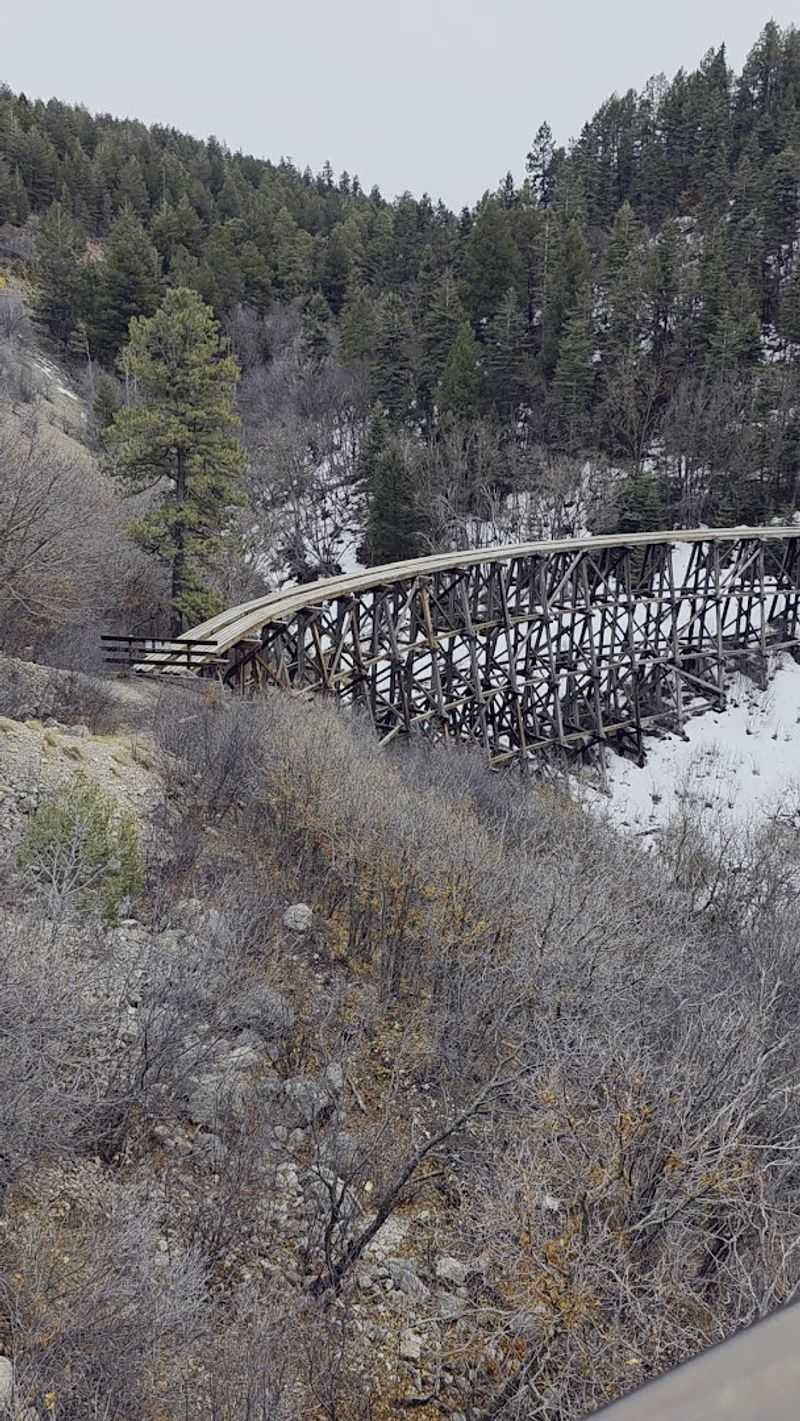
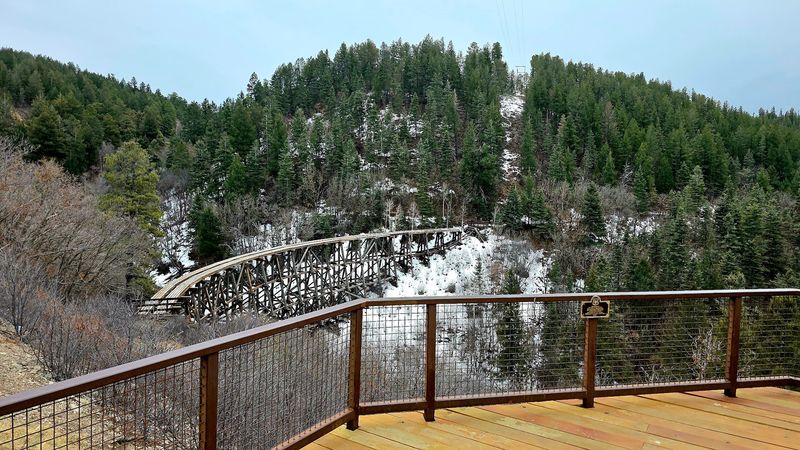
Few mountain views in New Mexico match the moment when the canyon opens up and the trestle comes into full view, its curved wooden frame stretching across the gorge with the distant Tularosa Basin visible beyond it.
On a clear day, the white shimmer of White Sands may be visible far below in the desert, creating a visual contrast between the cool mountain forest and the stark lowland dunes that feels almost surreal.
The viewing area is thoughtfully positioned to give visitors a full perspective on the trestle’s length and height, and I found myself reaching for my camera every few minutes as the light shifted across the canyon walls.
Morning visits tend to offer the best light for photography, with softer shadows and a golden quality that flatters the warm tones of the aged timber.
The canyon itself is rugged and textured, with exposed rock faces and dense vegetation competing for visual attention alongside the trestle’s impressive silhouette.
Even without the historic structure, the canyon view would make the drive to Cloudcroft feel worthwhile.
Standing there with the wind in the pines and the canyon dropping away below, it is genuinely hard to argue with that assessment.
A Hidden Landmark Among The Trees
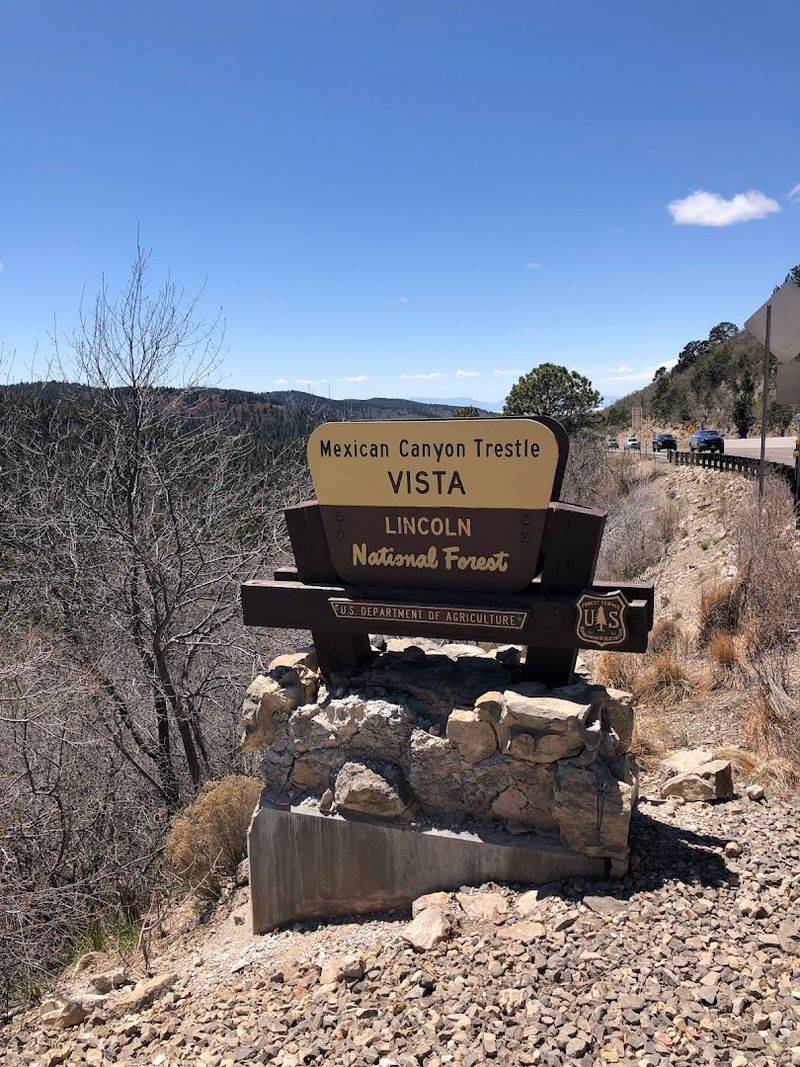
Listed on the National Register of Historic Places since 1979, the Mexican Canyon Trestle holds an official status that reflects its genuine importance to the region’s architectural and cultural heritage.
Despite that recognition, the trestle does not announce itself with billboards or heavy tourist infrastructure, which is part of what makes finding it feel like a personal discovery rather than a guided attraction.
The forest closes in tightly around the structure, and the approach through the trees builds a natural sense of anticipation that no amount of roadside signage could manufacture.
I had read about the trestle before my visit, but nothing quite prepares you for the moment the trees thin out and the full scale of the structure appears in front of you.
The trestle can be seen from the US 82 overlook, while the Trestle Recreation Area trail offers a more immersive approach through the forest.
Both access points are worth using if time allows, since they offer genuinely different perspectives on the structure and its relationship to the canyon.
The trail approach through Lincoln National Forest is my personal recommendation for anyone who wants the full, unhurried experience this landmark deserves.
Rustic Architecture In The High Country
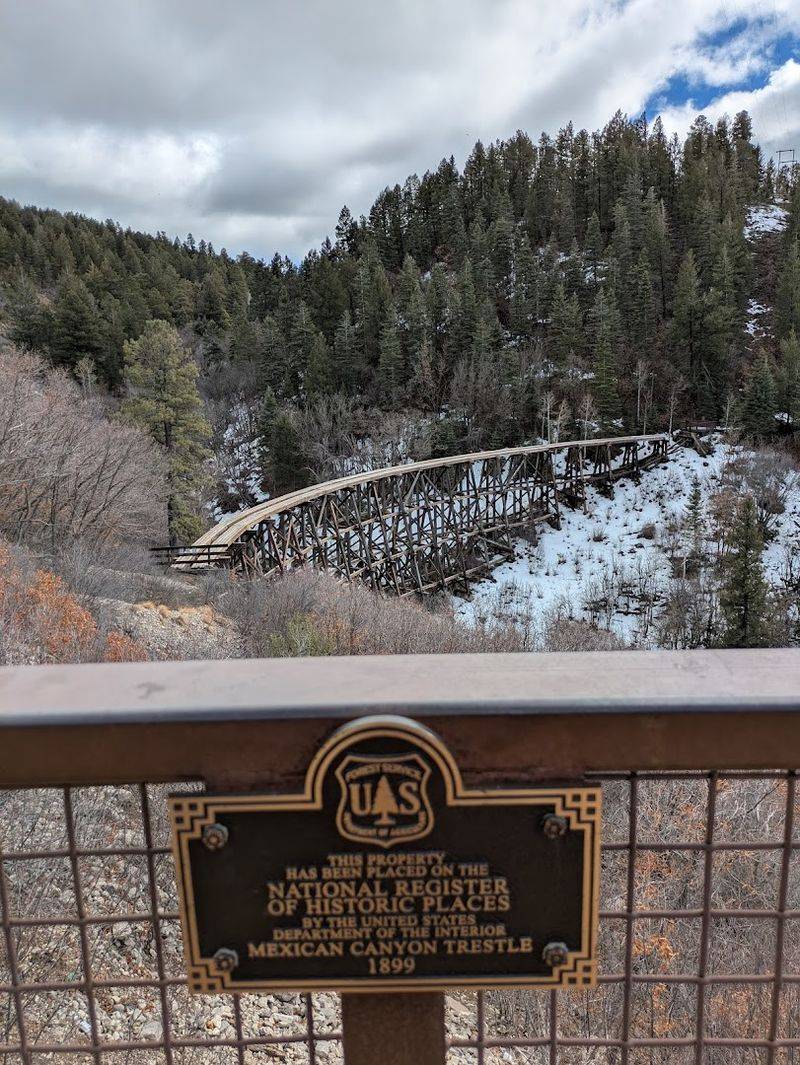
A curved wooden railroad trestle at high elevation was no small engineering feat in 1899. The craftsmanship visible in the Mexican Canyon Trestle still commands respect more than 125 years after its construction.
The curved alignment of the trestle was a deliberate design choice that helped the railway navigate the steep and winding terrain of the Sacramento Mountains without requiring impractical grades or sharp turns.
From the canyon rim, the arc of the trestle has an almost graceful quality, which feels unexpected for something built primarily to move heavy loads of timber down a mountain.
The timber framing follows construction techniques common to the late 19th century, using heavy wooden bents and cross-bracing that have proven remarkably durable under decades of mountain weather.
I noticed how the scale of the individual beams becomes more apparent the closer you get to the structure, with each timber representing a significant piece of work in an era before modern machinery.
The trestle’s survival as one of the few remaining examples along the old route speaks to both the quality of its construction and the care taken in its preservation.
Architecture this honest about its purpose and its age has a kind of rugged dignity that newer structures rarely achieve.
Scenic Shadows Beneath The Trestle
The view from below the trestle leaves a strong impression. From that angle, the lattice of wooden beams rises against the sky in a way that stays with you long after the drive home.
The shadows cast by the trestle’s framework shift throughout the day as the sun moves across the canyon, creating a constantly changing pattern of light and dark on the canyon floor that photographers find endlessly interesting.
I visited in the late afternoon, when the low angle of the sun sent long shadows stretching across the rocky terrain below the structure, adding a dramatic quality to an already striking scene.
The trail also passes a spot historically noted as Devil’s Elbow, one of the more colorfully named landmarks along the old railway route, which adds another layer of character to the overall experience.
From this lower vantage point, the 52-foot height of the trestle becomes much more tangible, and the engineering achievement of its original builders feels genuinely impressive rather than just historically noted.
The canyon’s natural acoustics carry the sound of wind and birdsong in ways that give the space an almost cathedral-like quality.
You can find the Mexican Canyon Railroad Trestle, a place where history, nature, and craftsmanship have been quietly sharing the same canyon for well over a century.