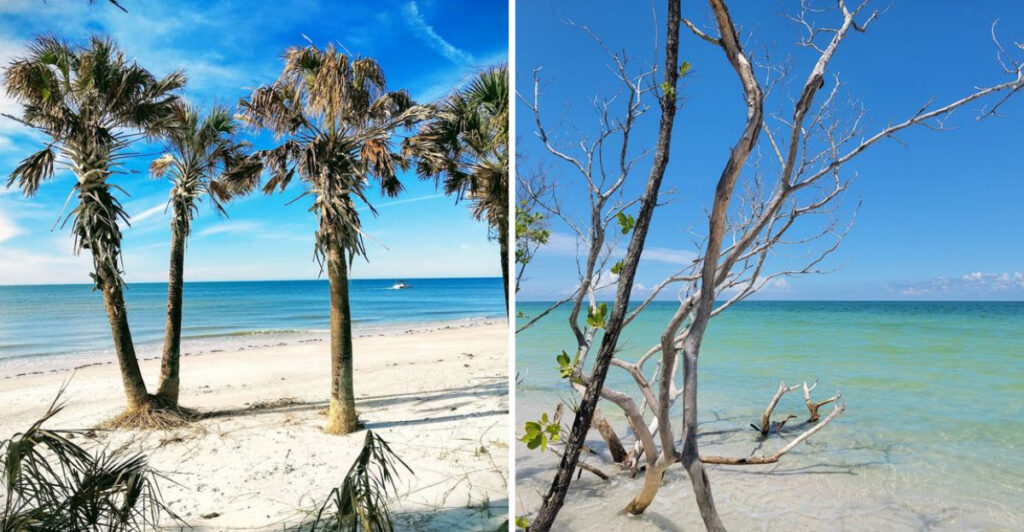
Florida has beaches that wait for you. This one expects much better behavior.
First comes the ferry, then the quiet realization that your car cannot rescue forgotten sunscreen. Once the boat pulls away, the mainland starts looking like somebody else’s problem.
That is when the island makes its move.
The Gulf flashes blue-green water, sand stretches farther than expected, and the clock becomes unpopular.
Four hours sounded generous at the dock. Once your towel touches the sand, it feels almost immediately like a clerical error.
You wander farther and begin treating the return schedule as a personal insult.
Florida rarely makes relaxation this organized. Yet the boat-only arrival gives the day a sharper edge and the beach more personality.
The island will tempt you to stay, but the ferry will not negotiate.
Blue-Green Water Gives The Gulf A Caribbean Accent
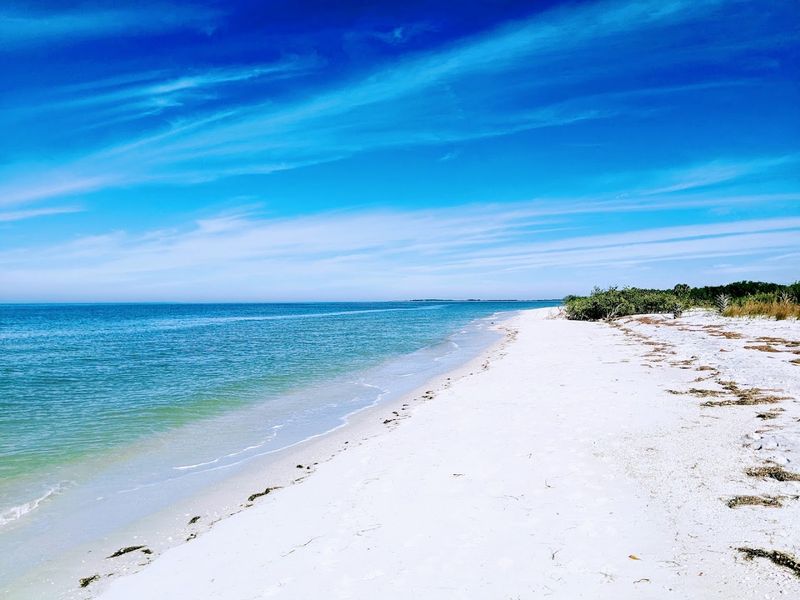
The Gulf apparently misplaced a piece of turquoise, and this island decided not to return it.
Boardwalks lead toward roughly three miles of pale shoreline edged by blue-green water. That pairing creates the tropical first impression behind all those Caribbean comparisons.
The exact color changes with sunlight, tides, depth, weather, and the sandy bottom. Calm conditions may bring bright aqua shallows, while cloudy skies or rougher water can soften the entire performance.
Swimming is allowed only in designated areas. Posted warning flags matter more than any postcard because they reflect current surf and marine conditions.
A green flag still requires ordinary caution. Yellow calls for extra care, red signals hazardous conditions, and double red closes the water to swimmers.
The dunes deserve attention too. Sea oats and other coastal plants help hold the sand in place, while elevated walkways reduce damage from foot traffic.
That boardwalk is not merely protecting your feet from hot sand. It is helping the beach stay a beach.
You may arrive comparing colors with the Bahamas, but Florida quickly reminds you that beauty still comes with rules.
Your Car Gets Rejected Before The Adventure Begins
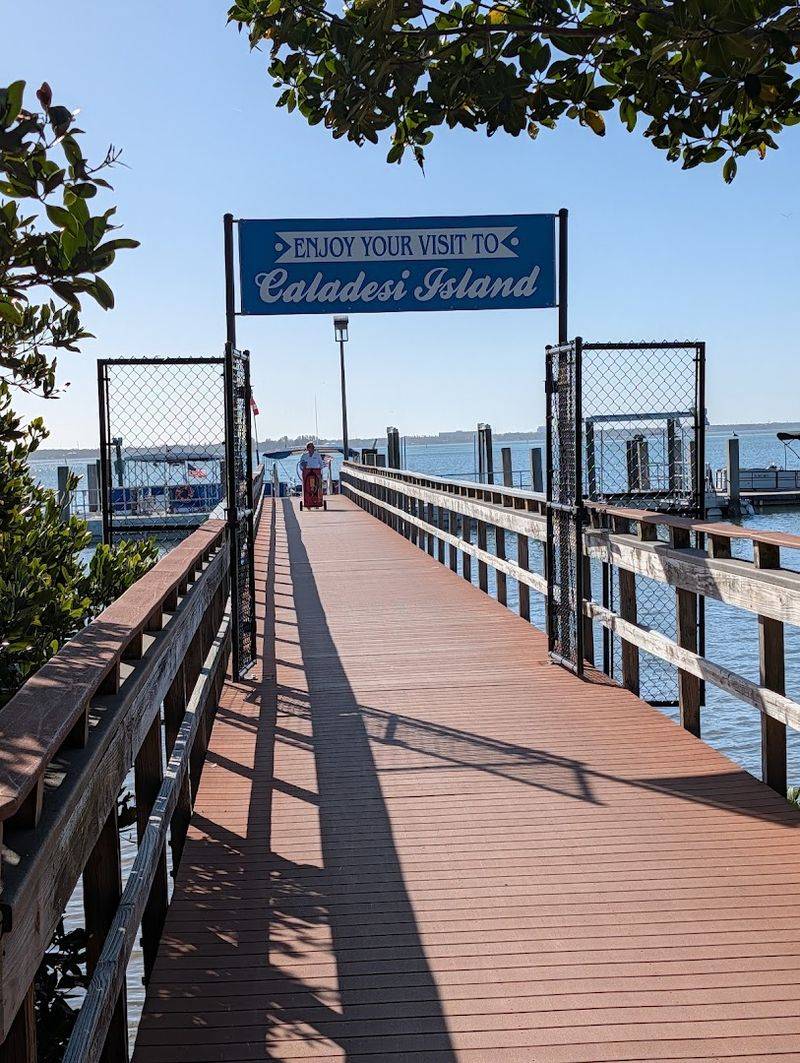
Here is the admission test: your car does not get invited.
The island is accessible only by boat. The public ferry leaves from Honeymoon Island State Park at 1 Causeway Boulevard in Dunedin and usually takes about 20 minutes.
Service depends on weather, and ticket times determine how long you may remain on the island. Many visitors receive a stay of up to four hours, which sounds generous until the beach starts spending it.
Tickets are purchased at the ferry office rather than online. Chairs, umbrellas, coolers, strollers, walkers, and wheelchairs may ride along, but beach carts and wagons are not accepted.
Pets cannot travel on the ferry and are prohibited on the beach.
Private boats, kayaks, and paddleboards provide alternate routes. Boaters must follow marked channels and current marina restrictions, while paddlers should match conditions to their experience.
Boat-only access gives the day a cleaner break from the mainland. It also punishes anyone who packed as though moving into a beachfront apartment.
The crossing takes about 20 minutes, and your debate over the cooler may last twice as long.
Three Miles Of Sand Make Four Hours Look Optimistic
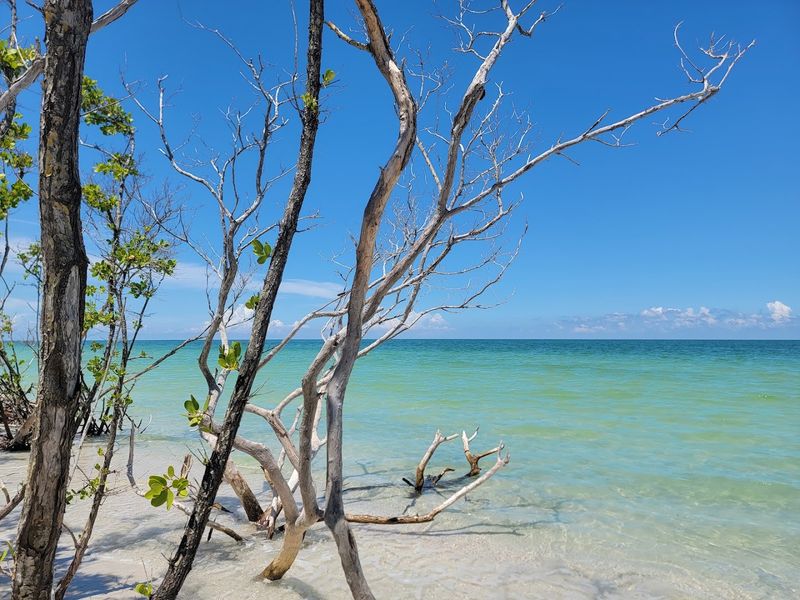
Crowd math changes when every umbrella, chair, and cooler must cross water first.
The shoreline extends for about three miles, offering more room than the ferry landing initially suggests. No road, hotel strip, or drive-up parking lot waits behind the dunes.
That does not guarantee an empty beach. Weekends, holidays, and excellent weather can still bring company. Boat-only access simply removes ordinary roadside traffic and changes the pace.
You can swim in marked areas, walk the shore, picnic, or search the wrack line for empty shells. Boardwalks connect the developed area to the beach while protecting sensitive dunes.
Restrooms, outdoor showers, picnic tables, grills, and accessible facilities keep the visit comfortable. Complimentary beach wheelchairs are available through the ranger station.
A café, gift shop, and equipment rentals normally operate near the marina, although storm recovery can affect availability. Carrying food and water prevents your appetite from depending on changing island services.
The open shoreline makes wandering tempting. Just remember that distance becomes less charming when your return boat is preparing to leave.
Mangrove Tunnels Give The Beach A Plot Twist
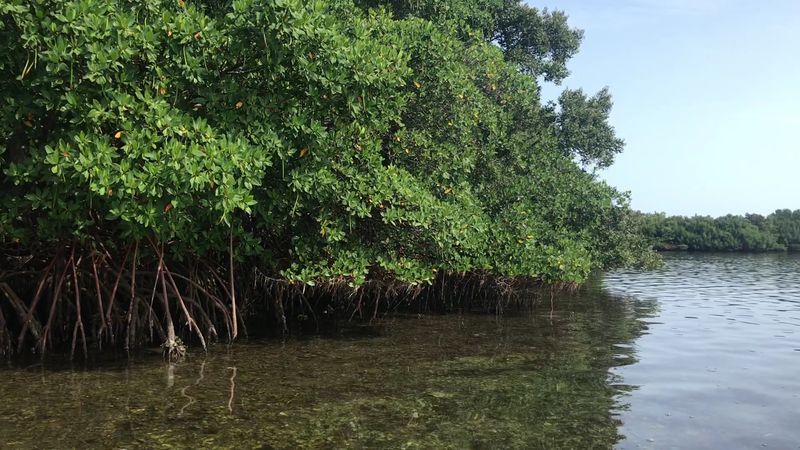
A paddling route begins near the marina and slips into an extensive mangrove forest. Branches lean over narrow water, red mangrove roots crowd the edges, and shallow seagrass flats appear beyond tighter passages.
Paddlers can choose a shorter loop of about one mile or continue along a route of roughly three miles. The longer option reaches the Scharrer Homestead ruins before circling through the mangroves.
This is not a racetrack wearing leaves. Extreme low tides can make sections difficult or inaccessible, and changing weather can turn a relaxed outing into hard work.
Visitors may bring their own nonmotorized craft, while rentals are normally available through the island concession. Checking availability before the trip prevents a paddle-free surprise.
Possible wildlife includes herons, egrets, ospreys, mullet, snook, and red drum. Dolphins, manatees, bald eagles, and roseate spoonbills may also appear, but wildlife never accepts reservations.
Mangrove roots shelter young fish and crustaceans. Slow paddling and careful steering protect that habitat while improving your chances of spotting movement below.
The quietest person in the group often sees the most. You may come for turquoise water, but the mangroves are perfectly capable of stealing the encore.
The Trail Keeps An Island Family In The Story
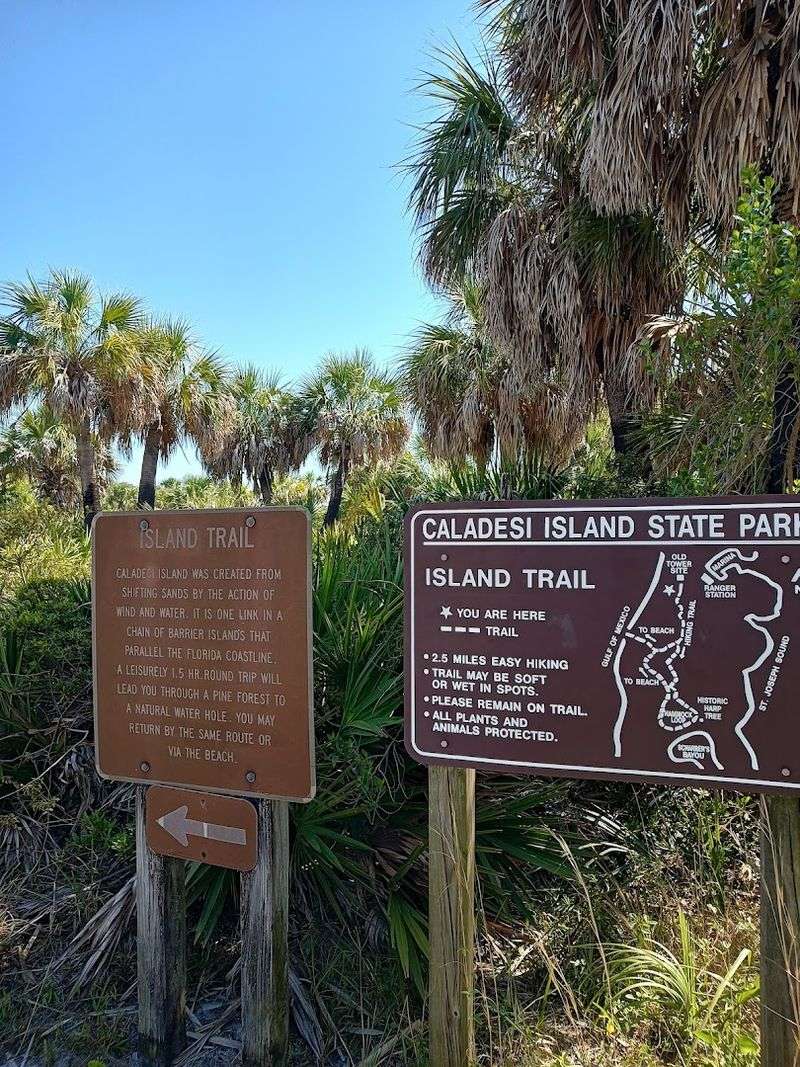
The nature trail covers about three miles through slash pine forest, live oaks, palms, and maritime hammock. The mostly flat route becomes sandy in places, making proper shoes far more useful than beach confidence.
Shade helps, but it does not cancel heat or humidity. Water, insect repellent, and sun protection belong in your bag.
The trail passes the remains of the Scharrer Homestead. Henry Scharrer and his family lived on the island, and his daughter, Myrtle Scharrer Betz, was born there before the land became a state park.
She later recorded her childhood in “Yesteryear I Lived in Paradise,” preserving memories of everyday life on a barrier island now visited mostly for day trips.
The landscape changed dramatically in 1921, when a hurricane split the larger Hog Island into the areas now known as Honeymoon Island and Caladesi Island.
That history gives the trail more purpose than collecting steps before lunch.
Ospreys and hawks may appear overhead, while gopher tortoises use burrows below. Give every animal room, especially anything already carrying its house.
Low Tide Opens The Island’s Shell Department
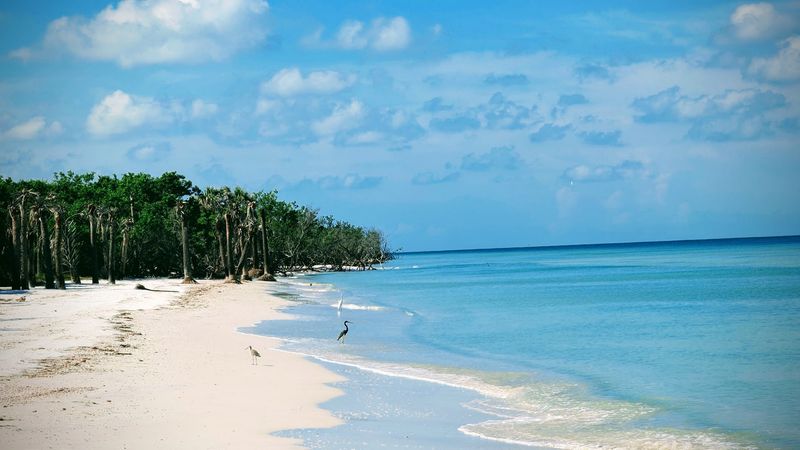
The tide runs the shell department, and it refuses to publish store hours.
Low tide exposes more sand and can improve your chances of finding shells deposited by the Gulf. Conchs, whelks, olives, scallops, and other varieties may appear along the shoreline.
The most important rule is simple: live shelling is prohibited.
Any shell containing a living animal stays exactly where you found it. The same respect applies to other marine life.
An attractive souvenir is not worth evicting its owner.
Wind, waves, tides, recent storms, and earlier beachcombers determine each day’s selection. No ferry time guarantees a perfect lightning whelk or a bag full of collector-worthy finds.
Walk slowly near the wrack line and inspect every shell before keeping it. A small container protects fragile discoveries better than dropping them beneath a cooler.
Marked nesting areas also deserve space. Shorebirds and sea turtles do not rearrange their plans because a promising shell appeared nearby.
Shelling works because it rewards patience rather than speed. Take the empty shell. Leave the tenant with the better beachfront address.
Storm Recovery Still Shapes The Visit
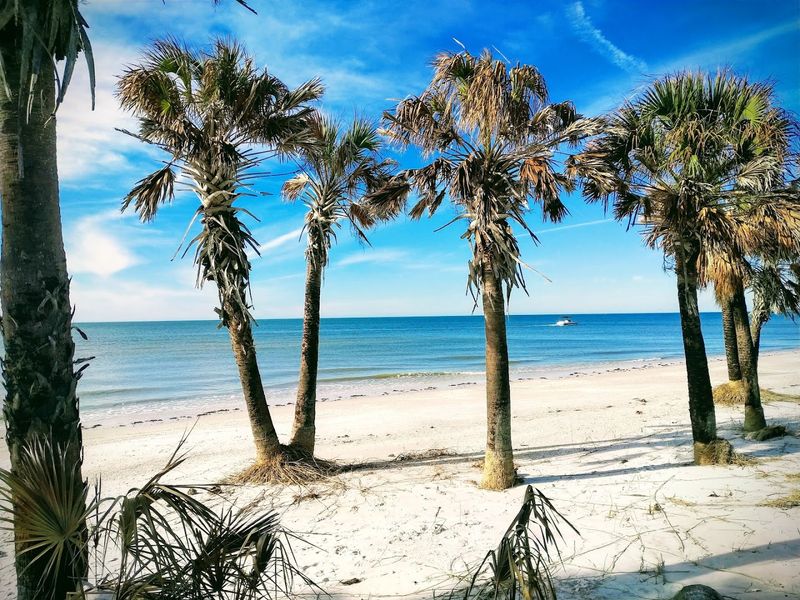
This island currently comes with an asterisk, and Hurricane Helene wrote it.
The park is open for day use, and ferry service from Honeymoon Island has resumed. Storm damage still affects parts of the marina and some visitor services.
C-Dock is available for daytime use with 26 slips, while a T-Dock can handle a larger vessel. Dockside power and water are unavailable.
Overnight marina stays remain suspended, so boaters should plan for a daytime visit rather than arriving with sleepover ambitions.
Food service and equipment rentals may also be limited during recovery. A packed cooler, drinking water, and essential gear reduce dependence on facilities that may change.
Weather can pause ferries, tides can affect paddling routes, and warning flags may alter swimming plans. Checking current park and ferry information before leaving prevents an avoidable surprise.
Ferry passengers must also follow their assigned return schedule.
Missing the boat is not an approved method for extending your beach day.
This Florida island asks for more preparation than a shore beside a parking lot. In return, it gives you blue-green water, miles of sand, and a crossing that makes arrival matter.