One smell can pull an entire coastline out of memory.
Not perfume, sunscreen, or saltwater, but mullet smoke curling out of an old fish shack near the Gulf. I love a place where the menu doesn’t beg for attention.
It just waits, steady as a tide chart, while locals order the thing their parents ordered before them.
Florida keeps some of its best food stories close to the water, and this one carries smoke in its bones. The attraction to these places is not shiny.
It is weathered wood, paper plates, warm fish, and a flavor with salt on its elbows.
You can almost hear screen doors, boat motors, and old stories rising with each smoky ribbon.
Florida shows up again in the plate, not as a postcard, but as a working coast with memory, patience, and appetite. This is the kind of stop you will want to chase slowly.
Where Florida’s Coastal Memory Still Tastes Like Smoke
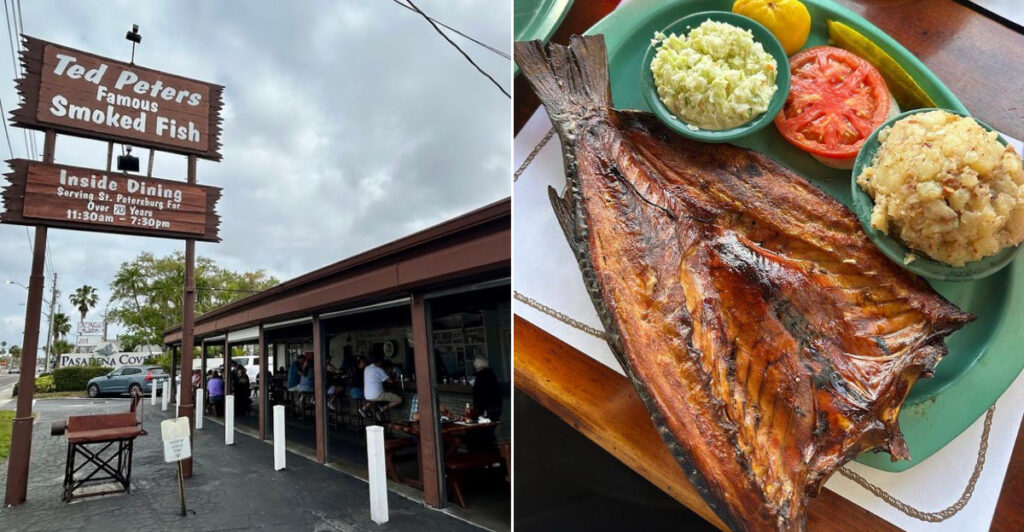
Ted Peters has been serving smoked fish since 1951, long enough for the smoke itself to sound like part of South Pasadena’s shoreline memory.
Back then, mullet pulled near Tampa Bay was not a novelty plate. It was dinner.
It was family food. It was the kind of fish people understood before menus needed long explanations.
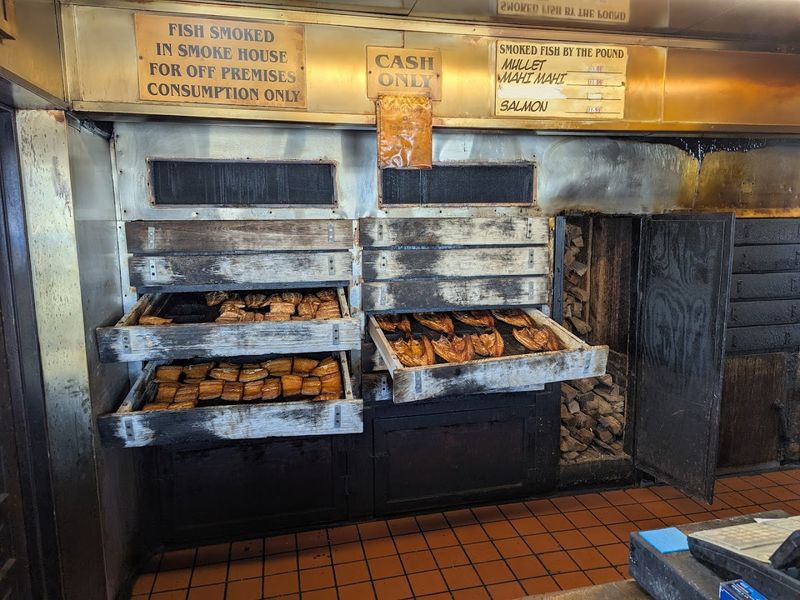
The restaurant built its name on that old coastal rhythm, using red oak wood to give the fish its deep, steady flavor.
Red oak does important work here. It burns clean, holds heat well, and gives the fish a rich smoky edge without burying the natural taste.
Many smokehouses changed equipment as decades passed. Ted Peters kept its old wood-burning smokehouse at the center of the operation, and that choice gave the place its signature.
The menu stays short for a reason. Smoked mullet, smoked salmon, and amberjack carry the fish side of the board.
Smoked fish spread, clam chowder, German potato salad, coleslaw, sandwiches, and a jumbo cheeseburger fill out the rest. Nothing about the lineup chases trends or novelty.
There is simply no need.
Five generations of family history add weight to the story. Independent restaurants come and go quickly, especially along a Florida coast shaped by tourism, rising land prices, and seafood chains with brighter signs.
Ted Peters chose smoke, wood, fish, and patience.
The mullet comes off the wood with the same kind of quiet authority that built the place. Some meals explain an entire coast without saying a word.
Finding The Address That Smells Like History
What kind of restaurant announces lunch before you even spot the sign?
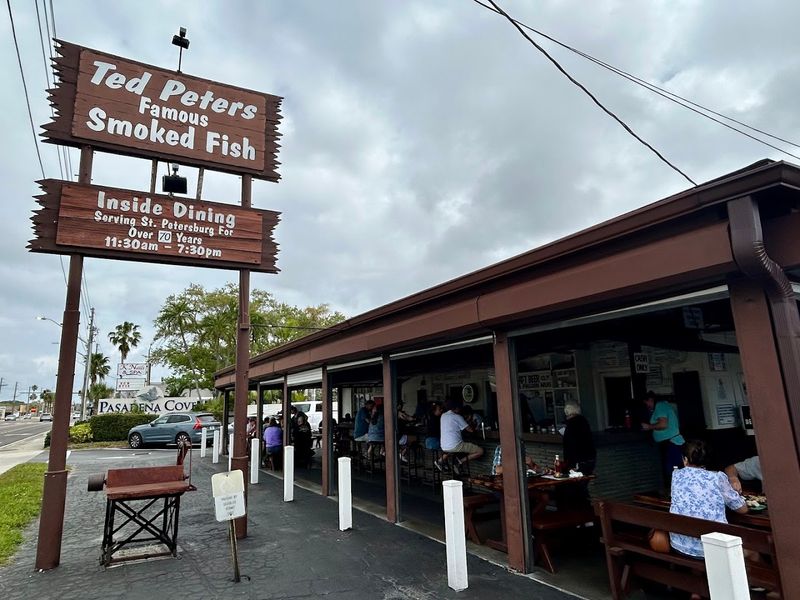
Pull up to 1350 Pasadena Avenue South in South Pasadena, and your nose may beat your eyes to the place.
Here, it is red oak smoke drifting through the air, carrying the kind of message GPS can never send properly. This is not a quiet little dining room built for soft background music and tiny plates.
This is a roadside smokehouse with a job to do.
Fish goes on the racks. Wood burns low.
Time does the heavy lifting.
The building sits near busy Pasadena Avenue, so the setting has its own soundtrack.
Cars pass. Doors open.
Orders land on tables. The smoke keeps talking over all of it.
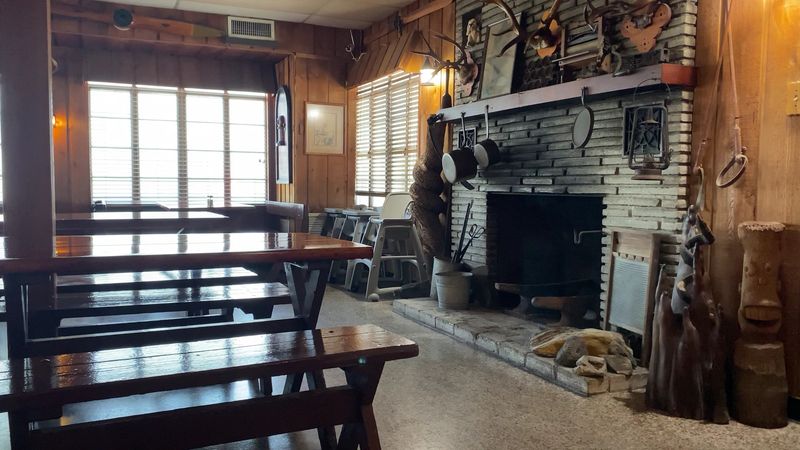
Outdoor tables give the meal that old Florida picnic feeling, especially when the shade is doing its best against the sun.
Indoor seating helps when the Florida heat gets bossy.
But the real centerpiece is the smokehouse itself.
Why hide the main character?
Ted Peters built its reputation on fish cooked over red oak, and the setup lets you understand the story before the plate arrives.
The current smoked fish lineup centers on mullet, salmon, and amberjack, with German potato salad, coleslaw, pickles, tomato, onion, and lemon riding along.
Fish spread, clam chowder, sandwiches, and a jumbo cheeseburger fill out the board. Availability can shift, because smoked fish does not behave like fast food.
When the day’s fish is gone, the lesson is simple.
Smoke rewards the early crowd.
Smoked Mullet Is The Fish Florida Forgot To Export
Mullet has a reputation problem outside of Florida. The name alone makes people hesitate.
Inside Florida, particularly along the Gulf Coast, smoked mullet was the working-class staple of fishing communities for generations, long before grouper sandwiches became the default tourist order.
Gulf mullet feeds heavily on plant material and organic matter near the bottom, which gives the flesh a richer, more pronounced flavor than leaner fish. That fat content is exactly what makes it respond so well to wood smoking.
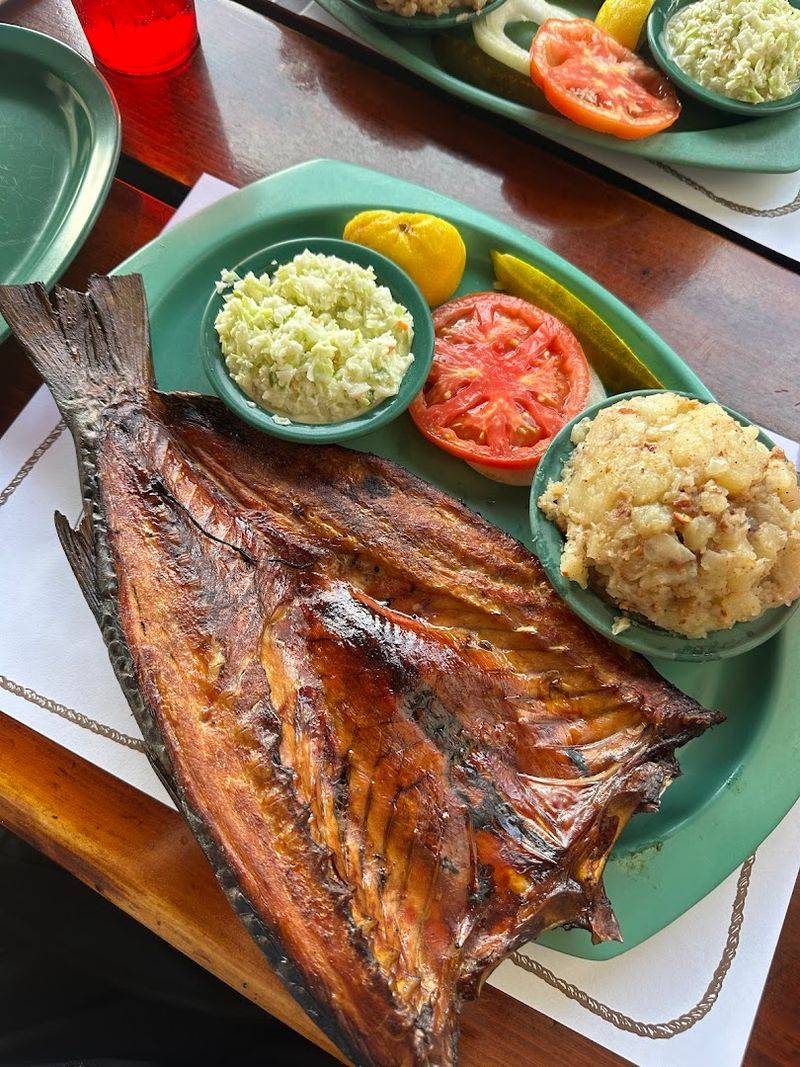
The fat carries the smoke flavor deep into the muscle, producing a result that salmon and mahi cannot fully replicate. A smoked mullet dinner at Ted Peters runs close to a pound of fish.
The portion arrives whole, or close to it, which means bones are present and navigating them is part of eating it properly. This is not a complaint about the kitchen.
Bone-in fish smoked whole retains more moisture and flavor than fillets processed before smoking.
The fish arrives with two sides. German potato salad and coleslaw are the traditional accompaniments, and both are made in-house.
The German potato salad uses a warm preparation with bacon, which distinguishes it from the cold mayo-based versions common elsewhere.
Guests who do not eat bacon should request the preparation details before ordering.
Mullet sells out. It sells out regularly and without warning.
Arriving shortly after the opening improves the odds of getting it.
If mullet is gone, smoked salmon and smoked mahi are on the board. But the mullet is the one worth planning around.
The Fish Spread That Travels Home In A Container
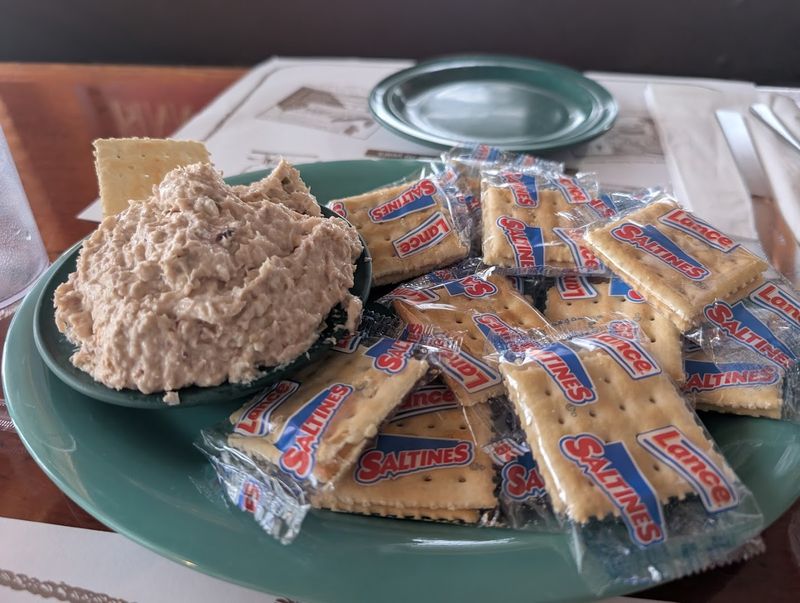
Smoked fish spread at Ted Peters is made from the same fish that comes off the wood-burning smokehouse. The kitchen blends the smoked fish with cream cheese and seasoning, producing a spread dense enough to hold its shape on a cracker but loose enough to scoop easily.
Saltine crackers arrive alongside the spread as the standard delivery vehicle. A bottle of hot sauce comes with it.
The combination is specific and intentional, matching the saltiness of the crackers against the richness of the smoked fish and letting the hot sauce cut through both.
The spread is available to order in the restaurant and to purchase as a to-go item from the smokehouse. Guests regularly buy extra containers to take home or bring as gifts to people in other states.
The flavor profile does not survive freezing particularly well, so the spread travels best when consumed within a few days of purchase.
Smoked fish spread became a Florida coastal tradition because smoked fish preserved longer than fresh fish before refrigeration was widespread. The smoking process itself extended shelf life.
The spread format made use of smaller pieces and broken sections of fish that did not plate attractively as whole portions.
Practical origins, excellent result.
The spread has appeared on the Ted Peters menu for decades without modification, which is the clearest possible signal about how well the original formula works.
Order it as a starter before the main fish plate arrives. Bring crackers if you plan to eat it in the car on the way home.
It holds up that well.
Red Oak Wood And The Science Of Consistent Smoke
Wood selection in smoking is not decorative. Different woods produce chemically distinct smoke, and those chemical differences transfer directly to the flavor of the fish.
Red oak generates a moderate, clean smoke with lower resin content than pine or cedar, making it appropriate for long smoking sessions without producing bitterness.
The temperature inside a wood-burning smokehouse fluctuates more than a gas-controlled unit. Skilled pit operators read the fire and adjust airflow manually to maintain the target temperature range.
That process requires attention and experience that cannot be automated.
Ted Peters has used red oak in its original smokehouse structure for the entire operating history of the restaurant. The structure itself has absorbed decades of smoke residue into its walls, which some pitmasters argue contributes a baseline flavor to every batch processed inside it.
Whether that claim holds up to scientific scrutiny or not, the consistency of the output across seventy-plus years suggests the system works. Smoking a whole mullet over red oak takes several hours.
The fish must reach an internal temperature that eliminates food safety concerns while retaining enough moisture to stay tender.
Rushing that process produces dry, chalky fish. Extending it too long produces fish that tastes more like smoke than mullet.
The balance Ted Peters achieves is specific and reproducible because the same wood, the same structure, and the same technique produce the same result every time.
That reproducibility across generations is the actual product being sold. Smoked fish is available in many places.
Smoked fish produced the same way for seventy years in the same building is a considerably shorter list.
Sides That Earned Their Place On The Plate
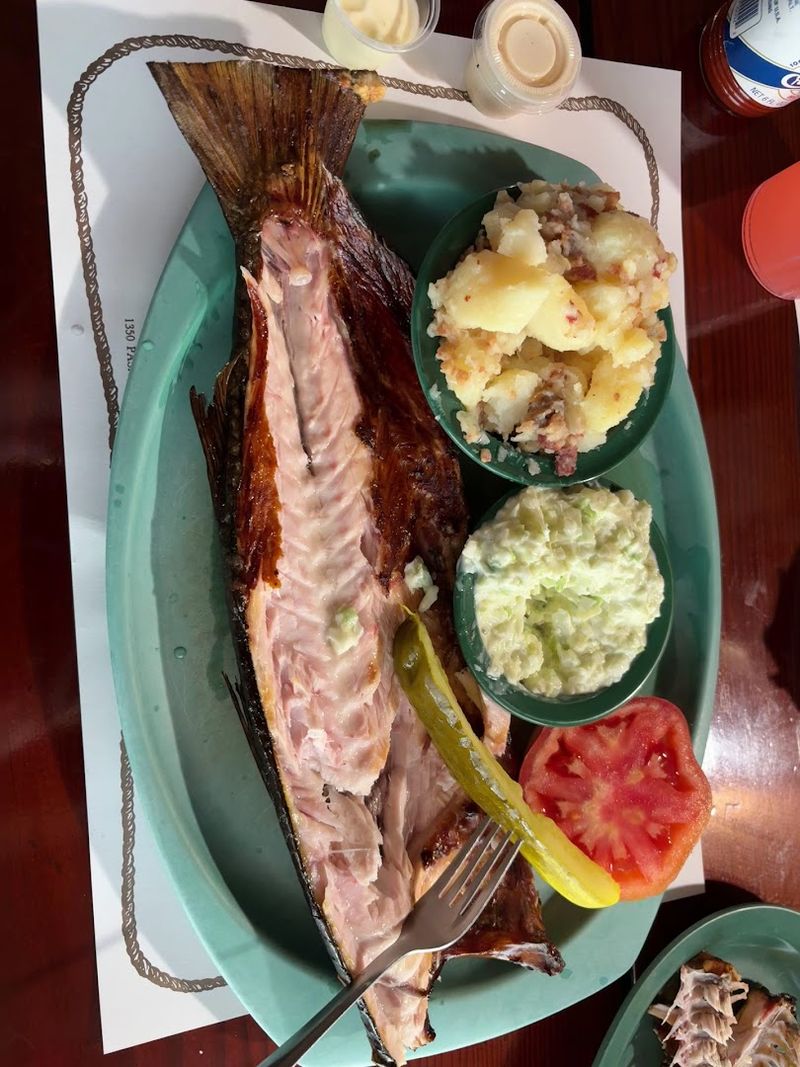
German potato salad at Ted Peters arrives warm, dressed in a vinegar-based sauce with bacon and onion. The preparation traces back to the Bavarian tradition of dressing boiled potatoes in a tangy, fat-based sauce while still hot, allowing the potatoes to absorb the dressing fully.
This is not the cold, mayo-heavy potato salad that shows up at most Florida seafood restaurants. The warm temperature and acidic dressing cut directly against the richness of smoked fish, which is why the pairing works as well as it does.
Acid and fat balance each other on the palate.
Coleslaw at Ted Peters uses a creamy dressing rather than a vinegar-only preparation. The texture stays crunchy rather than wilted, which suggests the slaw gets dressed close to service rather than sitting in dressing for hours.
That detail matters more than most people realize when ordering coleslaw.
Clam chowder appears on the menu in the Manhattan style, meaning a tomato-based broth rather than the cream-based New England preparation.
Manhattan clam chowder has deeper historical roots in the fishing communities of the mid-Atlantic and Gulf Coast than the cream version, which became popular later through restaurant standardization.
The cheeseburger at Ted Peters is genuinely large and genuinely good. It exists on the menu because the restaurant serves families, and not every person at the table wants smoked fish.
The burger does not get much attention in the conversation about what makes Ted Peters significant, but it earns its place. Sometimes the supporting cast holds the whole production together.
Try the German potato salad regardless of what you order.
The Smokehouse Rituals
The experience begins with the scent of red oak smoke drifting across the property, signaling the presence of a long standing wood fired process that defines the entire operation. The smokehouse remains visible on site, reinforcing that the cooking method is not hidden but central to the identity of the place.
Inside, the rhythm of service follows the output of the smokehouse rather than strict predictability. Fish is prepared in batches, and when a selection finishes, it is replaced by the next cycle rather than held for extended service.
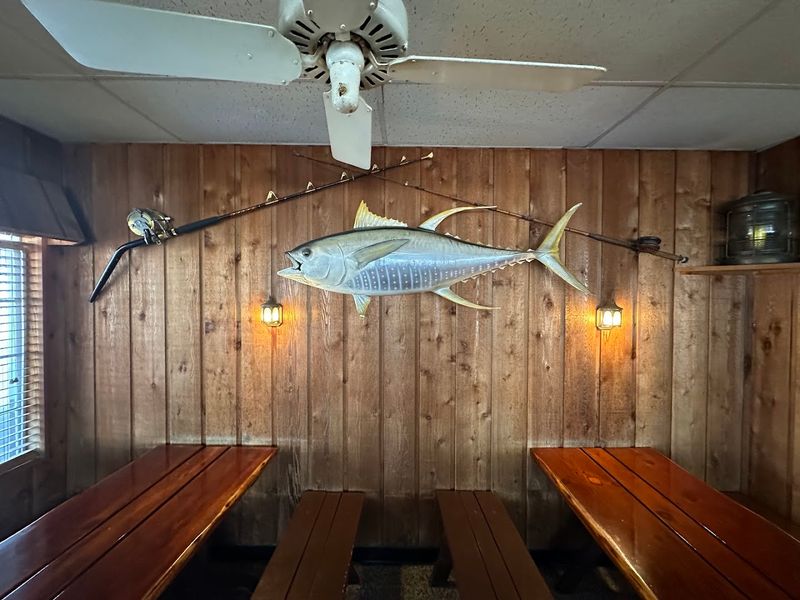
Seating spans both indoor and outdoor areas, shaped by weather and preference rather than formality. The setting remains casual, focused entirely on the food and the process behind it.
The result is a dining experience built around consistency of technique, where wood, fire, and time define every plate that leaves the kitchen.
Regulars often time their visits around when fresh batches are expected, knowing certain fish sell out quickly once the smokehouse gets busy.
The staff keeps things moving with a steady, unhurried pace that reflects the traditional setup rather than modern efficiency models. Conversations mix with the sound of trays and distant hissing from the smokers outside.
Even waiting feels intentional, as if the process itself is part of the meal. Nothing here feels rushed or staged for effect, and that steadiness is exactly what keeps people returning across years and generations.