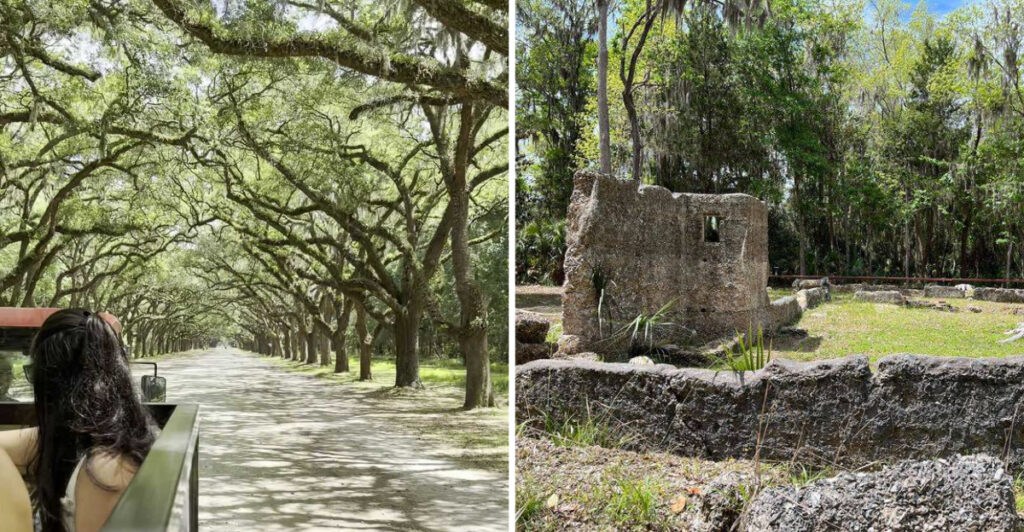
Georgia has a road that clearly thinks it belongs in a movie.
Around 400 live oaks line the route, stretching their branches overhead for roughly 1.5 miles. Spanish moss adds the finishing touch, and suddenly an ordinary drive starts looking suspiciously camera-ready.
But the famous canopy is only the opening scene.
Beyond it, the historic property reaches back to Georgia’s colonial era. Old ruins, trails, marsh views, and exhibits give you plenty of reasons to keep going after the photo stop.
That is the trick here. You arrive for the road everyone recognizes, then discover the view through the windshield was only the trailer.
So, what exactly is waiting once the trees finally open up?
Around 400 Live Oaks Turn The Entrance Into A Tunnel
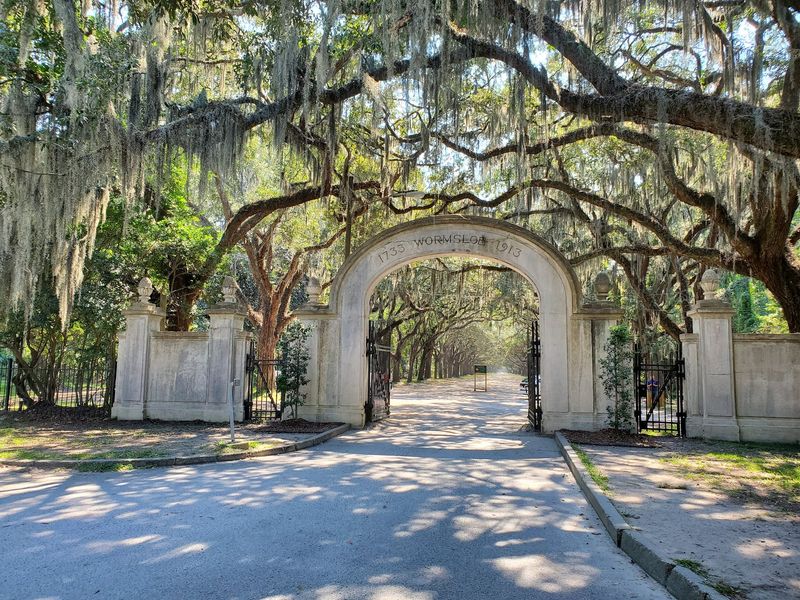
Your first clue that this is not an ordinary driveway appears before you have gone very far.
Around 400 live oaks line the avenue, creating a long allée that stretches toward the historic grounds. Their branches reach outward and upward, forming the dense canopy that gives the road its tunnel-like appearance.
The trees did not grow into identical shapes, which is part of what makes the scene so striking. Thick limbs bend low in some places and sweep high in others, while Spanish moss hangs from the branches and softens the edges of the view.
The avenue itself came long after Noble Jones established the property in the eighteenth century. Later generations of the De Renne family developed the grounds and created the oak-lined approach that now defines the entrance.
Even so, the avenue has become the visual signature of the Wormsloe site. You can find the entrance at 7601 Skidaway Road, Savannah, GA 31406.
A gate may mark the beginning, but the trees are what make you slow down.
One And A Half Miles Gives The View Time To Sink In
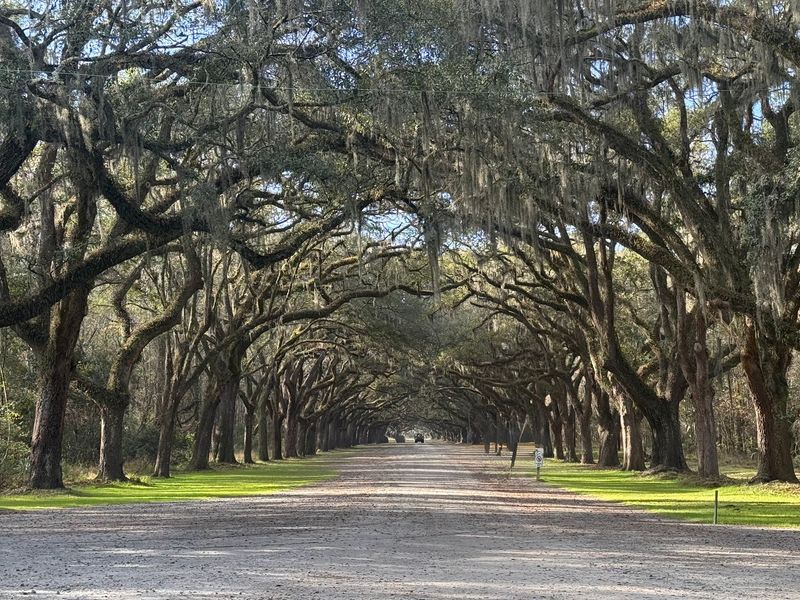
A short tunnel of trees would be pretty. A mile and a half changes the entire experience.
The oak avenue stretches about 1.5 miles toward the heart of the historic property, giving the canopy enough distance to seem less like decoration and more like a landscape of its own.
You can experience that route without turning the entire visit into a long walk.
Shuttle tours depart from the visitor center every 30 minutes, at the top and bottom of the hour.
Each tour lasts about 20 minutes and travels along Live Oak Avenue while an interpretive ranger introduces the history of the property and the generations connected to it.
You can get off at the museum and continue exploring the interpretive trail at your own pace before catching a return shuttle.
That flexibility comes in handy when different people in your group have very different ideas about how much walking belongs in a sightseeing day.
The avenue is only the opening act. Once you reach the interior grounds, historic ruins, exhibits, trails, and marsh scenery give you plenty of reasons to keep exploring.
A road this photogenic could easily become the whole story.
Instead, it spends 1.5 miles setting up everything that comes next.
Spanish Moss Supplies The Finishing Touch
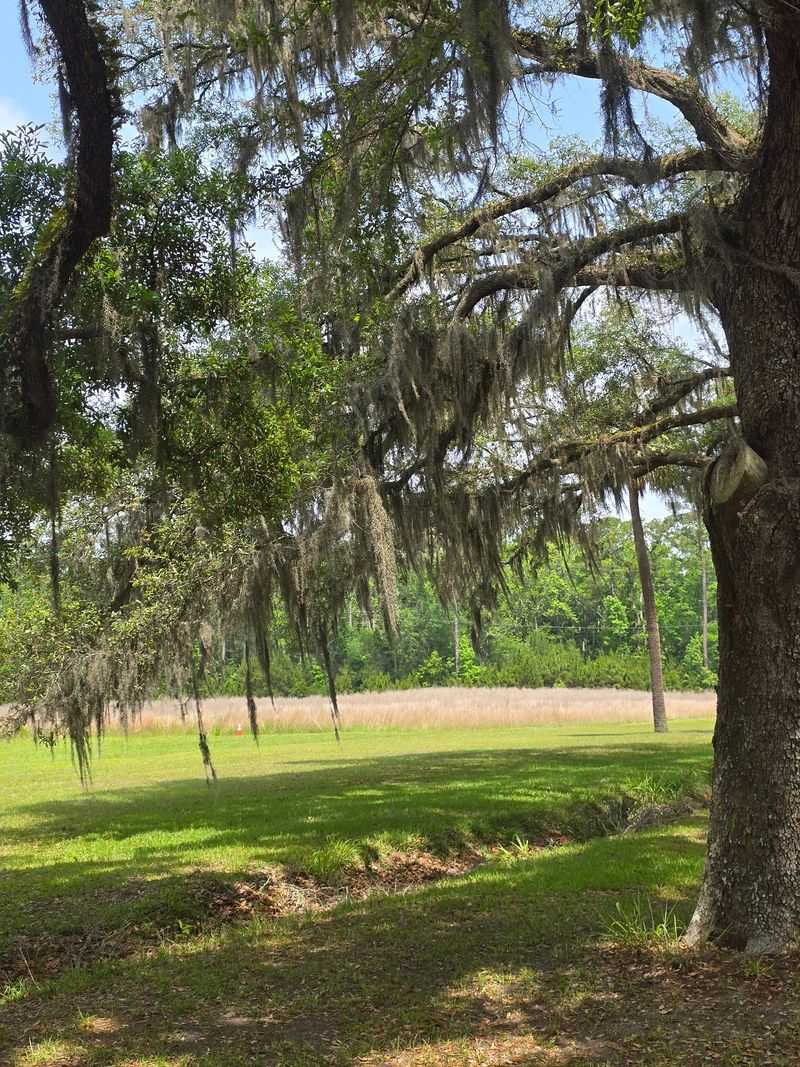
Live oaks bring the architecture. Spanish moss handles the special effects.
The gray-green strands hang from branches along the avenue, creating the soft, draped appearance so closely associated with coastal Georgia.
Despite its name, Spanish moss is not a true moss. It belongs to the bromeliad family, which also includes pineapples, and it grows as an epiphyte rather than a parasite. It uses trees for support while taking in moisture and nutrients from the air and rain.
That relationship changes the way you look at the canopy.
The hanging strands may make the branches appear weighed down, but Spanish moss is not rooting into the tree and stealing its food.
For you, the botany may become secondary once hundreds of oak limbs start closing overhead.
The moss catches light, moves with the air, and adds another layer of texture to a road that hardly needed extra help looking dramatic.
The oaks built the tunnel.
Spanish moss apparently decided it needed curtains.
The Road Leads Straight Into Colonial History
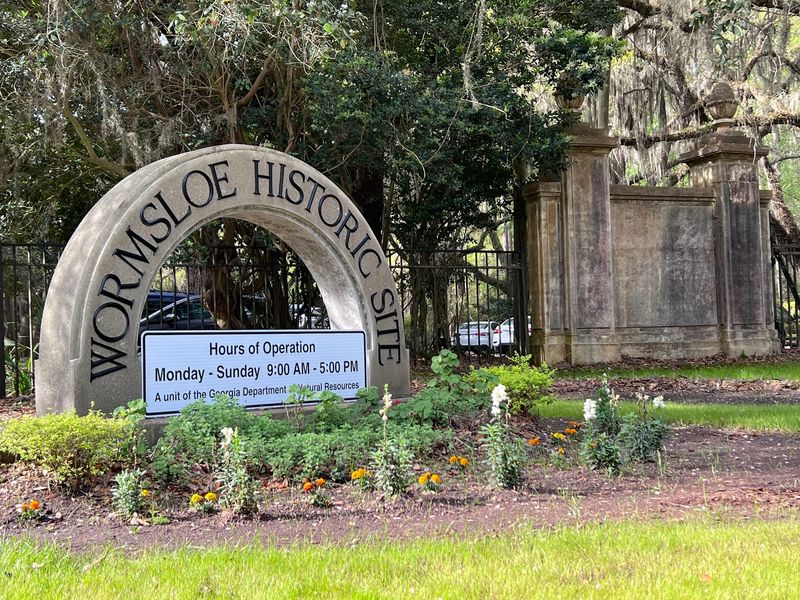
The scenery gets the camera first. The history gets the rest of your attention.
Noble Jones arrived in Georgia in 1733 with James Oglethorpe and the first group of English settlers. In 1736, he leased 500 acres on the Isle of Hope and later completed a fortified home called Wormslow in 1745.
Jones served the young colony in several roles, including carpenter, physician, constable, surveyor, soldier, and member of the royal council. He also commanded marines responsible for watching the inland water route.
The surviving ruins make the property especially significant.
They remain the last architectural remnant in Savannah from the Oglethorpe era, connecting the site directly to the city’s earliest colonial years.
That gives the oak avenue an entirely different context.
You are not simply following a beautiful road toward another scenic viewpoint. You are approaching land that has been part of Savannah’s documented history for nearly three centuries.
The photograph may be what gets saved to your phone. The timeline is what makes the place harder to forget.
Tabby Ruins Have Outlasted Nearly Three Centuries
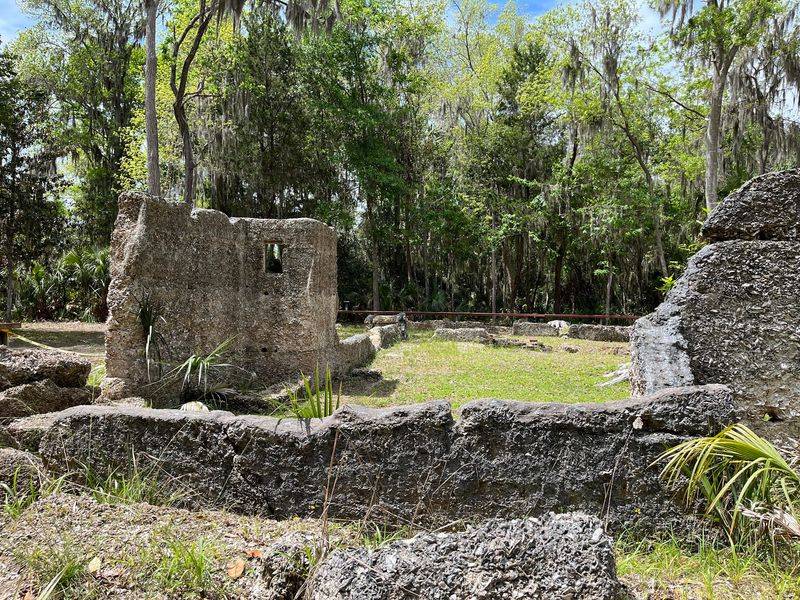
Stone is not the only material that knows how to survive.
The ruins beyond the avenue were built from tabby, a coastal construction material made with oyster shells, lime, sand, and water. Jones finished the fortified residence in 1745 after establishing the property during the colony’s earliest years.
Parts of those walls still stand.
Its position near the inland water route allowed Jones and his marines to watch for threats approaching Savannah.
You can still see the rough shell texture that gives tabby such a distinctive appearance, a reminder that builders used materials readily available along the coast.
The surviving walls also put the age of the property into perspective.
The famous oak avenue came much later, while these remnants reach directly back to the eighteenth century.
Nearly three hundred years have passed around them.
The live oaks may look timeless from a distance. The tabby walls have the history to prove it.
The Trails Pull You Beyond The Famous Photograph
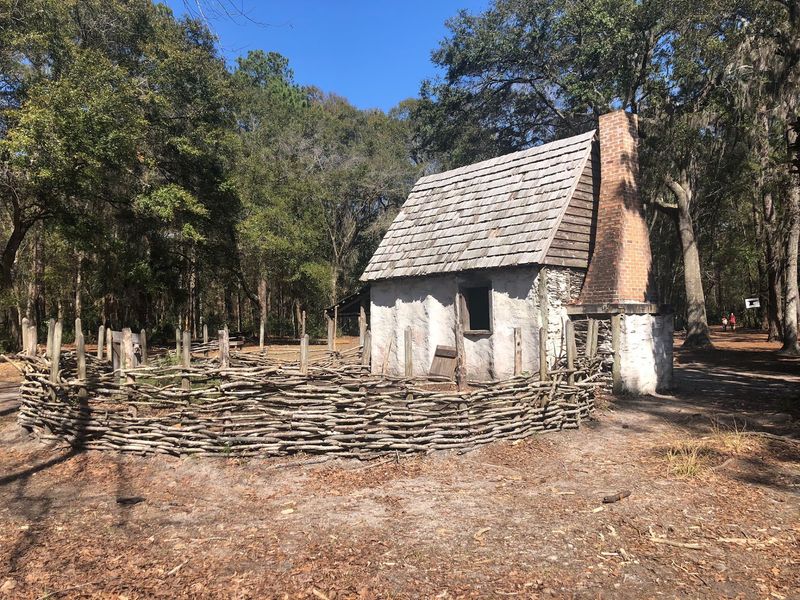
The most photographed road on the property has competition once you start walking.
The grounds include an interpretive trail through the historic area along with additional nature trails that extend into the surrounding landscape.
It offers seven miles of nature trail, giving you considerably more ground to explore beyond the oak avenue.
The interpretive route passes the tabby ruins, follows the marsh, and continues toward the Colonial Life Area.
That shift can happen quickly.
One moment you are beneath a carefully planted avenue known for its near-perfect canopy, and later you are moving through coastal surroundings with marshland appearing between the trees.
The Colonial Life Area is used during programs and special events for demonstrations of tools and skills associated with colonial life.
Birding is another listed activity, giving you another reason to pay attention once the famous entrance disappears behind you.
If you are traveling with a dog, leashed pets are allowed on the historic site trails, although they cannot enter buildings.
The oak tunnel wins the postcard contest. The trails make a strong case for staying after the picture is taken.
The Museum Adds Context To Everything Outside
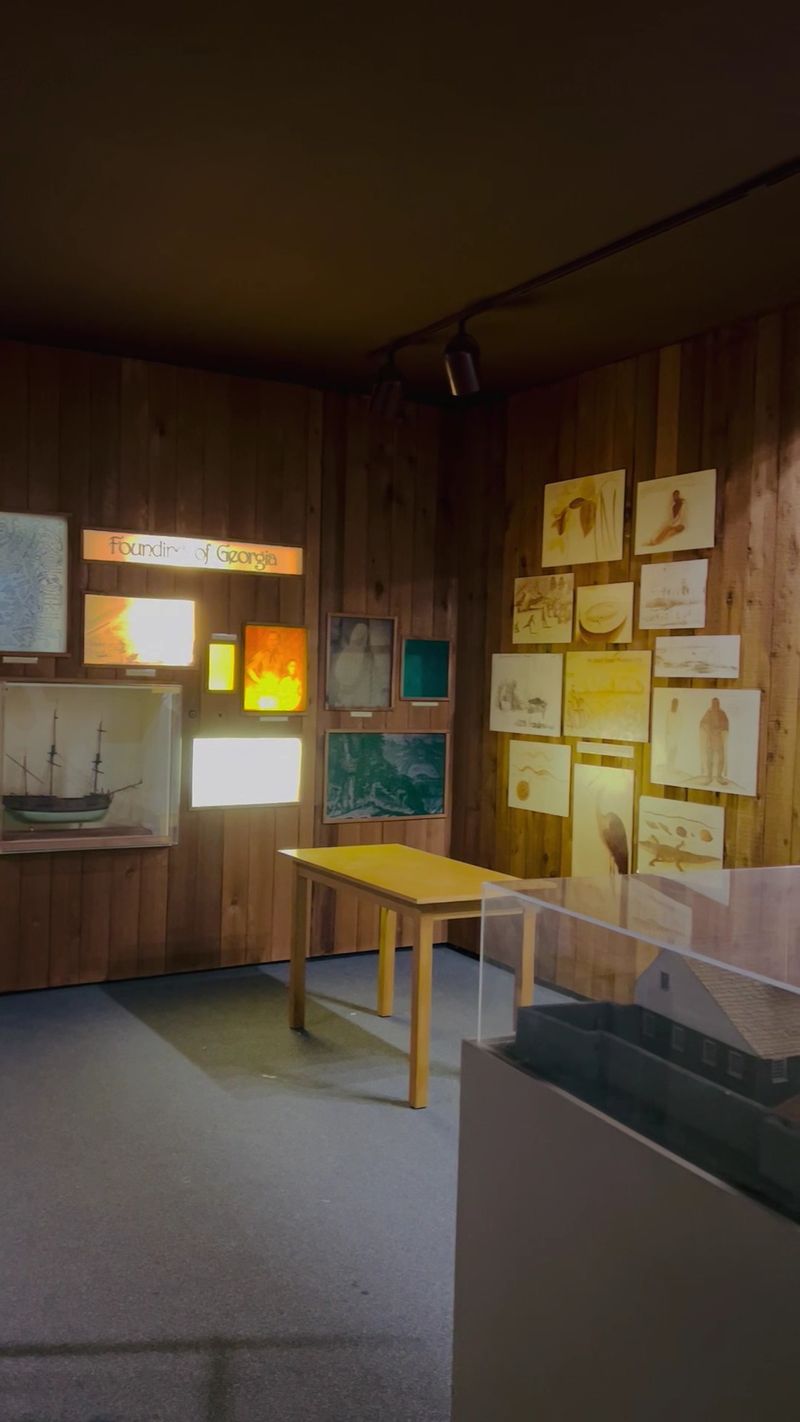
Eventually, even a tree tunnel this dramatic needs an explanation.
The museum adds context to the property, the Jones family, and the Native American, African, and European people who shaped the Isle of Hope across generations. Displays include artifacts excavated at Wormsloe.
That matters because many of the most interesting parts of the story are not immediately obvious from the landscape.
The oak avenue is much younger than the colonial property. The surviving tabby walls belonged to a fortified home, and descendants of Noble Jones remained connected to Wormsloe for generations.
Most of the historic acreage passed to the state in 1973, and Wormsloe Historic Site opened to the public in 1979.
Today, the property includes a museum, gift shop, picnic area, Colonial Life Area, gravesites, shuttle tours, trails, and the tabby ruins.
Once you understand those layers, the visit stops being a sequence of pretty trees and old walls.
You begin to see how one property changed across centuries while retaining traces of several very different periods.
The museum does not compete with the scenery outside. It gives you the missing pieces that make the scenery mean more.
One Dreamy Road Opens Into A Much Bigger Story

The clever trick is that the most famous part comes first.
You pass beneath around 400 live oaks, follow an avenue roughly 1.5 miles long, and get the kind of view that could easily convince you the trip has already delivered everything it promised.
Then the property keeps going.
A shuttle can carry you deeper into the grounds. Tabby ruins connect the site to the earliest decades of colonial Georgia. Trails extend through the property, while marsh scenery, museum exhibits, gravesites, and interpretive areas add entirely different layers to the visit.
That combination makes the avenue more than a beautiful entrance.
It works almost like a long introduction written in branches and Spanish moss.
You can certainly come for the canopy. The moment those limbs begin closing overhead, the appeal of that famous view becomes pretty obvious.
Just leave enough time for what waits after it.
The road may look like the dreamiest part of the visit, but its best trick is leading you somewhere worth waking up for.