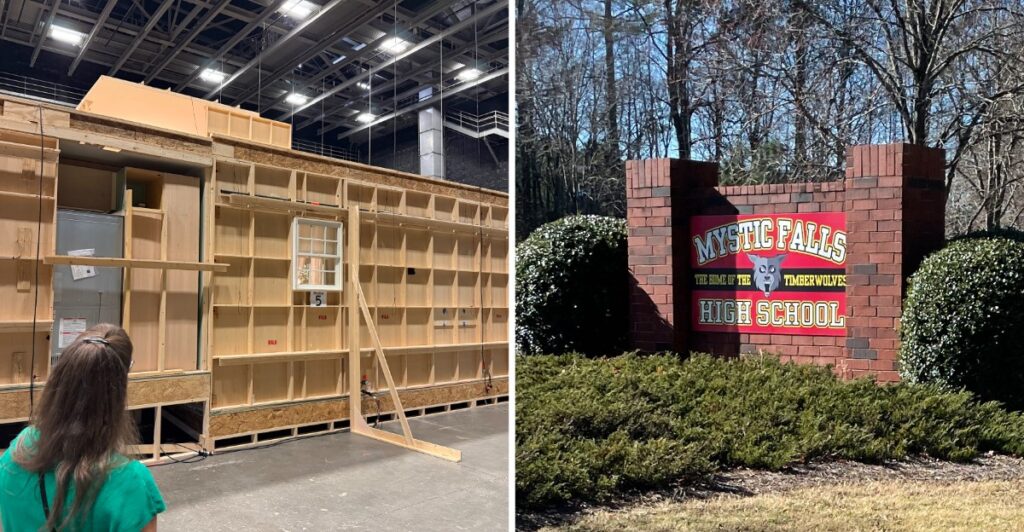
Ever wondered what happens before a finished scene looks finished?
This is about as close as most of us get.
On this Georgia production campus, the gates open just enough to show you how a working studio actually moves.
At first, some of the spaces barely register.
Then you learn what they have stood in for on screen, and your brain starts doing the before-and-after work on its own.
A plain wall can have a very glamorous résumé. A soundstage can hide an entire world behind an unremarkable door.
And because productions are still happening here, the experience never feels completely frozen in place.
Some doors stay closed. Others may open.
You will not see everything. But would it be nearly as interesting if you did?
Trilith Studios Opens Part Of A Working Film Campus To Tours
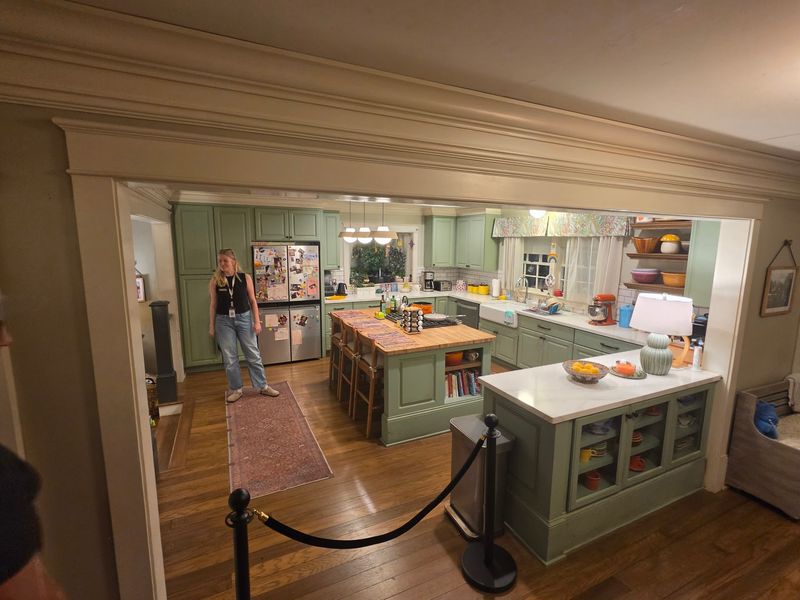
The Studio Tour Experience moves through an operating production campus rather than a museum built only for visitors.
Most of the 90-minute experience takes place aboard a trolley, which makes it possible to cover a large portion of the property without turning the outing into a long walk. The route also includes short walks inside two soundstages.
Production activity continues around the tour. Crews may be working elsewhere on the lot, stages can be in use, and access changes depending on what is happening that day.
A building connected with a familiar movie may be visible from the trolley, while another area may be closed because a production is active nearby.
The tour focuses on how filmmaking works across the campus. Soundstages, backlots, production support, props, sets, and specialized vendors all become part of the same larger picture.
Allow extra time before the scheduled start rather than arriving at the last minute. Guests are asked to arrive about 15 minutes early, which leaves room for check-in before boarding.
Two Soundstages Are Part Of The Standard Tour
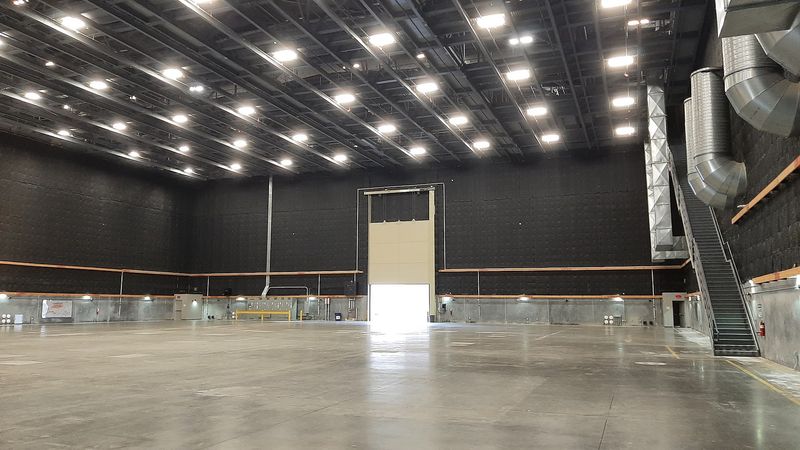
The public tour includes entry into two soundstages.
From the outside, a stage can look like an oversized industrial building. Inside, the open floor, tall walls, overhead grids, lighting infrastructure, and controlled environment show why film crews use these spaces for scenes that may look completely different on screen.
Trilith currently has 30 stages in a range of sizes. Individual stages can measure from about 15,000 square feet upward, with ceiling heights designed to accommodate lighting, scenery, and other production equipment.
What you see inside can vary. A soundstage may contain a set, production displays, or other material connected with the tour, while active production needs can affect what areas are accessible.
A set from a recent production is included on most tours rather than guaranteed on every visit. That distinction matters when you are booking around one particular film or television title.
Stay with the group and follow the StoryGuide’s instructions once you enter a stage. These are working production spaces, and the tour route is designed around what can be shown safely without interfering with ongoing work.
Major Movies And Television Series Have Used The Campus
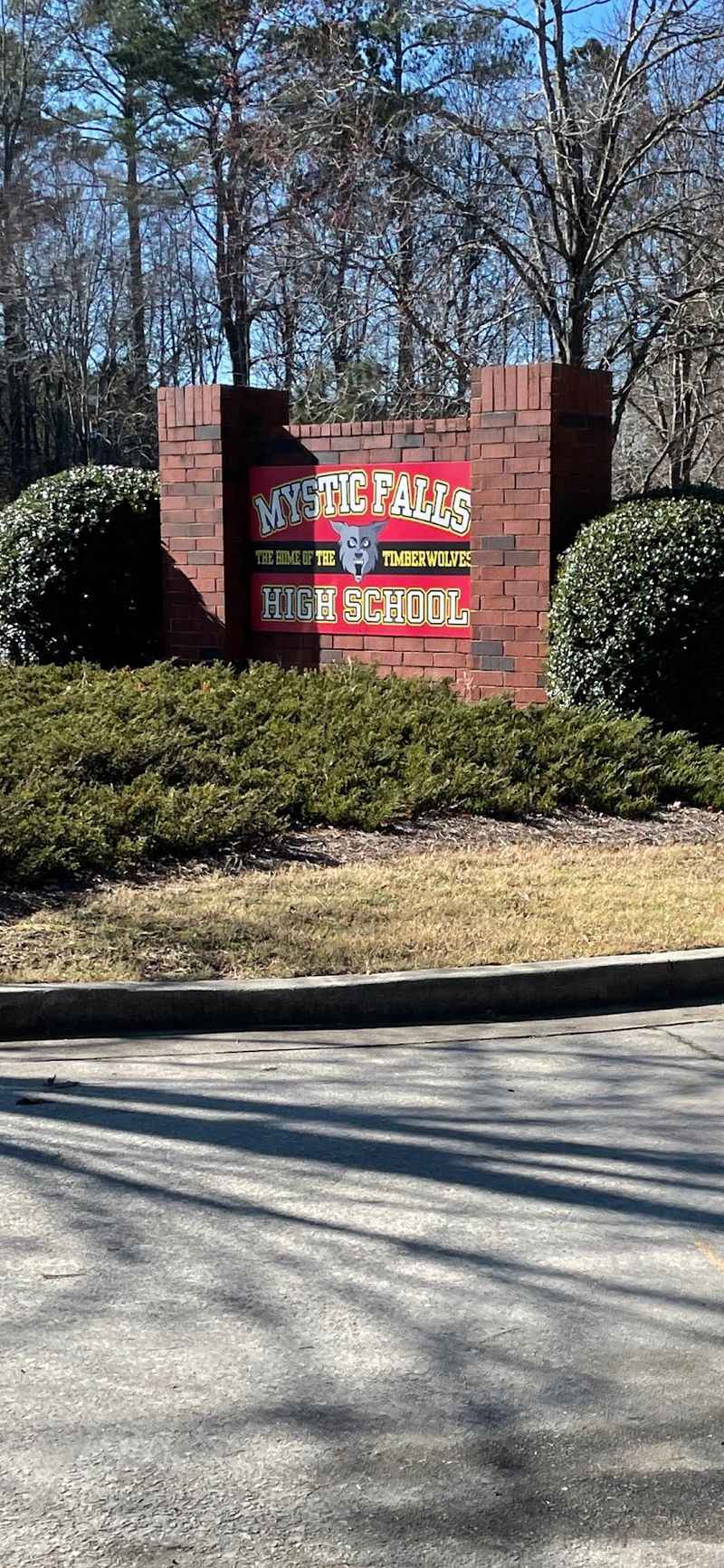
Trilith’s production history gives the tour plenty of recognizable names without needing to promise that a particular set will still be standing.
Avengers: Endgame used numerous stages across the campus. Spider-Man: No Way Home also filmed on multiple Trilith stages, including Stages 4, 6, 10, 11, 12, 14, 16, and 17.
Other credits include WandaVision, Loki, Guardians of the Galaxy Vol. 3, The Falcon and the Winter Soldier, She-Hulk: Attorney at Law, Ms. Marvel, Agatha All Along, and Ironheart.
The campus has also hosted productions outside the Marvel universe. Superman used several stages, while other credits include The Suicide Squad, Zombieland: Double Tap, Saturday Night, Megalopolis, and television productions such as Family Feud.
A numbered stage that looks plain from the road may have held several entirely different fictional places over the years.
Do not expect unreleased production details. Active projects are protected, and tour access is shaped around those restrictions.
Sets, Props, And Vendor Displays Show How Production Comes Together
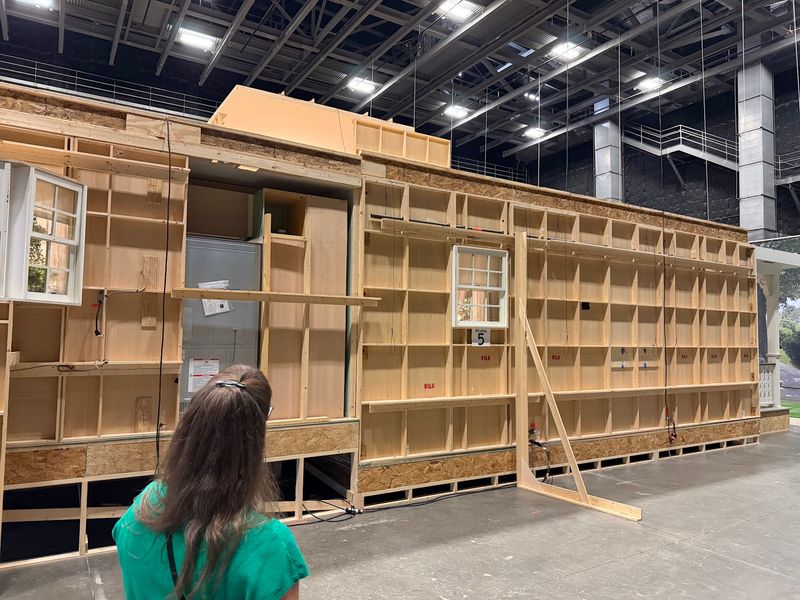
The tour is not limited to looking at stage buildings from a trolley.
Visitors also encounter displays connected with filmmaking, including props and vendor showcases. On most tours, the experience includes a set from a recent production.
A finished set can look convincing from the camera-facing side while revealing framing, supports, temporary materials, or production shortcuts from another angle.
Seeing both sides makes it easier to understand how scenery is designed for the lens rather than for everyday use.
Vendor displays widen the picture beyond actors, directors, and cameras. Film production depends on businesses and craftspeople handling lighting, grip equipment, fabrication, props, catering, greenery, technology, and other specialized work.
Trilith has an on-site network of production vendors, allowing many of those services to operate close to the stages and offices they support.
Take your time with the smaller details when the group stops. A sign, fabricated surface, piece of equipment, or prop can reveal as much about production work as the scale of a soundstage.
What is available can rotate, so treat the tour as a look at the current presentation rather than a permanent collection.
StoryGuides Come From Film And Creative Industries
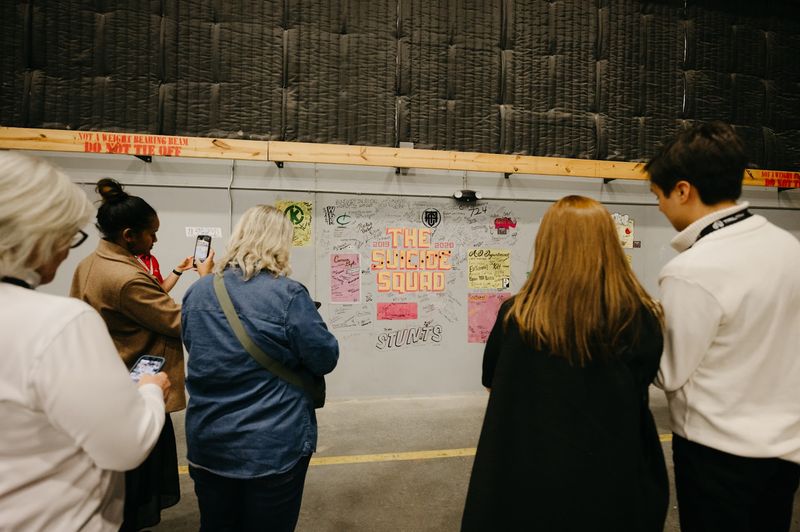
The guides leading the experience are known as StoryGuides.
StoryGuides come from creative and entertainment backgrounds including acting, writing, directing, set building, and other production work.
The format is still a guided tour, so the exact stories and examples depend on the route, the guide, and what can be discussed around active productions.
Ask practical questions if you are curious about how departments connect. Set construction, writing, acting, production logistics, stage use, and the work of vendors all fit naturally into a tour built around a working campus.
The experience is designed for ages seven and up, which is useful to know when planning a family visit. Younger visitors will still need to follow the same studio rules as everyone else, especially around restricted areas and photography.
Mobility also deserves advance planning.
The tour is primarily trolley-based, but the indoor portion includes walking and stairs inside two soundstages, and the standard experience is not wheelchair or ECV accessible.
The Campus Covers More Than 700 Acres
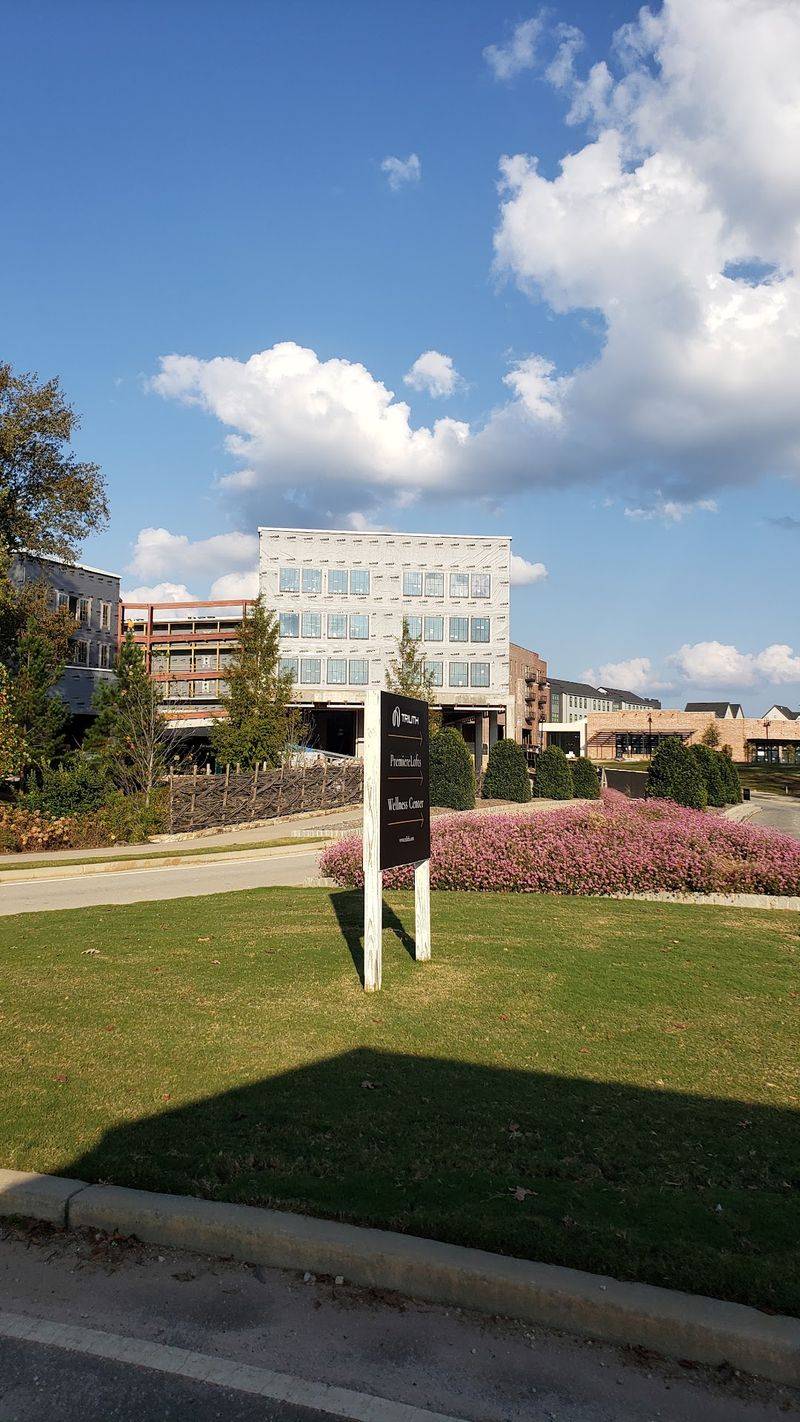
Trilith Studios occupies more than 700 acres of stages, offices, workshops, backlots, and production-support spaces in Fayetteville.
The campus includes 30 stages along with more than 400 acres of backlot landscapes such as woodlands, fields, streets, and other exterior filming areas.
Backlots give productions room to create outdoor scenes without relying entirely on public locations. Some spaces are natural, while others are designed or adapted for specific visual needs.
The studio also sits beside the Town at Trilith, a separate mixed-use community with restaurants, retail, residences, and other amenities. You can explore that area before or after the tour without treating it as part of the secure studio lot.
Tours depart from 210 Trilith Parkway, Fayetteville, GA 30214, rather than from the studio’s production entrance.
Use the tour address on your reservation and arrive about 15 minutes before the scheduled start. Heading directly to a production gate can put you in the wrong place for check-in.
The trolley handles most of the distance, but dress for the weather because boarding and portions of the experience involve moving between indoor and outdoor areas.
What To Know Before Touring Trilith Studios In Georgia
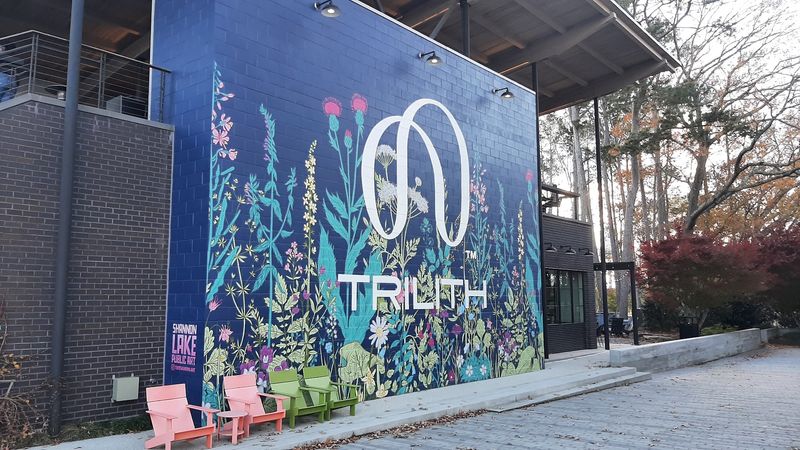
Set aside about 90 minutes for the tour itself, plus check-in time beforehand.
Photography is not allowed everywhere. Your StoryGuide identifies approved photo areas during the experience, and phones should stay put away outside those designated zones. Photography near active stages, backlots, and exterior sets is restricted.
Current production names and talent should not be identified in social media posts based on activity you happen to notice during the tour.
Wear comfortable clothing and shoes that can handle a short indoor walk and stairs. Most of the experience is seated on the trolley, but the soundstage portion requires more mobility than the ride itself.
If a particular movie is the reason you are booking, keep expectations flexible. Productions leave the lot, sets are dismantled or repurposed, and active work can change access.
The tour can still connect you with stages used by major films without guaranteeing a surviving set from one specific title.
The experience is intended for ages seven and older. For accessibility needs, contact the tour team before booking because the standard soundstage route includes stairs.
Check ticket availability before building the rest of your Fayetteville plans around a particular time. Group arrangements can also differ from standard individual bookings.
Once you arrive, follow the photo rules, stay with the group, and keep an eye on the ordinary-looking production buildings. Some of the biggest screen worlds made in Georgia began inside spaces that look surprisingly practical from the outside.