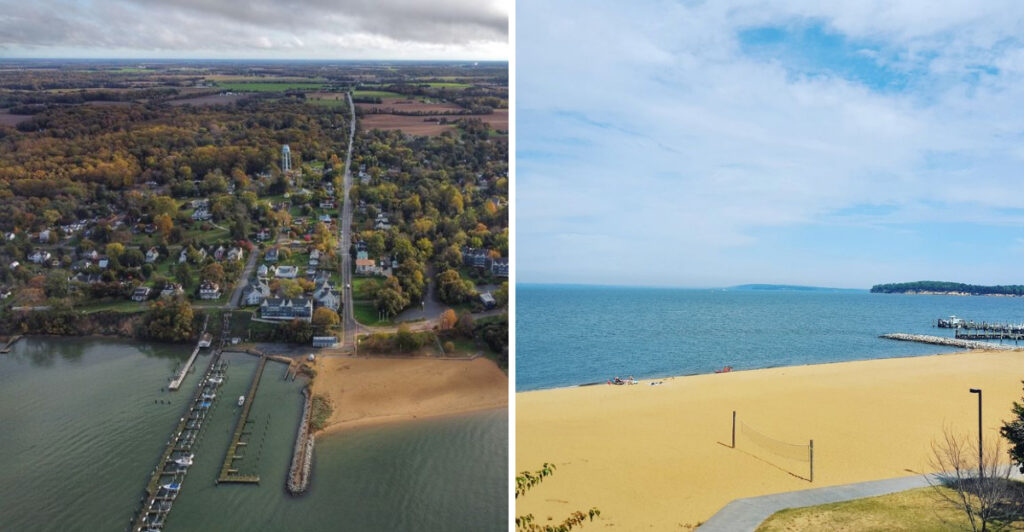
Beach town rule number one: the slower the schedule, the better the weekend.
This tiny Maryland town makes that easy. The public beach keeps things relaxed, the boardwalk gives you an excuse to wander, and the bay has a way of making the clock feel less important.
The funny part is how different things used to be. During the steamboat era, summer crowds poured in for hotels and waterfront stays.
Now the same shoreline is better suited to a picnic, or an afternoon with absolutely nowhere else to be.
So, how little could you plan and still have the perfect Maryland shore weekend?
This Was A Vacation Town Long Before Beach Trips Changed
Betterton’s recorded story reaches back to a 1664 land grant known as Fish Hall. Edward Crew later acquired the property, and the area became known as Crew’s Landing before the Betterton name arrived in the nineteenth century.
Richard Turner renamed the community Betterton after his wife’s family name. The town later incorporated in 1906, but its relationship with the water had already been shaping local life for generations.
The location mattered. Betterton sat near shipping routes linking the Chesapeake Bay with the Chesapeake and Delaware Canal. Produce moved by water, travelers passed through, and the shoreline gradually became more than a working landing.
By the late nineteenth and early twentieth centuries, steamboats were bringing vacationers from cities such as Baltimore to hotels and the beach.
The scale is easy to underestimate today. At its resort peak, Betterton had as many as eighteen hotels and boarding houses, along with amusements that made the town a genuine summer destination.
Now the population is much smaller. The 2020 Census counted 286 residents, giving the modern town a completely different rhythm from its resort peak.
That is part of the charm. You can stand near the same water that once delivered crowds by steamboat and hear far less commotion around you.
The Beach Keeps The Waterfront Refreshingly Simple
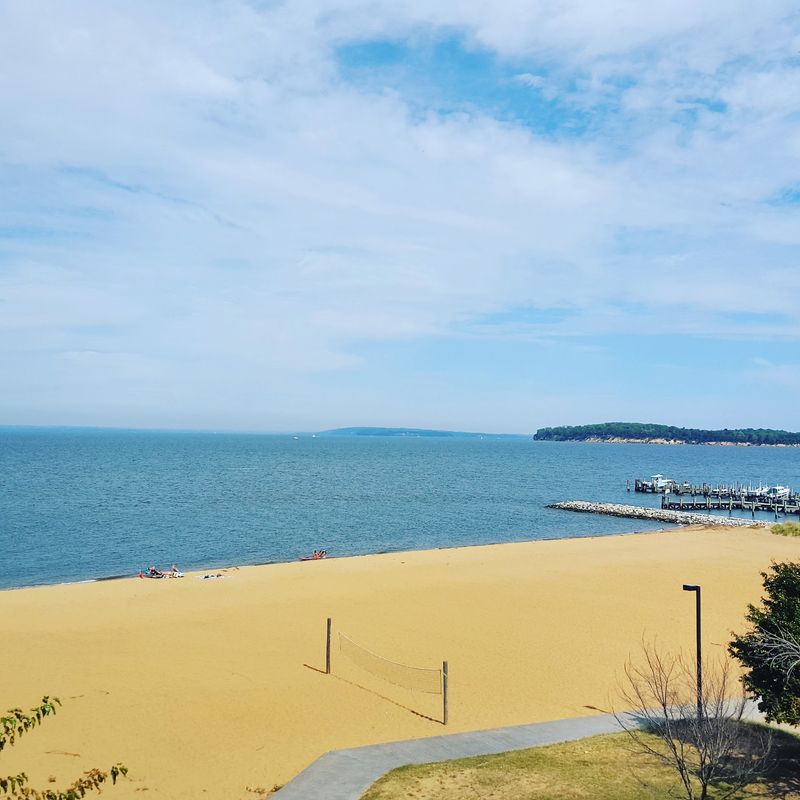
Betterton Beach is not trying to compete with a giant ocean resort. The county park covers 5.2 acres and keeps the setup practical: a sandy beach, picnic pavilion, volleyball court, fishing jetty, public boat ramp, restrooms, and bathhouse facilities.
A long boardwalk follows the waterfront, giving you a firm route for a stroll without staying in the sand. Benches and open views make it easy to pause.
The water is another reason the place stands apart from Maryland’s Atlantic coast. Betterton is known for calm tides and low salinity. That does not turn the Chesapeake into a swimming pool, but it does create a different shoreline experience from crashing ocean surf.
Swimming still deserves normal caution. Kent County monitors water quality and recommends avoiding swimming for forty-eight hours after rainfall because runoff can raise bacteria levels.
Lifeguard coverage is seasonal and depends on staffing and weather, so posted conditions matter.
For a useful starting point before heading down toward the waterfront, the Betterton Town Office is located at 100 Main Street, Betterton, Maryland 21610.
From there, the beach is close enough that the transition from town streets to bay views happens quickly.
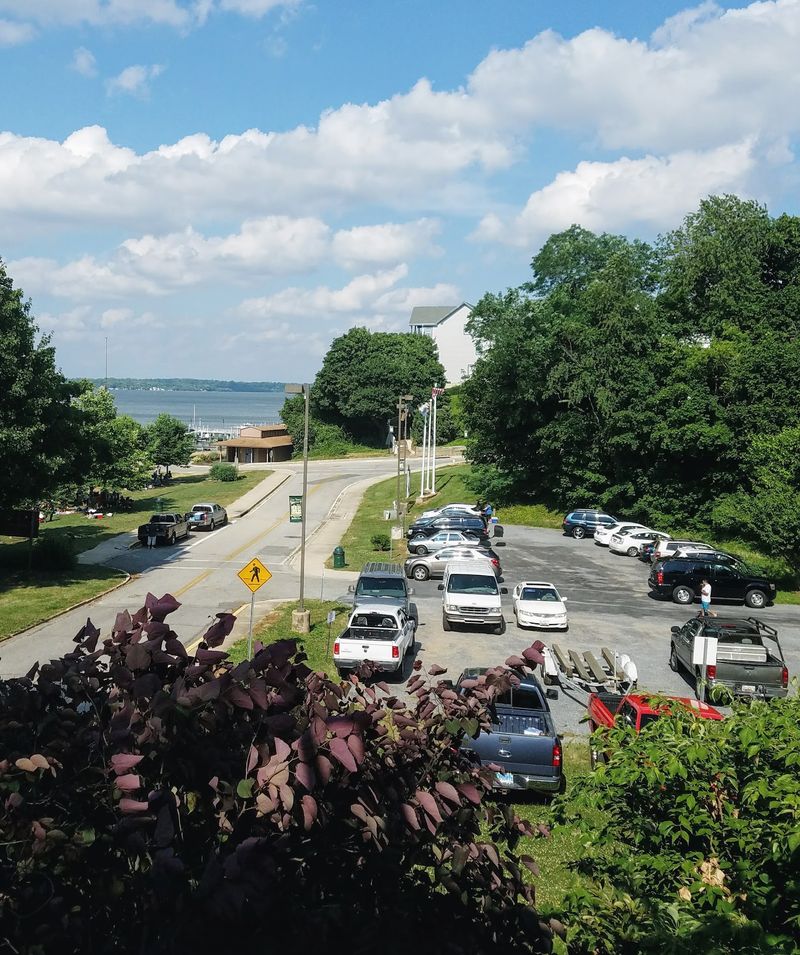
You can park near the center of town, walk toward the bluff, and let the shoreline become the main event without building a complicated itinerary around it.
That is Betterton in miniature: very little fuss between you and the water.
The Boardwalk Gives You A Slower Way To See The Shore
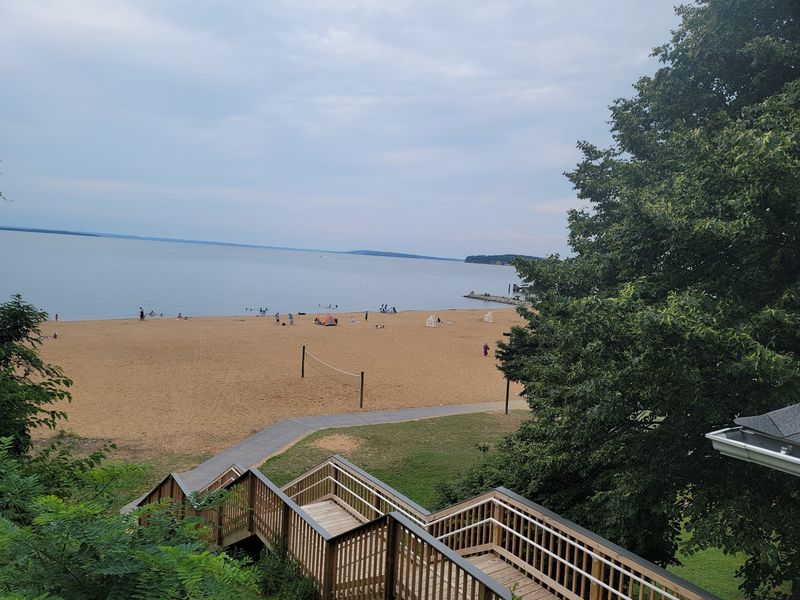
Betterton Beach’s boardwalk is one of those simple features that makes the waterfront easier to enjoy without turning it into an attraction park. It runs along the sandy shoreline and gives walkers a clear route beside the bay.
The best use for it may be doing almost nothing. Walk toward the fishing jetty, stop for the view, then turn around whenever you want. There is no required loop and no schedule attached to the experience.
The setting changes with the hour. Later in the day, the boardwalk becomes a place to watch light move across the Chesapeake while boats pass farther out.
Because Betterton sits near the mouth of the Sassafras River, the view mixes river and bay character rather than a wide Atlantic horizon.
The boardwalk also connects naturally with the rest of the beach park. A picnic can turn into a walk, a fishing stop can turn into a longer waterfront break, and nobody has to move the car between activities.
If you are staying for several hours, that compact layout makes it easy to change plans without packing everything up each time.
Betterton mostly asks you to choose a direction, slow down, and keep walking at your own pace.
Calm Tides And Low Salinity Give The Beach A Different Character
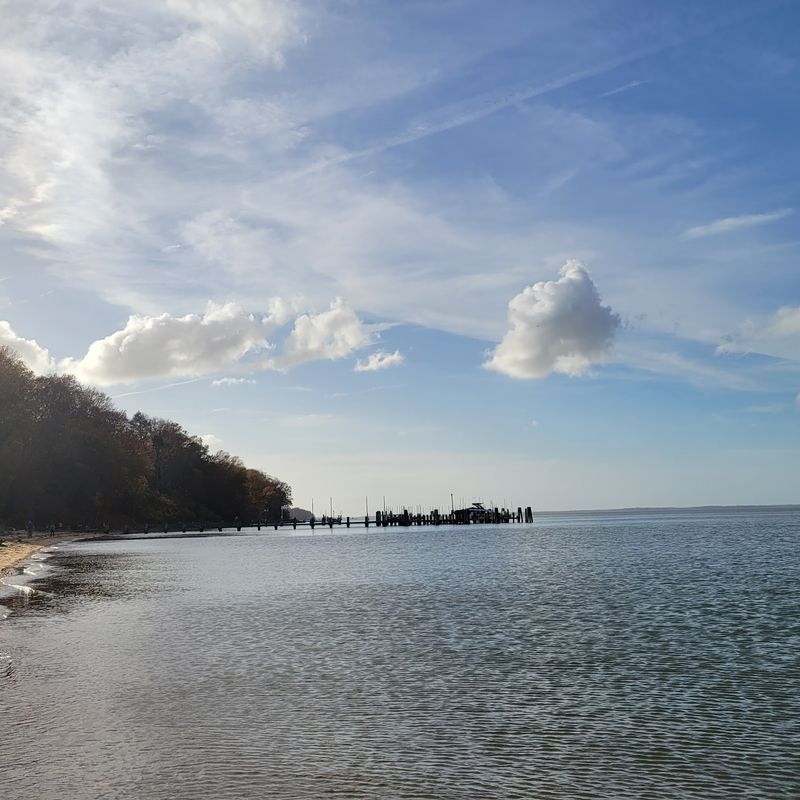
Betterton Beach is often described as a gentler alternative to Maryland’s ocean beaches, but the distinction is about setting rather than guarantees. The Chesapeake shoreline here is known for calmer tides and lower salinity than the Atlantic coast.
Fresh water flowing from the upper bay and nearby rivers helps keep salinity lower here, giving Betterton a different swimming environment from Ocean City.
Wind, rain, and water quality can change conditions quickly, so current advisories and posted notices still matter.
When conditions cooperate, the calmer bay water suits the town’s pace. You can wade, swim, or use the beach as the center of an unhurried afternoon.
The fishing jetty adds another option for people who would rather stay dry. It extends into the water from the park and keeps the shoreline useful even when swimming is not part of the plan.
Betterton’s appeal is not that the bay behaves perfectly. It is that the beach gives you several ways to spend time beside it.
Steamboats Once Turned This Small Town Into A Summer Hotspot
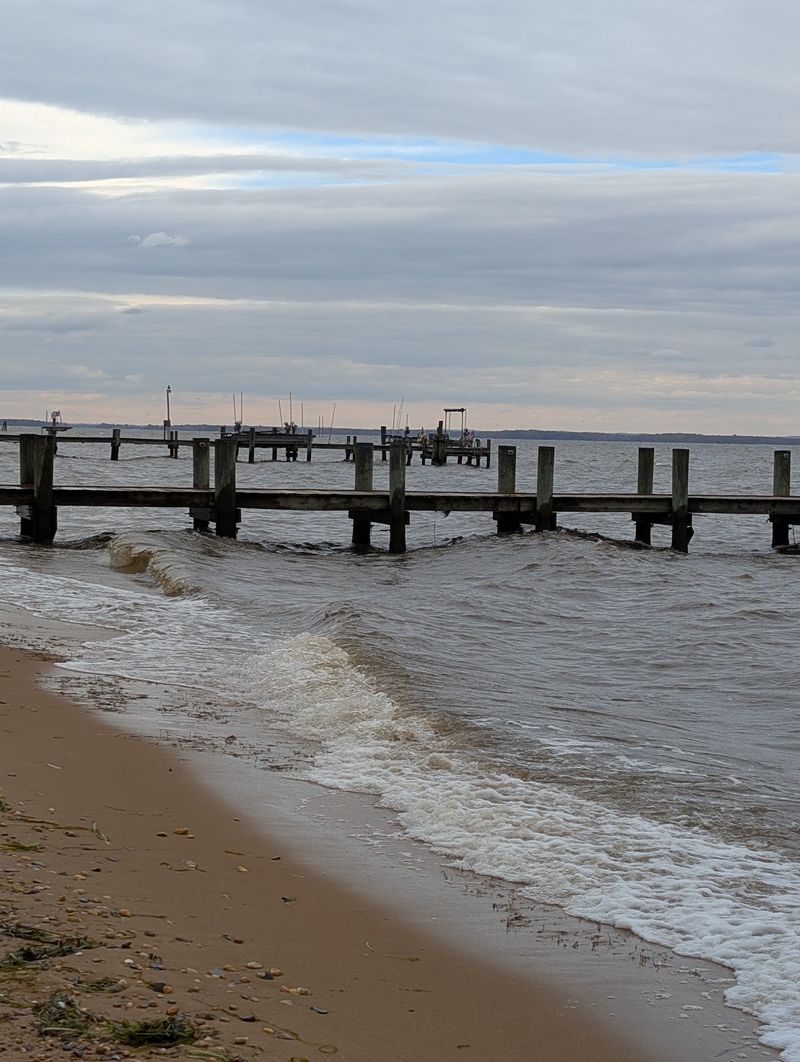
Modern Betterton makes more sense once you picture the waterfront crowded with steamboat passengers.
During the resort era, excursion boats brought visitors from Baltimore and other Mid-Atlantic cities to spend summer days and longer vacations along the bay.
Hotels and boarding houses grew around that traffic. At its peak, the town had as many as eighteen lodging properties plus resort-era entertainment.
The boom did not last forever. Automobiles changed how families traveled, the Chesapeake Bay Bridge opened in 1952, and Atlantic destinations became easier competitors for vacationers.
The last excursion boat left Betterton for Baltimore in 1968. By then, the town’s identity was shifting from busy resort to quiet waterfront community.
Some old hotel buildings disappeared. Others survived in altered form, and the beach eventually became public parkland after local efforts helped preserve the shoreline for community use.
That transition gives a modern visit an extra layer. The quiet is not evidence that nothing happened here. It is what came after a very busy chapter.
Stand near the water long enough, and the contrast becomes the best part of the story.
The Heritage Museum Keeps Betterton’s Resort Story Close By
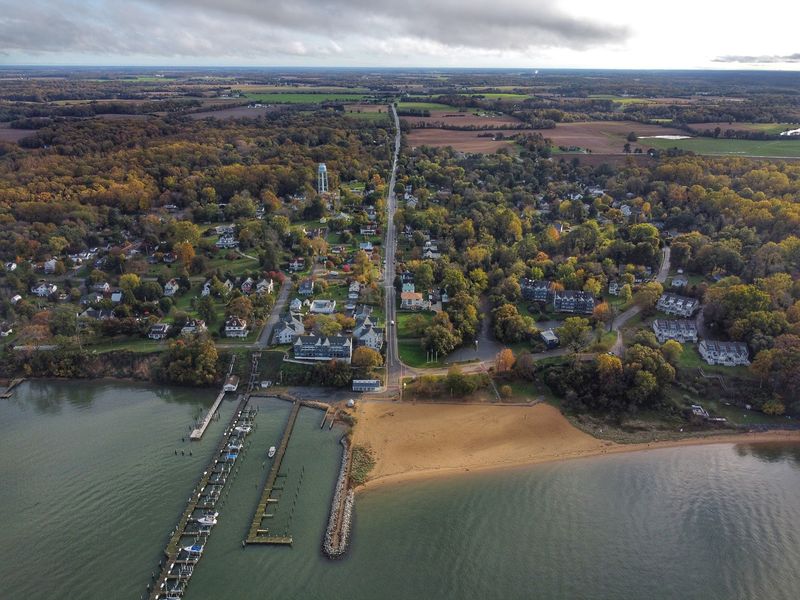
The Betterton Heritage Museum occupies the restored former church and preserves artifacts tied to the town and surrounding area.
Its exhibits connect the fishing-village years, steamboat period, resort life, and the waterfront community that followed. That makes it a useful stop before or after the beach.
For the 2026 season, the museum lists summer hours beginning May 23, with Saturday and Sunday opening from 1 p.m. to 3 p.m. It also participates in special museum events, so the calendar can add extra visiting opportunities.
The museum shares the community-center complex used by the town, keeping local government and local history close together.
You do not need hours inside to get the point. Even a shorter visit can connect the modern beach park with the much larger vacation industry that once surrounded it.
Betterton is small enough that history does not sit off in a distant district. The museum, Main Street, and the waterfront belong to the same compact story.
The Public Landing Keeps Betterton Connected To The Bay
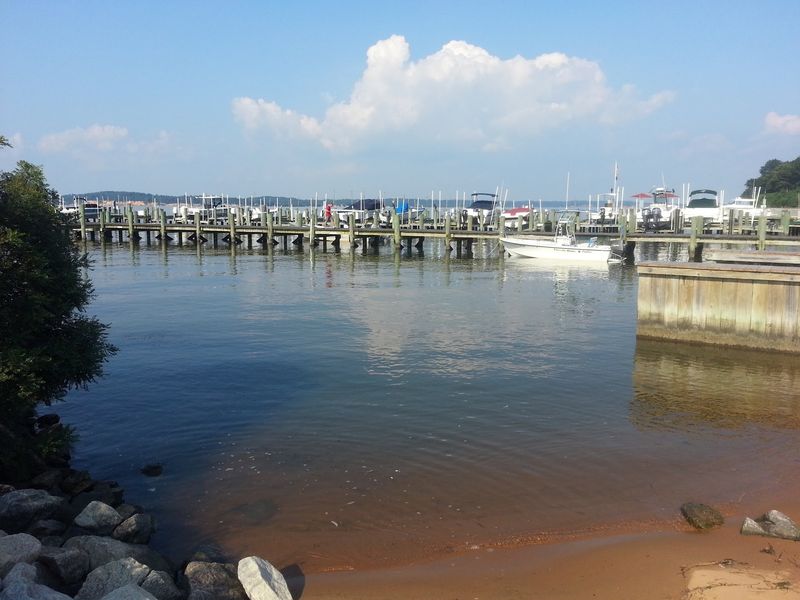
Water access still matters in Betterton, even though steamboats no longer deliver vacation crowds. The beach park includes a public boat ramp, pier access, and a fishing jetty, keeping the shoreline useful for boaters and anglers as well as swimmers.
That continuity suits a town whose history began with fishing and waterborne trade. The boats are different now, but arriving from the Sassafras River or heading toward the upper Chesapeake still makes geographic sense.
For visitors arriving by car, the landing adds activity without overwhelming the beach. A boat launch, fishing stop, and picnic can all happen within the same park.
Public-landing rules and permits can change, so boaters should check the current requirements before towing a trailer to town. A quick check keeps the waterfront part of the weekend simple.
The bigger point is simple: Betterton is still connected to the water in practical ways. The beach is not only scenery, and the bay is not only something to photograph.
That gives this tiny Maryland town more depth than its quiet first impression suggests. Betterton once welcomed steamboats full of vacationers. Today it offers a much smaller invitation: bring a towel, take a walk, learn the history, and let the Chesapeake set the pace.
For a weekend built around slowing down, that may be all the itinerary you need.