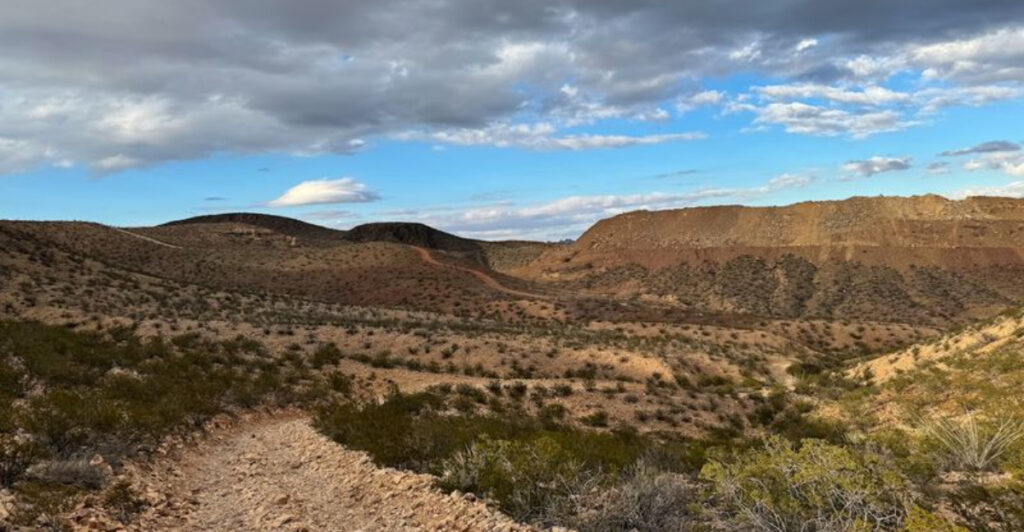
I was not looking at a view. I was looking at time.
The ground here holds traces from about 280 million years ago, when strange creatures moved through mud that later hardened into rock. Long before dinosaurs, this place was alive in ways we can only piece together from what survived.
That is what makes it so wild. You are not standing in a museum.
You are standing on the evidence.
In New Mexico, places can surprise you fast, but this one feels different because it does not need a dramatic entrance. The story is right there, pressed into stone, waiting for careful eyes.
I kept staring at the ground, thinking the same thing over and over.
How many people walk past history without seeing it today?
Rugged Trails Through Ancient Desert Canyons
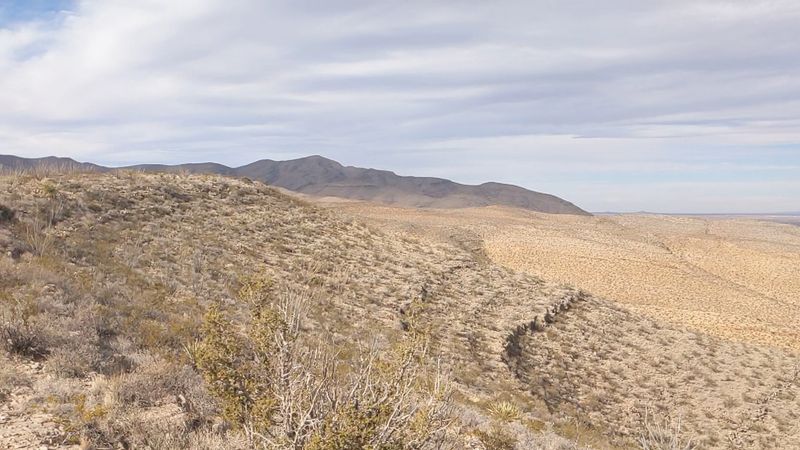
The first time I laced up my boots at the trailhead, I had no clue what kind of workout was waiting inside those canyon walls.
The trails here cut through raw, undeveloped terrain protected as part of a 5,280-acre monument managed by the Bureau of Land Management.
Narrow paths wind between eroded rock walls, loose gravel, and the occasional cactus that seems personally determined to make your ankles regret the trip.
The Ridgeline Trail gets steep in sections, but it rewards every step with increasingly dramatic canyon views that stretch far beyond what you expected when you parked your car.
I covered just over three miles on my first visit, and the physical challenge felt completely worth it once the canyon opened up around me.
Bring sturdy footwear, pack more water than you think you need, and leave early in the morning before the desert sun turns the trail into a slow cooker.
Shade is extremely limited on these paths, and the canyon offers zero mercy to anyone who underestimates southern New Mexico’s dry, sunbaked intensity at Prehistoric Trackways National Monument, Las Cruces, NM 88007.
Red Rock Layers With Prehistoric Stories
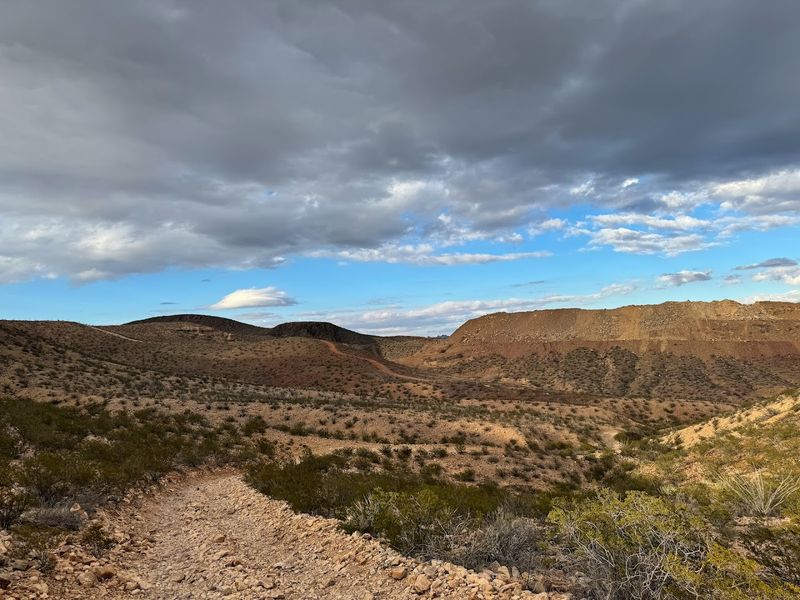
I stood beside those layered red rock walls and kept thinking about the age of it all. Each stripe of color represents thousands of years of sediment quietly stacking up while ancient creatures walked across the mud below.
The rock formations at this monument date back to the Permian Period, roughly 280 million years ago, when this region sat near the edge of the supercontinent Pangea in a warm coastal environment.
That context alone makes the geology feel almost surreal, because nothing about the current dry desert landscape hints at the tidal flats, river floodplains, and early conifer forests that once existed here.
Geologists and amateur rock enthusiasts alike find these layered exposures genuinely fascinating, since each band of sediment tells a chapter of a story that no human was around to witness firsthand.
I traced my fingers along one section of exposed stone and tried to count the visible layers, eventually losing track somewhere around fifteen distinct color shifts.
The red tones come from iron-rich minerals that oxidized over millions of years, giving the canyon walls that warm, almost glowing appearance at golden hour.
Every crack and fold in those walls is essentially a page from the oldest book on Earth.
Fossil Marks Hidden In The Stone
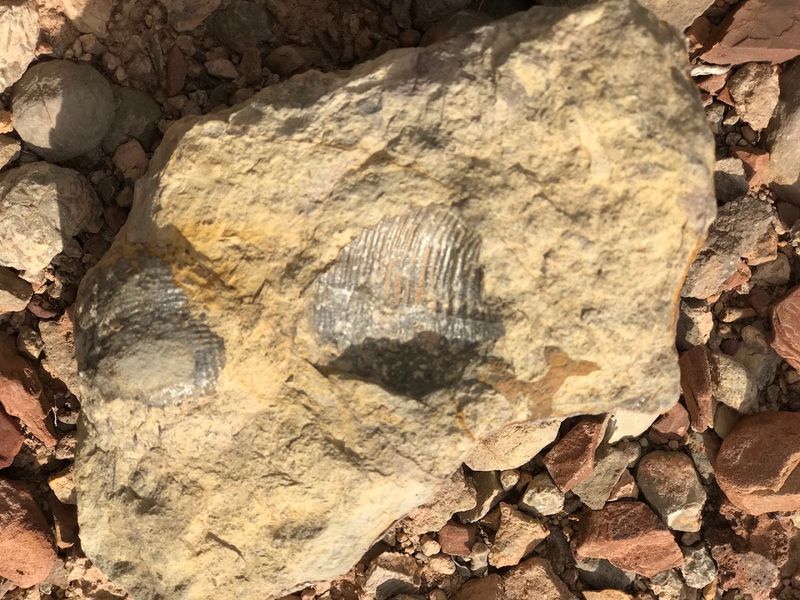
An actual fossilized footprint pressed into stone can stop your thoughts completely. For a second, all that is left is pure, unfiltered awe.
The monument preserves an extraordinary variety of trace fossils, including footprints from amphibians, reptiles, insects, and crustaceans, along with drag marks, burrows, and plant impressions that scientists describe as among the most significant Permian tracksites in the entire world.
One of the most thrilling tracks to look for is Dimetropus, attributed to Dimetrodon, a fin-backed carnivore that could reach up to thirteen feet in length and roamed this landscape long before any dinosaur ever existed.
Amateur paleontologist Jerry Paul MacDonald first brought these trackways to scientific attention on June 6, 1987, and his discovery eventually led to the monument receiving its official designation in 2009.
I spent a solid thirty minutes crouched over a flat section of rock near the Discovery Site, slowly scanning for the subtle depressions that signal an ancient footstep.
Many of the most impressive collected specimens are now curated at the New Mexico Museum of Natural History and Science in Albuquerque and the Las Cruces Museum of Nature and Science.
Patience is genuinely your best tool out here.
Wide-Open Views Across The Robledo Mountains
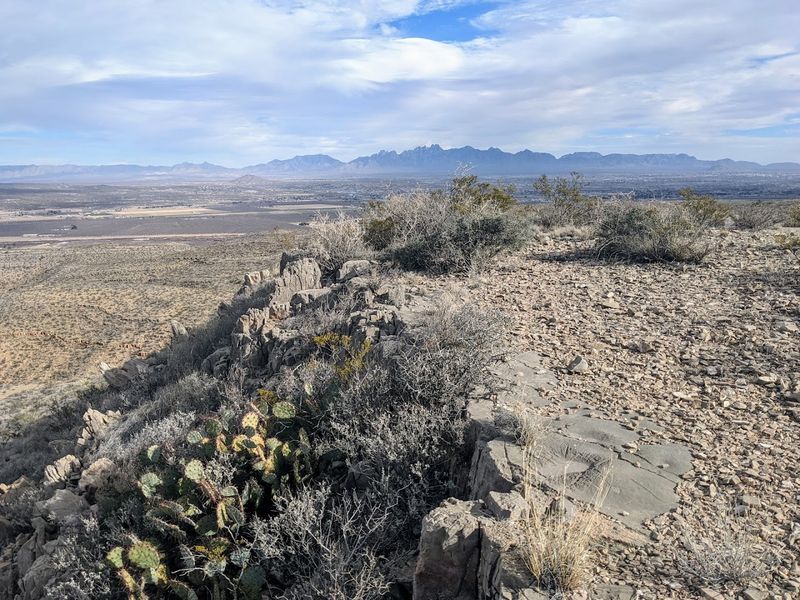
Nothing quite prepares you for the moment the trail crests the ridge. Suddenly, the entire Las Cruces valley unfolds below you like a topographic map brought to life.
The Robledo Mountains sit northwest of the city, and from the higher sections of the trail, you can spot the jagged silhouette of the Organ Mountains cutting into the sky on the opposite side of the valley.
From certain high points, pockets of green farmland far below add a surprisingly lush contrast to all the tan and rust-colored terrain surrounding you on the trail.
I reached the ridgeline on a clear winter morning, and the visibility stretched so far in every direction that I genuinely felt like I was standing on top of the entire region.
Winter is one of the most comfortable times to visit, since cooler temperatures make the exposed ridgeline far easier to enjoy without rushing.
Sunrise and sunset both deliver extraordinary color shows from up here, with the rock faces shifting from pale gold to deep orange as the light angle changes.
Honestly, the views alone justify every uphill step it takes to reach them.
Quiet Paths Through A Desert Time Capsule
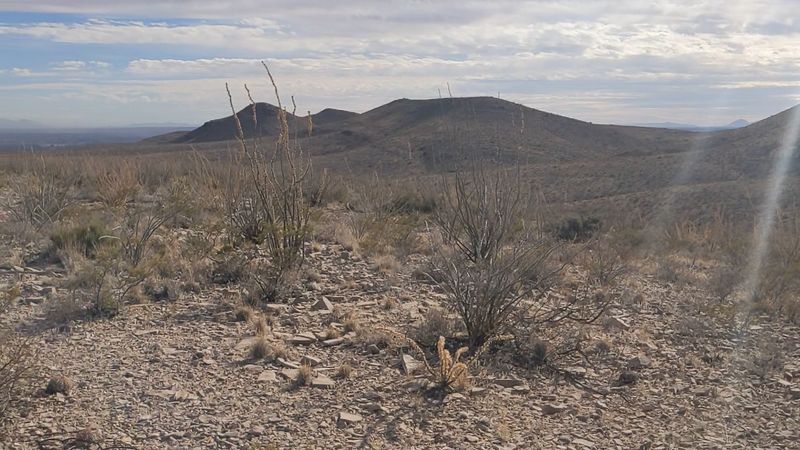
The silence out here feels different from ordinary quiet. It has weight, as if the landscape itself is holding its breath.
The monument encompasses approximately 5,280 acres of completely undeveloped terrain managed by the U.S. Bureau of Land Management, and that commitment to keeping the land raw is exactly what makes it feel so removed from ordinary life.
I encountered only two other hikers during my entire morning out there, which meant long stretches of trail where the only sounds were my footsteps, the wind, and the occasional rustle of a jackrabbit disappearing into the brush.
That solitude creates a genuinely meditative experience, especially when you pair it with the knowledge that you are walking through a landscape that preserves 280 million years of natural history beneath its surface.
The monument is open year-round, which means early risers can arrive with the desert still cool and watch the light slowly build across the rock.
No entrance fees, no crowds, no gift shop, just open land and the quiet satisfaction of exploring somewhere most people have never heard of.
Time moves differently out here, and that is a feature, not a flaw.
Sunbaked Slopes And Weathered Rock Walls
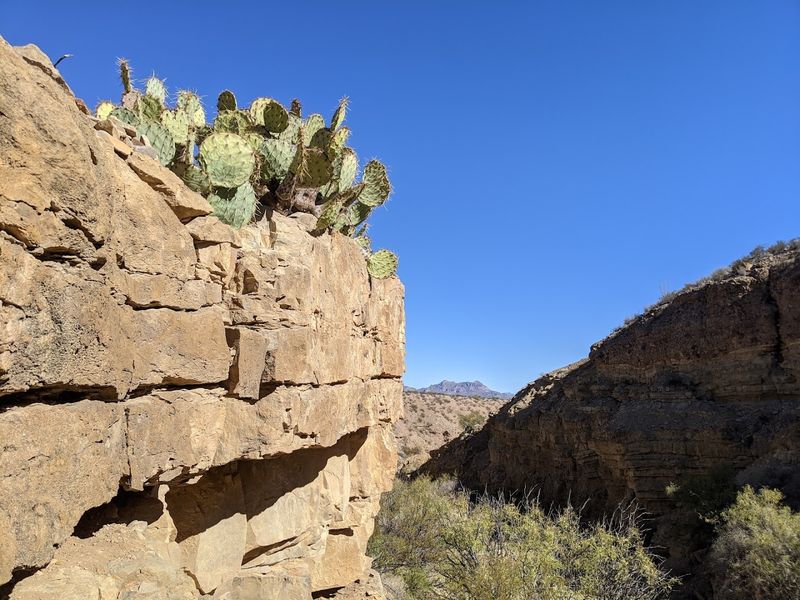
By mid-morning, the sun out here stops feeling like background scenery and starts feeling like a direct personal challenge.
The slopes of the Robledo Mountains receive intense solar exposure throughout most of the year, and the lack of tree cover means the rock surfaces absorb and radiate heat in a way that makes the air shimmer above the trail by late morning.
Those weathered rock walls tell their own story through texture, with fractures, pitting, and erosion patterns that reflect millions of years of freeze-thaw cycles, wind, and the slow chemical work of desert elements.
I pressed my palm flat against one sun-warmed wall and the heat coming off the surface was genuinely startling, even though the air temperature itself felt manageable in the early hours.
Summer visits require an early start, plenty of water, and a firm plan to turn back before the exposed slopes become dangerously hot.
The weathering process that makes these walls look so dramatic is also part of what gradually reveals new fossil surfaces over time, as outer layers of rock slowly flake away.
Every crumbling edge out here is essentially geology in slow motion.
A Remote Landscape Shaped By Deep Time
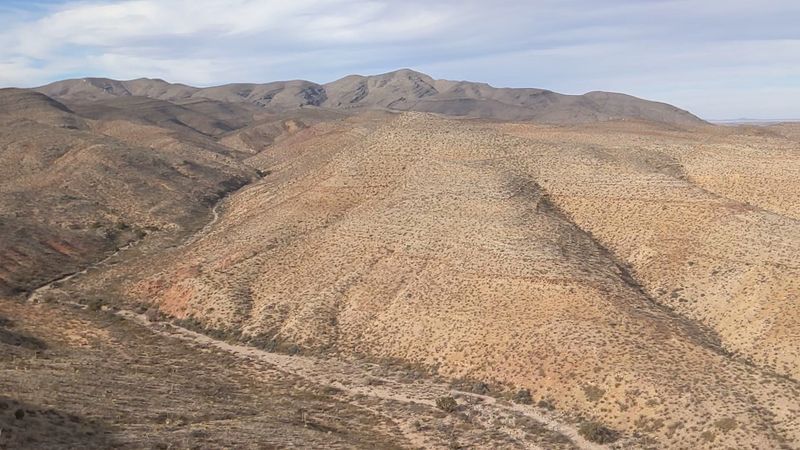
The deeper sections of this monument take effort to reach. That distance from the trailhead is exactly what keeps the landscape feeling genuinely untouched.
Access roads and informal routes around the Robledo Mountains can become rough quickly, especially after storms, and high-clearance vehicles are often the safer choice beyond the main approach.
The monument was officially designated as the 100th active U.S. national monument on March 30, 2009, a milestone that recognized the extraordinary scientific value of what the Permian-era trace fossils preserved here represent.
Scientists regard this site as one of the most important Permian tracksites in the world, not just because of the quantity of fossils but because of the exceptional diversity of species and behaviors recorded in the stone.
I stood at a point where the wash below me curved out of sight into the mountains, and the complete absence of any modern structure in my field of vision made the whole scene feel genuinely ancient.
The BLM manages this land with minimal infrastructure by design, preserving the raw character that makes the monument scientifically and experientially valuable.
Out here, deep time is not an abstract concept; it is the actual ground under your feet.
Wild Desert Scenery With Ancient Footprints
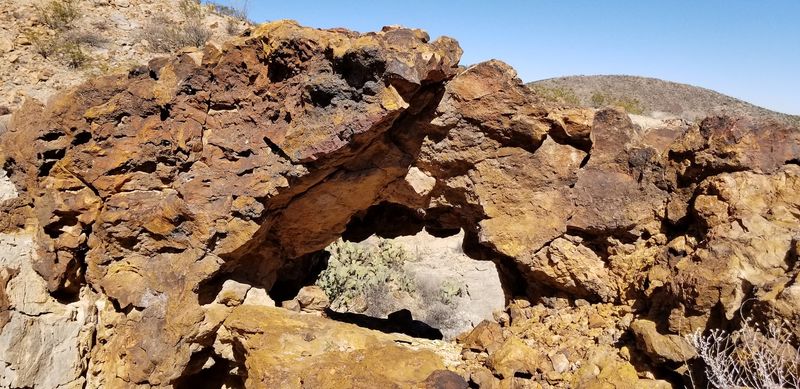
Every landscape has a personality. This one feels fierce, ancient, and quietly spectacular in a way that sneaks up on you instead of announcing itself all at once.
The combination of dramatic desert scenery and the knowledge that actual 280-million-year-old footprints exist somewhere beneath and around you creates a layered experience that is hard to find anywhere else in the American Southwest.
Trace fossils here include prints from amphibians like Batrachichnus, which resembled a salamander, alongside reptile tracks, insect impressions, crustacean marks, fossilized plants, and petrified wood scattered across the terrain.
I found a small section of petrified wood near the trail and spent several minutes examining the grain patterns still visible in what was once living timber from a forest that existed before the first dinosaur ever hatched.
The Discovery Trail leads hikers up to an informational display above a dry creek bed where red rocks carry imprints of leaves and animal footprints that you can examine up close.
Guided hikes and fossil-viewing opportunities can change by season, so it is best to check with BLM Las Cruces or the museum before planning around one.
Welcome to Prehistoric Trackways National Monument near Las Cruces, where the desert floor doubles as one of the most remarkable natural archives on Earth.