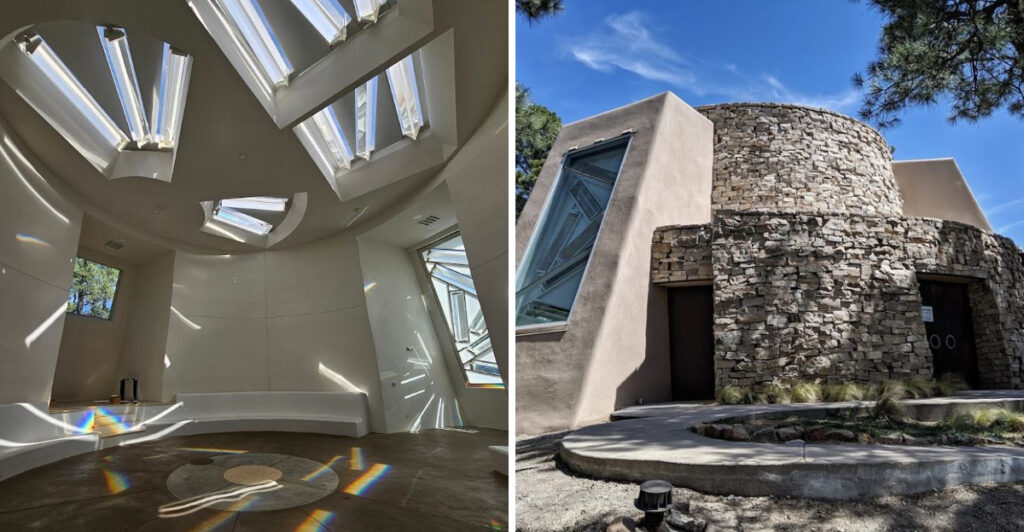
A round white building on a college campus in northern New Mexico is doing something wild with sunlight. At first, it looks calm.
Almost plain. Then you step inside, and the room starts changing around you.
Rainbows move across the walls. Light spills onto the floor.
The ceiling catches color in a way that makes everyone go quiet for a moment. The secret is built right into the place.
Dozens of prisms catch the sun and send color across the room, so the view depends on the hour and where you stand. My first visit caught me completely off guard.
I thought I was walking into a campus building. Instead, I ended up inside a room that felt alive.
It is the kind of stop people describe badly because photos do not explain it. You really have to stand there and watch the light move in real time for yourself.
Rainbow Light Across White Walls
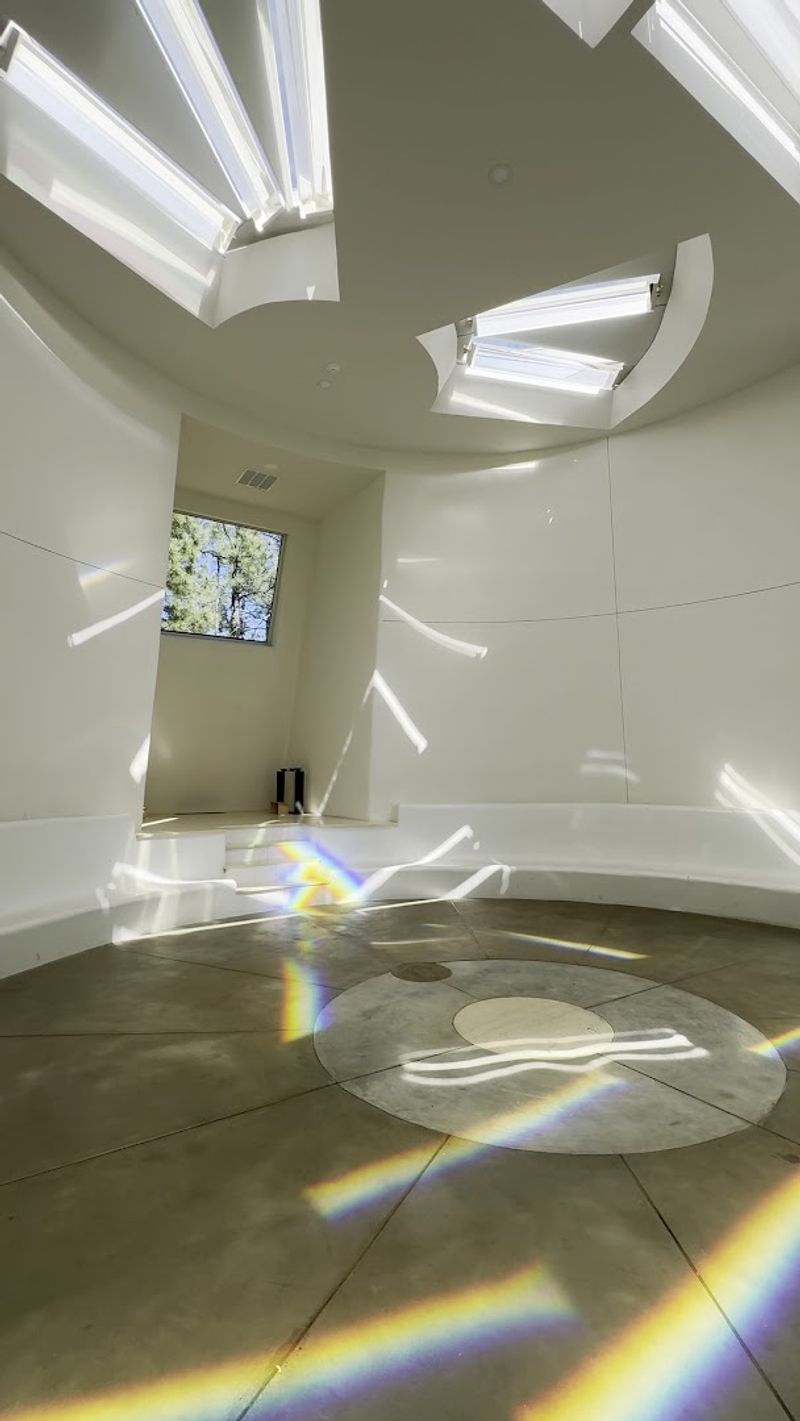
The first time I walked through the door of this circular sanctuary, I stopped moving and just stared at the walls.
The entire interior surface is smooth and white, which sounds plain until you realize that the whiteness is the point, because it acts as a giant canvas for the light show happening all around you.
Twenty-four large prisms are embedded in the apses and roof of the building, and when sunlight passes through them, it breaks apart into full-spectrum color that fans across every surface.
The rainbows are not static little patches on a wall, but wide, sweeping arcs of color that drift and shift as the sun moves across the sky.
I spent a solid twenty minutes slowly rotating in place, watching the colors crawl across the curved walls at a pace so gentle it felt intentional.
Late morning to early afternoon is the sweet spot for the strongest display, when the sun is high and the prisms are working hard.
On a clear day, this ordinary-looking white room suddenly becomes something that feels almost unreal.
That contrast is exactly what makes the Dwan Light Sanctuary at United World College-USA, State Rte. 65, Montezuma, NM 87731, so unforgettable.
A Quiet Room Filled With Color
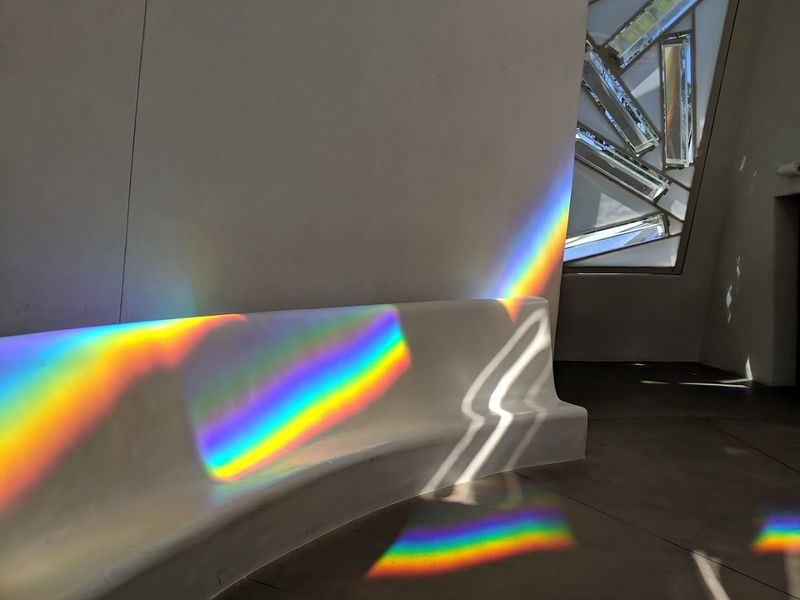
Silence has a texture in this room, and I mean that in the most grounded, non-dramatic way possible.
The sanctuary is designed for stillness, and the moment you step inside you feel the outside world peel away, replaced by nothing but the hum of your own thoughts and a ceiling full of color.
The room itself does not ask you to do much, which is part of its pull, because the white floor and curved walls give your eyes plenty of space to rest.
I settled quietly near the center for a while, watching one soft band of violet and gold slide slowly across the curved wall in front of me.
The acoustics add another layer to the experience, because even the smallest sound, a whisper or a soft hum, bounces around the dome in a way that feels almost musical.
Some visitors may sit quietly, while others simply stand near the walls and watch the ceiling change as the light moves above them.
Color, quiet, and that rare feeling of being somewhere clearly set apart from the rest of the world make this room one of the most unexpectedly calming spaces I have ever sat inside.
Prisms Beneath The Northern Sky
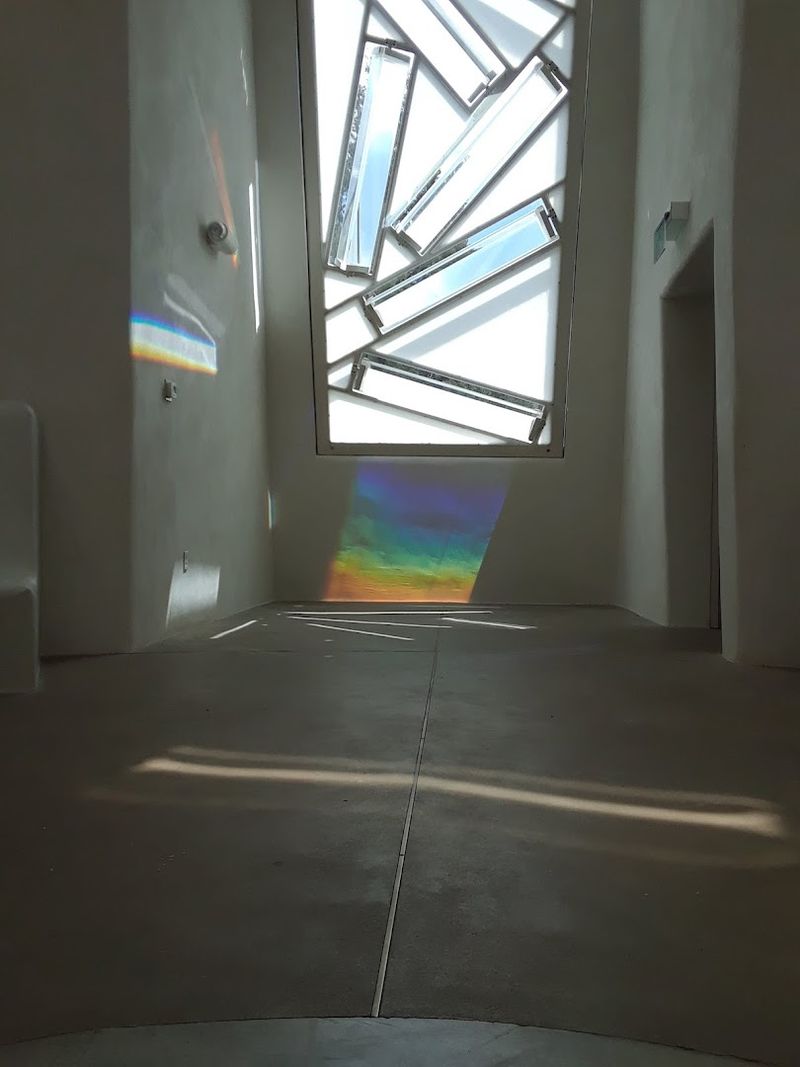
The outside of the building looks almost too modest for what it holds inside, a low white cylinder sitting quietly among the trees of the campus.
The real magic becomes visible once you get close enough to notice the panels along the exterior walls, where large prisms face outward toward the sky.
Those prisms are the engine of the whole experience, capturing the northern New Mexico sunlight and redirecting it inward as pure spectrum color.
In all, twenty-four large prisms are set into the apses and roof, each one aligned to catch light and send it into the room.
Northern New Mexico’s high-elevation light is a major part of the experience, and United World College USA says the site was chosen for its spectacular natural light.
I remember circling the exterior before going in, studying the clean prism panels and trying to imagine the math and craft that went into designing the whole system.
The artist Charles Ross refined the orientation and angle of the prisms so that light behavior inside the dome changes predictably throughout the day and across the seasons.
Standing outside that building under the wide New Mexico sky, you get the sense that someone here was paying very close attention to the sun.
A Minimal Space For Stillness
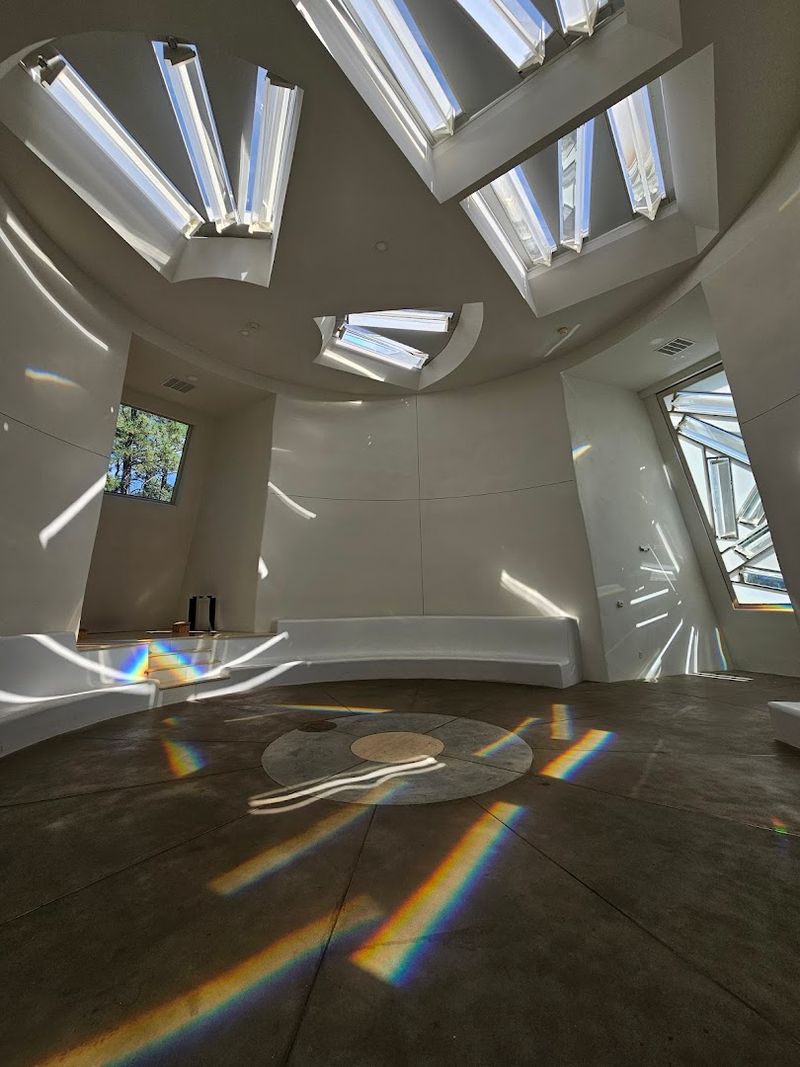
This building has almost nothing inside its quiet white shell, and that is absolutely the right choice.
The interior is stripped back to its essentials: a smooth white floor, curved white walls, a domed ceiling, and simple open space for visitors to sit quietly without distraction.
No art hangs on the walls, no signs compete for your attention, and no ambient music plays in the background, because the space itself is the experience.
That kind of deliberate emptiness is harder to pull off than it sounds, and the designers clearly understood that adding anything would only dilute the effect of the light.
I appreciated how the minimalism forces you to slow down and actually notice things, the way one band of color fades into another, the subtle difference between the light at noon versus the light an hour later.
Visitors come here to breathe, to think, or simply to sit without an agenda, and the sparse design makes all of those things feel completely natural.
In a world that constantly layers more on top of everything, finding a room that chooses less and means it deeply is its own kind of rare and quietly radical act.
Sunlit Geometry In The Forest
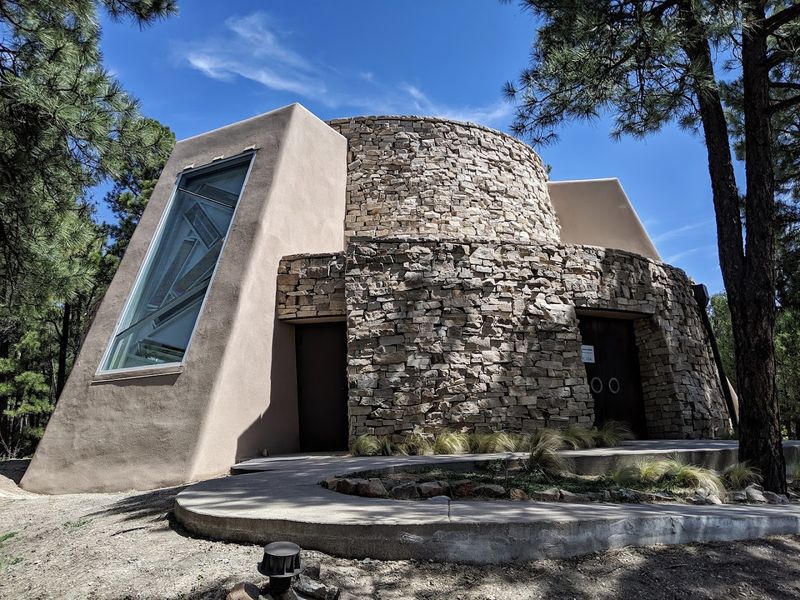
The approach to the sanctuary feels quiet before the building comes into full view among the trees.
The setting is striking, a precise geometric shape placed in the middle of a natural, forested landscape on the grounds of United World College USA.
The campus itself has a dramatic backdrop, with mountain country nearby and tall pines helping frame the experience as you move through the grounds.
That contrast between the clean, intentional geometry of the building and the organic, untamed landscape around it creates a visual tension that feels almost theatrical.
I paused before going in and took a long look, noticing how the white walls caught the late morning sun and seemed to glow against the dark green of the trees.
The short walk to the sanctuary feels like a transition, a small ritual that prepares you mentally for the experience waiting inside.
Architecture that earns its setting rather than ignoring it is a specific kind of achievement, and this building wears its forest surroundings like they were always part of the plan.
Soft Colors Moving With The Light
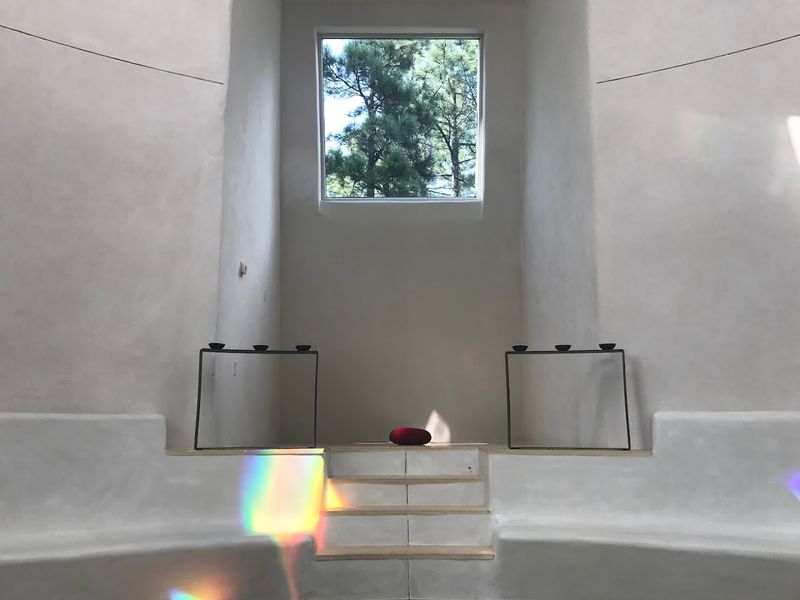
One of the most quietly fascinating things about this space is that it never looks exactly the same twice, even during a single visit.
As the sun shifts position in the sky, the angle at which light enters the prisms changes, which means the colors projected onto the interior walls are constantly in slow, almost imperceptible motion.
I sat still for about thirty minutes during my visit and watched a band of deep orange gradually soften into yellow, then stretch toward the ceiling as the sun climbed higher.
On partly cloudy days, the effect can become even more dynamic, because the colors appear and disappear as clouds pass, creating a rhythm that feels almost like breathing.
Even when clouds move through, brief breaks in the sky can bring the prisms back to life for a few bright minutes at a time.
That unpredictability is part of the appeal, because you can never fully script what you will see, and the light decides the show on its own terms.
A soft color moving across a white wall turns out to be one of the most unexpectedly meditative experiences I have stumbled into during years of travel.
A Peaceful Interior Of Rainbows
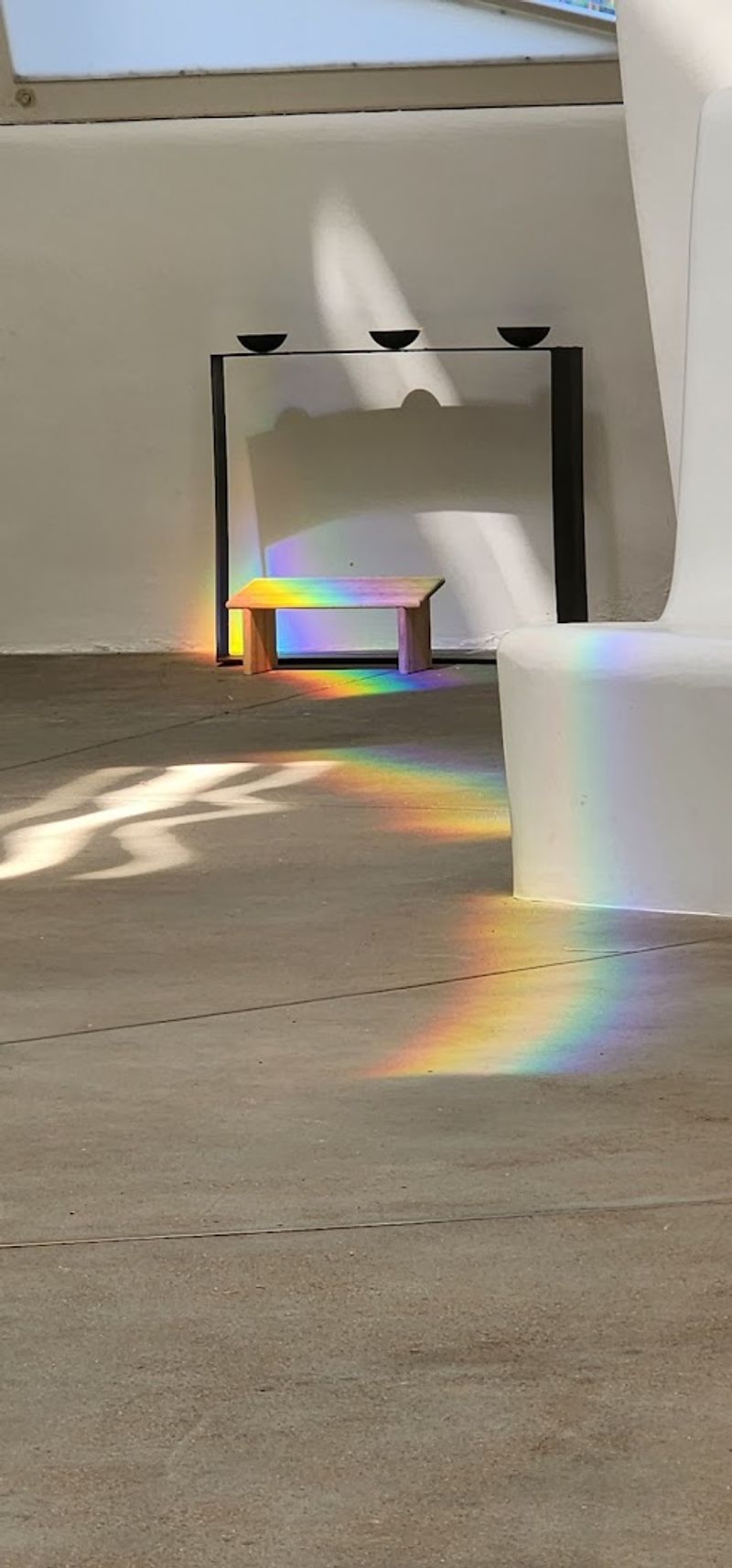
Peace is not just a feeling here, it is something the building actively engineers through its design, acoustics, and the way it handles light.
The circular shape of the room means there are no hard corners breaking the view, and the dome overhead creates an enveloping quality that makes you feel held rather than exposed.
Rainbows cover the walls and floor during peak sunlight hours, and the effect is not garish or overwhelming but quietly soft, like being wrapped in a slow watercolor painting.
I watched a visitor near me close her eyes and tilt her face upward, apparently just feeling the warmth of the colored light on her skin, and it looked like the most natural thing in the world.
The room welcomes all kinds of visitors, from those who come with a meditation practice to those who simply wander in curious and leave an hour later feeling inexplicably lighter.
The smooth floor and uncluttered interior make the space practical for sitting, stretching, or lying flat while watching the ceiling change above you.
Few buildings manage to feel both carefully designed and completely unpretentious at the same time, but this one pulls it off with a kind of effortless, color-drenched grace.
Where Architecture Meets The Sky
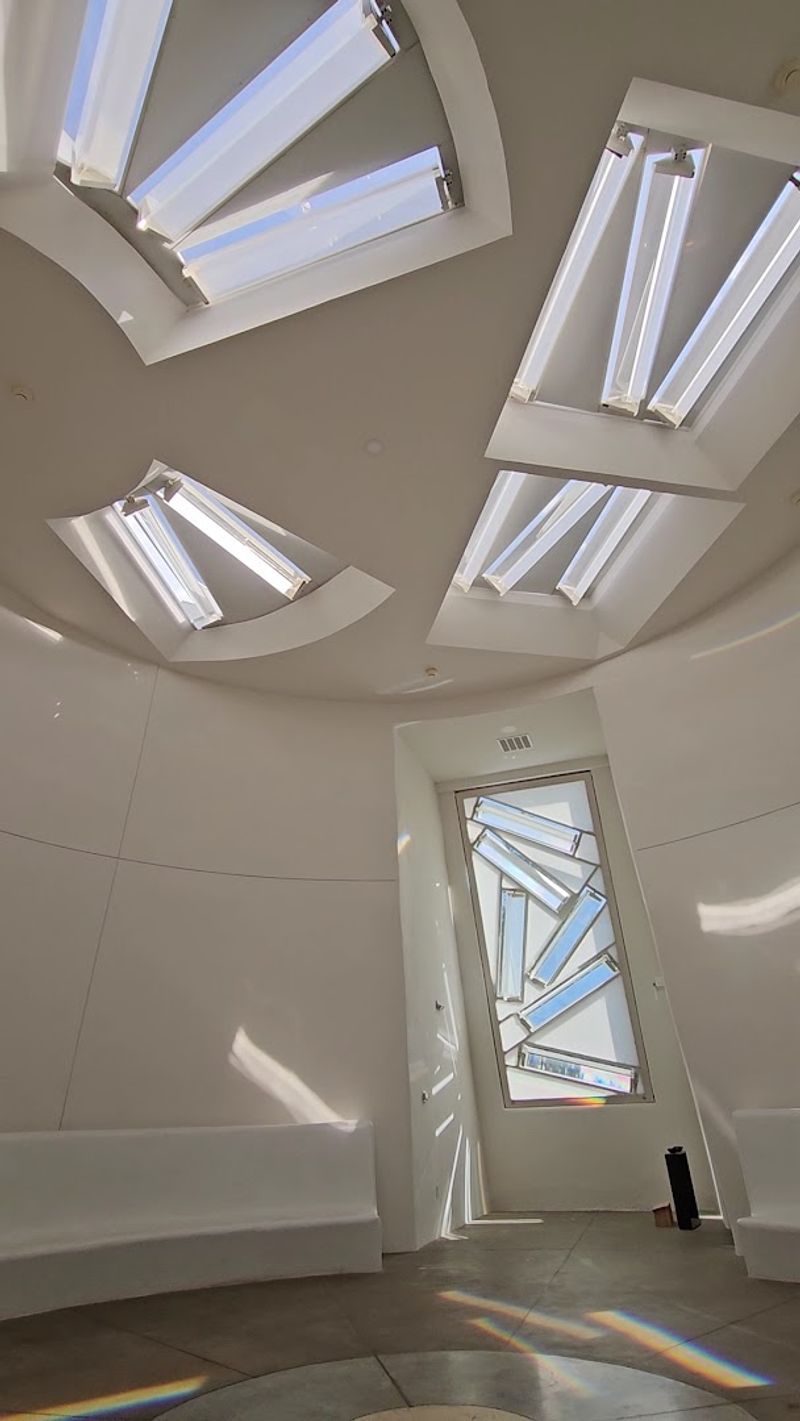
Charles Ross designed this building with a single driving idea: that architecture could serve as a direct instrument for transforming natural light.
Every decision in the structure, from the cylindrical shape to the placement of the prism panels to the orientation of the building on its site, was made in service of that central goal.
The result is a space that does not just sit under the sky but actively engages with it, pulling sunlight inward and converting it into something visitors can feel as well as see.
That relationship between the built structure and the living sky above it changes with every season, every weather pattern, and every hour of the day, keeping the experience fresh.
Ross worked on the design for years, and that long commitment shows in the precision of how the light behaves inside, moving through predictable arcs that shift with the calendar in ways that feel almost choreographed.
The building sits on the campus of United World College USA, and visiting it means passing through a landscape that feels removed from everyday life.
You can experience all of this at the Dwan Light Sanctuary, open daily from sunrise to sunset; stop at the Welcome Center first for directions and an access key.