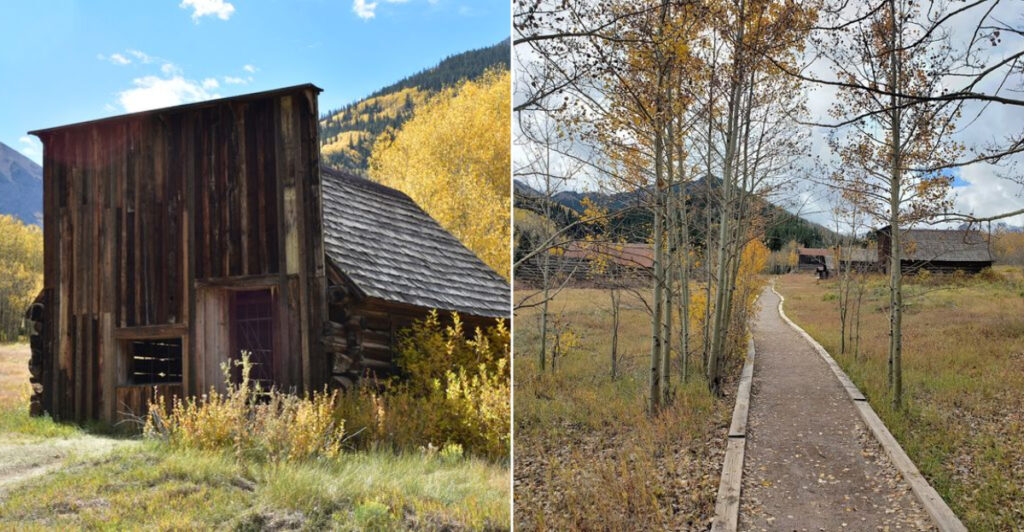
Some adventures seem to come together naturally, and this mountain getaway is one of those special places that feels relaxing right from the beginning. The road winds past beautiful groves, spacious meadows, and breathtaking mountain scenery that quickly pushes everyday worries aside, replacing busy schedules and responsibilities with the simple pleasure of being outdoors.
As the journey continues, excitement grows until visitors reach a wonderfully preserved piece of history, where aging structures, remnants of old mining operations, and informative markers reveal fascinating stories from the past. In Colorado, scenic drives like this are an important part of the experience, making the trip itself nearly as enjoyable as the historic destination waiting at the end.
The gentle trail makes exploring comfortable, while helpful guides and signs provide interesting background without interrupting the relaxed pace. From colorful autumn foliage and fascinating local history to a simple weekend escape, Colorado’s lesser-known historic destinations offer plenty of reasons to slow down and enjoy the journey.
The Ghost Town That Actually Earns the Name
Most places labeled a ghost town turn out to be one leaning shed and a hand-painted sign asking for donations. It is not that place.
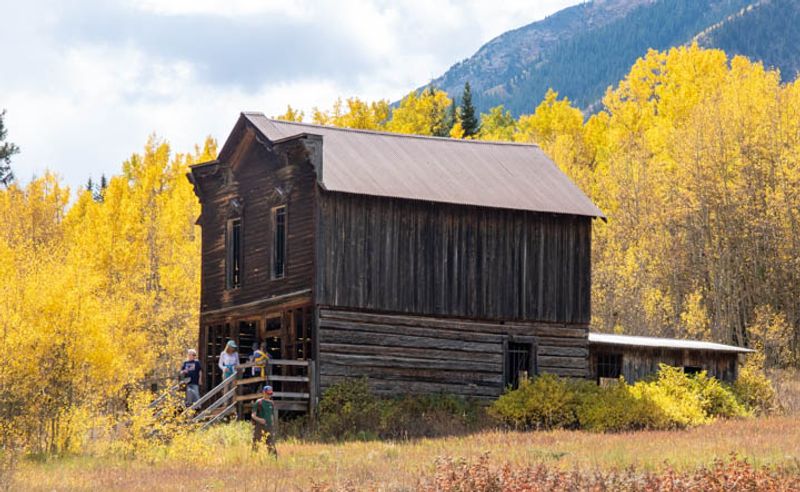
This former silver mining settlement sits at roughly 9,500 feet in the Elk Mountains and holds nine buildings total, seven of which are original structures from the town’s peak era, with two additional buildings brought in from other Colorado ghost towns to round out the experience.
What makes it stand apart is the care behind its preservation. The Aspen Historical Society maintains the site with a focus on structural integrity, waterproofing, and load-bearing reinforcement, all done in ways that preserve the original character of each building rather than replacing it.
Walking through, you get the genuine feeling of a place that was once alive and busy.
Informational placards are posted throughout the trail, featuring real photographs and stories of the actual people who lived and worked here. You are not just looking at old wood; you are reading about real lives.
Quick Tip: A $5 suggested donation at the entrance goes directly toward maintaining these irreplaceable structures for future visitors.
Castle Creek Road: The Drive Is Half the Adventure
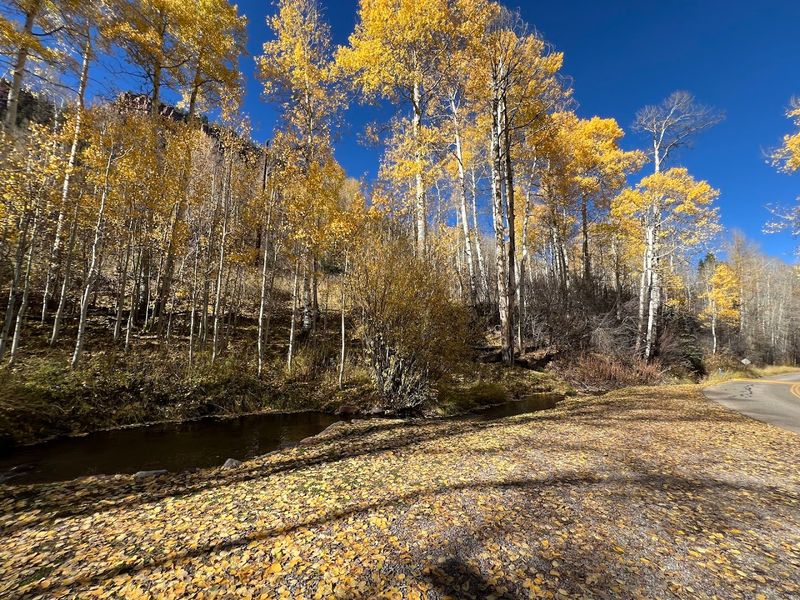
There is a particular kind of road that rewards you before you even arrive at your destination, and Castle Creek Road is exactly that. The route from Aspen to the ghost town covers about 12 miles of paved, winding mountain road that is accessible by any standard vehicle.
The pavement makes it far less intimidating than it sounds, even if the curves keep you honest.
During fall, the corridor transforms into one of the most photographed drives in the region. Aspen trees line both sides of the road, and when the leaves turn gold in late September through early October, the whole scene looks like someone turned the saturation dial up by thirty percent.
Visitors have spotted deer, elk, moose, bear, and fox along this stretch, sometimes all in a single evening drive.
Castle Creek itself runs alongside much of the route, adding a steady visual companion to the trip. The road does not loop back, so you will return the same way you came, which honestly gives you a second chance to catch everything you missed heading up.
Best For: Families, couples, and solo road-trippers who want scenery without a gravel road gamble.
Nine Buildings, Six You Can Step Inside
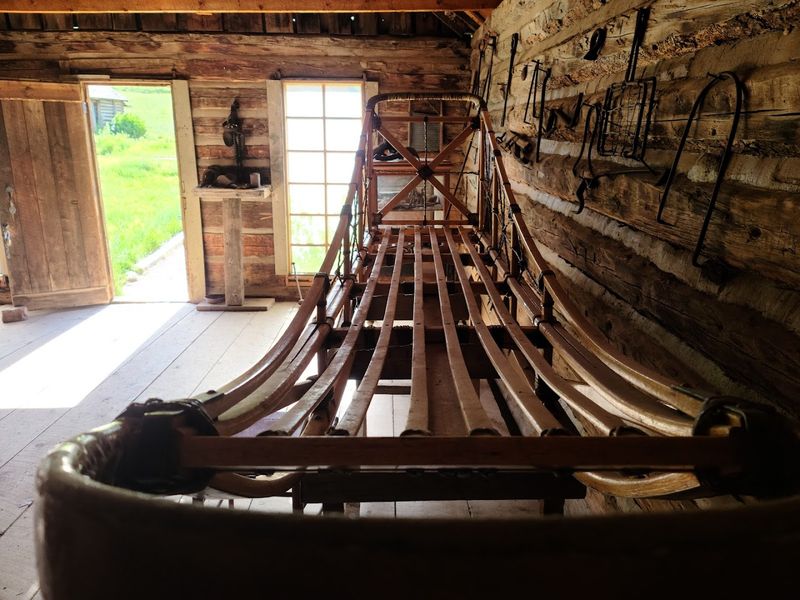
Not every historic site lets you cross the threshold, which is part of what makes Ashcroft so satisfying. Of the nine structures on the trail, visitors can enter six of them.
That means you are not just squinting through a dusty window hoping to spot something interesting; you are actually standing inside spaces where miners, merchants, and families once went about their daily lives.
The buildings include a saloon, residential structures, and various outbuildings that together paint a picture of what a high-altitude Colorado mining community actually looked like at the end of the 19th century. Inside, the smell of aged timber and old tools hits you in a way that no museum display case ever quite replicates.
It is immediate and specific, the kind of sensory detail that sticks with you on the drive home.
Antiques and period artifacts are displayed throughout, and the placards provide context that transforms each building from a curiosity into a chapter of a larger story. The site explains, among other things, why Ashcroft never grew into what Aspen became.
Insider Tip: Guides on site are knowledgeable and genuinely enthusiastic; asking questions gets you stories well beyond what the signs cover.
The Trail Itself: Accessible, Short, and Genuinely Rewarding
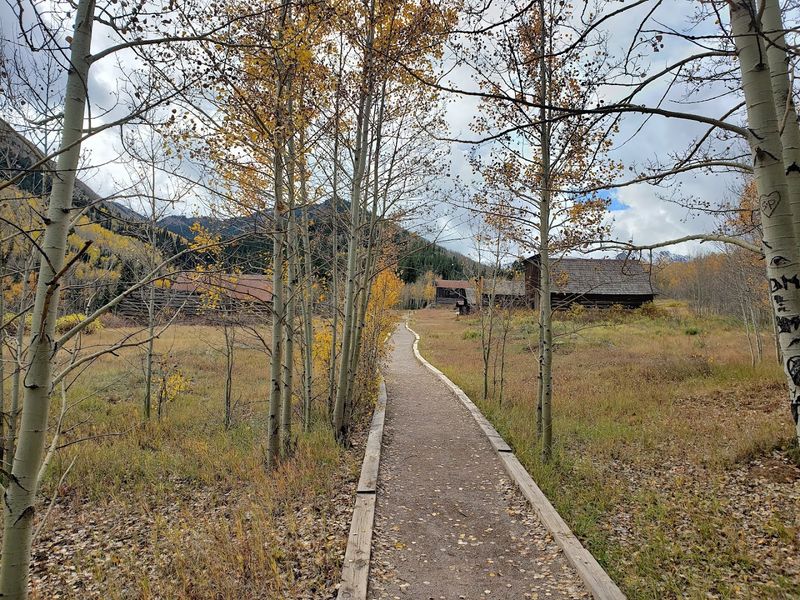
Not every worthwhile outdoor experience requires hiking boots, a hydration pack, and a motivational podcast queued up. The trail at Ashcroft is a short, flat walk along a finely crushed gravel path that makes it accessible for young children, older visitors, and anyone who showed up in their good shoes by accident.
The whole loop takes roughly 30 minutes at a comfortable pace.
That accessibility is genuinely meaningful. Families with strollers, visitors with mobility considerations, and groups with mixed energy levels can all do this trail together without anyone feeling left behind or exhausted.
The path connects all nine buildings in a logical sequence, so you move through the site the way the story unfolds rather than wandering in circles hoping you haven’t missed something.
Parking is plentiful at the trailhead, and there is a restroom facility on site, which, if you have ever driven 12 miles up a mountain road with children in the backseat, you will recognize as genuinely important information. Planning Advice: Arrive earlier in the day during peak fall season to avoid the late-morning crowd that tends to gather once the Aspen leaf-peeping crowd discovers the road.
Fall Foliage Timing: When Ashcroft Peaks
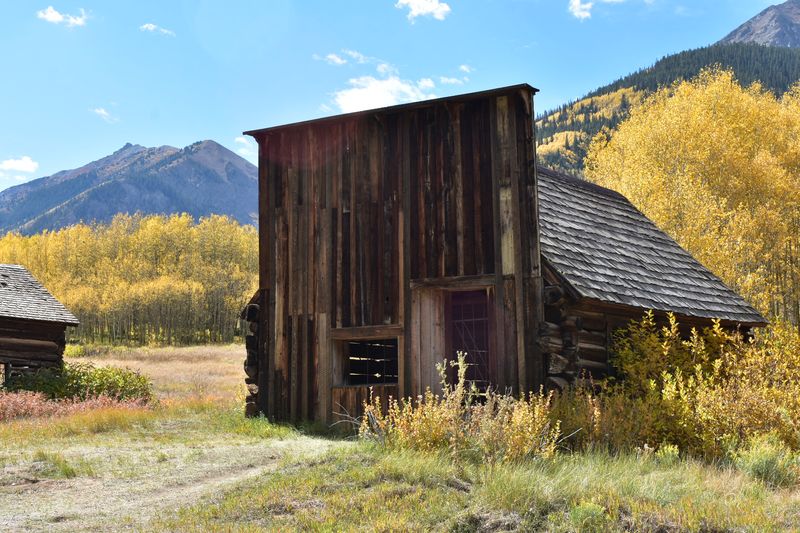
Timing is not everything in travel, but at Ashcroft it comes remarkably close. The site is open 24 hours a day, every day of the year, which means you technically have 365 opportunities to visit.
However, visitors and locals consistently point to late September through early October as the window when the site reaches its full visual potential.
During those few weeks, the aspen trees surrounding the buildings turn a saturated gold that photographs almost absurdly well. The contrast between the weathered grey timber of the structures and the bright foliage behind them is the kind of composition that makes amateur photographers look like they planned it.
Wedding couples have reportedly used the site for portrait sessions, which tells you something about the backdrop’s reliability.
Outside of fall, the site holds its own through winter snow and summer green, each season lending a different character to the same collection of buildings. Snow in particular gives Ashcroft an almost theatrical stillness.
Why It Matters: Colorado’s aspen season is brief and moves fast with elevation, so checking local foliage reports before your trip can mean the difference between peak gold and bare branches. Early October at this altitude tends to be the sweet spot.
Who This Trip Is Really For (And Who Should Know What to Expect)
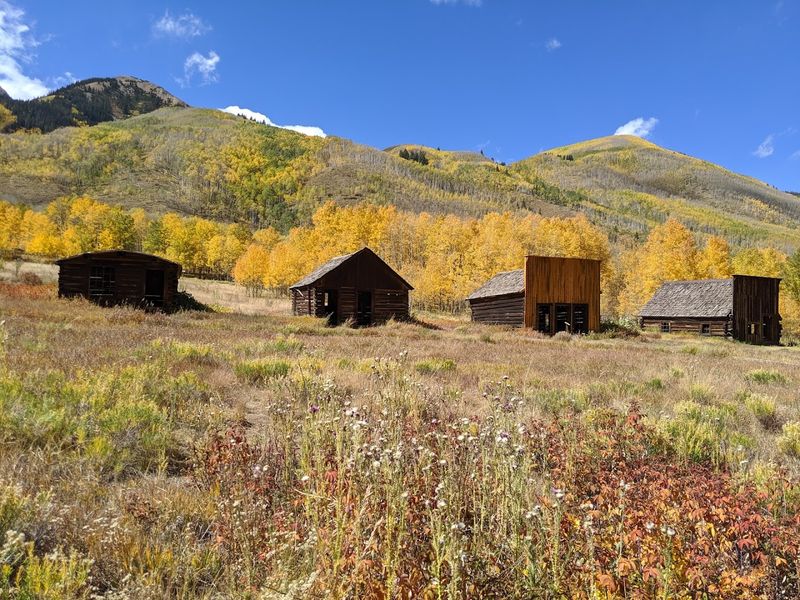
Ashcroft works for a surprisingly wide range of visitors, which is part of its quiet appeal. Families with young kids do well here because the walk is short, the buildings are genuinely interesting to children in a tactile way, and there are no steep drops or unmarked hazards to manage.
The restroom at the parking lot is a detail that parents of small children will silently appreciate more than any scenic overlook.
Couples looking for a low-debate Saturday plan will find that the drive alone justifies the trip, with the ghost town serving as the kind of destination that generates good conversation without requiring much coordination. Solo visitors and cyclists have also made the journey up Castle Creek Road a regular habit, with the 12-mile ride from Aspen offering a solid workout with an excellent payoff at the top.
Who This Is Not For: Visitors expecting a large-scale museum experience or a full half-day of structured programming may find the 30-minute trail on the brief side. The site is best framed as a focused, high-quality stop rather than an all-day destination.
Pair it with the scenic drive back and it becomes a complete, satisfying outing rather than a quick errand.
Final Verdict: A Colorado Stop Worth the Detour
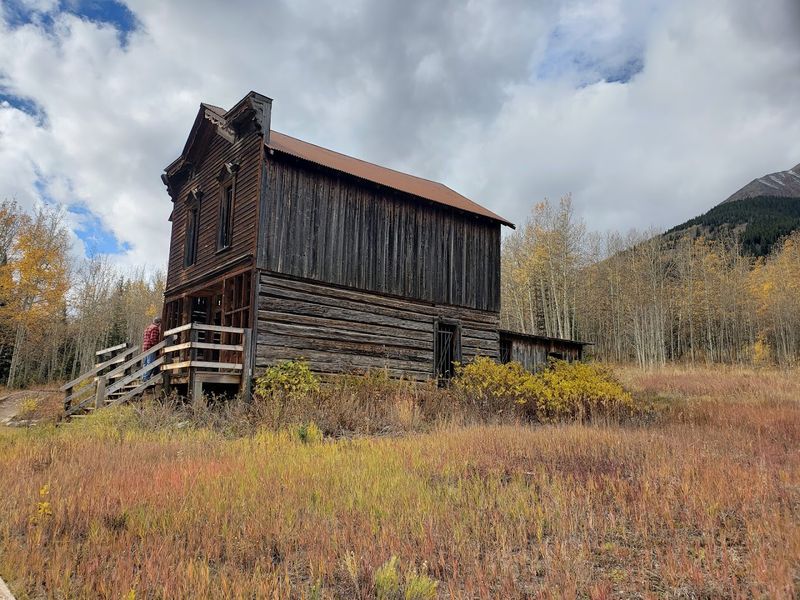
Here is the honest summary: Ashcroft Ghost Town at 11000 Castle Creek Road in Aspen, Colorado is one of those places that earns its reputation through quiet consistency rather than spectacle. The buildings are real, the history is documented, the trail is accessible, and the surrounding landscape is the kind that makes you stop mid-sentence to point at a mountain.
It holds a 4.6-star rating across nearly 300 visitor accounts, and the praise is remarkably consistent across different seasons and visitor types.
The $5 suggested donation is one of the better investments you will make on a Colorado road trip. That modest ask funds ongoing preservation work that keeps original 19th-century structures standing and interactive for the people who come after you.
The guides on site bring the placards to life in ways that make even the most history-resistant member of your group pay attention.
Key Takeaways: Open every day, 24 hours. Roughly 30-minute walk on a flat gravel path.
Nine buildings, six accessible. Located about 12 miles from downtown Aspen via a fully paved road.
Best visited in late September to early October for fall color. Ample parking and a restroom on site.
Bring the group, skip the overthinking, and just go.