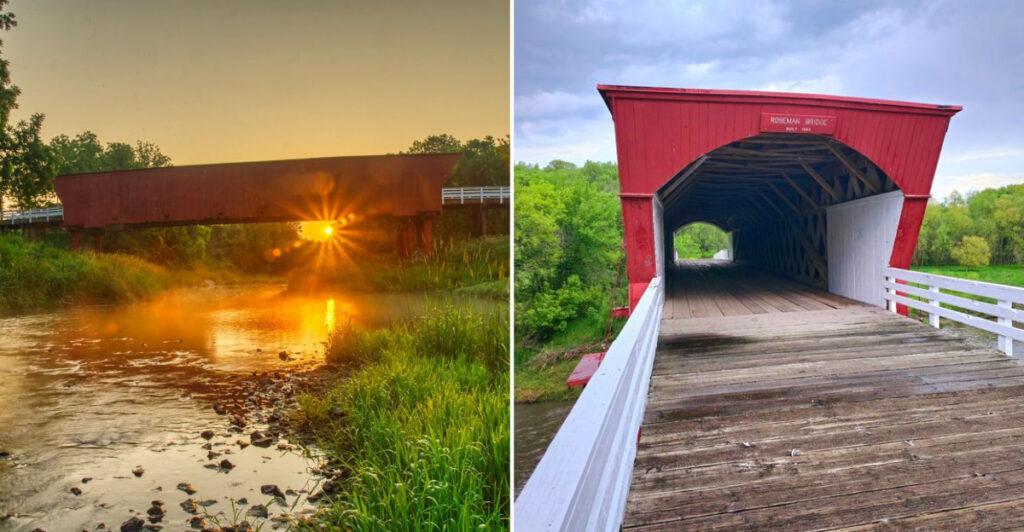
A weathered wooden bridge in Iowa has inspired a bestselling romance, a major Hollywood film, and generations of visitors who still make the drive just to stand inside it. That is a pretty remarkable legacy for a structure built more than 140 years ago.
Set among the quiet roads and farmland of Madison County, the bridge looks almost untouched by time. Its wooden walls, covered passage, and setting above the river give it an atmosphere that feels far removed from modern life.
The fame may have started with a love story, but the bridge has plenty of history of its own, including old legends and impressive 19th-century craftsmanship.
A Hollywood Star Hidden On A Gravel Road
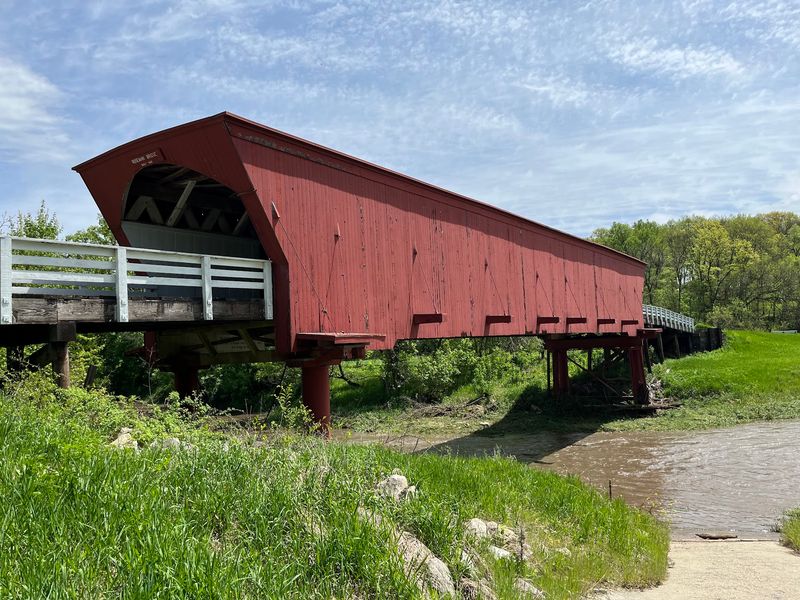
Most famous landmarks sit on busy streets with signs pointing you toward them from miles away. The Roseman Covered Bridge asks you to earn it a little.
You drive several miles of gravel road outside Winterset before the old wooden structure appears through the trees, and that approach alone sets the mood perfectly. The bridge feels like it belongs to a different era, one where life moved slower and the countryside felt endless.
Built in 1883, the Roseman Covered Bridge stretches 107 feet across Middle River and is one of six remaining covered bridges in Madison County, Iowa.
It became internationally famous after Robert James Waller published “The Bridges of Madison County” in 1992, and the 1995 film starring Clint Eastwood and Meryl Streep sealed its legendary status.
The bridge sits at 2451 Elderberry Ave, Winterset, Iowa 50273, and is open 24 hours a day, every day of the year. Getting there on a gravel road feels fitting, honestly.
A place this storied probably should not be too easy to reach, and the countryside surrounding it makes every mile worthwhile.
The Love Story That Put It On The Map
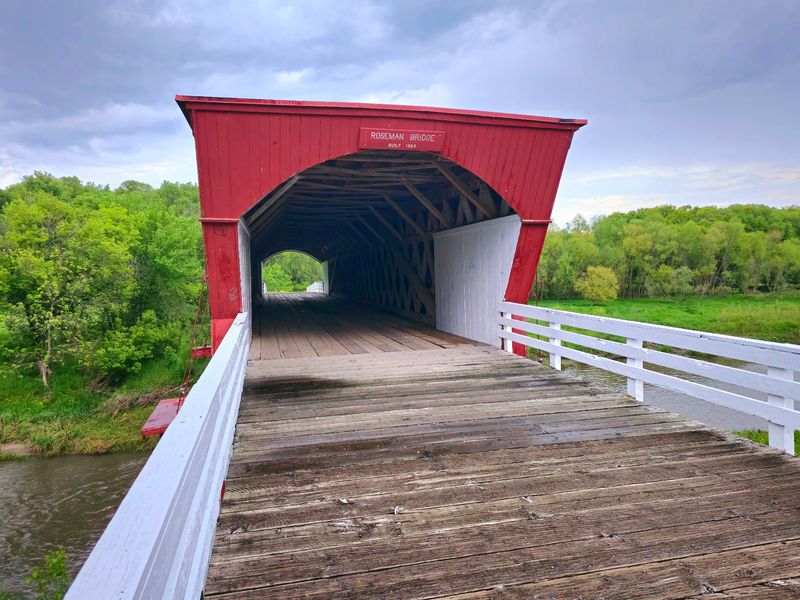
Robert James Waller wrote “The Bridges of Madison County” in just eleven days, and somehow that rushed creative energy translated into one of the bestselling novels of the 1990s. The book became an international bestseller and eventually sold tens of millions of copies worldwide.
The story follows Francesca Johnson, an Italian-born farm wife, and Robert Kincaid, a National Geographic photographer who comes to Madison County to photograph its covered bridges. Their brief but intense connection became the emotional core of a cultural phenomenon.
Roseman Bridge plays a central role in the story. Kincaid first meets Francesca when he stops at her farmhouse and asks for directions to Roseman Bridge, and she later leaves him a note at the bridge inviting him to dinner.
That small fictional detail transformed a 19th-century wooden structure into one of the most romantically charged locations in American literature.
Visitors who have read the book or watched the film often stand quietly on the bridge for a long moment, absorbing the atmosphere. The story layered something permanent onto this place, and you can feel that weight when you stand there yourself, surrounded by the soft sounds of Middle River below.
A Structure Built To Last More Than A Century
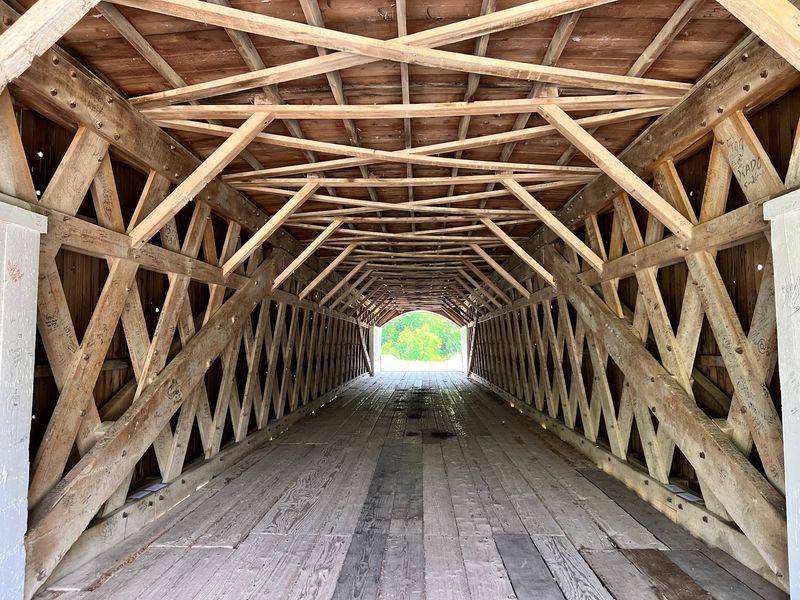
The craftsmanship inside Roseman Bridge is genuinely impressive, and it tells you a lot about the people who built it. The bridge uses a Town lattice truss design, a wooden structural system commonly used in covered bridge construction during the 19th century.
Covered bridges were roofed for a practical reason that surprises many visitors. The wooden structure underneath would rot quickly if exposed to Iowa rain and snow, but a roof and siding could extend the bridge’s life by decades.
The covering essentially turned the bridge into a long wooden tunnel, and that design decision is why so many of these structures survived long enough for us to admire them today.
The Roseman Bridge has been carefully maintained and preserved by Madison County. Officials take its preservation seriously, and the bridge is no longer open to vehicle traffic, which protects the structure from further wear.
Fire suppression tanks are mounted in the rafters as a precaution, a detail that shows how seriously the county takes its responsibility to protect this piece of history. The interior walls are covered in decades of visitor graffiti, which adds an unexpected layer of human history to the already rich story of the bridge.
The Ghost Story That Locals Still Tell
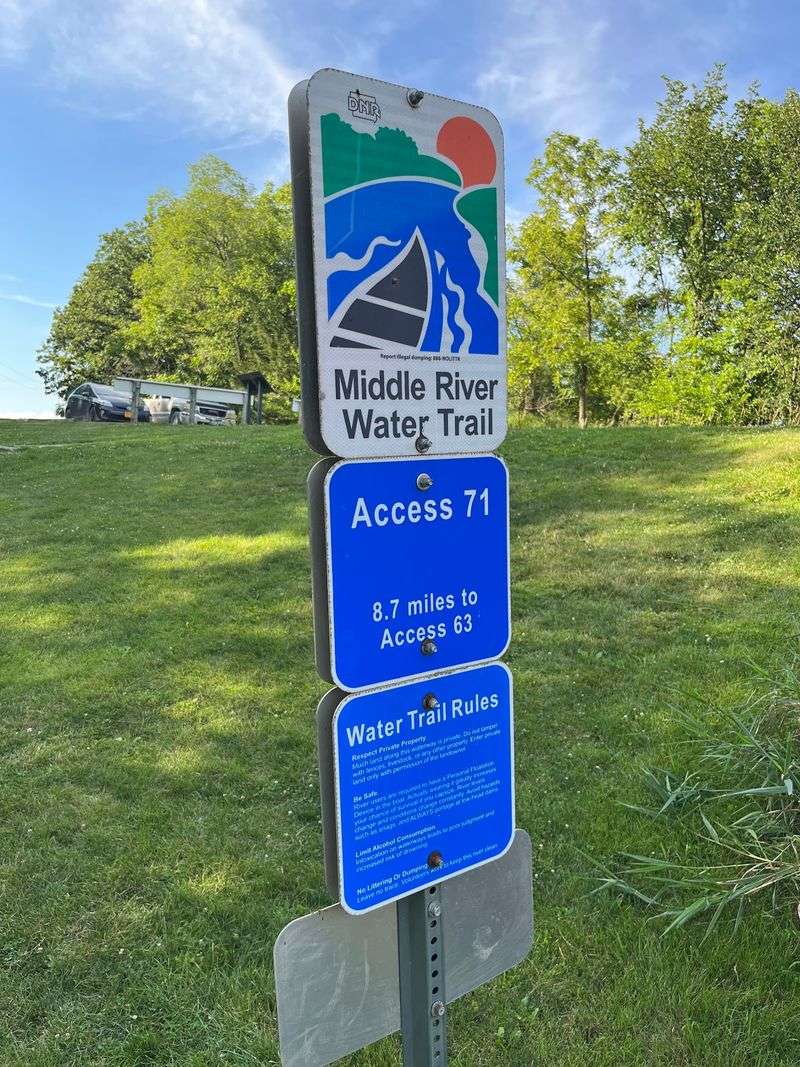
Every great old bridge deserves a ghost story, and Roseman delivers one that locals have been sharing for generations. According to the legend, a posse once chased a criminal into the bridge one night, and when they reached the other side, the man had completely vanished.
The story goes that the man was never found, and some locals believe his spirit still haunts the bridge. Whether or not you believe in that kind of thing, the legend adds a wonderfully spooky layer to an already atmospheric place.
The bridge earned the nickname “the haunted bridge” among some Madison County residents long before Waller’s novel made it famous. Visiting at dusk, when the light turns golden and the shadows inside the bridge grow long, makes the old story feel surprisingly plausible.
Several visitors have mentioned that the bridge feels different after dark, with the sounds of the river below and the creak of old wood creating an atmosphere that is hard to shake.
The ghost legend and the love story together give this bridge a personality that most roadside attractions could never match. It is spooky and romantic at the same time, which is a rare combination worth experiencing in person.
Photography Heaven At Dawn And Dusk
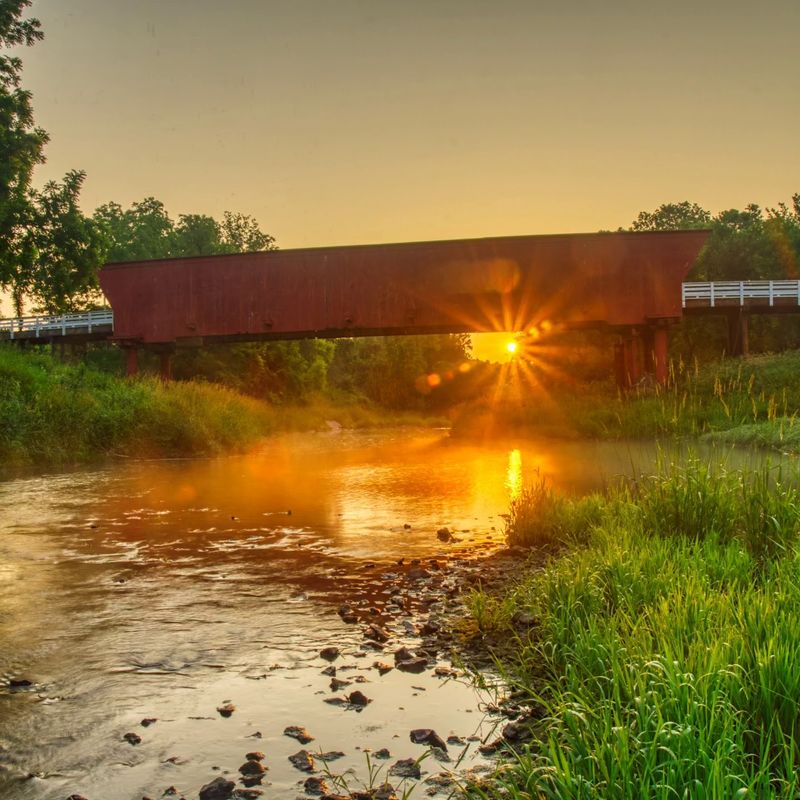
Few subjects in the Midwest photograph as beautifully as Roseman Bridge at the right time of day. The structure’s warm wooden tones absorb morning and evening light in a way that makes every shot look intentional, even if you are just pointing your phone at it from the road.
Arriving at dawn means you often have the bridge entirely to yourself. The light at that hour is soft and directional, and the mist that sometimes rises off Middle River below creates a scene that looks almost too cinematic to be real.
Dusk works equally well. The western sky turns shades of orange and pink behind the tree line, and the bridge silhouette against that backdrop is the kind of image people frame and hang on their walls.
The gravel steps near the bridge lead down toward the river, offering a lower angle that captures both the water and the underside of the structure.
That perspective shows off the bridge’s impressive length and the way it sits so naturally within the landscape. Serious photographers plan their visits around the light, and even casual visitors tend to take far more photos here than they expected to.
The bridge simply refuses to look bad in a picture.
More Than Just A Famous Name
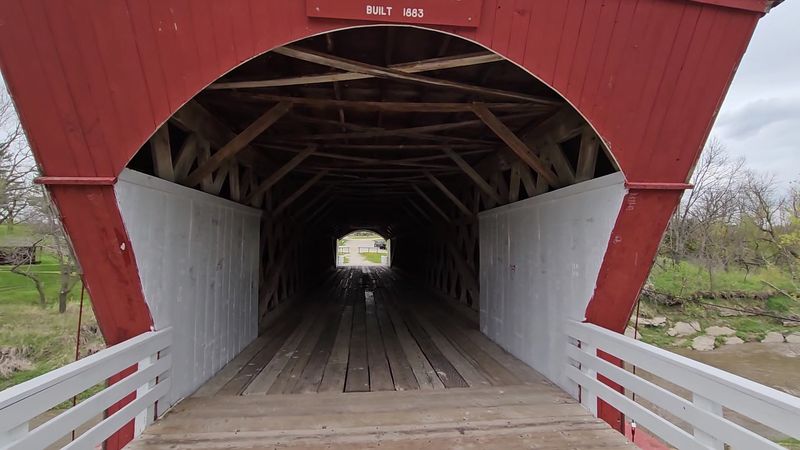
Beyond the literary fame, the Roseman Bridge area offers a few practical details worth knowing before your visit. A small gift shop sits nearby and carries local items, souvenirs, and information about the bridge’s history.
The shop is not always open, so calling ahead or checking hours before you make the drive on gravel roads is a smart move.
An informational kiosk near the bridge provides historical context about the structure and its place within the broader Madison County covered bridge network. That kiosk is genuinely helpful, especially if you want to understand what you are looking at beyond the famous story attached to it.
The bridge is part of the Iowa Covered Bridge Scenic Byway, which links several of the county’s remaining covered bridges along a mapped driving route. Visitors who complete the full loop get a much richer sense of Madison County’s architectural heritage and its beautifully preserved rural landscape.
Kayak launches are possible from the bridge area, which adds an outdoor recreation angle that surprises many visitors who expected only a photo stop.
The river below is peaceful and scenic, and paddling under the bridge from the water gives you a completely different perspective on the structure. It turns a quick stop into a proper half-day adventure.
The Best Part Of The Experience
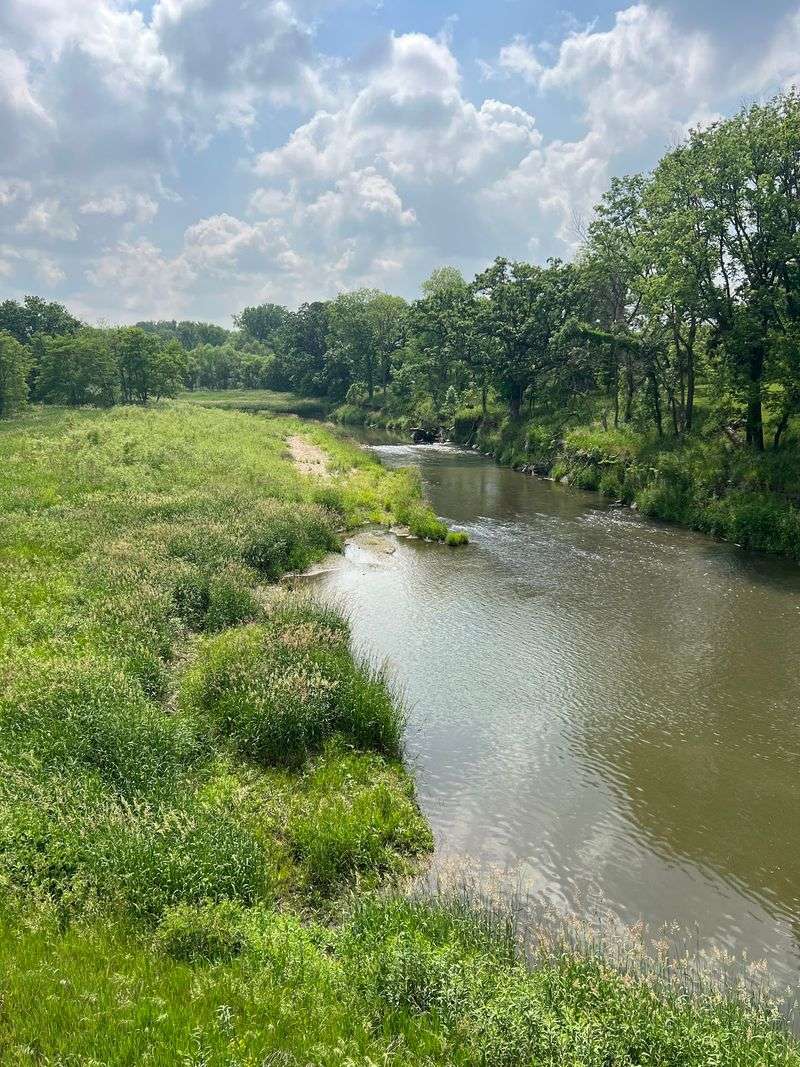
The approach to Roseman Bridge matters almost as much as the destination itself. The gravel roads that wind through Madison County are lined with wildflowers during warmer months, and the flat-to-rolling terrain gives you long views across fields that feel genuinely timeless.
A standard passenger car handles the roads without trouble, though the loose limestone gravel can kick up dust and coat your vehicle if you are driving fast. Taking it slow is the right call anyway, because the scenery along the way rewards a relaxed pace.
Madison County once had 19 covered bridges, but most were removed, replaced, or lost over the decades. Only six remain, and the scenic byway connects them in a loop that takes roughly half a day to complete comfortably.
Each bridge has its own character and setting, and the drives between them are genuinely pleasant rather than just transitional.
Roadtrippers who treat the journey as part of the experience rather than just a means to an end tend to leave Madison County with the most vivid memories.
The landscape has a quiet, unshowy beauty that builds on you slowly, and by the time you reach Roseman, you feel fully settled into the rhythm of the place. That is a rare and valuable thing.
Winterset Has Even More To Offer Nearby
A visit to Roseman Bridge pairs naturally with a trip into Winterset itself, the county seat of Madison County and a town with more personality than its modest size suggests. The downtown area has local shops, restaurants, and a visitors center that provides maps of the covered bridge scenic byway.
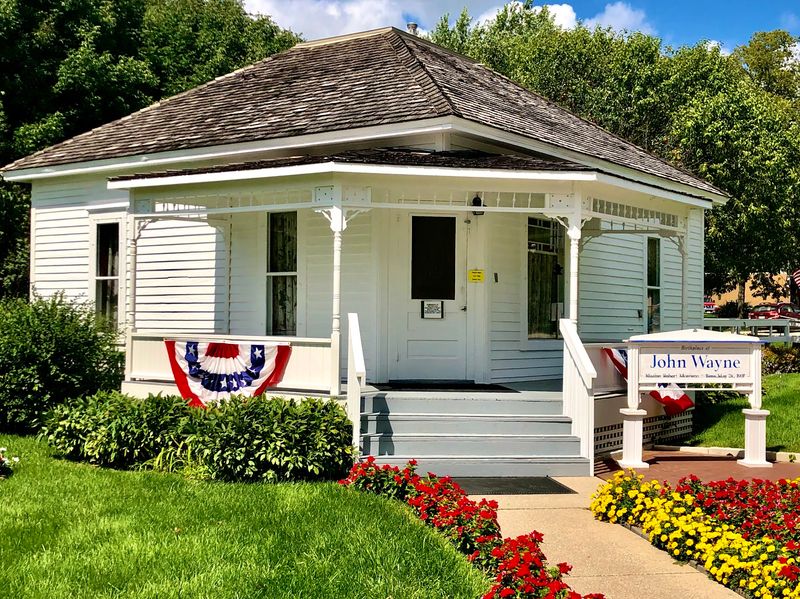
John Wayne was born in Winterset in 1907, and his birthplace museum is one of the town’s most visited attractions. The combination of the Wayne connection and the covered bridge fame gives Winterset a cultural identity that feels earned rather than manufactured.
A quilt museum, a historic courthouse square, and several annual events round out the local calendar. The Madison County Covered Bridge Festival, held each October, draws thousands of visitors and celebrates the county’s unique architectural heritage with tours, food, and local vendors.
The festival timing also happens to coincide with fall foliage season, which turns the drives between bridges into something spectacular.
The red and gold canopy over those gravel roads in mid-October is the kind of scene that makes you want to slow down and stay longer than you planned. Winterset rewards that impulse generously, and leaving always feels a little harder than you expected when you first pulled off the highway.