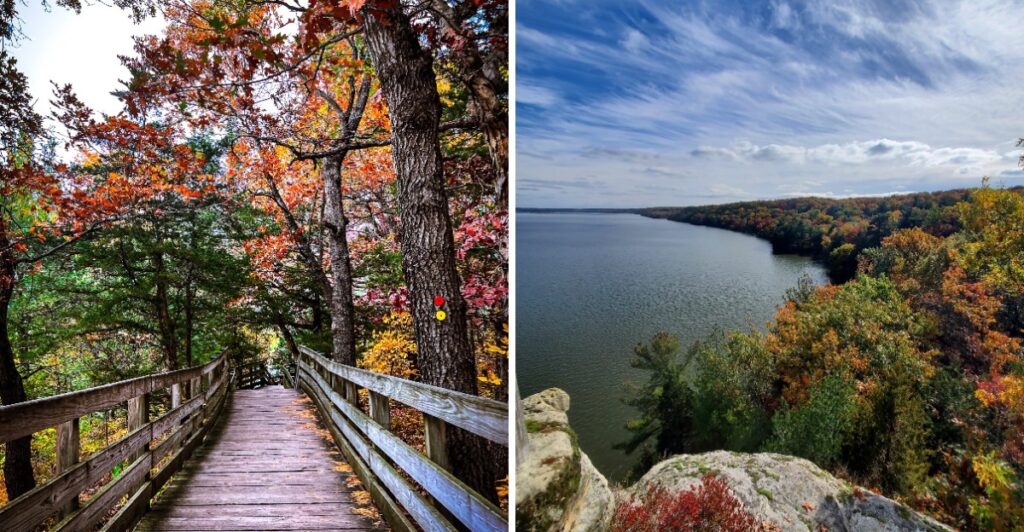
Glacial meltwater started carving 18 sandstone canyons into one riverside park more than 14,000 years ago. The best part is that they sit in Illinois, a state better known for flat cornfields.
The canyon walls rise straight up, wrapped in moss and layered St. Peter Sandstone. After a good rain or spring snowmelt, waterfalls spill over the edges and put on a show.
Autumn turns the bluffs into a color experiment as maples, oaks, ash, and cottonwoods stack up red, orange, and gold. Those vertical walls frame the scene like a gallery that forgot to lock its doors.
Entry is free, so the only real investment is a pair of sturdy hiking shoes. Flat Illinois clearly missed the memo on this corner of the state.
Those Canyon Walls Were Carved By Ice Age Floodwater
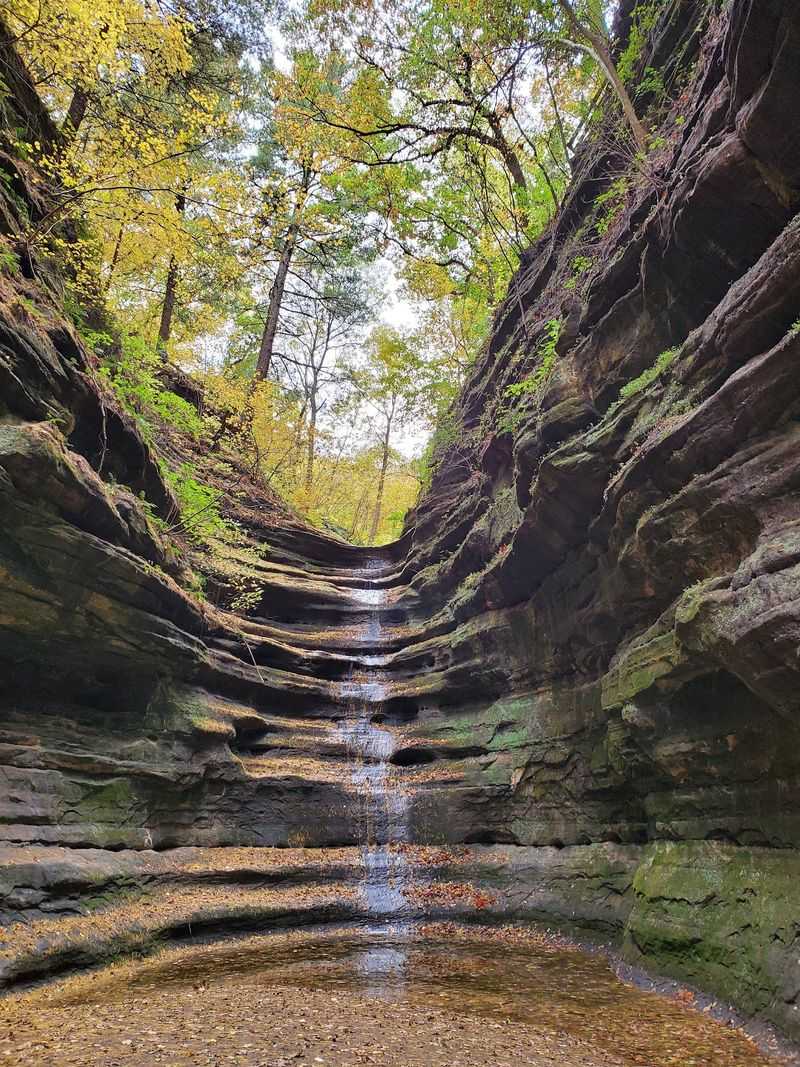
Meltwater from retreating glaciers did the heavy lifting here, more than 14,000 years ago. The result is Starved Rock State Park, home to 18 distinct canyons along the Illinois River.
Each canyon has steep walls of St. Peter Sandstone, often draped in moss. That combo feels more like a far-off national park than a spot in north-central Illinois.
Some of the best-known names include St. Louis Canyon, French Canyon, Ottawa Canyon, and Wildcat Canyon. Each one has its own shape and personality, so seeing just one feels like reading one chapter of a good book.
The sandstone is soft and easy to damage. That’s why carving or painting on the rock is illegal, along with rock climbing and rappelling.
Staying on marked trails also protects the fragile canyon floors. Hiking off-trail is against park rules, and honestly, the official paths already deliver the drama.
Wear shoes with good grip for your canyon visit. Some trails involve sand, dirt, and uneven ground, and wet spots appear after rain.
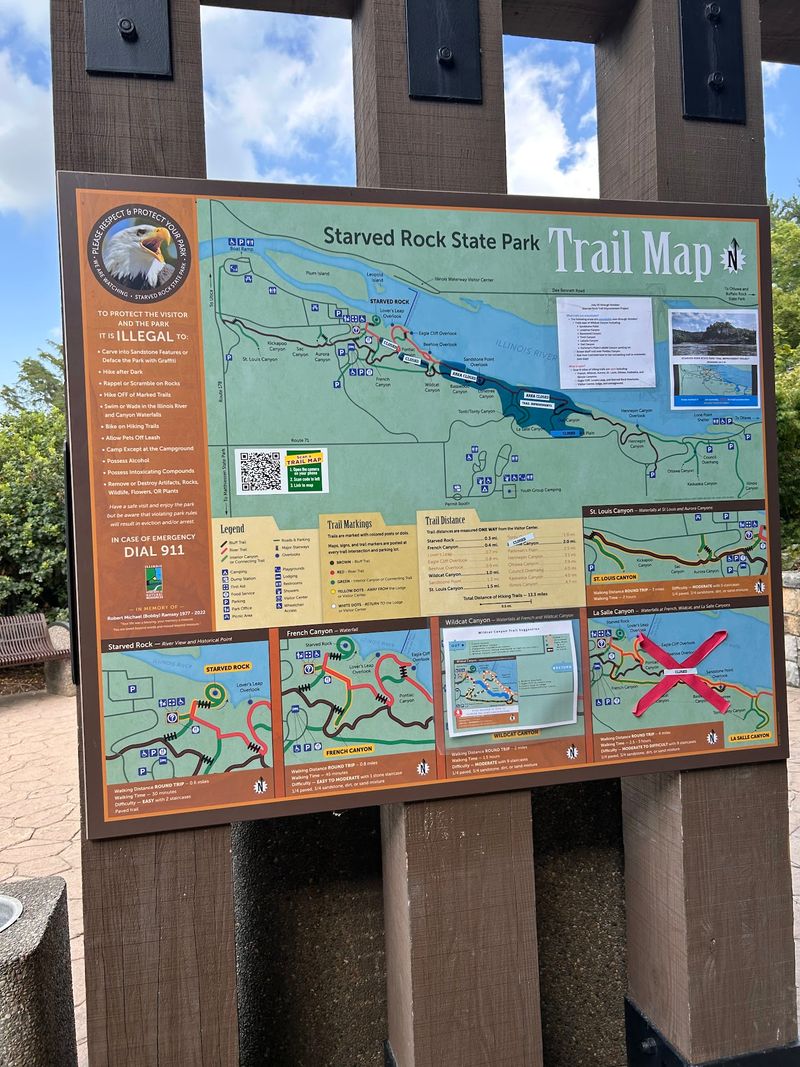
A quick tip before you set off. Grab a free trail map so you can plan which canyons fit your energy level and schedule.
Your Waterfall Luck Depends On The Weather Forecast
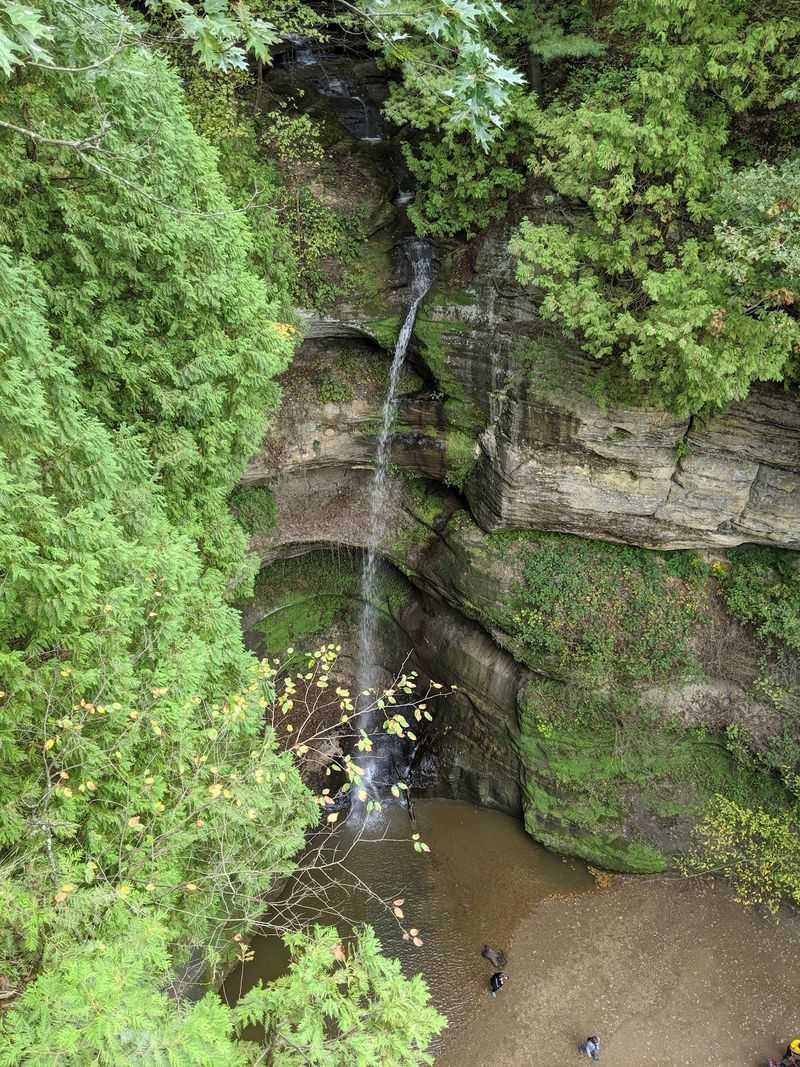
Rain is the secret ingredient. The waterfalls at Starved Rock are fed by rainfall, so they rise and shrink with the weather.
After a big storm or during spring snowmelt, water pours over the canyon rims. After a long dry stretch, those same ledges can look like empty stages waiting for the band.
St. Louis Canyon and Ottawa Canyon are two of the notable spots for falls. French Canyon also has a waterfall, though it can dry out when rain is scarce.
Timing your trip is the smartest move you can make. Check the recent rainfall before you leave home, and aim for a visit within a couple of days of a solid soaking.
Waterproof footwear helps a lot during wet stretches. Some canyon trails pass through shallow streams or muddy patches when water is flowing.
Swimming is not allowed in the canyons or the river. Splashing your boots is fine, but the pools are for looking only.
Winter brings its own bonus too. Cold weather can freeze the falls, and trails stay open year-round for those who bundle up.
Late October Turns The Bluffs Into A Painting
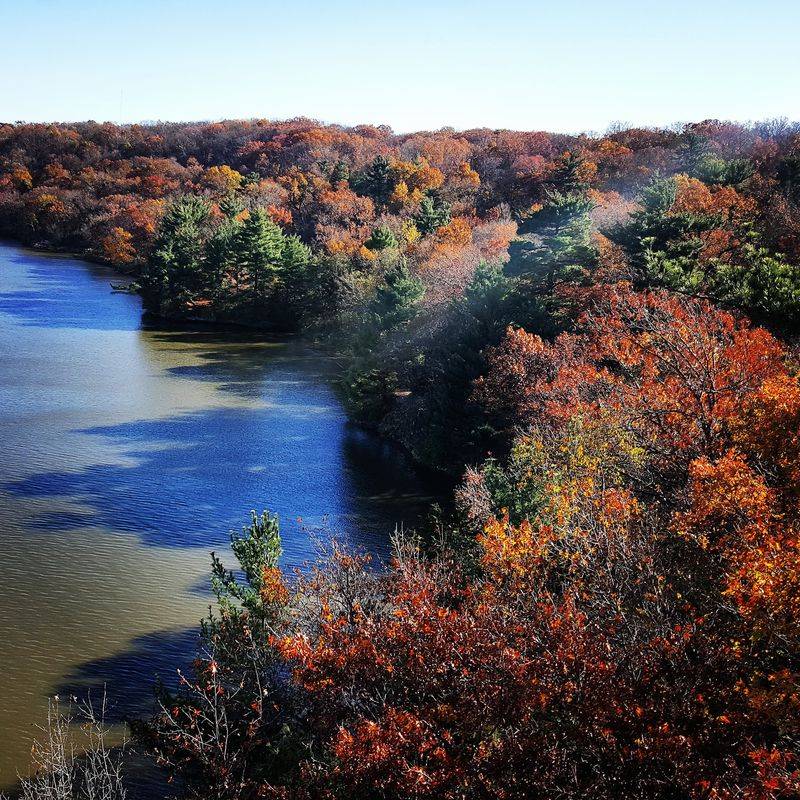
Maple, oak, ash, and cottonwood all share the same hillsides here. When fall hits, they turn into layers of red, orange, and gold.
The canyons add something flatter landscapes can’t. Their tall walls concentrate and frame the color, so every bend in the trail feels like a fresh postcard.
Peak color usually lands in late October at Starved Rock State Park. Weather can shift that window by a week or two, so keep an eye on the forecast as autumn rolls in.
Fall is also one of the busiest times of year. Parking lots on nice weekends can fill up and even close when they reach capacity.
Arriving early is the simplest fix. You’ll get a calmer trail and softer morning light for photos.
Bring layers, since mornings in Illinois can feel crisp before the afternoon warms up. Pack water and snacks for the stairs too.
Photographers have a reason to keep shooting. The park’s photography show accepts entries from October 1 to November 30, with the display running through December.
Climb Up For River Views That Earn Every Step
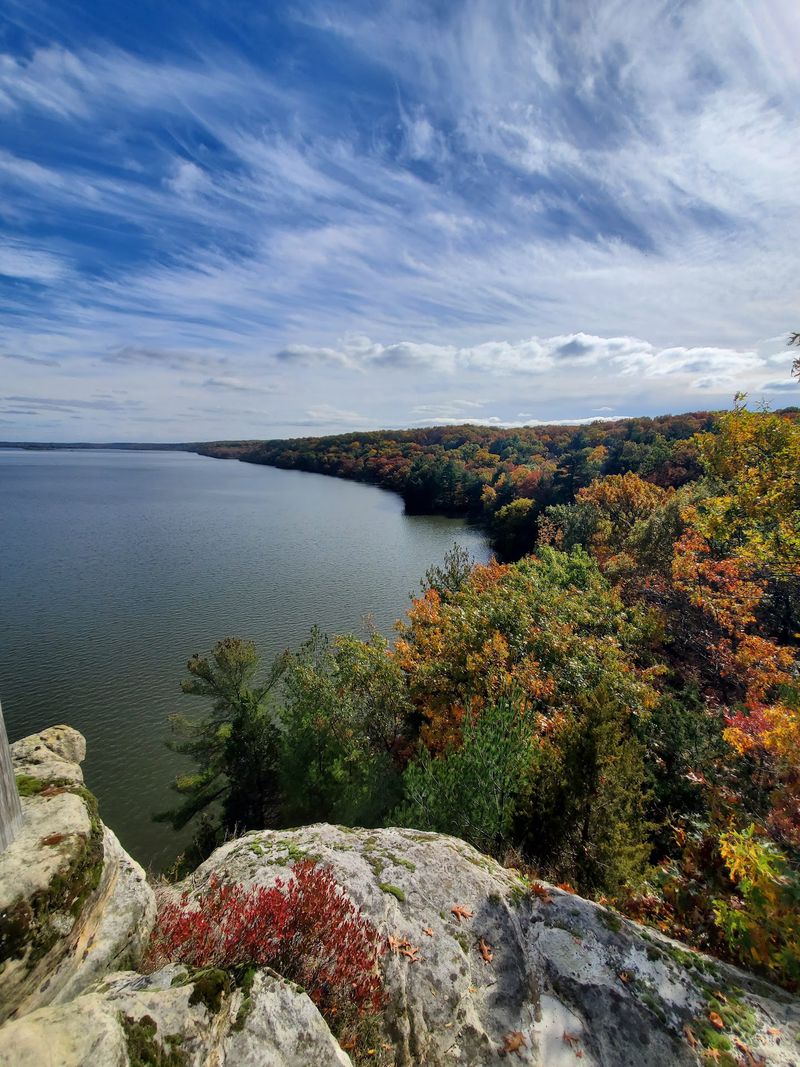
Stairs. Lots and lots of stairs. That’s the price of admission to the overlooks, and nobody seems to regret paying it.
From the top, the Illinois River Valley stretches out below the bluffs. Eagle Cliff Overlook is one of the popular perches for taking it all in.
Sandstone Point Overlook is another favorite viewpoint. Right now, though, it sits inside a construction zone and is closed during trail work.
The namesake butte also offers a lookout. Its short path has many steps, and the view sweeps across the river below.
Bald eagles are part of the wildlife show in this area. Seeing one glide below you from a cliff is a pretty great way to start a morning.
Plan for the climb with sturdy shoes and plenty of water. Take breaks on the landings, and let faster hikers pass.
Dogs are welcome on leashes up to 10 feet long. Keep them close near the edges, both for their safety and yours.
One more tip. Wooden boardwalks and stairs cover many sections, but some spots still mix in dirt and sand.
Know Which Trails Are Open Before You Lace Up
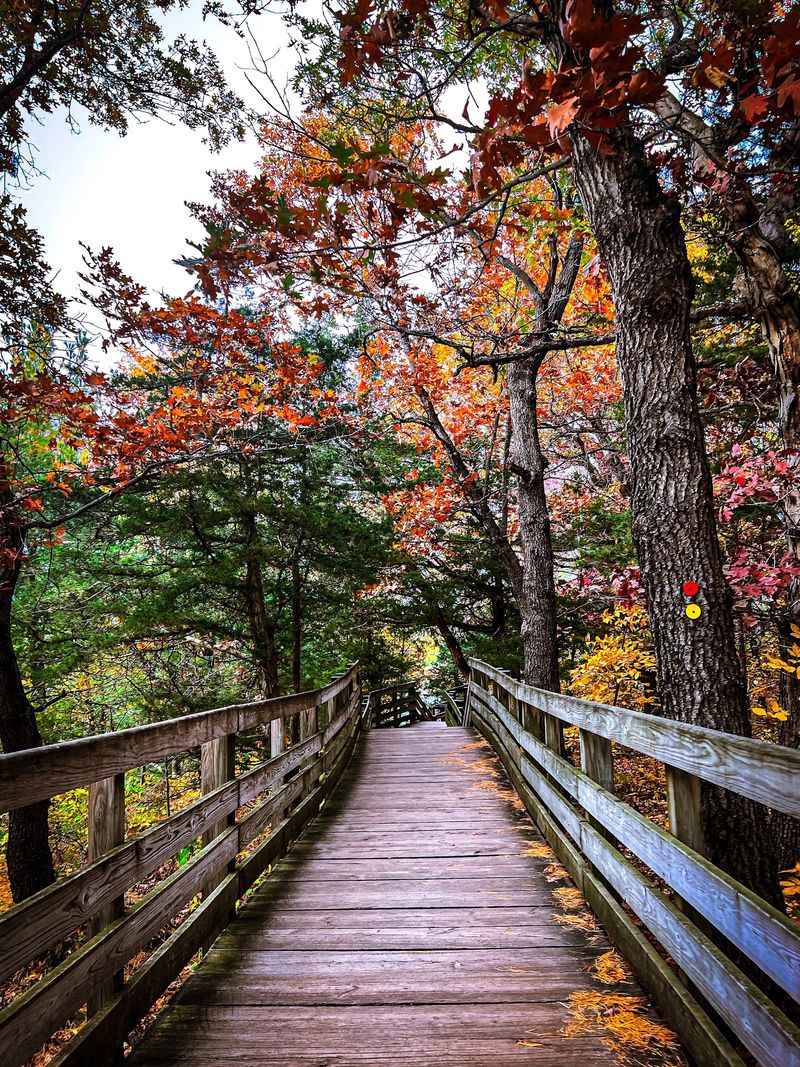
Thirteen miles of marked trails wind through Starved Rock State Park. They connect canyons, bluffs, and river views, and they’re open year-round.
Here’s the catch for now. A major trail improvement project runs from winter 2025 through summer 2027, so some areas are closed.
As of October 2026, LaSalle, Tonti, Pontiac, Basswood, and Lonetree Canyons are inaccessible. Sandstone Point is also off-limits while crews work.
Good news, though, plenty remains to explore. French Canyon is open, and the Visitor Center shares current updates on which trails you can hike.
Trail markings and maps help you pick a route. You can build a short stroll or a longer loop, depending on your legs and your patience with stairs.
Biking is not allowed on the hiking trails. Save the wheels for elsewhere and enjoy the slower pace on foot.
In winter, cross-country skiing and snowshoeing become popular options. It’s a whole different look at the same Illinois landscape.
After any hike through wooded areas, check your clothes and hair for ticks. Thirty seconds now saves trouble later.
Make The Visitor Center Your First Stop
Smart hikers start indoors. The Starved Rock Visitor Center offers museum-quality exhibits on the park’s history, geology, and ecology.
Staff members can recommend trails and hand out maps. With construction affecting some canyons, that local advice is worth its weight in trail mix.
The center sits at 2678 East 873rd Road, Oglesby, IL 61348. It’s open daily from 9 AM to 4 PM, while the park itself runs from 7 AM to sunset.
Plan around holidays in the colder months. The Visitor Center closes on designated holidays throughout the year, including Thanksgiving, Christmas Day, New Year’s Day, and Juneteenth.
Free events happen here throughout the year, often with support from the Starved Rock Foundation. Fall 2026 includes a Howloween pet event on November 1.
A drum circle called Nature’s Beat follows on November 8. Then a naturalist leads a thankfulness hike on November 28.
Kids can also connect with rangers through programs during visits. A little learning makes the trails feel even more alive.
Remember that dogs aren’t allowed inside park buildings. Certified service animals are the exception.
Stay The Night In A 1930s Log Lodge
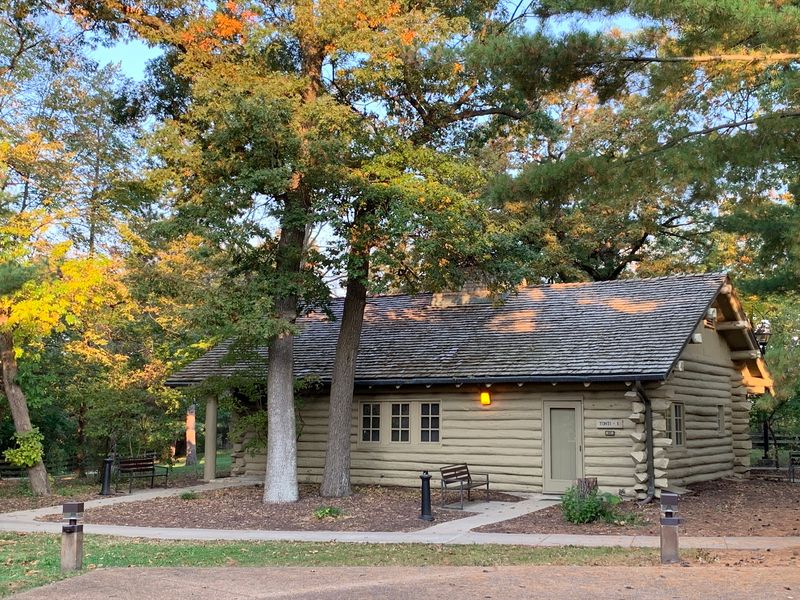
The Civilian Conservation Corps built the Starved Rock Lodge in the 1930s. Today it’s a historic retreat right inside the park.
Lodging includes 69 guest rooms and 21 cabin rooms. Some cabins even have wood-burning fireplaces, which is a cozy upgrade after chilly trails.
Lodge guests get access to an indoor pool complex. It includes two saunas, a hot tub, and a children’s pool for the smaller adventurers.
Hungry hikers have choices too. The Lodge restaurant serves breakfast, lunch, and dinner year-round, with fried chicken, steaks, seafood, and pasta.
Sunday brunch is a specialty. Gluten-free, vegetarian, and vegan options are available as well.
Need something quicker? Trailheads Concessions offers corn dogs, ice cream, fudge, and snacks daily from 10 AM to 5 PM.
The Cafe handles breakfast, lunch, and sweet treats. The Back Door Lounge serves casual lunch and dinner, and The Veranda adds seasonal outdoor dining with live music.
Prefer roughing it? The park campground has tent and RV sites, and reservations are recommended.
Bring A Picnic, A Paddle, Or A Fishing Rod
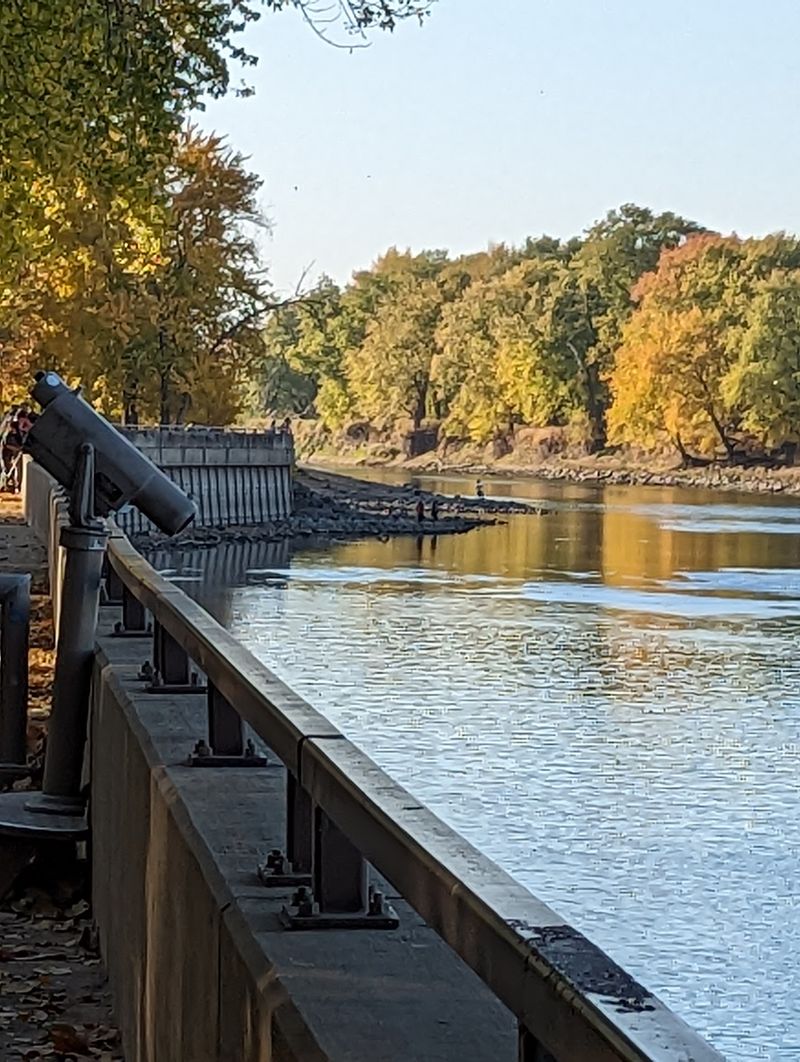
Not every great moment here requires a staircase. The Illinois River gives you a flatter way to enjoy Starved Rock State Park.
Fishing and boating are both popular along the water. A boat launch sits at the west end of the park, and kayak rentals are available.
Seeing those sandstone bluffs from river level offers a fresh angle. In autumn, the reflections of colorful trees make paddling feel extra cinematic.
Picnic areas come with tables, drinking water, and restrooms. Six shelters are available on a first-come, first-served basis, so early birds win again.
Packing your own lunch is a solid plan for a long day. Sandwiches taste better with a river view anyway.
Remember that swimming is prohibited in the river and from any park shoreline. Enjoy the water from a boat, a bank, or a bench.
Want to try something different nearby? Cedar Creek Ranch offers horseback riding about 15 minutes away.
Wildlife watching fits into every activity here. Keep your eyes on the treetops and the sky, because eagles love this stretch of Illinois.