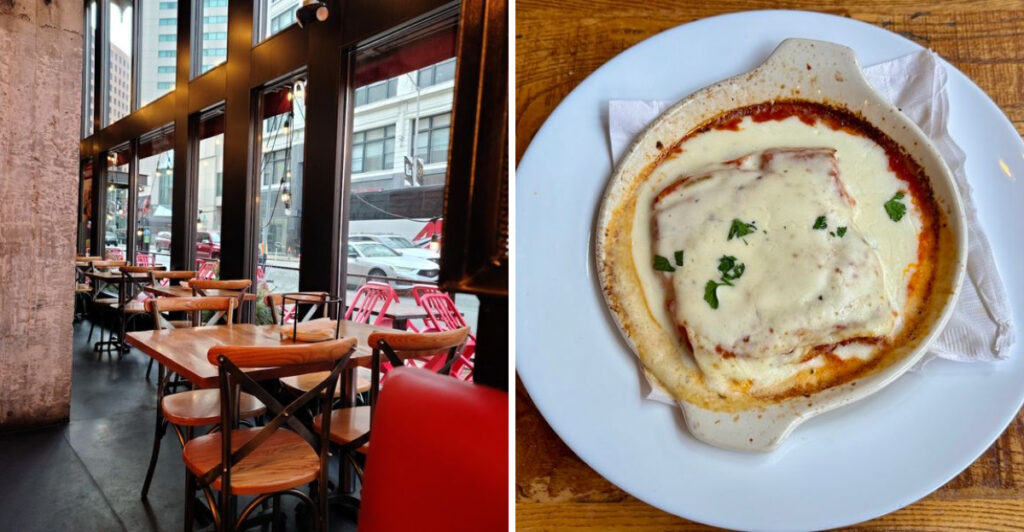
What kind of pizza shop makes you pause and ask if pasta just stole the spotlight?
That question hangs over this downtown Indiana address in the best possible way, because the menu plays a clever trick on expectations and then backs it up with serious kitchen discipline.
You come ready to talk crust, sauce, and molten cheese, then suddenly a baked stack of ricotta and herbs barges into the conversation like the class clown who also aced the exam.
Does your usual order run on autopilot? This is the sort of place that nudges you to look twice, read slower, and give the pasta section the respect it clearly earned.
A Chicago Family Recipe That Built The Brand
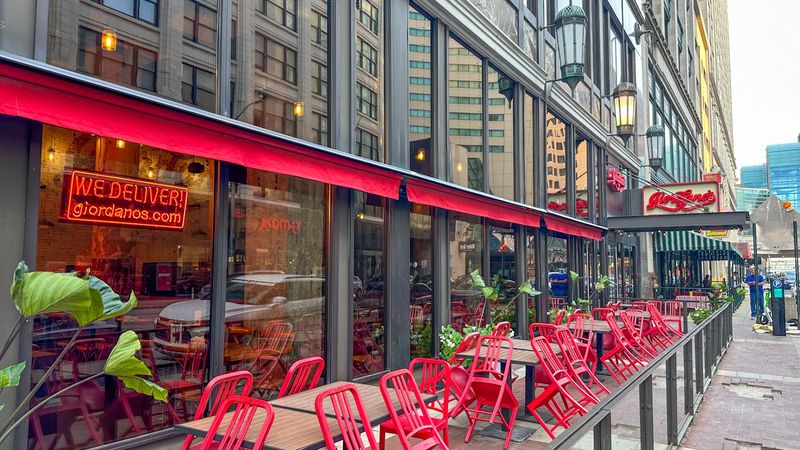
Some restaurant stories begin with expansion plans, but this one begins with a family recipe.
Giordano’s built its name on an old idea linked to Italian Easter Pie, and that origin gives the Indianapolis location a clear identity you can taste.
The brand traces its roots to brothers Efren and Joseph Boglio, who opened the first Giordano’s on Chicago’s South Side in the mid-1970s.
That history matters because the menu still points back to the same core formula. You are not looking at a place that borrowed the language of old-school cooking for decoration.
Instead, the Indiana outpost at 43 N Illinois St, Indianapolis, IN 46204, carries a concept that grew from one signature recipe into a national name. Expansion reached well beyond Illinois, yet the company still emphasizes old-world technique, proprietary ingredients, and a style that stayed linked to Chicago from the start.
That makes the downtown location easier to understand.
Read the menu with that background in mind, and each choice makes more sense. Then let the lasagna enter the chat.
The Stuffed Deep Dish Still Sets The Standard
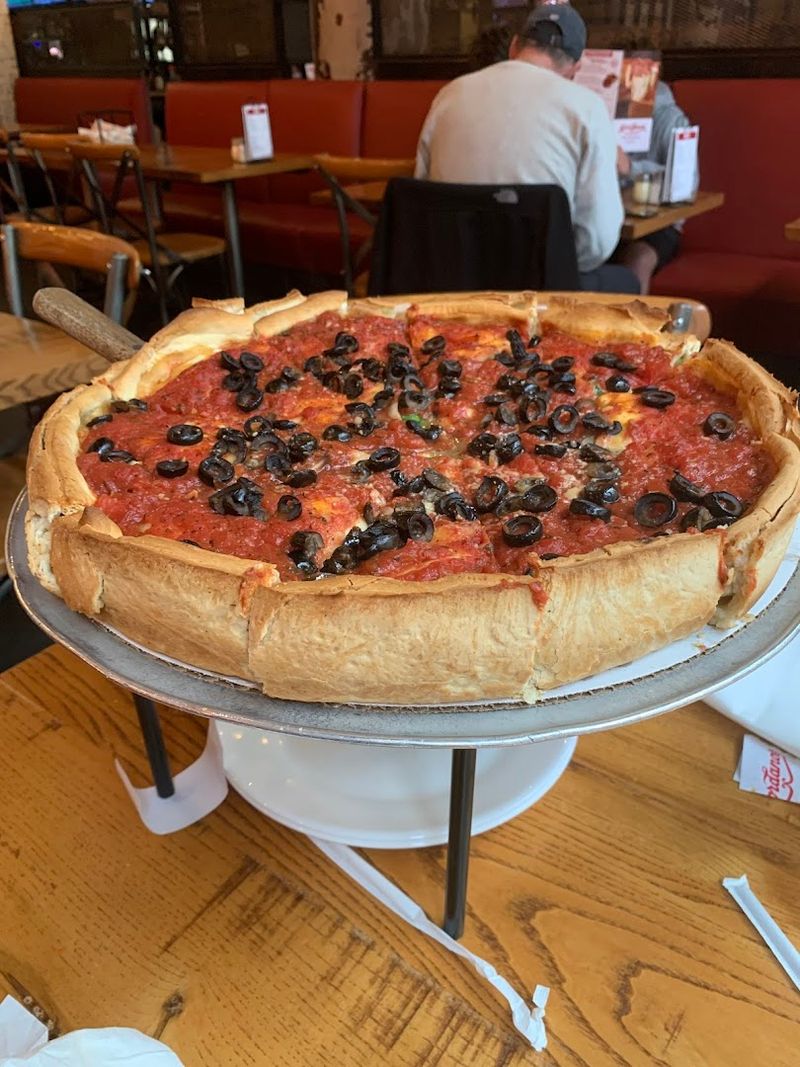
The signature pie does not whisper for attention.
At Giordano’s, the stuffed deep dish announces itself with a flaky double crust, a dense layer of mozzarella, and a topping of tomato sauce that sits above the cheese instead of beneath it.
That structure defines the house style and separates it from thinner, faster pizzas on the menu.
Each pie takes serious oven time, which shapes how you should read the experience.
In the middle of downtown, that long bake signals a process-driven kitchen, not a rushed slice counter. The company says one stuffed pizza takes trained craftsmen to assemble, and the bake runs long enough that advance ordering helps.
The cheese also deserves attention because it is proprietary Wisconsin mozzarella produced for the brand.
Packed between two layers of dough, it creates the rich pull people expect from Chicago stuffed pizza. Then the tomato sauce lands on top, adding brightness and keeping the interior from turning heavy.
If you want the house specialty, order with patience and read the crust like part of the recipe. Then decide how much room to save.
Thin Crust And Tavern-Style Give You Faster Options
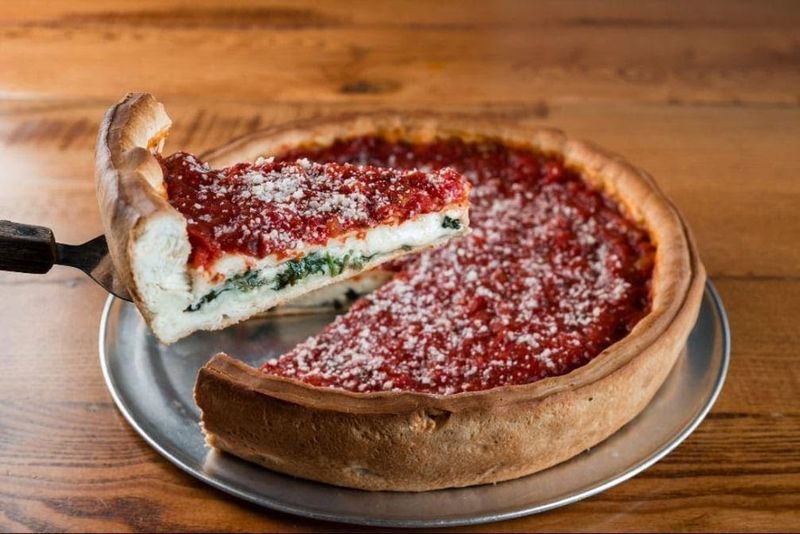
Long bake times are part of the stuffed-pizza formula, but the menu gives you quicker routes.
The traditional thin crust offers a lighter format with rich tomato sauce, mozzarella, and the Chicago habit of cutting pies into squares for sharing. That square cut immediately signals regional identity even before the first bite.
The tavern-style option pushes crispness further. It bakes very thin, carries toppings edge to edge, and develops a firmer crunch than the thicker house specialties.
If you want texture to lead the conversation, this is the style that does it most directly.
Both pizzas matter because they show that the restaurant does not rely on one format alone.
The thin crust keeps a flaky base and balanced topping load, while the tavern-style aims for a very crisp finish with premium ingredients spread across the whole pie.
Those details make the alternatives distinct, not interchangeable.
You should also notice what stays constant across styles. The square-cut Chicago identity remains in place, so even the lighter options speak the same language as the stuffed classic.
Pick your crust based on time, crunch, and appetite. Then let the sauce do the talking.
Lasagna Steps Out Of The Pizza Shadow
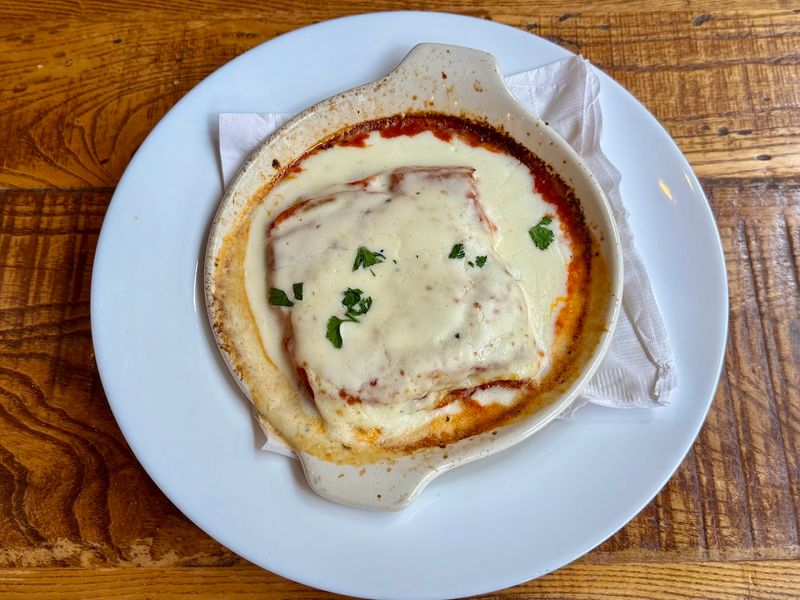
Here is the twist that gives this location its best conversation starter.
The lasagna has become the dish that can rival the pizza, which says a lot inside a restaurant built on crust.
Instead of playing a backup role, it arrives as a full-scale baked pasta with enough structure and richness to anchor the table.
The recipe centers on layers of ricotta cheese and fresh herbs, then opens into three distinct directions through the sauce.
You can pair it with house-made marinara for a brighter profile, house-made meat sauce Bolognese for added depth, or house-made Alfredo for a creamier finish. That simple choice changes the dish more than many pasta menus manage.
Size also matters here because the lasagna appears as both a standard entree and a family platter.
It makes it useful for solo appetites and larger groups without turning the dish into a side note. A pizza shop only gives pasta that kind of range when the kitchen trusts it.
If your order usually begins and ends with pie, pause here first. You may want the pasta to get top billing tonight.
The Cheese And Sauce Have Specific Sources
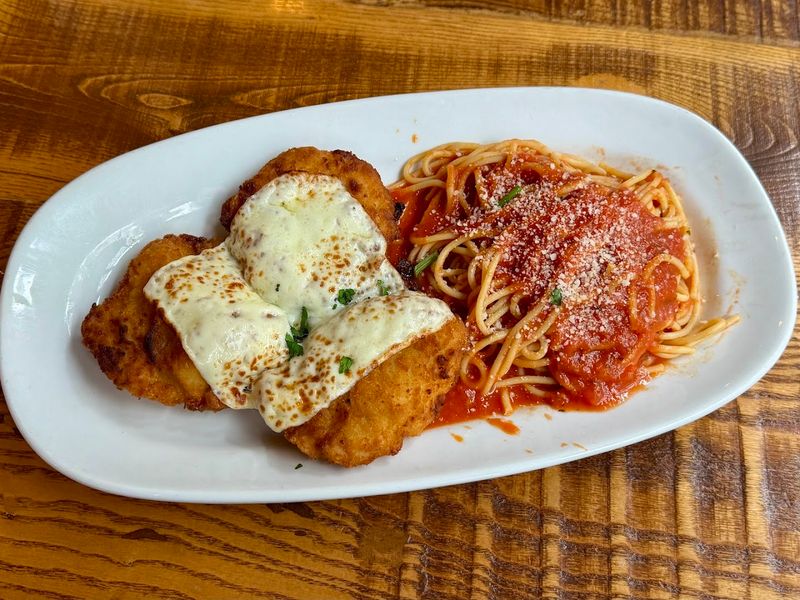
Ingredient sourcing explains a lot about why the menu tastes so specific.
Giordano’s uses proprietary Wisconsin mozzarella made for the brand with milk from local farms, then shreds it in-house each day.
That daily handling matters because pre-shredded cheese behaves differently once heat hits it.
The tomato story is just as particular. The sauce comes from tomatoes grown in a small part of Mendocino County, California, and the company says they are picked at peak ripeness for its recipe.
The sourcing gives the sauce a focused identity instead of the broad, generic profile many chain sauces settle for.
Dough also gets a precise foundation. The flour comes from a single Minnesota mill and uses an unbleached proprietary blend of North and South Dakota wheat.
When you connect that flour to the double-crust stuffed pie, the result starts to read less like hype and more like a system.
Those details shape consistency across locations, including Indiana.
If you want to understand the menu, study the cheese pull, the bright sauce, and the structure of the crust.
Then ask yourself a useful question. How often does one restaurant tell such a specific story through milk, wheat, and tomatoes alone?
Starters And Salads Round Out The Menu With Purpose
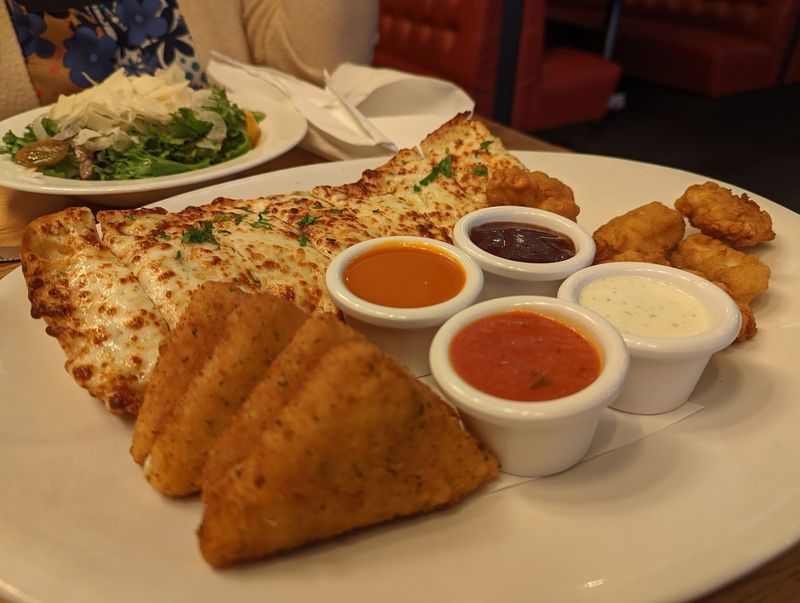
A strong pizza menu can make side sections look like filler, but this one gives them real jobs.
Giordano’s lists mozzarella triangles, traditional chicken wings, and a sampler platter that covers more ground when the table wants variety.
Those starters add range without drifting away from the core Italian American direction.
The salad section also stays specific.
One option pairs chicken with blue cheese, bacon, red onion, and honey mustard, while another leans Greek with feta, olives, and banana peppers. Those are not vague house salads with decorative names.
Each one uses distinct ingredients that change the rhythm of the meal.
The blue cheese combination pushes savory and sharp notes, while the Greek version brings salt, brine, and peppery contrast alongside heavier baked dishes.
If your order includes stuffed pizza or lasagna, that contrast becomes practical.
This section matters because it shows how the menu balances weight and texture. Fried starters, crisp vegetables, cheese-heavy mains, and bright dressings all work together without trying to compete for the same role on the table.
You can build a fuller meal here without losing the restaurant’s identity.
Take a longer look at the sides before skipping ahead. One smart salad can reset your whole order.
Sandwiches Keep The Menu Grounded In Italian American Basics
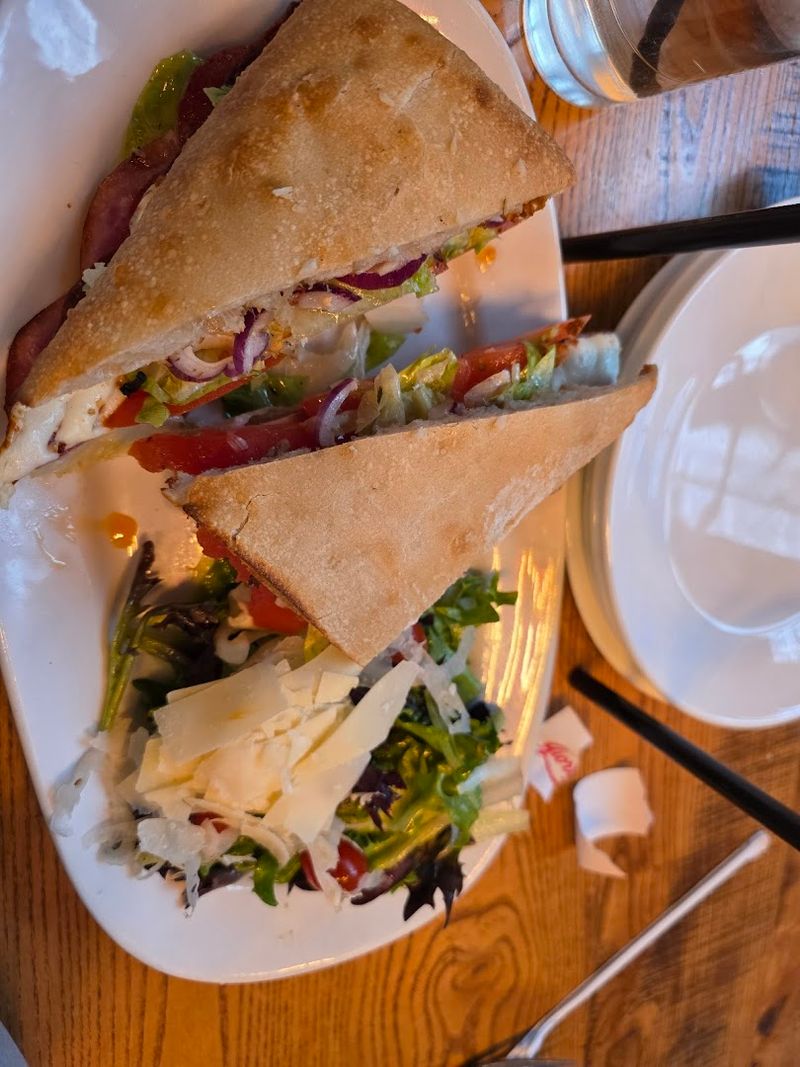
Pizza may lead the menu, yet the sandwich lineup keeps the restaurant grounded in familiar Italian-American combinations.
A grilled chicken sandwich pairs basil pesto with mozzarella, an Italian cold-cut option stacks salami and pepperoni, and the chicken parmesan sandwich leans on marinara plus melted mozzarella.
The combinations tell you exactly what each sandwich wants to do.
The value of this section comes from clarity. Pesto gives the grilled chicken version a herb-forward angle, the cold-cut sandwich pushes cured meat and spice, and the chicken parmesan keeps things squarely in red-sauce territory.
None of these choices depend on novelty.
Instead, they extend the same flavor logic used across the pizzas and pasta.
Mozzarella appears again, marinara appears again, and Italian deli cues stay visible without turning the menu into a duplicate of the pie section. That continuity helps the menu read as one kitchen with several lanes.
Sandwiches also offer a different eating pace than stuffed pizza. If you want handheld structure and direct flavors, they give you that route without abandoning the house identity.
The ingredients stay recognizable, and the pairings make sense on paper before they ever hit the table.
Give the sandwich section a proper glance. It might solve your indecision faster than a coin toss.
Ordering Strategy Matters Because The Kitchen Uses Time
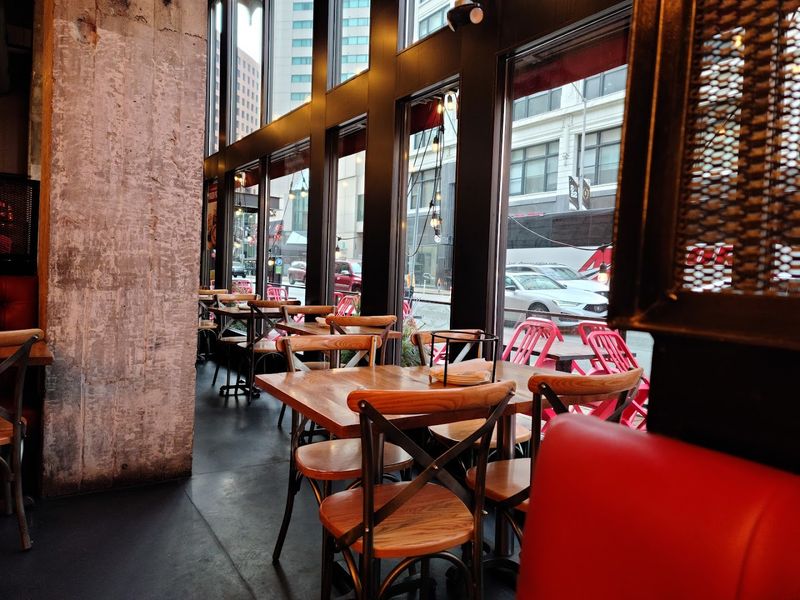
Timing changes the smartest way to order here.
The stuffed deep dish needs a long bake, so the kitchen cannot treat it like a quick-turn item without changing the product itself. That single fact shapes dine-in, carryout, and delivery choices more than any slogan could.
Giordano’s supports all three service formats at many locations, and the company also ships its stuffed deep dish nationwide.
Shipping matters for the brand’s reach, but the local lesson is simpler.
If you want the signature pie in Indiana, ordering ahead makes the process smoother because the oven time is built into the recipe.
This is one of those rare cases where patience is part of accuracy.
A stuffed pizza with double crust, a heavy mozzarella layer, and top-side sauce needs time to bake through properly. Thin crust, tavern-style pizza, sandwiches, salads, and lasagna can give you alternate paths if timing shapes your decision.
That range is useful because it lets you choose based on the clock without dropping quality expectations. You are not forced into one lane.
You are simply choosing how much oven time your order asks from the kitchen.
Use that knowledge to order smarter. Then decide if tonight belongs to crust or to that overachieving lasagna.