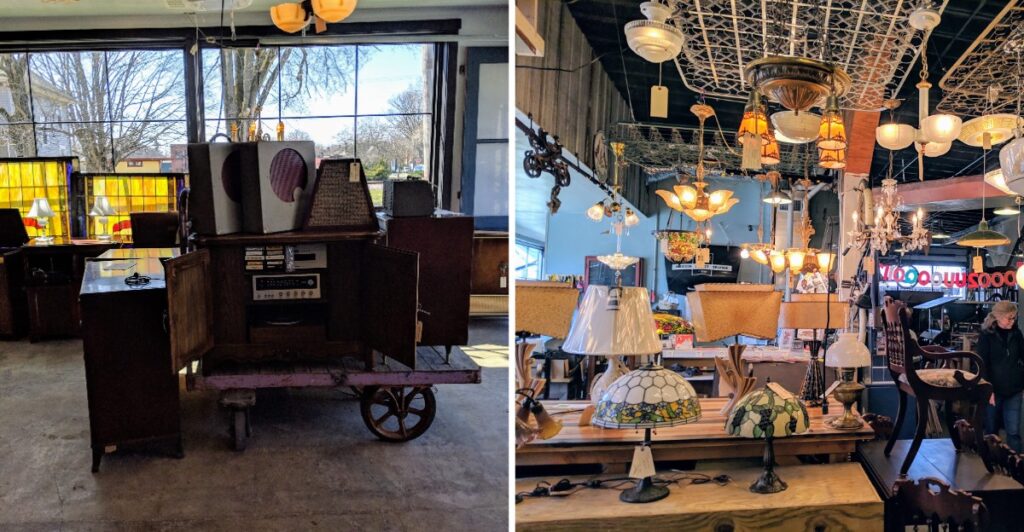
I have a hard time trusting a store where the best thing might be hiding under a pile of old hardware.
That is exactly the appeal here.
This Indiana salvage shop is built around whatever has been rescued, donated, and brought in lately, so the inventory never stays frozen in place.
One visit might turn up vintage lighting. Another could send you toward old furniture, records, signs, or the oddly specific piece your house has been missing for years.
There is no perfect aisle to follow.
You look. You dig. You double back.
And if you are restoring an older home, measurements may become your best friend.
The bonus is that every purchase supports a local preservation nonprofit, so the hunt comes with a little extra purpose.
Architectural Salvage Gives The Store Its Strongest Identity
Old doors, windows, hardware, mantels, mirrors, cabinets, flooring, and other building pieces are central to what Madison Street Salvage does.
The shop focuses especially on pre-1970 architectural salvage, which makes it useful for anyone working on an older house and trying to avoid a replacement that looks too new.
A hinge, knob, grate, cast-iron sink, or wood door can solve a specific restoration problem when the size and style line up.
You do not need a renovation project to enjoy looking around. Architectural pieces often show details that newer materials leave out.
The store also connects shoppers with practical preservation knowledge. Its larger mission is preservation first, with salvage used when historic material cannot remain where it started.
Staff and volunteers work with donated goods, deconstruction projects, furniture repair, sorting, and the daily movement of inventory.
Bring measurements if you are hunting for something functional. Doors, windows, and fixtures are much easier to evaluate when you know the opening, height, or width you need.
Without a project waiting at home, smaller hardware and decorative pieces can still turn a casual browse into a longer look.
The Franklin Location Has Its Own Layer Of History
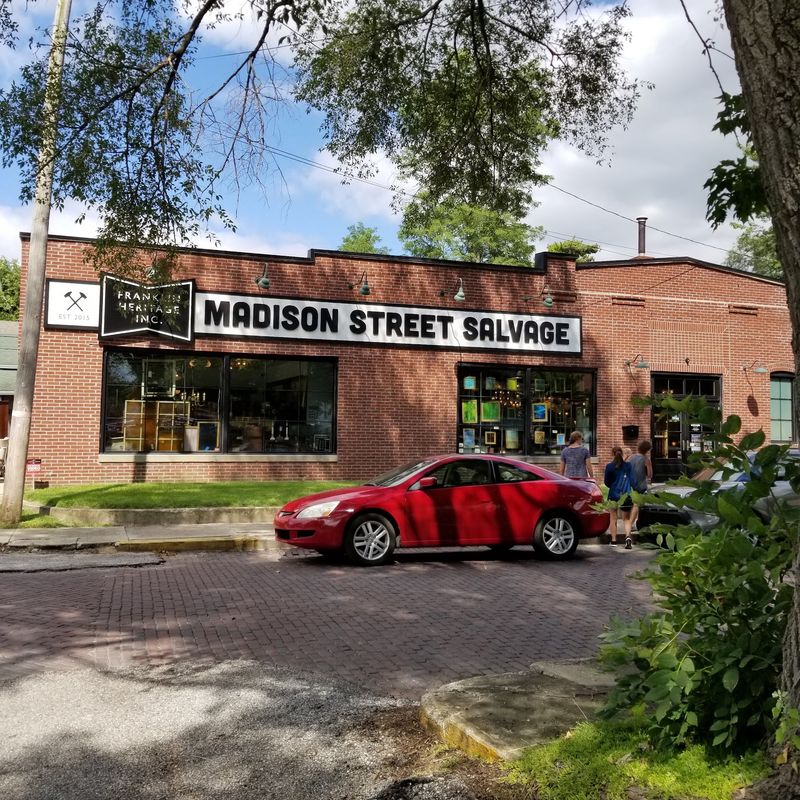
The building gives the salvage operation an appropriate home because it has already had more than one life.
The current shop occupies a restored commercial building that once housed McCarty’s Franklin Bakery.
The structure was built in 1919, and the bakery once produced a large share of the bread sold in Johnson County.
Other businesses used the building later before Franklin Heritage restored it for its present purpose.
That history works naturally with what happens inside now. Instead of replacing an older building with something new, the preservation organization repaired an existing structure and filled it with materials that can be reused elsewhere.
Madison Street Salvage is at 350 E Madison St, Franklin, IN 46131. The shop is open Monday through Saturday from 10 a.m. to 5 p.m. and Sunday from 1 p.m. to 5 p.m.
Those hours leave flexibility for a planned restoration stop or a weekend browse. If you are picking up a large or heavy online purchase, the shop recommends arranging ahead for weekday lifting help or choosing the weekend when assistance is easier to coordinate.
The building may have started as a bakery, but its current use still revolves around keeping useful things in circulation.
Donations Keep The Inventory Moving
The shelves do not follow the rhythm of a conventional retail store because Madison Street Salvage is donation based.
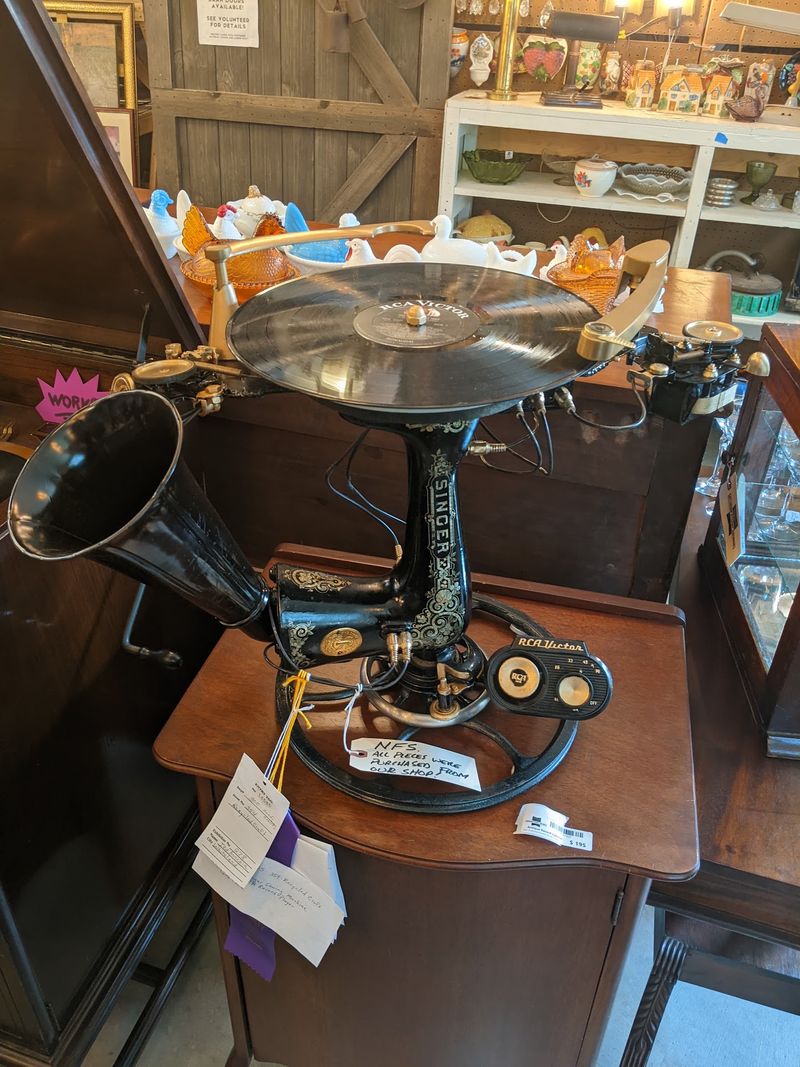
Furniture, vintage goods, architectural materials, records, lighting, and smaller pieces arrive through donations, and the store also handles salvaged material from buildings and deconstruction work.
That makes the inventory naturally variable. What you notice on one visit may be gone by the next, while different pieces may have arrived.
For shoppers, that changes the strategy. If you see an item that matches a project, it is worth taking measurements and details seriously rather than assuming an identical version will still be waiting later.
For donors, there are practical rules. The shop accepts donations throughout the week but asks people to contact the team so someone is available to help unload.
Weekly donation pickups can also be arranged, although limited floor space means the store cannot accept every item.
That limitation makes sense with large salvage pieces. Doors, windows, cabinets, furniture, sinks, and other bulky materials take up room quickly.
You can browse with a goal, but leaving space for surprise fits the store better. A visit for one piece of hardware can introduce you to a lamp, chair, sign, or stack of records you did not know would be there.
Vintage Furniture, Lighting And Records Broaden The Hunt
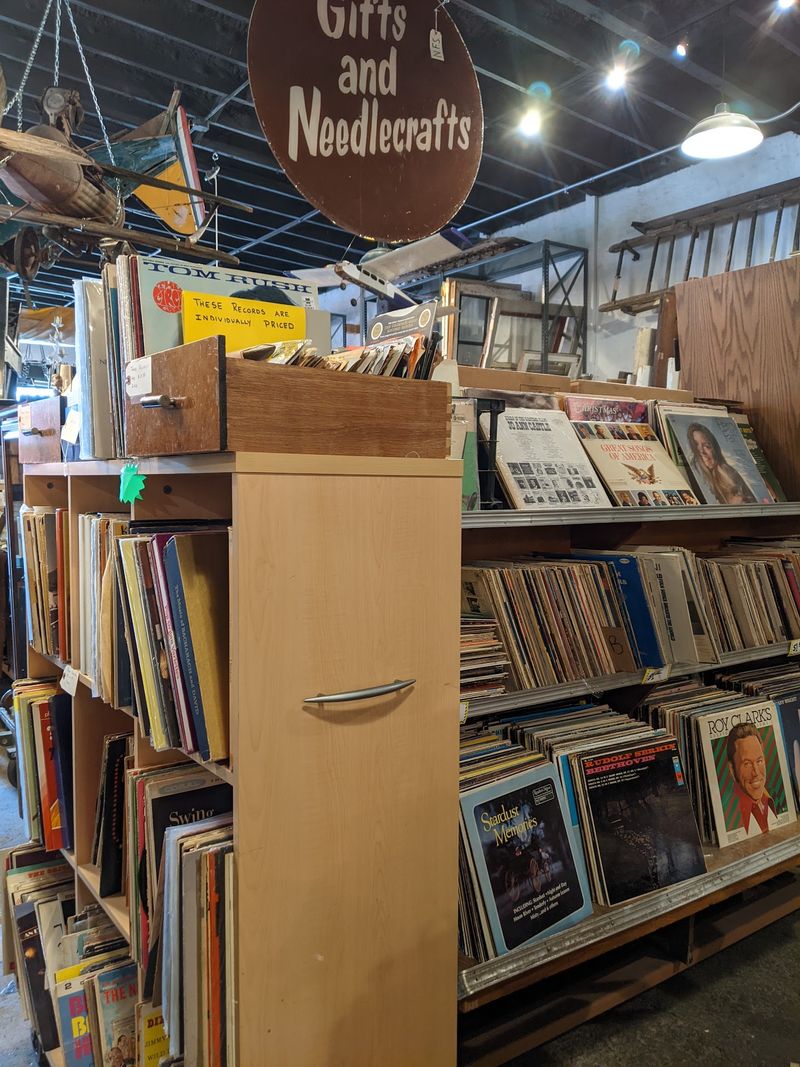
Architectural salvage may anchor the shop, but it does not define every aisle.
Vintage furniture is part of the mix, and volunteers help clean, move, repair, and process pieces as they come through.
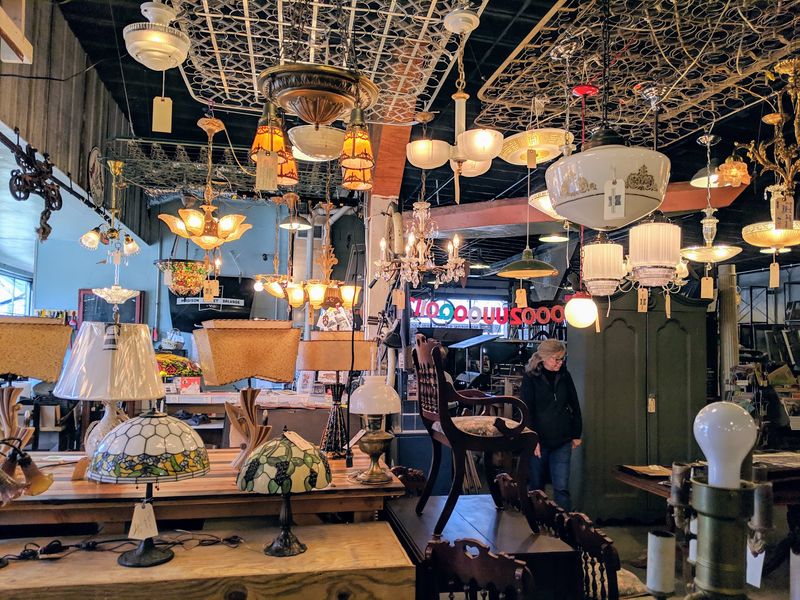
Lighting also has a visible place in the inventory, with chandeliers, hanging lamps, pendants, shades, and other fixtures appearing through both the physical shop and online listings.
Records add another direction. Franklin Heritage specifically includes vinyl records among the goods sold to raise funds, which means you can shift from studying an old fixture to flipping through music without leaving the building.
Someone restoring an older house may focus on period-appropriate materials, while another shopper is looking for a table, lamp, wall decor, or an unusual object.
Scan broadly before deciding where to spend your time. Large furniture and architectural pieces catch the eye first, but smaller shelves can hold hardware, jewelry, records, and other items that are easier to carry home.
If lighting is the goal, check dimensions and wiring needs before falling for a fixture. If furniture catches your attention, think about the route through your own front door before making the final call.
Salvage shopping is better when the great find also fits where you want it.
The Shop Grew Out Of Franklin Preservation Work
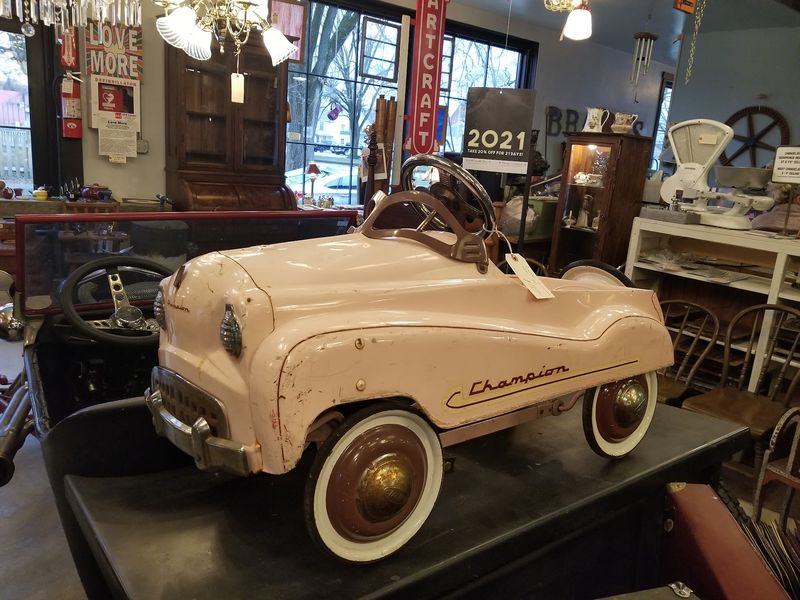
Madison Street Salvage did not begin as a conventional antique business.
After the major Franklin flood in 2008, Franklin Heritage stepped in to rescue reusable materials and help historic property owners.
That salvage effort became part of a broader preservation strategy: save a historic structure when possible, and when a building cannot be preserved, recover significant architectural pieces rather than losing everything with it.
The retail operation opened to the public in 2013. Its early setup was simpler than the current store, and over time the salvage program moved from a pole-barn operation into the restored Madison Street building.
That progression explains why the shop combines retail with work away from the sales floor. Volunteers and staff help with deconstruction projects, donation processing, deliveries, furniture repair, and woodshop tasks in addition to assisting shoppers.
It also explains why the merchandise can look so different from one section to the next. The inventory is not built around one manufacturer, decade, or decorating style. It comes from houses, buildings, donors, auctions, and preservation work.
That is useful when you are trying to match an old house. The exact piece you need may have started somewhere else in central Indiana before landing on a rack or shelf in Franklin.
Shopping Here Helps Fund A Larger Preservation Mission
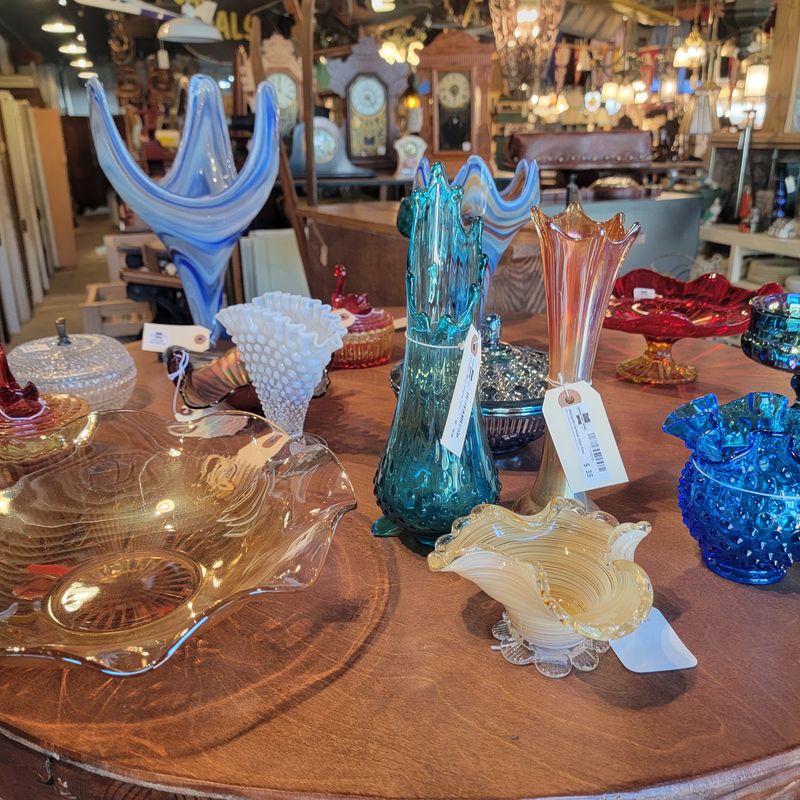
Madison Street Salvage is operated by Franklin Heritage, a nonprofit historic preservation organization founded in 1983.
The group works to protect Franklin’s historic character through restoration, salvage, education, and arts-focused projects. One of its best-known properties is the Historic Artcraft Theatre, the downtown movie house Franklin Heritage owns and continues to preserve.
The salvage shop serves as a revenue generator for that work. Sales of architectural materials, vintage goods, furniture, records, and other inventory help support Franklin Heritage and the Artcraft Theatre.
That changes the meaning of a purchase without making the shopping experience formal. You can still walk in because you need a door knob or because a vintage chair caught your eye. The preservation connection simply sits behind the transaction.
Donations work the same way. Rehoming usable furniture or older building materials gives the shop inventory while supporting the organization that processes and sells those pieces.
There is a practical benefit too. Materials that still have life left in them get another chance to be used instead of being discarded automatically.
So if you arrive with a house project, the mission and merchandise can line up neatly. You may find the old piece that solves a current problem while helping fund work on other historic buildings around Franklin.
Online Shopping Adds A Practical Way To Check What Is Available
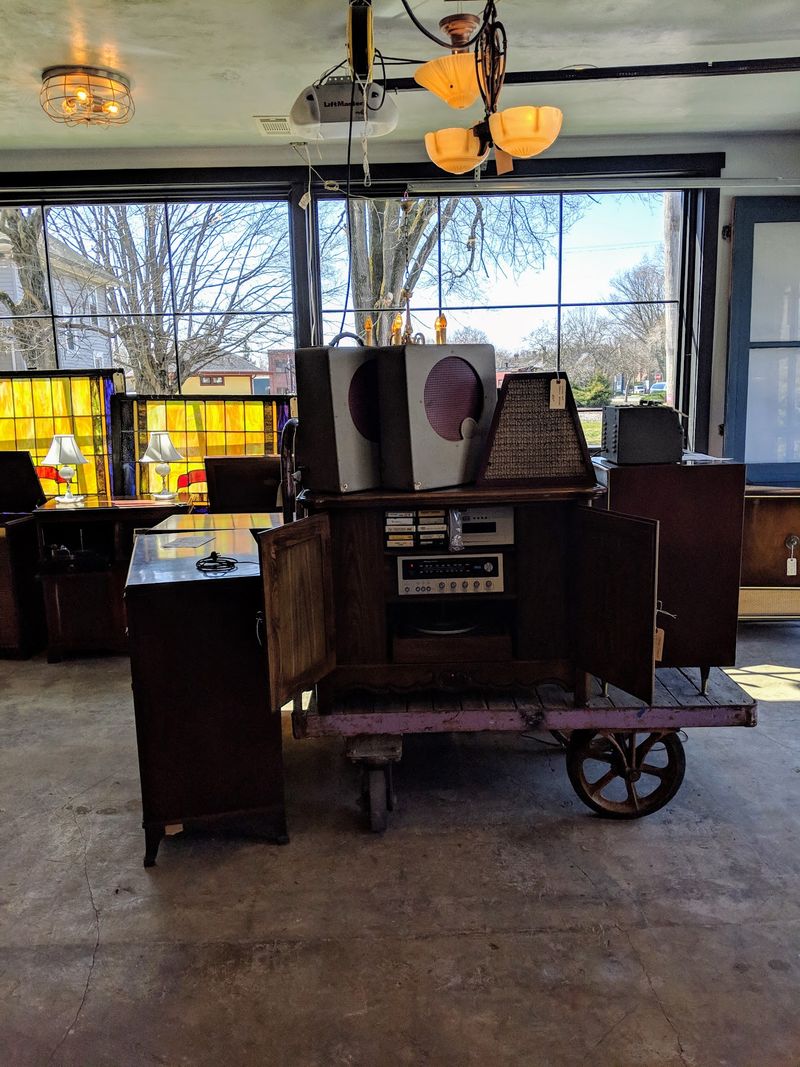
You do not have to begin every visit at the front door.
Madison Street Salvage maintains an online shop where selected inventory can be purchased for later pickup. That can be useful when you are looking for something specific or want to secure an item before making the drive.
There is one detail to remember: the shop does not ship merchandise. Online purchases are meant for pickup, and paid delivery is available depending on location. Free in-person pickup is also offered.
Large and heavy pieces require more planning. The store recommends weekend pickup for those items when possible, or contacting the team ahead of a weekday visit so lifting help can be available.
Purchased items generally need to be collected within seven days unless another arrangement has been made.
That keeps limited floor space from filling with sold merchandise and makes it worth checking your schedule before clicking the purchase button.
Online browsing only shows part of the appeal. A salvage shop is still at its best when you can look around, compare sizes, notice materials, and find the object you were not searching for.
Start online when you have a target. Walk the aisles when you have time. Madison Street Salvage works for both kinds of treasure hunt.