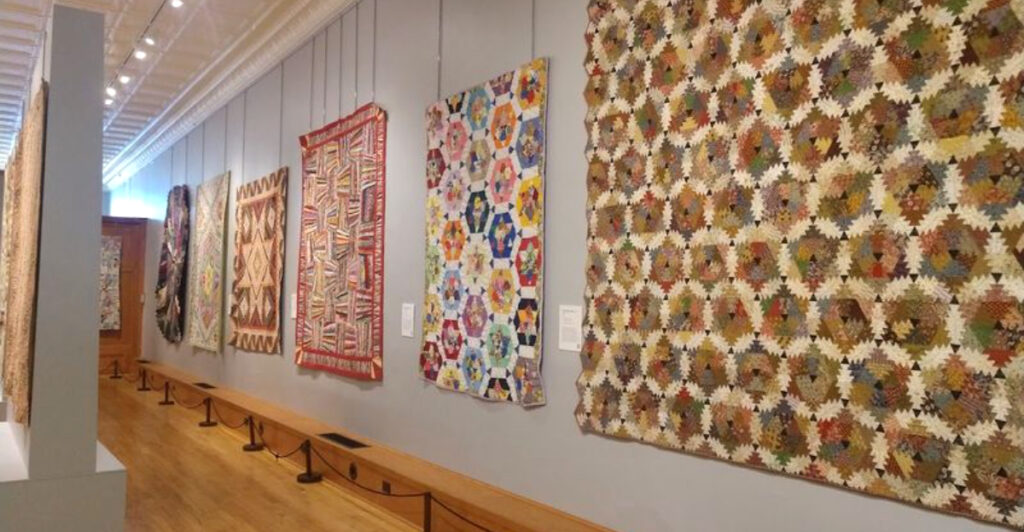
Can a quilt make you stop talking for a second?
In Iowa, the answer is yes, and honestly, it happens faster than expected. You walk in thinking fabric, patterns, maybe a pleasant little museum visit.
Then one stitched detail catches your eye, and suddenly the whole room feels a lot less quiet.
Who knew thread could be this persuasive?
This is not history sitting stiffly behind glass, asking you to behave. It is color, texture, patience, and hundreds of tiny choices made by hands that had something to say.
The surprise is how personal it feels. A pattern can look beautiful from across the room, then turn into a family story, a cultural clue, or a small act of creativity once you get closer.
Some Iowa museums tell history with plaques and dates. This one lets the fabric do the talking, and somehow the fabric has plenty to say.
A Former Department Store With A New Purpose
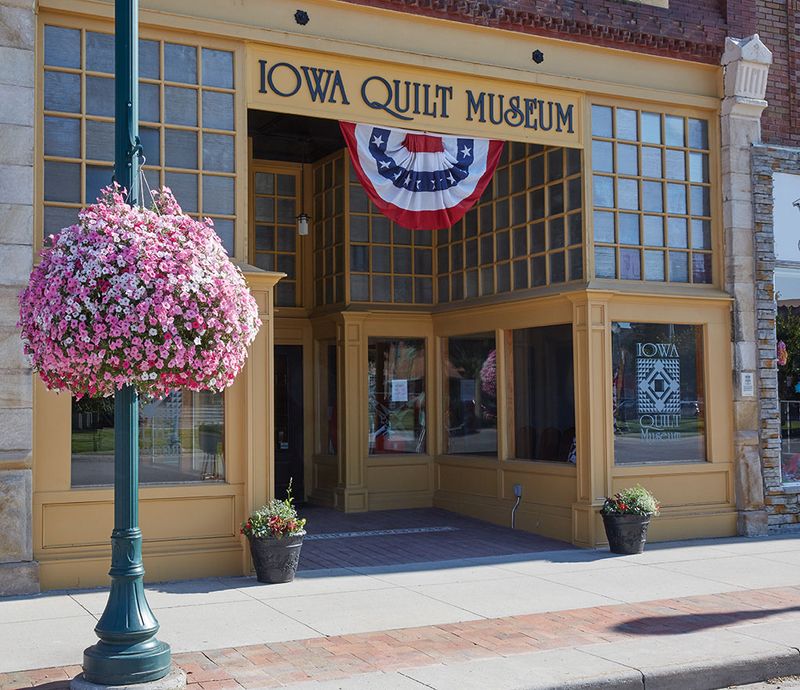
Not every museum gets to live inside a piece of retail history, but this one does.
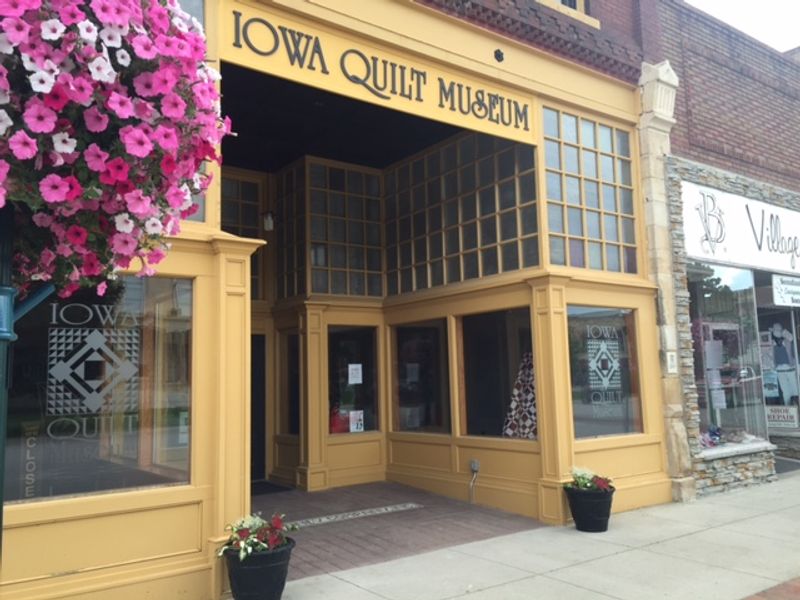
The Iowa Quilt Museum occupies the former JC Penney building in downtown Winterset, a structure that has been thoughtfully transformed into a bright, welcoming exhibition space without losing any of its original charm.
The high ceilings work beautifully here. Quilts hang at full length without being crowded, and the natural light that filters through the windows gives the fabrics a warmth that artificial lighting could never replicate.
The layout is easy to navigate, which matters more than people realize. My aunt, who does not walk long distances comfortably, had no trouble moving through the space.
Chairs are placed at nearly every display corner, so you can sit and really look at a piece without feeling rushed.
The building itself adds its own layer of character to the experience. There is something satisfying about the combination of old architecture and living textile art.
You can find the museum at 68 E. Court Ave, Winterset, IA 50273, right in the heart of downtown.
Rotating Exhibits That Keep Every Visit Fresh
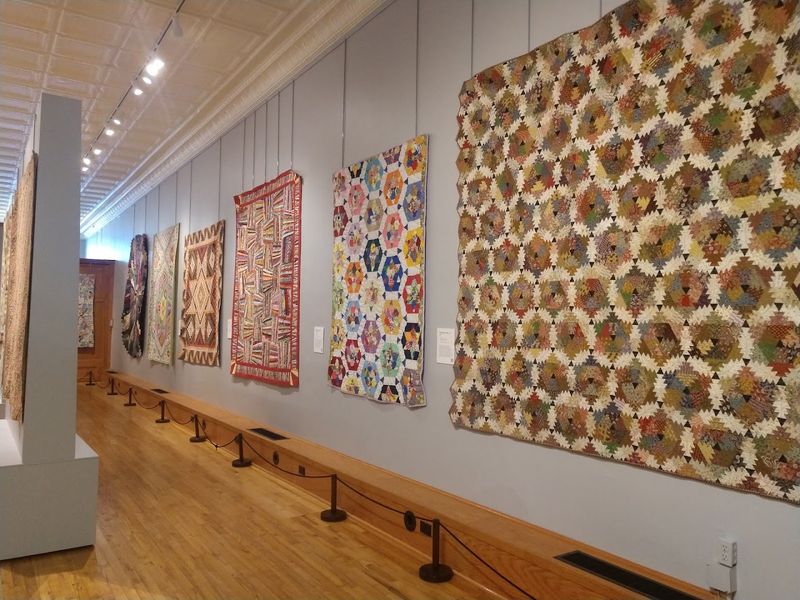
One of the smartest things this museum does is keep its exhibition schedule moving.
The Iowa Quilt Museum features rotating exhibits of historic and contemporary quilts, which means even if you visited during a past season, there is a solid reason to come back and see something completely different.
Past exhibits have included nineteenth-century indigo quilts, modern quilt collections, and themed shows that highlight just how flexible the art form can be.
One past indigo exhibition, for example, filled the room with deep blue-and-white color combinations and geometric precision that was almost hard to believe given the age and handwork involved.
The rotating format also means the museum can partner with private collectors and institutions to bring in pieces that would otherwise never be seen by the public. That kind of access is genuinely rare for a museum of this size.
Each new exhibit opening tends to draw a crowd of regulars who treat it almost like a community event. The staff can point visitors toward the current show, upcoming exhibitions, and special programs worth planning around.
That kind of enthusiasm is contagious and completely earned.
The Story Indigo Quilts Tell About American Craft
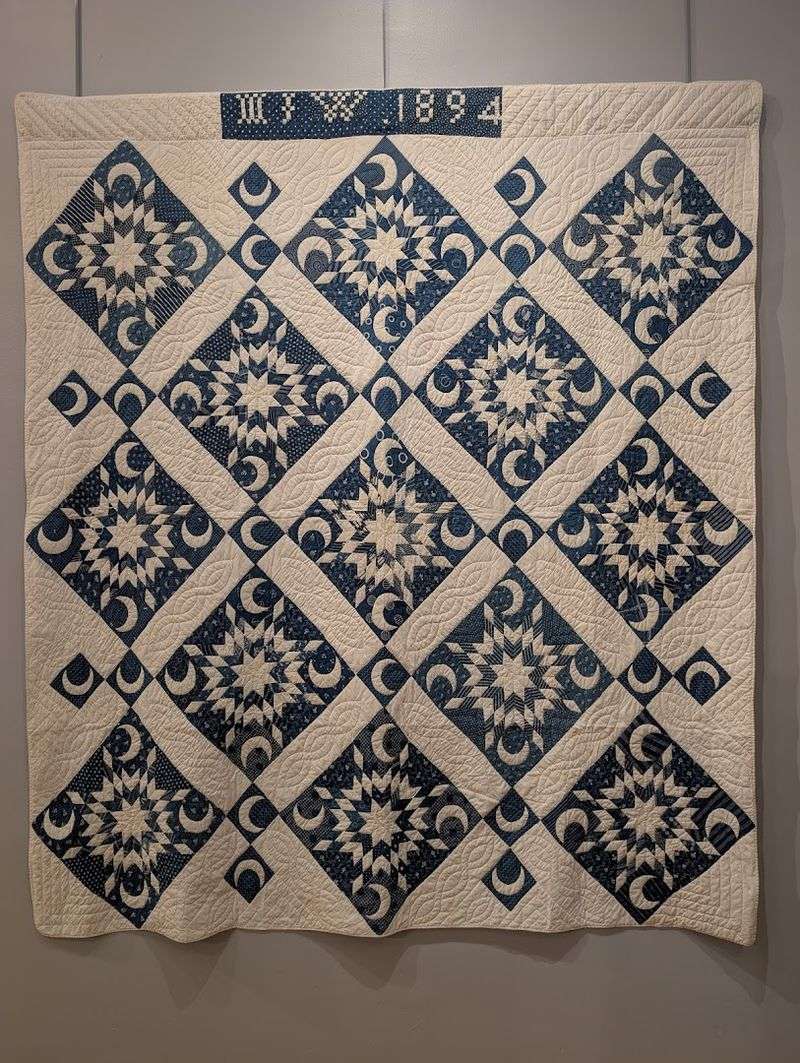
Indigo dye has a long and complicated history in America, and when indigo quilts are on display, they carry that history in every thread.
The deep blue color that made these textiles so distinctive came from a labor-intensive dyeing process connected to agricultural, domestic, and trade networks of earlier centuries.
What stands out most is how powerful the color remains on many antique examples. Indigo-dyed fabric is known for holding its color remarkably well compared with many other natural dyes, which is part of why surviving pieces can still feel so visually strong.
The patterns themselves are worth studying up close. Many feature complex geometric designs that required serious planning before a single stitch was made.
There is a real intelligence behind each composition that commands respect.
Some antique quilts also use techniques such as trapunto, which involves stuffing certain areas of the design to create a raised, sculptural effect.
Seeing that detail in person, rather than in a photograph, makes a real difference in understanding just how skilled these makers were.
White Gloves And Up-Close Access
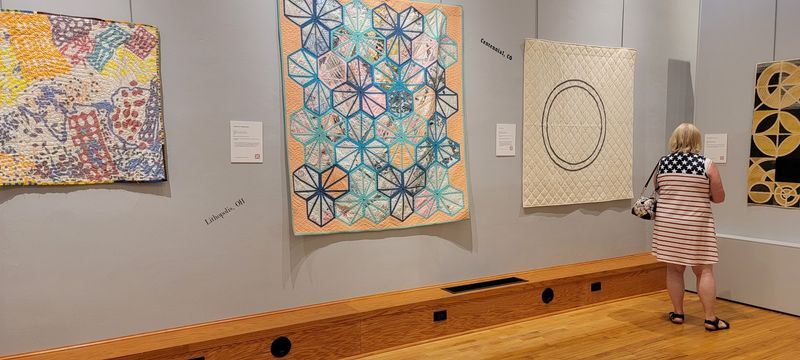
Most museums keep you at a respectful distance from their collections. The Iowa Quilt Museum does a good job of balancing preservation with close viewing.
That balance changes the entire experience.
The staff members here are often happy to help visitors notice details they might otherwise miss, from stitching techniques to the historical context behind specific patterns.
Depending on the exhibit or program, special handling opportunities may involve white gloves or staff guidance, but regular displayed quilts should be treated as museum objects and viewed without touching unless a staff member clearly says otherwise.
Even without handling the quilts, being able to stand close enough to study the stitching is something most people never fully expect from a small-town museum.
You can see individual stitches, notice where fabric has softened with age, and appreciate the sheer volume of work that went into each piece.
That close, careful access makes the visit feel personal rather than clinical.
Modern Quilts That Redefine What The Craft Can Be
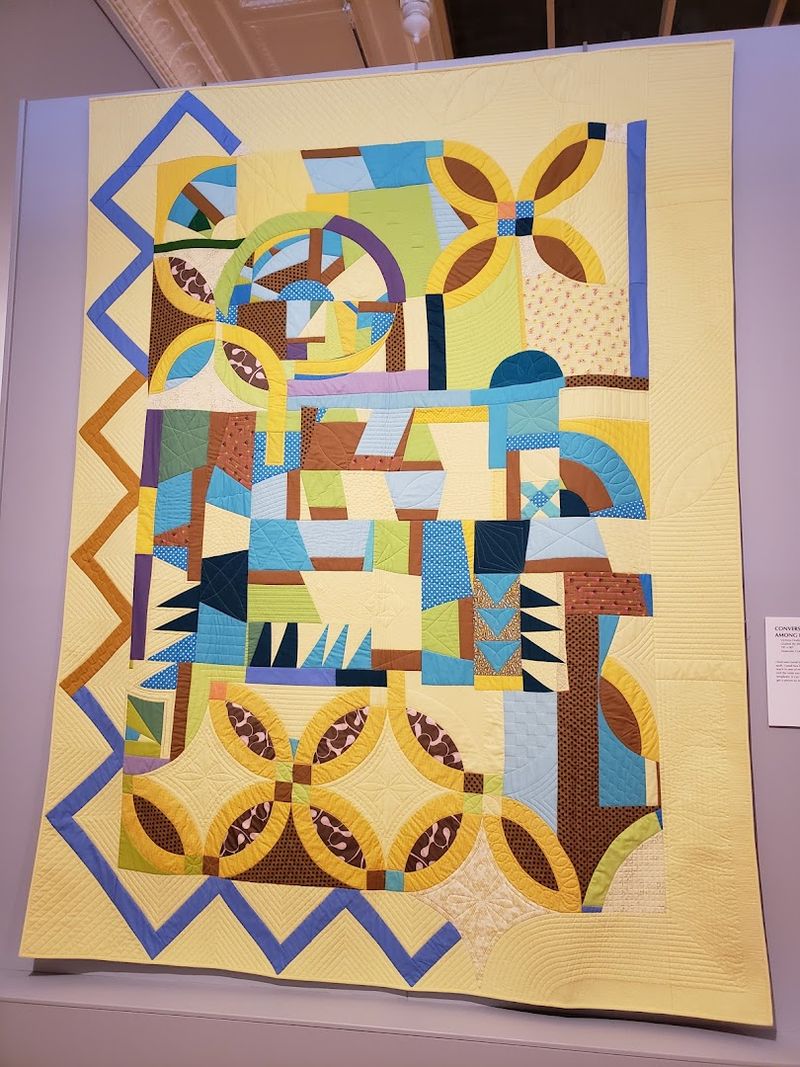
There is a common assumption that quilts belong to the past, that they are cozy relics of a simpler time. The modern quilt movement has been quietly dismantling that idea for years, and this museum gives it full credit.
During certain exhibitions, the entire ground floor fills with work that looks more like abstract painting than anything your grandmother might have kept on a bed.
Bold color blocking, asymmetrical compositions, and experimental materials push the definition of what a quilt can be in genuinely exciting directions.
I spoke with a staff member about the shift, and she explained that many contemporary quilters approach their work as fine art from the very beginning, with no intention of the piece ever being used for warmth.
The craft has expanded into galleries, competitions, and academic programs around the world.
Seeing that evolution laid out in a single museum makes the history feel alive rather than archived.
You understand where the tradition came from and where it is heading, and the distance between those two points turns out to be much more interesting than you might expect.
Antique Sewing Machines And The Tools Of The Trade
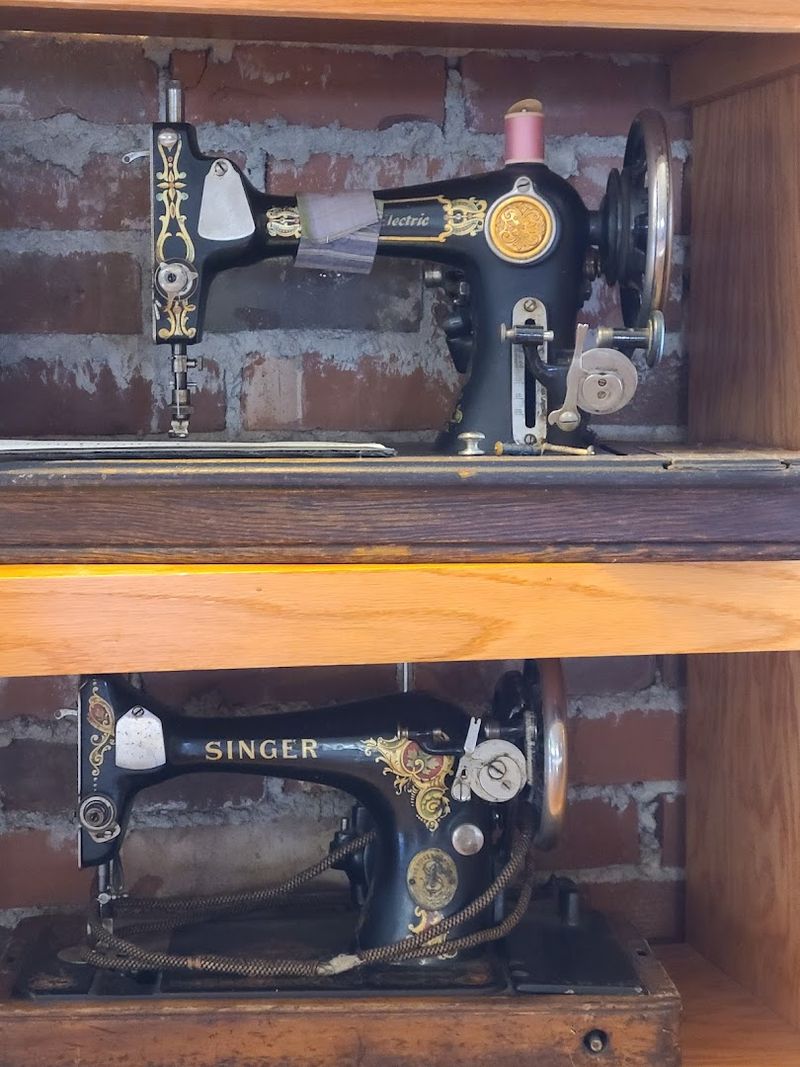
Up on the mezzanine level, the museum keeps a collection of antique sewing machines that adds a fascinating mechanical dimension to the overall story.
These are not just decorative objects. They represent the technological changes that transformed textile production over more than a century.
Machines from well-known American and European manufacturers sit side by side, and the differences in design, engineering, and intended use are more interesting than you might expect.
Some were built for industrial speed, others for domestic precision, and a few were clearly designed to be beautiful objects in their own right.
Reading the placards alongside each machine gave me a better understanding of how access to technology shaped what quilters could accomplish and how quickly.
A hand-quilter working alone and a woman with a treadle machine in 1890 were operating in very different creative realities.
The mezzanine also offers a slightly elevated view of the main exhibition floor below, which is a nice bonus. You can look down at the hanging quilts from a different angle and notice design elements that are not visible at ground level.
It is one of those small architectural surprises that makes a space feel layered.
What Admission Costs And What You Get For It
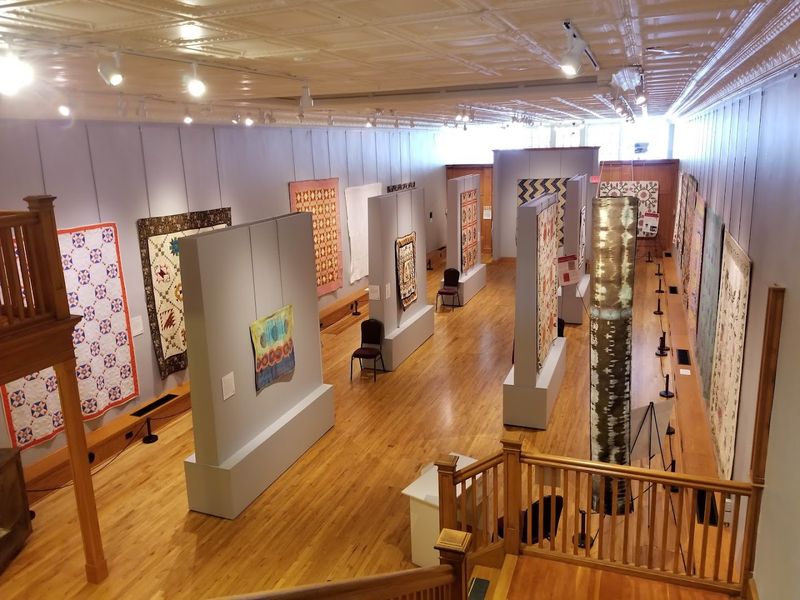
Admission at the Iowa Quilt Museum is modest by any measure. Current general adult admission is twelve dollars, with seniors, veterans, and active military admitted for ten dollars.
Children ages three through twelve and students with ID are admitted for five dollars, making this an accessible outing for families.
For that price, you get access to the museum’s rotating quilt exhibition, the displays inside the historic building, and the antique sewing machine area.
Formal guided tours are separate and must be arranged in advance, but staff members can still help answer questions during a regular visit.
Some visitors have noted that the number of quilts on display is smaller than what you might find at a large regional quilt show. That is fair.
But the quality and curation of what is here is consistently high, and the experience feels personal rather than overwhelming.
From April 1 through October 31, the museum is open Monday through Saturday from 10 AM to 5 PM and on Sundays from noon to 4 PM. From November 1 through March 31, it is open Monday through Saturday from 10 AM to 4 PM and Sunday from noon to 4 PM.
The museum closes on major holidays, including the Fourth of July, so checking the website before planning your trip is smart.
Planning ahead pays off here.
Quilts As Documents Of Social History
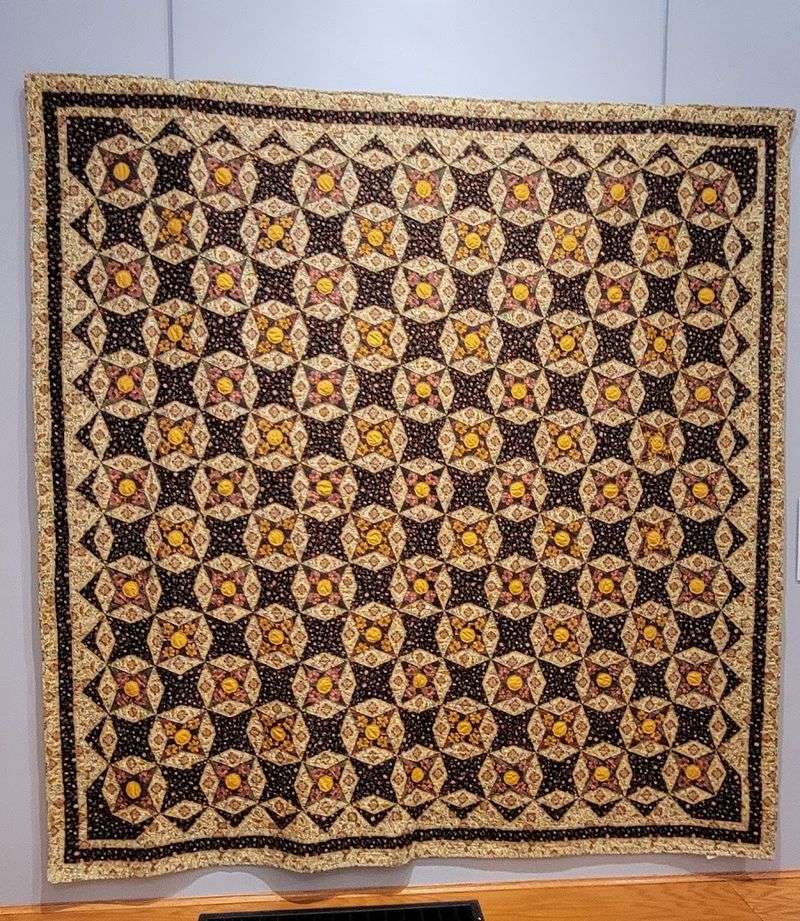
Every quilt in this museum is also a social document. The fabrics, patterns, and techniques used in each piece reflect the economic conditions, cultural influences, and community values of the time and place where it was made.
Antique quilt exhibitions can reveal how textile traditions moved through families, regions, and trade networks over time. That movement is not random.
It reflects shared community knowledge, available materials, regional taste, and the practical realities of making something beautiful under real constraints.
The museum does an excellent job of providing this kind of context without turning the experience into a lecture. Informational panels are clear, well-written, and genuinely interesting rather than dense with academic language.
What I came away understanding is that quilts were never just decorative. They were functional objects made under real constraints by real people, and the choices those makers made, about color, pattern, material, and technique, tell us things about their lives that written records often do not capture.
That is a remarkable kind of historical testimony, and this museum honors it seriously.
Visiting Winterset And Making The Most Of Your Trip
Winterset is worth more than a quick stop. The town is best known as the birthplace of John Wayne and for the covered bridges that inspired a famous novel and film, so there is plenty to explore beyond the museum walls.
Parking near the museum is easy and free, which is a refreshing change from navigating a city garage.
The museum sits right on the downtown square, so you can combine your visit with a walk around the historic district, lunch at a local spot, or a drive out to one of the nearby covered bridges.
The annual quilt event that the museum hosts each year draws visitors from across the region and is worth planning around if your schedule allows.
The staff can give you details about upcoming programming, and the museum’s website keeps a current calendar of exhibitions and special events.
Whether you are a dedicated quilter, a casual art lover, or just someone looking for something genuinely interesting to do on a Midwestern afternoon, this museum delivers something that is hard to find anywhere else.
Some places earn their reputation one stitch at a time, and this is absolutely one of them.