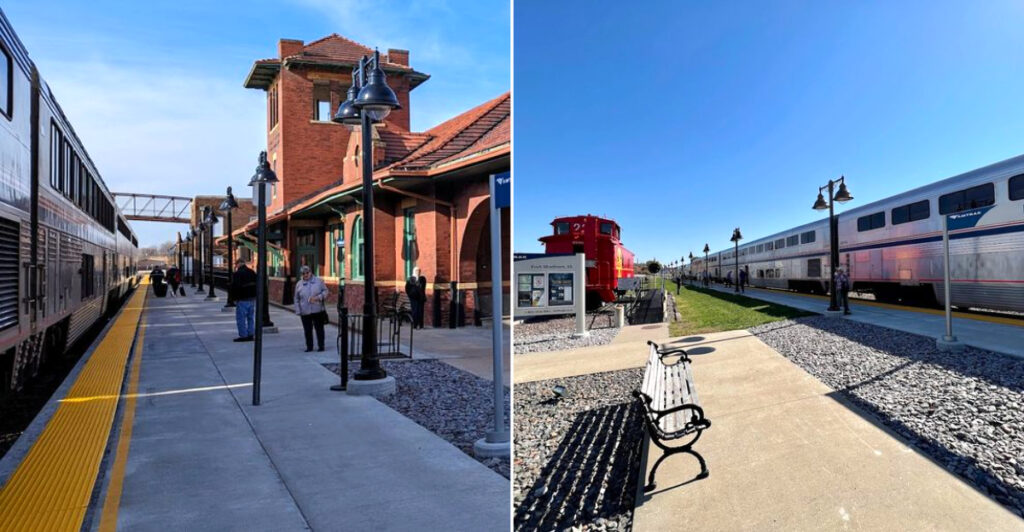
Old train depots are able to make regular time feel a little too modern.
This Iowa stop still carries that classic rail-travel feeling, but not in a dusty, glass-case kind of way. Trains still roll through, people still come and go, and the whole place has the energy of a story that never fully left the platform.
I expected a quick look around and maybe a few nice photos.
Instead, I found myself listening for the next engine, watching the tracks, and wondering why more travel days do not begin with a building this handsome.
Is it possible for a depot to make you romanticize waiting? Apparently, yes.
A Mission Revival Masterpiece With A Story To Tell
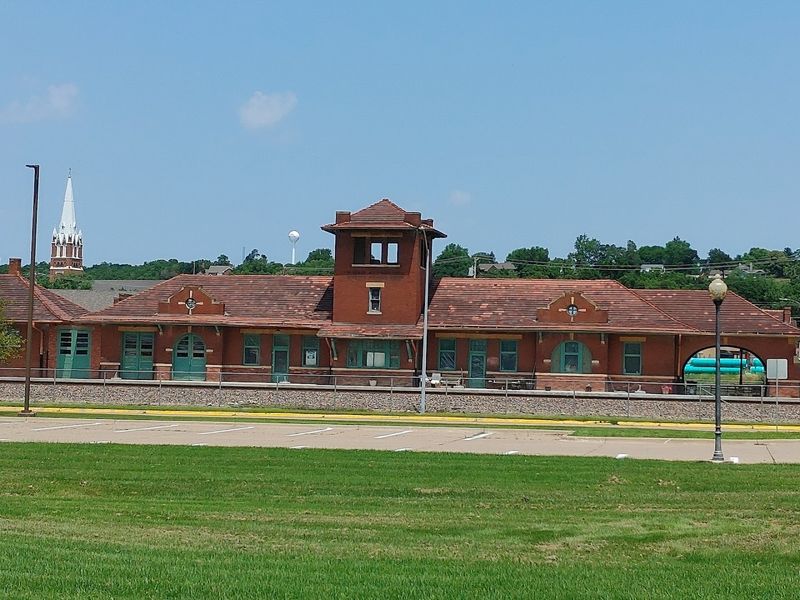
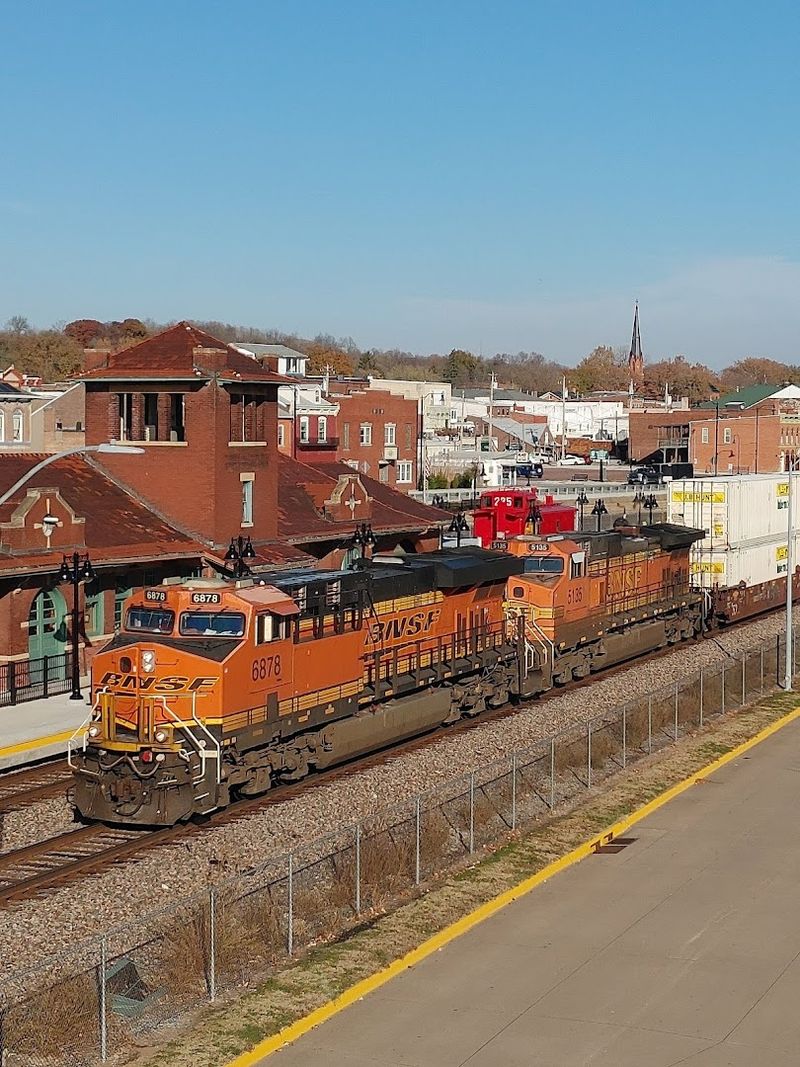
The first thing that genuinely stopped me in my tracks was the architecture. The Fort Madison Santa Fe Depot is a stunning Mission Revival-style building constructed from dark red brick and designed by Santa Fe Chief Engineer C.F.
Morse.
Each gable is fitted with the Santa Fe cross-within-a-circle emblem, and the deep eaves that circle the building were originally built to shelter passengers from harsh weather.
The trim is executed in local Appanoose stone, including the water table, sills, lintels, and coping, which gives the whole structure a grounded, handcrafted feel.
The building is part of a complex listed on the National Register of Historic Places, which tells you everything you need to know about its significance. This is not a reproduction or a restored replica.
It is the real thing, standing at the historic Santa Fe Depot complex in Fort Madison, with Amtrak using the station at 810 10th Street, Suite 1, Fort Madison, IA 52627.
Every detail, from the stonework to the roofline, reflects the craftsmanship of an era when train stations were built to impress and inspire.
Where History And Active Rail Travel Share The Same Roof
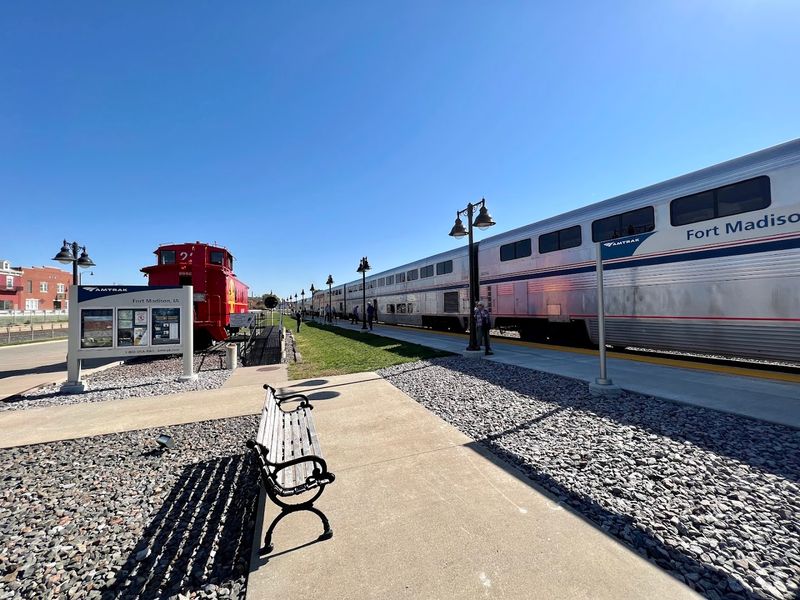
Not many historic landmarks in America still serve their original transportation purpose, but this one does. The Fort Madison Santa Fe Depot now functions as an active Amtrak stop while also remaining part of a historic museum complex.
The Southwest Chief, Amtrak’s legendary long-distance train running between Los Angeles and Chicago, makes this its only stop in Iowa. That alone gives the depot a special kind of energy that most museums simply cannot manufacture.
Passengers actually board and depart here, luggage in hand, heading off on journeys across the Midwest and the American West. Meanwhile, visitors can explore the depot complex, learn about local history, and watch the trains roll by.
The combination of a living station and a historic landmark creates something rare. You are not just reading about rail travel from behind a velvet rope.
You are standing inside it, watching it happen in real time.
That dual identity is exactly what makes this place feel so alive and worth the trip.
60 To 80 Trains A Day And Counting
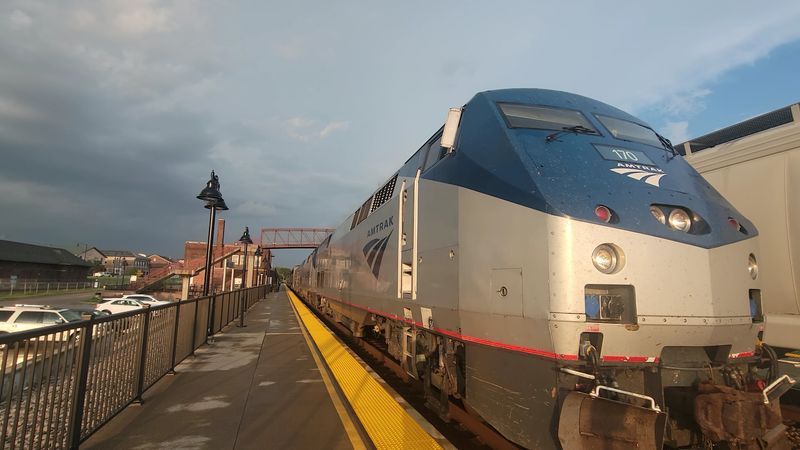
Let me be honest about something. I did not expect to feel like a kid again watching trains, but standing near the Fort Madison Santa Fe Depot, that is exactly what happened.
Fort Madison tourism promotes the area as a major railfanning spot where 60 to 80 trains or locomotives can be seen along the Mississippi riverfront on a busy day.
That includes Amtrak’s Southwest Chief and heavy BNSF freight traffic rolling through on a regular schedule.
The sheer volume of rail traffic here is remarkable, especially compared to most rail stops across the country where you might wait an hour for a single train to appear. Here, the action can feel nearly constant.
Railfans from across the country make the trip specifically for this reason. There is even a popular live-stream camera through the Virtual Railfan network, broadcasting the Fort Madison rail action for those who cannot make it in person.
Whether you spend an hour or an entire afternoon, you are unlikely to run out of trains to watch. The variety of equipment and the pace of traffic make this one of the most rewarding rail-watching spots in the Midwest.
The Skywalk Bridge View That Railfans Dream About
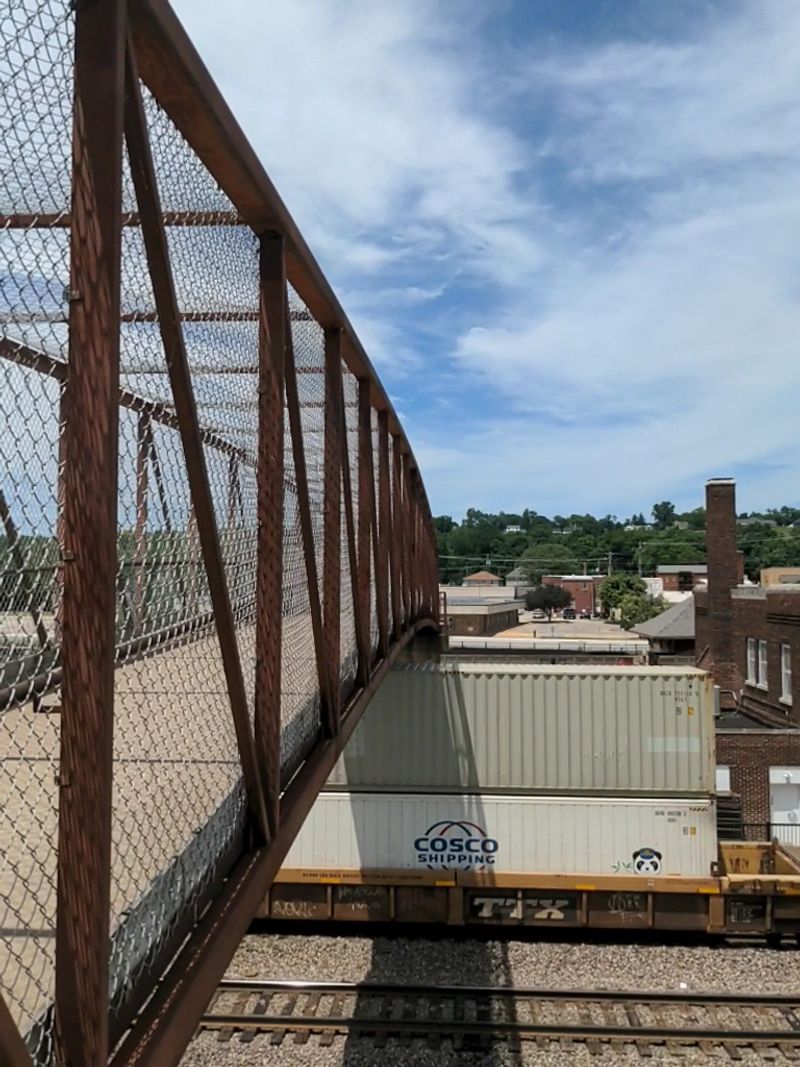
Right to the west of the depot sits one of the most exciting vantage points for train watching anywhere in the region.
A pedestrian bridge crosses directly over the railway tracks, giving you a bird’s-eye view of trains passing below.
I climbed up there myself, and the experience was genuinely thrilling. Watching a long BNSF freight train roll beneath your feet while the Mississippi River sits in the distance is the kind of moment that sticks with you.
The bridge is also a fantastic photo spot. The combination of the historic depot building, the active tracks, and the surrounding landscape creates a layered, dramatic composition that photographers and casual visitors alike tend to love.
Several people mentioned that being up on the skywalk while a train passes underneath is an unforgettable sensory experience. The sound, the vibration, and the sheer scale of the locomotives from that angle are hard to put into words.
If you visit and skip the bridge, you are missing one of the best parts of the whole experience.
The Museum Complex That Surprises Everyone
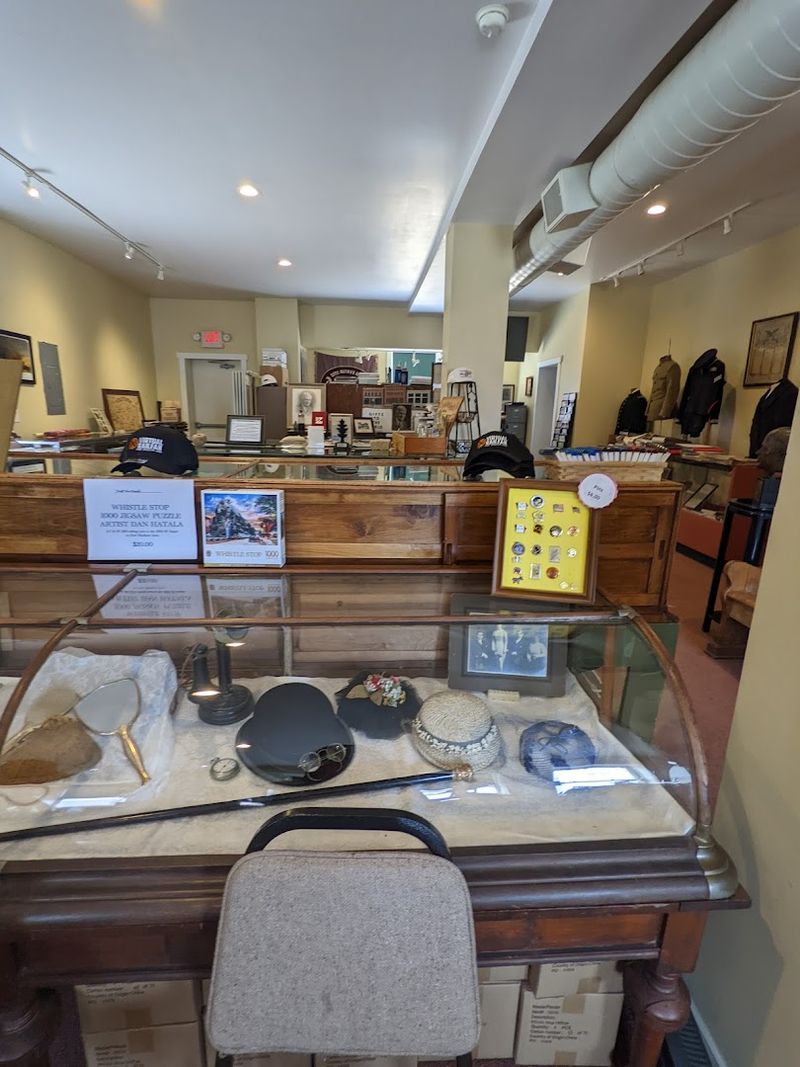
Beyond the active train platform and the stunning architecture, the depot complex houses a small but genuinely impressive museum collection packed with local history.
The exhibits cover a wide range of topics, including the history of Fort Madison itself, the construction of the original fort, military uniforms, arrowheads, and detailed stories about the railroad’s role in shaping the region.
What makes the museum stand out is not just the artifacts but the people who bring them to life. The volunteers and staff here are extraordinarily knowledgeable, and they clearly love sharing what they know.
I spent more time than I planned simply listening to one of the museum guides explain the history of the fort, how it was built, why it was eventually destroyed, and how the railroad transformed the town afterward. The depth of knowledge on display was genuinely impressive.
Families with children especially appreciate the hands-on storytelling approach. One young visitor I noticed was completely captivated, asking question after question with wide eyes.
The museum proves that the best history lessons come from passionate people, not textbooks.
The Staff Who Make Every Visit Feel Personal
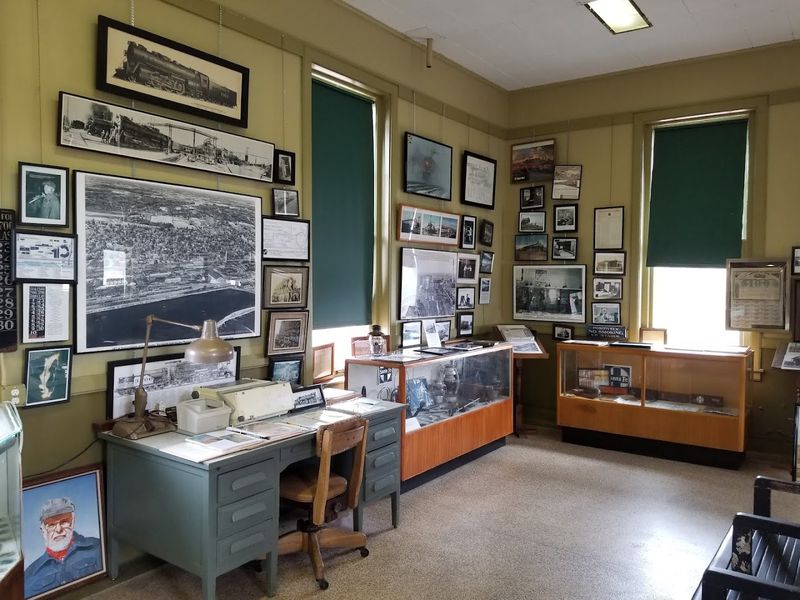
A place is only as good as the people inside it, and by that measure, the Fort Madison Santa Fe Depot complex makes a strong impression.
The staff and volunteers here have earned a reputation that travels well beyond the local area.
Fort Madison’s railfan community even has its own local personalities and inside references, including the well-known “Amtrak Amy” mentioned by the Virtual Railfan crowd.
The museum volunteers are often described as fonts of knowledge. Their stories about the railroad, the town, and the artifacts in the collection are the kind you find yourself retelling to friends weeks later.
The staff’s enthusiasm is genuine and infectious. They are not just clocking in and answering questions.
They are clearly proud of this place and what it represents.
That kind of human warmth transforms a historical landmark into something that actually feels like a community gathering point worth returning to.
The Southwest Chief And The Romance Of Long-Distance Rail
There is a reason the Southwest Chief has inspired countless travel writers, photographers, and adventurers over the decades.
Amtrak’s iconic long-distance route between Los Angeles and Chicago passes directly through Fort Madison, making this depot one of its scheduled stops.
The train offers a slower, more atmospheric way to experience the American landscape, with Fort Madison giving passengers a historic Iowa stop along the Mississippi River.
The Southwest Chief can also be a surprisingly practical travel option depending on route, timing, and fare, especially for travelers who would rather avoid a long drive.
For passengers boarding here, the historic depot sets the tone perfectly. You are not just catching a train.
You are starting a journey the old-fashioned way, from a building that was designed to make travel feel meaningful.
The Southwest Chief’s Fort Madison stop is brief, so passengers should always follow crew instructions before stepping off or taking photos during the stop.
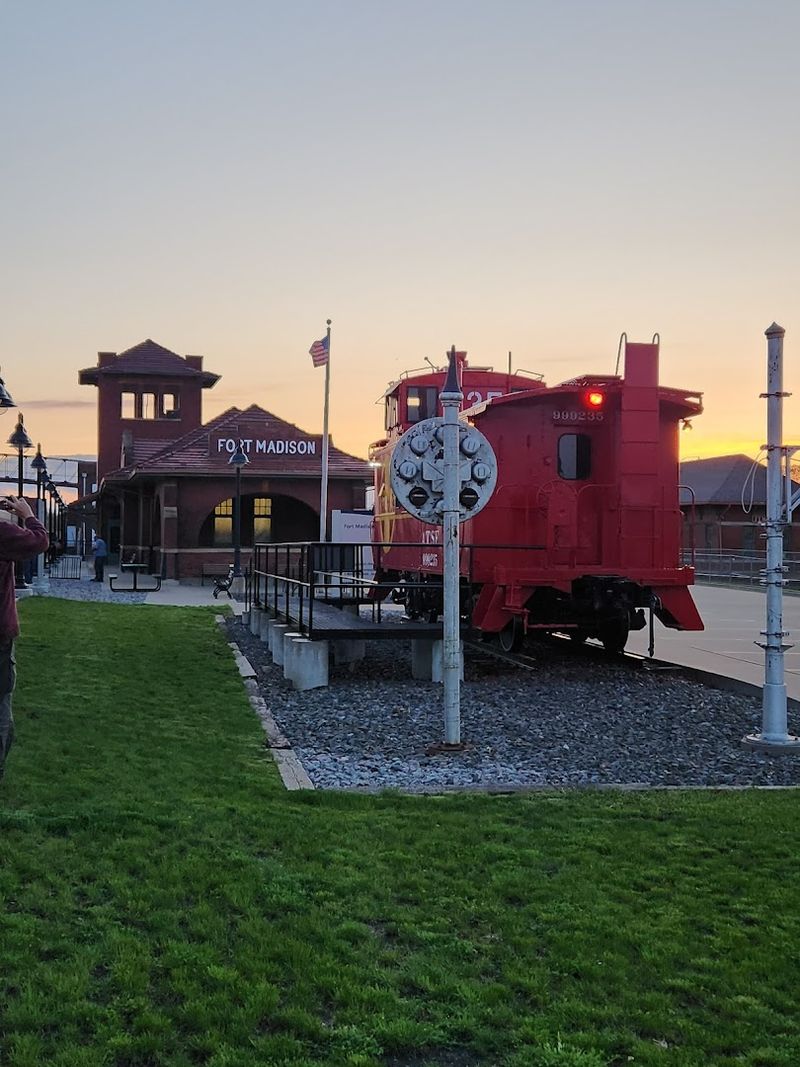
Santa Fe Caboose Number 235 And Its Restored Glory
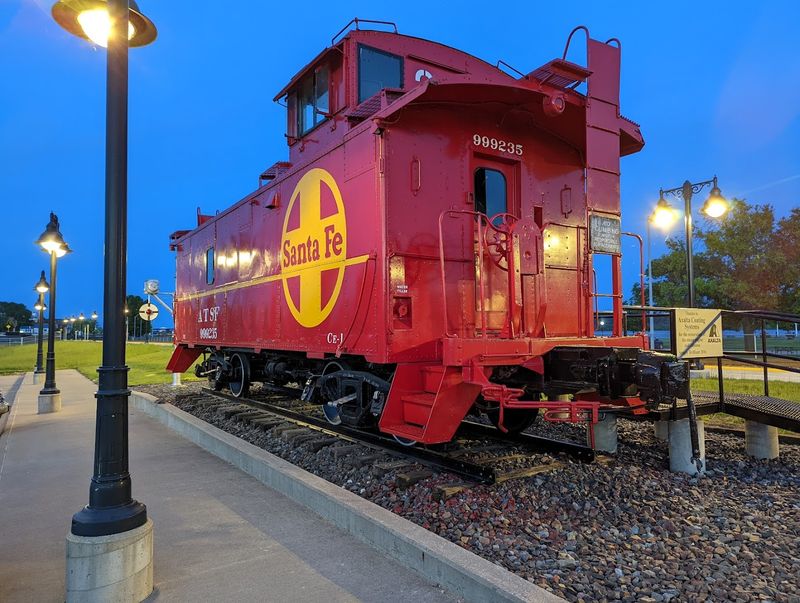
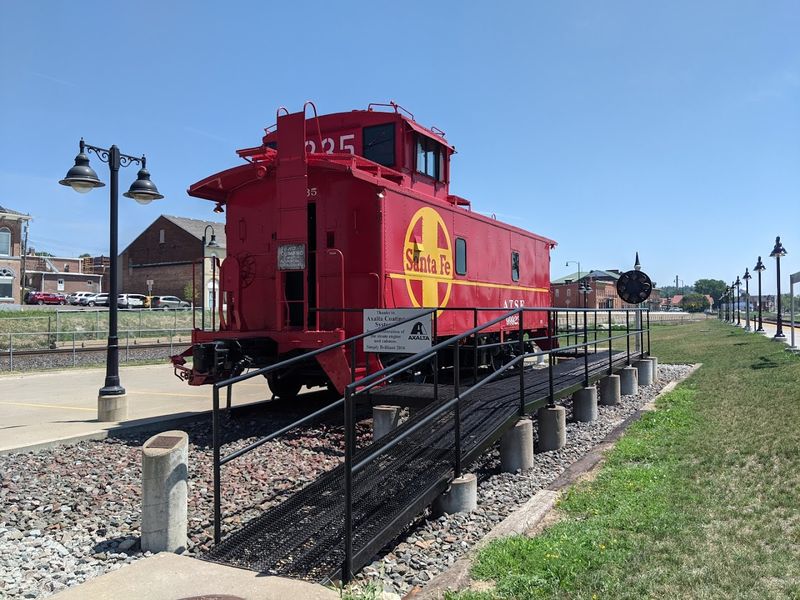
Parked right alongside the depot complex is one of the most charming pieces of railroad history you will find anywhere in the Midwest.
Santa Fe Caboose number 235 has been donated to the North Lee County Historical Society and restored as part of the historic display.
The caboose features the brakemen’s seats, the conductor’s desk, folding seat-and-bed combinations, and a cast iron stove, all preserved in a way that lets you genuinely picture life on the rails in an earlier era.
Cabooses like this one were a constant presence at the end of freight trains for much of the 20th century, serving as the crew’s mobile office and rest space during long hauls.
They were phased out as technology replaced the need for a rear crew, which makes surviving examples like this one genuinely valuable.
Getting to look inside and understand how the crew actually lived and worked during a run adds an entirely new dimension to the depot visit, though this outdoor display may be closed during the winter season.
History does not get much more tangible than seeing a restored caboose up close.
A Friendly Town That Wraps Around Its Railroad Heritage
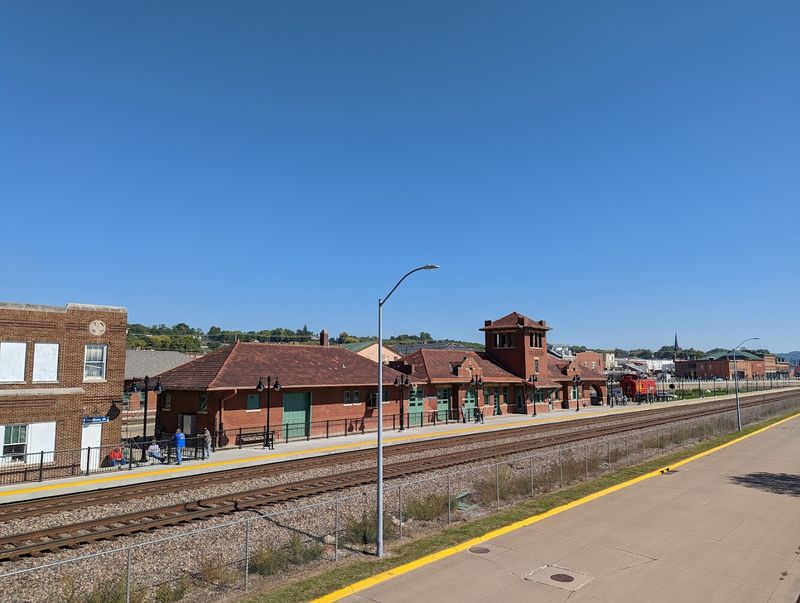
Fort Madison, Iowa is the kind of town that makes you slow down without anyone having to ask.
The entire community seems to have embraced its railroad and river heritage as central to its identity, and that pride shows in the way the town presents itself.
The Mississippi River runs right along the edge of town, and the combination of river views and constant rail traffic gives Fort Madison a layered, atmospheric quality that larger cities often lose.
The town has been working to preserve and celebrate its historical character through several ongoing local projects.
Riverview Park, just down from the depot, is a popular gathering spot where local events and community activities regularly bring residents and visitors together.
The Pen City Cruisers, a local classic car club, have been known to show up at community events with their beautifully maintained vehicles, adding an extra dose of Americana to the whole scene.
Fort Madison feels like a place that genuinely values its past without being stuck in it. The town is moving forward while keeping a firm and affectionate grip on what made it special in the first place.
Perfect For Families, Scouts, And Curious Kids Of All Ages
One of the things that genuinely surprised me about the Fort Madison Santa Fe Depot was how well it works as a family destination. This is not a hands-off, do-not-touch kind of museum experience.
The staff actively engages with younger visitors, explaining the history of the fort, the railroad, and the artifacts in ways that are clear and exciting for kids.
Boy Scout troops have taken organized tours here and come away with one of the most memorable field trip experiences imaginable.
Young children are absolutely captivated by the real trains passing through. There is no simulation, no screen, and no pretend version of anything here.
The trains are real, they are loud, and they are right there in front of you.
For families passing through the area with a bit of extra time, the depot is an easy and rewarding stop. A four-year-old can get just as much out of the visit as a history-loving adult, which is a genuinely rare quality in any attraction.
The mix of education, live action, and welcoming staff creates exactly the kind of experience that kids talk about long after the day is over.
Practical Details For Planning Your Visit
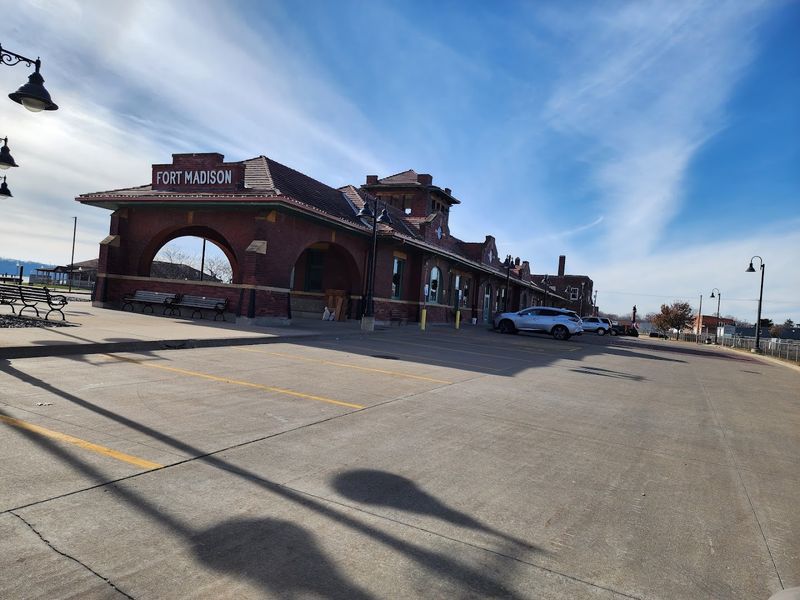
Getting the logistics right before you visit makes the whole experience much smoother. The Amtrak station is located at 810 10th Street, Suite 1, Fort Madison, IA 52627, inside the historic Santa Fe Depot complex.
The Amtrak contact number listed for Fort Madison is 319-372-3142, while the North Lee County Historical Society lists 319-372-7661 for its museum operations.
The North Lee County Historical Society lists the Santa Fe Depot as open year-round, Monday through Saturday from 10 AM to 4 PM and Sunday from noon to 4 PM.
Amtrak ticket-office or station hours should be checked separately before traveling, since train-service hours and museum hours are not the same thing.
The depot is easy to find in Fort Madison, Iowa, and parking in the area is not the kind of stressful urban scramble that puts people off visiting. The surrounding neighborhood is straightforward to navigate, and the depot itself is a recognizable landmark once you are in the area.
The hours make it possible to time your visit around the Southwest Chief’s schedule if you want to catch the Amtrak stop specifically.
Checking the Amtrak website in advance for the current timetable is a smart move, since arrival times can shift by season or operating conditions.
The community feedback is strong, and most visitors leave wishing they had stayed longer.
Why This Depot Deserves A Spot On Your Midwest Itinerary
After spending time at the Fort Madison Santa Fe Depot, I came away with a clear sense that this place punches well above its weight.
It is not a theme park version of railroad history. It is the genuine article, functioning and alive, with real trains, real stories, and real people who care about preserving it all.
The combination of architectural beauty, active rail traffic, a thoughtful museum, and staff who genuinely love their work makes this stop completely unique in the Midwest. Very few places manage to balance all of those elements at once without one of them feeling like an afterthought.
Rail enthusiasts will find the train frequency alone worth the drive. History lovers will appreciate the depth of the exhibits and the quality of the storytelling.
Families will appreciate how accessible and engaging the whole experience is for visitors of every age.
The depot is proof that the romance of classic rail travel does not have to live only in old photographs or nostalgia. Right here in Iowa, it is still very much rolling.
Make the trip, ask questions, climb the bridge, and let the trains remind you why rail travel captured the world’s imagination in the first place.