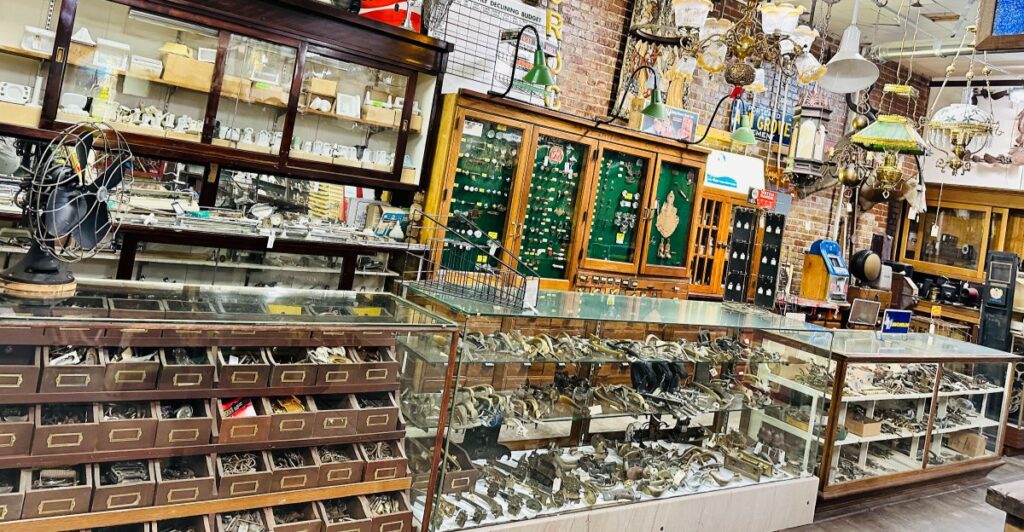
The first clue that this is not a typical resale shop is how quickly you stop thinking about resale altogether.
Instead of racks of ordinary secondhand goods, this Kansas spot is packed with architectural pieces, old fixtures, vintage doors, hardware, and objects that look like they were pulled straight from another era.
Browsing feels more like exploring a warehouse of possibilities than hunting for bargains.
One strange hinge, weathered cabinet, or stained-glass panel can suddenly become the centerpiece of a project you had not even planned yet.
I got hooked on places like this after spotting an old wooden drawer front that looked completely useless at first.
I picked it up, turned it over a few times, and started imagining it as a shelf, a sign, then something entirely different.
I never bought it, but I thought about it for days afterward. That is the trouble with a good salvage shop.
Sometimes the thing you leave behind keeps decorating your house in your head.
Buildings Become the Merchandise Here
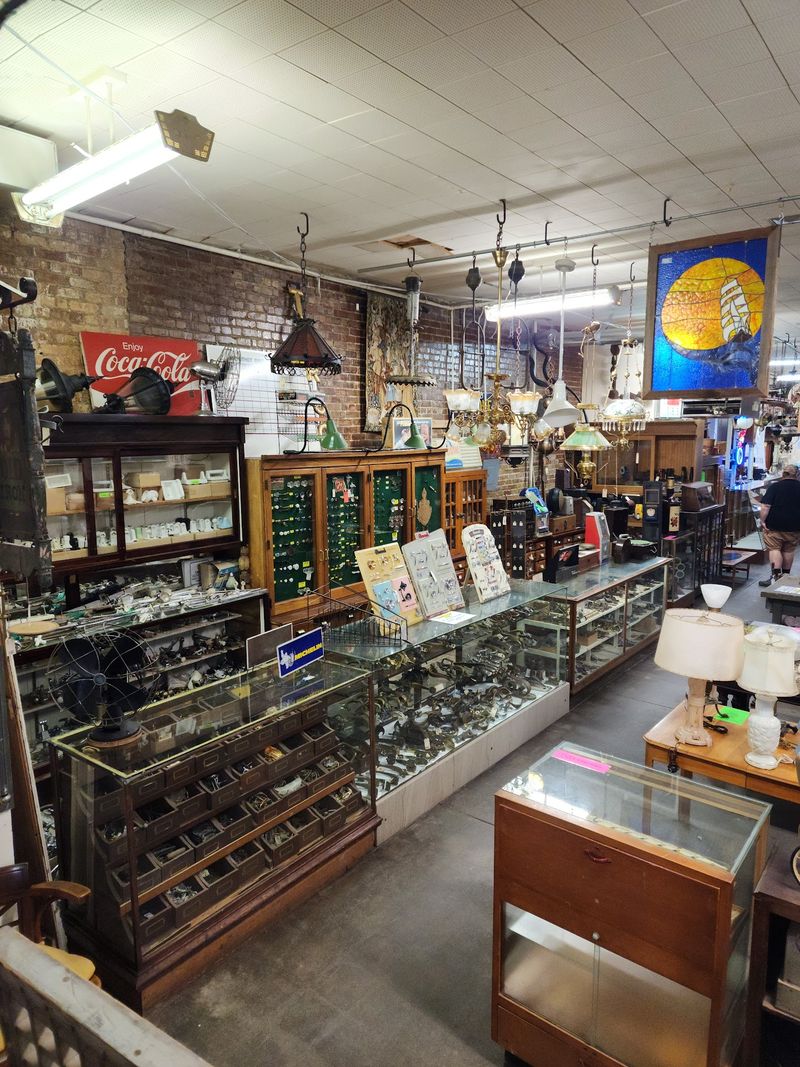
Most resale shops sell what people clean out of closets, but this one sells parts of buildings.
That single twist changes everything about how the store looks and feels. Instead of clothing racks, I find rows of rescued architectural pieces.
Think fireplace mantels, carved columns, window frames, trim boards, and heavy hardware that once held old Kansas houses together.
The word salvage means saving something before it gets thrown away. When an old home, church, or office gets torn down or remodeled, many of its best parts can be pulled out carefully.
Those parts then land in places like this, waiting for someone with a project in mind. It is recycling with a lot more style than a blue bin.
My tip is to walk in with an open mind and a loose plan. You might come for one thing and leave with a sketch for a whole new room.
Bring photos of your space, too. Seeing your room on your phone makes it easier to picture how a rescued piece will fit once it gets home.
Colored Light Through Stained Glass
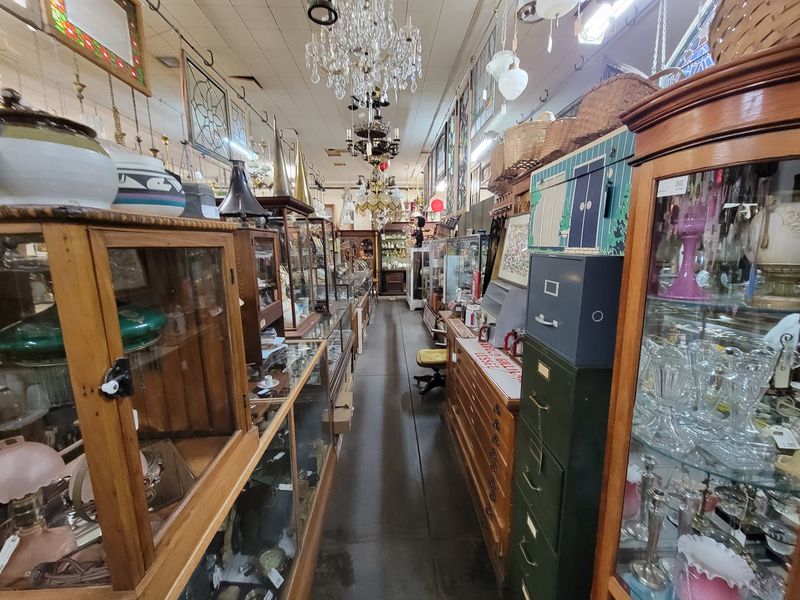
Sunlight hitting a stained glass panel is a small show all by itself, and this shop has plenty of tickets.
Its collection of stained glass windows and transoms is one of the highlights.
A transom is the narrow window that sits above a door. Builders long ago used them to let light and air move between rooms, and many were decorated with colorful glass designs.
Each panel is made of small glass pieces joined with thin metal strips. Because the work was done by hand, no two pieces look exactly alike.
These windows tend to cost more than simple items, and that makes sense. Old glass is fragile, and finding a panel that survived decades in one piece is not easy.
If you want one but do not have a window to fill, try hanging a small panel in front of an existing window.
It adds a rainbow of color without any construction work, and your neighbors will wonder where you found it.
Tiny Treasures in Hardware Bins
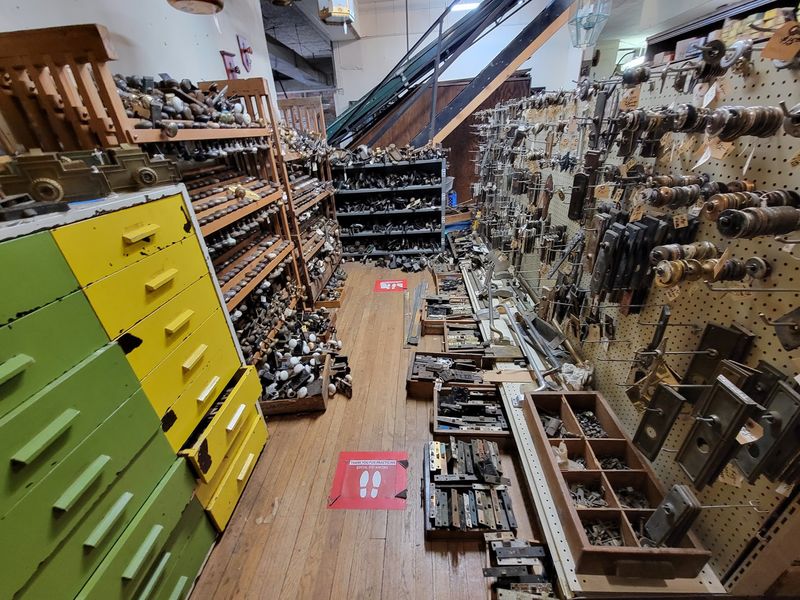
Small things can make a big difference, and the hardware section proves it one knob at a time.
I could spend an hour just sorting through the bins.
Old doorknobs come in glass, brass, ceramic, and iron. Cast hinges, latches, and decorative plates sit nearby, each one showing the craftsmanship of its era.
Fun fact: many older homes used ceramic and glass knobs because they were affordable and pretty at the same time. Today they add instant vintage charm to almost any door or cabinet.
Swapping hardware is one of the easiest upgrades you can make. It costs far less than buying new doors, and you can usually do it with just a screwdriver.
A smart move is to bring an old piece from your home to match. Sizes and screw spacing were not always standard, so comparing side by side helps you avoid surprises.
Matching sets are also worth grabbing when you find them, since a whole house of knobs that agree with each other is quite a satisfying sight.
A Glow-Up for Light Fixtures
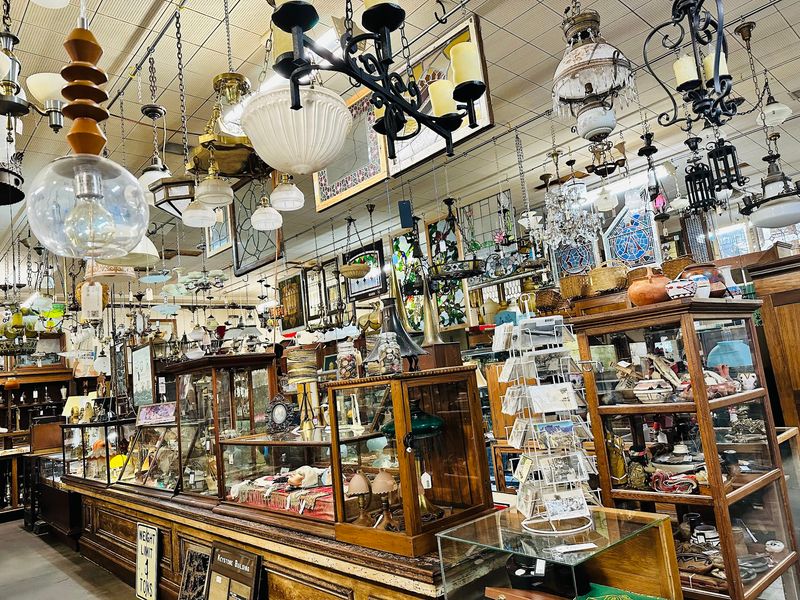
Look up when you walk through the aisles, because some of the best finds are hanging overhead.
Light fixtures fill a big part of this store. There are chandeliers, ceiling lights, sconces, and even tall floor torches.
Many come from the Art Deco period, a style known for bold shapes, clean lines, and a touch of glamour.
Art Deco became popular in the 1920s and 1930s. Its designs often feature geometric patterns, fans, and stepped shapes that still look stylish today.
A single vintage light can change the whole mood of a room. It becomes a conversation starter in a way that a plain store-bought fixture rarely does.
One practical tip matters here. Old lights may need new wiring before they are safe to use, so plan to have an electrician check things over.
That small extra step keeps your beautiful find shining for years. Honestly, it is a bright idea that pays off every time you flip the switch.
Mantels, Columns, and Grand Details
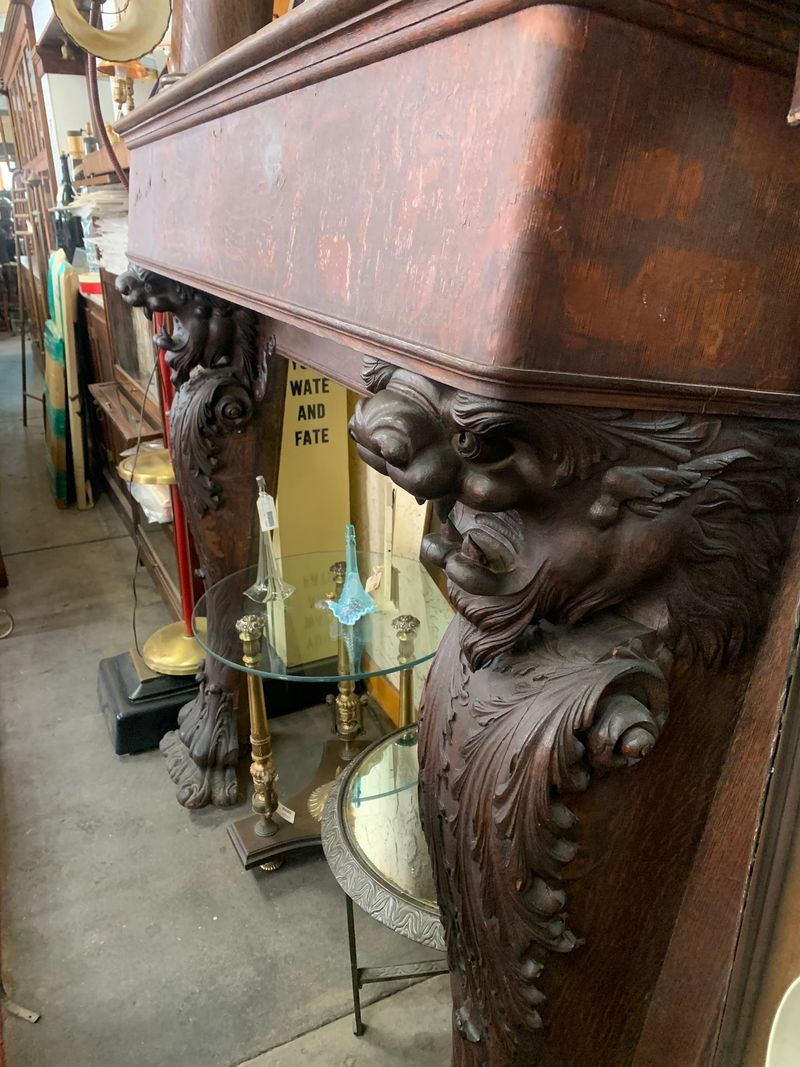
Grand old buildings left behind grand old details, and many of them now stand proudly inside this shop.
Fireplace mantels and columns are some of the most eye-catching pieces.
The styles stretch across history. I see hints of Gothic points, Neo-Classical columns that look borrowed from ancient Greece, and sleek Art Deco touches from the early twentieth century.
A mantel is the frame around a fireplace, often with a shelf on top. Even without a working fireplace, one can create a cozy focal point in a living room.
Columns work in surprising ways, too. People use them as room dividers, plant stands, porch supports, or simple sculpture in a corner.
These pieces are often heavy, so plan ahead. Bring a friend, a truck, and some blankets to protect the wood during the ride.
Thinking about transport before you buy saves plenty of stress later. A mantel that will not fit in your car is a lesson nobody wants to learn in the parking lot.
Oddities That Spark Curiosity
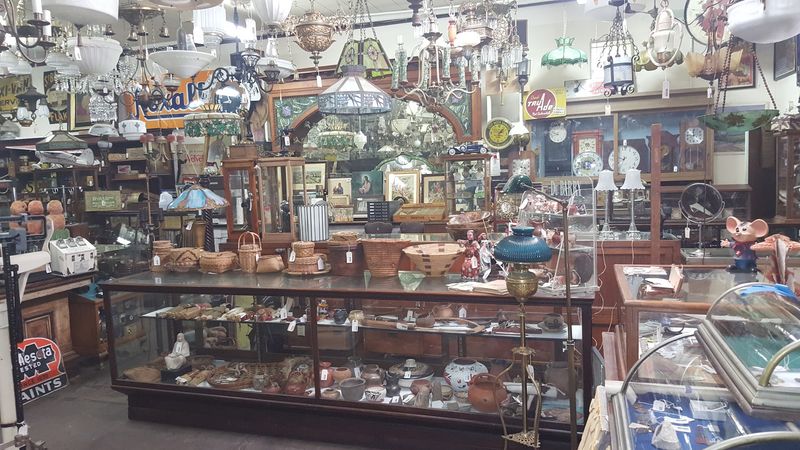
Not everything here came out of a wall, and the strange stuff might be my favorite part of the hunt.
The shop mixes building pieces with truly unusual antiques.
Over time, items like a 1930s shoe-fitting X-ray machine and an Edison Diamond Disc phonograph have turned up.
Old medical equipment, gadgets, lead toy soldiers, and coffee pots have also made appearances.
Here is a quirky history bit. Shoe stores once used X-ray machines so customers could see their foot bones inside new shoes, a practice that faded away decades ago.
Items like these are reminders of how daily life used to look. Even if you never buy one, they make the trip feel a bit like visiting a museum.
Stock changes all the time, so the oddity you spot today may be gone next week. If something grabs your heart, it is wise to decide quickly.
Kids especially enjoy this part. Turning a shopping trip into a mystery tour of the past keeps everyone curious.
Clean Aisles and a Fresh Address
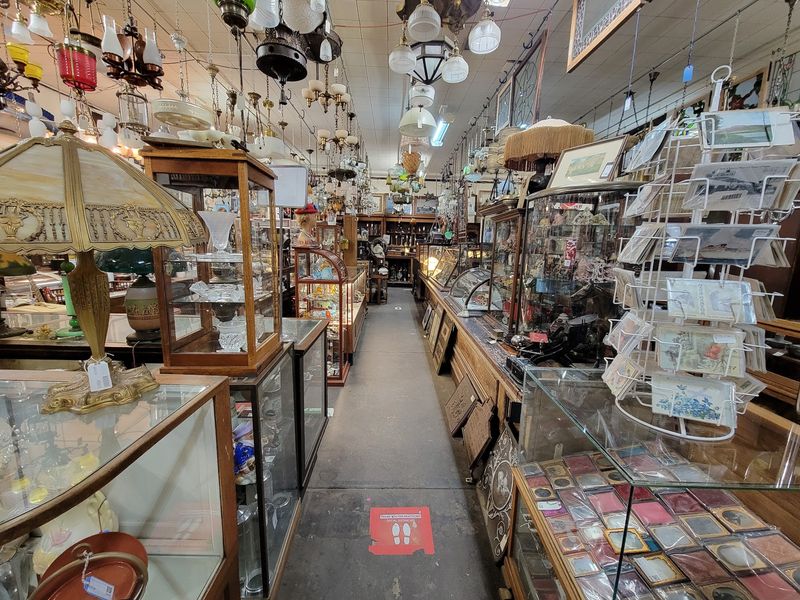
Many salvage yards feel dusty and chaotic, yet this one surprises people with how tidy it is.
The current shop at 2020 E Douglas Ave is clean and well organized. The business used to operate from a location on St. Francis in downtown Wichita.
After a move, it settled into its spot on East Douglas Avenue, with a layout that makes browsing easier.
Organization matters a lot in a store packed with thousands of pieces. Grouping doors, lights, glass, and hardware into sections helps shoppers find what they need without feeling lost.
Still, some areas can be tight to move through. The layout is not ideal for wheelchairs, so anyone with mobility needs should plan for that.
Wearing sturdy, closed-toe shoes is a smart choice, too. Salvaged pieces can have rough edges, and careful steps keep the trip fun.
A little preparation goes a long way. With comfy shoes and patience, exploring every corner of the shop feels like an easy stroll through Kansas history.
Smart Shopping and Fair Prices
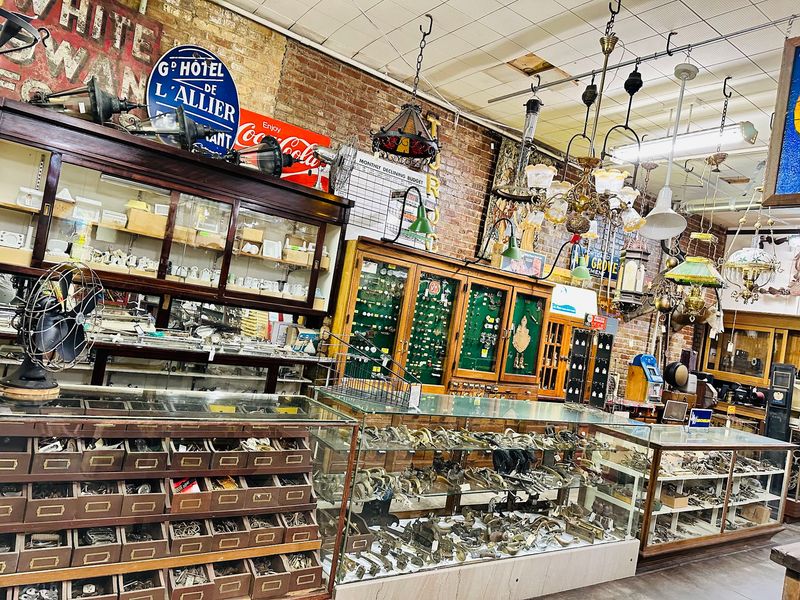
Price tags at a salvage shop tell a story about rarity, age, and the work it took to rescue each piece.
Expect a range here, with some bargains and some splurges.
Simple items like trim or hardware can be very affordable. Rare stained glass or fancy Art Deco lighting usually costs more, since those pieces are hard to find.
Some flexibility on price is often possible, especially if you buy several items together. Being polite and reasonable when asking goes much further than haggling hard.
Bringing cash can also help when you are making an offer. It keeps things simple and quick at the counter.
My budget tip is to set a top number before you walk in. With so many tempting finds, it is easy to fall for three mantels when you only have one fireplace.
Think about value, too. A solid wood door from a century ago often beats a new hollow one in both strength and style, which makes the price feel well spent.
Planning Your Trip Around the Hours
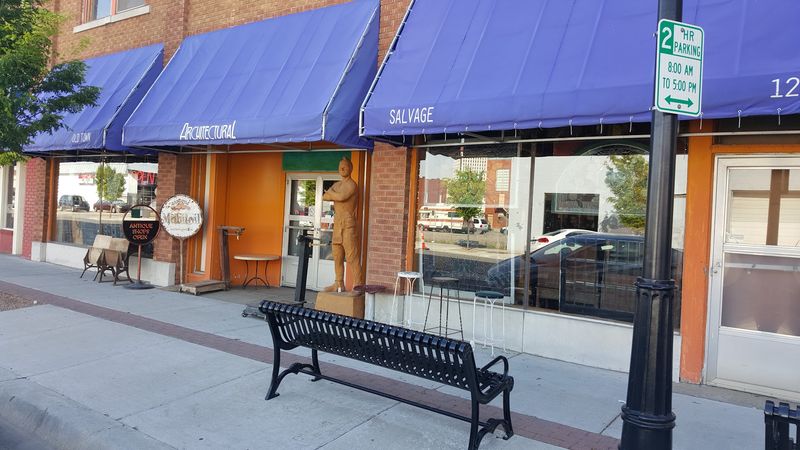
Timing a trip right can save you from staring at a locked door, so the schedule is worth memorizing.
The shop keeps fairly short hours. It opens Tuesday through Saturday from 9 AM to 4 PM.
Sunday is closed, while Monday visits require appointments.
Since closing time comes in the afternoon, mornings are the best window. Arriving early gives you plenty of time to browse without rushing past something special.
Plan for a longer visit than you think you need. With so many rooms and sections, a quick ten-minute peek almost never works out.
Wichita is the largest city in Kansas, which makes the shop easy to pair with other stops around town. East Douglas Avenue sits close to downtown and the Old Town district.
If you are road tripping across Kansas, this makes a memorable break from the highway. Pack measurements, a vehicle with room, and a sense of adventure.
Leaving with a door in the back seat is a very Wichita kind of souvenir.