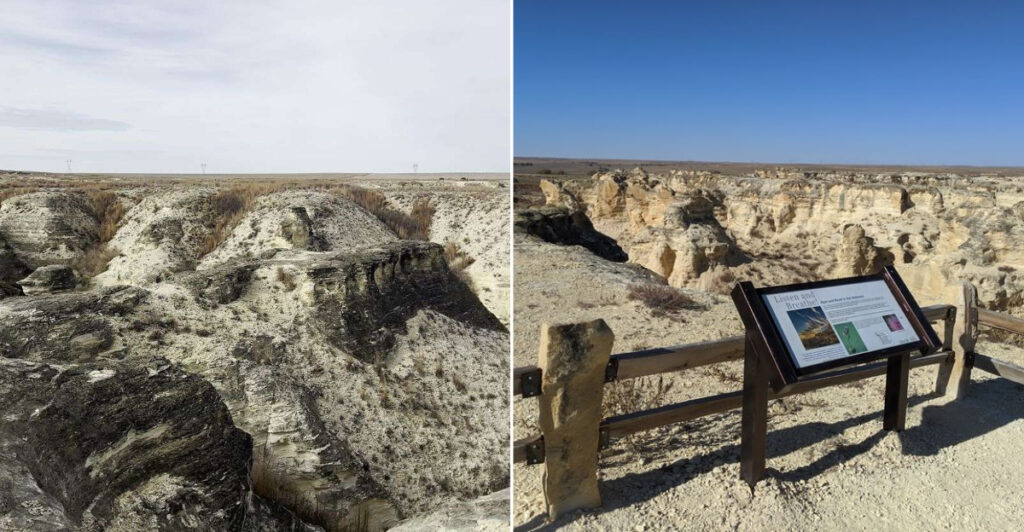
Late summer nights have a way of making the sky feel bigger, and there are few places in Kansas where that feeling is more dramatic than a rugged landscape carved into towering rock formations.
As daylight fades, the unusual terrain takes on a completely different character, creating a striking backdrop for watching meteors streak across the night sky.
Far from the glare of busy streets and city lights, the darkness here gives stargazers a chance to settle in, look up, and let the night put on its own show.
The combination of wide-open skies and otherworldly scenery makes this the kind of destination that feels made for a late-summer evening outdoors.
Bring a blanket, find a comfortable spot, and give your eyes a little time to adjust because the longer you look, the more the sky seems to reveal.
I’ve always loved those rare nights when you can forget the clock and simply watch the stars, and I can imagine sitting here late into the evening, hoping to catch one more meteor before calling it a night.
Exceptionally Dark Skies Far From City Light Pollution
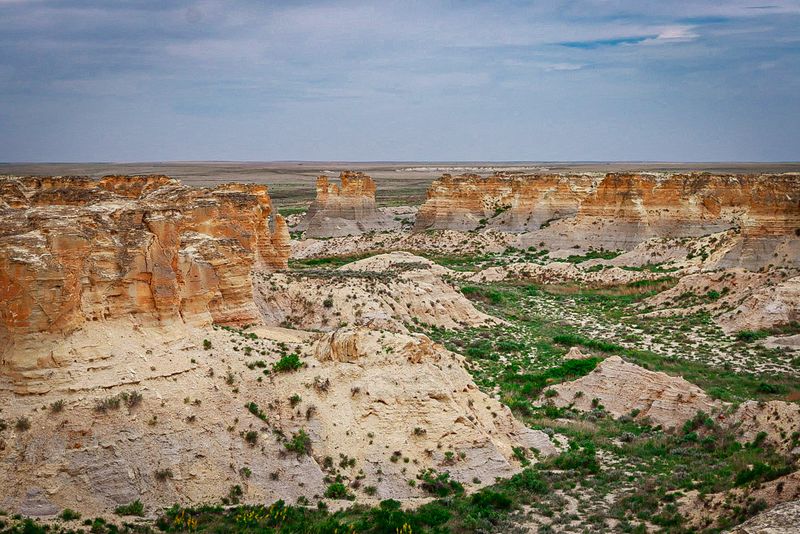
One of the most underrated facts about Little Jerusalem Badlands State Park is just how dark its skies get after sunset.
Oakley, Kansas sits deep in western Kansas, a region with very few large cities and almost no industrial light sources for miles in every direction.
That kind of darkness is rare. Most Americans live close enough to urban centers that true dark-sky conditions are nearly impossible to find.
Here, the horizon glows with nothing but starlight. During late summer, when the Perseid meteor shower peaks around mid-August, that ink-black sky becomes a natural theater.
Meteors streak across the canvas in bright, fast arcs that you can follow with your naked eye. No telescope is needed, no special equipment required.
Just a blanket, a clear evening, and the patience to let your eyes fully adjust to the magnificent darkness above western Kansas.
The Perseid Meteor Shower Peaks In Late Summer Every Year
Every year without fail, Earth passes through the debris trail left behind by Comet Swift-Tuttle, and the result is one of nature’s most reliable light shows.
The Perseid meteor shower typically peaks between August 11 and 13, though activity builds for several weeks on either side of those dates.
At its peak, observers under dark skies can spot anywhere from 50 to 100 meteors per hour.
That is roughly one or two per minute, which means you almost never have to wait long before another bright streak lights up the sky above you.
Little Jerusalem Badlands State Park sits in an ideal position geographically.
The flat, open landscape of western Kansas means your view of the horizon is practically unobstructed in every direction, giving you the widest possible field of view to catch fast-moving meteors as they enter the atmosphere.
Ancient Chalk Formations Create A Surreal Foreground For Stargazing
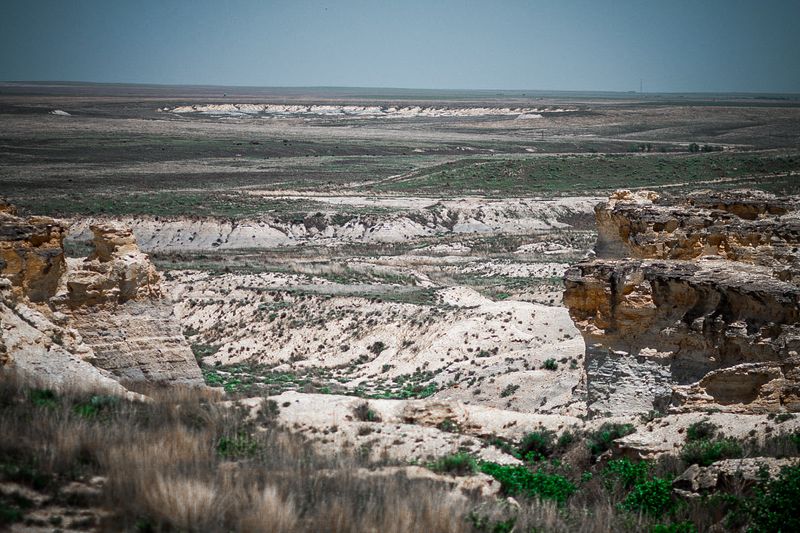
Most stargazing spots are just open fields or hilltops. Little Jerusalem Badlands State Park gives you something far more memorable as a backdrop.
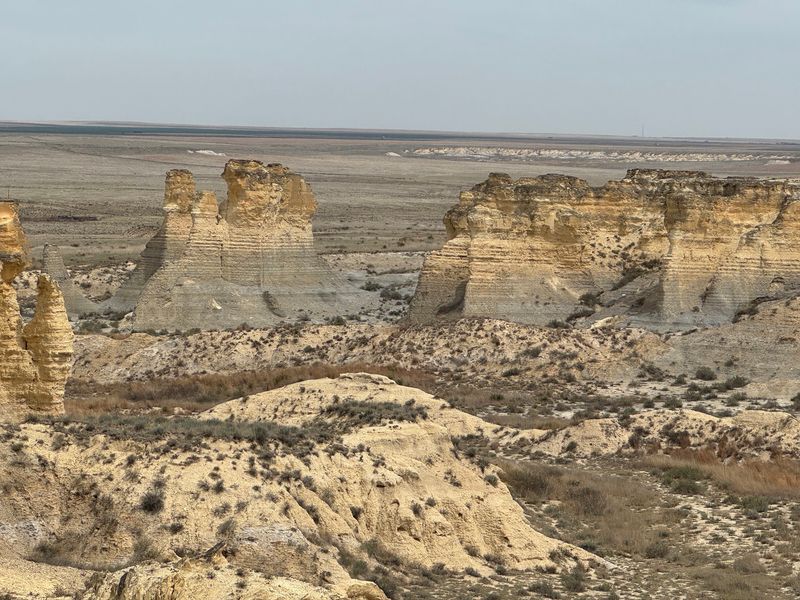
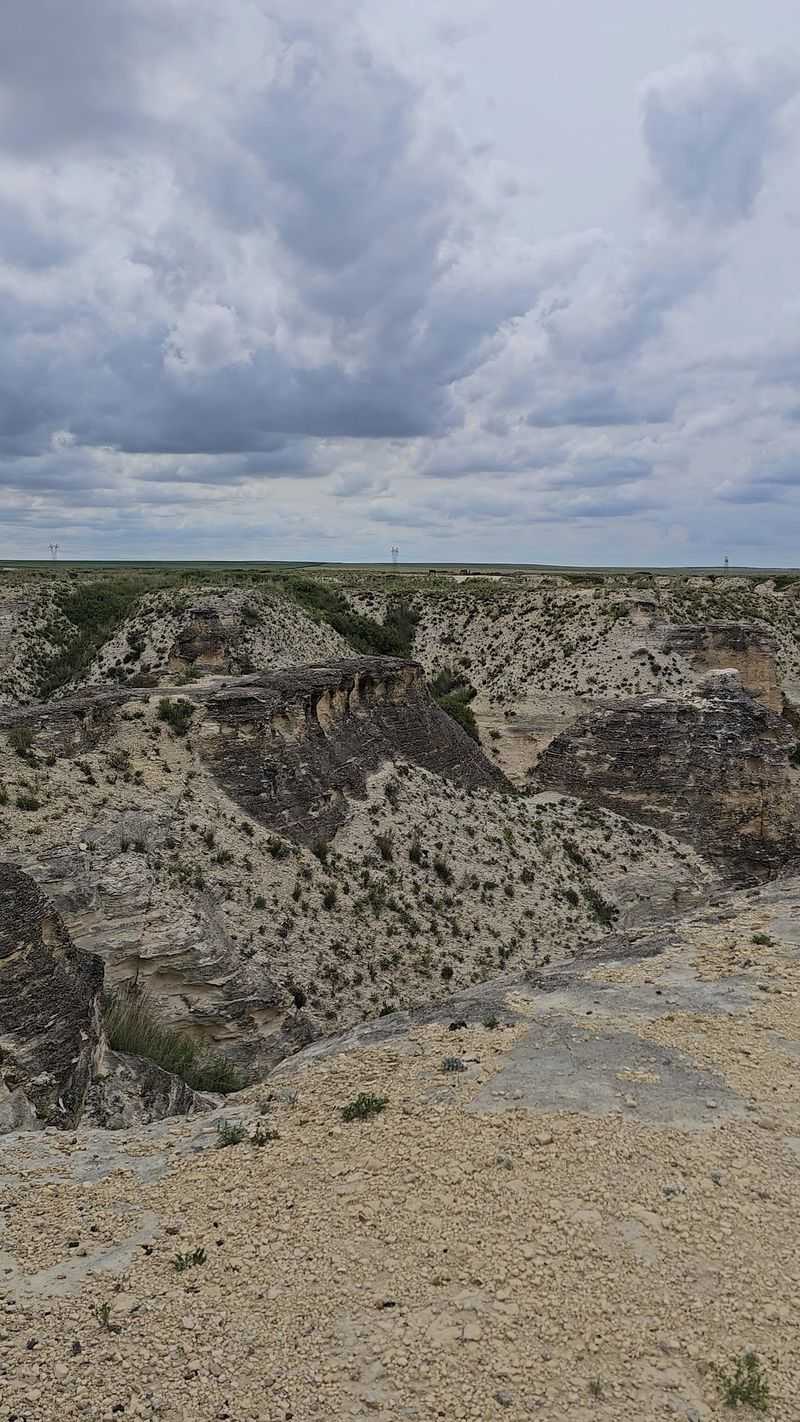
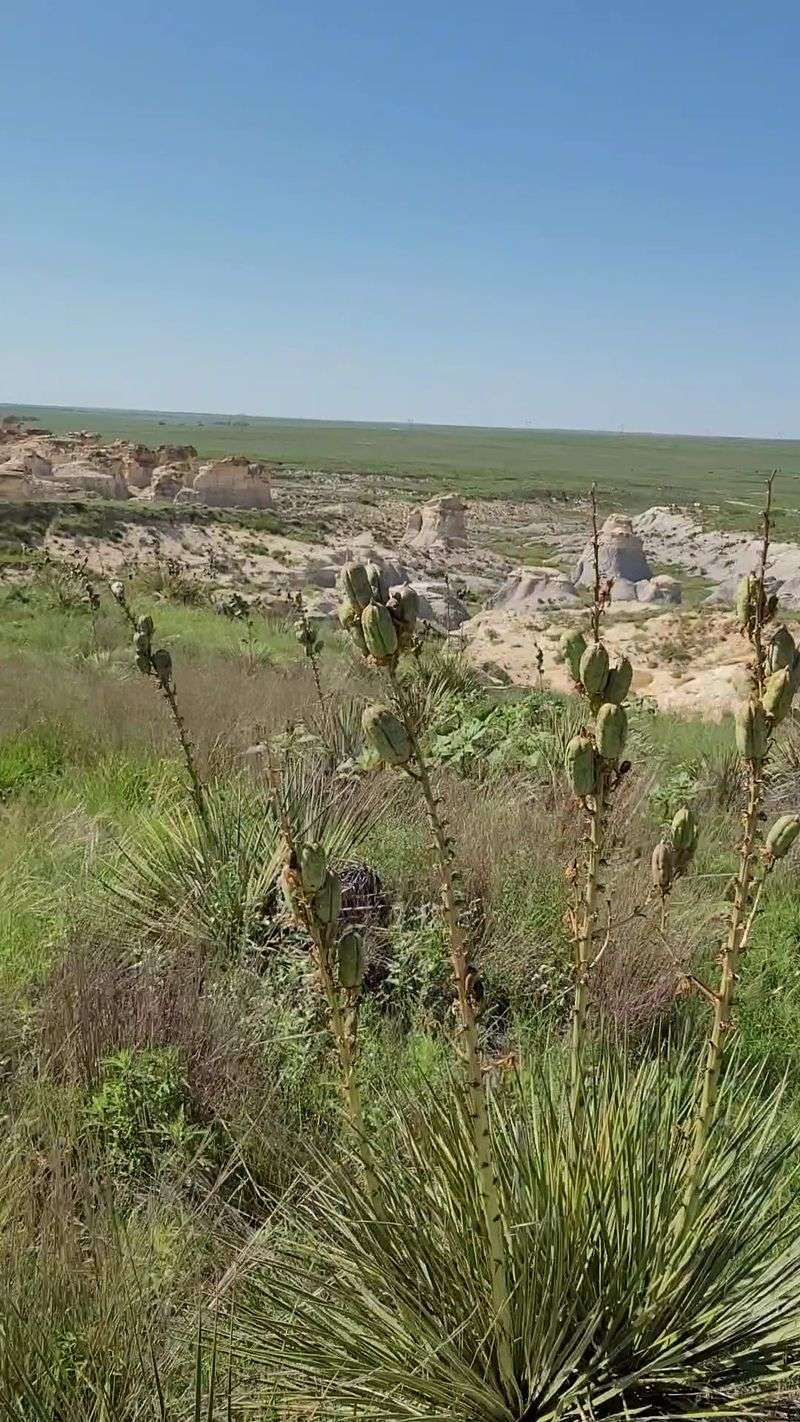
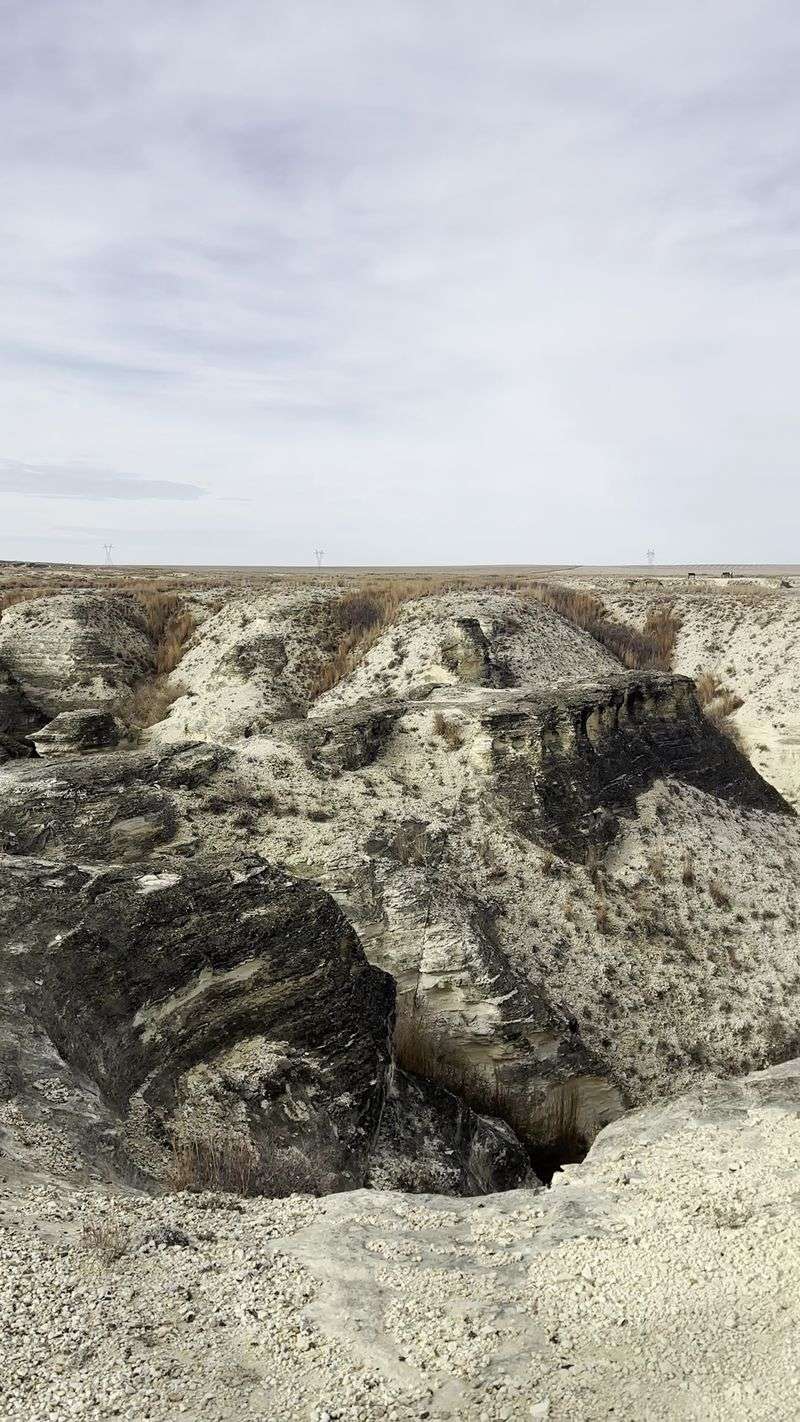
The park’s dramatic chalk formations, some reaching impressive heights above the canyon floor, glow softly in moonlight and create a genuinely otherworldly silhouette against the night sky.
These formations are made of Niobrara chalk, deposited roughly 80 million years ago when a vast inland sea covered much of what is now Kansas.
Standing near the overlook at night, you are essentially watching shooting stars above an ancient seafloor.
That combination of geological history and astronomical spectacle is hard to beat. The pale, jagged outlines of the rock formations frame the sky in a way that makes every photograph feel cinematic.
Even without a camera, the visual experience of meteors streaking past those ancient spires stays with you long after you leave.
Remote Location In Western Kansas Means Minimal Light Interference
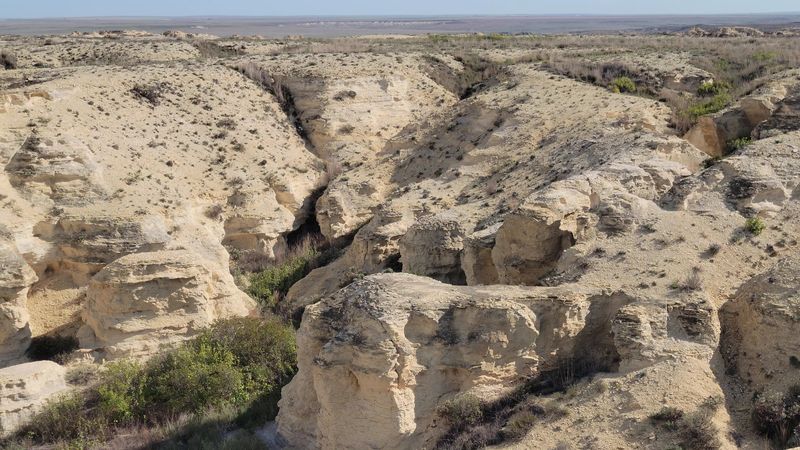
Geography works in your favor here. The Oakley area of Kansas is genuinely remote, and that remoteness is exactly what makes late summer meteor watching so rewarding at Little Jerusalem Badlands State Park.
The nearest large city, Colby, is roughly 20 miles to the north, and even that small city produces very little sky glow by stargazing standards.
Drive out to the park on a clear August night and the sky simply opens up in a way that feels almost disorienting if you are used to suburban skies.
Light pollution maps consistently show western Kansas as one of the darkest regions in the central United States.
Bortle scale readings for this area typically fall in the Class 2 or Class 3 range, which means the Milky Way is visible with the naked eye, faint star clusters pop out clearly, and meteor trails appear sharper and brighter than almost anywhere else you might choose.
Open Prairie Horizons Give You A 360-Degree View Of The Sky
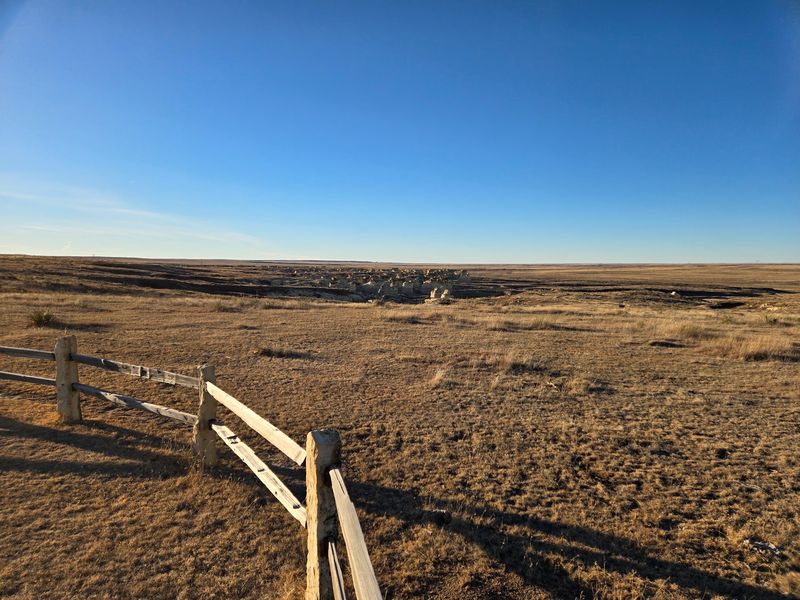
Forests are beautiful, but they are terrible for meteor watching.
Trees block your sightlines and force you to stare straight up, which is exhausting and limits how many meteors you can catch. Little Jerusalem Badlands State Park has no such problem.
The surrounding Kansas prairie is flat and wide, with no significant tree cover to interrupt your view.
From the parking area or the overlook trail, you can scan the entire sky from one horizon to the other without turning your head more than a few degrees.
Meteor showers radiate from a single point called the radiant, located in the constellation Perseus for the Perseids.
The meteors themselves, however, can appear anywhere in the sky. Having an unobstructed 360-degree view means you catch far more of them.
The wide, open skies that define this part of Kansas, often considered a drawback by some travelers, suddenly become the park’s greatest astronomical asset.
Guided Star Gazing Events Are Offered At The Park
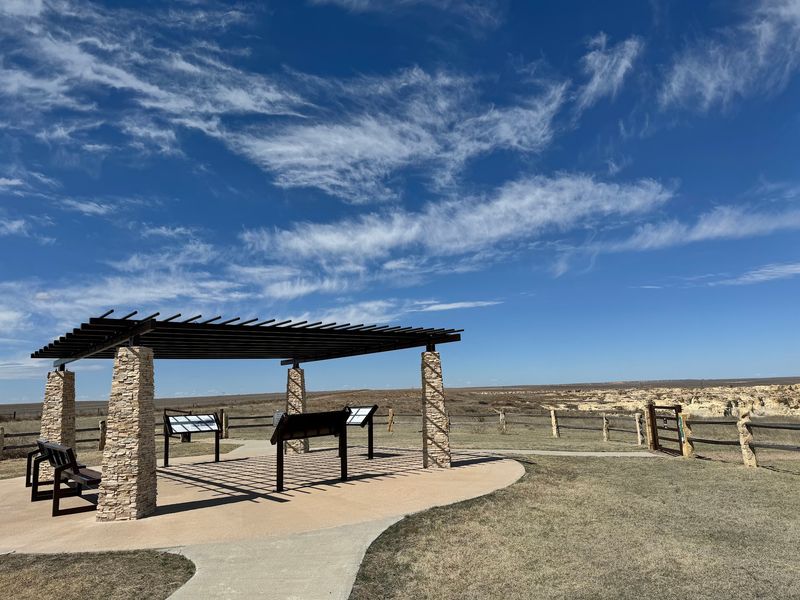
Showing up to a dark-sky site without knowing what you are looking at is a missed opportunity.
Little Jerusalem Badlands State Park occasionally offers organized stargazing programs, giving visitors a chance to learn about the constellations, meteor showers, and the deep-sky objects visible from western Kansas.
These guided experiences add real depth to the evening.
Having someone point out Perseus, explain why the Perseids seem to radiate from that direction, and describe the comet responsible for the annual display transforms a pretty light show into something genuinely educational.
Park programming varies by season, so checking ahead for scheduled events during August is a smart move.
Guided tours of the badlands canyon are also available by arrangement, and combining a daytime canyon tour with a nighttime stargazing session makes for one of the most complete nature experiences you can have anywhere in Kansas. Plan accordingly and you will not regret it.
The Park Sits Along The Historic Smoky Hills Region Of Kansas
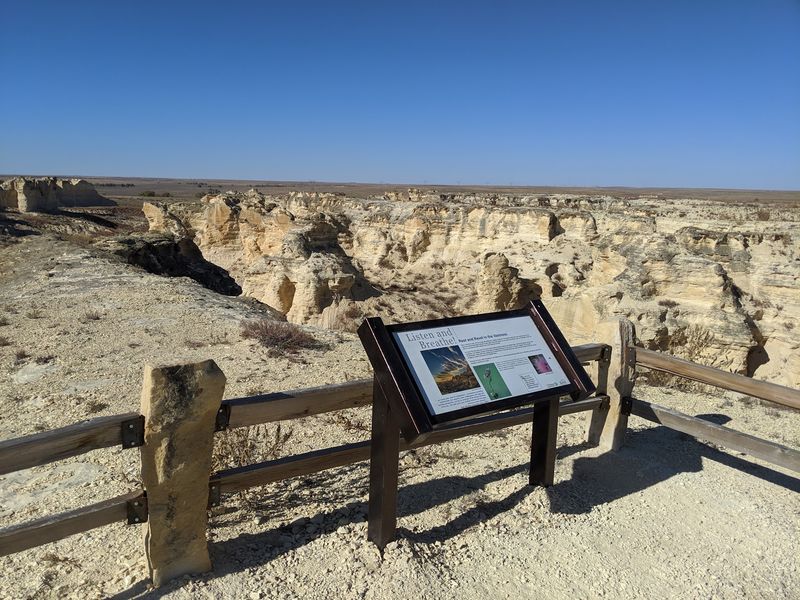
Context matters when you visit a place, and Little Jerusalem Badlands State Park has plenty of it.
The park sits within the broader Smoky Hills region of Kansas, a stretch of landscape shaped by millions of years of geological change, ancient seas, and wind erosion.
This is the same region that has produced some of the most significant fossil discoveries in North American history.
Niobrara chalk deposits throughout western Kansas have yielded mosasaurs, flying reptiles, and giant prehistoric fish. The ground beneath your stargazing blanket has a seriously impressive resume.
Understanding that history makes the night sky feel even more vast. You are lying on ground that was once the floor of a warm, shallow sea, looking up at stars that ancient marine creatures never saw.
The Perseids streak overhead just as reliably now as they did millions of years before humans arrived in Kansas to appreciate them.
Late Summer Temperatures in Oakley Make Nighttime Viewing Comfortable
One practical reason Little Jerusalem Badlands State Park works so well for late summer meteor watching is the weather.
August nights in western Kansas cool down significantly after the heat of the day, often settling into the comfortable 60s Fahrenheit by midnight.
That is a meaningful difference from the afternoon temperatures, which can climb into the 90s and make daytime hiking genuinely challenging.
Once the sun drops below the horizon, the air cools quickly across the open plains, and the experience becomes much more pleasant.
Bring a light jacket and a blanket, and you will be perfectly comfortable lying on your back for an hour or two scanning the sky.
Compared to meteor watching in humid regions, where warmth and mosquitoes make the experience miserable, the dry air of the Kansas high plains feels almost luxurious after dark.
Pack water, arrive before full dark, and let the sky do the rest.
No Major Nearby Attractions Mean Fewer Crowds After Dark
Popular stargazing destinations often suffer from their own success. Dark-sky parks that become well known start attracting enough visitors that headlamps, car headlights, and general noise disrupt the experience for everyone.
Little Jerusalem Badlands State Park has not reached that level of fame yet, and that works entirely in your favor.
On a typical late summer evening, especially on a weeknight, the park draws a modest number of visitors.
After the daytime hikers leave, the parking area grows quiet, and the sky fills in undisturbed. No flashlight parades, no idling engines, no competing for the best viewing spot.
The park charges a modest $5 day-use fee, payable at the entrance kiosk, and cash is the most reliable payment option.
That small entry cost keeps the experience feeling exclusive without actually being exclusive.
For the quality of sky you get in return, five dollars might be the best astronomy investment available anywhere in Kansas.
The Park Is Managed By The Nature Conservancy Alongside Kansas State Parks
Little Jerusalem Badlands State Park is a partnership between The Nature Conservancy and Kansas State Parks, a collaboration that has kept the land protected while making it accessible to the public.
The park is located at County Road 400 and Gold Road, Oakley, KS 67748, and the drive in covers about five miles of gravel road.
That partnership matters for stargazers because it means the land surrounding the park stays largely undeveloped. No commercial development, no bright signage, no parking lot floodlights.
The conservation mission that protects the chalk formations during the day also protects the darkness at night.
The Nature Conservancy purchased the land from a local ranching family, and cattle still graze the surrounding pastures.
That agricultural context keeps the broader landscape open and low-impact, which contributes directly to the outstanding dark-sky conditions.
Good land stewardship and great meteor watching turn out to be a surprisingly natural combination here in Kansas.