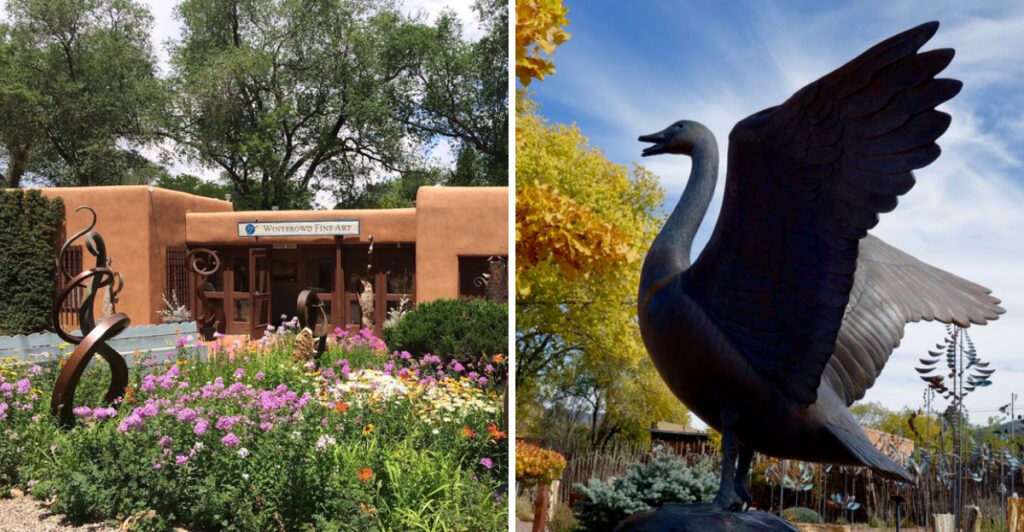
Your quick walk just lost the argument. This half-mile stretch may look manageable, but every few steps bring another reason to pause or wander into a gallery you never planned to visit.
A sculpture catches the light. A painted doorway pulls you closer.
Then a courtyard appears, and suddenly the afternoon has new plans. That is the fun of this remarkable art district.
It does not demand expert knowledge or a shopping budget. You can browse at your own pace and follow whatever grabs your attention.
The old adobe buildings make the experience feel less like a formal gallery crawl and more like exploring a street with stories behind every wall. New Mexico has plenty of memorable walks, but this one turns curiosity into a full itinerary.
Keep reading to see why this legendary stretch is so difficult to hurry through once you have taken those first few steps.
Adobe Walls Framing Remarkable Art
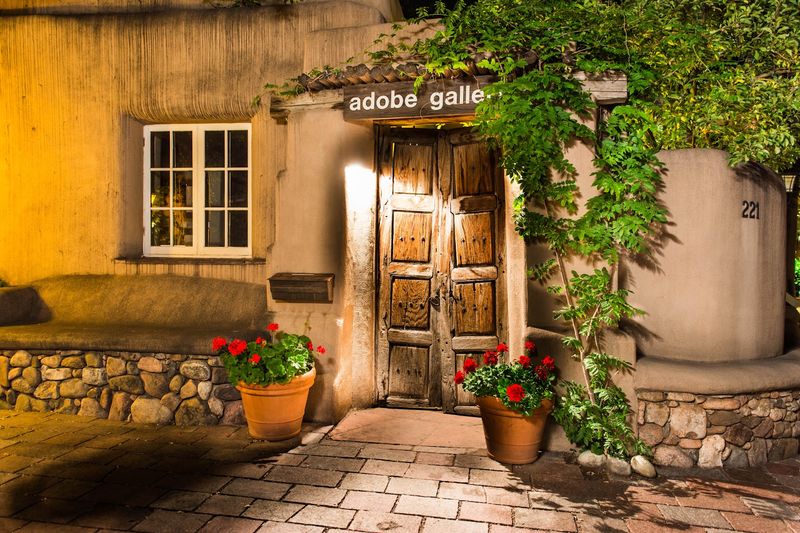
Few materials carry a story the way adobe does, and on this street, those thick earthen walls do far more than hold up a roof.
Many galleries along this corridor occupy historic local adobe buildings that feel deeply rooted to the land, while other creative spaces add welcome variety to the street’s distinctive architectural character.
The walls radiate warmth in the literal sense, soaking up afternoon sun and releasing it slowly as the day cools, creating an atmosphere that no modern structure quite replicates.
Inside those walls, the art finds a natural frame that complements rather than competes, so a large oil painting of the high desert or a delicate ceramic piece both feel perfectly at home.
Many of the buildings date back hundreds of years, and you can feel that history in the rounded corners and uneven plaster surfaces that no two galleries share exactly.
Walking from one adobe facade to the next, I kept noticing how the architecture itself becomes part of the artistic experience, not just a backdrop.
Canyon Road in Santa Fe is where that feeling first clicked for me, and it has not faded since.
Sculpture Gardens Hidden Behind Gates
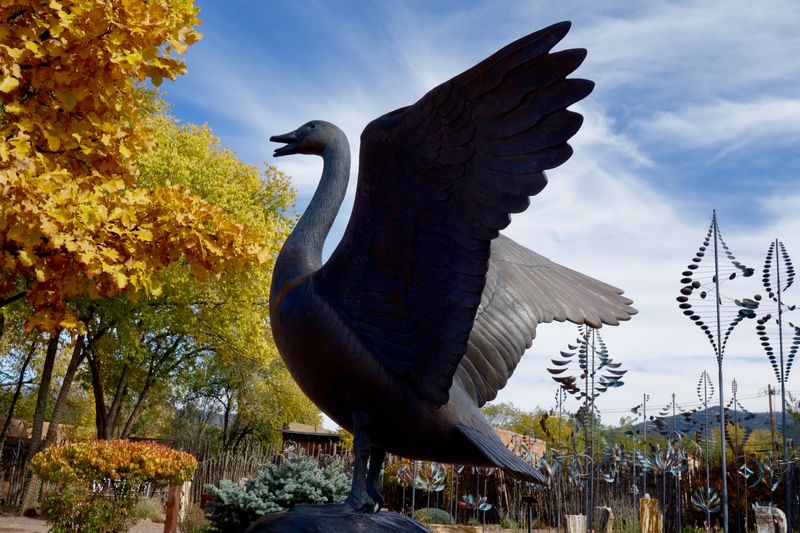
Push open the right gate on this street and the world quietly shifts around you.
Tucked behind low adobe walls and ornate ironwork, sculpture gardens appear like private worlds that reward the curious visitor willing to step off the main path and look closer.
Some gardens feel formal, with carefully placed bronze figures standing among trimmed hedges and gravel paths, while others spill into wild arrangements of kinetic metal pieces spinning gently in the New Mexico breeze.
Large-scale works anchor many of these outdoor spaces, the kind of pieces that command your attention and make you walk slowly around them, studying each angle as the light changes.
I found myself lingering in one garden longer than I had planned, drawn in by a massive welded steel piece that seemed to shift color as clouds passed overhead.
The combination of living plants, water features, and sculpture creates a sensory layering that no indoor gallery can fully match.
Every garden feels like a small discovery, and the fact that many are hidden from the street only adds to the sense that you have found something meant just for you.
A Tree-Lined Street Made For Wandering
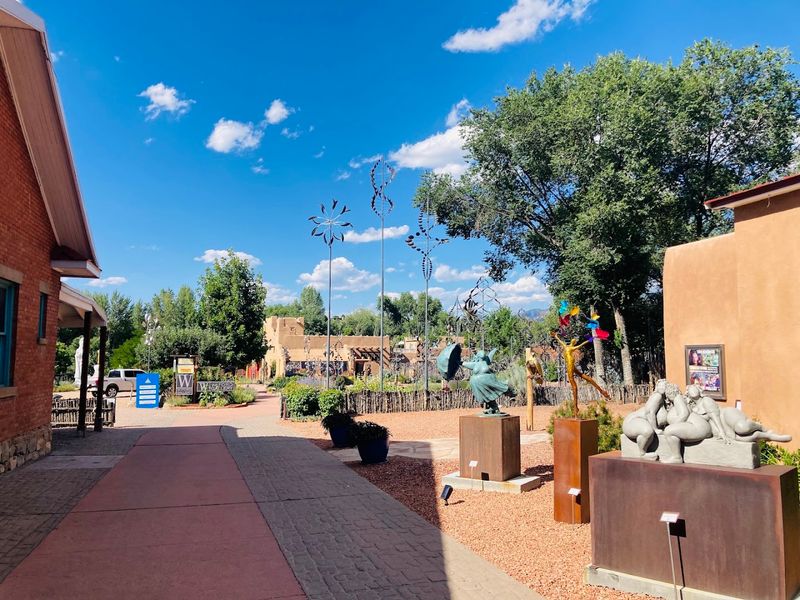
A street earns its reputation one step at a time, and this one earns it the moment you set foot under its canopy of mature trees.
Cottonwoods and elms arch overhead, filtering the strong high-desert sun into shifting patterns of light and shade that make even a slow midday walk feel comfortable and unhurried.
The road remains open to cars, but its narrow, pedestrian-friendly character encourages everyone to move at a slower pace, making the experience feel closer to a leisurely promenade than a typical city stroll.
Benches and low walls appear at just the right intervals, inviting you to sit, observe, and let the street come to you for a moment rather than the other way around.
Dogs trot alongside their people, couples pause to study window displays, and solo visitors stand quietly in front of sculptures as if having a private conversation with the art.
The pace here is genuinely different from the rest of the city, slower and more deliberate, as if the trees themselves set the rhythm.
By the time I reached the upper end of the street, I had already planned my return trip for the following morning.
Historic Homes Turned Into Galleries
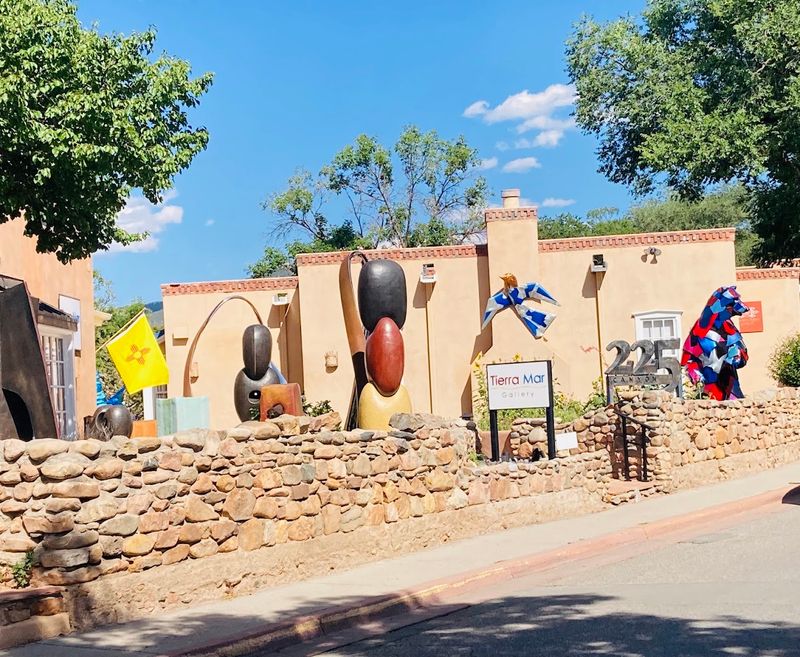
Some buildings hold their former lives in the walls, and along this street, you can feel the domestic history beneath every gallery floor.
Several structures here date back to the mid-1700s, originally built as family homes in the Spanish Colonial tradition, with low ceilings, thick walls, and small rooms designed for the rhythms of daily life rather than art display.
The conversion from private residence to public gallery happened gradually over the twentieth century, and many spaces kept original features like vigas, the heavy wooden ceiling beams that give each room a particular weight and character.
Walking through these galleries feels different from a standard white-cube museum experience because the rooms themselves have personality, with uneven floors, unexpected doorways, and windows that frame the garden outside like paintings in their own right.
The scale stays human throughout, so even museum-quality works feel approachable rather than intimidating.
I noticed how the intimacy of these converted homes encourages longer looking, the kind of unhurried attention that art genuinely deserves.
Spending an afternoon moving through room after room of original spaces is one of the most quietly satisfying things this street has to offer.
Colorful Doorways Around Every Bend
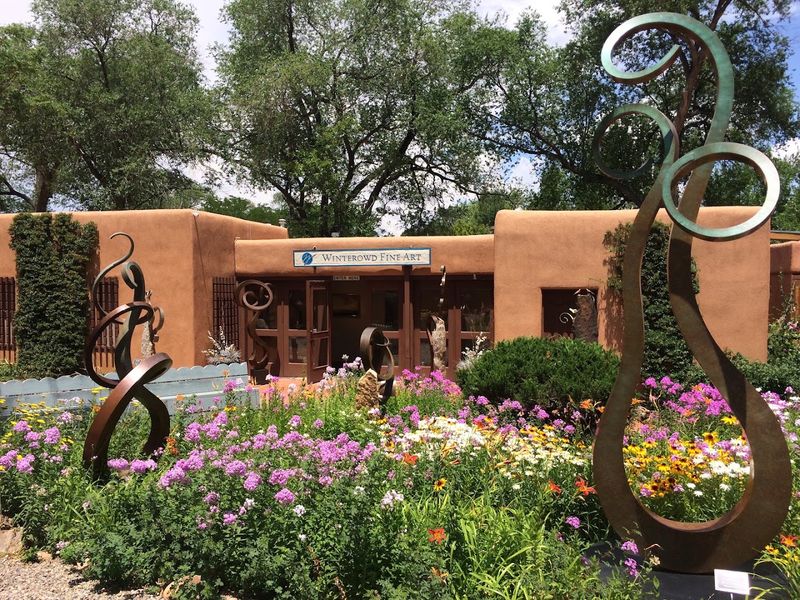
Color does serious work on this street, and the doorways are where it makes its boldest statement.
Turquoise, deep red, golden yellow, and vivid purple appear on gates and entry doors throughout the half-mile stretch, each one a deliberate choice that reflects the personality of the gallery or home beyond it.
The tradition of painting doors and gates in saturated hues connects to a long history of color use in Southwestern architecture, where pigment served both decorative and symbolic purposes rooted in indigenous and Spanish cultural practices.
Photographically, the doorways are irresistible, set against the warm tan of adobe walls and often framed by flowering plants that soften the geometry of the entrance.
I found myself stopping more times than I expected just to study a particular combination of color and texture, the way a hand-forged iron latch sat against a freshly painted blue surface, for example.
Each doorway hints at what lies beyond it without giving too much away, functioning almost like a cover on a book you immediately want to open.
The street rewards the slow walker who looks up, sideways, and around every corner rather than pressing straight ahead.
Courtyards Filled With Artistic Surprises
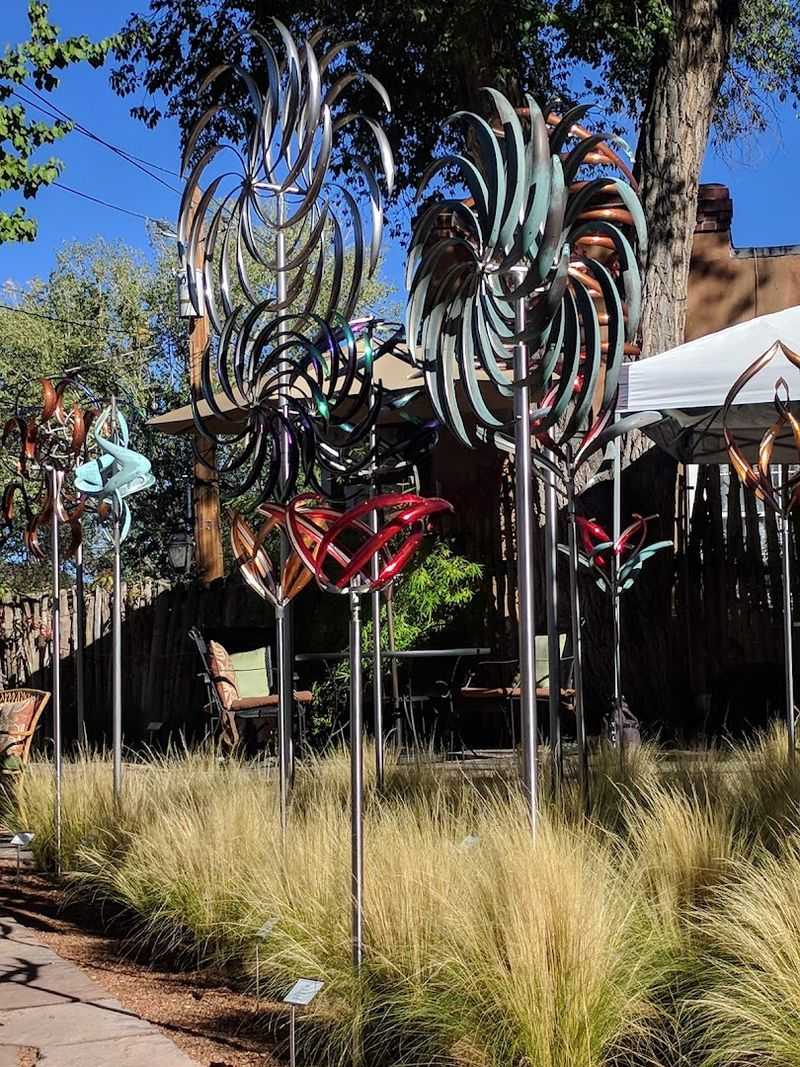
Step past the threshold of certain galleries and the room opens not into another interior space but into a courtyard that feels entirely separate from the street outside.
These enclosed outdoor areas function as extensions of the gallery experience, with art installations arranged among benches, water features, and carefully chosen plantings that create a mood distinct from anything indoors.
Some courtyards lean serene, with the sound of a small fountain and the smell of sage setting a contemplative tone that makes you want to sit quietly for longer than you planned.
Others feel more playful, packed with bold ceramic pieces, painted metal objects, and unexpected found-material sculptures that invite you to look at familiar things from an unfamiliar angle.
The element of surprise is central to the courtyard experience here because you genuinely cannot predict what you will find until you step inside.
I walked into one space expecting a small garden and found instead a dense installation of hanging glass pieces that caught the light in a way that made the whole courtyard shimmer.
That kind of unexpected encounter is exactly what makes this street so hard to leave once you have started exploring it.
Southwestern Character In Every Detail
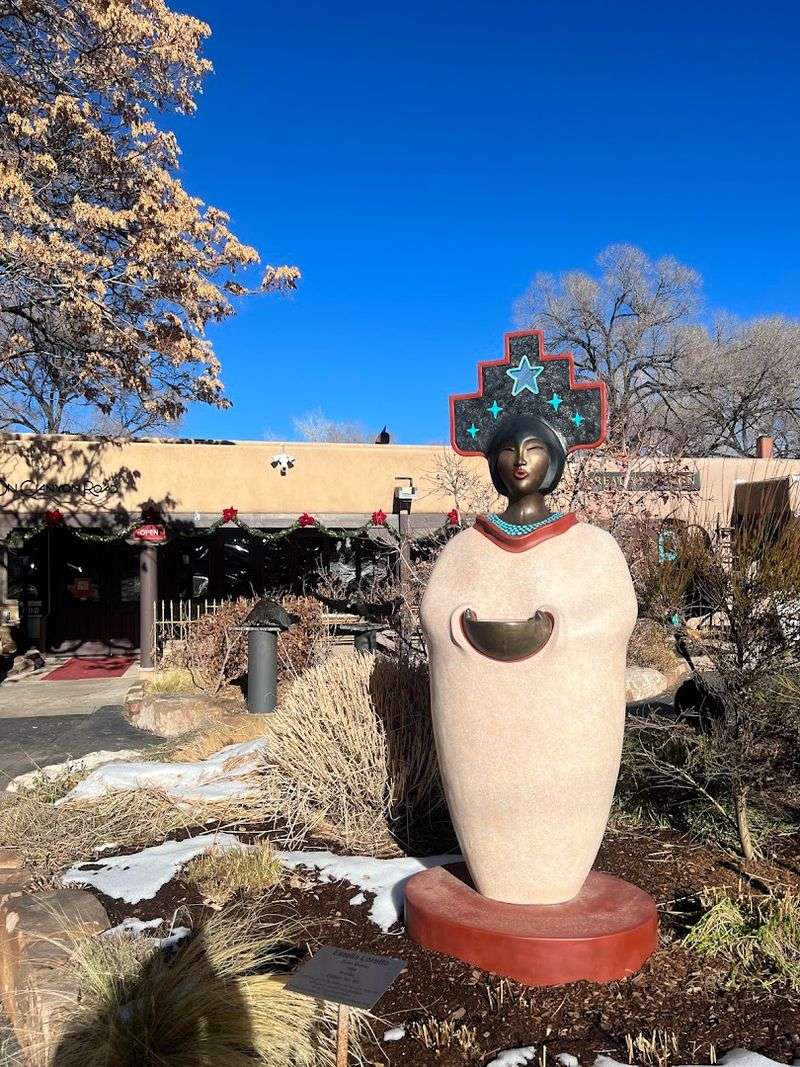
Character is not something you can install after the fact, and this street proves that point in every corner you look.
The Southwestern identity here runs deeper than surface decoration, showing up in the coyote fences made from upright wooden stakes, the hand-painted tiles set into doorsteps, and the indigenous motifs woven into gallery signage and metalwork throughout the corridor.
Spanish Colonial influence blends with Native American artistic traditions in a way that feels organic rather than curated, the result of centuries of cultural exchange playing out in a single half-mile stretch of New Mexico.
Even the landscaping carries meaning, with drought-tolerant plants like chamisa and native grasses chosen not just for practicality but because they belong to this specific landscape in a way that imported ornamentals never quite do.
The art on display inside the galleries reflects the same regional depth, with works addressing the land, the sky, the history, and the living cultures of the American Southwest.
I kept noticing small details I had walked past on the first pass, a carved wooden lintel here, a mosaic threshold there, each one added by someone who cared about the whole.
That cumulative attention to detail is what gives the street its genuine, unhurried soul.
More Than 100 Galleries In Half A Mile
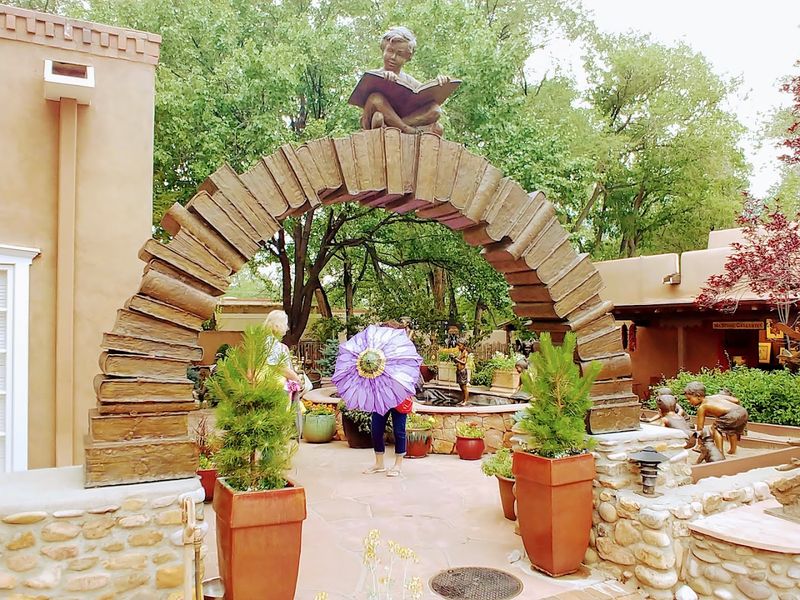
A hundred galleries packed into half a mile sounds like a statistic until you actually try to see them all in one visit.
The concentration of creative spaces here makes this stretch one of the densest art districts in the entire United States, a fact that becomes physically real when you realize you have been walking for two hours and still have a dozen doorways left to explore.
The range of work on offer is genuinely broad, covering contemporary painting, traditional Southwestern pottery, large-scale bronze sculpture, photography, fiber arts, and mixed-media installations that resist easy categorization.
Price points vary just as widely, from accessible prints and small ceramics to major investment pieces that belong in serious collections, which means the street welcomes browsers and buyers with equal hospitality.
Boutiques and restaurants fill the gaps between galleries, offering natural pause points where you can rest your feet and refuel before heading back out to cover more ground.
I made a rough plan before my visit and abandoned it within the first thirty minutes because the street simply has its own logic that rewards following your instincts.
Canyon Rd holds more creative energy per square foot than almost anywhere else I have walked.