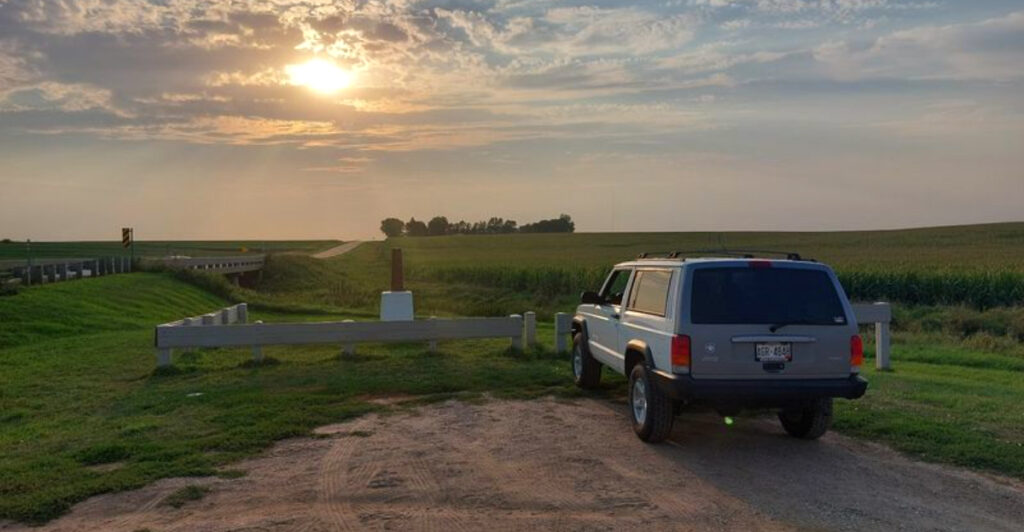
There is a tiny roadside flex near Valley Springs that beats a whole stack of souvenir magnets.
Stand by the marker, and you can say, accurately and with unnecessary confidence, that you are in Iowa, Minnesota, and South Dakota at once.
This little Iowa border marker is a quick stop with a very specific kind of charm. No big entrance, no staged attraction, just open sky, a gravel pull-off, and a geography trick that feels weirdly satisfying.
It is the kind of place that turns ten quiet minutes into a road-trip story. Three states, one marker, zero need for a theme song, though your inner map nerd may provide one anyway.
What Exactly Is the Tripoint and Why Does It Exist
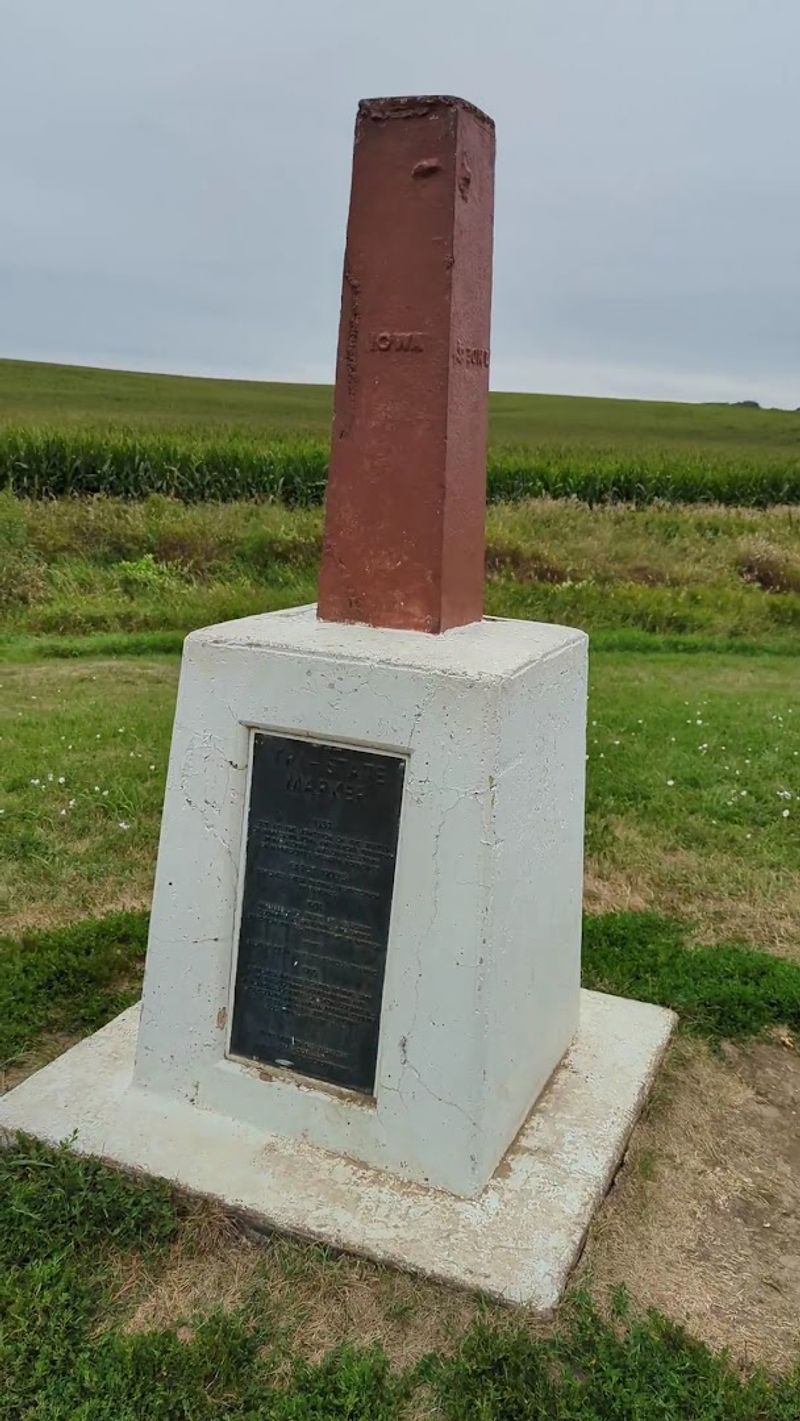
Most people drive past state borders without thinking twice. However, the Tripoint IA, MN, SD is a spot where three of them meet at one surveyed corner.
It marks the geographic meeting point of Iowa, Minnesota, and South Dakota, making it one of the rare multi-state convergence points in the country.
These kinds of markers exist because of careful land surveys conducted over generations. The Federal Land Office survey of Minnesota’s western boundary helped establish this particular junction in 1859, when the area now known as South Dakota was still Dakota Territory.
This particular tripoint sits in the upper Midwest, where the terrain is flat and open enough that the survey lines feel almost visible.
Unlike Four Corners out west, this one does not come with a national park fee or a tour bus crowd.
It is just a roadside monument, a small survey marker, a rural road, some fields, and the quiet knowledge that you are standing at a place most people in all three states have never visited.
That alone makes it worth knowing about.
Finding the Spot Without Getting Lost in the Cornfields
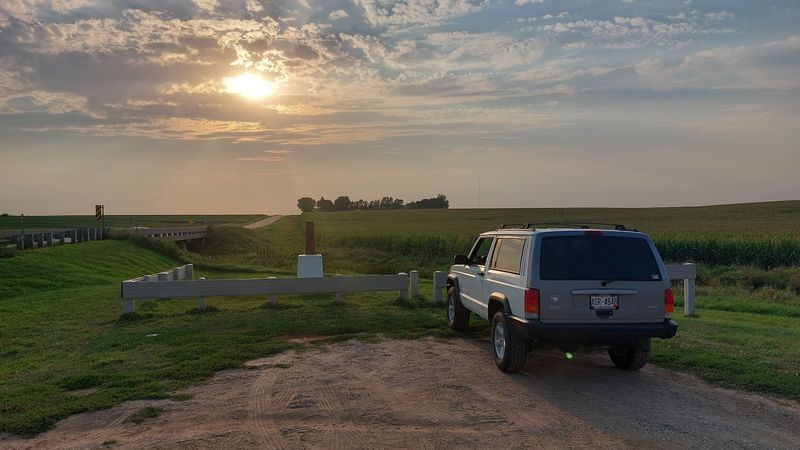
Getting to the Tripoint is easier than the remote setting might suggest. The marker is commonly listed near 26799 488th Ave, Valley Springs, SD 57068, close to the Iowa, Minnesota, and South Dakota border junction.
That detail matters more than it sounds, especially if you are driving a standard sedan or a rental car with low clearance.
The pull-off area fits one or two cars comfortably near the roadside. It is not a formal parking lot, but it works fine for a quick stop.
The roadside monument sits near the intersection, while the actual tripoint is marked separately by a small pin or marker in the road area, so use caution and watch for traffic if you are trying to locate the exact point.
A few people have noted that the spot is easy to miss at normal rural-road speed, which is fair.
There is no large attraction-style sign announcing the tripoint, so slow down once your GPS puts you in the right area.
Plugging the listed address or the Tripoint IA, MN, SD map listing into a navigation app should get you close without much trouble.
What You Actually See When You Arrive
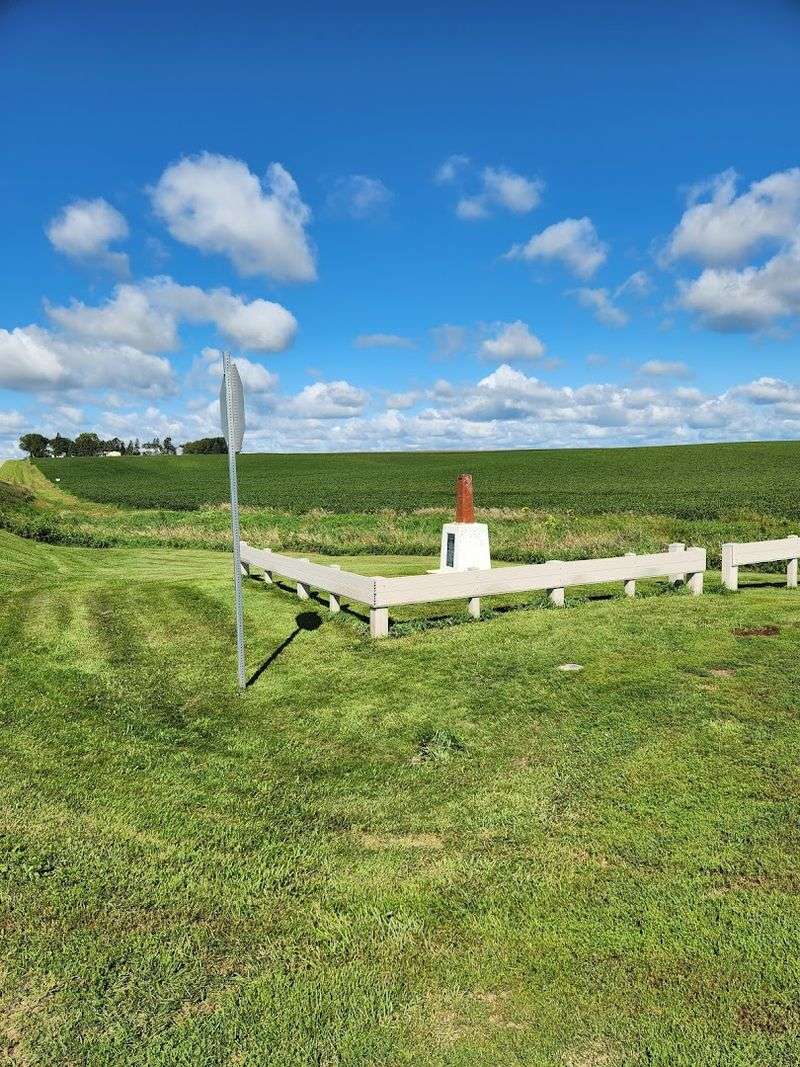
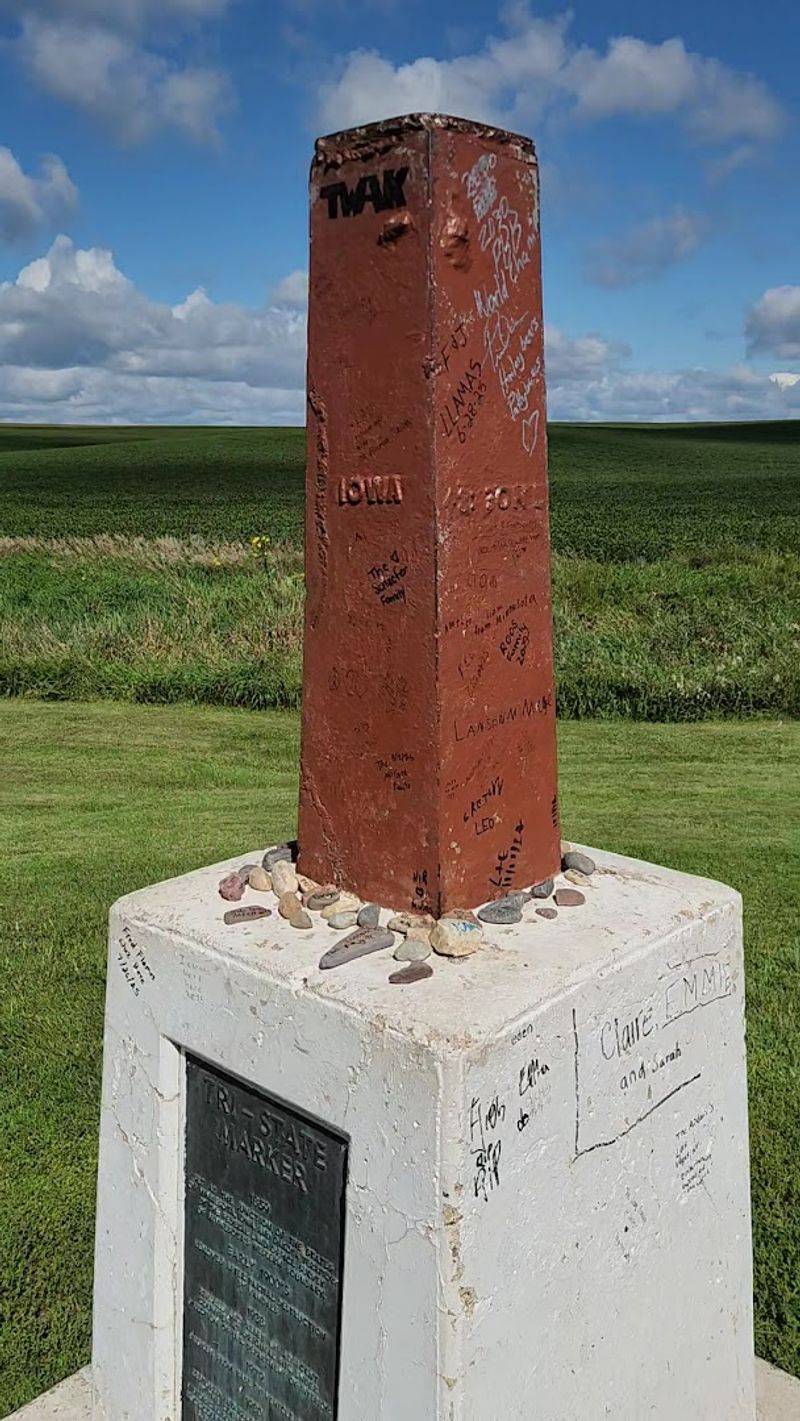
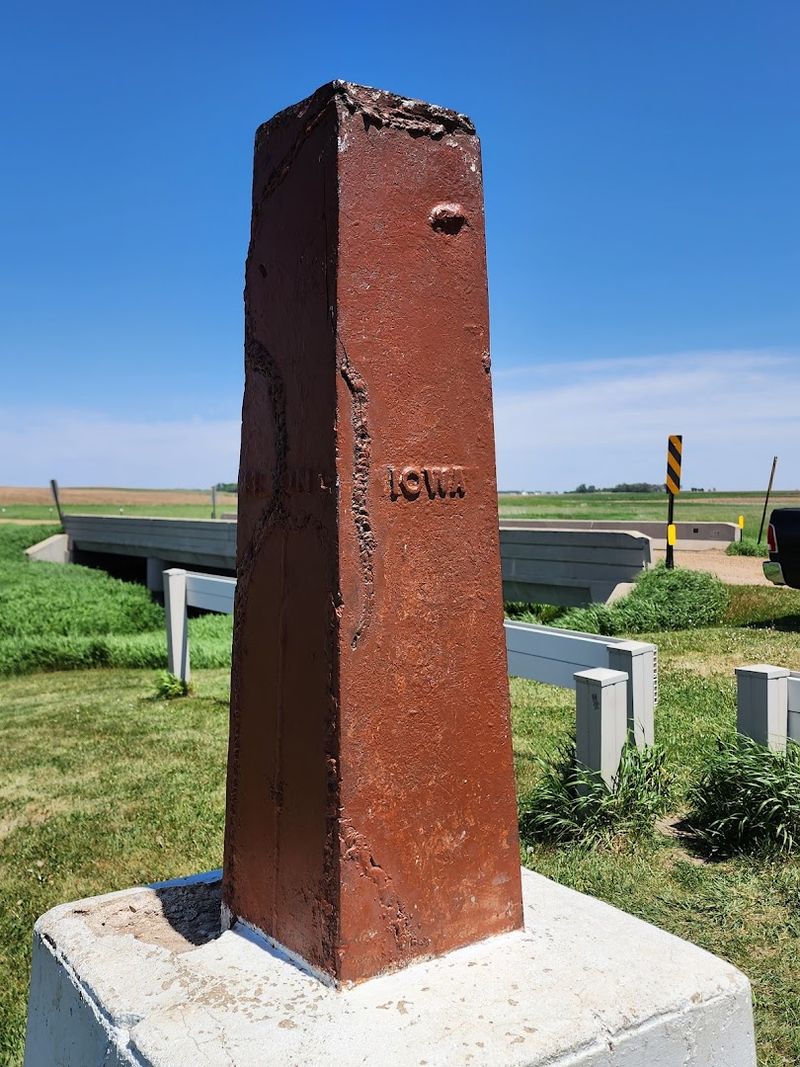
The monument itself is modest by any measure. A roadside marker and plaque sit near the intersection, giving visitors the historical context for the place where Iowa, Minnesota, and South Dakota meet.
The actual tripoint is more subtle. Sources identify it as a small brass pin or marker in the road area, the kind of thing you might miss if you did not know what you were looking for.
One thing worth knowing before you arrive: the marker has had a rough history. The monument was damaged by vandalism in the early 1900s, restored in 1938, damaged again by vehicle traffic in 1979, and restored to its present roadside position in 1981.
That history gives the stop more personality than its small size might suggest.
The roadside monument still stands and gives enough context to understand where you are. The surrounding landscape is open farmland with wide sky in every direction.
On a clear day, you can see a long way across the fields, which gives the whole stop a quietly dramatic quality that the humble monument alone would never suggest.
The Actual Thrill of Standing in Three States at Once
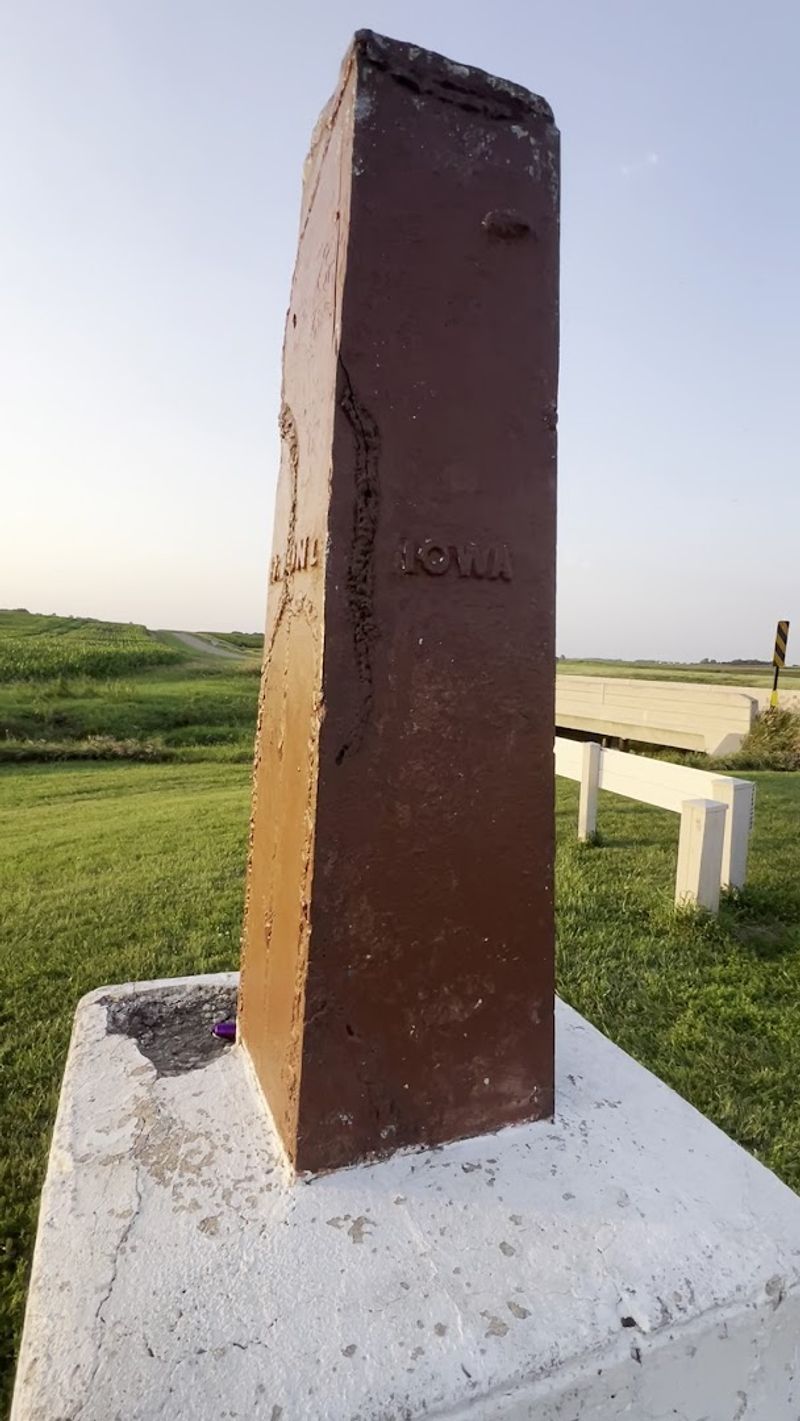
Here is the honest appeal of this stop: you can visit the spot where Iowa, Minnesota, and South Dakota meet.
The roadside monument gives you the photo-friendly version of the experience, while the actual tripoint is marked by a small pin or marker in the road area nearby.
It is a small, goofy, geography-nerd kind of thrill, and it works completely.
Just remember that the exact point may be in or near the roadway, so use common sense, watch for cars, and do not treat the road like a photo studio.
The open road, the flat fields, and the total absence of tourist crowds make the whole thing feel like a private discovery, even though the GPS coordinates are publicly listed and the marker has been there for years.
People who love collecting state visits, checking off geographic oddities, or just want a story to tell at dinner will get exactly what they came for here.
It is the kind of stop where the experience is almost entirely mental, a quiet moment of realizing that an invisible line drawn on a map can feel surprisingly real when you are standing right beside it.
How Close It Is to Sioux Falls and Other Nearby Stops
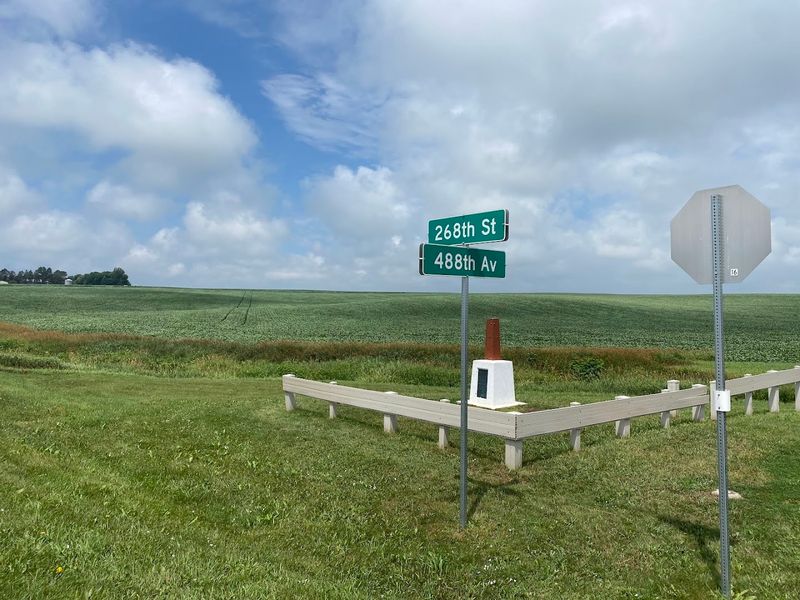
One of the best arguments for making this stop is how little it costs you in time.
From Sioux Falls, South Dakota, the drive is roughly 25 to 30 minutes depending on your starting point and route, which means you can add it to a road trip through the area without a major detour.
Grand Falls Casino & Golf Resort sits nearby in Larchwood, Iowa, so if you are already heading out that direction, the tripoint is an easy bonus stop.
People who are chasing Iowa’s highest point, Hawkeye Point in the far northwest corner of Iowa, may also route through this region, making the tripoint a logical add-on along that journey.
The surrounding area is quiet and rural, so do not expect a strip of restaurants or gas stations right at the marker.
Fuel up and grab food in Sioux Falls, Brandon, Larchwood, or another nearby town before heading out, and plan the tripoint as one stop among a few rather than a solo destination.
Paired with a drive through the Big Sioux Recreation Area or a quick look at the river valley nearby, it becomes part of a genuinely satisfying afternoon loop.
Who Will Enjoy This Stop the Most
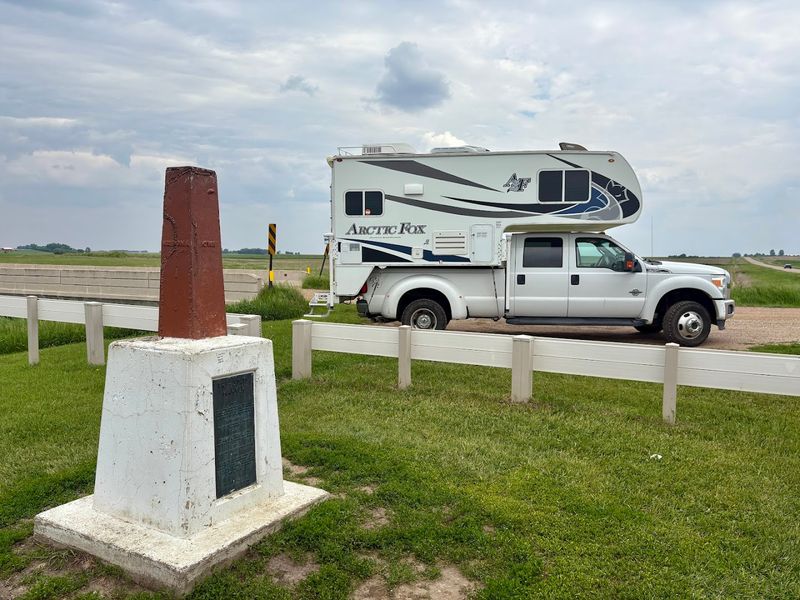
Road trip families with kids who need a stretch break will find this stop genuinely useful. There is room to get out, walk around, and burn off a little energy without any real risk of getting lost.
The open space and the novelty of the three-state thing tend to land well with younger kids who enjoy the idea of being in multiple places at once.
Geography enthusiasts, map nerds, and anyone who keeps a running list of states visited will feel right at home here.
The tripoint adds three states to your count in a single stop, which has a certain efficient appeal.
A few people have described the stop as life-changing with obvious tongue-in-cheek humor, but the underlying sentiment is real: it is a small thing that somehow feels bigger than it should.
Solo travelers passing through on long drives also tend to appreciate the break in routine.
Pulling off the road to stand at an obscure geographic marker, taking a photo, and driving on feels like exactly the kind of unplanned moment that makes a road trip memorable rather than just a long drive from one place to another.
The History Behind the Marker and Its Troubled Past
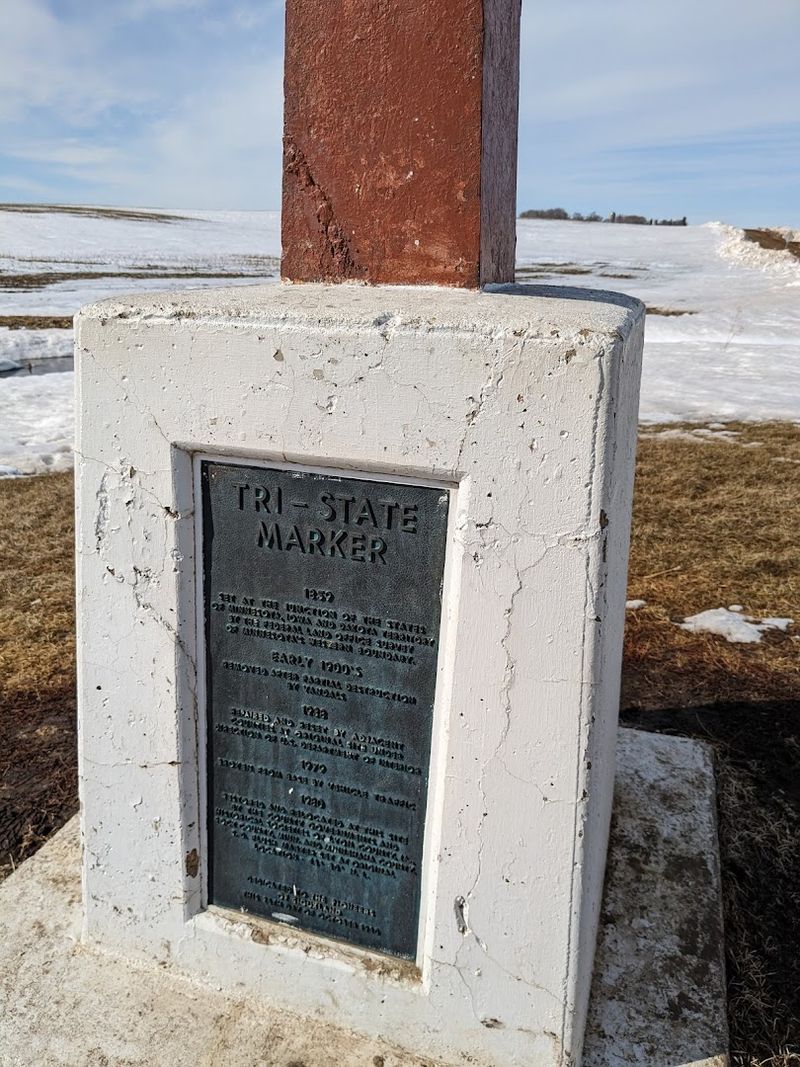
The tripoint marker has had a harder life than most roadside monuments. The original tripoint was established in 1859 at the junction of Minnesota, Iowa, and Dakota Territory by the Federal Land Office survey of Minnesota’s western boundary.
The marker was later damaged by vandals in the early 1900s and restored in 1938. Then, after being damaged by vehicle traffic in 1979, the monument was restored to its present roadside location in 1981.
That distinction matters: the roadside monument explains the history and marks the general location, while the actual tripoint is identified by a smaller marker or pin in the road area.
A text panel on or near the monument describes some of this history, giving visitors more context than the marker alone would provide.
That background turns what could be a forgettable roadside stop into something with an actual stry behind it, the kind of detail that makes you want to look it up when you get home.
Practical Tips Before You Make the Drive
The tripoint is open 24 hours a day, every day of the year, which means you can technically visit at midnight in January if that is your preference.
That said, a visit during a blizzard, which at least one person has actually attempted, is not the recommended approach. A clear day with decent visibility makes the open landscape much more enjoyable.
Parking is limited to roughly one or two cars on the gravel shoulder right next to the marker. On a busy weekend, you might need to wait a minute for another group to finish their photos and move on.
The wait is rarely long given how few people know this spot exists. Keep kids close to the road edge since cars do pass by at normal rural speeds and there are no barriers or fences.
There are no restrooms, no vendors, and no fee of any kind. Bring water if it is a hot day and have your camera ready before you get out of the car.
The whole stop takes about ten minutes, which is exactly the right amount of time for what it is.
Why This Kind of Stop Makes a Road Trip Better
Road trips through the Great Plains can stretch into long, samey hours of highway if you do not break them up with something worth stopping for.
The tripoint does not ask much of you, just a short detour and ten minutes of your afternoon, but it delivers the kind of oddly satisfying moment that a chain restaurant exit ramp never will.
There is a reason people are obsessed with a monument that is essentially a rock next to a ditch. The appeal is not the physical object.
It is the idea behind it, the invisible lines that define states, the surveys that measured them, and the small human impulse to stand exactly where three of them meet just because you can.
Minnesota and Iowa are both just a step away once you are there, which means South Dakota hands you two bonus states for the price of one tank of gas.
If you are already driving through the region, skipping this stop would be the only real mistake you could make.