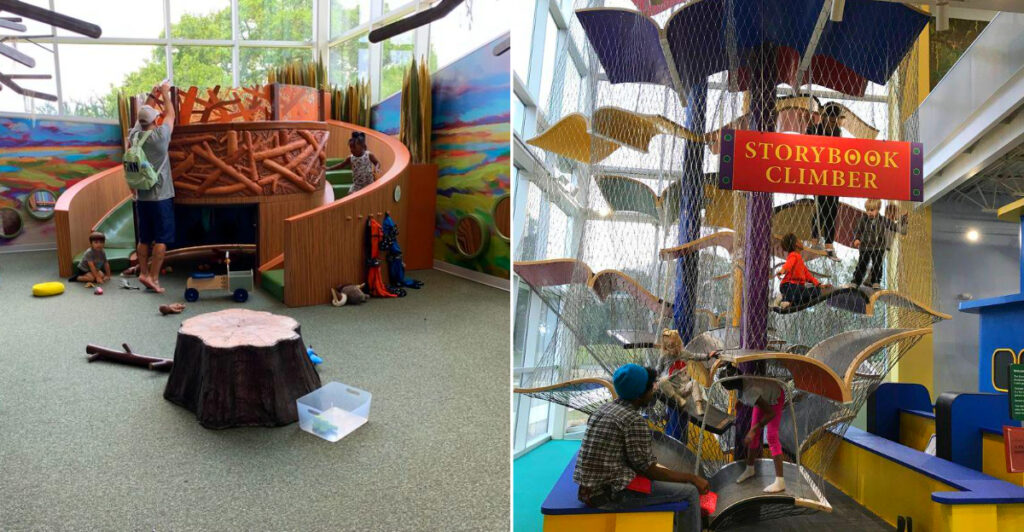
I have dragged my children through enough museums to know the exact timeline: twelve minutes of interest, followed by whining, followed by bargaining about the gift shop. This place broke the pattern entirely.
From the moment we walked in, my youngest sprinted toward a pretend grocery store stocked with wooden food, while my oldest vanished into a building zone full of foam blocks and pulleys. I stood there holding my coffee, realizing I had not heard a single complaint for the first time in weeks.
The zones flow into each other so naturally that kids migrate without getting bored, plus each room introduces something specific to the region that I actually wanted to explain.
We stayed three hours, roughly two hours longer than my children have ever tolerated indoors. A museum built for curiosity runs the show in Louisiana, plus my coffee stayed hot the entire time.
Climb First, Then Roam
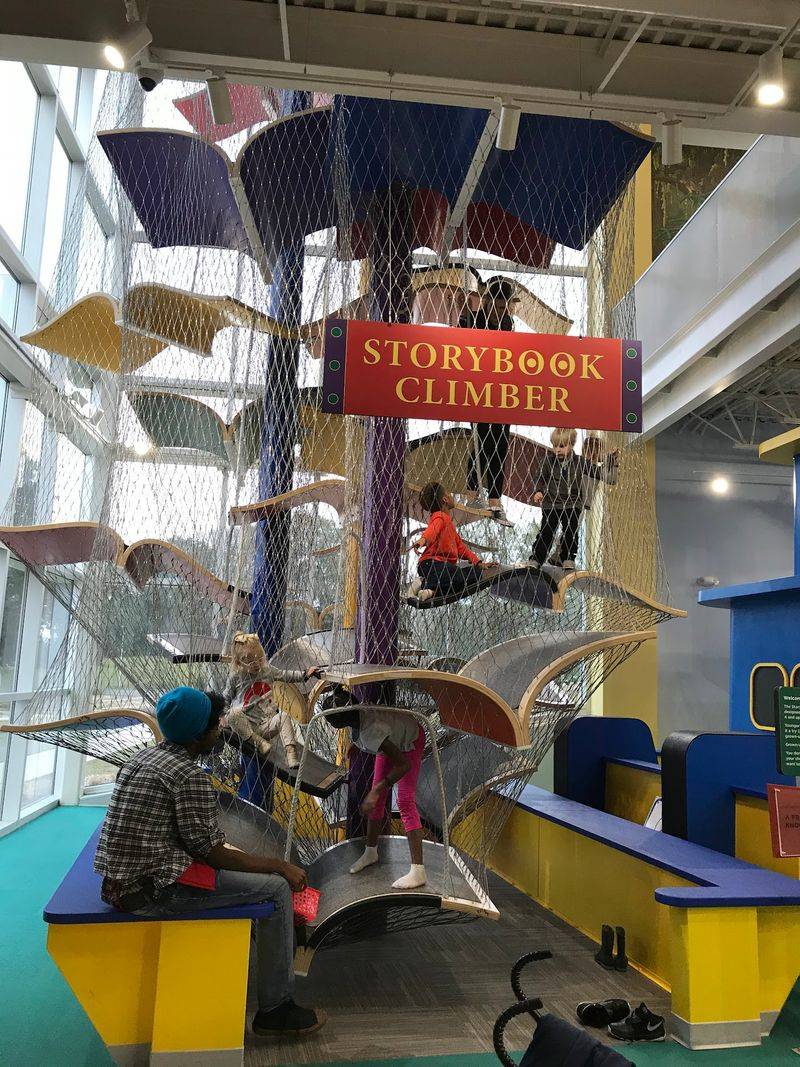
Nothing resets a child’s mood quite like climbing toward a giant story. The Storybook Climber rises about two and a half stories, with padded steps shaped like open pages and netting around the structure for safety.
It is one of the museum’s signatures, and it quickly explains the place’s mission: literacy and movement can share the same space.
Instead of treating it like a quick photo stop, give kids time to return to it more than once. The climb looks dramatic, but the design is self contained and approachable for the museum’s intended age range.
From below, adults can watch without losing sight of other nearby activity. After one round up and down, many children seem readier to explore quieter zones because they have already used some big energy and gained a bird’s eye view of the museum floor below.
Dalrymple Drive Opens Into City Park
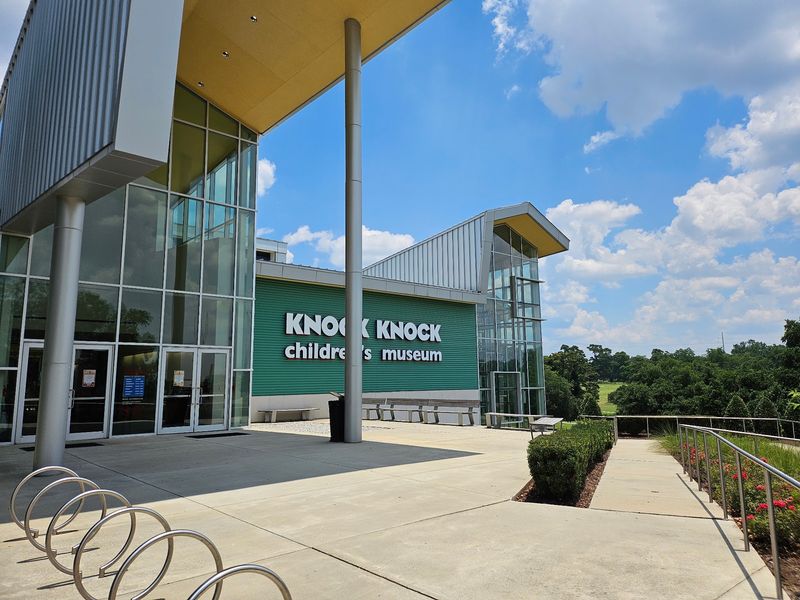
Knock Knock Children’s Museum sits at 1900 Dalrymple Drive in Baton Rouge, Louisiana, inside BREC’s City-Brooks Community Park. Dalrymple Drive is the road to use for the final approach, with the museum property tucked into the park near I-10.
Stay on Dalrymple Drive as you enter the City-Brooks park area and continue toward the museum rather than stopping at the first park facilities. The museum has its own entrance and parking area, so the same road carries you directly from the surrounding city streets to the property.
Free parking is available in the museum’s on-site lot. If that lot is full, additional parking is available at the City-Brooks Community Park playground lot farther along Dalrymple Drive, about 0.3 miles away, leaving a short walk back to the museum entrance.
Notice The Building Before The Exhibits
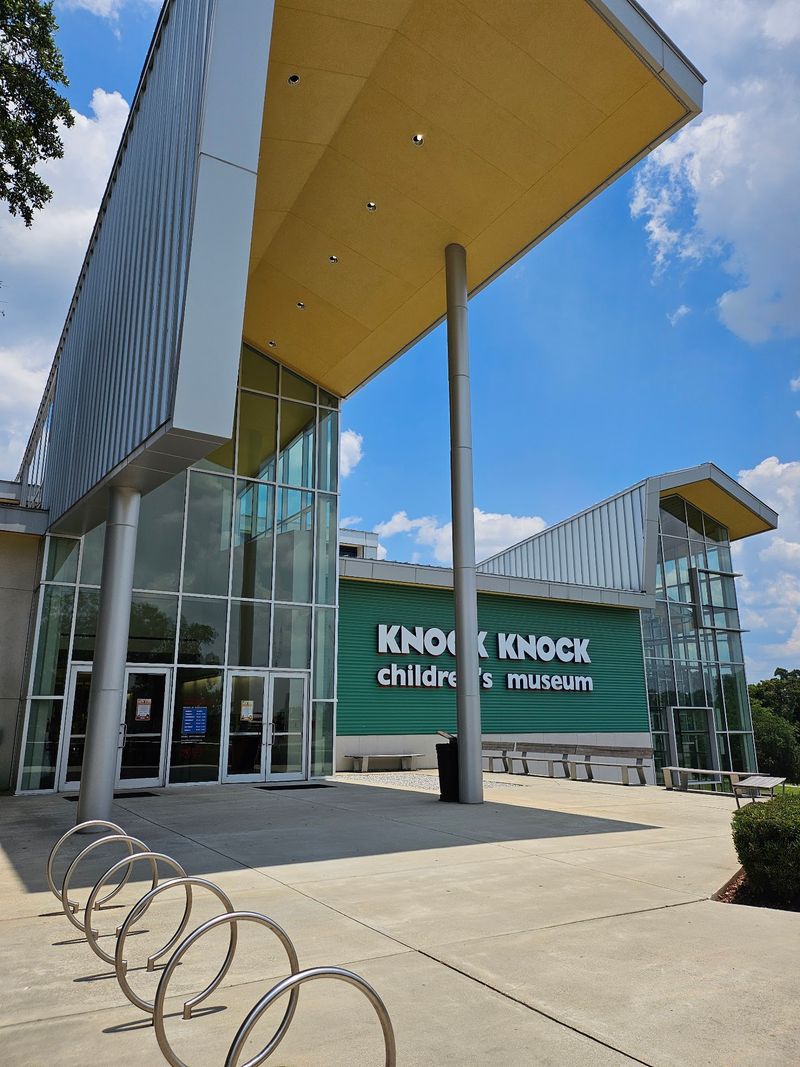
Before anyone touches an exhibit, the building has already started teaching. Knock Knock Children’s Museum sits on Knock Knock Hill inside BREC’s City Brooks Community Park, and its connected pavilions step along the rise instead of fighting the landscape.
Huge live oaks frame the approach, while the glass front keeps the indoors visually linked to the park outside.
Kids may not care who designed the place, yet they notice how inviting it feels. The layout by Remson Haley Herpin Architects leaves room for motion, light, and clear sight lines, which matters when families spread out between zones.
I like pausing for a minute near the entrance and letting children look around before racing off. That small beat helps them understand the museum as one big play world, not a maze of separate rooms with surprises tucked around every corner inside.
Build Big In The Workshop
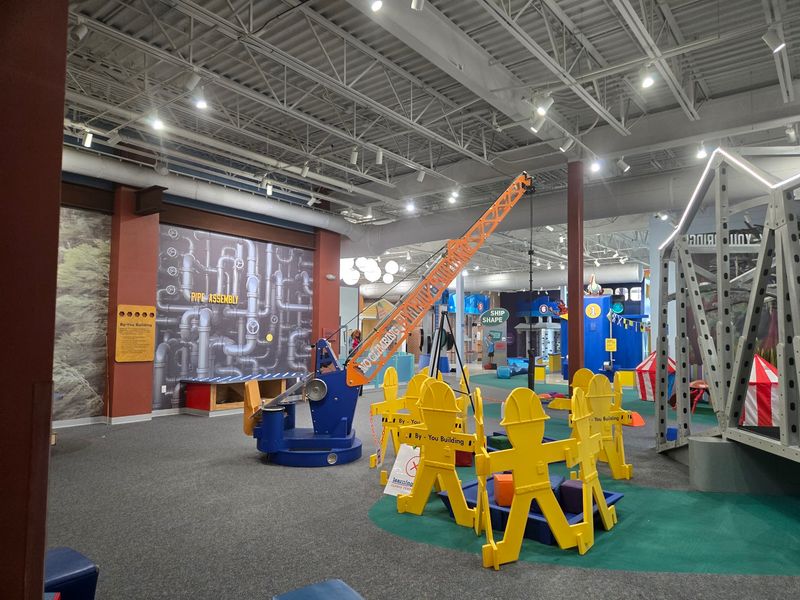
The clank and shuffle of oversized building pieces give this zone its own music. In the By You Builder Workshop, children stack large components, test ideas, and sometimes operate crane features while learning that construction is really problem solving in sneakers.
A bridge element nods to Louisiana waterways and even echoes lights from the Horace Wilkinson Bridge, which quietly roots the activity in Baton Rouge.
Some kids arrive certain they want to build a tower, then end up making something stranger and better. That is the charm here.
Open ended materials leave room for teamwork, stubborn trial and error, and sudden bursts of pride when a plan finally stands up. If your child loves controlling every detail, this workshop offers a useful lesson: adjust, rebuild, laugh, and keep going when gravity wins the first round for almost everyone at first.
Save Energy For The Art Garden
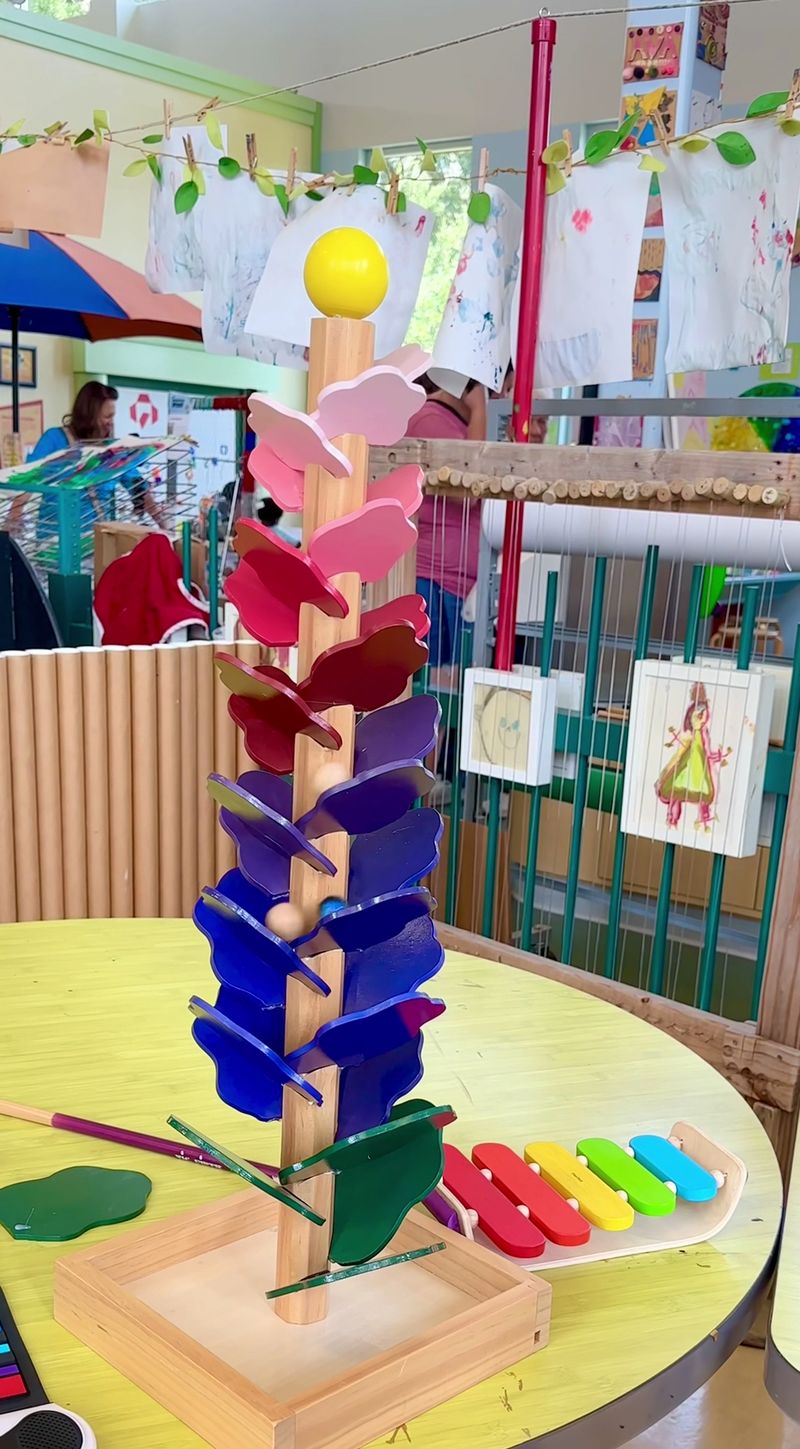
Paint has a way of slowing the day down, even inside a busy museum. The Art Garden feels lively but focused, with smocks, easels, and different materials that can include paint, fabric, and clay.
Around it, a cardboard tube fence displays self portraits by local children, which gives the space a welcome sense of community instead of polished perfection.
Families sometimes rush past art areas because they assume making something takes too long. Here, a short stop still works.
One child may stay with color mixing while another experiments for five minutes and moves on, and both visits count. I try to save this zone for the middle of the trip, when energy needs a reset but nobody is ready to leave.
It often becomes the calm pocket that helps the rest of the museum feel manageable and memorable too.
Give Little Ones Their Own Bayou Space
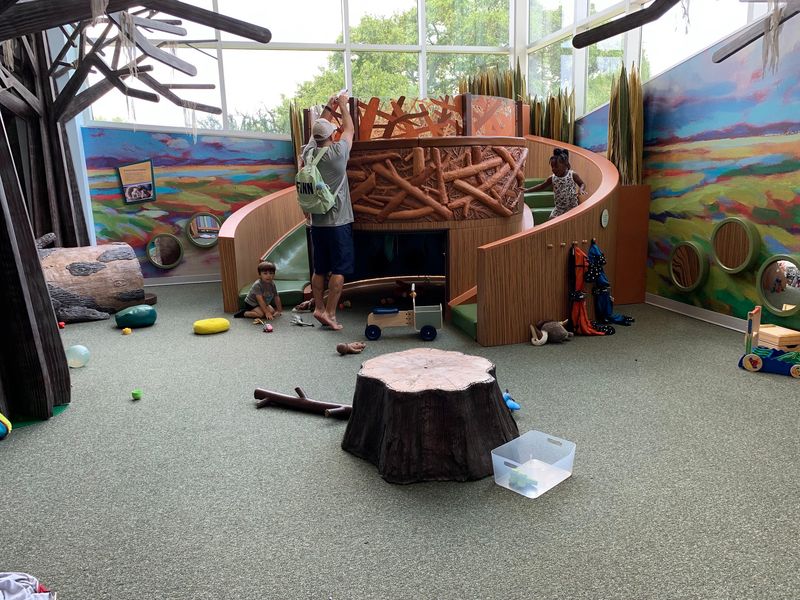
Small feet need their own map, and Crawbaby understands that beautifully. Designed for infants and toddlers under 40 inches tall, this softer zone uses padded flooring and bayou themed features like a rocking skiff, a catfish cave, and a beaver den.
Murals inspired by the Atchafalaya Basin wrap the room in Louisiana scenery without turning it into visual chaos.
Parents with older siblings should know this space can save a visit from unraveling. Little ones get a safer place to crawl, wobble, and practice language, while bigger kids can take turns elsewhere with another adult.
The separate feel matters. When everything in a museum is sized for active older children, babies can seem like tiny afterthoughts.
Here they get their own stage, and that changes the whole family mood in a quiet, helpful way during longer visits on warm afternoons.
Pack Snacks For The Big Back Yard
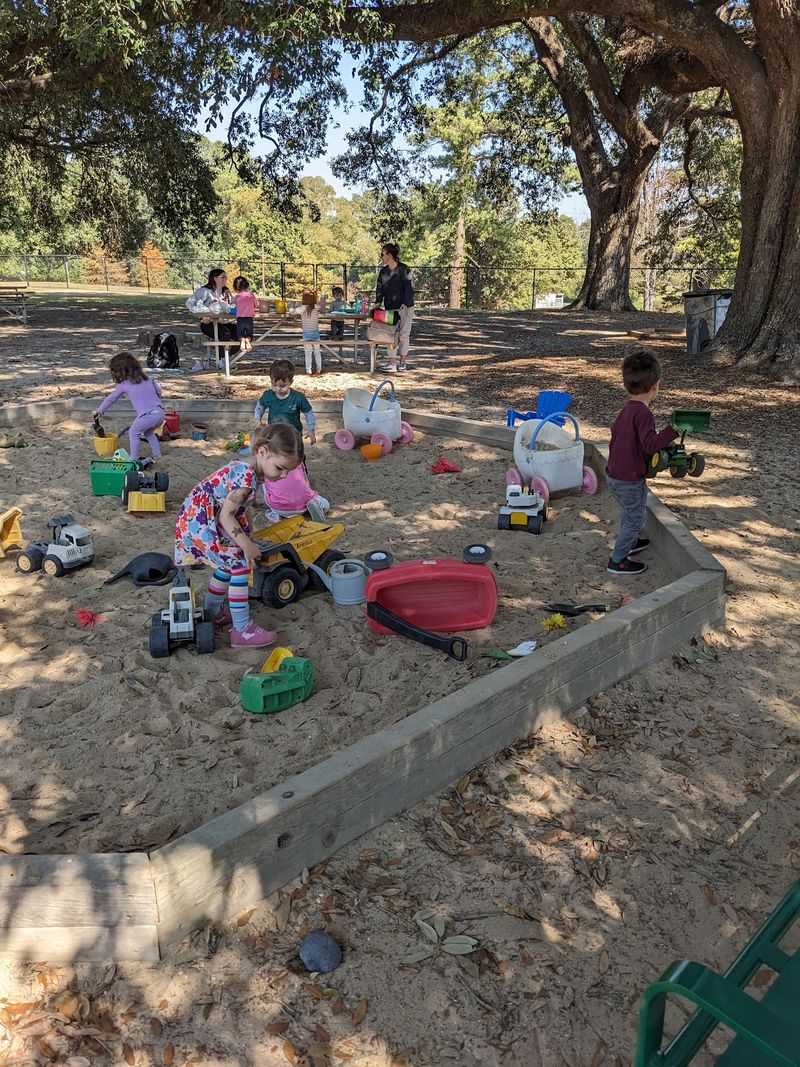
Few parenting victories feel as solid as not hunting for lunch in the car afterward. Knock Knock allows outside food and drinks in the Big Back Yard, while food stays out of the main exhibit areas except for bottled water.
That rule actually helps the museum stay cleaner, and it gives families a natural pause between active indoor play and another round outside.
The yard is more than a backup picnic spot. Mature trees, open space, and room to move make it a useful pressure valve when indoor energy starts to spike.
Packing simple snacks or an easy lunch can stretch your day without adding another stop. I would bring wipes, extra water, and a change of clothes if sand or outdoor play is on your child’s agenda, because Baton Rouge weather can turn a tidy plan playful fast sometimes.
Match Your Plans To The Age Range
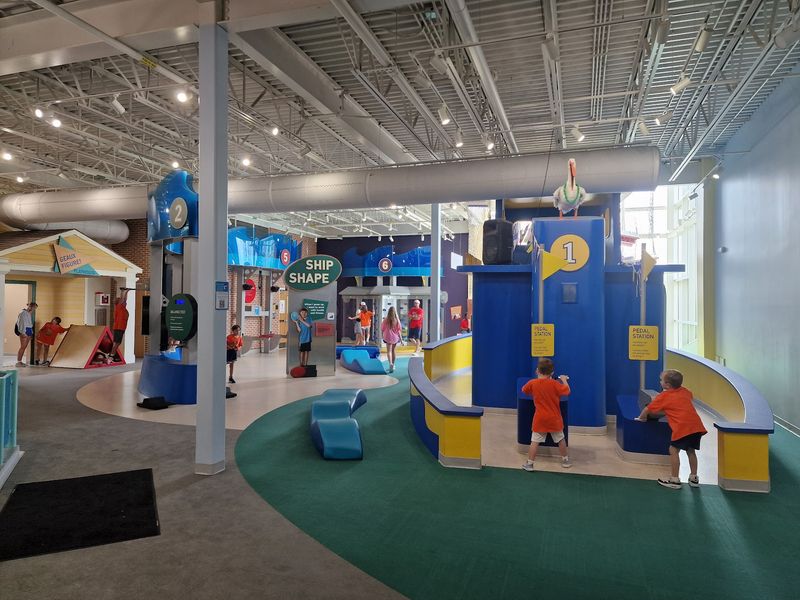
One honest tip helps set expectations: the museum is especially strong for kids from birth through age eight. That does not mean older siblings cannot have fun, but the learning zones, climber, and hands on activities are clearly tuned to younger children and families.
Knowing that ahead of time makes it easier to plan pace, split up briefly, or promise an older child a role as helper instead of pretending every exhibit will hit equally.
When families ignore age fit, frustration sneaks in from both directions. Younger kids get rushed, and older ones get restless.
A better approach is to lean into what the museum does best. Let the little ones lead, then give bigger kids small missions like photographing zones or helping with a building challenge.
Expectations shape mood almost as much as the exhibits do once you arrive.
Ask About Accessibility Before You Need It
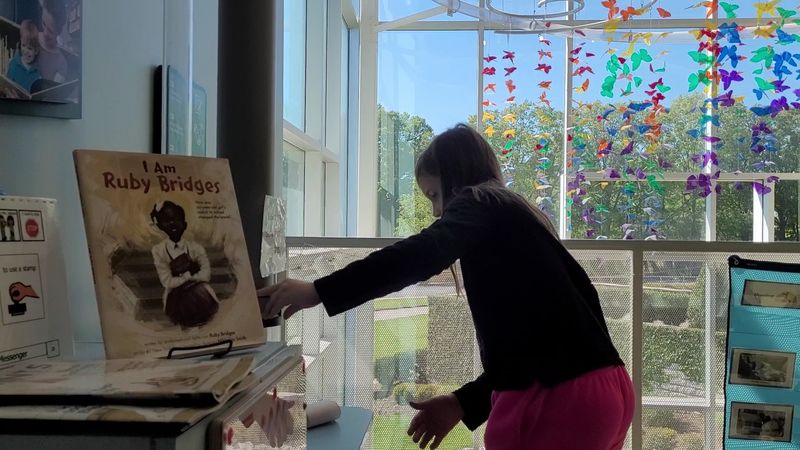
Busy children’s spaces can overwhelm even kids who were excited in the parking lot. Knock Knock makes room for different needs with wheelchair accessible learning zones and restrooms, plus supports such as noise reducing headphones, braille picture books, weighted lap blankets, and a Quiet Cabin when a break is necessary.
Knowing those options exist can lower stress before the visit starts.
You do not need to wait for a rough moment to ask about accommodations. Check in early and let staff know what helps your child regulate.
That simple step can change the day from reactive to steady. Sensory needs are not always obvious, especially in a place built around motion and sound.
A planned pause, a quieter corner, or borrowed support items can help a child stay engaged longer and leave with happier memories than a rushed visit allows.
Look For The Louisiana Thread
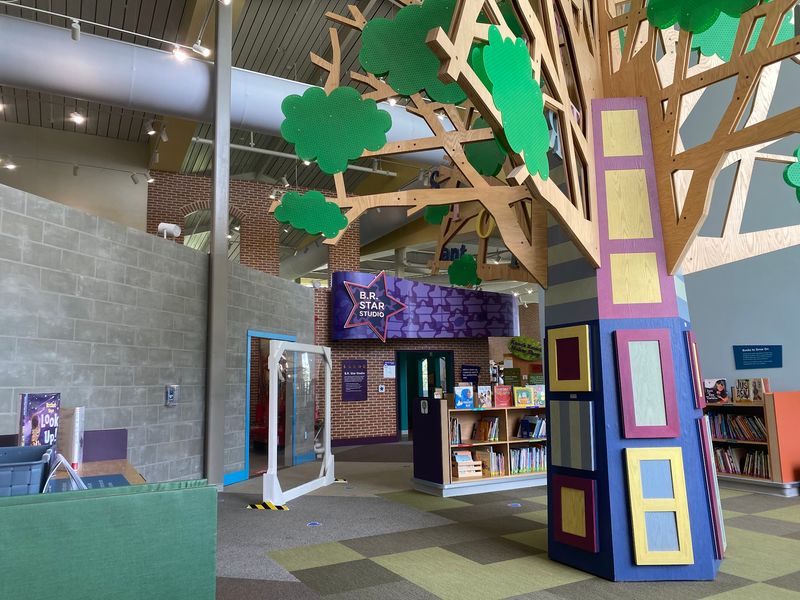
Louisiana shows up here in ways children can actually touch, climb, and notice. Instead of dropping in random exhibits, the museum threads local identity through spaces like Crawbaby’s bayou scenery, the builder workshop’s bridge reference, and outdoor areas that feel connected to south Louisiana weather and trees.
That local texture gives the museum more personality than a generic play center.
A child may not remember every label or concept, but place sticks. Seeing familiar landscapes turned into play helps Baton Rouge families feel seen, and it gives visitors a clearer sense of where they are.
I appreciate that the museum never treats local culture like wallpaper. It becomes part of the learning itself.
While adults catch the references, kids simply absorb that stories, science, art, and engineering belong to Louisiana too, not somewhere far away when the day is done.
Leave Room For Surprise Favorites
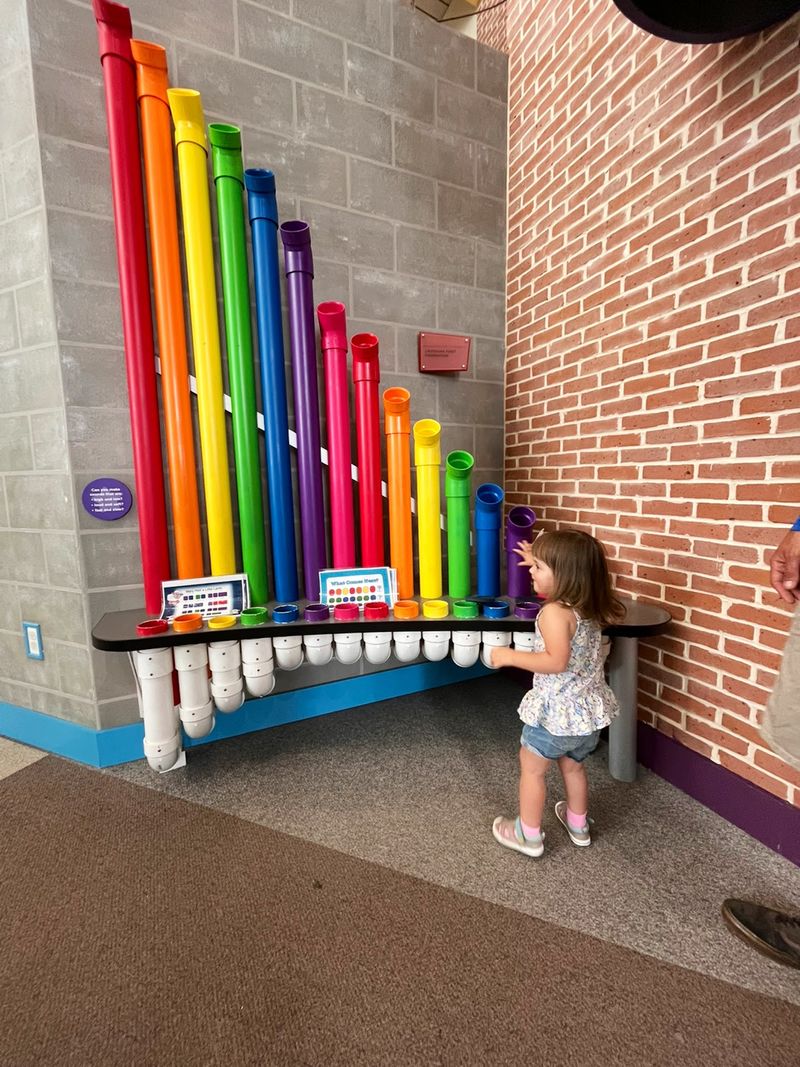
The sneakiest tip is leaving part of the schedule blank. Knock Knock works best when families resist marching through all 18 learning zones like a checklist and instead follow the child’s attention for a while.
One room sparks pretend play, another invites building, and then a corner you barely noticed becomes the place they talk about all evening.
That kind of discovery is the museum’s real trick. Because the exhibits are interactive and varied, children often reveal interests you did not expect, especially when adults stop steering every minute.
I have watched a carefully planned route dissolve the instant a child finds a station that matches their mood exactly. Let that happen.
Covering less ground can produce a richer visit, and it leaves a reason to come back rather than feeling you squeezed the whole place flat in one afternoon.