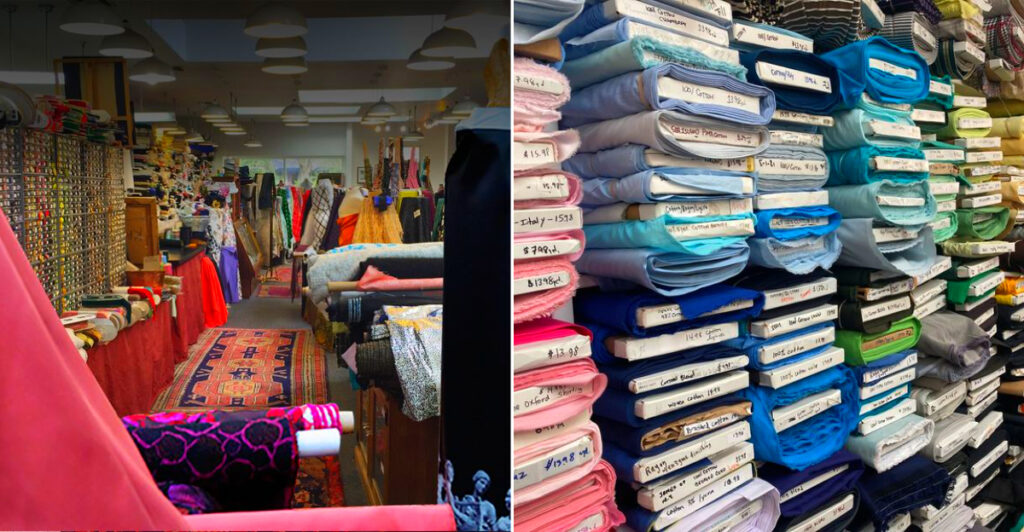
Fabric hunting in New Orleans can feel less like shopping and more like following a rumor, which is exactly why I enjoy it. Somewhere between polished storefronts and old downtown buildings, the possibility of finding vintage trim, unusual buttons, or fabric with actual personality makes the search worthwhile.
The important thing here is to plan before you start wandering. Public information supports a well-established fabric shop with a reputation for couture-worthy cloth, ribbons, notions, and vintage textiles, but claims about a separate downtown warehouse are much less clear.
Vintage fabrics, rare trims, designer textiles, and old-school sewing treasures make this New Orleans fabric destination a dream stop for serious makers.
I would check the current address and opening hours before leaving the hotel, especially because public access can be limited. Go with measurements, project notes, and enough restraint to avoid adopting twelve yards of brocade simply because it winked at you.
Book Before You Go
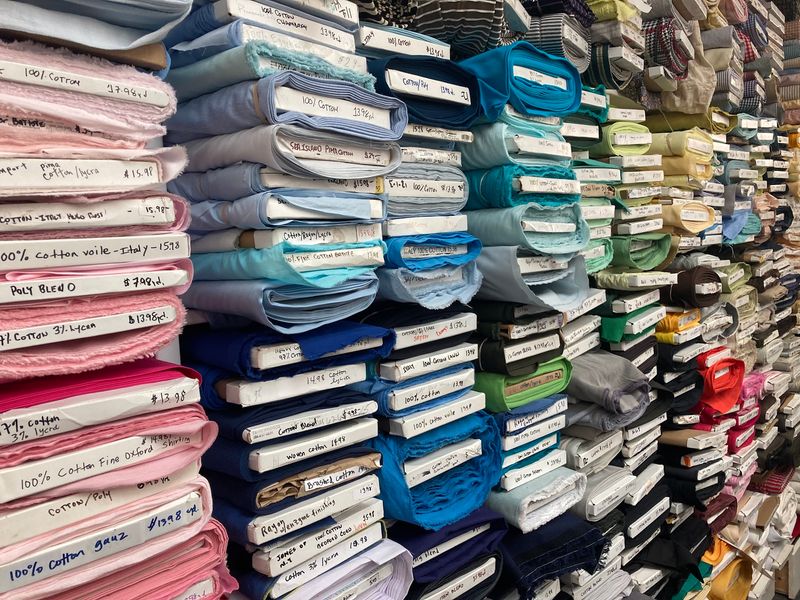
Spontaneity works beautifully for beignets, jazz bars, and wandering the French Quarter without knowing where you are going. A fabric warehouse filled with specialty inventory requires slightly more organization.
Visits to the Promenade Fine Fabrics warehouse are arranged in advance, so contact the business before heading downtown rather than simply appearing at the door. The warehouse itself is separate from the company’s regular retail shop on St. Charles Avenue.
That advance notice becomes especially useful if you already know what you are hunting. Mention the kind of fabric, color, era, fiber, or project you have in mind when arranging the visit.
If something on the company’s website has caught your eye, include its stock information so staff can tell you where it is stored and whether it can be available for your appointment.
I would also avoid squeezing this into a tightly scheduled afternoon. Fabric shopping has a strange ability to turn ten minutes into an hour once several good bolts appear.
Bring project notes, measurements, and a rough budget, then give yourself enough breathing room to actually look.
The Warehouse Really Is Hidden Downtown
Nothing about the location screams fabric destination from the sidewalk, which makes arriving feel slightly like being let in on a New Orleans secret. The warehouse occupies the fourth floor at 408 Magazine Street, putting a substantial textile collection inside a downtown building rather than behind the obvious storefront you might expect.
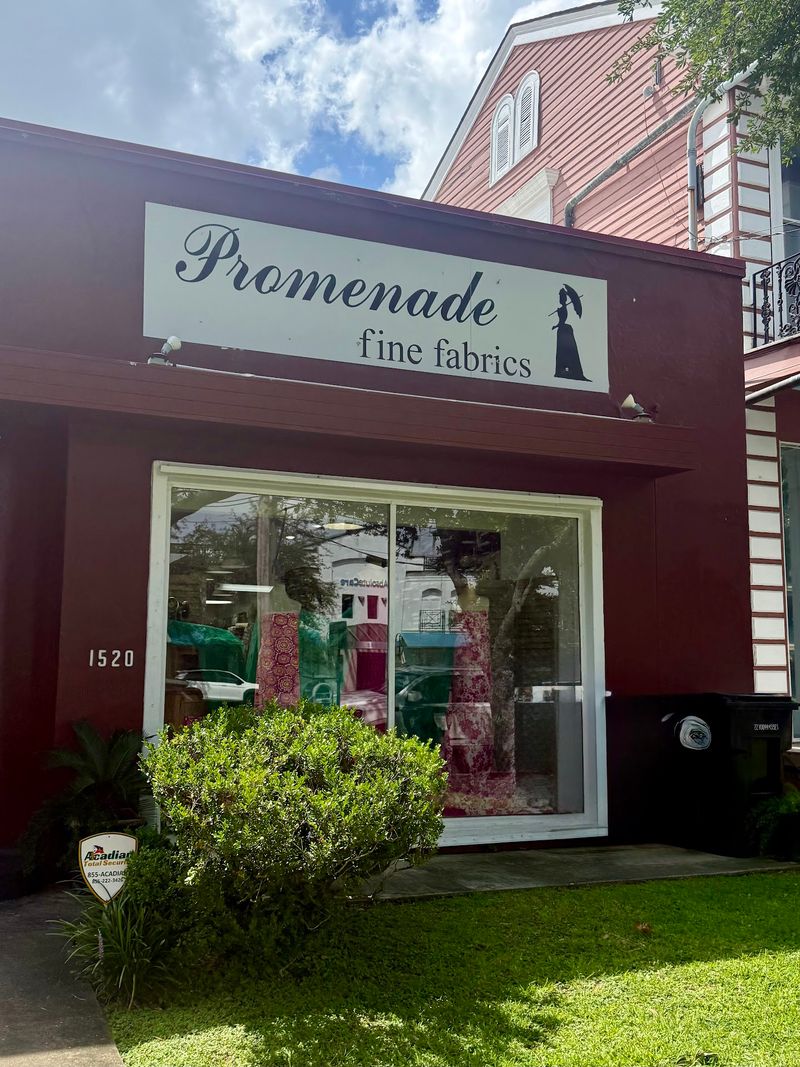
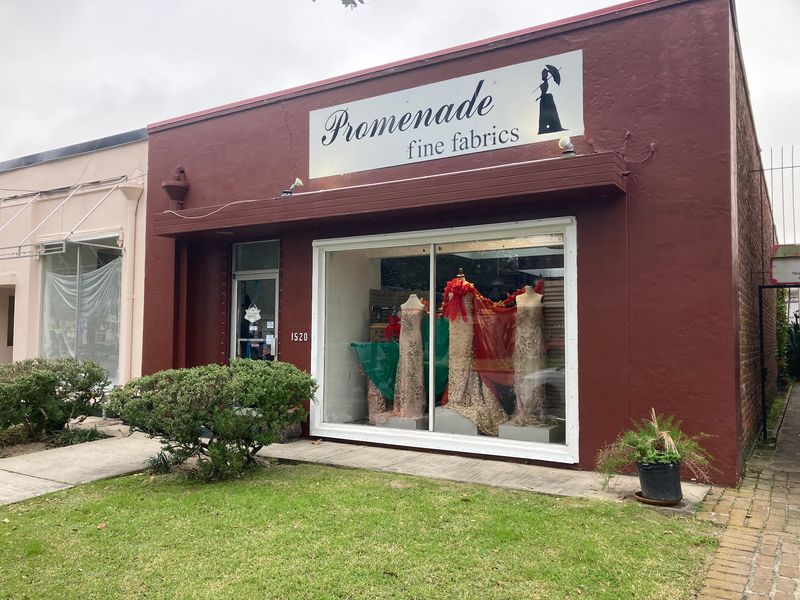
That address is worth saving separately from the company’s retail location. Promenade Fine Fabrics also operates its public shop at 1520 St. Charles Avenue, but the two spaces serve different purposes and should not be treated as interchangeable stops.
For warehouse visitors, the appointment is the important part. Once that is confirmed, give yourself extra time to reach Magazine Street, navigate downtown traffic, and find your way into the building without arriving already flustered.
I like that the location does not turn the inventory into a spectacle. The attraction is what waits upstairs: deadstock fabrics, older material, trims, and the deeper reserves of a business that has spent decades acquiring unusual textiles.
Retro Prints Are The Real Draw
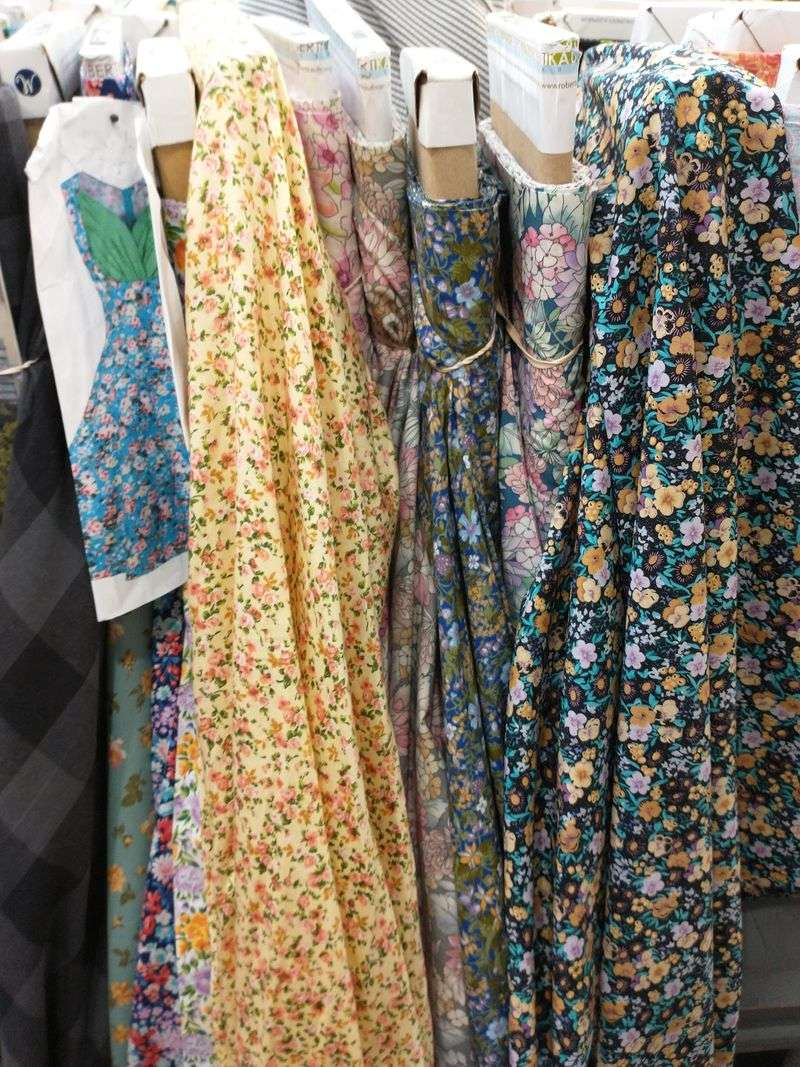
Color gets dangerous when you encounter it by the bolt. A floral that seemed ridiculous in a thumbnail can become irresistible at full scale, while a strange geometric pattern suddenly starts suggesting dresses, curtains, jackets, and several projects you definitely did not have when you walked in.
Promenade Fine Fabrics specializes in deadstock and unusual designer textiles, with vintage material sharing space with fabrics from mills, cutting rooms, and fashion sources around the world. The current collection includes retro florals, saturated satins, brocades, jacquards, plaids, stripes, and patterns that refuse to look like something pulled from a modern big-box shelf.
That unpredictability is part of the point.
Deadstock means quantities can be limited because the fabric already exists rather than being continuously reproduced. If you discover something extraordinary, ask how much yardage remains before planning an entire room around it.
Buttons And Ribbons Matter Too
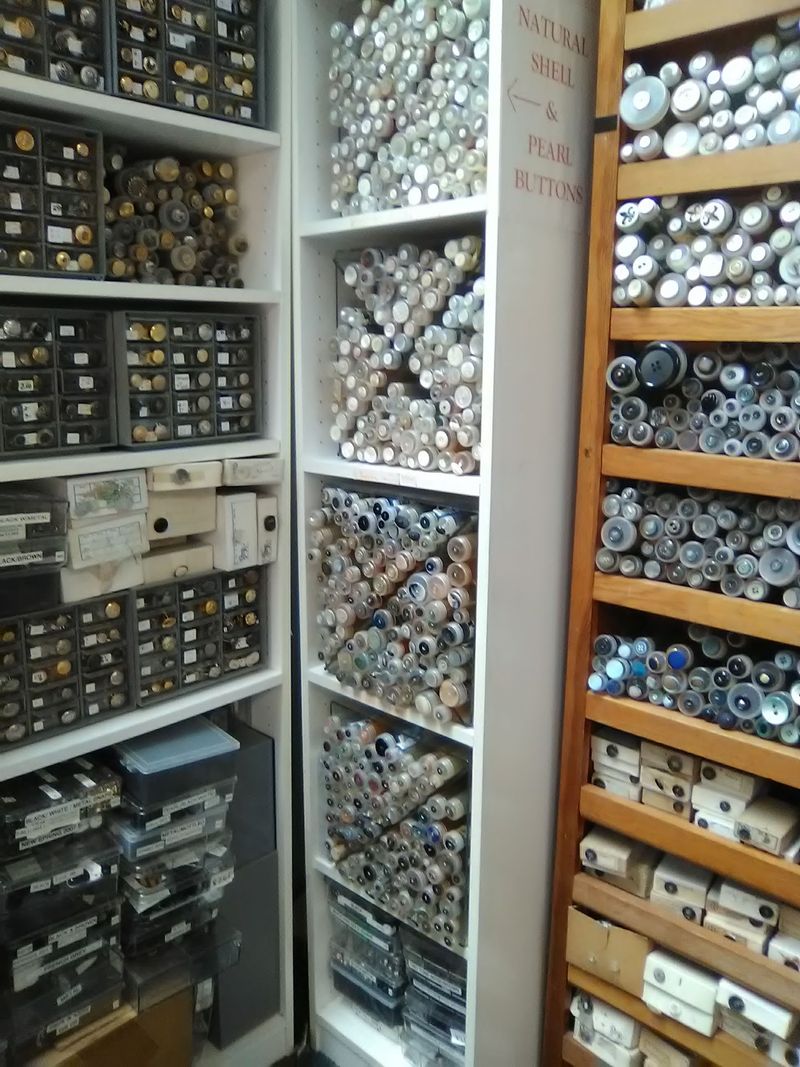
Fabric may get top billing, but the smaller details can easily consume just as much browsing time. Promenade has built a serious reputation around vintage ribbon, trims, and designer buttons, giving sewists plenty of ways to turn an ordinary piece of cloth into something much more specific.
The ribbon selection is especially dangerous for anyone who likes older materials. Deadstock ribbon is no longer being produced, so a color, weave, or width you find today may genuinely be finite.
The business also carries vintage Hyman Hendler ribbon alongside newer specialty trims, creating the sort of collection where “I only need one button” can become an extremely optimistic statement.
Bring a swatch if you are matching an existing fabric. Memory is terrible at subtle colors, particularly once five shades of burgundy are sitting beside each other insisting they are completely different.
It also helps to ask how much ribbon remains before designing an entire garment around a trim with only a few yards left.
A Family Legacy Shapes The Stock
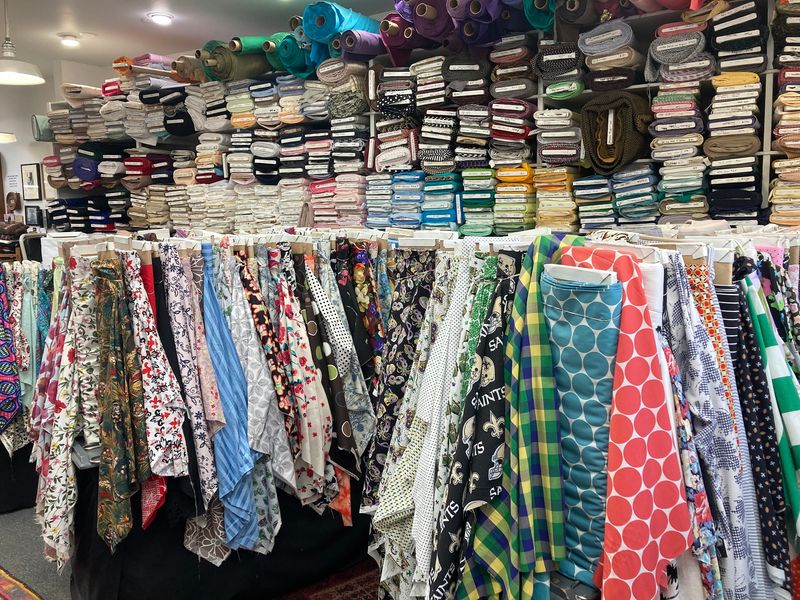
More than half a century of buying fabric leaves traces on the shelves. Promenade Fine Fabrics has been part of New Orleans since 1968, and its family-run history helps explain why the inventory feels accumulated rather than simply ordered for the current season.
The business has spent decades sourcing textiles from mills, designers, cutting rooms, and suppliers around the world. That long view matters with deadstock because interesting material often survives precisely because somebody recognized its value before fashion circled back around to appreciating it.
Silks, wools, lace, bridal materials, couture fabrics, unusual prints, vintage ribbon, trims, and designer buttons all fit into that larger collecting habit.
I find stores like this more interesting than perfectly coordinated modern showrooms because the timeline gets messy. Something produced decades ago may sit beside a contemporary designer deadstock fabric that happens to echo the same color or texture.
Short Hours Change The Strategy
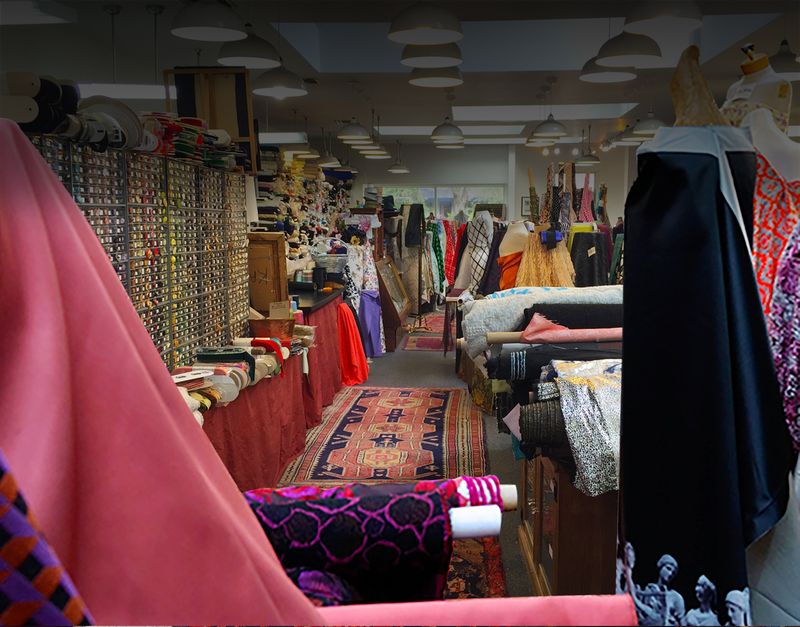
This is not the place to save for a lazy late-afternoon shopping spree.
Promenade’s regular retail shop at 1520 St. Charles Avenue keeps unusually short public hours, generally opening from 10 a.m. to 1 p.m. Monday through Saturday and closing Sunday.
Out-of-hours appointments may be arranged in advance, but casual shoppers should plan around that compact morning window.
The smartest strategy is to know roughly what you need before arriving.
Write down yardage, bring measurements, save screenshots of fabrics you liked online, and make a short priority list. Otherwise, three hours can disappear while you debate whether a ribbon is burgundy, oxblood, wine, or some fourth shade invented specifically to ruin your decision-making.
If you want to see website inventory in the retail shop, advance notice matters because the store and online collections are not identical. Giving staff time to bring over a particular bolt prevents disappointment.
The Retail Shop Is Worth A Stop Too
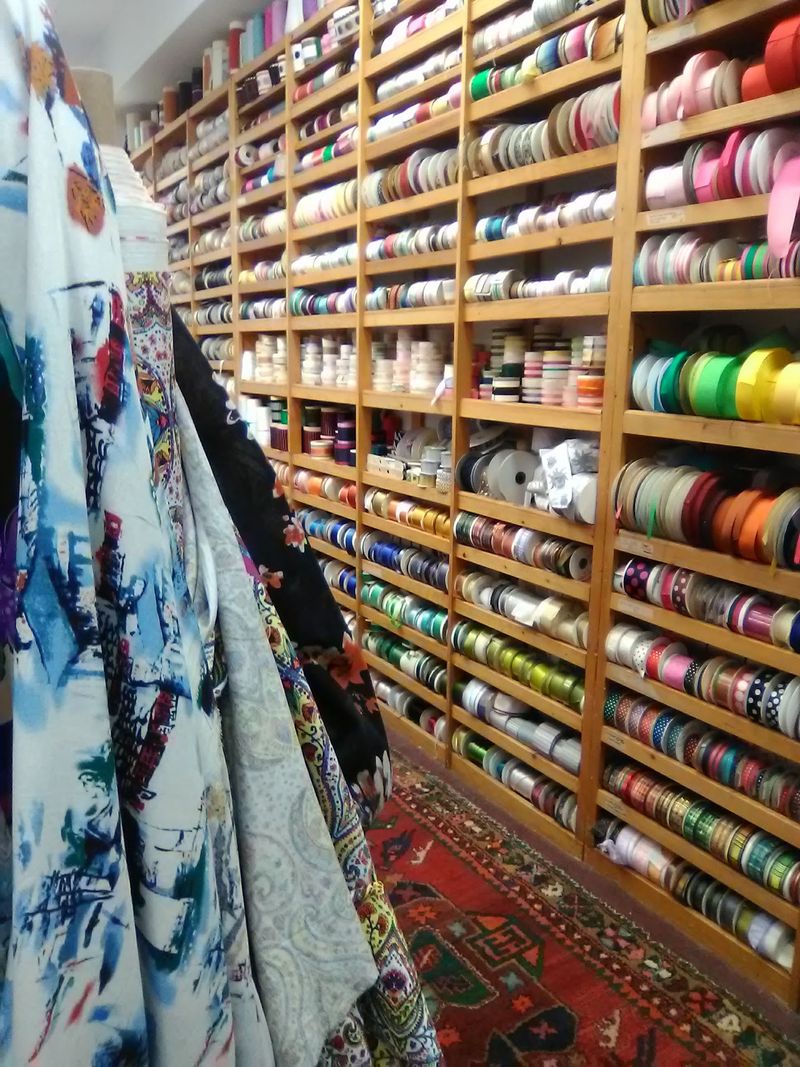
The warehouse may have the secretive appeal, but the regular store is more than a waiting room for the deeper collection.
Promenade’s retail space gives shoppers access to designer and couture fabrics, ribbon, buttons, trims, and the kind of informed assistance that becomes increasingly useful once a project moves beyond “I need something blue.”
If you are unsure exactly what you need, starting here may actually make more sense.
Bring the pattern or describe the garment. Staff can help narrow down suitable weight, drape, width, fiber, and yardage before you become distracted by something beautiful but completely inappropriate for the job.
The shop also makes it possible to arrange viewing of certain website fabrics with advance notice, connecting the more accessible retail experience with stock stored elsewhere.
Home-decor shoppers have another temptation nearby. BackRoom Fabric, another family fabric business, specializes in upholstery and interior textiles next door, making this stretch of St. Charles particularly dangerous for anyone whose definition of “one small sewing project” is flexible.
Bring Swatches And Measurements
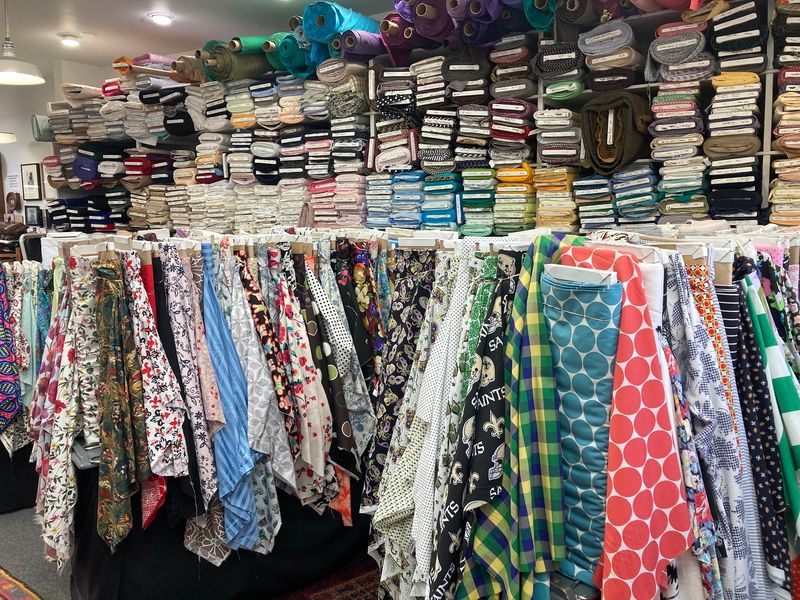
A little preparation can prevent an expensive piece of gorgeous fabric from becoming a very decorative resident of your closet.
Start with measurements. For clothing, check the recommended yardage and fabric width on your pattern.
For curtains, cushions, or other home projects, bring dimensions and photographs of the space. Pattern repeats can dramatically increase how much material you need, so account for them before asking for a cut.
Physical color references help too.
Bring paint chips, existing fabric swatches, thread, buttons, or whatever needs to coordinate with the new material. Phone photos are useful for context, but screens can distort color enough to make a perfect online match look completely wrong in person.
For retro fabrics, reference images can also help define the aesthetic you are chasing.
Take notes as you browse. Stock numbers, fiber content, width, price, and remaining yardage can quickly blur together once several promising options enter the competition.
Most importantly, do not assume you will remember everything.
Warehouse Browsing Rewards Patience
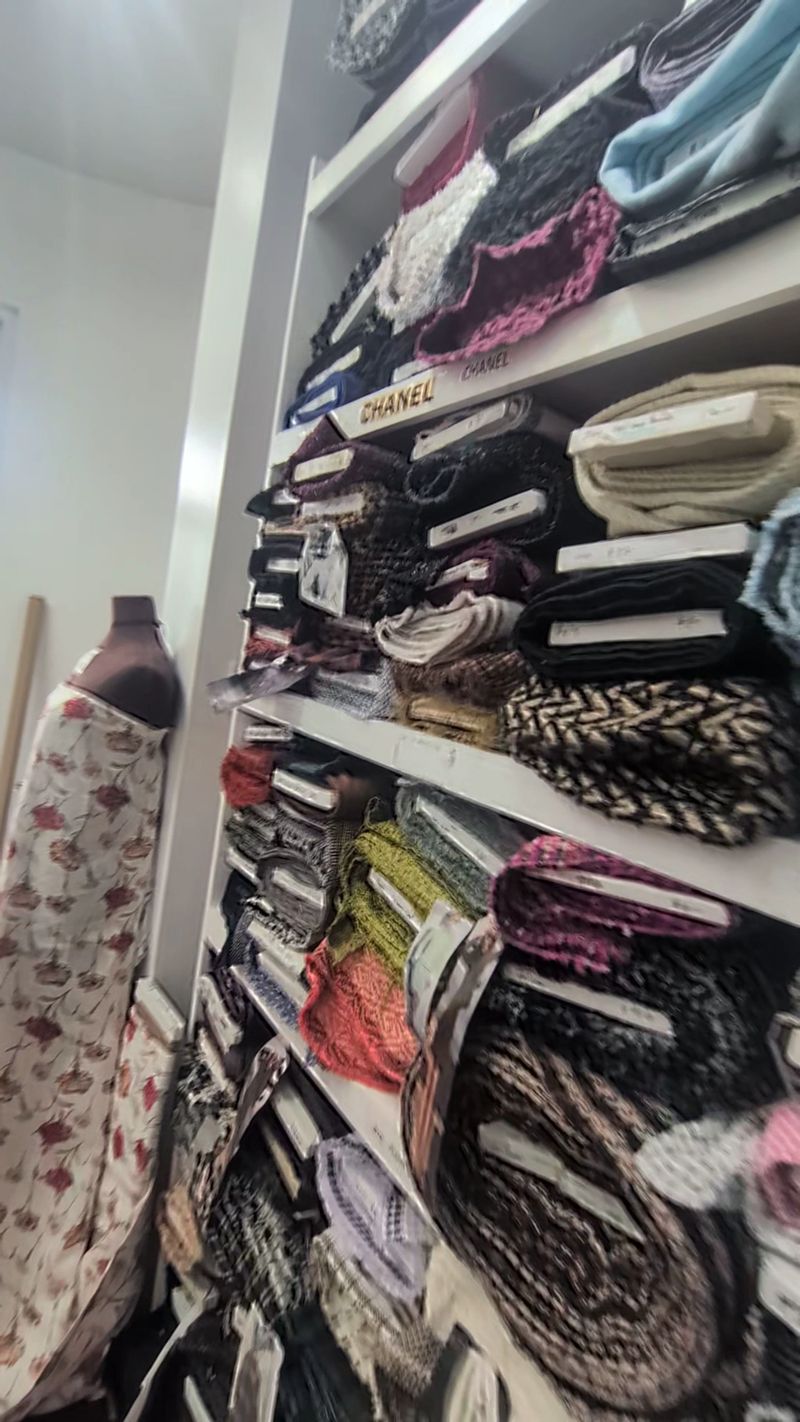
Fast scanning works poorly when the good stuff may be folded behind something louder.
Vintage and deadstock fabrics often reveal themselves slowly. A bolt can look unremarkable until enough material is opened to expose the full repeat, while a subtle texture may only become obvious once light moves across it.
Touch changes things too.
Online photographs can show color and pattern, but they cannot tell you exactly how a fabric drapes through your hands, how substantial it feels, or whether the texture is softer, stiffer, stranger, or more luxurious than expected.
That makes in-person browsing particularly valuable.
Pull a few options and compare them rather than immediately choosing the first fabric that produces an emotional response. Step back from oversized prints.
Look at both sides. Check how the material catches light and imagine it at the scale of the finished project rather than as a folded bolt.
With older stock, inspect condition as well. Limited quantities and age are part of the territory, especially when shopping for materials that may no longer be produced.
Ask About Cuts And Returns
The moment scissors touch a bolt, changing your mind becomes considerably more complicated.
Before buying, confirm the basics: fiber content, width, price, available yardage, care requirements, and whether the material comes in one continuous piece. With vintage or deadstock fabric, it is also worth asking about flaws, fading, irregularities, or anything else that might affect the usable amount.
Those details matter more for large projects.
A dress may tolerate working around one small imperfection. Six matching curtain panels are considerably less forgiving.
Returns deserve attention too. Cut fabric is generally treated as a final sale unless there is a genuine defect, so do not rely on the strategy of buying first and calculating later.
Check the pattern twice.
Then check the yardage again.
If the fabric has a directional design, large repeat, nap, or pattern that needs matching, add enough extra material to accommodate it. Saving a few dollars by buying the absolute minimum feels much less clever when the final sleeve has to be attached upside down.