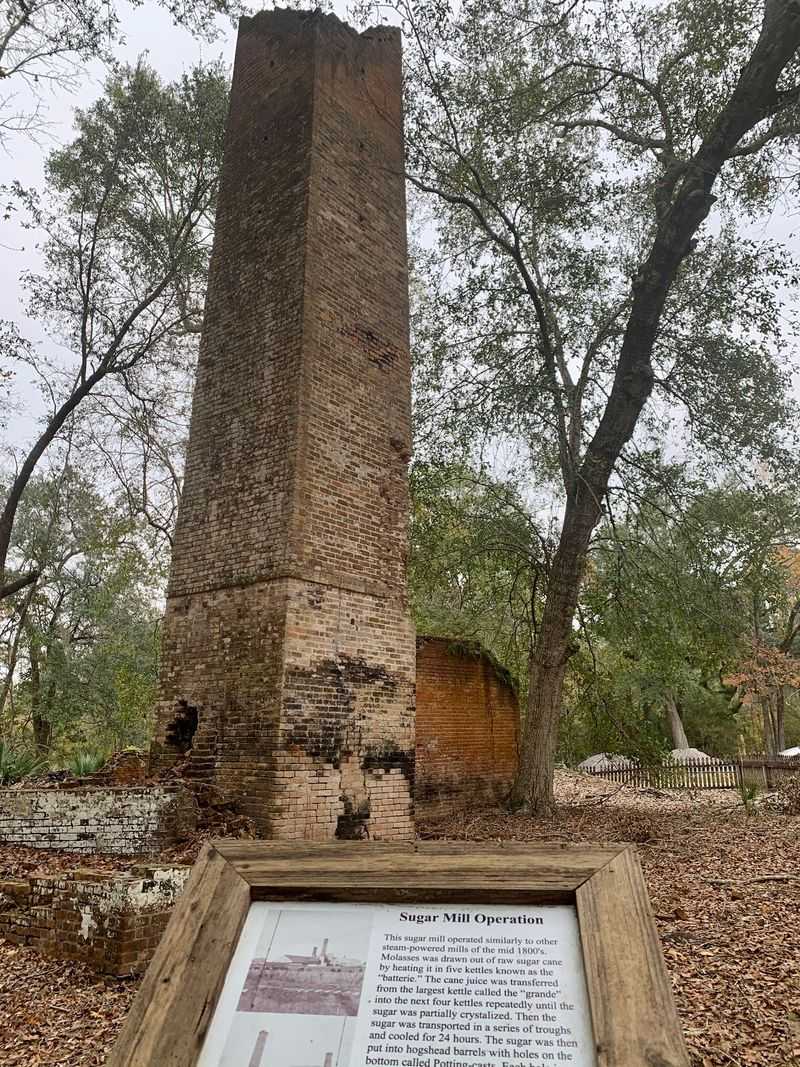
Crumbling brick walls from an 1829 sugar mill still stand near a lake beach where kids splash today. That pairing stopped me cold. I can’t imagine a stranger, more fascinating neighbor for a sandcastle.
Those bricks once belonged to a plantation that also made bricks and lumber. Many of its bricks helped build New Orleans. So a piece of this quiet park lives on in one of America’s most famous cities.
The ruins also carry a heavy story worth hearing. Enslaved people were forced to work this land, and a marker now tells part of their history. I believe that honesty makes the place more powerful, not less.
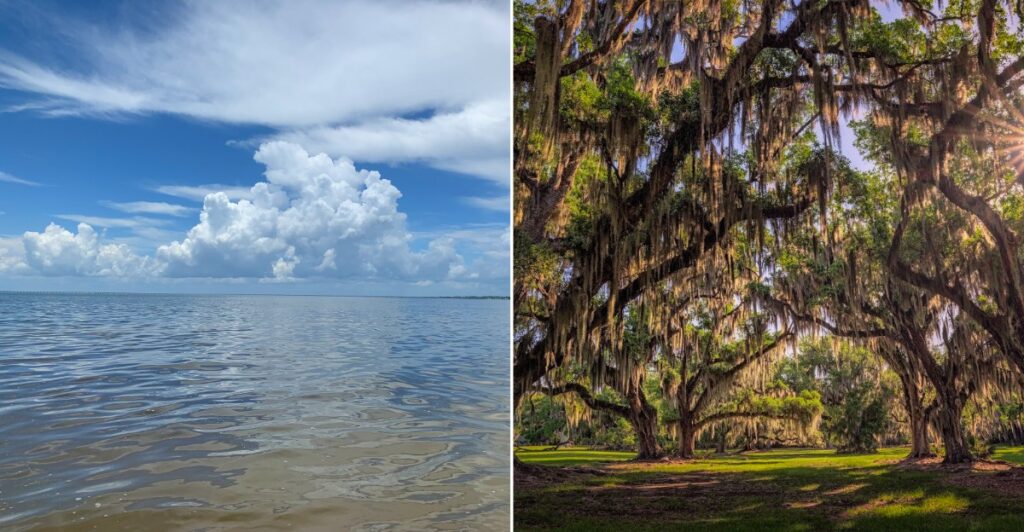
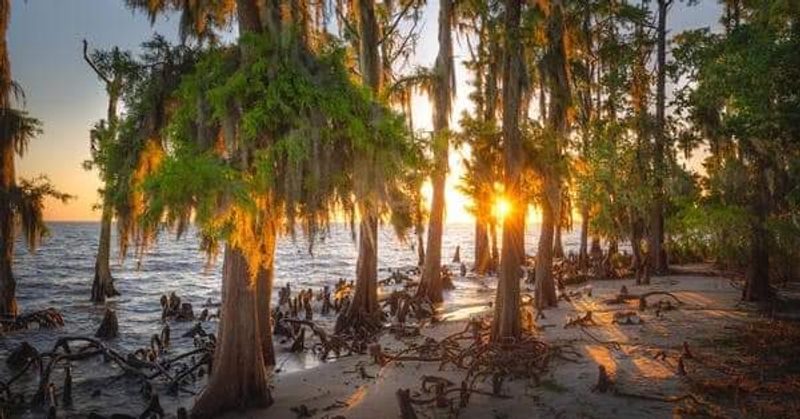
Around the old walls, Louisiana does what it does best. Giant oaks, marsh boardwalks, and lake sunsets fill the rest of the day. Why does a ruin feel this alive?
A Harder Chapter Deserves Your Full Attention Here
Sugar did not grow itself, and the park doesn’t pretend otherwise. A historical marker near the ruins shows where 20 double cabins once stood for enslaved people.
Records from 1840 list 153 enslaved individuals living on the plantation. Fifty-seven of them were children under the age of ten. That single number tends to stop people in their tracks.
These men and women were forced to do skilled and grueling work. They ran sugar presses, lumber mills, and steam engines. Others worked as blacksmiths, brickmakers, and shoemakers.
So those famous bricks? Enslaved hands made them. That truth changes how the ruins look once you know it.
The forced labor continued here until 1862. The marker helps keep their story attached to the land instead of fading behind pretty scenery.
I like that the park treats this history with care. It gives visitors a chance to remember real people, not just old buildings.
Take a few quiet minutes at the marker before moving on. Reading it with kids can also open an honest, meaningful conversation. Few field trips teach this much in such a small space.
Those Old Brick Walls Have Stories They Still Want To Tell
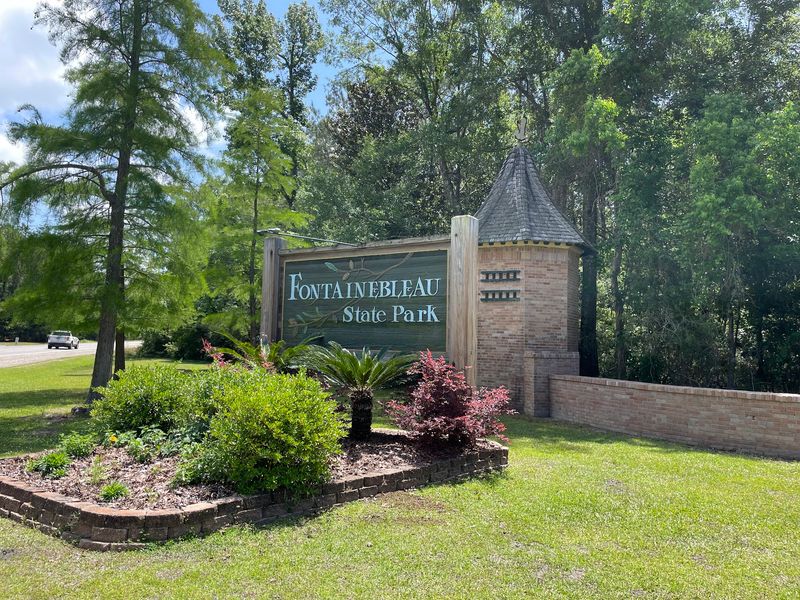
Fontainebleau State Park lies at 62883 Louisiana Highway 1089 in Mandeville, Louisiana, along the north shore of Lake Pontchartrain. Approach from the Mandeville area via Highway 1089 to the state park entrance.
Once inside, the sugar mill’s brick ruins can be seen near the park’s main road and visitor center. The old chimneys and masonry remnants are the useful landmarks, not a remote swamp trail.
Enter through the state park’s visitor access point, pay any applicable admission and ask staff for the safest viewing route from the visitor center. Stay on permitted paths and do not enter unstable ruins.
A Fancy French Name With A Surprisingly Simple Backstory
Marigny clearly had a soft spot for France. He named his huge landholding Fontainebleau after the scenic forest near Paris.
That name stuck around for a long time, though not without a detour. The land began its shift from plantation to park in 1938.
When it officially opened in 1943, it carried a much clunkier title. Visitors knew it as Tchefuncte State Park and Conservation Reservation. Try saying that three times fast.
Eventually, the name changed to Fontainebleau State Park, and honestly, it fits better. The forest connection makes sense once you see the trees here.
The park also earned a spot on the National Register of Historic Places in 1999. That recognition helps protect its story for future visitors.
Today the park covers about 2,800 acres. Lake Pontchartrain, Bayou Cane, and Bayou Castine border it, giving the land plenty of variety.
You’ll find it at 62883 Louisiana Highway 1089, Mandeville, Louisiana 70448. Gates open at 7 a.m. daily and stay open into the evening. Day-use entry carries a small per-person fee, and young kids and seniors get in free.
Walk Under Oaks That Were Old Before The Mill Was Built
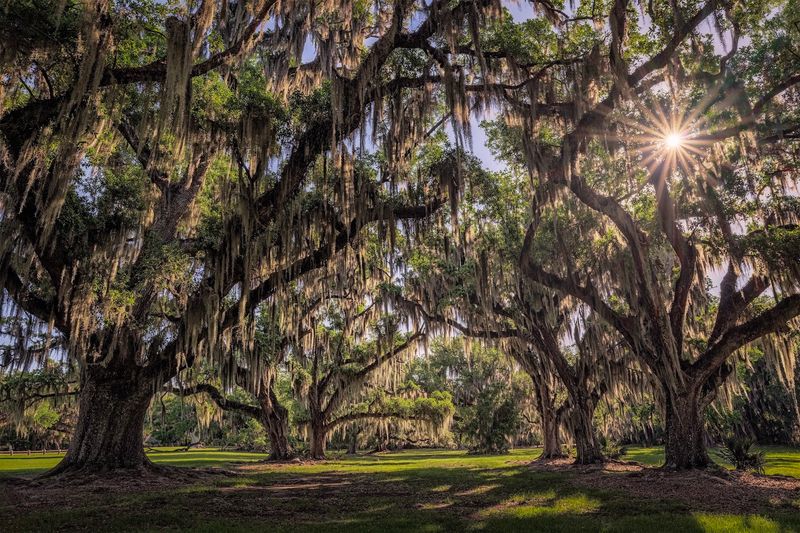
Some of the live oaks here may be up to 500 years old. That makes the 1829 sugar mill look like a newcomer.
The Alley of the Oaks lets you wander among these giants. Their thick branches stretch wide and low, often dressed in Spanish moss.
It’s a fantastic spot for slowing down. Kids can gawk at the massive trunks, while adults can simply enjoy the shade.
Shade matters in a Louisiana summer, trust me. A walk under these trees can feel like nature’s version of air conditioning.
Photographers will also love this area. The twisting limbs create dramatic shapes, especially when light filters through the moss.
Hollywood noticed the scenery too. The park has served as a backdrop for film productions, including Where the Crawdads Sing.
Want a tip? Pair the oaks with your visit to the ruins for a full trip back in time. Old trees and old bricks make a moody, memorable combo.
Just remember these trees are living landmarks. Admire them gently, stay on paths, and let them keep growing for another few centuries.
Sand, Sunsets, And A Pier Stretching Over The Lake
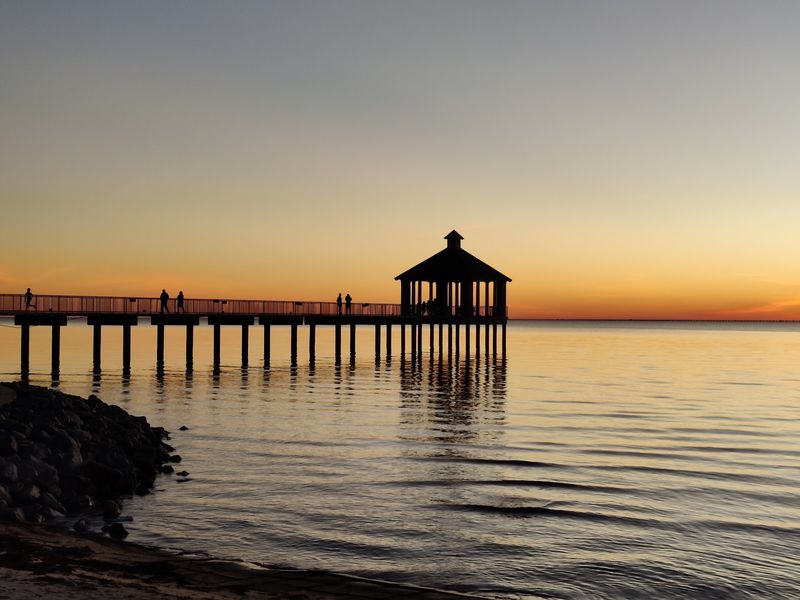
A sandy beach on Lake Pontchartrain sits just a short trip from the brick ruins. Few historic sites come with built-in sunset views.
Fontainebleau State Park stretches along the lake’s north shore. The water looks huge from here, almost like a small sea.
A pier reaches out over the lake, giving you a front-row seat to the horizon. It’s a lovely place to watch the sky change colors in the evening.
The lake offers room for sunbathing, swimming, fishing, and boating. That gives every member of your group something to do.
Covered picnic pavilions sit near the beach area. Picnic tables and barbecue grills are scattered around the park too.
So pack lunch and plan to stay a while. A beach afternoon after exploring history feels like a well-earned reward.
Pets on leashes are welcome in the park. Still, check the rules before bringing a dog near the beach area.
Sunscreen and water are smart additions to your bag. The lakefront can get bright, and the shade near the sand is limited.
Bring Binoculars Because The Locals Have Feathers And Scales
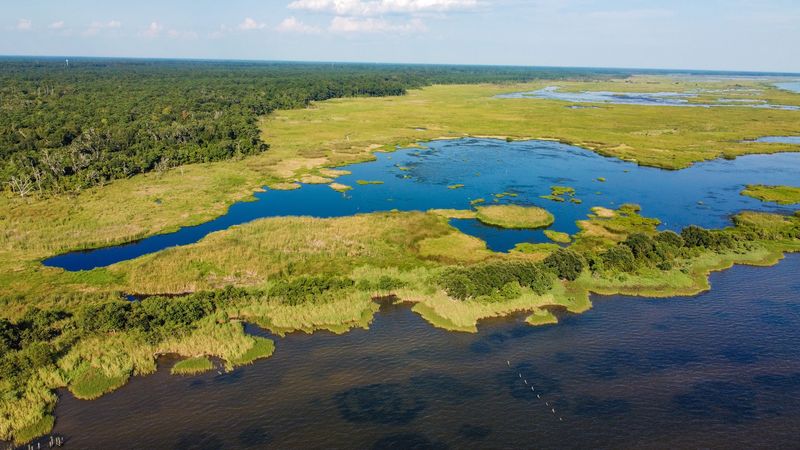
More than 400 bird species have been recorded at this park. Birders, that’s your cue to pack the good binoculars.
The mix of lake, bayou, marsh, and forest creates many different habitats. That variety brings in a wide range of creatures.
Alligators live here, along with raccoons, otters, and deer. Seeing any of them adds a little thrill to a simple walk.
Gators deserve respect, of course. Keep a safe distance and never feed wildlife, no matter how cute a raccoon looks.
Speaking of raccoons, campers should store food carefully. Those masked bandits are clever, and snacks left out may not stay yours.
Early mornings and evenings are often good times for wildlife watching. Animals tend to be more active when the day isn’t so hot.
A field guide or bird app can make the trip more fun for kids. Turning sightings into a checklist feels like a scavenger hunt.
Bug spray belongs in your bag too, especially in warm months. The marsh supports plenty of tiny residents along with the big ones.
Your Sneakers, Bike, Or Kayak All Have Somewhere To Go
Thirty-one miles of paved trail runs right through the park. The Tammany Trace was once an old railroad track, now turned into a path for people.
You can bike, hike, or inline skate on it. A parallel equestrian trail even gives horseback riders their own lane.
Prefer dirt under your feet? A 4.8-mile hiking trail stretches out toward Bayou Cane.
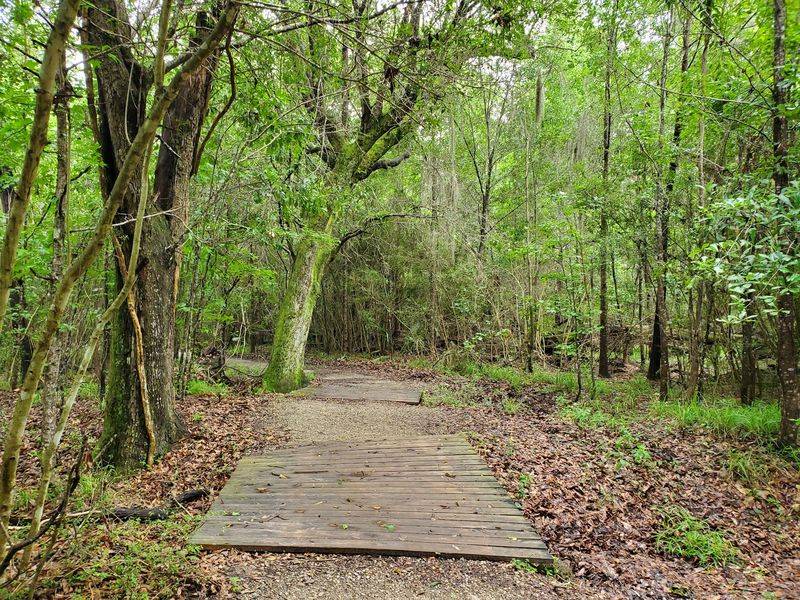
The shorter nature trail loop runs about 1.2 miles. It has interpretive signs and a boardwalk that heads into the marsh.
That boardwalk is a great pick for families. It’s short enough for little legs and interesting enough for curious minds.
The Cane Bayou Trail offers a 4.4-mile round trip through brackish marshland. It’s a quieter way to see the wetter side of the park.
Kayakers can rent a boat and paddle along Bayou Cane. From there, you can explore toward Lake Pontchartrain.
An electric all-terrain wheelchair is also available at no charge. It requires a reservation and training at least 48 hours ahead, so plan early.
Kids Get A Splash Pad And A Seriously Inclusive Playground
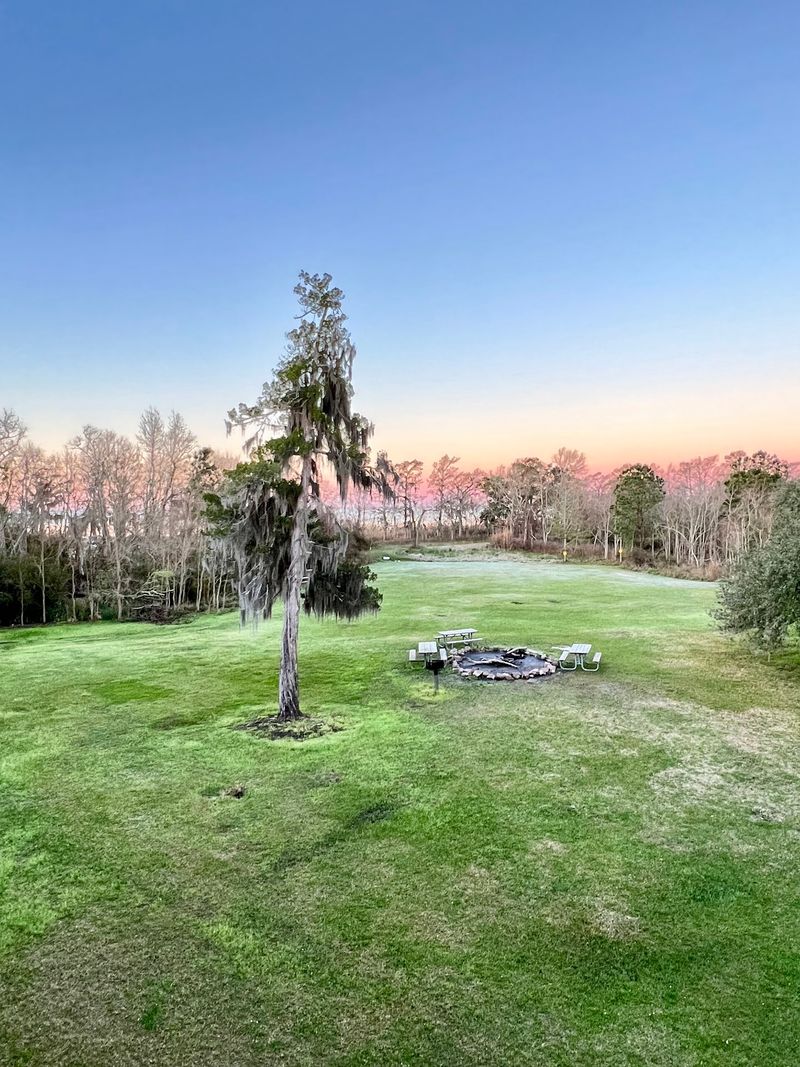
History lessons go down easier when a splash pad waits nearby. Parents, you can thank the park planners later.
The water playground runs Tuesday through Sunday, from 8 a.m. to 8 p.m. It closes on Mondays for cleaning and maintenance.
That Monday detail matters. Nobody wants to promise a splash and deliver a dry slab of concrete.
Fontainebleau State Park also has an all-inclusive playground covering more than 7,200 square feet. It was designed so kids of many abilities can play together.
Features include a safety surface and accessible ramps. There’s also a wheelchair-accessible glider and a tactile roller slide.
Inclusive swing seats round out the setup. It’s thoughtful design that lets more children join the fun.
Plan your day around these spots if you’re traveling with little ones. A morning at the ruins and an afternoon at the splash pad is a solid balance.
Pack a towel, a change of clothes, and maybe a backup snack. Wet, happy kids tend to get hungry fast.
Sleeping On Stilts Over The Water Sounds Pretty Great
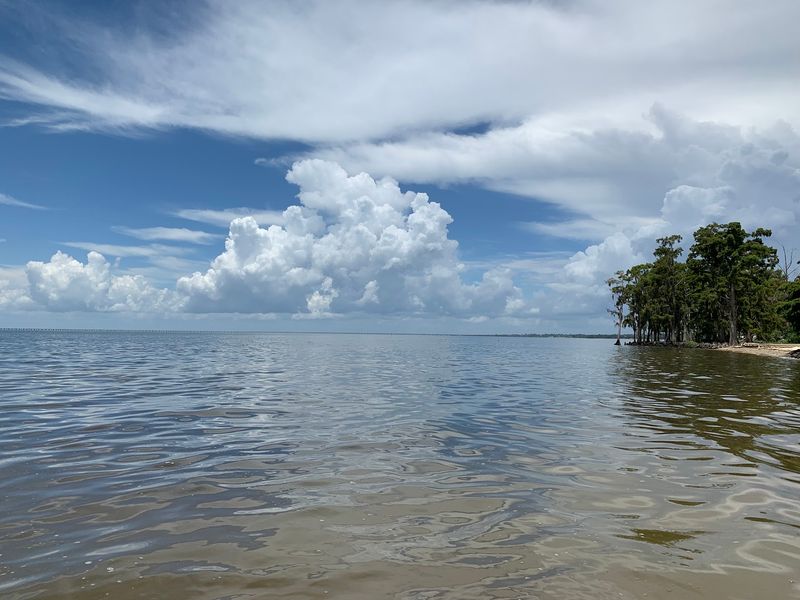
Twelve deluxe cabins stand on stilts right over Lake Pontchartrain. Waking up above the water beats a standard hotel view by a mile.
Each cabin has a porch, a kitchen, and a television. They can sleep up to eight people, and some are accessible.
Campers have plenty of choices too. The park offers 163 campsites for RVs and tents.
Many sites include water and 30 or 50 amp electric hookups. Unimproved and primitive options suit folks who like things simpler.
Bigger groups aren’t left out. Three group camps and a lodge are available, with group camps sleeping up to 100 people.
Staying overnight gives you more time to explore. You could catch sunset on the pier and still hit the ruins early the next morning.
Before leaving, stop by the visitor center. It has museum displays, interpretive programs, and exhibits of handmade tools and furniture.
It’s a fitting final stop at this Louisiana treasure. The past and present share the same ground here, and that makes a weekend feel fuller.