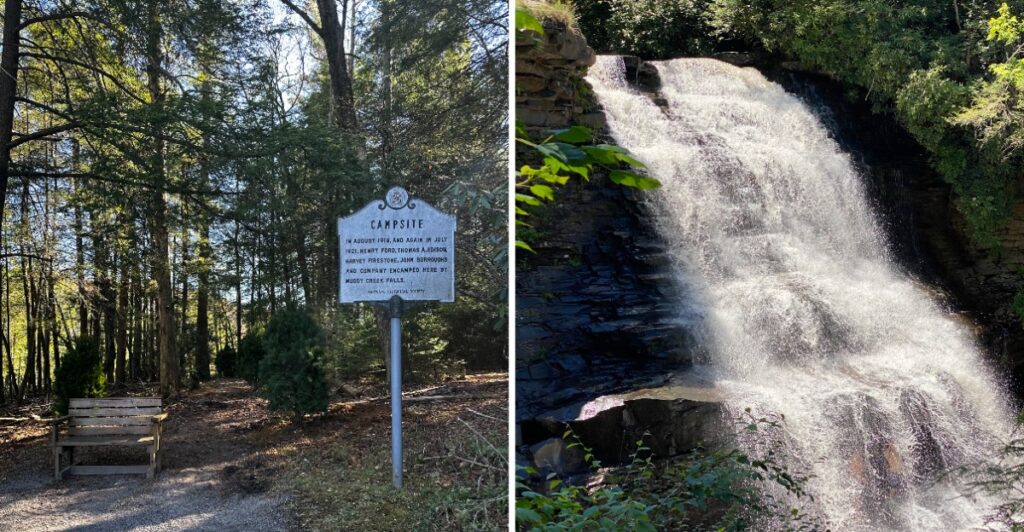
The big waterfall gets your attention first.
Fair enough. Fifty-three feet of rushing water will do that.
But the trail is not finished with you.
Follow it through the woods and more cascades start appearing between the rocks. That is where this Maryland hike gets interesting.
The main falls may be the reason you came, but they are not the only reason to keep walking.
The path can get damp and uneven, so this is not quite a casual sidewalk stroll. Still, you can keep the visit short or follow the loop farther through the forest.
Every season changes the mood, too.
Green in summer. Color in fall. Ice when winter gets involved.
I’d come for the 53-foot drop.
Then keep walking until 53 feet stops feeling like the whole story.
Muddy Creek Falls Drops 53 Feet Into A Rocky Western Maryland Gorge
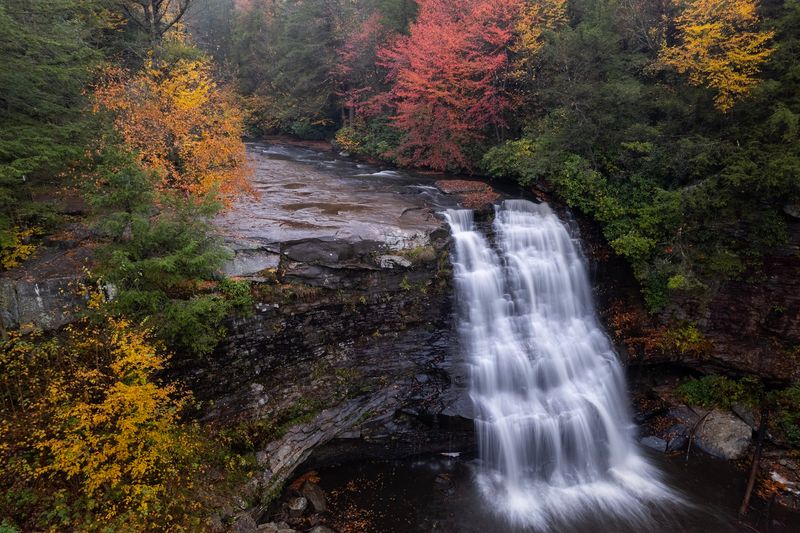
Hear that steady rush as the trail approaches the gorge? Muddy Creek Falls sends water over a rock ledge and down a 53-foot drop, the highest free-falling waterfall in Maryland. The water falls into the rocky channel below, where flow and spray vary with recent weather.
At Muddy Creek Falls, water drops from a steep ledge rather than traveling down a long slope of exposed rock.
Cunningham Falls, another tall Maryland waterfall, follows a series of rocky steps. Compare their different shapes when planning visits to both parks.
Rock walls, evergreen branches, and the creek below fill the view. After rain, the water can move rapidly, and the sound may carry well along the path.
During drier periods, a smaller flow can reveal more of the ledge and the rock underneath.
For photographs, try a wide composition that includes the cliff and nearby trees, then a closer frame showing the falling water.
A change in perspective along the designated trail is safer than scrambling onto boulders.
Keep your camera strap secure near the overlook, and pause before moving so others can use the same viewing space safely.
Ancient Hemlock Trees That Have Outlived Centuries Of Change
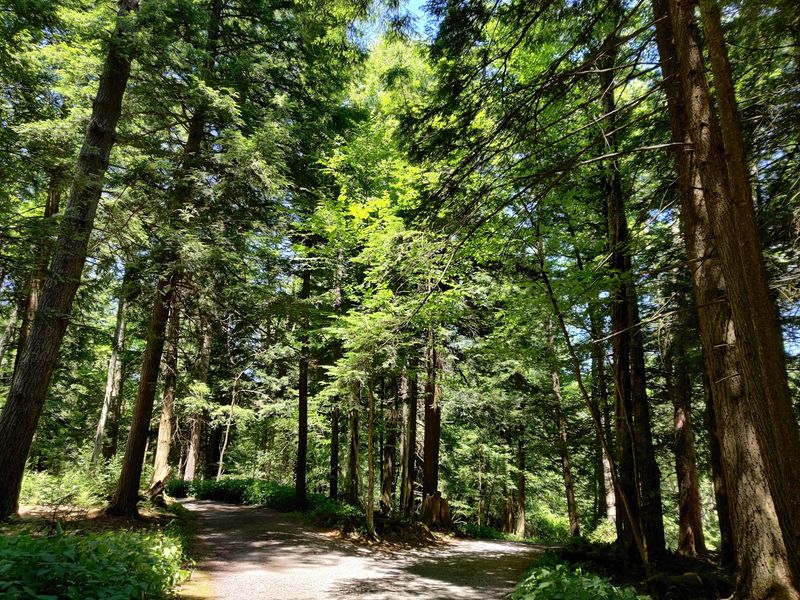
Some of the hemlocks and white pines at Swallow Falls have been growing for centuries. The park protects an old-growth stand along the Youghiogheny River, with some trees reported to be at least 360 years old.
Tall trunks, evergreen branches, and fallen wood give this section a different character from a recently planted forest.
Look upward as you walk. Eastern hemlock has short, flat needles and delicate branching, while white pine carries its needles in bundles.
Old-growth forests are uncommon in Maryland after generations of logging elsewhere in the region. Stay on the trail to avoid trampling seedlings and the soil around exposed roots.
Bring binoculars if birds are part of your trip. Blackburnian warblers, with orange coloring on the head and throat of breeding males, are among the birds associated with this forest.
Spring is a useful season to listen for their thin calls high among the branches, though wildlife sightings are never certain.
Take a short break beneath the canopy and listen. Water from the river and creek can remain audible even when you cannot see either channel.
Following The Canyon Trail Through Swallow Falls State Park
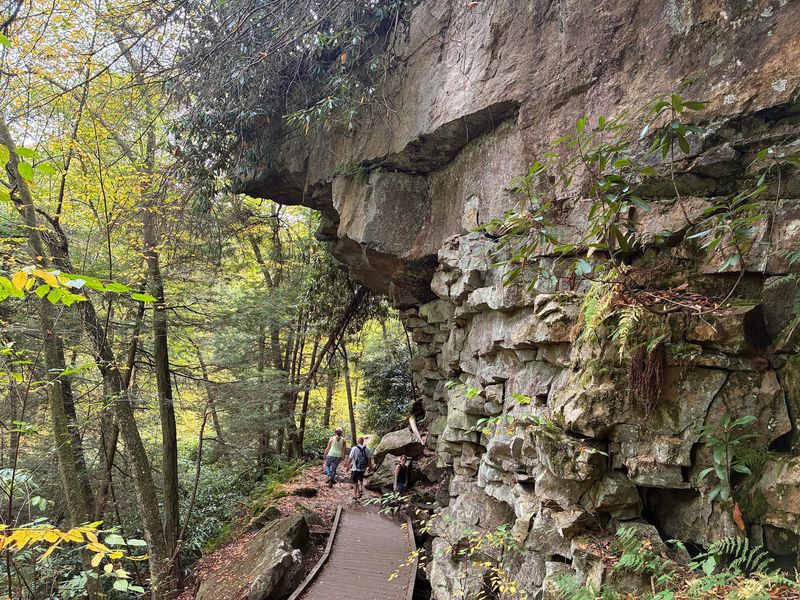
For an easier start, use the designated day-use area and look over the trail information before leaving the parking lot. The forest paths are not paved sidewalks, and the weather can change how comfortable a short hike feels.
The Canyon Trail walking route goes through the old-growth forest and past several waterfalls. It is for foot traffic only, so leave bikes for other permitted trails.
The loop gives you a way to see the main falls and nearby river features in one outing without committing to a long backcountry hike.
Do not mistake the short mileage for a perfectly easy path. Roots, steps, rocky stretches, and changes in elevation require steady footing. The surfaces can become slippery after rain, while snow and ice create additional hazards during colder months.
Wear shoes with traction and take your time where the trail narrows.
If you have limited time, focus on the established approach to Muddy Creek Falls rather than rushing the full circuit.
The park also has a 5.5-mile trail linking Swallow Falls with Herrington Manor State Park through Garrett State Forest.
That is a separate, longer excursion suitable for visitors prepared for additional mileage. Mountain biking is permitted on that connecting trail, not on the Canyon Trail.
Carry water, particularly on warmer days. Give other walkers room at narrower sections and keep children close around overlooks and fast-moving water.
Upper And Lower Swallow Falls Add More Waterfalls To The Forest Walk
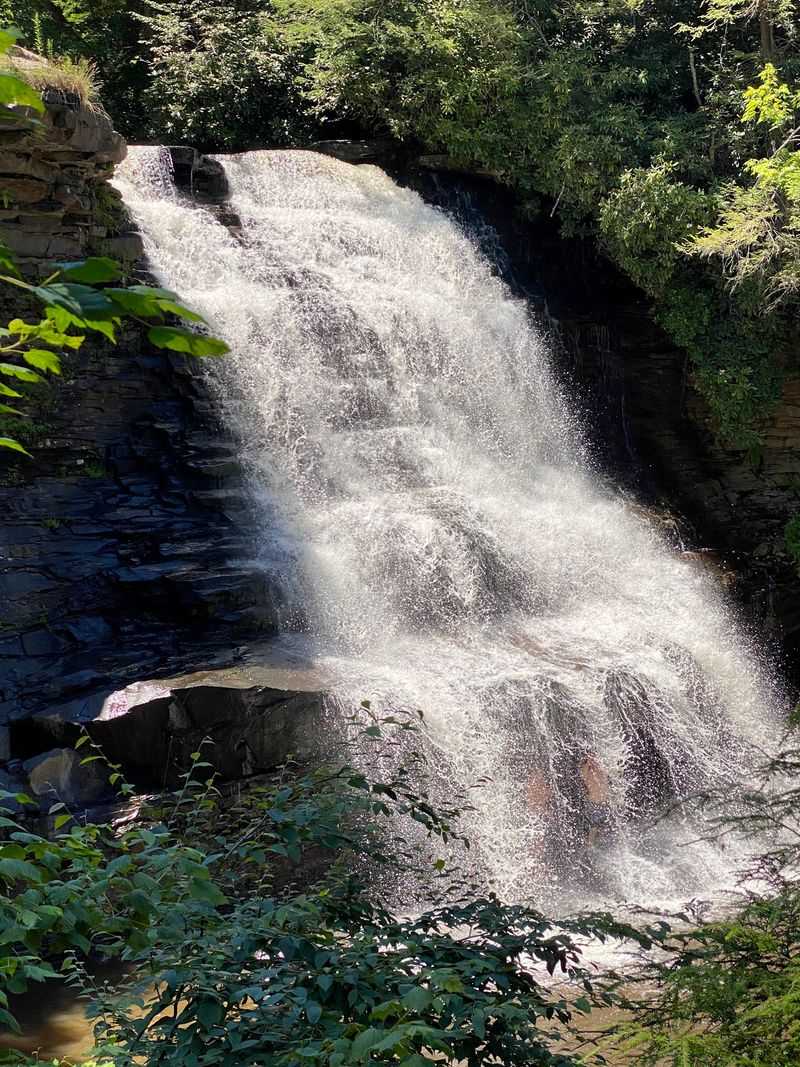
Muddy Creek Falls is not the only waterfall on the Canyon Trail. Upper and Lower Swallow Falls lie along the Youghiogheny River, adding more places to stop and watch water moving over rock.
Their shapes differ from the main plunge, with flow passing through a series of ledges and narrower channels.
The Youghiogheny is a powerful river, especially after substantial rainfall. You may see whitewater gathering around exposed stone or quieter stretches between the drops.
One useful plan is to allow a pause at each marked viewpoint instead of hurrying from one named waterfall to the next. Compare the way water moves at the river falls with the single main drop at Muddy Creek Falls.
The stone beside the river may appear flat, but wet surfaces are often slick. Do not wade into the current or approach a drop-off for a photograph. The strongest view is not necessarily the one closest to the water.
Stay on marked paths and use stable viewing spots.
For a longer break, the park also has picnic tables and grills in its day-use area. Save your packed lunch for an established picnic spot rather than balancing food near a wet rock ledge.
The 1921 Camping Trip That Brought Thomas Edison And Henry Ford To The Falls
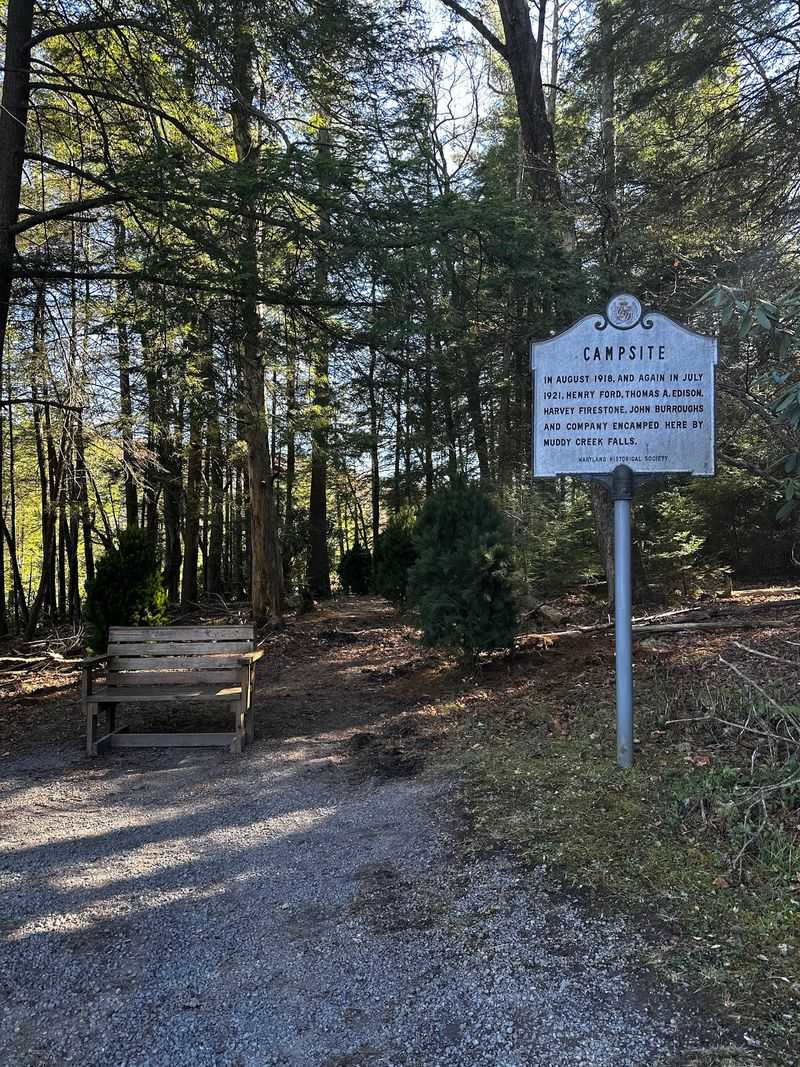
The forest has a connection to a well-documented American camping tour. In July 1921, Thomas Edison, Henry Ford, and Harvey Firestone camped beside Muddy Creek Falls during one of the trips they took together. Their traveling group became known as the Vagabonds.
The campers arrived in Garrett County after a stay farther east in Maryland. They spent several days near the waterfall, surrounded by the hemlock and pine forest.
At the time, the land was privately owned and used as a retreat, decades before many present-day visitors would know it as a state park.
The group had taken summer camping journeys since the previous decade, traveling by automobile through different parts of the country.
Look for interpretive information about the 1921 camping trip during your visit. Continue along the marked trail toward the waterfalls, with a stop beneath the hemlocks near the historic campsite area.
For a family conversation along the path, ask how camping equipment and travel conditions might have differed a century ago. Then compare that with the practical gear you carried into the park.
How Cranesville Swamp Gives Muddy Creek Its Distinctive Dark Water
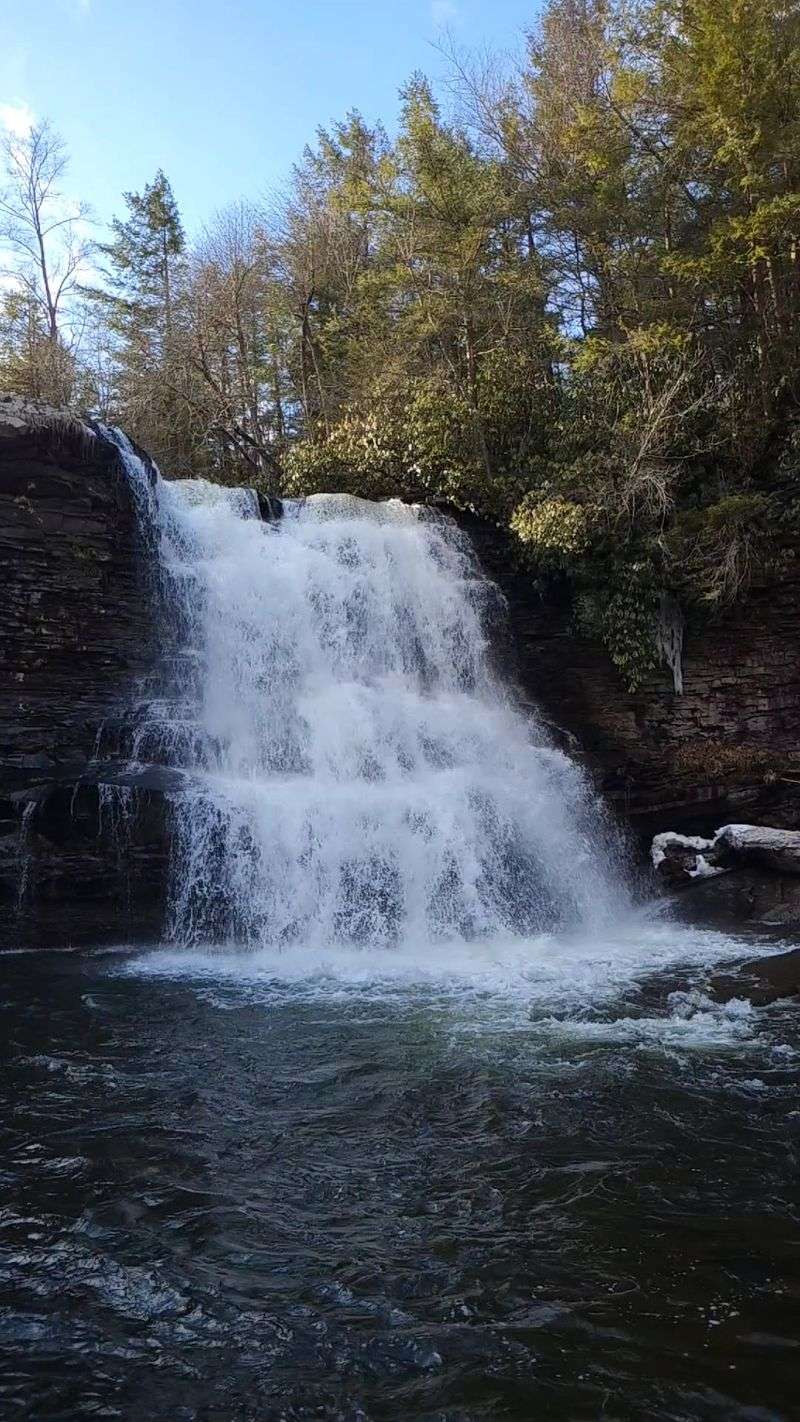
At certain water levels, Muddy Creek can appear amber or tea-colored. Organic material from wetlands and forest soils can contribute to that coloration as water travels downstream.
Cranesville Swamp lies near the Maryland and West Virginia border in the broader upstream landscape. It is a cool wetland known for habitat conditions that support plants uncommon in much of the surrounding region.
Water moving through vegetation and decaying leaves may pick up dissolved natural compounds, including tannins.
Tannins occur naturally in leaves, bark, and other plant material. They can give water a yellow-brown cast, though color alone cannot establish water quality or explain every change in a creek.
Avoid treating the water as drinkable simply because the tint may have a natural source.
For a closer look, compare the color in shaded pools with the appearance of the faster water pouring over the falls. Use the trail viewpoints for observation rather than collecting water or stepping into the stream.
The creek’s appearance changes with the conditions. Rain can carry additional sediment, while a quieter day may leave the amber tones easier to distinguish. Look for color differences where slower water meets the falls.
Trail Conditions, Entrance Fees, And The Best Seasons To Visit Muddy Creek Falls
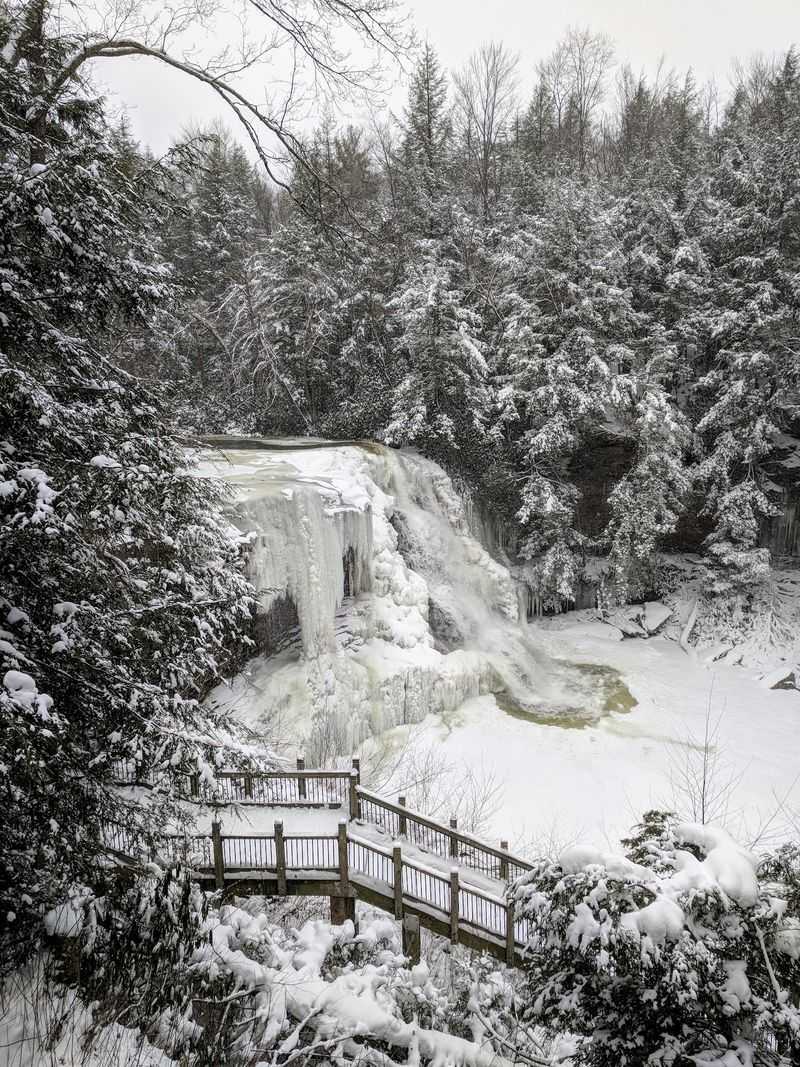
Swallow Falls State Park is open for day use from 8 a.m. to sunset. Spring can bring increased water flow, summer adds dense green foliage, autumn changes the surrounding hardwood colors, and winter may bring snow or icy sections.
A day-use entrance charge applies. During summer and on certain spring and autumn weekends, fees are assessed per person; at other times, they are generally charged per vehicle.
Maryland residents and out-of-state visitors pay different rates, so check the applicable fee before departure.
For 2026, visitors arriving by vehicle need advance day-use reservations on weekends and holidays during the Memorial Day to Labor Day period. Reservations are made online, with timed entry periods.
Pets are not permitted in the day-use area or on the Canyon Trail during the summer restriction period. If bringing a dog during another season, check the applicable leash and access rules before traveling.
Cell service can be unreliable, so save directions and the trail map offline. Keep a rain layer and water handy, and do not underestimate slippery stone even after a brief shower. The park’s GPS address is 2470 Maple Glade Road, Oakland, MD 21550.
Arrive with enough daylight to finish your route before sunset.